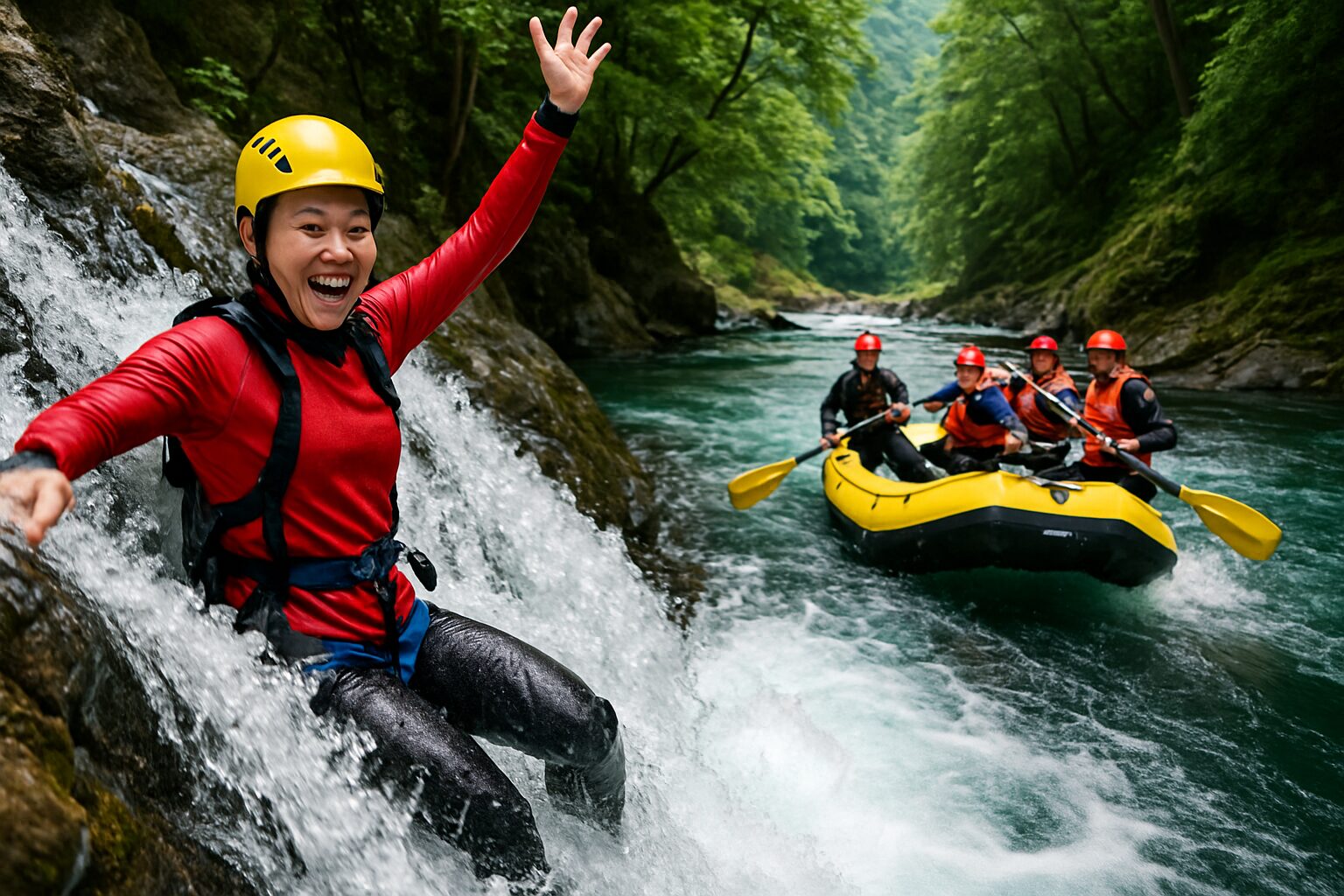
Yo, what’s up, adventure squad! Megumi Hara here, coming at you live from Tokyo. My usual gig is planning the most lit events in the city, but sometimes, you just gotta escape the concrete jungle, you know? You gotta trade the neon lights for the bright green of the mountains and the deep blue of a wild river. If you think Japan is all ancient temples and crowded subways, you are about to have your mind blown. For real. We’re talking about diving headfirst—literally—into some of the most stunning, raw, and untamed nature you’ll ever see. Forget just sightseeing; we’re about experiencing it. Today, we’re deep-diving into the world of canyoning and river rafting in Japan, the absolute GOAT of summer activities that will get your heart pumping and your spirit soaring. This isn’t just a tour; it’s a full-on reset button, a way to connect with the wild heart of this country. It’s about that rush, that feeling of being completely alive as you navigate roaring rapids or leap into crystal-clear waterfall pools. This is the side of Japan you won’t see in the guidebooks, the one that the locals know is the ultimate way to beat the heat and create some seriously legendary memories. So, buckle up your life vest, grab your paddle, and get ready to drop into a world of pure, unadulterated fun. This is your official invitation to Japan’s biggest, wettest, and wildest party, and trust me, you don’t want to miss it. Let’s get it!
After your wild river adventure, consider unwinding at a luxury resort in Hakone, where a new branded property is set to open.
Minakami, Gunma: The OG Adrenaline Capital
When discussing river sports in Japan, one name is spoken of with utmost reverence: Minakami. This place is the undisputed champion, the original legend. Nestled in the northern mountains of Gunma Prefecture, just a short Shinkansen ride from Tokyo, Minakami is where the magic unfolds. The heart of this town is the powerful Tone River, or Tonegawa as locals call it. This isn’t your typical gentle river. In spring, as the snow from the surrounding peaks melts, the Tonegawa transforms into a raging force. We’re talking Grade 4 rapids that will challenge your team’s coordination and give you stories to share for years. It’s an exhilarating rush, a full sensory overload in the best way possible.
The Atmosphere of a Minakami Rafting Experience
Imagine this: you and your group arrive at the rafting base. The air is crisp, carrying the scent of pine and the distant roar of the river. The atmosphere is electric. Guides shout, people laugh, everyone buzzes with excitement. You’re squeezed into a wetsuit—a comical affair in itself—then given a helmet and life jacket. After an important yet fun safety briefing, you board a bus that bumps along a mountain road to the launch point. The moment your raft hits the icy water, it’s game time. Your guide stands at the back, shouting commands—“Forward!” “Back!” “Duck down!”—and you all paddle in sync, a single unit fighting the churning currents. You’ll crash through waves that soak you, maneuver around massive boulders, and feel your stomach drop as you plunge down rapids. But it’s not all chaos. There are moments of pure tranquility when you float through peaceful canyons, rock walls soaring above, draped in lush green moss. You can lean back, gaze at the sky, and just take it all in. Most tours even stop at a spot where you can cliff jump into a deep, calm pool. It’s the ultimate challenge of courage, and the sensation of flying through the air before hitting the water is pure freedom. The whole journey is a rollercoaster of adrenaline and calm, perfectly balanced to leave you feeling refreshed and accomplished. It’s team-building like no other—you start as friends and finish as a real paddling crew.
Canyoning: Becoming One with the Waterfall
But rafting is just part of Minakami’s story. The true hidden treasure here is canyoning, or `sawanobori` (stream climbing) as it’s traditionally called. This is where you leave the raft behind and become part of the river itself. You hike up a mountain stream, and your descent follows the stream itself—sliding down natural water slides carved by centuries of flowing water, rappelling down cascading waterfalls, and leaping into deep, emerald-green pools. It’s like a natural water park, but a thousand times better. The guides are experts, setting up ropes and guiding you safely down. They know these canyons like the back of their hand. There’s something deeply primal about it. You use your whole body, scrambling over rocks, swimming through gorges, feeling the immense power of the water around you. It’s a challenge, no doubt, but the reward is access to scenery few ever see. You’re deep in the mountain’s heart, surrounded only by the sound of water and the vibrant forest greens. It’s an immersive experience that connects you to nature in ways you never imagined. It’s you, the water, the rocks, and a whole lot of epic fun. Honestly, it’s one of the coolest things to do in Japan.
After the Adventure: Onsen and Local Cuisine
One of the best parts of adventure sports in Japan is what comes after. In Minakami, that means one thing: onsen. The area is renowned for its natural hot springs. After a day battling cold river water, there’s nothing better than sinking your tired body into a steaming, mineral-rich onsen bath. Many rafting and canyoning companies have their own onsen or partner with local ones. Soaking in an outdoor bath (`rotenburo`) while gazing at the mountains you just conquered—that’s quintessential Japan. It’s the perfect way to warm up, soothe aching muscles, and chat with friends about the day’s epic moments. Once clean and relaxed, it’s time to refuel. Minakami and the surrounding area boast amazing local food. You’ve got to try the regional soba noodles or sample some locally brewed craft beer. Plenty of tour operators offer BBQ packages, so you can end your day grilling meat and veggies by the river. It’s the perfect finish to a perfect day of adventure.
Okutama: Tokyo’s Wild Backyard Escape
What if you’re based in Tokyo and can’t spare time for a weekend getaway? What if you need a quick, easy hit of nature and adrenaline? Say no more. Welcome to Okutama, Tokyo’s hidden gem. Situated in the far western edge of the Tokyo Metropolis, Okutama feels like another world, yet it’s just a train ride away from the hustle of Shinjuku. This is the perfect spot for a day trip that truly delivers. The Tama River takes center stage here, carving through deep, forested valleys and creating an ideal playground for canyoning as well as a more relaxed, scenic style of rafting.
Canyoning Just Minutes from Shibuya
Canyoning in Okutama is seriously impressive. It’s amazing to realize this level of untouched nature exists within Tokyo’s official limits. You’ll meet your guides near a local train station, and within minutes, find yourself deep in a gorge that feels worlds apart from the city. The waters of the Tama River and its tributaries are crystal clear, with a beautiful turquoise tint. The courses cater perfectly to beginners and intermediate adventurers. You’ll experience the full thrill: sliding, jumping, and swimming through pristine natural surroundings. The contrast is unforgettable—one moment, you’re on a crowded train scrolling your phone, and the next, you’re ziplining into a waterfall basin. Accessibility is the major draw. You can literally wake up in your Tokyo hotel, enjoy an epic canyoning adventure, and return to the city in time for dinner and drinks in Shinjuku. It’s the ideal way to break up a city-focused itinerary and add some serious excitement without a huge time commitment.
Rafting and Beyond on the Tama River
Although the rapids on the Tama River aren’t as intense as those on Minakami’s Tonegawa, the rafting here offers its own special charm. It’s more of a scenic float with some splashy fun added in, making it incredibly family-friendly and great for groups looking to enjoy themselves without the hardcore thrill. You’ll paddle through stunning landscapes, with opportunities to hop out for a swim in calmer stretches. Some operators also offer packrafting or ducky (inflatable kayak) tours, giving you more control and a fresh type of challenge. Beyond the river, Okutama is a paradise for hikers. There are endless trails ranging from easy riverside strolls to demanding mountain climbs like Mount Mitake. You can combine a half-day canyoning trip with a hike to a mountain shrine or a visit to a limestone cave. The region is also renowned for its wasabi farms, which use pure mountain water to cultivate some of the finest wasabi in Japan. Be sure to try fresh wasabi with your lunch—it’s a revelation. Okutama shows that you don’t have to venture far from the capital to find genuine, soul-refreshing adventure.
Yoshino River, Shikoku: The Final Boss of Japanese Rafting
Alright, adrenaline seekers, this one’s for you. If Minakami is the king, then the Yoshino River in Shikoku is the emperor. Without a doubt, it’s the most intense, spectacular, and renowned rafting destination in all of Japan. The Yoshino River carves through the heart of Shikoku, the smallest of Japan’s four main islands, forming the breathtaking Koboke and Oboke Gorges. We’re talking about world-class, continuous Grade 3 and 4+ rapids that will leave you exhilarated and buzzing for days. This is definitely not for the faint-hearted. This is the main event.
Conquering the Koboke Gorge
The stretch of the Yoshino River running through the Koboke Gorge is legendary. It demands a full-day commitment and a serious workout. The rapids here have names, like `Magarito` (The Bend) and `Nidan no Taki` (Two-Step Waterfall), and they command respect. The water is a striking cobalt blue, contrasting vividly with the white roar of the rapids and the gray crystalline schist rock formations of the gorge. The scale is immense—the cliffs rise vertically from the water, and the river flows with relentless power. Your guide will be a seasoned expert, skilled at reading the water and navigating the safest yet most thrilling paths through the chaos. Teamwork is absolutely essential here. One missed paddle stroke can send you spinning. It’s an intense, focused experience, but the payoff is beyond words. The thrill of successfully conquering a monster rapid with your crew, everyone shouting and high-fiving, is pure gold. This is the kind of adventure that forges lifelong bonds. It’s a challenge overcome together, with a huge sense of accomplishment at the day’s end.
The Shikoku Vibe: Off the Beaten Path
Part of the magic of rafting the Yoshino River lies in its location. Shikoku is one of Japan’s more rural and traditional regions, off the main tourist trail, giving it a genuinely authentic and relaxed atmosphere. The journey there is part of the adventure, passing through sleepy countryside towns, terraced rice fields, and winding mountain roads. The locals are incredibly warm, and the ambiance is a world away from the fast pace of Tokyo or Osaka. Spending the night in a local `minshuku` (family-run guesthouse) is highly recommended—you’ll enjoy amazing home-cooked meals and experience true Japanese hospitality. The area around Oboke and Koboke Gorges also offers other amazing sights, like the vine bridges of the Iya Valley (`Kazurabashi`), traditional suspension bridges made from mountain vines hanging high above the river. It’s a journey back in time. A trip to Shikoku for a Yoshino River adventure is more than just rafting; it’s an immersive experience into a part of Japan that still feels wild, untouched, and full of ancient mysteries.
A Guide for First-Timers: Everything You Need to Slay on the River
Feeling excited but a bit anxious because it’s your first time? Don’t worry at all. Canyoning and rafting are very beginner-friendly. Tour companies in Japan are exceptionally professional, with a strong emphasis on safety. Here’s the scoop on what to expect so you can show up to your adventure feeling confident and ready.
What to Wear and Bring
This is the most common question, so let’s clarify. The tour company will supply all the essential safety gear, including a wetsuit (or drysuit if it’s cold), a helmet, a life jacket (or PFD – Personal Flotation Device), and sometimes river shoes. Your job is to bring what goes underneath and what you’ll need afterward.
- Underneath the Wetsuit: Simply wear a swimsuit. That’s all. For extra warmth on chilly days, you can layer a synthetic (non-cotton) rash guard or thermal top. Avoid cotton because it gets cold, heavy when wet, and stays damp.
- Footwear: Some companies provide river shoes or booties, but it’s best to check ahead. If you need to bring your own, old sneakers that you don’t mind getting soaked work well. Avoid sandals or anything that slips off easily. You want shoes with good grip for navigating wet rocks.
- For Afterwards: This is crucial. Bring a large, fluffy towel and a full change of clothes, including underwear. Having a plastic bag for your wet swimsuit is a smart move.
- Extras: If you wear glasses, get a strap to keep them secure. Contact lens wearers should consider bringing a spare pair. Waterproof sunscreen is essential, even on cloudy days, since sunlight reflects strongly off the water. A waterproof camera like a GoPro is great for capturing the fun, but make sure you have a secure mount for your helmet or chest.
The Essential Safety Briefing
Before you even approach the water, you’ll receive a comprehensive safety briefing from your guides. Pay close attention! This isn’t just a formality—it ensures you have a safe and awesome experience. They’ll teach you how to paddle effectively as a team, the proper way to sit in the raft for stability, and what to do if you fall into the water—usually the “point your feet downstream and float on your back” technique. They’ll explain hand signals used on the river since it’s often too loud to hear verbal commands, and conduct a swim test in calm water to ensure everyone is comfortable in their gear. These guides are highly trained professionals, often internationally certified in swiftwater rescue. Their job is to manage risks so you can focus on having fun. So listen carefully, ask questions if you’re unsure, and trust your guides—they’ve got you covered.
Picking the Right Tour for Your Group
Not all tours are the same; they differ in duration, intensity, and overall vibe. It’s important to select one that fits your group’s fitness level and preferences.
- Half-Day vs. Full-Day: A half-day tour usually lasts 2-3 hours on the water and is great for a quick taste or to pair with another activity. Full-day tours offer a deeper experience, often covering more river and including lunch. For spots like the Yoshino River, a full-day tour is ideal to enjoy the best rapids.
- Intensity Level: Tour operators clearly label their courses, ranging from “family-friendly scenic floats” to “extreme high-water adrenaline trips.” Be honest about your group’s skill and comfort levels. Starting with a beginner course is perfectly fine—it’s all about enjoying yourself.
- The Vibe: Check out the company’s website and reviews. Some cater to a party atmosphere with large groups, while others focus on smaller, more intimate tours. Some even include extras like BBQ and onsen packages, which is a great bonus. Choose the company that suits the energy you’re after.
The Seasonal Flow: When to Go
Timing is crucial in Japan, especially when it comes to river sports. The experience varies greatly with the season, so here’s a brief guide to help you plan an ideal trip.
Spring (April – June): The Power Season
During this time, mountain snow melts, pouring vast amounts of cold water into the rivers. Water levels are at their peak, and the rapids become the most powerful and intense. This season is perfect for serious thrill-seekers. If you’re visiting Minakami or the Yoshino River and want the biggest waves and fastest currents, spring is the way to go. The water is icy cold, so wearing a full drysuit or a thick wetsuit is essential, but the adrenaline rush is unparalleled. It’s an epic, high-stakes adventure. Keep in mind that some of the gentler rivers may not yet offer tours, so this season mainly suits major destinations.
Summer (July – August): The Party Season
Summer is the busiest season, and for good reason. The hot, humid weather makes the cool river water incredibly refreshing. Water levels are generally lower and more predictable than in spring, but there’s still plenty of excitement. This is the ideal time for beginners, families, and anyone seeking a classic, fun-in-the-sun rafting or canyoning experience. The atmosphere is fantastic—everyone’s out on the water, the sun is shining, and energy is high. The downside? It gets crowded. You’ll need to book your tour weeks or even months in advance, especially for weekends and holidays. Still, the lively atmosphere is well worth it—it’s the quintessential Japanese summer adventure.
Autumn (September – October): The Scenic Season
As summer heat fades, autumn brings a unique charm to Japan’s mountains. This is the season of `koyo`, or autumn leaves. The forests along the river gorges transform into stunning shades of red, orange, and yellow. Water levels are typically at their lowest and calmest, making it less about challenging rapids and more about enjoying a beautiful, scenic journey. It’s perfect for a relaxed float, ducky tours, or canyoning where you can take your time and soak in the breathtaking scenery. The weather is crisp and comfortable, and the crowds have lessened. If you’re seeking a calm, picturesque, and highly Instagrammable river experience, autumn is the ideal choice. It offers a totally different but equally wonderful atmosphere compared to the other seasons.
More Than a Thrill: The Culture of the River
Engaging in these activities in Japan goes beyond just the rush of adrenaline. It offers a chance to connect deeply with the Japanese cultural reverence for nature. Shinto, Japan’s native religion, is animistic, meaning it holds that gods or spirits (kami) inhabit natural entities like mountains, trees, rocks, and rivers. When you find yourself deep within a canyon, surrounded by ancient rocks and the powerful flow of water, you can truly sense that spiritual energy—a feeling of respect and awe for nature’s strength. This represents an intense form of shinrin-yoku, or forest bathing. You’re not merely observing nature; you’re fully immersing yourself in it, allowing it to wash over and renew your spirit.
The social aspect is equally important. The teamwork involved in rafting fosters a strong bond, or nakama. Additionally, the tradition of visiting an onsen together after a day outdoors is a fundamental part of Japanese culture. It’s about sharing experiences, relaxing side by side, and strengthening relationships. So when you’re paddling furiously with new friends or soaking in a hot spring afterward, you’re not just having fun—you’re engaging in a cultural ritual that has been integral to Japanese life for centuries. You’re connecting with both the land and its people on a profoundly deeper level.
So, are you prepared to answer the wild’s call? Japan’s rivers await, ready to challenge you, excite you, and reveal a raw, powerful, and stunningly beautiful side of the country. It’s an experience that will test your limits, flood your senses, and leave a huge smile on your face. Set aside your itinerary for a day, trade your sneakers for river shoes, and make a splash. Trust me, it’s a journey you’ll never forget. It’s time to elevate your Japan adventure. Let’s go make some waves!