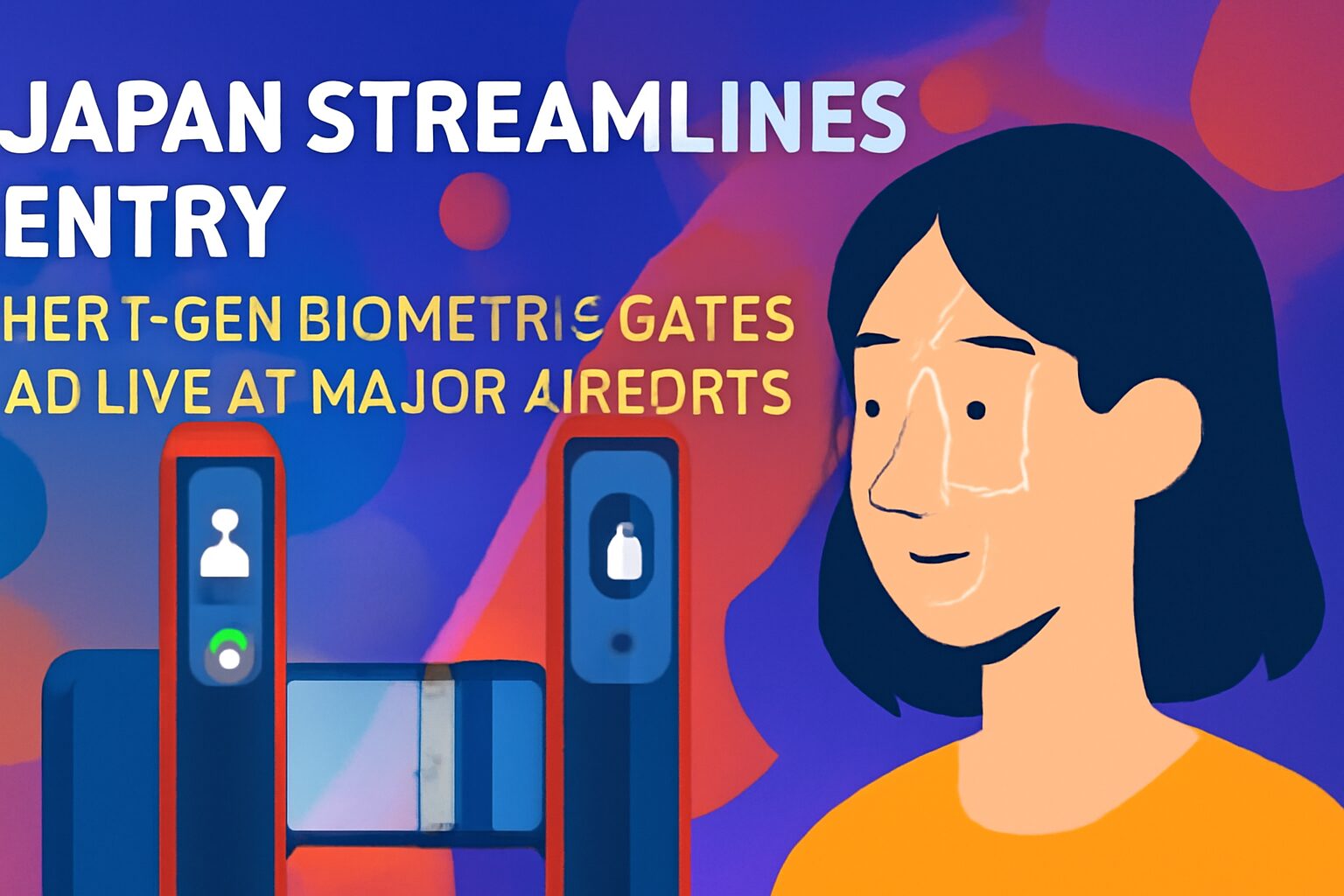
Japan is rolling out advanced biometric facial recognition gates at its major international airports, marking a significant step forward in enhancing the travel experience for international visitors. This move, which includes hubs like Narita (NRT) and Haneda (HND) airports in Tokyo, is designed to dramatically reduce immigration processing times, offering a seamless and touchless welcome to the country.
A Response to Surging Tourism
This technological upgrade is a direct response to Japan’s booming tourism industry. Before the pandemic, Japan welcomed a record 31.88 million international visitors in 2019. After a period of border closures, tourism has rebounded with incredible speed. In fact, March 2024 saw a new single-month record, with over 3 million visitors entering the country.
With the Japanese government setting an ambitious goal of attracting 60 million tourists annually by 2030, the pressure on airport infrastructure has been immense. Long queues at immigration have often been the first, and most frustrating, experience for travelers. The new biometric system is a key part of the national strategy to manage this influx efficiently and combat the congestion associated with overtourism.
How the New Biometric System Works
The process is remarkably simple and efficient for foreign travelers. Upon arrival, visitors approach the new e-gates. Here’s a quick look at the steps:
- Scan Your Passport: The traveler places their IC-chipped passport on the reader.
- Look at the Camera: A high-resolution camera captures a facial image.
- Instant Verification: The system instantly matches the live facial data with the photo stored in the passport’s IC chip.
Once the identity is verified, the gate opens, allowing the traveler to proceed to customs. This entire process can be completed in as little as 10 to 15 seconds, a stark contrast to the minutes-long wait often required for a traditional face-to-face inspection with an immigration officer. This touchless procedure also enhances hygiene, a welcome feature in the post-pandemic travel era.
The Impact on Your Travel Experience
Drastically Reduced Waiting Times
The most immediate benefit for travelers is the significant reduction in waiting times. By automating the identity verification process, airports can handle a higher volume of passengers without the corresponding increase in queues. This means less time spent in line and more time to enjoy your destination, whether you’re making a tight connection or heading straight into the city.
A Smoother First Impression
For many, the airport is the first impression of a country. A swift, technologically advanced, and stress-free entry process sets a positive tone for the entire trip. It demonstrates Japan’s commitment to omotenashi (Japanese hospitality) by respecting the traveler’s time and comfort from the moment they land.
Looking Ahead: The Future of Travel in Japan
The implementation of biometric gates is just the beginning. This initiative is part of a broader “Smart Airport” vision that aims to leverage technology across the entire passenger journey. We can expect to see this technology expand to more regional international airports in the near future, standardizing a high-efficiency entry process across the country.
Furthermore, this move solidifies Japan’s position as a leader in travel technology. As the nation prepares for major international events, such as the 2025 World Expo in Osaka, ensuring smooth and secure travel logistics is paramount. For visitors, this means that future trips to Japan are likely to become even more convenient and enjoyable, powered by smart, user-friendly technology.