Yo! So you’ve scrolled through your feed, seen the neon-drenched streets of Tokyo, and maybe even have a trip bookmarked. You think you’ve got the vibe down: serene temples, killer ramen, maybe some Ghibli magic. But then you see it—a video of a packed, ear-splittingly loud arcade where grown adults are losing their minds over… Pokémon? Not on a Switch, not on their phones, but on this massive, glowing machine, slapping buttons and collecting what look like oversized poker chips. And you’re probably thinking, “Hold up. I thought Pokémon was a cozy RPG I played in my pajamas. What is this intense, public spectacle?” That’s the disconnect, right? The gap between the Pokémon you know and the Pokémon of the Japanese gēsen, or game center. It’s a whole different beast, and honestly, it tells you so much more about modern Japan than a thousand cherry blossom pics ever could. This isn’t just about a game; it’s about third spaces, the obsession with collectibles, and a culture of public, focused hobbyism that’s totally unique. It’s a world where the hunt for a shiny Charizard becomes a legit spectator sport. Forget what you think you know. We’re about to dive deep into the chaotic, electric world of Japanese arcades, the real-life arenas where Pokémon trainers are forged in neon and noise. This is where the grind goes IRL.
To truly understand this unique culture of public hobbyism, you can explore how Japan’s distinct Pokémon fandom extends far beyond the arcade.
The Gēsen Vibe: More Than Just Games
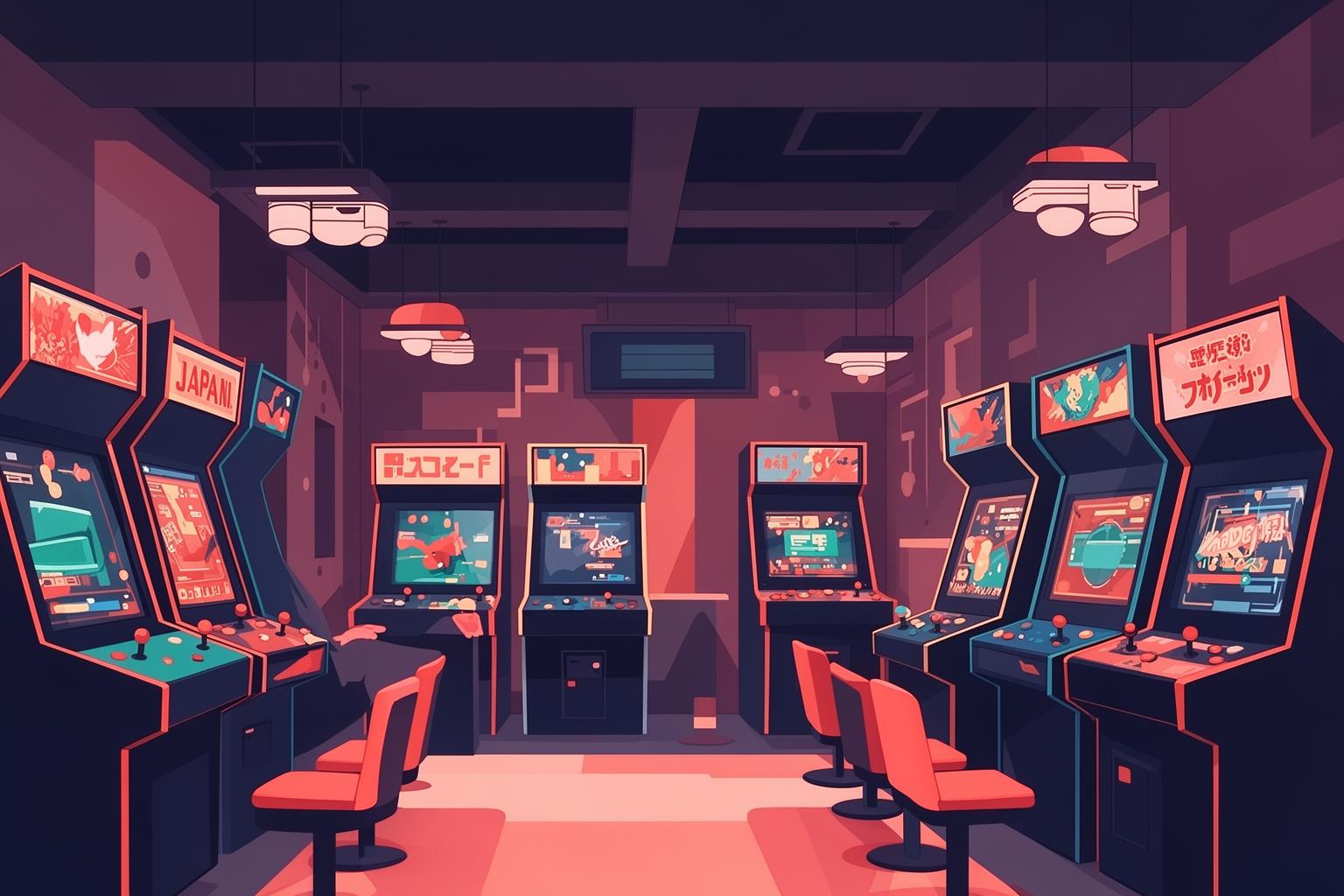
First off, you need to understand that a Japanese game center, or gēsen, is nothing like the sad little arcade corner you might find at your local mall back home, with sticky floors and a handful of lonely retro cabinets. Not even close. Walking into a major gēsen in places like Shibuya or Akihabara is a full sensory overload, and that’s exactly the point. It’s a deliberate and calculated chaos meant to whisk you away from the hyper-organized, often quiet reality of everyday Japanese life. The moment the automatic doors slide open, you’re hit by a wall of sound—a chaotic symphony of explosive sound effects, high-energy J-pop from rhythm games, the clatter of tokens in UFO catchers, and overlapping announcements from dozens of machines. This might be deemed a public nuisance anywhere else, but here, it’s the very lifeblood of the place. The air buzzes with a unique energy—a palpable vibe of focus and competition. This overwhelming atmosphere serves a vital social purpose. In a society where living spaces are tight and public behavior is generally reserved and quiet (think silent trains), the gēsen acts as an essential outlet. It’s a sanctioned environment to be loud, expressive, to shout in triumph or groan in defeat without judgment. It’s the nation’s communal living room for hobbies.
A Symphony of Chaos
The visual scene is just as intense as the auditory one. Rows upon rows of machines are packed so closely together you have to turn sideways to get through. Every surface blinks, flashes, and glows with hypnotic attract-mode animations. Towering rhythm game cabinets pulse with neon lights; crane games overflow with a rainbow of plushies and prizes, and battle game screens explode with combo effects. There’s no empty space; every inch is designed for maximum stimulation. This density mirrors urban Japanese life—maximizing limited space. But it also creates a sense of shared experience. You’re never truly playing alone. You’re physically close to the person next to you, silently involved in their game as they are in yours. You can feel the tension from the fighting game player on your left and hear cheers from the group gathered around the horse racing simulator behind you. This isn’t the isolated experience of gaming at home. It’s communal, performative, and deeply public. Even the air once carried a distinctive smell—a now-fading mix of cigarette smoke and electronics, though thankfully most places are now non-smoking. Still, the sensation of stepping into an alternate dimension, a pocket universe ruled by its own noise and light, remains powerful. This place is made to make the outside world, with its social expectations and quiet norms, vanish for a while.
It’s a Social Scene, Seriously
And here’s the crucial point many visitors overlook: a gēsen is fundamentally a social space. It’s a “third place,” neither home (the first place) nor work or school (the second place). It’s where communities form around shared passions. You’ll spot groups of high schoolers in uniform, pouring 100-yen coins into a four-player racing game, their friendly trash talk contributing to the overall roar. You’ll see couples on dates, trying (and usually failing) to win a giant plush from a UFO catcher—a classic Japanese dating ritual. Then there are the regulars, the jōren. These players are masters of their realm: perhaps a salaryman who visits every day after work to perfect his shoot-’em-up runs, or a young woman revered as a god at Taiko no Tatsujin. They claim informal territories within the arcade, favor certain machines, and have quiet reputations among their peers. People literally gather to watch them play—both for entertainment and to learn. Here, the arcade transcends mere amusement and becomes akin to a dojo or public gym. It’s a place for serious practice and mastery, and that dedication commands respect. For games like Pokémon, this social structure means everything. It’s not just you versus the machine—it’s about your place in the local community of trainers.
Decoding Pokémon Mezastar: It’s Not What You Think
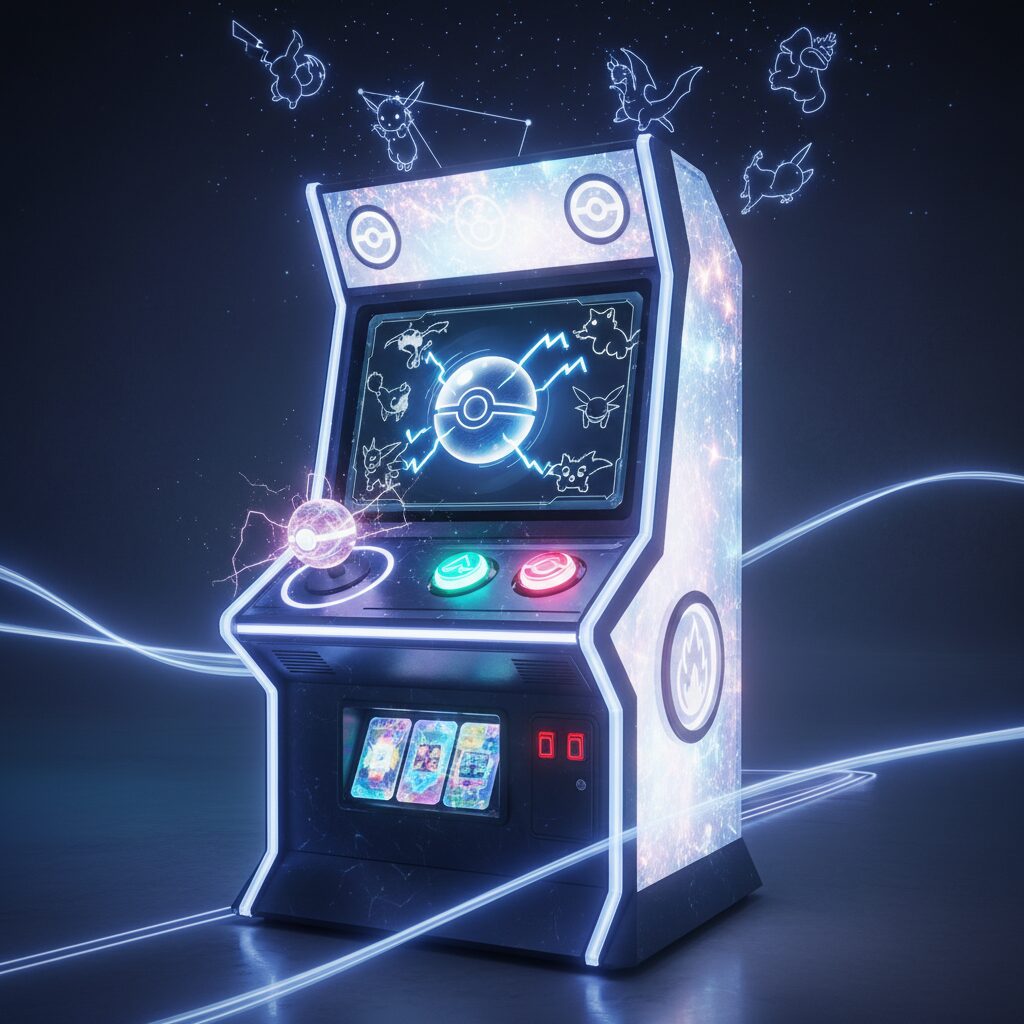
Alright, let’s dive into the main attraction: the Pokémon machine that’s sparking all the buzz. The reigning champion right now is a game called Pokémon Mezastar. You’ll want to immediately wipe away any notion of the slow-paced, turn-based RPG from your Game Boy past. Mezastar is an entirely different beast, designed specifically for the arcade setting. It’s hands-on, loud, and focuses on a physical, collectible element: tags. These are sturdy plastic rectangles, almost like dominoes, each featuring a different Pokémon with stats and star ratings printed on them. Instead of selecting a Pokémon from a digital menu, you physically pick up your tags and slam them into slots on the control panel to summon your team. This tactile interaction is a major part of its appeal. In a world going more digital every day, there’s a deep satisfaction in holding a real object that represents your progress and collection. It bridges the game to reality in a way a save file never could. The machine itself is imposing—a wide cabinet with a giant vertical screen, built to be a spectacle both for the player and for observers behind them. When a battle begins, the speakers blast, and the screen bursts with high-def animations far more dynamic than anything you’d see on a handheld console. It’s a full-on performance.
The Tag-Team Battle System
At first glance, the gameplay seems simple but it has layers that veterans have mastered. Battles are typically 2-on-2 or 3-on-3. You place your chosen Pokémon tags on the console, and they appear on screen, ready to fight. The core mechanic is timing-based. You mash buttons to build attack power, then time a spinning roulette wheel to determine how effective the attack will be. It’s straightforward enough for a six-year-old, but complex enough for adults to get deeply invested in perfecting their mash technique and timing. You can even buy a special controller accessory for maximum mashing efficiency. The real strategy, though, lies in team composition. The tags sport different types, abilities, and power levels, indicated by a rating from 1 to 5 stars, with the ultra-rare 6-star “Superstar” Pokémon being the ultimate prize. You fight through several rounds of wild Pokémon, and if you succeed, you enter “Get Time.” This is the climactic moment, blending Pokémon with the excitement of a slot machine. You toss a virtual Poké Ball, and the machine determines which of the Pokémon on screen you capture. With luck, you get the chance to catch the powerful boss Pokémon you just defeated.
The “Gotta Catch ‘Em All” IRL Grind
This core loop is what hooks players hard and is a masterclass in psychological design. When you “catch” a Pokémon, the machine physically dispenses a brand-new tag for that Pokémon right then and there. The clatter of a tag dropping into the retrieval slot is incredibly satisfying—it’s instant gratification made physical. Here’s where the grind—and the real money—come in. Each play costs 100 yen. But if you want to ensure you obtain a tag from a Pokémon you defeated, you often have to pay an additional 100 yen. And when a super-rare “Superstar” Pokémon appears? Everyone is pumping coins into the machine to boost their odds of catching it. The chase for these Superstar tags is the endgame. They boast significantly more power and eye-catching designs. Players spend thousands of yen hunting for a specific tag, like a shiny Rayquaza or Mewtwo. The secondary market for these tags is massive, with the rarest fetching hundreds of dollars online or in specialty stores. This creates a unique arcade dynamic. When a player faces a Superstar Pokémon, a crowd often gathers. The tension is palpable. Will they catch it? Witnessing someone land a catch and seeing that prized 6-star tag drop from the machine is a shared victory moment for everyone watching. It’s a public spectacle repeated hundreds of times daily in arcades across Japan, and it’s this blend of collection, chance-driven excitement, and communal drama that makes it so captivating.
The Unspoken Rules of the Arcade Arena
Like any subculture, the Japanese arcade scene has its own set of unspoken rules and etiquette. Breaking them won’t get you thrown out, but it will definitely mark you as an inexperienced outsider. Grasping this etiquette is essential to truly appreciating the culture, not just taking part in it. It reflects a microcosm of the Japanese social contract, where maintaining harmony and showing respect for others—even amid chaos—is paramount. For a game like Pokémon Mezastar, which often draws long lines of eager kids and dedicated adults, this etiquette is what preserves the peace and ensures everyone gets a turn without conflict. It’s all about reading the room and recognizing the subtle cues that govern the space. Here, you see a deep-rooted cultural preference for order and predictability in action, even in a place devoted to flashing lights and fantasy battles. It’s a fascinating paradox: a strict, unspoken system of rules that enables wild, expressive fun to unfold smoothly.
The Line-Up Etiquette
So, you’ve found a Pokémon Mezastar machine, but someone is already playing. How do you signal you’re next? This is the first lesson. Under no circumstances should you just stand there and hover awkwardly behind the player. This is seen as rude and puts undue pressure on them. Instead, look for the queue. Sometimes there’s a formal, roped-off line, especially on weekends when new, popular tags are released. More often, though, it’s an informal arrangement. The accepted method is to place your marker on the machine’s dashboard or a designated waiting area beside it. This marker is usually a 100-yen coin or, for regulars, their personal Pokémon tag case. This is the silent way of saying, “I’m next.” Everyone who arrives afterward places their coin or case behind yours, creating a neat line of objects. This system is elegantly efficient. It lets you hold your place without physically standing in line, freeing you to watch others play or even try another game nearby, provided you return when your turn comes. It’s a system founded on trust and mutual respect. By following it properly, you demonstrate your respect for local customs and fellow players. It’s a small gesture that goes a long way in helping you fit into the scene.
Watching the Pros: Learning by Observing
Another important aspect of arcade etiquette is the culture of observation. In many Western cultures, staring at someone playing a game might feel odd or confrontational. In a Japanese gēsen, it’s a fundamental part of the experience. Watching skilled players is not just accepted—it’s encouraged. It’s how you learn deeper strategies of the game. You’ll see kids watching adults, and adults watching teenagers who have mastered a particular rhythm game. There’s no shame in being a spectator. For many, it’s as entertaining as playing. When you watch someone play Pokémon Mezastar, give them space, but don’t hesitate to get a clear view of the screen. You can learn a lot by observing which tags the pros combine, how they tackle different boss battles, and the rhythms of their button presses. If a player is particularly skilled or engaged in a high-stakes battle against a Superstar Pokémon, you’ll notice a small, respectful crowd gathering behind them. The atmosphere is quiet and focused. People aren’t chatting or distracting the player; they’re collectively invested in the outcome. It’s like watching a chess match or a golf putt. This shared focus fosters a strong sense of community. When the player wins (or loses), there’s a quiet, mutual acknowledgment of the effort and result. It turns a simple game into a public performance, where for that moment, the player is a star and the watchers are their audience.
Where to Find the Action: The Real Hotbeds
So you’ve got the theory down and are ready to witness these battles in real life. But where do you actually go? While Pokémon Mezastar machines can be found in arcades scattered across Japan—from bustling cities to quiet rural towns—the intensity and atmosphere vary greatly by location. Choosing where to play depends on the experience you want. Are you seeking the highest level of competition, where pros vie for the rarest tags? Or do you prefer a more relaxed, family-friendly setting where you can try the game without feeling overwhelmed? The location matters immensely. The player demographics, the pressure of the queues, and the overall vibe of the gēsen are shaped by its neighborhood. From the vibrant heart of otaku culture to a calm suburban mall, each spot offers a unique glimpse into this captivating subculture.
Akihabara: The Electric Mecca
The most obvious choice is Akihabara. This Tokyo district is the undisputed global hub for anime, manga, and gaming culture. Arcades here are more than just arcades—they are multi-story gaming cathedrals. Landmarks like the iconic GiGO buildings (formerly SEGA-operated) and Taito Stations often span six or seven floors, each dedicated to a different genre. The Pokémon Mezastar sections are serious arenas. Expect long rows of machines with well-ordered queues, especially on weekends. The players are a mix of hardcore regulars, tourists drawn by legends, and collectors from across Japan chasing rare tags. Competition is fierce, and skill levels are notably high. You’ll see players with massive, custom-decorated tag cases holding meticulously organized collections. They know every type matchup and optimal strategy inside out. The atmosphere is intense and focused. While it might feel intimidating to a newcomer, Akihabara offers the most passionate and dedicated glimpse of this culture. It’s the premier league of arcade Pokémon battles.
Ikebukuro: The Alternative Hub
If Akihabara feels too intense or you’re after a different slice of otaku culture, try Ikebukuro. This sprawling district on Tokyo’s west side is another major center for anime and gaming but carries a distinct vibe. Historically, Akihabara has been more male-focused, while Ikebukuro is famous for Otome Road—a street catering primarily to female fans. This influences the whole area’s ambiance. Arcades like the sprawling Round1 Stadium or the local GiGO are just as busy and competitive as those in Akihabara, but the crowd is more diverse. You’ll spot more groups of young women, couples, and a generally more relaxed mood. The Pokémon Mezastar scene is lively, with dedicated players and long queues, but it feels more approachable. Ikebukuro offers a fantastic snapshot of the game’s broad appeal across gender and age. It’s an excellent spot to people-watch and observe a wider cross-section of the gaming community in their natural environment. It proves that the pursuit of a Superstar Pikachu is truly universal.
The Suburban Sanctuary: The Local Gēsen
For perhaps the most authentic and low-pressure experience, head beyond the city center. Visit any large shopping mall in the suburbs of Tokyo, Osaka, or other major Japanese cities. Hidden in a corner of nearly every Aeon Mall or LaLaport, you’ll find a gēsen. These suburban arcades contrast sharply with Akihabara’s hardcore gaming arenas. The atmosphere is notably more family-oriented. Here, elementary school children, often accompanied by patient (and funding) parents, are the primary Pokémon Mezastar players. This is where you see the culture at its grassroots. Queues are shorter, the pressure is lighter, and the community feels warmer and more local. Kids trade duplicate tags, share strategies, and celebrate their catches together. It’s less about professional-level competition and more about simple, pure enjoyment. For non-Japanese visitors, this is an ideal place to try the game for the first time—you can learn the basics without feeling scrutinized by experts. It offers a wholesome, insightful look at how this hobby is passed down through generations, ensuring the Japanese gēsen culture thrives far from the city’s bright lights.
Beyond the Battle: Why It Matters
So, ultimately, why does a loud, costly, and repetitive Pokémon arcade game attract such a dedicated following in Japan? It’s because it’s much more than merely a game. It embodies a perfect blend of several fundamental aspects of contemporary Japanese culture. It taps into the deeply rooted passion for collecting, the shūshū culture seen in everything from gachapon capsule toys to limited-edition train stamps. The drive to complete a set and own a physical representation of every character is a powerful incentive. The game also highlights the ongoing importance of the “third place.” In a country where homes are small and work hours are long, having a public space to unwind and enjoy a hobby is not a luxury but a necessity. The gēsen is a loud, chaotic, yet strangely orderly haven where people connect with a community that shares their enthusiasm. It’s a space to be an individual while doing so alongside others. Moreover, the commitment shown by the top players reflects the spirit of monozukuri—the Japanese dedication to craftsmanship and perfection. Whether crafting a sword, arranging flowers, or attaining the perfect score in a video game, the pursuit of mastery is a culturally revered ideal. The regulars at the Pokémon Mezastar machine, with their encyclopedic knowledge and refined techniques, are simply applying this principle to a contemporary pastime. So, next time you pass a Japanese arcade and hear the familiar roar of a Pokémon battle, don’t simply write it off as children’s play. Look closer. You’re witnessing a vibrant cultural stage, a modern dojo where strategy is challenged, collections are formed, and communities are built, one 100-yen coin at a time. It’s a tangible reflection of a digital obsession, and in its chaotic, neon-lit splendor, it stands as one of the most genuinely modern Japanese experiences available.