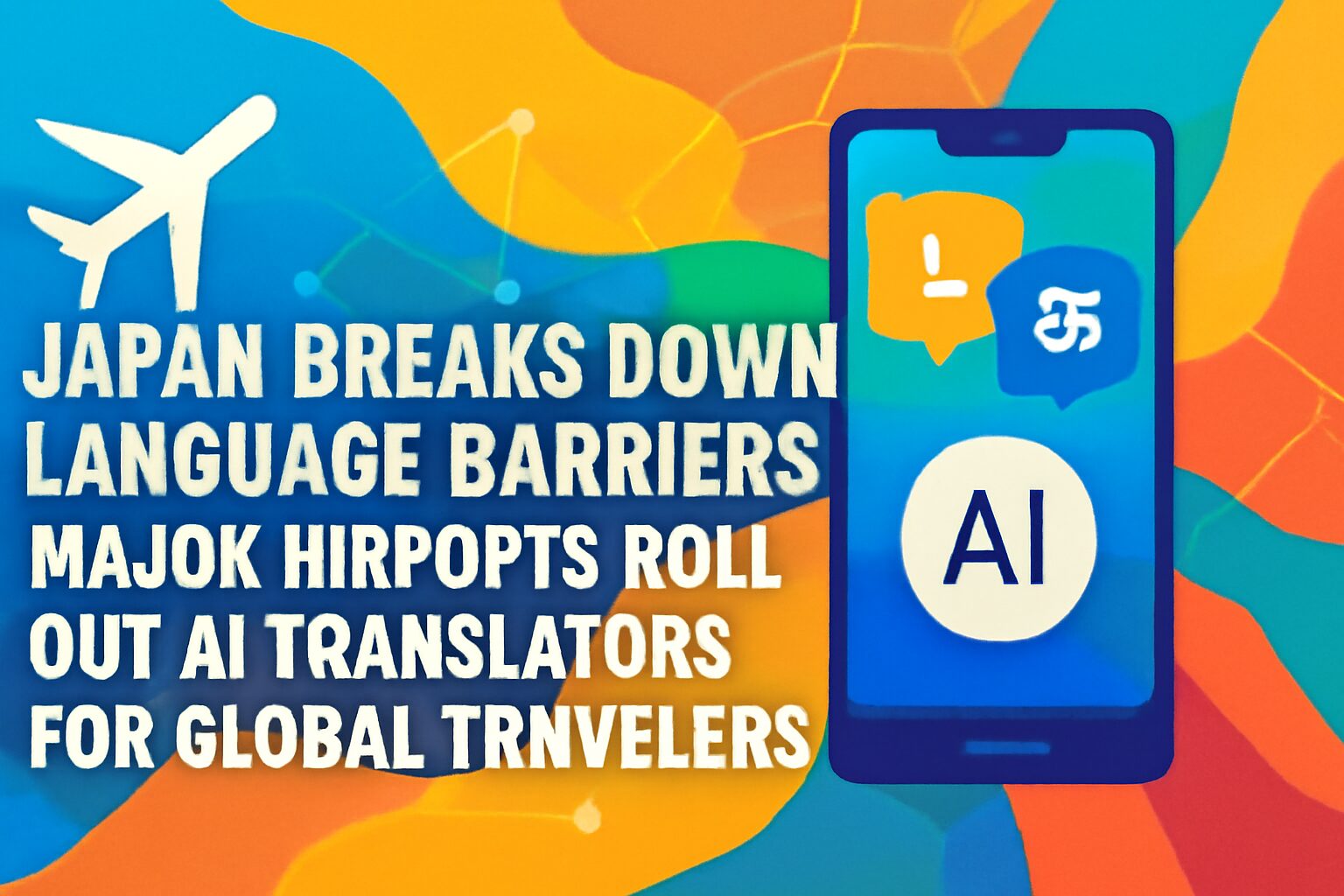
Japan is taking a significant leap forward in enhancing the travel experience for international visitors. Narita and Kansai International Airports, two of the nation’s busiest gateways, have begun deploying state-of-the-art AI-powered translation devices at key service points, signaling a new era of seamless communication for travelers from around the globe.
A Tech-Forward Welcome at Japan’s Busiest Hubs
Arriving in a country where you don’t speak the language can be daunting. Japan is addressing this head-on. The new real-time translation devices, now operational at information counters and security checkpoints, are designed to eliminate communication friction.
This powerful technology supports over 80 languages, offering instant, two-way voice translation. Whether a traveler needs to ask for directions, inquire about a connecting flight, or understand security procedures, the devices provide a clear and immediate bridge between airport staff and visitors. This move is a direct response to the practical challenges faced by both tourists and airport personnel, aiming to make every interaction smoother and more efficient.
Why Now? Responding to a Record-Breaking Tourism Surge
The timing of this initiative is no coincidence. Japan is currently experiencing an unprecedented tourism boom. According to the Japan National Tourism Organization (JNTO), the country welcomed over 25 million visitors in 2023. This trend has only accelerated, with March 2024 marking a historic milestone as the number of monthly visitors surpassed 3 million for the first time.
This surge places immense pressure on infrastructure and staff, particularly those in multilingual roles. The AI translation devices serve as a practical solution to labor shortages while ensuring a high standard of service. Furthermore, with major international events on the horizon, most notably the World Expo 2025 in Osaka, Kansai, ensuring smooth operations is a national priority. This technological investment is a key part of Japan’s strategy to not only manage the influx but also to solidify its reputation as a world-class, welcoming destination.
The Future of Japanese Hospitality: A Seamless Journey Awaits
The introduction of AI translators at major airports is expected to have a ripple effect across Japan’s entire tourism industry.
An Enhanced Traveler Experience
For visitors, the impact is immediate. The reduction in language barriers means less stress, shorter wait times, and a greater sense of security and confidence when navigating complex airport environments. This allows travelers to focus on the excitement of their journey from the moment they land.
Empowering Staff and Elevating ‘Omotenashi’
This technology also empowers airport staff. By handling the linguistic heavy lifting, the devices free up personnel to focus on providing the nuanced, heartfelt service known as omotenashi, or Japanese hospitality. It’s a perfect blend of high-tech efficiency and high-touch human interaction.
A Glimpse into the Future
The success of this deployment at Narita and Kansai will likely pave the way for wider adoption. We can expect to see similar technology appearing in other airports, major train stations, hotels, and tourist attractions across the country. This initiative represents more than just a convenience; it’s a step towards a future where technology makes travel more accessible and enjoyable for everyone, regardless of their native language.
In conclusion, Japan’s investment in AI translation technology is a clear signal of its commitment to global travelers. It’s a forward-thinking move that not only addresses current challenges but also enhances the very essence of its celebrated hospitality, promising an even more welcoming and seamless experience for all who visit the Land of the Rising Sun.