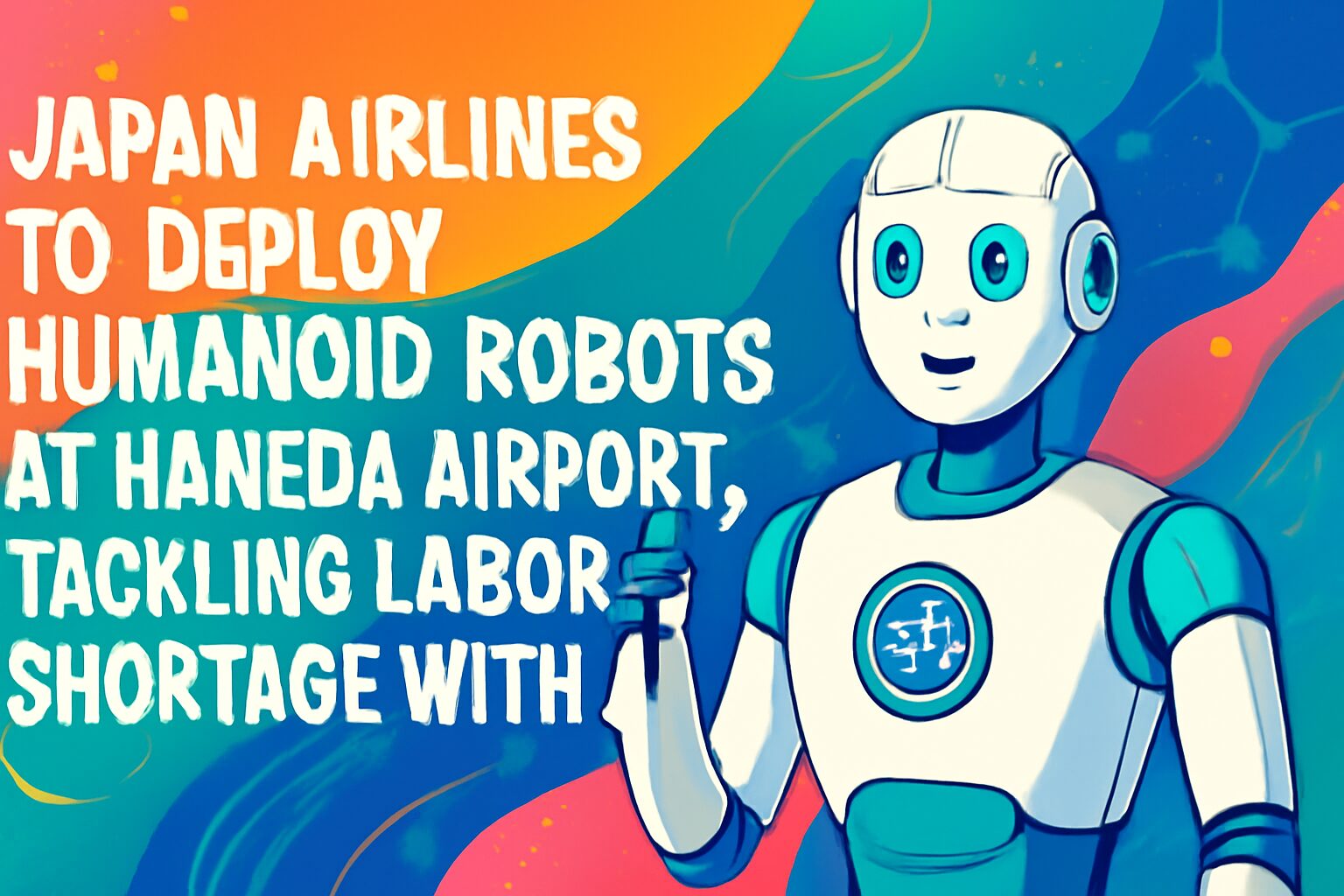
In a landmark move to navigate Japan’s pressing labor shortages and booming tourism, Japan Airlines (JAL) has announced a futuristic solution: the deployment of AI-powered humanoid robots for ground handling operations at Tokyo’s Haneda Airport. This initiative marks a significant step towards automating airport logistics and could redefine the future of air travel.
The Perfect Storm: Why Robots are Needed Now
JAL’s decision is a strategic response to a dual challenge facing Japan: a shrinking workforce and a record-breaking influx of tourists.
Japan is grappling with a severe demographic shift. The nation’s workforce has been shrinking for years due to a declining birthrate and an aging population. The logistics and transportation sectors are among the hardest hit. This labor scarcity is further compounded by the “2024 Problem,” new government regulations that cap overtime hours for workers in these industries, putting immense pressure on operations like airport ground handling.
Simultaneously, Japan’s tourism industry is experiencing a massive rebound. In 2023, the country welcomed over 25 million international visitors. The figures for 2024 are on track to surpass pre-pandemic levels, placing an unprecedented strain on airport infrastructure and personnel. The increased flight frequency and passenger volume demand a more efficient and sustainable operational model.
A Glimpse into the Future of Airport Operations
The two-year trial, set to begin in May 2026, is a collaboration between JAL and the technology firm GMO AI & Robotics.
The Plan in Motion
The initial phase will see these advanced humanoid robots take on the physically demanding task of loading and unloading cargo and baggage containers from aircraft. The long-term vision is to expand their responsibilities to include handling individual passenger luggage and even performing in-cabin cleaning between flights.
The Humanoid Advantage
The choice of humanoid robots is a key strategic element. Unlike specialized, single-task machinery, these robots are designed to operate within existing airport environments and use current equipment. This “plug-and-play” approach means they can be integrated into the workflow without the need for massive, costly infrastructure overhauls, making the transition smoother and more cost-effective.
What This Means for Travelers and the Aviation Industry
While the robots will be working behind the scenes, their impact will be directly felt by passengers.
Enhanced Efficiency and Punctuality
By automating labor-intensive tasks, JAL aims to create a more resilient and efficient ground handling system. This can significantly reduce aircraft turnaround times, leading to fewer delays and improved on-time performance. For an airline like JAL, already renowned for its world-class punctuality, this initiative reinforces its commitment to operational excellence.
A Smoother Passenger Journey
A more efficient baggage handling process could lead to faster delivery of luggage to the carousel and a potential reduction in mishandled or lost bags. Furthermore, automating these physical roles will allow human staff to be redeployed to more complex, customer-facing positions, enhancing the quality of passenger service throughout the airport.
A Blueprint for Global Aviation
This trial at Haneda, one of the world’s busiest airports, will be closely watched by the global aviation industry. If successful, it could serve as a blueprint for other airports and airlines facing similar labor challenges. Japan’s pioneering effort may well accelerate the adoption of robotic technology in airports worldwide, heralding a new era of automated aviation logistics.
JAL’s initiative is more than just a technological experiment; it is a necessary adaptation to profound economic and demographic shifts. For travelers, it promises a future of more reliable, seamless, and efficient air travel. As the first robots prepare to report for duty in 2026, Haneda Airport is set to become a live showcase for the future of the airline industry.