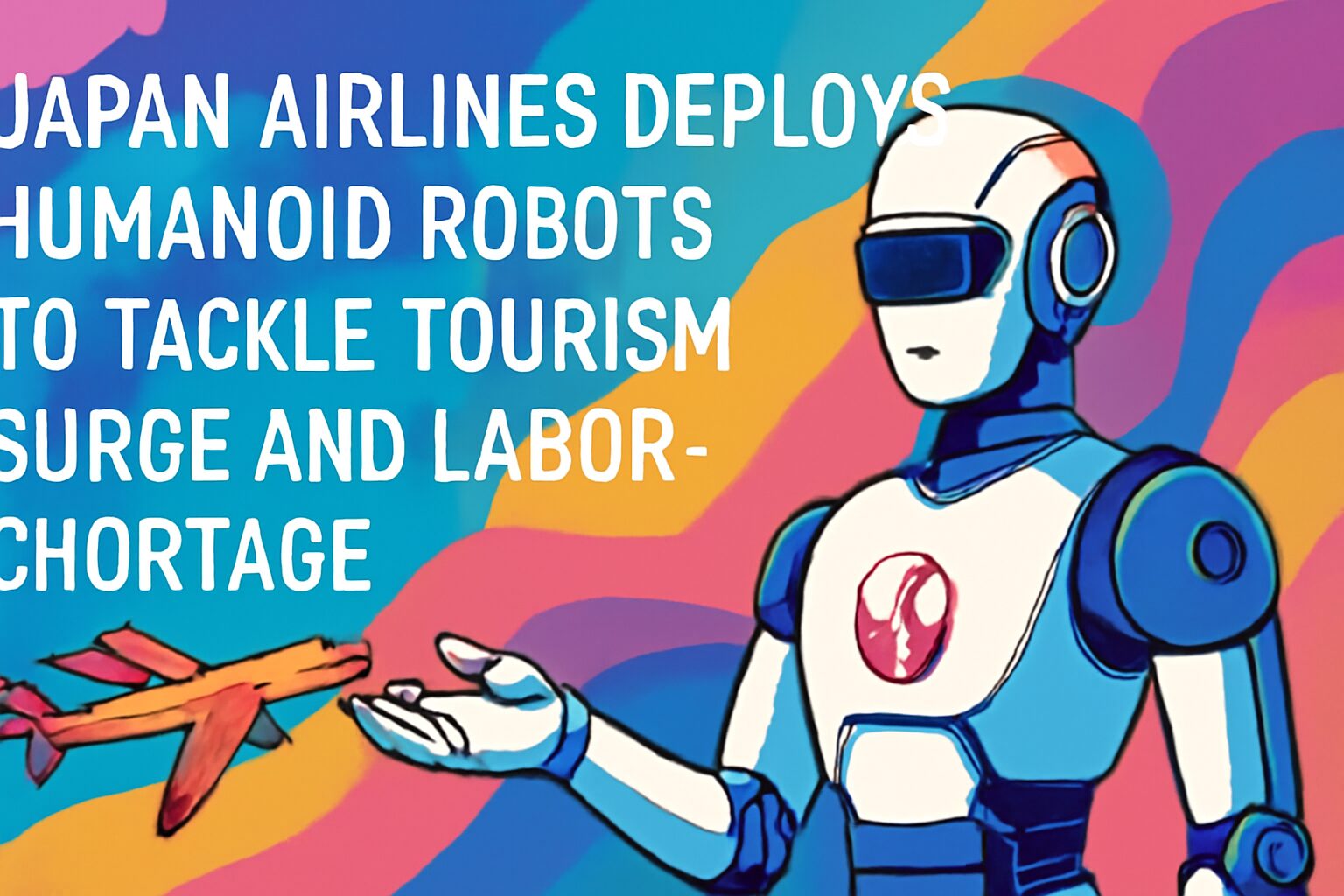
A New Era of Automation at Haneda Airport
In a bold move to address the dual challenges of a record-breaking tourism boom and a persistent labor shortage, Japan Airlines (JAL) has announced a two-year trial of humanoid robots for baggage handling at Tokyo’s Haneda Airport. This initiative signals a significant leap forward in integrating advanced automation into Japan’s travel infrastructure, aiming to create a more efficient and resilient airport experience for a rapidly growing number of international visitors.
Background: The Perfect Storm of Record Tourism and a Shrinking Workforce
Japan is currently experiencing an unprecedented influx of international tourists. According to the Japan National Tourism Organization (JNTO), the country welcomed over 3 million visitors in March 2024 alone, the first time this monthly figure has ever been surpassed. This surge follows a strong recovery in 2023, which saw over 25 million visitors, and the trend is expected to continue.
However, this tourism success story is unfolding against the backdrop of a critical domestic issue: a severe labor shortage. Japan’s aging and declining population has put immense pressure on industries across the board, with the service and transportation sectors being hit particularly hard. Airports, the primary gateways to the country, are at the forefront of this struggle, facing difficulties in recruiting and retaining staff for physically demanding roles like baggage handling. JAL’s robotic trial is a direct and strategic response to this pressing reality.
The Haneda Trial: How Robots Will Support Human Staff
The two-year trial at Haneda Airport will see advanced humanoid robots deployed to handle the physically intensive task of loading and unloading luggage. The primary goals of this project are:
- Increased Efficiency: The robots are designed to work consistently and quickly, potentially speeding up baggage processing times and ensuring flights depart on schedule.
- Supporting Human Workers: By automating strenuous physical labor, JAL aims to reduce the risk of injury and alleviate the physical burden on its ground staff. This allows human employees to be redeployed to more complex, supervisory, or customer-facing roles that require critical thinking and interpersonal skills.
- A Test for the Future: This trial serves as a crucial test case. JAL will gather data on the robots’ performance, reliability, and integration with existing airport systems to determine the feasibility of a wider rollout.
Future Outlook: The Impact on Travel in Japan and Beyond
The success of JAL’s initiative could have far-reaching implications for the future of air travel.
For the Traveler
For passengers, the most immediate benefit could be a smoother and faster airport experience. Efficient robotic baggage handling may lead to shorter wait times at the carousel and a lower incidence of lost or mishandled luggage. This technological upgrade promises to enhance the overall journey, allowing visitors to start their Japan adventure with less stress.
For the Aviation Industry
If the trial proves successful, it could set a new standard for airport operations not only in Japan but globally. Other airlines and airports facing similar labor challenges will be watching closely. We may see a future where human-robot collaboration becomes the norm in ground handling, from baggage and cargo to aircraft servicing.
A New Form of “Omotenashi”
This move does not signal an end to Japan’s famed hospitality, or omotenashi. Instead, it represents an evolution. By freeing human staff from repetitive, physically demanding tasks, it allows them to focus on what they do best: providing nuanced, empathetic, and personal service to travelers. The future of Japanese hospitality may be one where technology handles the logistics, while humans deliver the heartfelt welcome.
Ultimately, JAL’s forward-thinking approach is more than just a technological experiment; it is a vital step in future-proofing Japan’s travel industry, ensuring the country can continue to welcome the world with efficiency, safety, and a touch of robotic innovation.