A Response to Japan’s Twin Challenges: A Shrinking Workforce and a Tourism Surge
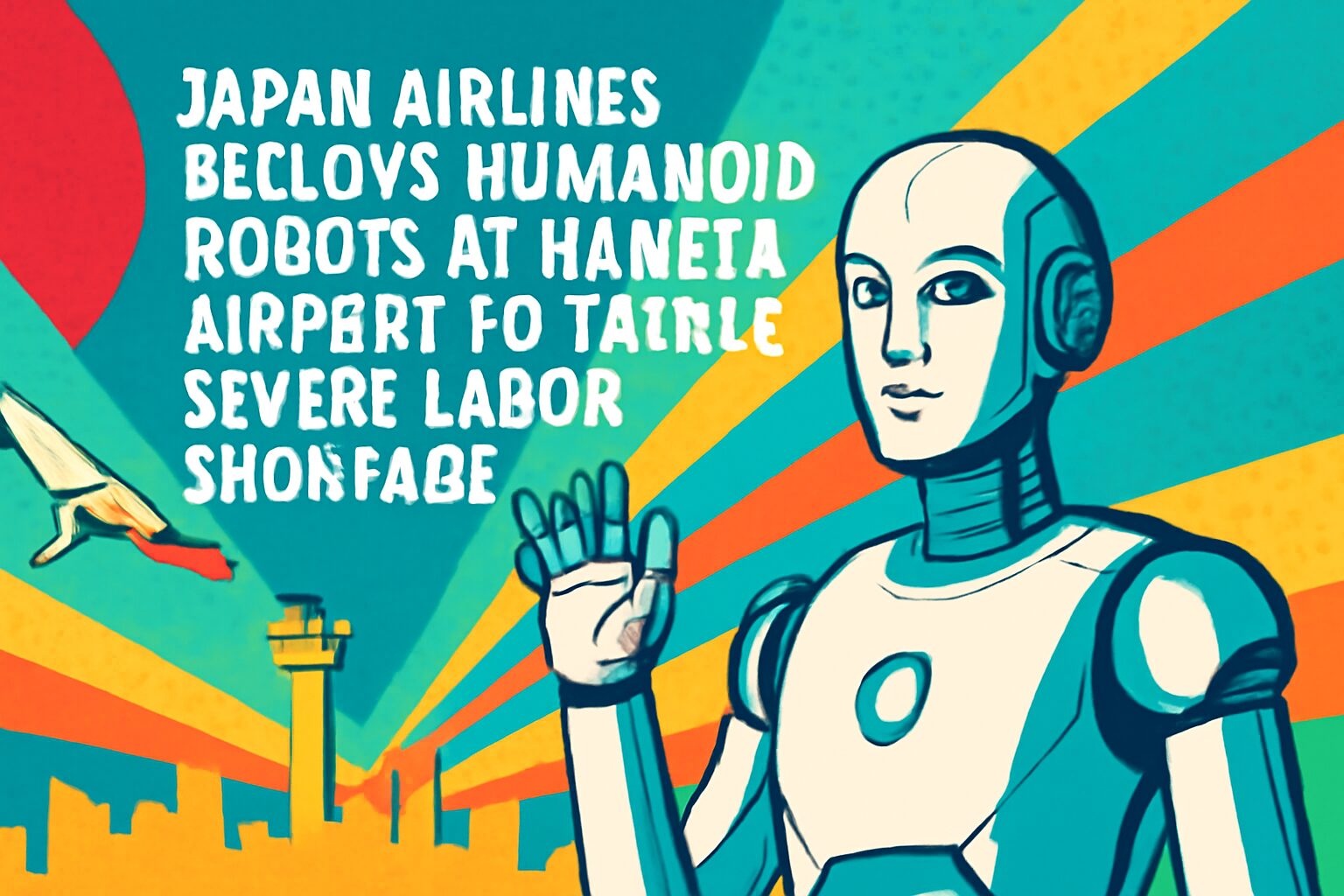
Japan Airlines (JAL) is set to embark on a pioneering two-year trial, deploying humanoid robots for ground handling operations at Tokyo’s Haneda Airport starting this May. This bold initiative, developed in partnership with GMO AI & Robotics, aims to directly address one of Japan’s most pressing socio-economic issues: a critical labor shortage exacerbated by a post-pandemic surge in international tourism.
The trial marks a significant step towards automation in an industry that has traditionally relied heavily on human labor. Initially, the robots will be tasked with assisting in the physically demanding work of loading and unloading cargo containers from aircraft, a crucial step in ensuring on-time departures.
The Driving Forces: Demographics and a Record-Breaking Influx of Tourists
The decision to integrate robotics is not a matter of choice, but of necessity. Japan is facing a demographic crisis, with a rapidly aging population and a declining birthrate leading to a shrinking workforce. As of 2023, nearly 30% of Japan’s population was aged 65 or older, putting immense strain on labor-intensive sectors like transportation and logistics. The aviation industry, in particular, has struggled to recruit and retain ground staff, a challenge commonly referred to as the “2024 Problem” in the broader logistics field.
Compounding this issue is the unprecedented boom in inbound tourism. Following the full reopening of its borders, Japan has seen a massive influx of international visitors. According to the Japan National Tourism Organization (JNTO), the country welcomed over 25 million tourists in 2023. This trend has accelerated dramatically in 2024, with March alone setting an all-time monthly record of over 3 million visitors. This surge, while a boon for the economy, places enormous pressure on airport infrastructure and staff, from check-in counters to the tarmac.
Robots on the Tarmac: A Glimpse into the Future of Ground Handling
The humanoid robots selected for the trial are designed to work alongside human staff, alleviating the most strenuous physical tasks. By taking over the repetitive and heavy lifting involved with cargo containers, JAL hopes to create a safer and more sustainable working environment for its existing employees, allowing them to focus on more complex, supervisory, and skilled roles.
The two-year trial period will serve as a crucial data-gathering phase. JAL and its partners will meticulously evaluate the robots’ efficiency, durability, and ability to operate safely in the dynamic and fast-paced airport environment.
Potential for Expansion and Industry-Wide Impact
If the initial phase proves successful, JAL envisions expanding the robots’ responsibilities. Future tasks could include cleaning aircraft cabins, performing routine aircraft maintenance checks, and assisting with other ground support duties. This would not only improve operational efficiency but also ensure a higher standard of service and cleanliness for passengers.
The implications of this trial extend far beyond Japan Airlines. It could serve as a blueprint for other airlines and airports across Japan and globally that face similar labor challenges. A successful implementation would solidify Japan’s reputation as a leader in robotics and a pioneer in leveraging technology to solve complex societal problems.
For international travelers, the long-term benefits could be significant. The automation of key ground handling tasks could lead to:
- Reduced Delays: More efficient and reliable luggage and cargo handling can contribute to better on-time performance.
- Improved Baggage Handling: Automation can minimize the risk of human error, potentially leading to fewer instances of lost or damaged luggage.
- Enhanced Service: With human staff freed from physically taxing roles, they can be redeployed to customer-facing positions, improving the overall passenger experience.
JAL’s initiative is more than just an experiment with new technology. It represents a forward-thinking strategy to ensure the long-term sustainability and growth of Japan’s aviation industry, promising a future where technology and human expertise work in harmony to keep the world connected.