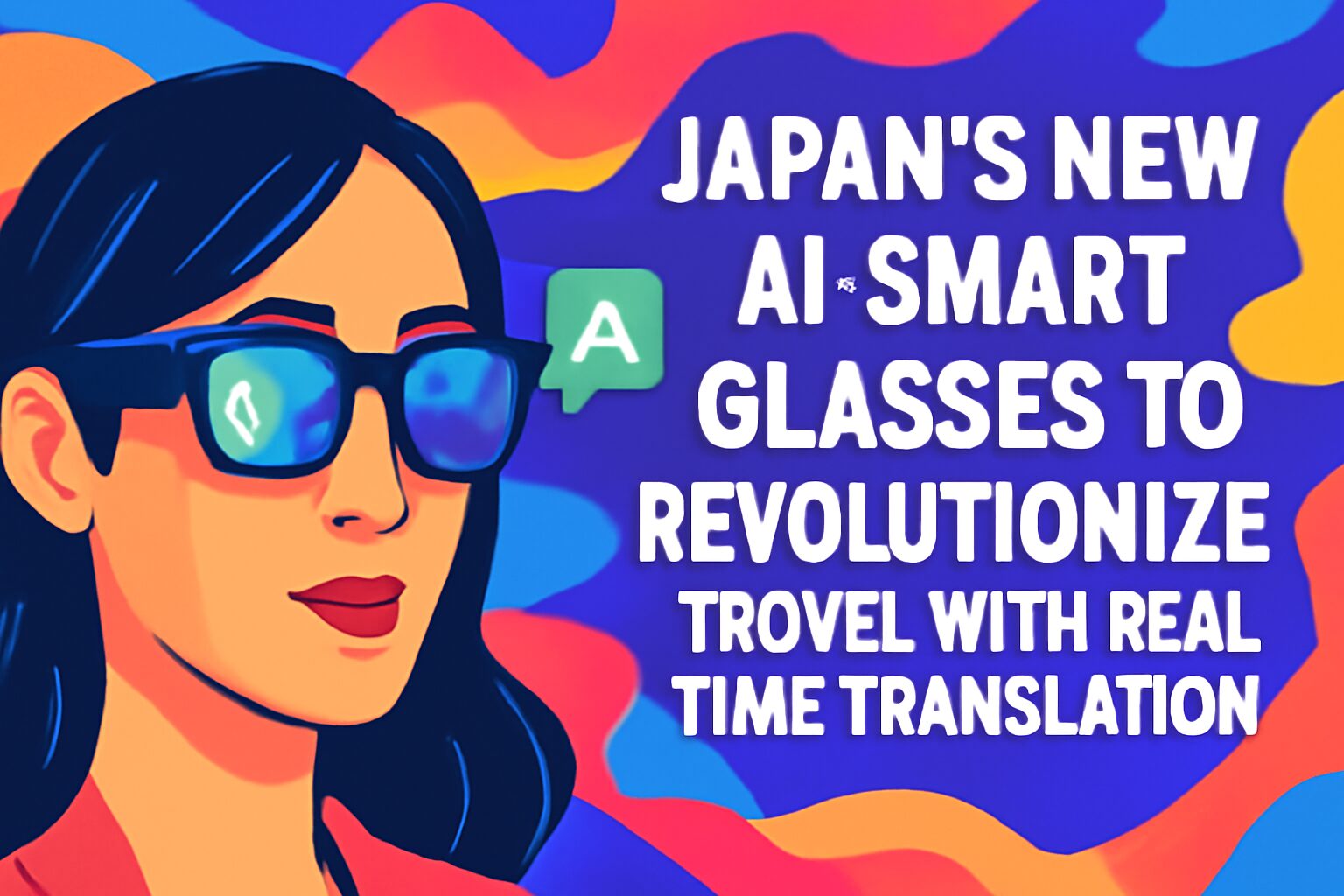
A Japanese electronics firm has pulled back the curtain on a groundbreaking prototype that could redefine how we experience international travel. The new lightweight AI-powered smart glasses promise to tear down one of the most significant barriers for tourists in Japan and beyond: language. By offering real-time translation and seamless navigation, this device aims to turn every traveler into a confident explorer.
The Context: Bridging the Communication Gap in a Tourism Boom
Japan is currently experiencing a massive resurgence in international tourism. In 2023, the country welcomed over 25 million foreign visitors, a figure that signals a strong recovery and a return to its status as a top global destination. However, many travelers still face a common challenge: the language barrier.
According to the 2023 EF English Proficiency Index, Japan is ranked in the “Low Proficiency” band. While hospitality in major cities is world-class, venturing off the beaten path can often be intimidating for those who don’t speak Japanese. This technological innovation directly addresses that pain point, arriving at a time when the need for accessible communication tools has never been greater. It represents Japan’s strategic push to leverage its technological prowess to enhance its tourism infrastructure.
A Closer Look at the Technology
So, what makes these smart glasses a potential game-changer? It’s the integration of several key features designed specifically for the modern traveler.
Real-Time Subtitles for Your World
The core function is its powerful voice-to-text translation engine. When someone speaks in a foreign language, the glasses capture the audio and display translated subtitles directly in the user’s field of vision, almost like a scene from a sci-fi movie. This hands-free approach allows for more natural conversations, whether ordering food at a local ramen shop, asking for directions, or engaging with cultural exhibits.
Integrated Navigation and Local Info
Beyond translation, the device integrates with local transport and mapping systems. Imagine navigating Tokyo’s labyrinthine Shinjuku Station with directional arrows appearing in your line of sight, or getting real-time information about bus schedules in a rural town. This feature aims to eliminate the stress of deciphering complex transit maps and empowers travelers to explore with unparalleled ease.
The Future of Travel: Potential Impacts and Challenges
The introduction of such a device could have a profound impact on how we travel, not just in Japan but globally.
Transforming the Traveler Experience
For solo travelers and those seeking authentic, unscripted experiences, these glasses could be revolutionary. The technology encourages deeper cultural immersion by enabling spontaneous interactions with local residents. It could also boost tourism to more remote, less-trafficked regions of Japan, as visitors will feel more confident exploring areas where English is rarely spoken.
Market Implications
The smart glasses market is competitive, but by focusing on the specific niche of travel, this Japanese firm has carved out a unique position. If successful, it could spur a new category of travel-focused wearable technology. We may also see hotels, airports, and tourist attractions developing compatible applications to provide guests with an even more integrated experience.
Hurdles to Overcome
Of course, challenges remain. The accuracy of AI translation in noisy environments, the device’s battery life, and its price point will be critical factors for its adoption. Furthermore, questions around data privacy—both for the user and for the people being translated—will need to be carefully addressed to build public trust.
What’s Next?
The company has announced its intention to release the smart glasses ahead of the next major international event in Japan. This timeline strongly suggests a launch timed for the World Expo 2025 in Osaka, an event expected to draw millions of visitors from around the globe.
These AI-powered smart glasses are more than just a clever gadget; they represent a vision for a more connected and accessible world. By breaking down language barriers, this technology doesn’t just make travel easier—it makes it more human. The journey to a truly frictionless travel experience is underway, and Japan is once again leading the charge.