Alright, so you’ve done it. You’ve been to Japan. You squeezed onto the Yamanote Line, you ate ramen that changed your life, and you took that killer photo at Fushimi Inari in Kyoto, weaving through the thousands of vermilion gates. You saw the Great Buddha at Todai-ji, maybe you even got bowed at by a deer in Nara. It was epic, for sure. But, if you’re anything like me, maybe a tiny part of you felt like you were on a beautifully curated movie set. You saw the highlights, the greatest hits album of Japanese culture. But where was that other Japan? The one you feel more than see. The one whispered about in folklore, the one that animates the background of every Studio Ghibli film—the Japan that feels ancient, a little bit weird, and profoundly, deeply spiritual in a way that’s hard to put your finger on. You’re wondering where you can find that eerie, silent vibe, where the air itself feels thick with stories and you half-expect a forest spirit to peek out from behind a mossy lantern. You’re ready for another Japan, a deeper dive into the mystical side of things, where the Kami (the gods, the spirits, the essences) and the Yokai (the supernatural critters and ghosts) feel less like characters in a book and more like the neighbours you just haven’t met yet. If that’s the headspace you’re in, then forget the city temples for a minute. The experience you’re looking for is waiting for you, tucked away down forgotten country roads, deep in cedar forests, at the rural shrines that dot the Japanese landscape like quiet, sleeping sentinels. This is your guide to finding and, more importantly, understanding that palpable, eerie presence that makes these places so legendary.
If you’re ready to embrace the imperfections and deeper stories of Japan, consider how the philosophy of kintsugi can transform your next journey.
Ditching the Tourist Trail: Why the Vibe is Different Out Here
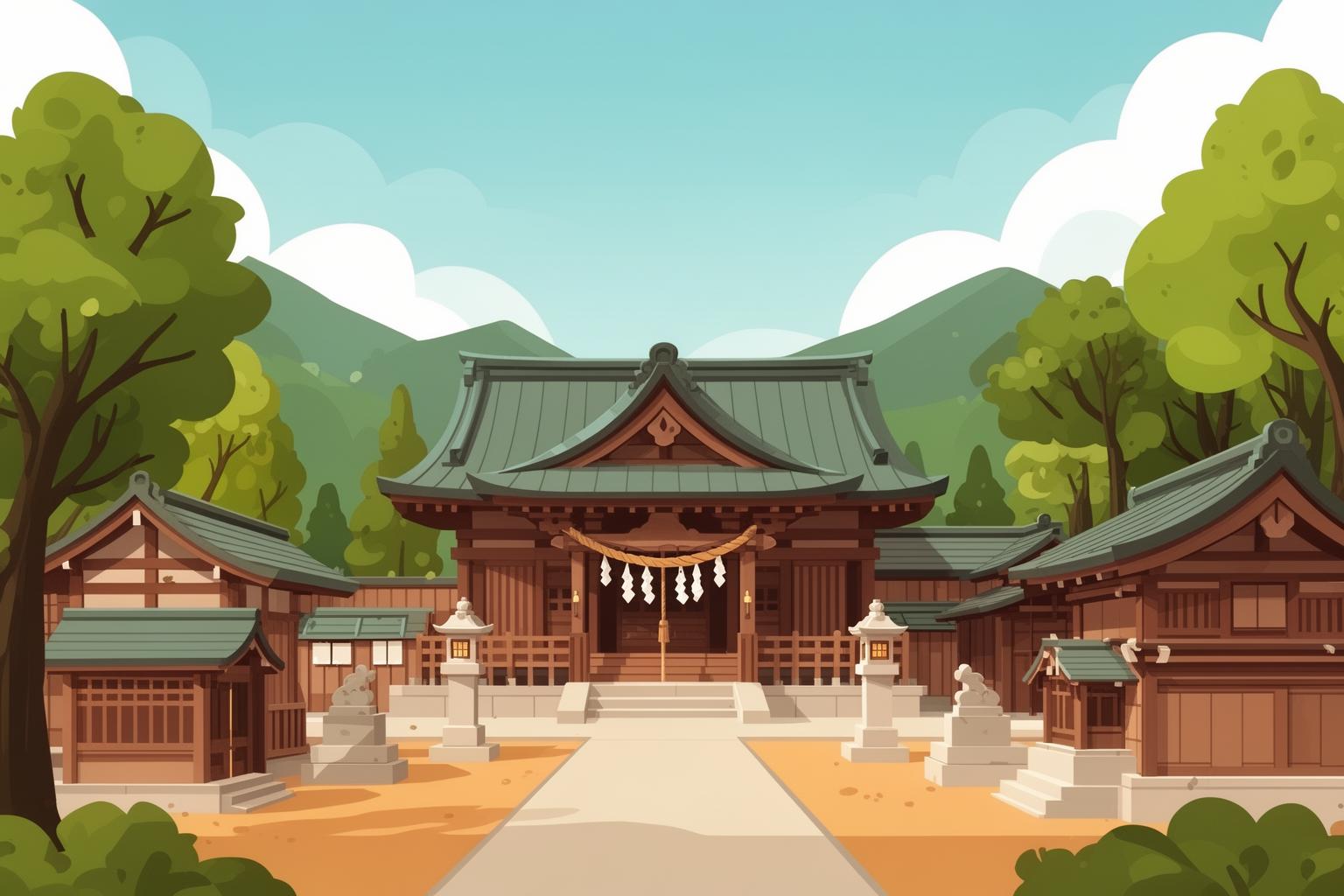
So, what’s the big deal about going rural? A shrine is a shrine, right? A torii gate, a main hall, a place to drop a coin and say a prayer. Well, yes and no. The architecture may share a common language, but the feeling, the ambiance, the entire vibe is worlds apart. Iconic city shrines like Meiji Jingu in Tokyo or Yasaka Shrine in Kyoto are undoubtedly magnificent. They hold immense cultural and historical significance, yet they serve as pockets of calm amid urban chaos, designed as an escape from the modern world. Rural shrines, however, aren’t escapes from anything. They are integral parts of their surroundings. They don’t stand apart from the world around them; they are the focal point of its inherent spiritual energy. They are plugged straight into the natural world’s mainframe, and when you step onto their grounds, you plug in as well. This fundamental difference is the source of their unique power and their slightly unsettling, otherworldly atmosphere. It’s not a curated experience; it’s a raw, unfiltered connection to a belief system that has shaped the Japanese landscape for millennia.
The Sound of Silence: Not Just Quiet, but Charged
One of the first things you notice when you enter one of these places is the silence. But it’s not an empty silence. In the West, silence is often seen as a void, an absence of sound. In Japan, there’s a concept called shizukesa (静けさ), better translated as profound, meaningful stillness. It’s the kind of silence so deep it feels like a tangible presence. It’s not empty; it’s full. It’s charged with potential. This is the silence of a rural shrine. You leave the road, pass through the first torii gate, and the modern world simply… fades away. The hum of traffic is replaced by a completely different soundscape, one that actually amplifies the stillness.
Suddenly, you become aware of the oppressive, electric buzz of cicadas in summer, a sound so constant and overwhelming it becomes a form of silence itself. You hear the rustling leaves in a sudden breeze, the creak of an ancient wooden beam in the main hall, the distant, lonely caw of a crow echoing through the trees. Each sound serves only to highlight how deep the underlying quiet is. It’s a silence that invites introspection. It makes you lower your voice, slow your steps, and begin to notice the world around you differently. This is when that eerie feeling starts to creep in. Your city-conditioned brain, accustomed to constant noise and stimulation, doesn’t know how to handle this sensory minimalism. It begins to fill in the gaps. The wind whispering through the massive cedar trees sounds like voices. The shrine’s creaking becomes footsteps. The deep, dark shadows beneath the trees seem to move when you’re not looking directly at them. This isn’t because the place is haunted in a Hollywood sense; it’s because the profound quiet strips away your distractions and forces you to confront the raw, untamed nature of the place. You’re not just observing a forest; you’re in it, and you are decidedly not the most important thing there.
And it’s not just the sounds. The entire sensory experience is different. There’s the smell of damp earth and decaying leaves, a primal, organic perfume that speaks of life and death cycles. There’s the rich, almost sacred scent of cypress (hinoki) and cedar (sugi) wood—the very materials used to build the shrine and communicate with the gods. You can feel the cool, fuzzy texture of moss carpeting everything—the stone lanterns, guardian statues, retaining walls. It’s a visual symbol of time itself, a green blanket softening every hard edge and showing how nature is constantly, patiently reclaiming everything. This total sensory immersion makes the experience so powerful. It’s not a spectacle to be consumed; it’s an atmosphere to be absorbed.
Kami Aren’t People: Understanding Japan’s Animistic Core
To truly grasp the vibe of a rural shrine, you need to discard Western ideas of what a “god” is. If you imagine an old man with a white beard sitting on a cloud, you’re way off. The foundation of Shinto, Japan’s indigenous faith, is animism. It’s the belief that a spiritual essence, a life force—a kami—resides in everything. Not just living things, but rocks, mountains, rivers, waterfalls, wind, thunder, and even uniquely shaped trees. The world isn’t a creation of the gods; the world is the gods. There are said to be yaoyorozu no kami (八百万の神), or eight million kami, a poetic way to say they are infinite and uncountable.
So, a shrine isn’t necessarily a house for a god like a church or mosque. It’s more like a signpost. The iconic torii gate isn’t a door to a building; it’s a symbolic gateway marking the transition from the mundane world to the sacred space where a particular kami’s presence is especially strong. This is why many rural shrines feel built into the landscape, rather than on top of it. They are often established to honor a specific natural feature recognized as especially awe-inspiring or powerful. This object is called a yorishiro (依り代), a vessel able to attract and house a kami.
When you visit a rural shrine, look for the yorishiro. It’s often the most impressive feature. It might be a colossal, ancient tree, its trunk thicker than a car, with a sacred straw rope called a shimenawa (注連縄) tied around it. This tree is the shinboku (神木), the god-tree. It was here long before the shrine, which was built to honor its presence. Or perhaps the shrine backs onto a waterfall, whose constant roar and mist are seen as the voice and breath of a water dragon kami. Maybe the main hall faces a distinctively shaped mountain peak considered the dwelling place of a powerful mountain spirit. Sometimes, the most sacred object is a large, unadorned rock resting in an open space, also marked with a shimenawa. This is an iwakura (岩倉), a god-seat. This is Shinto in its most elemental, primal form. It’s not about intricate theology or complex scripture; it’s about a raw, intuitive recognition of power and divinity in the natural world. This is why these rural spots feel so potent. They strip away the layers of institutional religion and connect you directly to the animistic beliefs that have pulsed through Japan for thousands of years. You’re not inside a building dedicated to a god; you’re in the living room of the god itself.
Reading the Room: How to Vibe with a Rural Shrine
Alright, so you’ve come across a small, slightly eerie shrine out in the middle of nowhere. The silence is overwhelming, the trees tower above you, and you feel that familiar tingle at the back of your neck. Now what? How do you engage with a place like this? It can be a little intimidating, as if you’ve accidentally walked into a private gathering without knowing the rules. The good news is, it’s less about strict rituals and more about your attitude. The key is respect. You’re a guest in a space regarded as sacred. The rituals aren’t tests of faith; they’re ways to show you understand that—a silent message saying, “Hello, I come in peace and with good intentions.” It’s about shifting your mindset from that of a tourist to that of a respectful visitor.
It’s Not About Prayer, It’s About Presence
While Japanese people do pray at shrines—for health, exam success, safe childbirth—a large part of the experience is simply being present and acknowledging the local kami. It’s like checking in with the local landlord. You pay your respects, announce your arrival, and ask for continued goodwill. You don’t have to believe in Shinto to take part. Think of it as cultural etiquette, a respectful gesture toward the beliefs of those who have cared for this place for centuries.
The ritual is straightforward and common everywhere. When you approach the first torii gate, stop and bow. You’re entering the kami’s domain. As you walk along the path (sando), try to stay to the sides, as the center is reserved for the kami. Before reaching the main hall, you’ll come across a water pavilion called a temizuya (手水舎), used for purification. Don’t skip this; it’s a beautiful and significant part of the visit. Take the ladle with your right hand, scoop water, and pour some over your left hand. Then switch hands, pouring water over your right. Go back to your right hand, cup your left, and pour a bit of water into it to rinse your mouth. Discreetly spit the water onto the ground beside the basin, never back into it. Finally, hold the ladle vertically so the remaining water runs down the handle, cleansing it for the next person. You’ve now physically and symbolically washed away the dust of the outside world.
At the main offering hall (haiden), if you wish to pray, this is the place. You’ll usually find a large offering box. It’s customary to toss in a coin. A 5-yen coin is considered lucky because its name, go-en, is a homophone for good fortune or fate (ご縁). Then, perform the ritual: bow deeply twice, clap your hands twice (to gain the kami’s attention), hold your hands together for a silent prayer or reflection, and then bow deeply once again. This “two bows, two claps, one bow” sequence is standard. Don’t worry about perfection; intention matters most. This physical meditation sharpens your focus and shows respect. It transforms your role from a passive observer into an active participant.
The Thin Veil: Where Kami and Yokai Blur
This is where it gets truly fascinating and explains that eerie sensation. In the West, we often have a clear division: God and angels are good; demons and monsters are evil. In Japanese folk belief, that line is much blurrier. A powerful kami isn’t necessarily ‘good’ in human terms. They represent forces of nature. A mountain kami might bless a harvest but could also cause landslides and floods if angered. Their nature is dual: the nigi-mitama (gentle, peaceful spirit) and the ara-mitama (rough, violent spirit). Rituals and offerings aim to soothe the ara-mitama and encourage the nigi-mitama.
This duality means the awe you feel in the presence of a mighty natural force is laced with a bit of fear. It’s in this gray area that the world of Yokai thrives. Yokai covers a vast range of supernatural beings—they can be ghosts (yurei), monsters (bakemono), mischievous animal spirits (kitsune, tanuki), or even inanimate objects that have gained life after 100 years (tsukumogami). Many are tied to specific natural places. The kappa, a water goblin, inhabits rivers and ponds. The tengu, bird-like mountain ascetics, dwell deep in forests. The kodama, tree spirits, live in ancient trees. At rural shrines nestled in mountains or near quiet rivers, the realms of kami and Yokai seem to overlap.
This sensation is strongest at twilight. The Japanese have a poetic word for this time of day: tasogare (誰そ彼). It literally means, “Who is that over there?” It describes when the light dims so much you can’t quite distinguish faces. It’s a liminal moment, between day and night, between the human and spirit worlds. The veil is thinnest then. This is when your imagination can run wild at a rural shrine. Shadows stretch and twist into unfamiliar shapes. A rustle in the bushes could be a badger—or a shape-shifting tanuki. A flicker of light on a distant stone might be a reflection—or the eye of something watching. The shrine itself encourages this feeling. The long, winding sando path isn’t just a route; it’s a deliberate journey that gradually disconnects you from the mundane world. The tall, dense cedar trees block out the sky, creating an eternal twilight even at midday. The entire setting is crafted to make you feel small, to sense you’ve crossed a threshold into another reality. You’re now in their world, and you’d better behave accordingly.
Decoding the Landscape: Signs You’re in a Power Spot
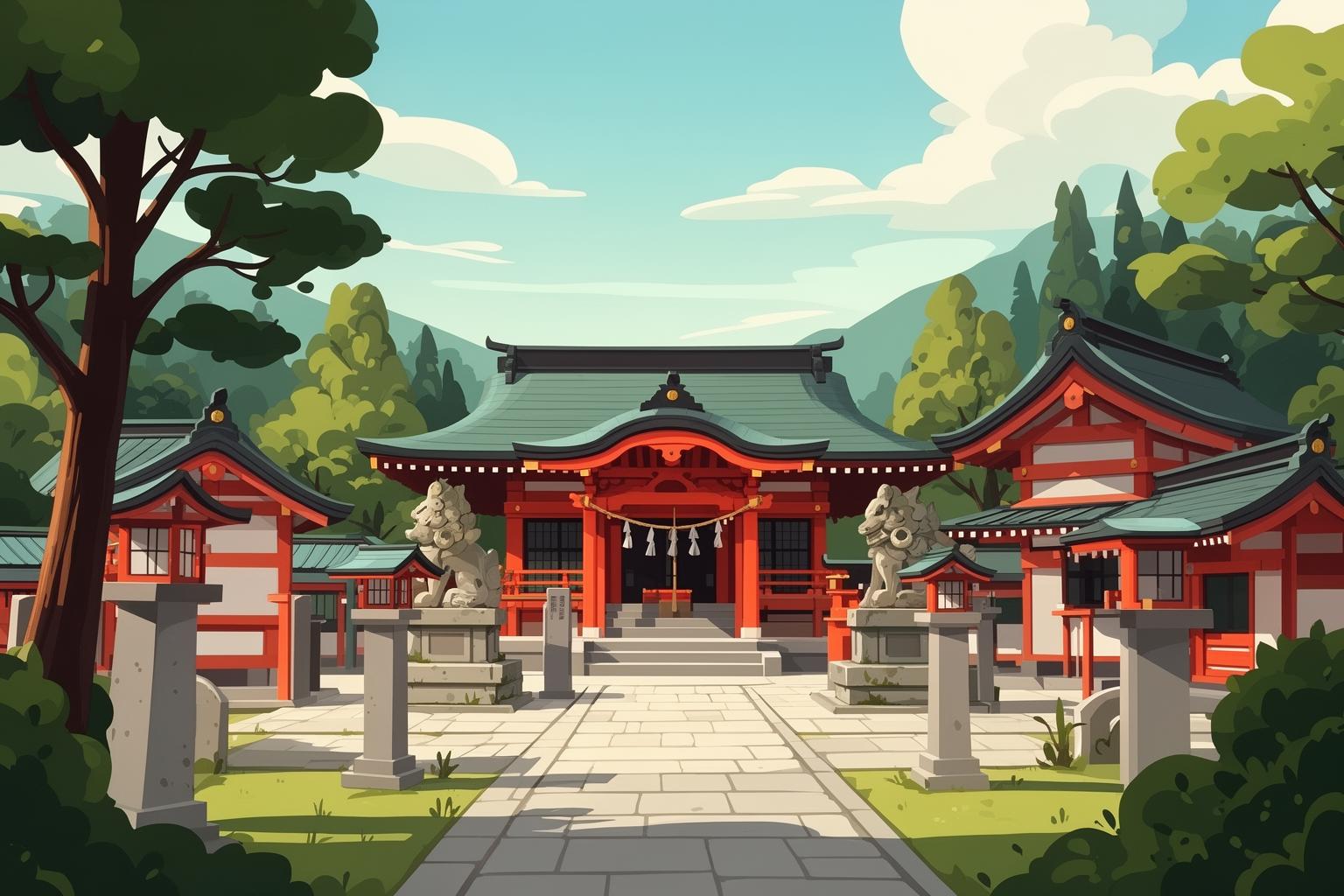
When you begin to grasp the underlying animistic beliefs, the Japanese countryside shifts from being merely a landscape to a readable text. It is filled with clues and symbols that reveal its spiritual importance. These are not hidden mysteries; rather, they form an open visual language that indicates where power resides. Recognizing these signs is essential to discovering the most atmospheric and sacred places, those sites locals have revered for centuries. It turns a simple drive through the countryside into a sacred treasure hunt.
Shimenawa and Shide: The Original “Keep Out” Signs
Perhaps the most common and significant symbols you will notice are the shimenawa and the shide. The shimenawa is a thick, braided rope made of rice straw. You’ll find them hanging on torii gates, in front of shrine halls, and most notably, wrapped around natural objects. The shide are the white, zigzag-shaped paper streamers that often hang from the shimenawa. When you see these, it’s important to understand that they are not mere decorations. They are powerful symbols of purity and sacredness, acting as a spiritual barrier that separates the sacred from the profane. They convey the message: “This space has been purified. A kami dwells here. Enter with respect.”
Spotting a massive, ancient camphor or cedar tree in a forest with a shimenawa tied around its trunk means you are looking at a shinboku, or god-tree. The rope signals that this is no ordinary tree, but an object of worship—a living being with a potent spirit. It should neither be touched nor taken from. Similarly, if you encounter a waterfall with a shimenawa stretched across its flow, you are being shown that the water is sacred, embodying a kami. The same applies to large, uniquely shaped boulders in rivers or on mountainsides. These ropes visually express the reverence people hold for these natural wonders, transforming geological features into divine presences. Learning to recognize them allows you to view the landscape with the eyes of someone deeply connected to the land through animism. You begin to discern which trees are simply trees and which are deities.
The Company of Statues: Jizo, Komainu, and Other Guardians
Rural shrines are seldom empty; they are inhabited by a fascinating array of stone guardians and figures, each carrying its own story and purpose. These statues add layers of meaning and emotion to the space, their weathered, moss-covered forms contributing greatly to the mysterious, ancient atmosphere. The most familiar are the komainu (狛犬), pairs of lion-dog statues positioned at the entrance to the main shrine. These fierce protectors ward off evil spirits. Typically, one has its mouth open while the other’s is closed, representing “a” (阿) and “un” (吽)—the first and last sounds of the Sanskrit alphabet, symbolizing the beginning and end of all things, much like alpha and omega. Observe them closely. In rural shrines, these statues can be ancient, their features smooth from centuries of wind and rain, bodies draped in thick moss, appearing less like statues and more like creatures petrified in stone, ready to spring back to life at any moment.
Another ubiquitous figure, especially along desolate mountain paths and village outskirts, is Jizo (地蔵). Jizo is a Bodhisattva who has attained enlightenment but postpones nirvana to assist others. He protects travelers, firefighters, and, most poignantly, the souls of children who passed away before their parents. You will often see groups of six, symbolizing the six realms of rebirth. Typically depicted as gentle, childlike monks, Jizo statues commonly receive offerings from locals—a small pile of stones, a coin, or most noticeably, a red bib or cap. The red color is believed to ward off evil and illness. Encountering a line of these small, red-clad figures on a misty mountain path is a profoundly moving sight. It offers comfort—a sign of protection—and carries a deep melancholy, reminding one of life’s fragility and the sorrow of those who made the offerings. They imbue the landscape with a powerful sense of human emotion and history.
Beyond these, other messengers (tsukai) of the kami appear depending on the shrine’s deity. At Inari shrines dedicated to the god of rice and commerce, you will find numerous stone foxes (kitsune), often clutching a key or jewel in their mouths. At shrines honoring the mountain god Sanno, monkeys (saru) may be present. These animal guardians further blur the boundary between natural and supernatural. Serving as intermediaries, they operate in the liminal space between our world and that of the kami. In rural areas, where you might actually glimpse a wild fox or monkey, this connection feels immediate and tangible.
The Human Element: Abandonment, Neglect, and the Beauty of Decay
There is another essential factor that contributes to the unique, eerie atmosphere of many rural shrines: the visible passage of time and the evolving human connection with these places. Japan is experiencing a significant demographic shift, with its population aging and declining, a trend most evident in rural areas. Young people move to cities in search of work and opportunities, leaving behind small, aging communities. This directly affects the local shrines, which these communities have supported for centuries. The gradual process of decay, as nature reclaims these spaces, creates an ambiance that is both haunting and deeply beautiful.
The Unmanned Shrine: Who Cares for This Place?
You will quickly observe that the vast majority of these small rural shrines are completely unmanned. There is no resident priest, no office selling amulets (omamori) or fortunes (omikuji). One might ask: who sweeps the paths? Who replaces the sacred shimenawa ropes when they rot? Who brings out the offerings? The answer lies with the local community. The families living nearby are regarded as the parishioners of the local kami, the ujiko (氏子). Maintaining the shrine is their shared responsibility. They organize festivals (matsuri), clean the grounds, and ensure that proper rituals are observed.
However, as these communities shrink, this responsibility becomes increasingly challenging. The outcome is a unique aesthetic that balances between care and neglect. The most important tasks are usually completed: the path to the main hall is swept free of fallen leaves, and the offering hall is kept clean. Yet, the edges often show wear — a stone wall may be crumbling, its stones scattered; the roof of a secondary building might have a hole patched with a simple blue tarp; the paint on wooden beams fades and peels, revealing weathered gray wood beneath. This is not the pristine, meticulously maintained environment of a famous Kyoto temple. Instead, it is a place that is living, aging, and slowly yielding to nature’s forces, all while being held together by the thinning thread of community devotion. It feels real, authentic, and lived-in. There is a melancholy here—a sense of a world gradually fading—which adds to the powerful, eerie silence of the shrine.
Wabi-Sabi in the Wild: Embracing Beauty in Imperfection and Impermanence
This state of beautiful decay perfectly embodies the Japanese aesthetic concept of wabi-sabi (侘寂), a philosophy centered on accepting transience and imperfection. It finds beauty not in shiny newness but in objects whose character and history are visible on their surface. Wabi-sabi celebrates things that are imperfect, impermanent, and incomplete—like moss growing in the cracks of a stone lantern, the irregular pattern of a hand-thrown tea bowl, or the faded patina on a bronze bell.
A rural shrine exemplifies wabi-sabi masterfully. Moss is not viewed as neglect to be cleaned away but as a testament to the shrine’s age and harmony with its surroundings. Crooked steps worn smooth by generations of worshippers are more beautiful than perfectly cut, modern ones. Silence is not emptiness; it carries the weight of centuries. This outlook contrasts sharply with the Western ideal of preserving things in a flawless, unchanging state. Here, beauty lies in the natural cycle of growth, decay, and return to the earth. The palpable presence of kami and yokai feels stronger in these places precisely because fewer modern, perfect distractions obscure it. The peeling paint and crumbling walls do not lessen the shrine’s sacredness; they enhance it by reminding visitors of time’s relentless passage. This experience is humbling and grounding, connecting you not only to Japanese culture but to a deeper, universal truth about impermanence. You are a fleeting visitor in a place that has witnessed countless seasons come and go—and will witness many more long after you are gone.
The Real Journey Begins Here
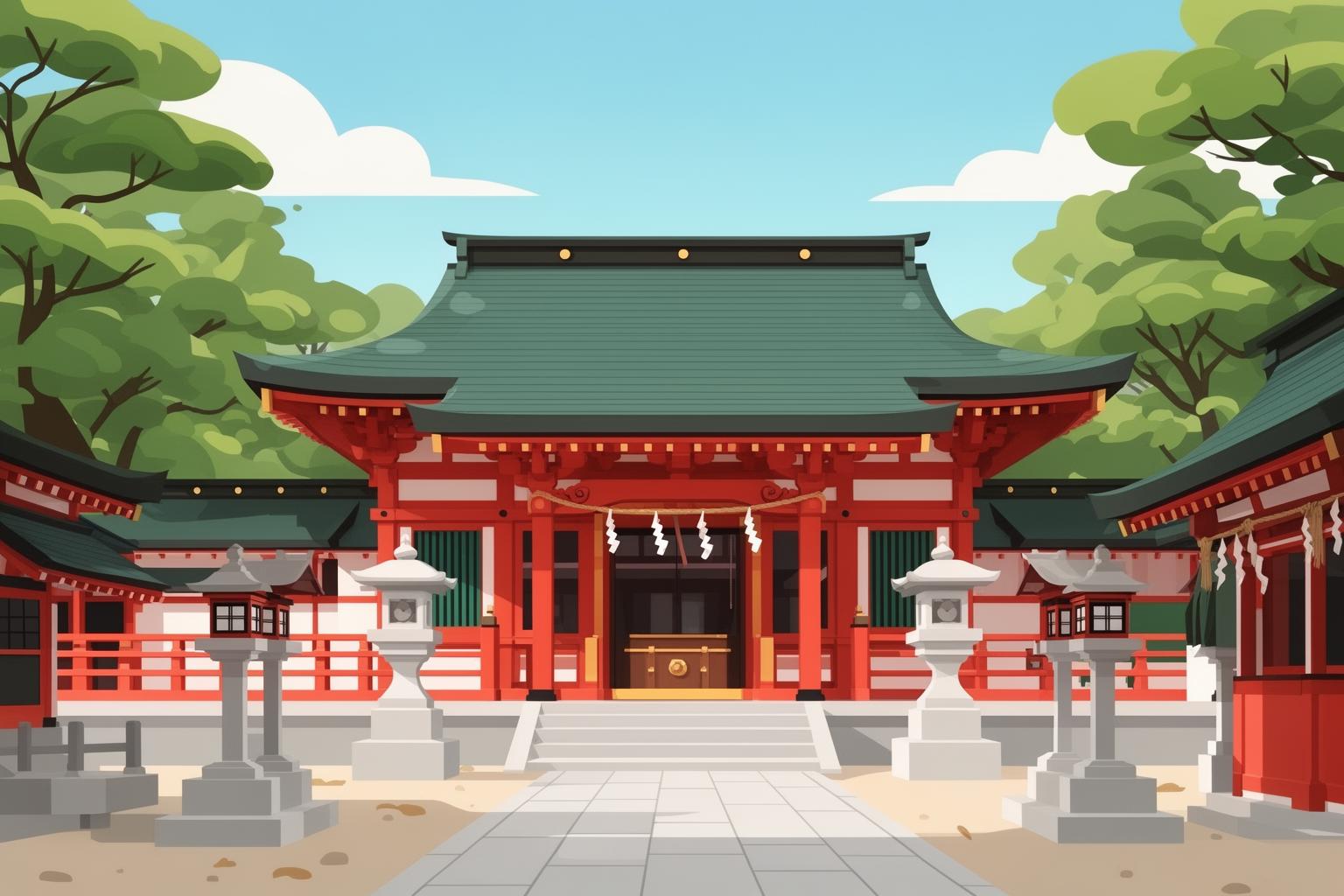
So, we return to that initial question: Where is that ‘other Japan’? The one that lingers under your skin and haunts your daydreams long after you’ve come home. It’s not a fantasy from an anime. It’s real, but off the beaten tourist path. It doesn’t demand your attention with bright lights or loud noises. Instead, it waits quietly in the secluded places, in the deep green mountains and along forgotten shorelines. Finding it isn’t about pinpointing a specific ‘haunted’ spot on a map. It’s about learning a new way to see, a new way to listen. It’s about understanding that for many in Japan, the world is not a mere backdrop for human drama but a living, breathing presence, filled with countless spirits, both kind and fearsome.
The true journey for a second-time traveler, for anyone seeking depth, begins when you embrace the silence. It starts when you learn to read the landscape’s visual language—the shimenawa marking a sacred tree, the row of Jizo statues guarding a mountain pass. It happens when you choose the local train over the bullet train, when you rent a car and follow a road just to see where it leads, when you climb worn stone steps into a shadowy cedar grove. That’s where you’ll find it—in the charged stillness, in the presence of something ancient and powerful, in the beautiful, melancholic decay of places slowly reclaimed by time and nature. You don’t need to believe in Kami or Yokai to sense it. You just need to be open, respectful, and listen to the silence. That eerie, tangible presence you’re seeking is the soul of Japan, waiting quietly for you to discover it. It’s a whole mood, a unique vibe, and once it clicks, you’ll begin to see it—and feel it—wherever you go. The greatest hits are memorable, but the deep cuts hold the true magic.