Yo, what’s the move? If you’ve already flexed on the Golden Route, smashed the sushi, and vibed with the temples, you might be wondering what’s next on the Japan itinerary. For the repeat visitor, the real flex is digging deeper, past the polished surface to find something with a bit more… texture. We’re talking about a Japan that’s not quite ancient, not quite brand new. It’s a glitch in the matrix, a nostalgic echo from the recent past, a vibe we call Heisei Retro. Now, mash that up with the crisp, functional aesthetic of today’s Gorpcore fashion, and you’ve got a whole new way to experience the Japanese outdoors. This isn’t your grandpa’s sightseeing tour. This is a deep dive into the mountains that time, and most tourists, forgot. It’s about finding the beauty in faded concrete, the thrill in a vintage ropeway, and the perfect shot of your high-tech jacket against a backdrop of 90s futurism. It’s an unforgettable and stylish outdoor experience, a pilgrimage for those who get it. If you know, you know. This is where the concrete jungle dreams of alpine air, and where your adventure gets a seriously cool, seriously Japanese upgrade.
For a more relaxed take on the outdoors, discover the perfect spots to embrace the yuru camp vibe on your next hike.
The Vibe Check: Decoding Heisei Retro x Gorpcore Hiking
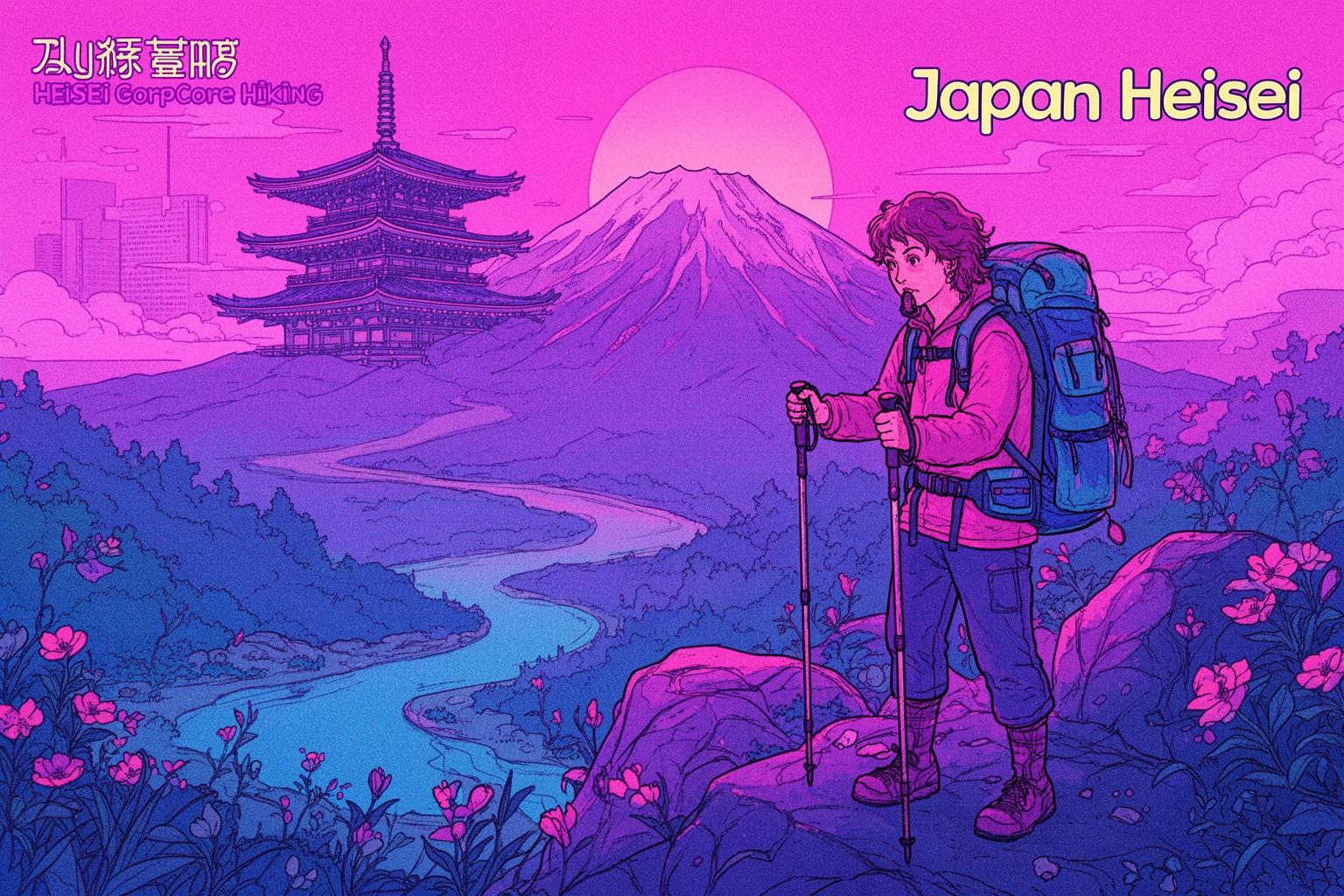
Before we drop the pin on our first trailhead, let’s unpack the aesthetic. This is the essence of the entire experience, the special ingredient that elevates these hikes beyond just a walk in the woods. It’s about tuning into a particular frequency, a cultural resonance you feel deep in your bones once you know how to detect it. It’s a conversation between two seemingly opposite worlds that, here in the mountains of Japan, harmonize into something perfectly poetic.
What is Heisei Retro? More Than Just Old Tech
Heisei Retro, or Heisei Retoro (平成レトロ) as it’s called locally, captures the aesthetic of Japan from 1989 to 2019. We’re especially focused on that golden era from the early 90s to the mid-2000s. It was a strange, fascinating time. The economic bubble had just burst, yet the cultural boom was accelerating at full speed. This period laid the groundwork for modern anime, iconic video games, and J-pop that still resonates today. The aesthetic blends post-bubble melancholy with relentless techno-optimism. Picture chunky, rounded plastic designs, pastel color schemes, slightly clunky user interfaces, and a future vision that now feels charmingly naive. It’s the design language of MiniDiscs, flip phones, and the original PlayStation.
In the mountain context, this aesthetic is seen in infrastructure built during Japan’s domestic tourism boom. Think ropeway stations crafted from poured concrete and tinted glass, with signage in fonts that scream 1995. Observation decks resembling forgotten UFOs perched atop sacred peaks. Visitor centers featuring faded, sun-bleached dioramas explaining local geology. These structures once symbolized progress and leisure, offering urbanites easy access to nature’s splendor. Now, they stand as monuments to a bygone era, their ambition softened by time and weather. There’s a lonely beauty here, a Japanese concept known as mono no aware—a gentle sadness for the impermanence of things. But for us, it doesn’t feel sad. It’s undeniably cool. A tangible slice of history you can touch and interact with, offering a backdrop that sterile, modern buildings could never provide. Authentic, unpretentious, and brimming with stories.
Gorpcore: The Uniform of the Modern Explorer
Now, about you. Gorpcore is the uniform. Named after the hiker’s trail mix staple “Good Ol’ Raisins and Peanuts,” this trend celebrates functional, technical outdoor gear as everyday wear. It’s the Arc’teryx shell jacket worn for grabbing coffee, Salomon trail runners navigating the subway, the fleece vest ready for a sudden rain or an overly air-conditioned office. In Japan, Gorpcore isn’t merely a fad; it’s an evolution of a deep-rooted appreciation for functional beauty, known as you no bi (用の美). True beauty emerges from an object’s flawless fulfillment of its purpose. A perfectly waterproof seam, lightweight yet durable fabrics, pockets placed for optimal accessibility—these details define it.
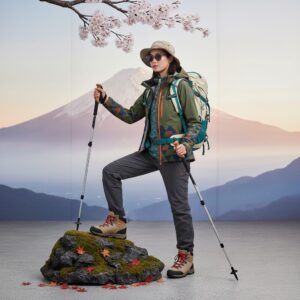
On the trails we’re exploring, Gorpcore thrives naturally but with a twist. It’s not just about withstanding the elements; it’s about making a strong visual statement. Your hyper-modern, seam-sealed, Gore-Tex Pro jacket is cutting-edge technology embodied. Standing on a Heisei-era concrete platform, gazing out over a thousand-year-old forest, you become a living collage of time. You are the future standing within the recent past, surrounded by the ancient. The sleek lines and muted, earthy tones of your gear contrast sharply with the chunky shapes and faded pastels of the retro structures. This contrast is the point. It’s a performance, a dialogue with your surroundings. You’re not just passively observing the landscape; your aesthetic choice actively participates in its ongoing story.
The Synergy: Why This Combo is Pure Magic
So why does this mashup hit so powerfully? Because it’s real. In a world full of hyper-curated, flawlessly filtered travel content, the Heisei Gorpcore experience feels refreshingly raw and authentic. It embraces imperfections. The slightly rusted handrail, the trail sign with peeling paint, the mountain hut serving the same curry for thirty years—these aren’t flaws; they’re features. Proof of life, of a history that isn’t locked away in a museum.
This blend creates the ultimate IYKYK trip. It’s a travel subculture requiring a certain eye, a unique appreciation for what most overlook. It’s a rejection of the obvious, a search for the emo (エモい)—a slang term capturing that elusive feeling of nostalgia, emotion, and sentimentality. You’re not merely hiking a mountain; you’re on a treasure hunt for a feeling. Exploring the liminal spaces of Japan’s identity, the gap between its imperial past and its Blade Runner future. In these forgotten corners of the Heisei dream, you find an experience that is deeply personal, incredibly stylish, and 100% your own.
The Heisei Gorpcore Pilgrimage: Top Peaks & Trails
Alright, gear up—it’s time to move out. The following locations are prime hunting grounds for the Heisei Gorpcore aesthetic. These aren’t just mountains; they are vast canvases of concrete, steel, and ancient wilderness, waiting for you to leave your mark. Each spot offers a unique take on the retro-future vibe, telling a different chapter in Japan’s evolving relationship with its wild spaces.
Mount Tanigawa, Gunma Prefecture: The Sentinel of the North
Mount Tanigawa, or Tanigawadake, is legendary. Sitting on the border of Gunma and Niigata prefectures, it’s notorious for extreme weather and difficult routes, earning the nickname “Mountain of Death.” But don’t be deterred. The accessible areas, mostly reachable by a spectacular ropeway, are a certified Heisei Retro goldmine. Tanigawa’s allure comes from this very contrast: the raw, untamable force of nature existing side-by-side with remarkable, slightly outdated human engineering. It’s an ideal setting for Gorpcore, where your high-tech gear is more than a fashion statement—it’s a salute to the mountain’s power.
The Tanigawadake Ropeway: A Time Capsule to the Clouds
The adventure begins at Doai Station, brimming with Showa-era energy, then moves to the Tanigawadake Base Plaza. Here, the time warp truly takes hold. The whole complex—from the ticket counters to the gift shop—feels lovingly preserved from the early 90s. The main attraction is the Tanigawadake Ropeway. Stepping into the gondola is like stepping back decades. Notice the window shapes, seat materials, and the gentle hum of the machinery. This is no sleek, silent, modern capsule; it’s a machine with personality. The 15-minute ascent is slow and dramatic, floating above a sea of trees towards the mountain’s imposing rocky face. The scale is humbling.
At Tenjindaira Station, the vibe is flawless. The station is a masterpiece of its era—functional, somewhat brutalist, with huge panoramic windows overlooking the alpine landscape. Wander the observation deck; feel the wind whip by. The railings, concrete, and tiled floors all contribute to the aesthetic. Step inside the cafeteria, where the menu is a shrine to mountain hut classics: curry rice, ramen, katsudon. The food is simple, hearty, and tastes as it did in 1998. Faded posters advertise local ski resorts, and rows of vending machines dispense hot coffee in cans—the scene is complete. This isn’t a tourist trap; it’s a living piece of history.
The Trail Aesthetic: Gorpcore Meets Alpine Majesty
From Tenjindaira, the real hike begins—where your Gorpcore outfit is truly put to the test. A popular route is the short but stunning Tenjin Ridge hike. The trail is rugged yet well-marked, blending dirt paths with rocky scrambles. This is the heart of the visual poetry. Your carefully chosen Salomon XT-6s grip ancient, weathered rock. Your Arc’teryx shell, engineered in Vancouver, shields you from the same wind that has shaped this mountain for millennia. The contrast is electric. Notice the old, faded trail markers and chunky galvanized steel chains bolted into rock on steep sections—details that anchor you to Heisei-era outdoor culture: functional, safe, but lacking modern sleekness.
The ridge’s views are breathtaking. You grasp Tanigawa’s scale and ferocity, spotting more challenging peaks in the distance—a reminder this is a serious mountain. That’s the thrill: using a retro gateway to access a timeless wilderness. It’s a safe way to touch the void and feel the sublime power of the Japanese Alps while clad in your 21st-century gear.
Practical Beta: Mastering Tanigawa
Access is straightforward. From Tokyo, take the Joetsu Shinkansen to Jomo-Kogen Station (around 75 minutes). From there, a Kan-etsu Kotsu bus heads directly to the Tanigawadake Ropeway Base Plaza (about 50 minutes)—a classic train-to-bus combo defining rural Japanese travel.
Gear is essential. Tanigawa’s weather is famously unpredictable. A sunny base can turn into a windy, freezing fog-fest at the summit. This is where your Gorpcore kit shines: waterproof/windproof shell, insulating mid-layer (like fleece or light down), and sturdy hiking shoes are musts, even for the short ridge hike. Layers are your friends.
Timing matters. July to October is best for most hikers. Autumn foliage (mid-October) is spectacular, with the mountain aflame in reds, oranges, and yellows. Winter is reserved for experienced mountaineers, as the area sees some of the world’s heaviest snowfall.
A vital local tip: Before or after your hike, visit JR Doai Station—Japan’s deepest train station. The northbound platform lies in a tunnel 70 meters underground, reachable only by a monumental 486-step stairway. The wooden station building itself is a charming, unmanned relic. Descending through that long concrete tunnel is surreal, a peak Showa/Heisei industrial vibe. For post-hike recovery, nearby Minakami Onsen offers hot springs perfect for soothing tired muscles—a fitting end to a journey across time and terrain.
Chichibu-Tama-Kai National Park: Sacred Peaks and Forgotten Highways
Just a couple of hours from Tokyo’s relentless energy, the Chichibu region offers vast mountains, forests, and deep valleys that feel otherworldly. Part of Chichibu-Tama-Kai National Park, it’s long been a spiritual pilgrimage site. The Heisei era also left its mark, creating a landscape where ancient shrines, sacred peaks, and aging concrete infrastructure coexist. This place pulses with deep spiritual energy and palpable retro vibes, making it a top destination for our aesthetic hunt.
Mitsumine Shrine: Where Divine Meets 80s Resort Vibe
First stop: Mitsumine Shrine, one of Kanto’s most powerful and atmospheric shrines. Perched at 1,100 meters, it honors the wolf deity O-inu-sama. The shrine’s intricate, brightly colored carvings and towering cedar trees create a mystical atmosphere. Yet the Heisei element shines in the journey. You’ll take a long, winding bus up the mountain—a classic rural Japanese transit experience. Upon arrival, beyond the shrine lies a complex including a visitor center and Mitsumine Hotel, Kounkaku. This late-Showa to early-Heisei architecture—with large windows and dated resort style—feels like a relic from the heyday of group tours and company mountain trips.
Hiking from the shrine leads to viewpoints or longer trails. Notice how sacred and secular intertwine: ancient pilgrim paths lined with stone lanterns and sacred trees give way to concrete observation decks with distinct 90s metal railings. Weathered trail signs feature chunky, rounded typography softened by decades of mountain air. This layering of history is what makes Chichibu special—you’re journeying through multiple eras at once.
The Kumotori Pilgrimage: Tokyo’s Highest Peak
For serious Gorpcore enthusiasts craving a challenge, Mount Kumotori stands tallest at 2,017 meters—Tokyo Prefecture’s summit. Reaching it is a legitimate two-day pilgrimage, not a casual hike. The trail plunges deep into the Okuchichibu mountains, putting your full Gorpcore kit—pack to water filter—to work.
The highlight from a Heisei Retro angle is overnighting at Kumotori Sanso, a mountain hut near the summit. The yamagoya (mountain hut) experience is central to Japanese hiking culture—simple, functional shelters with a preserved-in-amber vibe. You’ll sleep communally on futons, share a modest dinner (curry or ginger pork) and breakfast with fellow hikers, and follow house rules. Details stand out: worn wooden floors, vintage posters, aluminum window frames. This stripped-down space exemplifies Japanese functionalism. Rising before dawn, gearing up in the cold, and hiking the last stretch for sunrise (goraiko) is unforgettable. Clad in cutting-edge gear, you partake in a decades-long ritual within a perfect time capsule.
Practical Beta: Conquering Chichibu
Getting to Chichibu is easy from Tokyo. Take the Seibu Red Arrow Limited Express from Ikebukuro to Seibu-Chichibu Station—a comfortable 80-minute ride. Local buses connect to trailheads, including Mitsumine Shrine. Bus schedules are sparse; plan accordingly.
Hut life requires planning. For popular huts like Kumotori Sanso, reservations are mandatory, usually by phone (a Japanese speaker helps). Upon arrival, be respectful: remove muddy boots at the entrance, keep gear tidy, and observe quiet hours, which start early. Always pack out trash—respect is currency in this communal experience.
Look out for Chichibu’s hidden gems: remnants of Heisei-era industry like old mining ruins, defunct forest railways, and abandoned service roads slowly reclaimed by nature. These offer an almost post-apocalyptic layer to the Gorpcore aesthetic—a future that never quite happened, now the backdrop for your adventure. For a different Heisei culture slice, Chichibu City is famous as the setting of the anime Anohana: The Flower We Saw That Day, where pilgrimage spots throughout town add 2010s nostalgia to your trip.
Mount Tsukuba, Ibaraki Prefecture: The Twin-Peaked Playground
Mount Tsukuba is iconic. In Ibaraki Prefecture, its distinctive twin peaks—Nyotai-san (female) and Nantai-san (male)—are visible from miles away. Sacred for centuries and a popular tourist site, the mountain’s history is richly layered, with a thick, visible Heisei-era imprint. Its accessibility from Tokyo makes Tsukuba an ideal day trip and a live catwalk for Japanese Gorpcore fashion—a place to observe the aesthetic in action while exploring a mountain that feels like a retro-futuristic theme park designed by nature and a committee from 1992.
The Cable Car & Ropeway: A Tale of Two Ascents
Part of Tsukuba’s charm lies in the two ascent options, both steeped in retro flair. The Tsukuba Cable Car climbs Nantai-san’s side, delivering a classic, almost Showa-era feel. The boxy cars glide through dense forest, beautiful and nostalgic. On the other side, the Tsukuba Ropeway climbs near Nyotai-san; its gondolas often sport classic 90s design—large, rounded windows and a slightly chunky frame. The real gems are the stations themselves. Summit station architecture, especially around the ropeway terminus, radiates peak Heisei: sprawling concrete and glass complexes built for crowds with all amenities. Inside, gift shops sell omiyage with packaging unchanged for years, noodle restaurants flaunt plastic food displays, and observation decks house coin-operated binoculars. It’s a proud celebration of function over form—a concrete island amid lush green. Don’t miss the Koma Observatory, a rotating展望台 offering stunning 360-degree views of the Kanto Plain. Sitting in this slowly revolving structure, peering through slightly warped plexiglass, is pure nostalgic gold.
The Trails: A Natural Gym for the Gorpcore Crowd
Though mechanical ascents delight, Tsukuba’s hiking trails demand attention. Paths connecting the twin peaks and descending the mountain blend well-maintained sections with rugged, rocky stretches. The summit loop is famous for giant, oddly shaped rocks named through the centuries. Scrambling over these ancient stones, you share the trail with a diverse crowd: families in matching Montbell gear, serious trail runners decked in the latest techwear. It’s a living outdoor fashion lookbook. The contrast is striking—hikers in cutting-edge apparel and carbon-fiber poles navigating a trail that’s both an ancient spiritual site and a Heisei tourist attraction. This microcosm perfectly reveals modern Japan’s complex relationship with nature.
Practical Beta: Your Day Trip to Another Decade
Tsukuba is incredibly easy to reach, perfect for a spontaneous trip. From Akihabara Station, take the Tsukuba Express (TX) line to Tsukuba Station—a sleek, modern train contrasting with what awaits. From there, a shuttle bus runs to Tsukuba Shrine’s entrance, the start of the cable car and some prime hiking trails. Total travel time is under two hours.
Tsukuba’s popularity and accessibility mean weekends and holidays get crowded. For the best experience, visit on a weekday or take the earliest train to beat summit crowds. Early morning solitude on those rocky peaks is magical.
Pro tip to complete the thematic journey: Tsukuba is not just a mountain; it’s a “Science City.” Planned and built from the 1970s onward as a research and education hub, the city houses the Tsukuba Space Center (JAXA). Visiting offers a physical embodiment of Japan’s Showa and Heisei scientific aspirations, filled with rockets, satellites, and exhibits rich in retro-futuristic charm. The blend of sacred mountain, Heisei tourist infrastructure, and space-age scientific ambition makes for a conceptually perfect day trip.
The Gear & The Grind: Perfecting the Heisei Gorpcore Aesthetic
Alright, we’ve got the locations sorted. But bringing the Heisei Gorpcore vision to life is about much more than just showing up—it’s an art form. It’s how you navigate these spaces, the gear you select, and the mindset you carry with you. This is a deep dive into nailing the fit, honoring the culture, and capturing the vibe.
Layering Like a Pro: Mastering the Japanese Fit
In Japan, the Gorpcore style is polished and deliberate. It’s not about looking like you just finished a ten-day trek. It’s a thoughtful blend of function, form, and fashion. The secret? Layering. The mountain weather demands it, but the aesthetic perfects it. Start with a high-performance base layer. Next, a fleece jacket—Patagonia’s Synchilla or Retro-X remain classics for good reason. The outer layer is the standout: the shell jacket. Brands like Arc’teryx, The North Face (especially the Japan-exclusive Purple Label), and Snow Peak are highly regarded. Also consider Japanese brands like Montbell for exceptional quality and value, or And Wander for a more fashion-forward, avant-garde take on outdoor apparel.
Color choices are key. Expect lots of earthy hues: olives, beiges, charcoals, and navies. But the magic lies in pops of color—a bright yellow rain pant, a neon pink beanie, or trail runners flashing 90s turquoise. This nods to the playful, vibrant color schemes of Heisei era sportswear. It’s about crafting a look grounded in nature yet playfully artificial. Accessories complete the outfit. A sacoche (a small, flat shoulder bag) is practically a uniform staple for your essentials. A Nalgene bottle plastered with stickers, a carabiner clipped to a belt loop holding keys—these little details mark your place in the tribe.
Yamagoya Etiquette: Honoring the Retro Spirit
When you embark on a multi-day hike staying in a yamagoya, you’re taking part in one of the most culturally rich and memorable aspects of Japanese hiking. These mountain huts are the heart and soul of the trails, operating on a foundation of mutual respect. Understanding the etiquette is essential. First, muddy boots never, ever cross beyond the designated entrance (genkan). Shelves or cubbies for your hiking shoes will be provided, and you’ll usually get slippers to wear indoors. Second, space is limited. Keep your gear organized and compact, whether in shared sleeping quarters or a small bunk. Third, listen carefully to the hut staff about meal times (be punctual!) and lights out (early, typically around 8 or 9 PM). Sound carries easily, so remain quiet and considerate of fellow hikers resting. Lastly, and most importantly: carry out everything you bring in. There are no trash bins in the high mountains. Following these simple rules helps preserve these wonderful, often family-run huts for generations to come.
Capturing the Moment: Analog Vibes in a Digital Age
How should you photograph this experience? It’s not about snapping a perfect, postcard-ready landscape. The Heisei Gorpcore aesthetic finds beauty in grit, grain, and imperfections. Get close. Focus on textures. Shoot the peeling paint on a trail sign, rust stains on concrete, or the detailed weave of your jacket’s ripstop nylon. Frame your shots to highlight contrast—a brightly colored GORE-TEX sleeve against muted wood and stone, or a sleek modern backpack next to a retro vending machine at a summit. Embrace nostalgia. If you use film, natural grain and light leaks will complement the Heisei vibe perfectly. For phone photos, try apps or filters that mimic 90s film stock—faded, grainy, atmospheric. The goal isn’t perfection; it’s about capturing a feeling, that elusive emo of a place suspended between past and future.
Beyond the Peaks: Fueling Your Retro Adventure
The Heisei Gorpcore experience doesn’t end when you leave the trail. It continues through the rituals that frame the hike—the preparation beforehand and the recovery afterward. These moments are equally important for setting the mood and fully immersing yourself in the culture.
The Art of the Konbini Pre-Hike Meal
The Japanese convenience store, or konbini, is a cultural staple and the ultimate pre-trail mission control for hikers. Stopping at a 7-Eleven, FamilyMart, or Lawson at the mountain base is a revered ritual. This is where you gather your fuel. An onigiri (rice ball) makes the perfect portable carb-load; classic fillings include salmon (sake) or pickled plum (umeboshi). A CalorieMate bar, a compact, shortbread-like nutrient block in its iconic yellow wrapper, represents pure Heisei-era functional food design. And naturally, coffee. A can of hot BOSS coffee from a vending machine or a freshly brewed iced coffee from the konbini counter is the essential pick-me-up. The packaging, flavors, and vast selection are all part of the experience. Packing your bag with these delights is the first step of the day’s journey.
Post-Hike Onsen: The Ultimate Recovery Session
If the pre-hike ritual is the konbini stop, then the post-hike reward is the onsen. Immersing your tired body in a natural hot spring is an indispensable part of the Japanese hiking experience. It’s the ultimate recovery. For an authentic vibe, seek out the older, local onsen rather than shiny, new super-sentos. Look for places with character: tiled baths with slight cracks, old wooden lockers operated by wristband keys, and maybe a view of the mountains you just conquered. Sinking into that mineral-rich, geothermally heated water and feeling the lactic acid melt away is pure bliss. It’s a moment of quiet reflection, a perfect and peaceful end to a day of effort and sensory immersion.
The Drive Home: Heisei J-Pop on the Stereo
To complete the time capsule, you need the right soundtrack. As you head back to the city by train or bus, with the sun setting and mountains fading behind you, put on a playlist of Heisei-era J-pop. Think of the legends: Utada Hikaru, Spitz, Mr. Children, aiko, Dragon Ash. The music from 90s and early 2000s Japan carries a distinct sound—a blend of optimism, melancholy, and unforgettable melodies. It serves as the perfect sonic backdrop for the feeling of joyful exhaustion and the flood of memories from the day. Gazing out the window as the countryside shifts to suburbs and then to the neon city lights, with this soundtrack in your ears, is the final, perfect piece of the puzzle. It links your mountain adventure to the cultural fabric of the era you sought.
This is more than just a hike. It’s a way of seeing, a way of being. It’s a treasure hunt for those beautifully awkward, wonderfully nostalgic moments hidden in plain sight. It’s about discovering the profound in the ordinary, style in functionality, and the future in the past. So gather your gear, choose a peak, and find your own perfect glitch in the Japanese landscape. Go discover that emo vibe. It’s out there, waiting for you on a misty summit, in a faded concrete station, just for you.