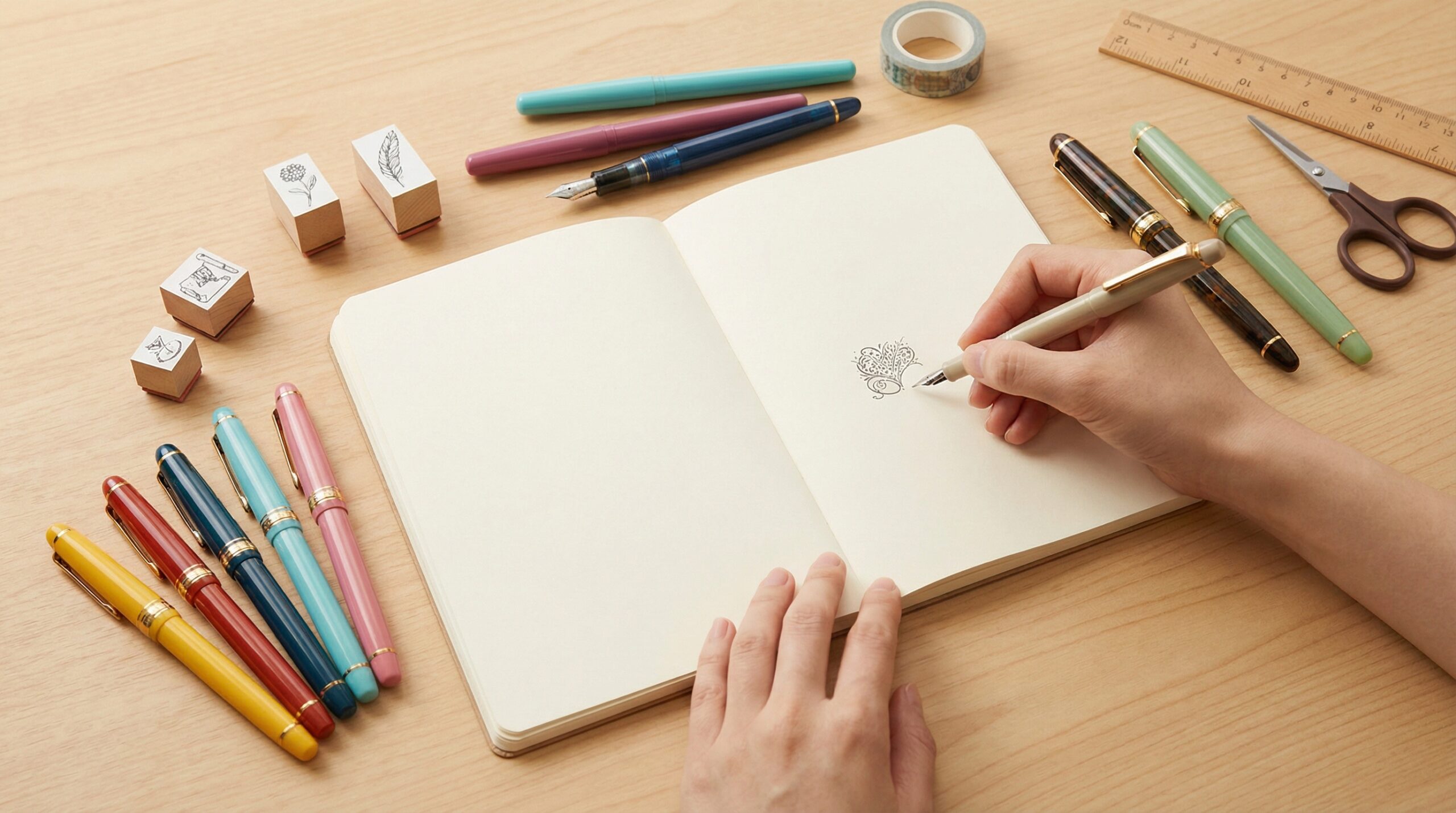
What’s up, fellow creatives and Japan dreamers? It’s Mia Kim, and let’s get real for a sec. In a world that’s all about the digital hustle, the endless scroll, and notifications pinging 24/7, there’s this low-key rebellion happening. It’s quiet, it’s analog, and it smells like fresh paper and new ink. I’m talking about the world of journaling, but with a specifically Japanese twist that’s got me completely hooked: ‘Techo-Katsu’ (手帳活). This isn’t just about jotting down your appointments, fam. Nah, this is a whole mood. It’s a lifestyle, a creative outlet, a mindfulness ritual that transforms a simple notebook into a personalized chronicle of your life. It’s about creating something beautiful and tangible in a world that often feels way too virtual. And the heart of this entire movement? The absolute god-tier stationery that Japan offers. We’re talking paper so smooth it feels like silk, pens that glide like they’re skating on ice, and washi tapes with designs so fire they belong in a museum. Forget what you know about sad, flimsy office supplies. This is a journey into a universe of meticulous craftsmanship and aesthetic perfection. So, grab your favorite drink, get cozy, and let’s dive headfirst into the rabbit hole of Japanese stationery. We’re about to unlock the secrets to crafting a journal that’s not just organized, but is a legit work of art and a true reflection of you. Your personal ‘Techo-Katsu’ era starts now. To kick off our pilgrimage, let’s pinpoint ground zero for stationery lovers in Tokyo: the legendary Itoya in Ginza, a multi-story tower dedicated to the art of writing and creating.
If you’re looking to extend this analog, mindful vibe beyond your journal, consider planning a digital detox at a glamping retreat near Mt. Fuji.
The Soul of the Game: What Exactly is ‘Techo-Katsu’?
Before we start filling up our virtual shopping carts, let’s first explore the core concept. ‘Techo-Katsu’ is a Japanese portmanteau that goes far beyond its literal meaning. ‘Techo’ (手帳) translates to planner or notebook, and ‘Katsu’ (活) is short for ‘katsudou’ (活動), which means activity, life, or pursuit. Simply put, it means ‘planner activities’ or ‘planner life.’ But that’s like saying anime is just cartoons—it misses the entire culture and meaning behind it.
In Japan, ‘Techo-Katsu’ is a deeply personal and cherished hobby. It involves the intentional use of a planner not only for scheduling but also for life logging, memory keeping, habit tracking, creative expression, and goal setting. It’s about enjoying the analog process. It’s the gratifying feeling of crossing off a to-do list with a favorite pen, the therapeutic act of decorating pages with stickers and washi tape to mark special days, or the quiet reflection that comes from jotting down your thoughts and emotions. This practice is rooted in a wider Japanese cultural appreciation for mindfulness, intentionality, and ‘monozukuri’ (ものづくり)—the craft and spirit of making things with care and precision. Every item in the ‘Techo-Katsu’ world, from paper to pen, is designed with the user’s experience at heart. It’s not just about practicality; it’s about the feeling it inspires.
The community aspect is significant as well. Search Instagram for #手帳活 or #手帳の中身 (the contents of my planner), and you’ll find millions of posts featuring stunningly beautiful and intricately designed planner spreads. People share their layouts, favorite stationery, and creative techniques. But don’t let the online perfection intimidate you. The true essence of ‘Techo-Katsu’ is that your planner is your own space. It can be messy, minimalist, or a vibrant explosion of colors and stickers. There are no rules. It’s your personal paper sanctuary, a place to organize your thoughts and document your unique journey. It turns the ordinary task of planning a week into a beautiful, mindful ritual.
The Holy Trinity of Techo: Planners That Slay
The foundation of any great ‘Techo-Katsu’ setup is, naturally, the techo itself. And in Japan, planner culture reaches a whole new level. There are many options available, but three brands stand out as the undisputed leaders, each boasting a large, devoted fanbase. Choosing one is like picking your starter Pokémon—it shapes the tone for your entire journey.
Hobonichi Techo: The Cult Favorite
If there’s one name synonymous with the global journaling movement, it’s Hobonichi. The Hobonichi Techo is more than just a planner; it’s a cultural phenomenon. Created by Japanese copywriter Shigesato Itoi, the mind behind the beloved ‘EarthBound’/’Mother’ video game series, the Hobonichi was designed as a life book—a portable container for your thoughts, memories, and daily experiences. What makes it legendary? It all begins with the paper.
Hobonichi uses Tomoe River paper (or the newer, very similar Tomoegawa paper), which is practically legendary. It’s incredibly thin and light, yet remarkably strong and resistant to ink bleeding and feathering. This means you can use fountain pens, watercolors, and heavy markers, and the paper handles it all. The pages produce a distinctive crinkly sound when turned, a sensory feedback that users become addicted to. Writing on it is a sublime experience; the paper’s subtle texture provides just the right amount of resistance, making your pen glide effortlessly. Because the paper is so thin, a full year’s worth of pages fits into a compact, chunky book that becomes a satisfyingly thick archive by year’s end. This ‘chonky’ planner is a badge of honor within the community.
The layout is another standout feature. The main planners—the A6 ‘Original’ and the A5 ‘Cousin’—offer a one-page-per-day design. Each page features a clean, minimalist 3.7mm grid layout, highly versatile for writing, drawing, charting, or attaching photos. At the bottom of each page is a daily quote, translated from its Japanese source and taken from the Hobo Nikkan Itoi Shinbun website, offering a bit of inspiration or reflection. The planner also includes monthly and weekly views, making it a comprehensive life management tool. There’s also the ‘Weeks’ version—a slim, wallet-sized planner ideal for on-the-go scheduling, displaying a week on one page and a grid memo page on the other.
But the real brilliance of the Hobonichi system is in the covers. Each year, Hobonichi releases a vast selection of covers in collaboration with artists, designers, and brands. You can find covers made from beautiful textiles, fine leather, or adorned with artwork from your favorite anime or artist. The cover transforms the planner from a simple book into a personal fashion statement and treasured companion. It’s this blend of ultimate functionality, unmatched paper quality, and endless customization that makes the Hobonichi Techo the uncontested king.
Midori and the Traveler’s Notebook: For the Wanderlust Spirit
If the Hobonichi is the meticulously organized life book, the Traveler’s Notebook (often known as TN) from Midori is its free-spirited, bohemian cousin. The TN is less of a planner and more of a modular system that evolves and adapts with you. At its core is a simple yet beautiful, rugged leather cover crafted from a single piece of vegetable-tanned leather. It’s not a pristine, flawless product fresh out of the box—it’s meant to be scuffed, scratched, and worn. Over time, the leather develops a unique patina, reflecting your personal journeys and adventures. No two TNs are identical; each one tells its owner’s story.
The magic of the system lies in its customizability. Inside the leather cover are elastic bands. Rather than a pre-bound book, you build your own. Midori offers dozens of notebook inserts, or ‘refills,’ that slide under the bands. You can mix and match a monthly calendar, weekly planner, blank notebook for sketches, grid notebooks for journaling, and even specialty inserts with watercolor or kraft paper. Accessories like plastic zipper pouches, card holders, and pen loops can also be added. This modularity allows your notebook to be whatever you need it to be. Going on a trip? Insert a travel-focused setup. Starting a new project? Create a dedicated notebook. It’s the ultimate B.Y.O.N. (Build Your Own Notebook) experience.
Midori’s MD Paper, used in the refills, is another stationery icon. Developed in the 1960s, MD Paper is known for its minimalist aesthetic and exceptional quality. It’s cream-colored, gentle on the eyes, and has a smooth yet toothy texture that fountain pen enthusiasts love. The paper offers a luxurious writing experience with no bleed-through and minimal ghosting. Midori also sells standalone MD Notebooks, praised for their simple elegance and lay-flat binding. For minimalists, travelers, or anyone who chafes against the rigidity of pre-dated planners, the Traveler’s Notebook provides a sense of freedom and endless possibilities. It’s a loyal companion for capturing life’s big and small adventures.
Kokuyo Jibun Techo: The Life Logger’s Ideal
For those who are data-driven, ultra-organized, and eager to document every detail, there’s the Kokuyo Jibun Techo. ‘Jibun’ (自分) means ‘myself’ in Japanese, and this planner is designed as a comprehensive record of your own life. It’s an impressively thorough and slightly intimidating three-in-one system that can feel like the ultimate challenge in planning.
The system includes three separate booklets housed in a single cover. The first is the ‘DIARY’—the planner’s heart, featuring a unique 24-hour vertical weekly layout. This ‘vertical weekly’ or ‘bujo’ format allows precise time-blocking from wake-up to bedtime. It also includes small icons to track weather, mood, and meals, plus spaces for to-do lists and daily notes. It’s perfect for students, professionals, or anyone juggling a complex schedule.
The second booklet is the ‘LIFE’ book. This is a planner for your entire life, not just the current year. It holds pages to log your life goals, dreams, personal mottos, family trees, major life milestones, financial plans, and lists of favorite books, movies, and music. The idea is to carry this booklet year after year, crafting a continuous and invaluable record of your personal history. It’s a profound exercise in self-reflection.
The third booklet is the ‘IDEA’ book—a grid-paper notebook for brainstorming, mind maps, meeting notes, sketches, or extensive journaling. Like the others, it uses Kokuyo’s proprietary ‘THIN’ paper, which is smooth, lightweight, and durable.
While the Jibun Techo may initially appear daunting, its structured design is a blessing for those craving organization. It encourages you to focus not only on daily tasks but also on long-term ambitions and personal history. It’s the ultimate tool for anyone who believes a well-documented life is a well-lived life.
Level Up Your Spread: The Tools of the Trade

A beautiful planner is only the beginning. The true joy of ‘Techo-Katsu’ lies in the tools you use to fill it. Japanese pens, markers, and inks are globally celebrated for their quality, innovation, and astonishing variety. Stepping into the pen aisle of a Japanese stationery store is an experience itself—a vibrant mix of color and technology.
Pens, Pens, and More Pens: The Ink-redible Arsenal
Selecting a pen in Japan is a serious affair. It’s not about picking up a cheap ballpoint; it’s about finding the perfect tool that feels right in your hand and makes writing enjoyable.
Fountain Pens: The OG Vibe
Fountain pens are the centerpiece of the deep journaling community. There’s a certain romance and mindfulness to using one—the ritual of filling it with ink, the way the nib glides over the page, and the beautiful shading and sheening of the ink on quality paper—it’s a sensory experience unmatched by any other pen. Japan boasts the ‘Big Three’ fountain pen makers: Pilot, Sailor, and Platinum, each with its unique character.
Pilot is known for remarkable consistency, smooth writing, and innovative designs. The Pilot Kakuno is ideal for beginners—affordable, durable, available in fun colors, and even features a tiny smiley face on the nib. For those looking to upgrade, the Custom 74 and the Vanishing Point (a retractable fountain pen) are iconic favorites. Sailor is famed for its nibs, known for their distinctive pencil-like feedback that many writers love, and offers a wide variety of nib sizes including specialty calligraphy tips. Their Pro Gear and 1911 models are timeless, and their limited-edition colorways are highly sought after. Platinum focuses on practicality. Their 3776 Century pen features a groundbreaking ‘Slip & Seal’ cap that prevents ink from drying out for up to two years—a true game-changer. And the world of Japanese inks—brands like Iroshizuku (Pilot), Kobe INK Monogatari (Sailor), and Kyo-no-oto—offers hundreds of nuanced, gorgeous colors inspired by Japan’s nature and culture.
Gel Pens: The Everyday Heroes
If fountain pens feel a bit high-maintenance, don’t worry. Japan’s gel pen technology surpasses the rest of the world by miles. These pens are perfect for everyday writing, color-coding, and making notes stand out.
The Pilot FriXion is pure magic. It’s a gel pen with thermo-sensitive ink that vanishes with friction. The small rubber nub at the end lets you ‘erase’ your writing cleanly without dust or residue. It’s a holy grail for perfectionists and commitment-phobes alike. The Uni-ball Signo line is legendary, too. Its pigment-based ink is smooth, vibrant, waterproof, and fade-resistant—ideal for archival use. The Signo DX 0.38mm is a cult favorite for its fine, precise line. Then there’s the Zebra Sarasa Clip, known for vivid colors, fast-drying ink (perfect for lefties!), and a sturdy binder clip—making it a dependable and joyful workhorse. The sheer variety of colors and tip sizes across these lines is staggering. People often spend hours testing pens to find their ideal match.
Fineliners and Markers: For Doodles and Headers
To bring artistic flair to your pages, a good set of fineliners and markers is essential. The Sakura Pigma Micron is the industry standard for artists, architects, and journalers alike. Its archival-quality pigment ink is waterproof and fade-resistant, perfect for outlining drawings or writing anything you want to last. They come in a wide range of precise tip sizes.
For calligraphy, headers, and coloring, the Tombow Dual Brush Pens are iconic. Each pen features a flexible brush tip on one end and a fine-point felt tip on the other, making them extremely versatile. With over a hundred colors available, the water-based ink can be blended like watercolors. Lastly, we must mention the Zebra Mildliners, highlighters that transformed the game. Rather than harsh fluorescent colors, Mildliners offer soft, muted pastel shades that are gentle on the eyes. They make highlighting and color-coding notes a truly aesthetic experience. They also come with a dual-tip design, featuring a chisel tip and a fine bullet tip.
The Art of Adornment: Stickers, Tapes, and Stamps
This is where ‘Techo-Katsu’ transitions from simple planning into a fully immersive creative hobby. Decorating your pages, commonly known as ‘deco,’ is a huge part of the enjoyment. Japanese decorative stationery forms a unique world, rich with stunning artistry and irresistible charm.
Washi Tape Wonderland
Washi tape is undoubtedly one of Japan’s greatest contributions to the crafting community. It is a decorative masking tape made from traditional Japanese paper (‘washi’). What sets it apart is its durability combined with the ease of tearing by hand and its repositionable nature. You can stick it down, reconsider, and peel it off without damaging the paper or leaving any sticky residue—it’s practically magical.
The range of washi tape options is endless. You’ll find every color, pattern, and width imaginable. Designs vary from minimalist geometric patterns and traditional Japanese motifs like cherry blossoms or waves to cute animal characters and artist collaborations. Brands like mt (short for Masking Tape) by Kamoi Kakoshi lead the way, offering an enormous and high-quality selection. BGM is another well-loved brand known for its gorgeous foil-accented designs. Washi tape is used for everything: framing pages, highlighting sections, making tiny flags or tabs, or attaching photos and postcards. Collecting washi tape is a hobby in itself—and a costly one.
Sticker Mania: From Kawaii to Chic
Japan’s sticker culture is on a level unmatched anywhere else globally. The detail, print quality, and sheer inventiveness are astonishing. These stickers go far beyond basic smiley faces. You’ll find sheets featuring lifelike food items, beautiful watercolor florals, or small, practical icons for tracking appointments, weather, or habits. ‘Sticker flakes’ are another popular style—small boxes or packets filled with dozens of individual die-cut stickers perfect for scattering across a page.
Brands like Mind Wave, San-X (creators of Rilakkuma and Sumikko Gurashi), and BGM release fresh designs every season. Whether your style is ultra-cute and ‘kawaii,’ vintage chic, or minimalist and practical, there’s a sticker set waiting for you. They offer a quick, easy way to add personality and visual appeal to your planner spreads without requiring artistic talent. Stickers can help tell a story, set a mood, or simply brighten an otherwise dull Tuesday.
The Stamp of Approval: Inkan & Clear Stamps
Stamping has deep roots in Japan, where ‘hanko’ or ‘inkan’ (personal seals used instead of signatures) hold cultural significance. This tradition has blossomed into a lively hobby stamping scene. Using stamps in your journal is a wonderful method to create repeatable designs and custom layouts. You’ll find tiny wooden stamps with individual icons (like a coffee cup or envelope) as well as larger clear acrylic stamp sets used with an acrylic block.
Clear stamps are especially popular because they allow you to see exactly where the image will be placed. You can find sets designed for creating calendars, habit trackers, or decorative borders. Brands such as Kodomo no Kao (‘Child’s Face’) are renowned for their adorable and detailed stamp designs. To complement your stamps, you’ll need ink pads, which Japan offers in every color imaginable. VersaMagic ink pads are a community favorite due to their chalky, matte finish that looks lovely on planner paper.
The Pilgrimage: Where to Find Your Stationery Grail

Alright, so you’re convinced and ready to jump in. But where do you find all this incredible stationery? If you’re fortunate enough to be in Japan, you’re in for a real treat. Shopping for stationery in Japan isn’t a quick chore; it’s an experience in itself. The stores are expansive, multi-level treasure troves where you can easily lose yourself for hours.
The Giants: Loft, Tokyu Hands, and Itoya
These three giants dominate Japanese retail and are essential stops for any stationery enthusiast. They are more than just stores; they are cultural landmarks, each offering a unique experience.
Loft (ロフト): The Yellow Wonderland
Easily identified by its bright yellow logo, Loft is a ‘lifestyle’ department store selling everything from cosmetics and home goods to travel accessories and, naturally, stationery. The stationery section in major Loft stores, such as the flagship locations in Shibuya or Ginza, is truly impressive. It often occupies an entire floor and serves as a lively, creative hub. Loft excels at showcasing the newest trends. During ‘Techo Season’ (starting as early as August), they feature huge planner displays, extensive pen-testing stations where you can try hundreds of pens, and a vast array of stickers and washi tape. They also regularly host pop-up shops and exclusive artist or brand collaborations, so there’s always something fresh to discover. The vibe is fun, modern, and inspiring—a place to explore and get creative.
Tokyu Hands (東急ハンズ): The Creative Life Store
Tokyu Hands shares Loft’s ‘everything store’ concept but puts a greater emphasis on DIY, crafts, and hobby supplies. Their motto is ‘The One-Stop Shop for Creative Life.’ If you’re after not just pens and paper but also leatherworking tools, model kits, or professional art materials, this is your spot. Their stationery sections are vast and impeccably organized. The pen selection at the Shinjuku Takashimaya Times Square location, for example, is legendary. You’ll find premium fountain pens, every type of gel pen imaginable, and rare art markers. They also boast an incredible range of papers and notebooks tailored to every need. Tokyu Hands has the feel of a creative workshop rather than a trendy lifestyle store, making it ideal for finding top-notch tools for any creative endeavor.
Itoya (伊東屋): A Stationery Skyscraper
Itoya stands as the grand dame of Japanese stationery. Established in 1904, it’s a specialist store with a rich history and a refined, sophisticated ambiance. The flagship store in Ginza, marked by its iconic red paperclip, is a twelve-story skyscraper devoted entirely to stationery and paper goods—a true pilgrimage site. Each floor is themed differently: the ground floor features greeting cards and seasonal items; another is dedicated solely to writing instruments, where you can test luxury fountain pens valued at thousands of dollars; there’s a floor for office supplies, travel goods, and crafting materials. The most renowned is the ‘Paper Concierge’ on the seventh floor, where experts help you select from over a thousand varieties of paper, differing in color, texture, and weight, to create custom notebooks or stationery. Itoya focuses less on ‘kawaii’ trends and more on timeless quality and craftsmanship, offering an unforgettable experience for serious lovers of the art of writing.
The Hidden Gems and Specialized Boutiques
Beyond the big three, numerous smaller shops are well worth exploring. For fans of the Traveler’s Notebook, the Traveler’s Factory in Nakameguro, Tokyo, is a must-visit, offering beautifully designed exclusive refills, charms, and TN accessories. For adorable character stationery, stores like Kiddyland in Harajuku and the many Sanrio and San-X shops are pure paradise. Don’t overlook unexpected spots— convenience stores (‘konbini’) often carry surprisingly good and sometimes exclusive stationery from brands like Muji. Bookstores such as Maruzen or Junkudo also feature large, excellent stationery sections. Discovering these smaller shops is part of the joy in exploring the rich depth of Japan’s stationery culture.
Crafting Your Cozy Corner: Bringing Techo-Katsu Home
The charm of ‘Techo-Katsu’ lies in the fact that you don’t need to be in Japan to practice it. With tools and planners increasingly accessible online, the essence of this practice is universal. It’s about carving out a small, intentional space in your life for reflection and creativity.
Begin by establishing a ritual. It doesn’t need to be complicated. Perhaps it’s ten minutes each morning with a cup of coffee, or a half-hour every Sunday night to plan your week. Play some soothing music, light a candle, and make your journaling time a special, protected moment in your day. This is your time. This is your space to disconnect from digital distractions and reconnect with yourself.
If you’re new and facing a blank page feels daunting, start small. You don’t have to craft an artistic masterpiece daily. Use your planner as a simple gratitude journal, noting one thing you’re thankful for. Use it to track a habit you’re developing. Use it as a ‘brain dump’ to clear your swirling thoughts onto paper. The key is just to begin. The more you engage with your planner, the more it will become an essential part of your life.
And keep in mind, your ‘Techo-Katsu’ journey is uniquely yours. Avoid the comparison trap on social media. Your planner doesn’t need to resemble anyone else’s. It’s a tool for your life, not a show for others. Let it be messy. Let it be simple. Let it be a genuine reflection of your days, dreams, struggles, and victories. In a fast-paced world, the simple, analog act of putting pen to paper can serve as a powerful anchor. It’s a way to slow down, stay present, and create a beautiful record of the one-of-a-kind story that is your life.