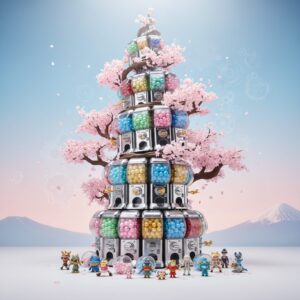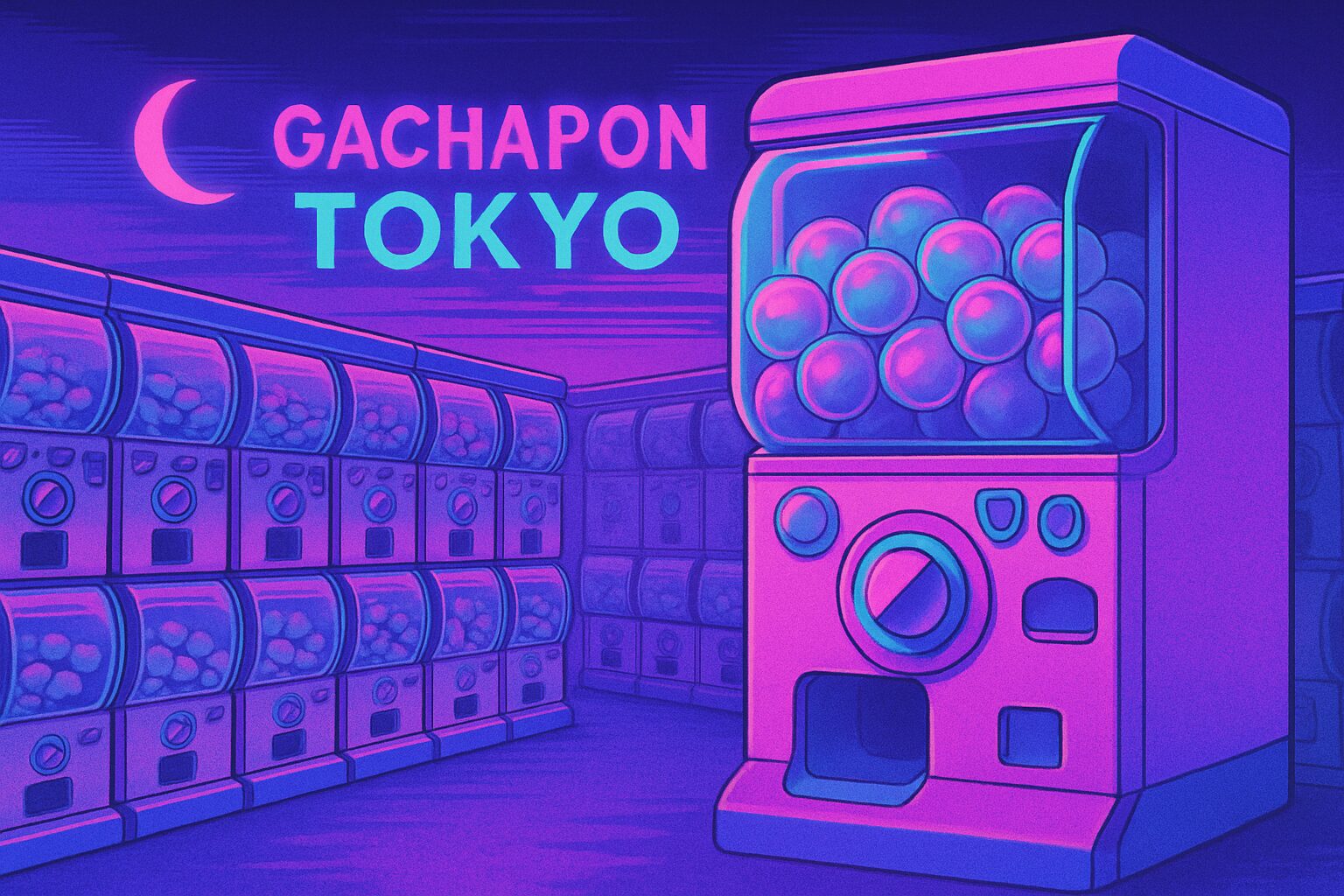
Yo, let’s get real for a sec. You think you know vending machines? You’ve seen them dispense drinks, maybe a snack. But Japan? Japan looked at the vending machine and said, “Hold my melon soda.” What if we took that concept, shrunk it down, filled it with pure, unadulterated joy, and made it a national obsession? Fam, welcome to the world of Gachapon. It’s not just a toy dispenser; it’s a cultural phenomenon, a treasure hunt, and a straight-up dopamine factory all rolled into one. Picture this: walls, entire corridors, even whole buildings lined with hundreds of identical-looking machines, each promising a tiny, exquisitely detailed prize locked away in a plastic sphere. The thrill isn’t just in the toy—it’s in the hunt, the satisfying gacha crank of the dial, and the final pon as your capsule drops. It’s a low-stakes gamble where everyone’s a winner, and it’s one of the most authentically fun things you can dive into while exploring this incredible country. From hyper-realistic miniatures of food to bizarrely adorable animals in hats, Gachapon is the chaotic, creative, and kawaii soul of Japan in a can. It’s an experience that’s absolutely bussin’, and once you start, trust me, you won’t want to stop. So, grab your yen coins, ’cause we’re about to dive headfirst into the addictive, epic world of capsule toy hunting. It’s giving adventure.
The Vibe: What It Feels Like to Step into Gachapon Heaven

Forget quiet, sterile shops. A dedicated Gachapon space is a sensory explosion. The first thing that strikes you is the sound—a symphony of controlled chaos. There’s the steady, gentle clatter of plastic capsules being sorted by staff, the excited chatter of friends deciding which machine to try next, and above it all, the signature soundtrack: the rhythmic, percussive gacha-gacha-gacha of dozens of dials turning in unison, punctuated by the satisfying, hollow pon as treasures are dispensed. It’s a sound that connects directly to the pleasure centers of your brain. The air hums with an energy that’s part arcade, part treasure vault. There’s a shared sense of purpose among the people there. You’ll find high school students in their uniforms, gathered around a new anime release, serious collectors meticulously checking which figures they still need from a set, wide-eyed tourists, and even office workers on their lunch break grabbing a quick fix. It’s a space where age and background dissolve, united by the simple joy of the hunt. Visually, it’s a kaleidoscope. Rows upon rows of machines form canyons of color. Each machine has a display card, a vibrant splash of art showcasing the potential prizes inside, all vying for your attention. The sheer volume can be overwhelming at first, a testament to the boundless creativity of the Gachapon industry. It feels less like a store and more like a library of possibilities, an archive of tiny, tangible dreams. You can feel the collective anticipation—the hope of securing the rare item, the friendly commiseration when someone gets a duplicate, and the pure, unscripted joy when a coveted character finally appears. It’s a fully immersive experience, a pocket of pure, unadulterated fun that’s impossible not to get swept up in.
A Twist of Fate: The History and Culture Behind the Capsule
To truly grasp the Gachapon phenomenon, you need to recognize that it’s not just a recent trend. It is a genuine part of contemporary Japanese culture with origins that go back further than you might expect. The concept actually began in the United States in the early 20th century with gumball machines that occasionally dispensed small toys. However, as Japan often does, it took this simple idea and elevated it into an art form. The first authentic Gachapon-style machines, called “Gacha Gacha,” were introduced and popularized in the 1960s by Ryuzo Shigeta, who later became known as the “Gacha Gacha Ojisan,” or the “Grandfather of Gachapon.” At first, the prizes were basic, inexpensive toys. It wasn’t until the 1970s, when the leading toy company Bandai got involved, that the phenomenon really soared. They trademarked the name “Gashapon” (a blend of the two key sounds) and importantly began producing toys based on beloved characters, such as the hugely popular Kinnikuman (Ultimate Muscle) erasers. This shift was a turning point. Gachapon evolved from a simple novelty into a powerful merchandising tool and collectible platform. It tapped directly into Japan’s cultural values of collecting (shūshū), craftsmanship (monozukuri), and an appreciation for small, detailed objects. A Gachapon toy isn’t merely a plastic item; it’s a tiny sculpture. The quality, even in a ¥300 product, is often remarkable. The paintwork is precise, the molding intricate, and the design carefully considered. This commitment to quality distinguishes it from the cheap toys found elsewhere. Moreover, Gachapon embodies the cultural concept of wabi-sabi—finding beauty in imperfection and impermanence. Most series are produced in limited quantities, meaning once they’re sold out, they’re gone forever. This scarcity makes each discovery more precious. It also reflects the element of chance and luck that permeates many facets of Japanese culture, from temple fortunes (omikuji) to festival games. Every turn of the crank is a small offering to the gods of Gacha, a tiny gamble connecting you to a tradition of chance and reward. Gachapon has become a medium for artists, a promotional vehicle for movies, and a way to celebrate everything from classical art to everyday objects, transforming them into prized collectibles.
The Ritual: A Step-by-Step Guide to Your First Gacha Hunt

Alright, let’s break it down. You’re standing in front of a wall full of Gachapon machines, and it’s showtime. Don’t be intimidated; the process is a beautiful, simple ritual. Here’s the scoop on how to do it like a pro.
Step One: The Scouting Mission
First, just browse. Walk the aisles and let your eyes wander over the hundreds of display cards. This is the window shopping phase. What catches your eye? Is it the row of adorable shiba inus sporting tiny hats? The intricately detailed miniature set of Showa-era electronics? The collection of bizarre, muscular pigeons? The display card is your menu, showing every possible prize in the series. Pay close attention. You’ll often spot one or two items labeled as “secret” or “rare,” adding an extra thrill. Prices will be clearly marked, usually between ¥200 and ¥500, although premium Gachapon can cost more. Take your time. This is part of the fun. Let the variety wash over you and find the series that makes your heart race.
Step Two: The Currency Quest
Almost all Gachapon machines operate on ¥100 coins. Some newer machines accept ¥500 coins or even cashless payment, but ¥100 coins are the standard. Most people don’t carry a mountain of coins, and the Gachapon gods understand this. Look for the change machine. Every Gachapon hall or corner has one. These wonderful machines will eagerly take your ¥1,000 or ¥5,000 bills and dispense a stream of shiny ¥100 coins. The sound of those coins hitting the tray is the starting gun for your adventure. Pro tip: Get more change than you think you’ll need. You might end up with duplicates and want a re-roll. It happens to the best of us.
Step Three: The Moment of Truth
Go back to your chosen machine. Insert the correct number of coins into the slot. You’ll hear a satisfying clunk as each one registers. This is it—the point of no return. Place your hand on the dial, usually a chunky, satisfying piece of plastic designed for a firm grip. Now, turn it. You’ll hear that iconic gacha-gacha sound, a mechanical grinding that builds anticipation. It feels tactile and real in a way a button press never could. Turn it clockwise until you feel a final, decisive click and the tension releases. Then, listen for it… PON. That’s the sound of your capsule dropping into the retrieval bay below. It’s a moment full of potential.
Step Four: The Reveal
Reach in and grab your prize. The capsule itself is part of the experience. They come in various colors and sizes, sometimes opaque to keep the mystery alive, sometimes clear to offer a tease. Now, find a spot to perform the opening ceremony. Some like to open it right there, surrounded by the energy of the Gachapon hall. Others prefer a quiet corner or wait until they’re back at their hotel to savor the moment. There’s no wrong way. Pop open the plastic sphere. Inside, you’ll find your prize, often wrapped in a thin protective layer of plastic, along with a small paper insert (minibukku) showing the entire collection. Unwrap your toy. Examine it. Did you get the one you wanted? The super rare one? Or the one you hoped to avoid? Whatever the result, that’s the magic of Gacha—an unexpected surprise every single time.
The Gachapon Taxonomy: A Field Guide to Capsule Wonders
You can’t truly grasp the vast, wild variety of Gachapon until you experience it firsthand. It’s a universe bursting with creativity that’s hard to categorize, but for the sake of your sanity, let’s outline the main genres you’re likely to encounter in the wild. This is merely the tip of the iceberg, a launching point for your adventure into the fascinating world of Japanese capsule toys.
The Anime & Manga Pantheon
This is the core, the cornerstone of the Gachapon realm. If an anime, manga, or video game is popular in Japan, you can bet there’s a Gachapon series for it. We’re talking everything from global giants like Dragon Ball, One Piece, and Sailor Moon to current seasonal hits. The prizes range from small, static figures and keychains (sutorappu) to more intricate items like acrylic stands (akusuta) and miniature character-themed goods. The quality can be breathtaking, with sculpts and paint jobs rivaling much pricier scale figures. For fans, this is the ultimate treasure hunt—a chance to collect a tiny, tangible piece of their favorite series. Hunting for a specific character from a massive franchise is a rite of passage for any fan visiting Japan. It’s a pilgrimage.
The Kawaii Kingdom: Cute & Cuddly Critters
This category is pure, unfiltered joy. The designers behind “kawaii” Gachapon are masters of turning practically anything into something irresistibly adorable. Animals are the most common subjects, but never just ordinary animals. You’ll find cats wearing fruit hats, shiba inus working as ramen chefs, hamsters holding tiny office supplies, and capybaras lounging in miniature onsens. The creativity is off the charts. This category also includes original characters from well-known Gachapon lines like the “Shakurel Planet” series (animals with oversized chins) or the “Neko Atsume” figures. These toys are made to do one thing: make you smile. Perfect for decorating a desk, adding charm to a shelf, or carrying as a pocket-sized good luck charm, it’s the art of cute, perfected and dispensed for just a few hundred yen.
Hyper-Realistic Miniatures: The Food & Furniture Section
Prepare to have your mind blown. This category is for true detail aficionados. Japanese Gachapon artists replicate real-world objects with astounding fidelity. The food miniatures are legendary—you can collect tiny, perfect sushi platters, bowls of ramen, bento boxes, and elaborate desserts. The attention to detail is microscopic—the texture of the rice, the glistening sheen on a piece of tuna, the tiny green flecks of nori. It’s a miniature celebration of Japan’s culinary arts. Beyond food, you’ll find complete sets of miniature furniture from different eras, tiny retro electronics like TVs and cassette players, and even precisely scaled public infrastructure such as vending machines, mailboxes, and train station signs. These are hugely popular among dollhouse enthusiasts and photographers who craft intricate dioramas. It’s a world within a world, and collecting these feels like curating your own tiny museum.
Kimo-Kawaii & The Kingdom of Weird
Welcome to the deep end. Kimo-kawaii means “gross-cute,” and it’s a genre Japan has perfected. Here lies the true, unrestrained chaos of Gachapon design. Imagine zombie animals that remain adorable, disturbingly muscular pigeons, or realistic insects that double as articulated action figures. This category pushes toy boundaries. You might find statuesque Greek gods striking apologetic poses or collections of different fungi with tiny faces. It’s weird, wonderful, and a direct window into the playful, often surreal side of Japanese humor. Collecting from this genre is a statement. It shows you’re not just here for the mainstream cute stuff; you’re here for the genuine, deep-cut weirdness. These are the Gachapon that will make your friends back home ask, “…What is that? And where can I get one?”
The Surprisingly Practical
Not all Gachapon are purely decorative. There’s an entire genre of capsule toys with practical, if niche, purposes. You’ll find tiny pouches and eco-bags folding into a character’s head, “cable biters”—small figures that attach to charging cables to protect them and add flair—miniature LED lanterns that actually light up, tiny printed towels, and a vast range of pen and pencil holders designed to hang on the edge of cups or monitors. One popular series, “Fuchico on the Cup,” features a tiny office lady in various poses, balanced on the rim of your drinkware. These items combine the joy of collecting with everyday usefulness, making them a guilt-free indulgence. You’re not just buying a toy; you’re buying a tool—a very, very cute tool.
The Sacred Hunting Grounds: Where to Find the Best Gachapon

You can find Gachapon machines almost anywhere in Japan. They’re located in airports, outside supermarkets, and tucked away in train stations. But to truly experience their full, overwhelming charm, you need to visit one of the dedicated meccas. These are places where the walls are lined with machines, the collections are vast, and the energy is electric.
Akihabara: The Otaku Epicenter
Akihabara, or “Akiba,” is the spiritual center of Gachapon culture. This is ground zero. The streets are already a vibrant explosion of anime and gaming culture, and the Gachapon scene is an extension of that. The most famous spot here is Akihabara Gachapon Hall (or Kaikan). It’s not a flashy place; it’s a raw, utilitarian space wholly dedicated to the craft. It’s a long, narrow room packed with over 500 machines stacked floor to ceiling. The air buzzes with the sound of cranking dials and the collective energy of hardcore collectors. The selection here is immense and changes rapidly, with a strong focus on the latest anime and gaming releases. You’ll find rare and niche series here that might not appear elsewhere. Beyond the Gachapon Hall, nearly every electronics store and anime shop in Akiba, like Yodobashi Camera or the various Animate buildings, has its own massive Gachapon section. Exploring Akihabara is a Gachapon safari; you never know what you’ll discover down a side street or on the 5th floor of an obscure building.
Ikebukuro: The Modern Challenger
If Akihabara is the seasoned veteran, Ikebukuro is the flashy, modern contender. The main attraction here is the Gashapon Department Store inside the Sunshine City shopping complex. It holds the Guinness World Record for the largest number of capsule toy machines in one venue. We’re talking over 3,000 machines. Three. Thousand. The scale is unfathomable until you stand inside. The space is bright, clean, and extremely well-organized. It feels more like a high-end department store than a cluttered hall. The machines are grouped by genre, making it easy to find what you’re searching for—whether cute animals, anime figures, or quirky novelties. They also feature sections for premium Gashapon and a well-staffed counter to provide change and answer questions. Ikebukuro is a major hub for female otaku culture (sometimes called the “Otome Road” area), so you’ll discover a fantastic selection catering to those fandoms alongside all the mainstream hits. It’s a must-see for its staggering, mind-boggling scale.
Nakano Broadway: The Vintage Vault
For those seeking something different, Nakano Broadway is the place to go. This multi-story shopping complex is a labyrinth of otaku culture, but with a distinctly retro and niche vibe compared to Akihabara. While it has many modern Gachapon machines scattered throughout, its real strength lies in the numerous small collector shops, like the famous Mandarake, that buy and sell secondhand goods. In these stores, you can find complete sets of older, long-discontinued Gachapon series. This is where you go if you’re hunting for that one specific character from a 90s anime you can’t find anywhere else. You’ll be digging through glass cases and meticulously organized bins, searching for treasures of the past. It’s less about random luck from the machine and more like a curated archaeological dig. It’s a different kind of thrill, perfect for the serious collector.
Shibuya & Harajuku: The Trendy Spots
Though not as concentrated as the big three, the trend-setting districts of Shibuya and Harajuku offer their own unique Gachapon vibe. Here, the machines found in stores like Tokyu Hands, Loft, or Village Vanguard often feature design-focused or fashion-forward items. You might encounter Gachapon from independent artists or collaborations with trendy brands. Takeshita Street in Harajuku, with its colorful and chaotic energy, has several Gachapon corners catering to the younger, fashion-conscious crowd, emphasizing all things kawaii and quirky. The Gachapon here feels like an accessory, another way to express your personal style. It’s a great place to find unique, non-anime-related prizes with a distinct Tokyo cool factor.
The Collector’s Code: Pro-Tips and Etiquette
Starting a Gachapon adventure is simple, but knowing a few local tips and unwritten rules can transform your experience from that of a casual tourist to a seasoned collector. This insider knowledge will help you navigate the scene smoothly and with respect.
The Duplicate Dilemma
It’s inevitable. You’re trying to complete a set of five charming kittens, and you end up with your third duplicate of the calico. This is both the frustration and the joy of Gacha. So, what should you do? First, don’t lose heart. If you’re with friends, this is the perfect chance to trade. Trading is a big part of the community spirit. If you’re alone, you have several options. In many Gachapon-heavy areas, especially in Akihabara, there are informal trading spots where collectors leave duplicates for others to take or swap. Look for small trays or boxes placed near the machines—it’s a pay-it-forward system. Alternatively, you can bring duplicates to secondhand shops like Mandarake or K-Books, where you might sell them for a small sum, though don’t expect a big payout. Or simply embrace the duplicate as a quirky, inexpensive souvenir to gift a friend back home.
Respect the Space
Gachapon hotspots can get quite crowded. Be mindful of your surroundings. Avoid blocking an entire row of machines while pondering your selection for an extended time. Make your choice, have your turn, and then step aside so others can try. Designated areas with small tables or benches are often provided for opening capsules and organizing your collection—use them. These are also where you’ll find essential capsule recycling bins. Please recycle your empty plastic balls there. Don’t just leave them on the floor or atop machines. The system works because everyone pitches in to keep the area tidy and orderly. It’s a simple courtesy to the space and fellow collectors.
Check for the Dreaded “Sold Out” Sign
Before you insert your coins into a machine, take a quick look. Peek through the clear front to see if any capsules remain inside. Sometimes a machine is empty. Usually, a small handwritten sign with the characters 売り切れ (urikire), meaning “sold out,” will be taped over the coin slot. If there’s no sign but the machine looks empty, it’s best to avoid it. If you accidentally insert money into an empty machine, don’t panic or try shaking it. Find a store employee instead. They’re accustomed to this and can either refund your money or open the machine to confirm it’s empty.
The Social Game
Don’t hesitate to watch others and engage a little. Seeing what excites other players can introduce you to a cool new series you might have missed. If someone pulls a prize you really want, a friendly nod or a quiet “sugoi!” (wow!) is perfectly fine. The Gachapon community is generally welcoming and united by shared enthusiasm. While you may not strike up a long conversation unless you speak Japanese, a shared smile over a great pull or a sympathetic groan over duplicates transcends language. It’s a warm, low-pressure social scene that’s a genuine pleasure to be part of.
A Personal Quest: The Tale of the Tiny Tanuki
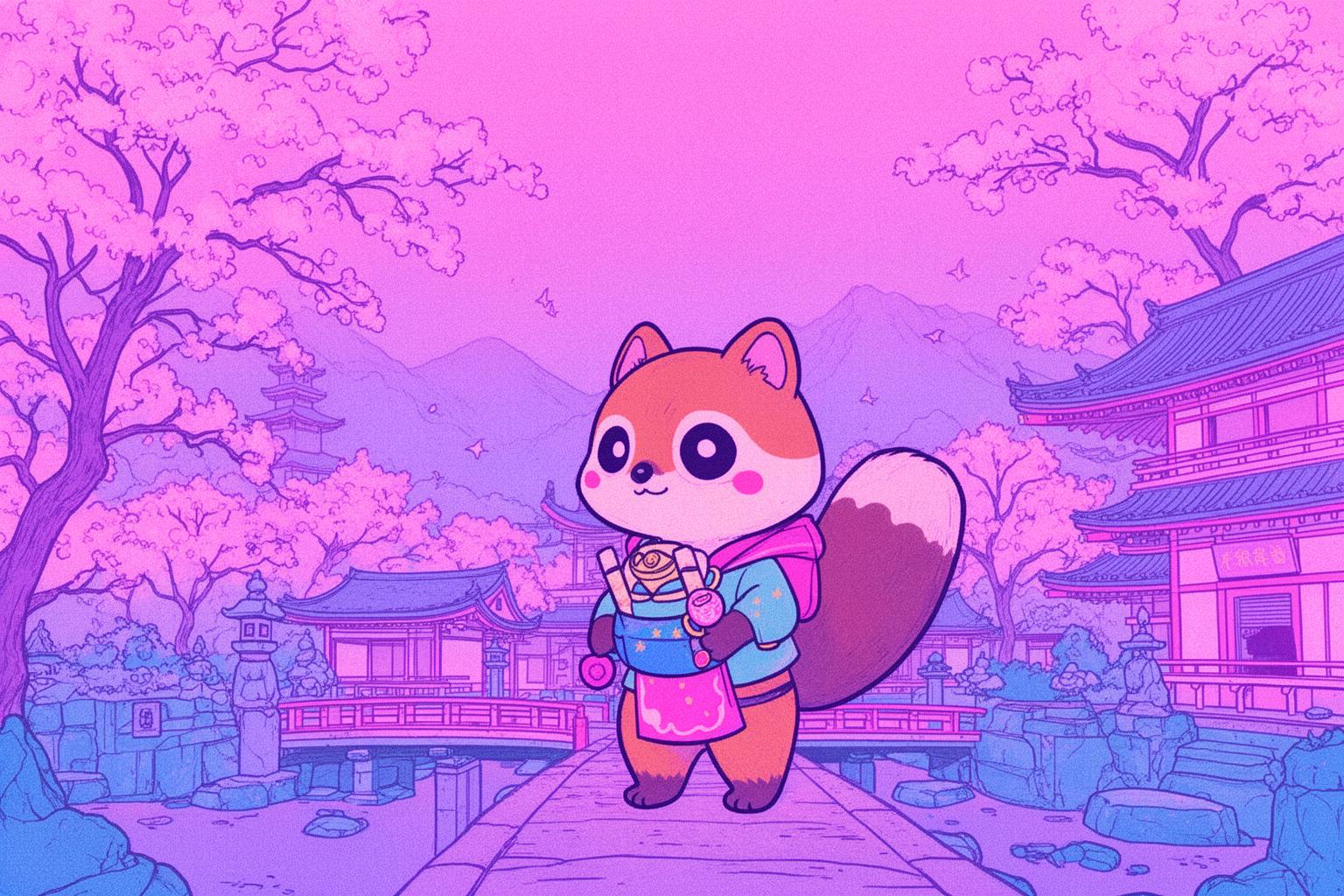
I remember my first truly obsessive Gachapon hunt. It took place in a crowded corner of Nakano Broadway. I wasn’t searching for anything specific, just soaking in the atmosphere, when I noticed it—a machine dispensing a series of traditional Japanese yokai (spirits) portrayed as tired, overworked salarymen. There was a Kappa carrying a tiny briefcase, an Oni distracted by his phone. But the one I wanted, the one that truly resonated with me, was the Bake-danuki (a shape-shifting raccoon dog) slumped on a park bench, his sake gourd empty. It was peak kimo-kawaii, and I had to have it. My first try gave me the Kappa. Cool, but not the Tanuki. The second try—another Kappa. The Gacha gods were testing my patience. I got more change. The third try yielded a Rokurokubi (a long-necked woman) tangled in her own neck. Amusing, but still not the Tanuki. Four attempts in, I was fully committed. People came and went, collecting their own prizes. I was locked in a silent battle of wills with this unyielding machine. I fed in my last ¥300, turned the crank slowly, whispering a small plea. Pon. I grabbed the capsule, opaque and mysterious. I popped it open—and there he was, in all his melancholic, slumped-over glory. The tiny, perfect, spiritually exhausted Tanuki. The rush of relief and triumph was surprisingly intense for a ¥300 toy. That little figure still sits on my desk, a reminder of the ridiculous, wonderful thrill of the hunt. It’s never been about the monetary value; it’s about the story, the effort, and the pure, random joy of finally claiming your tiny plastic treasure.
The Future in a Capsule
The world of Gachapon is continually evolving. What began as inexpensive trinkets has grown into a multi-billion yen industry that holds significant artistic and commercial influence. There is an increasing presence of “premium” Gashapon, with prices reaching ¥800, ¥1,000, or even ¥1,500. These higher prices enable the creation of larger, more intricate, and highly detailed figures, sometimes featuring complex articulation or electronic elements like LEDs. The distinction between a Gachapon toy and a high-end collectible is increasingly blurred. Simultaneously, the digital realm has adopted the concept through the rise of “gacha” mechanics in mobile games, where players spend currency for a chance to obtain new characters or items. Yet, despite the digital surge, the allure of physical Gachapon remains stronger than ever. There is something unique about the tactile experience: the weight of the coins, the mechanical turn of the dial, the solid feel of the capsule in your hand. It offers a real-world treasure hunt that no app can replicate. It connects you to a tangible place and a community of like-minded enthusiasts. It is a small, affordable luxury, a brief moment of pure, unscripted joy in a world that often feels too predictable. As long as there is a passion for craftsmanship, surprise, and the beautifully strange, the Gachapon machine will continue turning, dispensing tiny spheres of happiness to anyone with a few hundred yen and a sense of wonder. So go ahead, take a chance. Your perfect, tiny treasure is out there waiting for you, just one twist of the dial away.