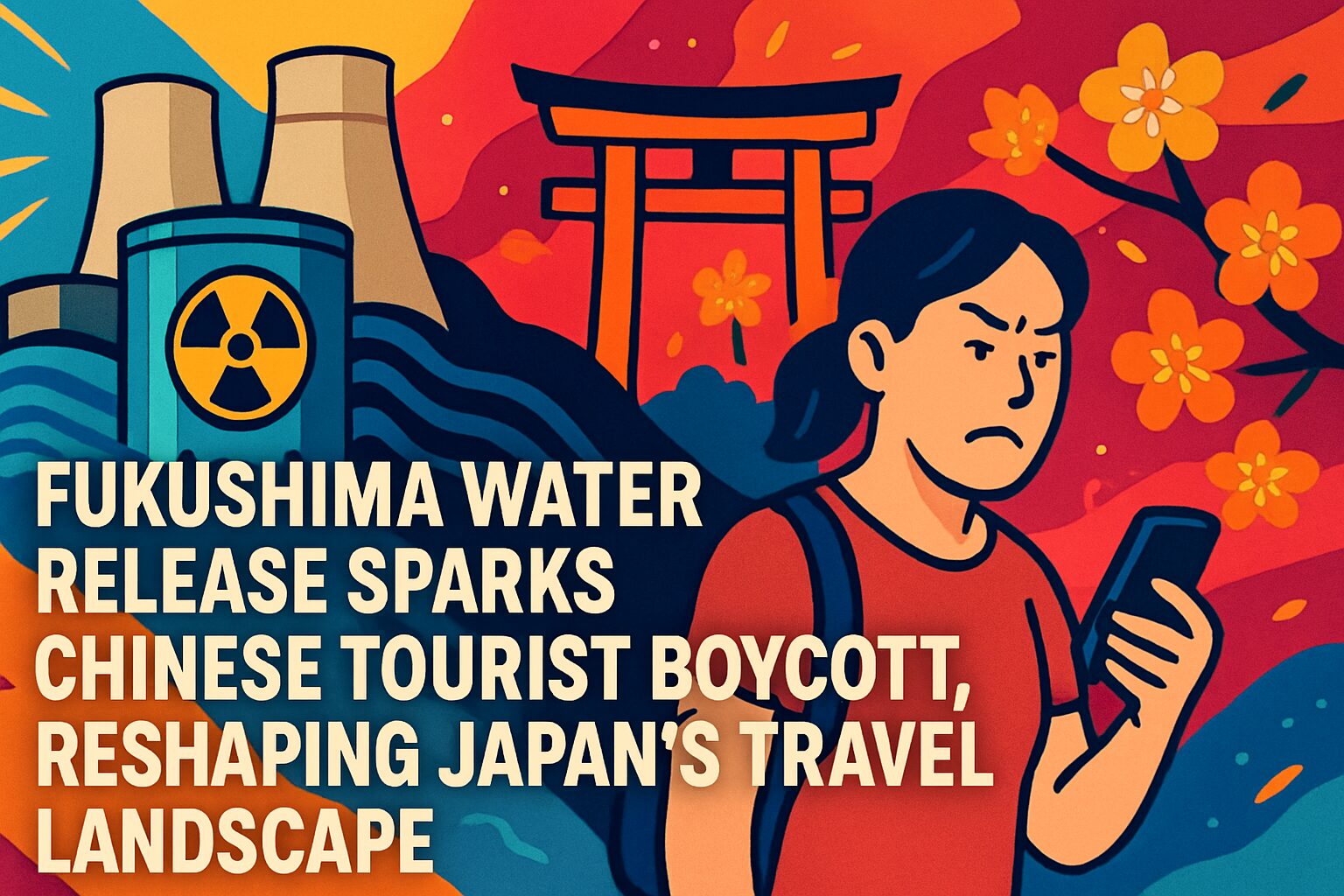
Japan’s tourism industry, once grappling with the challenges of “overtourism,” now faces an entirely different problem: a sudden and sharp decline in visitors from its largest market, China. A diplomatic dispute over the release of treated radioactive water from the Fukushima Daiichi nuclear power plant has triggered a wave of travel cancellations, fundamentally altering the outlook for Japan’s post-pandemic tourism recovery.
The Background: A Nation Torn Between “Too Many” and “Too Few”
Before the global pandemic shut down international travel, Japan was a victim of its own success. In 2019, the country welcomed a record 31.88 million foreign visitors. Popular destinations like Kyoto, Mt. Fuji, and parts of Tokyo were overwhelmed, leading to strained public transport, environmental degradation, and friction with local residents. The phenomenon, widely known as overtourism, prompted authorities to consider measures like raising bus fares for tourists and implementing a new entry fee for climbing Mt. Fuji.
Within this bustling landscape, Chinese tourists played an unparalleled role. In 2019, they accounted for the largest contingent of visitors, with 9.59 million arrivals. More significantly, their spending reached a staggering 1.77 trillion yen ($12 billion), representing 36.8% of the total expenditure by all international tourists. The industry’s reliance on the Chinese market was immense.
After a long hiatus, Japan was eagerly anticipating the return of Chinese tour groups, which were officially permitted to resume on August 10. Hopes were high for a swift economic boost, particularly for department stores, drugstores, and hotels that had previously catered heavily to this demographic.
The Turning Point: Diplomatic Fallout Over Treated Water
The situation took a dramatic turn on August 24, when Japan began the planned release of ALPS (Advanced Liquid Processing System) treated water from the Fukushima plant into the Pacific Ocean. While Japan and the International Atomic Energy Agency (IAEA) have maintained that the process is safe and meets international standards, the Chinese government responded with fierce opposition.
Beijing immediately imposed a blanket ban on all Japanese seafood imports and state-owned media launched a campaign criticizing the decision. This official response fueled a surge of anti-Japanese sentiment online and offline, leading to harassment calls to Japanese businesses and public institutions.
The Immediate Impact: Cancellations and Uncertainty
The fallout was swift and severe for the travel sector. Reports emerged of mass cancellations of flights and hotel bookings by Chinese tourists. Travel agencies that were gearing up for the lucrative National Day “Golden Week” holiday in October are now facing a near-total collapse in demand.
While precise cancellation figures are not yet public, the trend is clear. Before the water release, visitor numbers from China were steadily recovering. According to the Japan National Tourism Organization (JNTO), 364,000 Chinese tourists visited in August 2023. While this was still below pre-pandemic levels, it represented a significant month-on-month increase and positioned China as the third-largest source of visitors after South Korea and Taiwan. The diplomatic row has abruptly halted this momentum.
Future Outlook: A Forced Diversification of Japan’s Tourism Strategy
The sudden evaporation of the Chinese market is forcing a painful but potentially necessary pivot in Japan’s tourism strategy.
Short-Term Pain
In the short term, businesses heavily reliant on Chinese group tours and high-spending shoppers will face significant financial strain. The upcoming autumn and winter seasons, typically popular with Chinese visitors, are now shrouded in uncertainty. The economic loss could be substantial, impacting not only major cities but also regional areas that were hoping to attract more tour groups.
Long-Term Shift
This crisis may accelerate Japan’s move away from a volume-based tourism model to one focused on “quality over quantity.” For years, policymakers have discussed the need to attract higher-spending tourists and encourage longer stays and visits to lesser-known regions. The current situation provides an unsought-after catalyst for this transition.
The JNTO and other tourism bodies are expected to intensify their promotional efforts in other key markets, including:
- Europe, North America, and Australia: These markets have shown a strong recovery, with visitors often spending more per capita and staying longer.
- Southeast Asia and the Middle East: These are growing markets with significant potential, and Japan has been easing visa requirements to attract more visitors from these regions.
The overtourism problem that once plagued Kyoto’s Gion district and the trails of Mt. Fuji may be unintentionally alleviated. However, this comes at a steep economic price. The challenge for Japan’s tourism industry will be to navigate the immediate economic shock while building a more resilient and sustainable model that is not overly dependent on a single market, ensuring its long-term health against the unpredictable tides of international diplomacy.