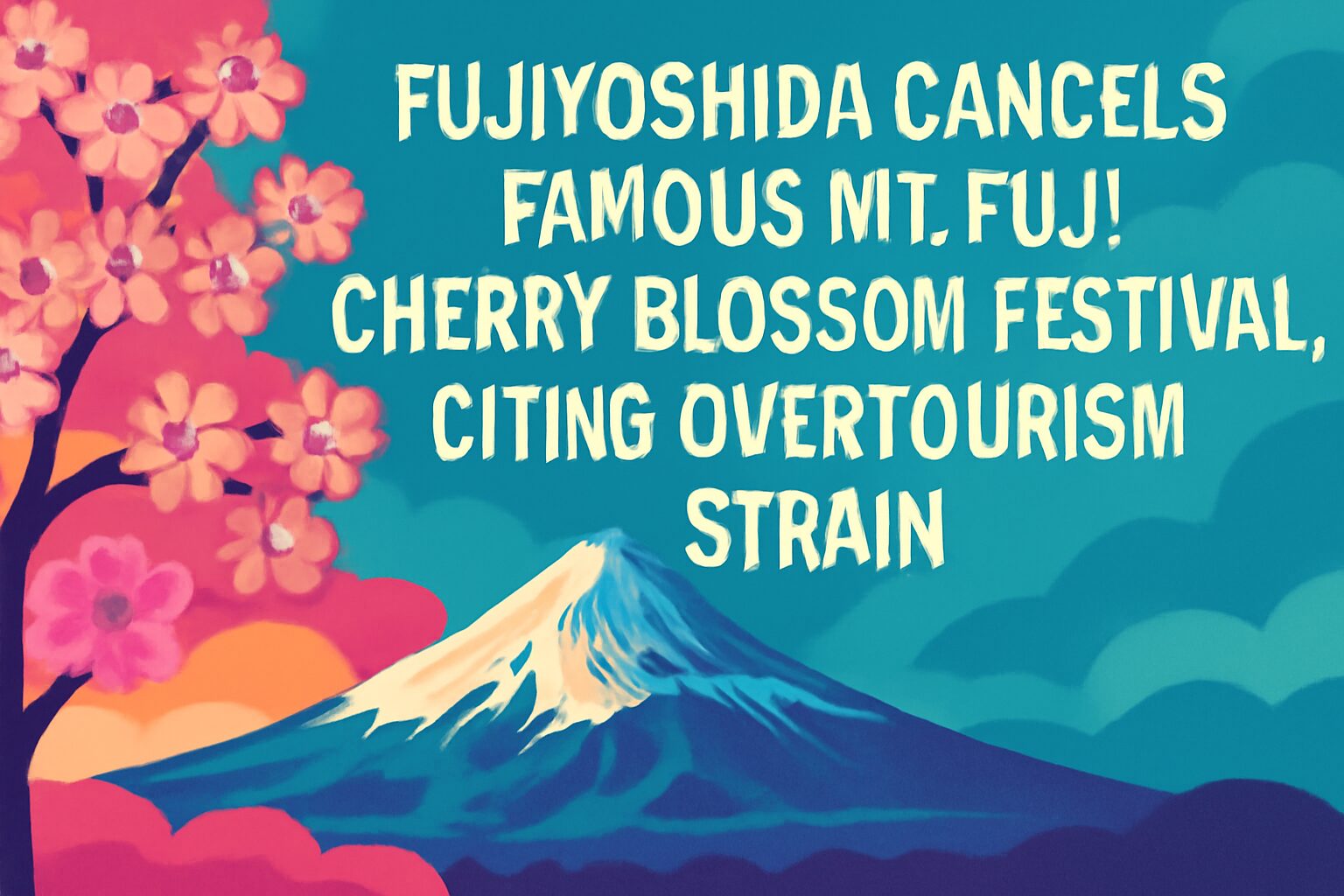
In a significant move that highlights Japan’s growing struggle with overtourism, the city of Fujiyoshida has announced the cancellation of its renowned cherry blossom festival held at the Arakurayama Sengen Park. The event, famous for its iconic view of the Chureito Pagoda framed by sakura and Mount Fuji, has fallen victim to its own success, as the city grapples with the severe economic and social pressures brought on by an overwhelming number of visitors.
The Unseen Costs of a Picture-Perfect View
For years, Arakurayama Sengen Park has been a must-visit destination, especially for international tourists seeking the quintessential photograph of Japan. The view from the park’s observation deck has graced countless social media feeds and travel guides, transforming the quiet city of Fujiyoshida into a global hotspot.
However, this popularity has come at a steep price. The influx of tourists has led to severe traffic congestion on the narrow local roads, illegal parking, widespread littering, and damage to the natural environment. Residents have also reported instances of trespassing and other disturbances, leading to a decline in their quality of life. The city’s infrastructure, not designed for such massive crowds, has been pushed to its limits.
This is not the first drastic measure the city has taken. In May 2024, officials erected a large black screen to block a popular photo spot in front of a Lawson convenience store, an attempt to deter crowds from congregating on a narrow sidewalk and dangerously crossing the street. The cancellation of the cherry blossom festival is a far more significant step, signaling that previous measures have been insufficient.
Japan’s Tourism Boom by the Numbers
The situation in Fujiyoshida is a microcosm of a nationwide issue. Fueled by a weak yen and pent-up travel demand following the pandemic, Japan is experiencing an unprecedented tourism boom.
According to the Japan National Tourism Organization (JNTO), the number of international visitors has been breaking records. In March 2024, monthly arrivals surpassed 3 million for the first time in history, a trend that continued through April and May. While this influx provides a significant boost to the national economy, it places immense strain on popular destinations that are ill-equipped to handle the volume.
The economic pressure cited by Fujiyoshida officials is not about a lack of revenue, but about the soaring costs of managing the “tourism pollution.” These include expenses for increased security personnel, traffic management, waste collection, and repairs to public facilities—costs that are beginning to outweigh the direct economic benefits for the local community.
Future Implications and the Search for Sustainability
The cancellation of such a major festival is a landmark decision that could have a ripple effect across Japan. Other tourism-heavy destinations like Kyoto, Kamakura, and Shirakawa-go, which face similar challenges, will be watching closely. It may embolden other municipalities to take similarly drastic steps to protect their communities and environments.
What this means for Fujiyoshida:
The city is now forced to rethink its tourism strategy, likely shifting its focus from attracting a high quantity of visitors to cultivating a higher quality, more sustainable form of tourism. This could involve implementing reservation systems for popular sites, introducing a local tourist tax, or promoting less-crowded attractions to disperse visitors.
What this means for travelers:
Travelers planning a trip to Japan may need to adjust their expectations. The era of unrestricted access to the most famous photo spots may be coming to an end. This decision serves as a stark reminder for visitors to be mindful of their impact, to respect local rules and customs, and to consider exploring destinations off the beaten path.
Ultimately, Fujiyoshida’s painful decision to cancel its beloved festival is a clear signal that the conversation around tourism in Japan is changing. The focus is shifting from pure growth to a more balanced approach that prioritizes the well-being of local residents and the preservation of the very beauty that attracts visitors in the first place. This could mark the beginning of a new, more sustainable chapter for tourism in the shadow of Mount Fuji.