Yo, let’s spill the tea. You’ve probably seen it on your feed: impossibly deep, fluffy snow, mountains that look like they’ve been dusted with powdered sugar, and… wait, is that guy ordering a flat white in a broad Aussie accent? You’re scrolling through geotags for Hokkaido, the northernmost island of Japan, but the whole vibe feels less like a quiet Japanese mountain town and more like Bondi Beach decided to get into snowboarding. This is Niseko. And if you’ve ever found yourself asking, “What’s the actual deal here? Why does this one specific spot in Japan feel like a piece of Australia got teleported to Asia?”—then you’ve hit on one of the most fascinating and, low-key, controversial stories of modern Japan. It’s a wild ride that involves Siberian weather fronts, a massive economic hangover from the 80s, and the sheer power of word-of-mouth. This ain’t your typical travel guide. We’re going deep to unpack the layers behind why Niseko became the undisputed capital of ‘Japow’ and how it transformed from a sleepy backwater into a global phenomenon that feels both distinctly international and yet, could only have happened in Japan. It’s a story of globalization on steroids, a cultural crossover event that has locals and outsiders alike still trying to figure it all out. So grab a hot drink, and let’s get into the nitty-gritty of how this powder paradise became a home away from home for a whole continent.
To understand how this powder paradise evolved from its quiet origins, consider exploring the real-life Snow Country that inspired its legendary atmosphere.
The Legend of Japow: It’s All About the Snow, Fam
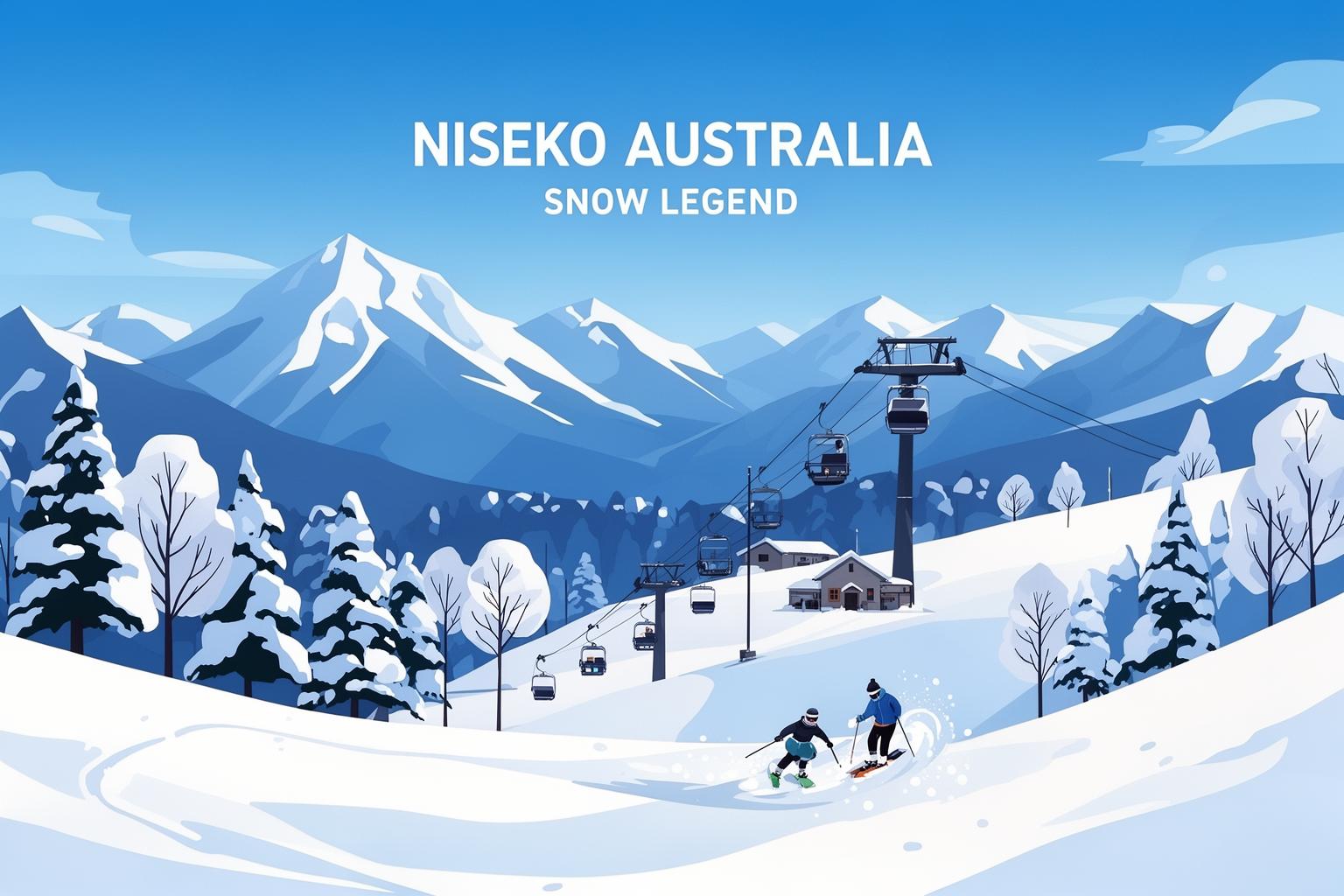
First and foremost, you need to grasp the almost mythical substance that started it all: ‘Japow,’ or Japanese powder snow. If you’re not a skier or snowboarder, this might sound like marketing exaggeration. But believe me, it’s a genuine meteorological marvel. The hype is real, and it forms the foundation of Niseko’s entire identity. To truly understand Niseko’s transformation, you first have to understand why people are willing to travel halfway across the world for this specific frozen snow.
The Science Behind the Magic
So, what makes Japow so incredibly special? It’s a perfect storm, literally. It begins far away in the vast, frigid expanse of Siberia. During winter, intensely cold, dry air masses originate there. These air masses then move eastward, and as they pass over the relatively warm Sea of Japan, they absorb a huge amount of moisture. Imagine a bone-dry sponge being dragged through a puddle. This moisture-saturated air then collides with the mountains of Hokkaido, including the Niseko range. The mountains force the air upward, causing it to cool quickly and drop all that moisture as snow. And because the air remains so cold, the snowflakes that form are incredibly light and dry. This isn’t the heavy, wet snow you might find elsewhere, which can be tough to ski through; this is champagne powder. It’s so light that it contains an extremely low water percentage, sometimes as little as 8%. This creates a sensation of floating, almost like surfing on a cloud. It’s bottomless—you can fall into it and feel like you’re landing in a foam pit. For powder enthusiasts, this is the holy grail. Niseko consistently receives some of the highest snowfall totals worldwide, averaging 15 meters (about 50 feet) per season. It snows nearly every day in January and February. This isn’t an occasional blizzard; it’s a steady, reliable refreshing of the slopes. You can ski your favorite run, and by the next morning, it’s a pristine blank canvas covered with fresh powder. This relentless consistency is what transformed Niseko from a local secret into an international destination. The word spread through the global ski and snowboard community: if you want guaranteed deep, light powder, Japan is the place to be.
More Than Just Snow: The Vibe It Created
The quality of the snow also influenced the culture of skiing and snowboarding in Niseko. The deep powder and beautifully spaced birch trees provide some of the best tree skiing experiences in the world. This drew a particular type of rider—one less focused on perfectly groomed trails and more on exploration, adventure, and discovering fresh, untracked lines. This adventurous mindset, this emphasis on the pure joy of riding deep powder, became the heart of Niseko’s identity. It was less about the flashy après-ski scene of European resorts and more about the raw experience of being in nature and enjoying the best snow on earth. This raw, authentic charm was the initial draw that began attracting the most dedicated skiers and snowboarders from around the world, especially from Australia, where a similar surf culture chasing the perfect wave seamlessly translated to pursuing the perfect powder day.
Ghost of the Bubble: How an Economic Crash Set the Stage
Alright, so the snow in Niseko is incredible. Understood. But great snow exists elsewhere too, right? Why did Niseko, in particular, become so famous? To explain that, we need to rewind to late 1980s Japan, during the era known as the “Bubble Economy.” It was a period of absolute economic madness. The Tokyo Imperial Palace grounds were reportedly worth more than all the real estate in California. People were paying millions for golf club memberships. There was a flood of cheap money, and companies were spending it recklessly. A large portion of that investment went into constructing extravagant resorts, especially ski resorts. The belief was that a burgeoning, wealthy middle class would have endless leisure time and money to spend on skiing vacations. Developers went overboard, building enormous hotels, cutting-edge gondolas, and whole resort towns in remote mountain regions throughout Japan.
The Bubble Bursts, Resorts Fail
Then, in the early 1990s, the bubble burst. Spectacularly so. The stock market collapsed, real estate prices nosedived, and Japan entered a prolonged period of economic stagnation called the “Lost Decades.” All those shiny new ski resorts, built for a future that never materialized, suddenly became white elephants. They were over-leveraged, under-visited, and hemorrhaging money. Many went bankrupt. Across Japan’s mountains, ghost resorts appeared—beautiful facilities with world-class potential, yet nearly deserted. The domestic ski market was shrinking as the population aged and the economy weakened. The resorts that remained were desperate, offering lift tickets and lodging at rock-bottom prices just to stay afloat. Niseko was one of these places. It boasted four connected resorts, excellent terrain, and legendary snow, but it was a quiet, locally focused destination struggling to survive. The infrastructure existed, but the crowds did not. This created a vacuum—a huge opportunity for anyone seeking a world-class ski experience without the corresponding price tag.
An Unintended Invitation
This economic context is absolutely key. Without the bubble’s collapse, Niseko probably would have remained an expensive, domestic-focused resort. The crash effectively put Japan on the market. The yen was relatively weak, and the assets—the hotels, the land, the lift companies—were incredibly affordable for anyone with foreign currency. It was an accidental, unplanned invitation to the world. Japan wasn’t trying to promote Niseko internationally; it was simply trying to survive. This economic desperation prepared the ground for a foreign takeover that was about to unfold. The stage was set for a new wave of pioneers to discover this undervalued, snow-covered paradise.
The Aussie Invasion: How a Continent Found Its Winter Home

So, you have a perfect storm brewing: legendary amounts of snow and struggling resorts practically handing out lift passes. The final piece of the puzzle was the arrival of the Australians. In the early 2000s, a handful of adventurous Aussie skiers and snowboarders, hearing rumors about Japan’s incredible powder and low prices, made the journey. What they discovered blew them away.
Why Australians, Specifically?
At first glance, the connection seems arbitrary, but it makes perfect sense when examined closely. First, the geography is a major advantage. Australia’s summer coincides with Japan’s winter. For Australian ski enthusiasts, the traditional options were long-haul flights halfway around the world to North America or Europe, involving severe jet lag and expensive, lengthy travel. Japan, by contrast, is practically next door. The flight duration is reasonable, and crucially, the time difference is minimal—just one or two hours depending on where you are in Australia. This means you can take a week-long break without spending the first several days feeling like a zombie. It’s a real game-changer. You can leave Sydney Friday night and be carving the slopes of Niseko by Saturday afternoon. Secondly, there was the economic factor. During the mid-2000s mining boom, the Australian dollar was exceptionally strong against the Japanese yen. For Australians, Japan became not only accessible but also affordable. A ski holiday in Niseko—including flights, accommodation, and lift tickets—could cost less than a comparable trip to Australian ski resorts, where snow is notoriously unreliable and prices are higher. It was an unbeatable value.
From Trickle to Flood: The Power of Community
What began with a few pioneers quickly turned into a flood, fueled almost entirely by word-of-mouth. Those early visitors returned with unbelievable stories and photos of chest-deep powder. They told their friends, “You won’t believe this place. It snows every day, it’s affordable, and the food is incredible.” The surf and ski communities in Australia are very close-knit. Word spread fast. Before long, groups of friends were booking trips en masse. Aussie entrepreneurs recognized the opportunity and began establishing businesses to serve this new wave of tourists: ski schools with English-speaking instructors, rental shops, cafes offering flat whites and meat pies beloved by Aussies. They snapped up cheap property, building lodges and chalets. This created a feedback loop: more Australians came, the town adapted to them, making it even more appealing for more Australians to visit. English became the unofficial language of the main village, Hirafu. You could live, work, and holiday there for months without needing to speak Japanese. Niseko wasn’t just a destination Australians visited; it became a place they lived. It felt like home, only with way, way better snow.
Niseko Today: A Tale of Two Realities
Fast forward to today, and the change is astonishing. The main hub, Hirafu, is almost unrecognizable compared to the quiet Japanese village it once was. It has become a hyper-modern, international resort town. Sleek, minimalist concrete-and-glass luxury condos and penthouses have replaced the old pensions and traditional inns. The streets are filled with upscale restaurants, trendy cocktail bars, and international brand-name ski shops. You’re now more likely to hear English, Cantonese, or Mandarin spoken on the street than Japanese. The prices reflect this new reality. Niseko has become one of the most expensive real estate markets in Japan, with land values skyrocketing to rival those in central Tokyo. The area functions within its own economic microclimate, a bubble within the larger, often struggling, Japanese economy.
The International Village
The atmosphere is unabashedly international. Supermarkets carry imported goods like Tim Tams, Vegemite, and Australian craft beer. Menus are written in English, prices are often shown in Australian dollars, and credit cards are accepted everywhere—a stark departure from the cash-centric culture typical of much of rural Japan. This has created a space that is incredibly easy and comfortable for foreign tourists to navigate. There’s no culture shock or language barrier. It’s a frictionless version of Japan, perfectly tailored for a global audience. For many visitors, this is exactly the point. They enjoy Japan’s epic snow and delicious food without any of the usual communication hurdles. But this situation also prompts the central question that hangs over the resort.
Is This Even Japan Anymore?
You can spend a week in Hirafu and experience an almost entirely non-Japanese environment. Your ski instructor might be from New Zealand, your bartender from Canada, the real estate agent from Hong Kong, and the family next door from Singapore. This has sparked a common criticism: that Niseko isn’t the “real Japan.” In many respects, that’s true. It’s not a typical Japanese town. But dismissing it as inauthentic misses the point. Niseko’s story—a mix of a post-bubble economy, favorable weather, and international capital—is a distinctly modern Japanese story. It’s a compelling case study in globalization and a living example of how Japan is evolving, for better or worse. It represents a new kind of Japan, one that is more open, more international, and more fueled by foreign investment than ever before. It’s an anomaly, but one born from very specific Japanese circumstances.
The Local Perspective: Gold Rush or Cultural Erosion?
What is it like for those who were there before it all began? For the local Japanese community in nearby towns like Kutchan, the Niseko boom has been a double-edged sword. On one side, it brought a tremendous amount of economic activity to a region that, like much of rural Japan, faced depopulation and decline. It generated jobs, sparked construction, and put the area on the global map. The surge in tax revenue funded new schools and public facilities. Many locals who owned land became millionaires almost overnight, selling their family farms for astonishing sums to foreign developers.
The Cost of the Boom
However, this gold rush has come at a steep price. The most apparent problem is the rising cost of living. The Niseko property boom has made it nearly impossible for ordinary local residents, especially younger generations, to afford living in the area where they grew up. They are being priced out of the very economy they help support. Many of the new jobs are low-wage, seasonal service roles—cleaning hotel rooms, washing dishes, operating ski lifts—while the well-paid professional and management positions often go to foreigners. This has created a clear social and economic divide. There’s a growing feeling of alienation, of becoming strangers in their own hometown. Imagine walking through your village and not being able to read the signs because they are all in English, or being unable to afford a coffee at the new cafe that replaced the old noodle shop. There is a sense that the culture is being diluted, that the traditional way of life is being wiped out and replaced by a generic, international resort culture. The quiet onsen (hot spring) experience has been drowned out by loud après-ski bars. The sense of community has been fractured.
Navigating the Future
This tension stands as the central challenge for Niseko’s future. How can the region balance the undeniable economic benefits of tourism with the need to preserve its cultural identity and ensure that the local community shares in the prosperity? There are no simple solutions. Some advocate for greater regulation on foreign development, while others warn this would kill the golden goose. From the perspective of someone familiar with East Asian culture, it is a familiar story of development versus preservation, but with a distinctively Japanese twist. Unlike some rapid, state-driven development projects seen elsewhere in Asia, Niseko’s growth was more organic and chaotic, propelled by external forces that the local system was initially unprepared to handle. The town is now rushing to manage the consequences of a boom that happened to them, rather than one they engineered. The story is far from finished. The next chapter will be shaped by how Niseko navigates this delicate balancing act—striving to be a world-class destination without losing the very soul that made it special in the first place.