You’ve seen them. That hypnotic scroll on your feed stops for a sec on an ASMR video. A blade, impossibly thin and shimmering like a sliver of moonlight, glides through a ripe tomato. There’s no pressure, no tearing. The tomato halves just… separate, their internal structure perfectly intact. Or maybe it’s a high-end cooking show, where a stoic chef wields a long, elegant knife, carving a block of tuna into translucent slices of sashimi with a single, fluid pull. The knife looks less like a kitchen tool and more like an artifact from another world. You see the price tag, and you gotta ask: Yo, what’s the actual deal here? Why are people dropping hundreds, sometimes thousands, of dollars on a Japanese kitchen knife? Is it just for the aesthetic, a piece of kitchen jewelry for the clout-chasing foodie? Is this whole thing just a modern weeb fantasy, or is there some legit, tangible substance behind the insane hype? The short answer? It’s deep. Deeper than you think. This isn’t just about getting a sharper knife. It’s about tapping into a legacy that’s been forged over centuries, a story of how a weapon of war was reborn as an instrument of culinary art. We’re about to peel back the layers, moving past the surface-level cool factor to get at the core of why these blades are a whole different beast. This is a journey into the soul of Japanese craftsmanship, where history, metallurgy, and a philosophy of perfection all get hammered into a single piece of steel. To really get it, you have to go to the source, to places where the air still rings with the sound of hammers on steel, like the city of Sakai in Osaka, a historic capital of Japanese blade-making.
To truly understand the philosophy that shaped these blades, one must explore the samurai’s unique relationship with death and the principles of Bushido.
From Katana to Kitchen: The Samurai Legacy Drop
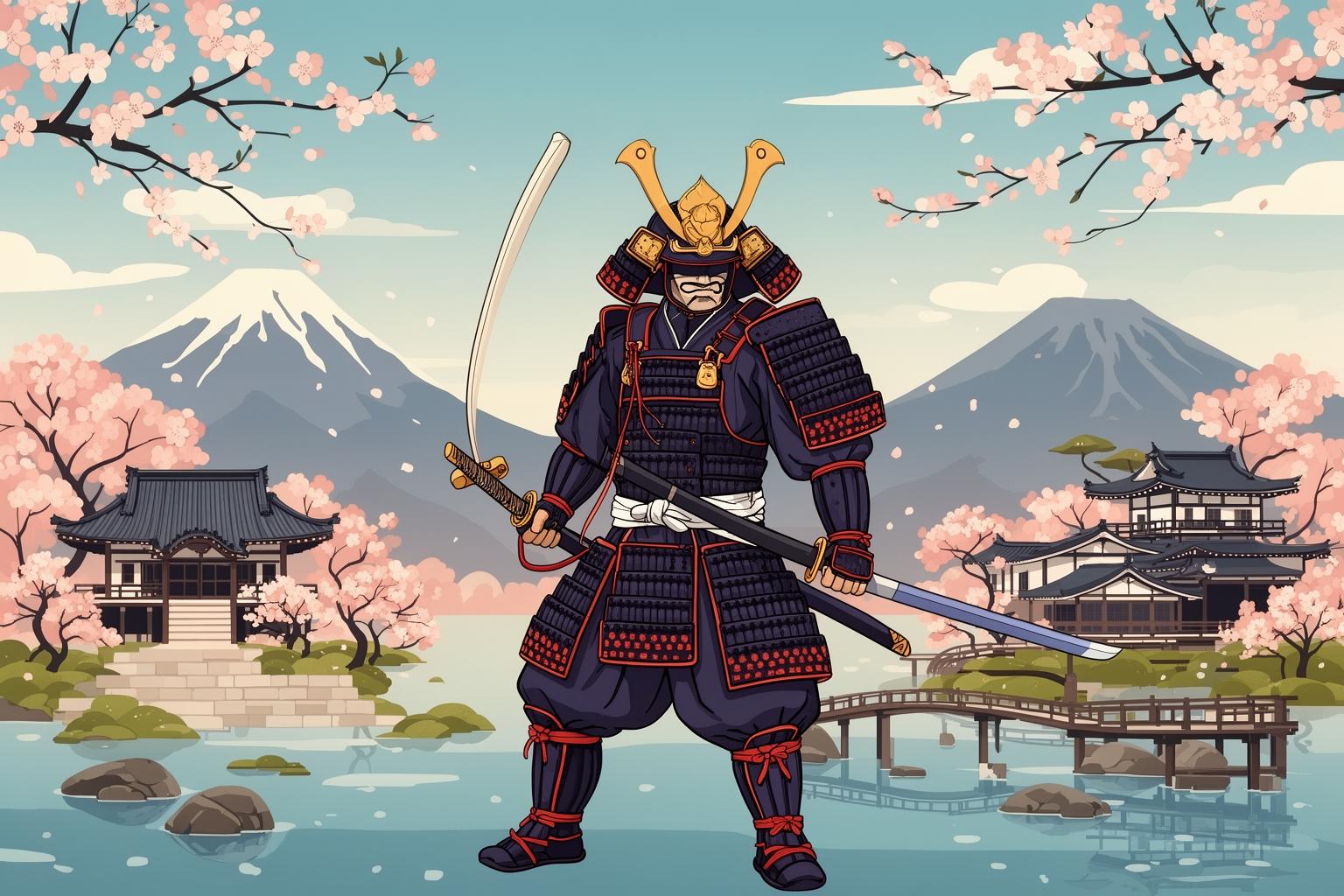
The story of the modern Japanese kitchen knife is essentially one of cultural upheaval and reinvention. To truly grasp the blade in your hand, you need to go back to the late 19th century, a time that profoundly transformed Japan: the Meiji Restoration. It was an era of sweeping, jolting change. After centuries of feudal isolation, Japan opened its doors to the West and raced to modernize its industry, government, and society. In this frenetic push toward the future, the past was forcefully abandoned, most keenly felt by the samurai.
The Original Swordsmiths’ Shift
For centuries, the samurai formed the elite warrior class, with the katana at their core. The swordsmiths who crafted these blades were among the country’s most revered artisans. They were far more than metalworkers; they were masters of a nearly mystical craft, transforming raw iron sand into weapons of legendary sharpness and beauty. Their entire existence, social standing, and family heritage were tied to sword-making. Then, in 1876, the government issued the Haitōrei Edict, banning the public wearing of swords. Just like that, the samurai class was dismantled, and their principal status symbol rendered obsolete. An entire industry grounded in centuries of tradition vanished overnight. Imagine being a master craftsman at your peak, only to have your life’s work outlawed. Demand for katanas disappeared. Thousands of skilled swordsmiths across Japan, from Seki to Sakai, faced unemployment and an identity crisis. What does one do when the world no longer needs their art? They adapt or perish. So, they adapted. Using the same ancient techniques, deep steel expertise, and relentless pursuit of perfection that went into sword-making, they began crafting tools fit for a peaceful era. They forged kitchen knives (hōchō), scissors, and farming implements. This was more than a career change; it was cultural preservation. They ensured their ancestral knowledge—the very spirit of Japanese blade artistry—would not fade into history. This embodies the essence of monozukuri, a Japanese concept often translated as “the art of making things” but holding much deeper meaning. It reflects a craftsman’s pride, skill, and dedication to creating the highest quality product, not merely for profit but as a service to society. The first generation of modern knifemakers were not just producing kitchen tools; they were forging a new identity and preserving the samurai spirit in a form for everyday use.
Katana Lineage in Your Gyuto
The connection between a katana and a high-end Japanese kitchen knife is more than romantic marketing; it is a real metallurgical heritage. The core construction principles that made the katana a formidable weapon are directly reflected in the kitchen knives crafted by master smiths today. This technique lineage is visible in the very steel itself.
The Hard Steel Core (Hagane)
The brilliance of the Japanese sword lay in solving a classic engineering challenge: how to make something both incredibly hard (to retain a sharp edge) and tough (to absorb impact without breaking). These qualities are usually mutually exclusive in steel. The Japanese swordsmiths’ answer was lamination. They forged an extremely hard, high-carbon steel core—hagane—for the cutting edge. This steel sharpens to a razor edge and retains it through intense use but is brittle, like glass, and would snap if used alone in combat. Therefore, they clad this hard core in a softer, more flexible, lower-carbon iron or steel jacket called jigane, which acted as a shock absorber, providing resilience and preventing breakage. This exact technique, called san mai (three layers) or warikomi, forms the backbone of most premium forged Japanese kitchen knives. The smith forge-welds the hard core between two layers of softer steel. Often, a faint wavy line near the blade edge reveals this layering, a mark of its heritage and a direct link to the swords of old. It’s a design that balances the best of both worlds: an ultra-sharp edge that endures, supported by a blade body tough enough for professional kitchens.
The Signature Wave (Hamon)
Anyone who has closely examined a real katana will recall the hamon: a striking, cloud-like or wavy pattern running along the blade near the edge. This pattern is not merely decorative; it is the visible result of differential hardening. The smith coated the blade with a secret mixture of clay, charcoal, and other materials, applying a thick layer on the spine and a very thin layer on the edge. When heated to the ideal temperature and quenched in water, the thin-clay edge cooled almost instantly, becoming extremely hard (forming martensite), while the thick-clay spine cooled more slowly, remaining softer and more flexible (forming pearlite and ferrite). The hamon marks the boundary between these two steel structures. Although most kitchen knives lack a true clay-tempered hamon—due to the labor-intensive process and reduced necessity for kitchen use—the spirit remains. The contrast between the hard hagane core and softer jigane cladding is often a deliberate aesthetic choice. Additionally, many modern knives showcase suminagashi or Damascus patterns, created by forge-welding multiple steel layers, then grinding and polishing to reveal swirling, wood-grain-like patterns. This design is not only beautiful but also helps reduce food sticking. This is a modern expression of katana’s visual storytelling—the blade’s surface revealing how it was made.
The Grind and the Edge
Perhaps the most important functional inheritance from sword-making is the blade geometry, especially the cutting edge. Traditional Japanese knives, known as wabōchō, are often single-beveled, sharpened only on one side, producing an extremely acute edge angle—usually about 15 degrees, compared to 20–25 degrees on both sides of a typical German knife. This chisel-like edge, called a kataba, enables sushi chefs to slice fish with surgical precision, minimizing cellular damage and preserving the ingredient’s delicate texture and flavor. This design evolved directly from tools and weapons requiring clean, efficient cuts. Meanwhile, double-beveled Japanese knives, like gyuto, are versatile, Western-style adaptations but maintain a thinner profile and more acute edge angle than European knives. This focus on pure cutting efficiency and minimal force traces a philosophical lineage from feudal Japanese battlefields right to the modern kitchen counter.
The ‘Shokunin’ Vibe: More Than Just a Job
To fully understand why these knives are so exceptional, you need to appreciate the culture that creates them. In the West, someone might be called a master craftsman, but in Japan, the term is shokunin. The concept of shokunin carries profound social and spiritual significance. It goes beyond the idea of a job or career and enters the realm of a lifelong calling. This deeply rooted cultural ideal shapes the very essence of Japanese craftsmanship.
The Craftsmanship Cult
A shokunin is an artisan who has devoted their life to perfecting their craft. However, the shokunin mindset, or shokunin kishitsu, is about far more than just technical expertise. It is a commitment to giving one’s utmost effort for the spiritual and material well-being of society. The pursuit of perfection is not motivated by fame or profit but by dedication to the craft itself. This mindset sharply contrasts with the mass-production attitude of settling for “good enough.” For a true shokunin, “good enough” equals failure. The process is a continuous cycle of improvement, known as kaizen. Each day’s goal is to produce a knife that is just a little better than the one made the day before. This often involves a rigorous and prolonged apprenticeship. A young apprentice (deshi) may spend years, sometimes even a decade, performing seemingly simple tasks like sweeping the workshop, tending the fire, and preparing materials. They learn through observation, absorbing the rhythm and flow of the master’s work. Only after demonstrating unwavering patience, dedication, and deep respect for the craft are they allowed to handle a hammer and blade. This journey is not about memorizing instructions; it is about internalizing a philosophy. The knifemaker is not merely creating an object; they are infusing it with their spirit, dedication, and entire essence. When you hold a knife made by a master shokunin, you are holding a lifetime of focused effort—a piece of their soul. Such commitment is rare in the modern world, and it is evident in the perfect balance and flawless finish of the blade.
Why the Hyper-Specialization?
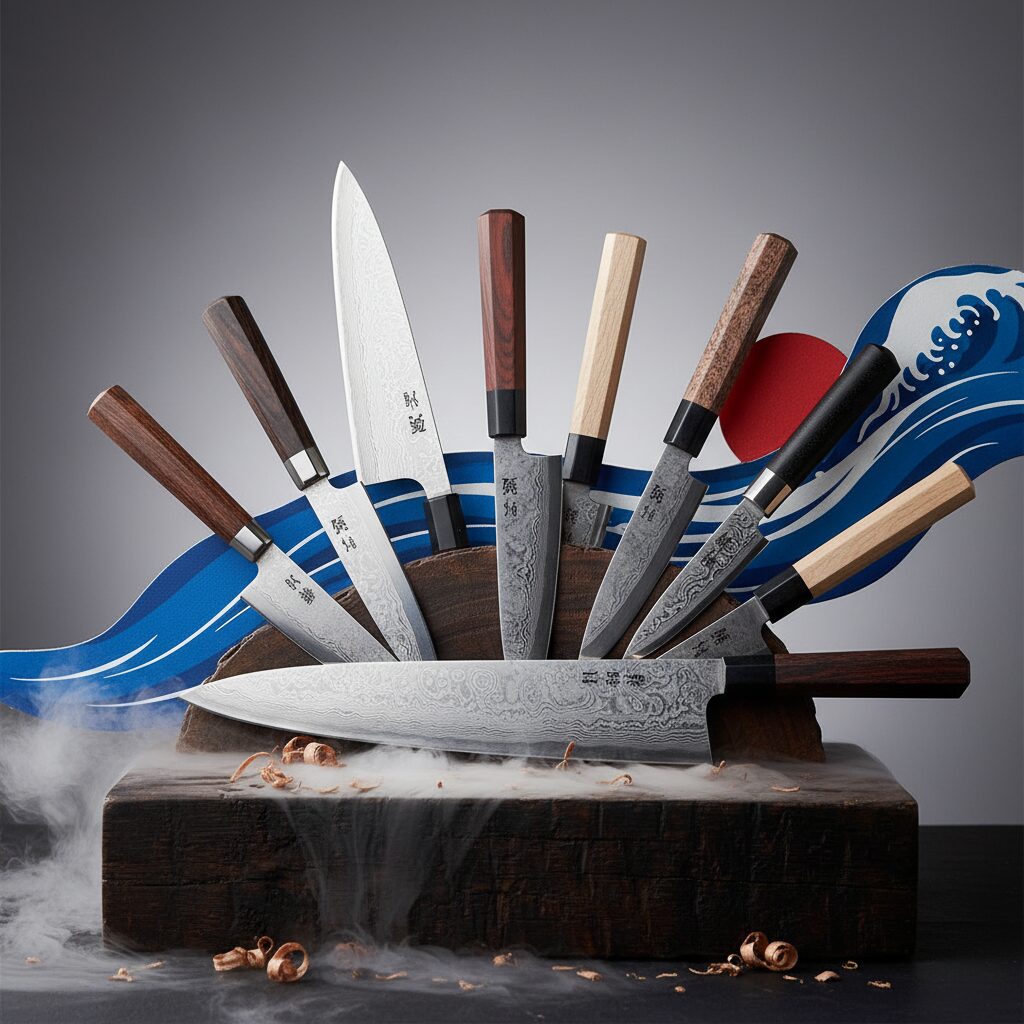
Step into a specialty knife shop in Japan, and the vast variety can be overwhelming. It’s not just about a chef’s knife and a paring knife. There is a whole universe of blades, each crafted for a specific purpose. This hyper-specialization directly reflects the demands of traditional Japanese cuisine, washoku. The core principle of washoku is to highlight and honor the natural flavors and textures of seasonal, fresh ingredients. Because the preparation is often minimalist, the quality of the cuts is crucial. A dull knife or the wrong blade can crush the delicate cells of vegetables or tear the flesh of fish, altering texture and releasing bitter flavors. Thus, the knife is not merely a cutting tool; it is the primary and most vital instrument in the culinary symphony. There is the deba, a thick, heavy, single-bevel knife with a sturdy spine designed for butchering and filleting whole fish, capable of cutting through bones and cartilage. Then the yanagiba—a long, slender, willow-leaf-shaped slicer used for sashimi—whose length allows chefs to pull the blade through fish in one smooth, uninterrupted motion, creating slices with a glossy, perfectly smooth surface that feel sublime on the tongue. For vegetables, there are the usuba (thin blade) and nakiri (home version), both with flat, straight edges for precise chopping and peeling paper-thin sheets of daikon radish (katsuramuki). Each knife is a specialist and a master of its domain. Using the correct knife shows respect—respect for the ingredients that gave their life, respect for the diners, and respect for the culinary tradition itself. For a Japanese chef, their knives are extensions of their hands and will—the most sacred tools in their arsenal.
Real Talk: Is It All Just Hype?

With all this history and philosophy, it’s easy to get caught up in the romance. But let’s focus on the practical question: is a high-end Japanese knife truly worth it, or is it just diminishing returns driven by clever marketing? When you begin shopping, you’re overwhelmed by a flood of technical terms and options that can be quite confusing. Carbon vs. stainless? Handmade vs. hand-finished? It’s vital to cut through the noise and grasp the real-world trade-offs.
The Carbon Steel vs. Stainless Steel Debate
This is the first significant decision for any buyer and represents a fundamental philosophical choice — the clash between ultimate performance and everyday convenience.
Carbon Steel (The Purist’s Preference)
Traditional Japanese knives are crafted from high-carbon steels like Shirogami (White Paper Steel) or Aogami (Blue Paper Steel). These names derive from the color of the paper Hitachi Metals uses to wrap the raw steel, indicating its purity and composition. These steels are direct descendants of the tamahagane steel used in swordmaking. Their main advantage is incredible sharpness. The fine grain structure of high-carbon steel allows sharpening to a much finer, more acute edge than most stainless steels. It also boasts excellent edge retention, keeping its sharpness longer. For professional chefs requiring a razor edge for extended periods, this is a game-changer. However, carbon steel has a major downside: it’s reactive. Cutting acidic foods like lemons without wiping the blade immediately can cause discoloration. Leaving it wet will lead to rust—and quickly. Over time, the blade develops a patina, a stable oxidation layer that turns it mottled grey or blue-black. This patina actually protects against aggressive red rust, and many enthusiasts value it as a mark of the knife’s history and use. Caring for a carbon steel knife demands discipline; you must wash and dry it by hand right after use. It’s a commitment reflecting a deeply Japanese cultural value: dougu wo taisetsu ni suru — to cherish and care for one’s tools. A tool isn’t disposable; it’s a partner in the craft. The relationship you build with a carbon steel knife—nurturing its patina and maintaining its edge—is part of the experience.
Stainless Steel (The Low-Maintenance Champion)
For many home cooks, the idea of a knife that rusts is unacceptable. That’s where modern stainless steel comes in. Stainless steel contains a high chromium content, forming a passive, rust-resistant surface layer. You don’t need to obsess over drying it immediately. The traditional critique was that stainless steel is softer, harder to sharpen, and lacks the edge-holding ability of carbon steel. But metallurgical advances have surged forward. Modern Japanese stainless steels like VG-10, AUS-8, and especially high-tech powder metallurgy steels like SG2 (R2) and ZDP-189 deliver incredible performance. They’re engineered for extreme hardness, allowing a sharp edge to be held for a long time, rivaling and sometimes surpassing some carbon steels, while offering excellent corrosion resistance. For many, a knife made of high-quality Japanese stainless steel strikes the ideal balance between elite performance and practical everyday use.
“Handmade” vs. “Hand-Finished”: How to Beware of Fakes
The global rise in popularity of Japanese knives has inevitably flooded the market with fakes and low-quality copies. Brands on Amazon or Instagram often use Japanese-sounding names and vague marketing buzzwords like “Samurai Steel” or “Hand-Forged” to sell mass-produced knives from China. It’s essential to distinguish a truly forged blade from a cheap imitation. A genuine forged knife, or uchi-hamono, is crafted by a blacksmith who heats and hammers steel billets to shape the blade, forge-weld layers, and set geometry—a demanding skill requiring years to master. Many cheaper knives, however, are stamped from large metal sheets by machines, then machine-ground and quickly finished. The term “hand-finished” can be misleading; it might just mean a worker attached a pre-made handle to a machine-stamped blade by hand. How do you spot an authentic knife? Look for signs of craftsmanship. A truly handmade knife shows subtle imperfections. You may see faint hammer marks, known as tsuchime, which also help with food release. The lamination line (san mai) near the edge is often visible. The spine and choil (where blade meets handle) are usually rounded and polished for comfort. Most importantly, research the maker and region—the great Japanese knife-making centers—Sakai, Seki, Sanjo, Echizen, Tosa—carry strong reputations. A genuine knife has a pedigree, a story, and the maker’s name. Be wary of knives perpetually on 50% off “sale” or making exaggerated claims. A real forged knife represents an artisan’s lifetime of work, and its price reflects that.
The Modern Samurai’s Toolkit: So, Should You Get One?
After exploring the history, culture, and technical aspects, we return to the initial question: should you really buy one of these knives? The answer depends on what you need. If you simply want a knife to chop vegetables and plan to put it in the dishwasher, then honestly, a high-end Japanese knife might not be the right choice. It would be like purchasing a Formula 1 car just to do grocery shopping. However, if you desire something more, it could transform your entire cooking experience.
It’s Not Just a Knife, It’s a Mindset
Owning a finely crafted Japanese knife invites you to be more present and mindful in the kitchen. When you hold a tool that’s so light, perfectly balanced, and incredibly sharp, it demands your full focus. Carelessness isn’t an option. This concentration naturally influences how you handle your ingredients. You start making more intentional, precise cuts, consider the angle of each slice, and begin to appreciate the texture of a perfectly julienned carrot or the clean, unblemished surface of a sliced scallop. This goes beyond efficiency; it’s about engagement. Food preparation shifts from a chore into a practice, a form of active meditation. Caring for the knife—washing and drying it carefully, learning to sharpen it on a whetstone (toishi)—becomes a soothing ritual. The meditative sharpening process is an art in itself, a quiet moment of connection between you and your tool. In this way, you partake in the shokunin philosophy, striving for perfection in a simple, daily act. You honor your tools and ingredients. This mindset shift can bring unexpected joy and fulfillment to the humble act of cooking.
Finding Your Blade
If you’re ready to dive in, the key is to start wisely. Avoid buying an ultra-specialized, $500 single-bevel yanagiba knife unless you’re planning to open a sushi counter at home. For 99% of people, the best starting point is a versatile, all-purpose knife. The two main options are the Gyuto and the Santoku. The Gyuto is the Japanese counterpart to the Western chef’s knife, with a slightly curved belly ideal for rocking cuts and a pointed tip for detail work. A 210mm (8.3-inch) Gyuto is often regarded as the perfect all-rounder. The Santoku (meaning “three virtues”) is slightly shorter, with a flatter edge and a sheepsfoot tip, excelling at slicing, dicing, and mincing. It’s an excellent choice for home cooks with smaller kitchens. Whenever possible, try holding a knife before buying it. The weight, balance, and handle feel are highly personal. Japanese handles (wa-handles) tend to be lighter, cylindrical, or octagonal, and differ greatly from the heavier, contoured Western-style handles. There’s no right or wrong—it’s about what feels like an extension of your hand. See this purchase not as a simple transaction, but as an adoption. You are acquiring a piece of functional art, a tool with a soul, forged with the samurai legacy and the spirit of the shokunin. It’s an investment that, with proper care, will last a lifetime, linking you to a centuries-old tradition each time you approach the cutting board. And that, truly, is a vibe worth having.