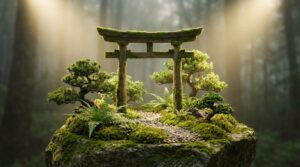
You’ve seen the pictures. They’re all over your feed, probably saved in a folder titled “Japan Trip Inspo.” A world of impossible green. Ancient trees draped in thick, velvety moss, their roots twisting over damp earth like sleeping giants. Sunlight filters through a dense canopy, dappling the forest floor and illuminating tiny, otherworldly mushrooms. It’s straight out of a Studio Ghibli film, a real-life Princess Mononoke forest. The caption usually has some variation of the hashtag #powerspot. It looks serene, magical, and deeply spiritual. And that’s where the question hits you. What exactly is a “power spot”? Is this some ancient Japanese tradition, a Shinto pilgrimage that’s been happening for centuries? Or is this just the latest wellness trend, the Japanese equivalent of crystal healing and energy vortexes, perfectly packaged for the Instagram age? The honest answer is… it’s complicated. It’s a super modern phenomenon layered on top of something ancient, a blend of pop culture fantasy, post-economic-bubble anxiety, and a genuinely profound connection to nature that’s core to the Japanese psyche. It’s a vibe, for sure, but it’s not just a vibe. It’s a cultural rabbit hole that tells you more about modern Japan than a thousand guidebooks. So, let’s get into it. Let’s decode why everyone is suddenly trying to find Mononoke’s forest, and what this spiritual boom is really about. It’s a journey that’s less about finding a magical spot and more about understanding how a hyper-modern society is trying to reconnect with something primal.
This modern quest for Ghibli-esque nature is also a poignant reminder of the fragility of these landscapes, as explored in our article on the fading magic of Japan’s Totoro-like countryside.
The Vibe Shift: What Exactly is a “Power Spot”?
First, let’s set things straight. The term “power spot,” or パワースポット (`pawaa supotto`), might sound like it belongs on an ancient scroll, but it’s actually a relatively recent creation. It is a prime example of `wasei-eigo`—a word made from English elements but coined and popularized in Japan. It didn’t arise from centuries-old Shinto or Buddhist texts. Instead, it gained popularity in the 1990s thanks to a television psychic who used it to describe locations believed to be filled with special spiritual energy from the earth. The idea was that visiting these spots could recharge your own energy, much like plugging your soul into an outlet. The focus was on personal benefit: enhancing luck, healing the body, boosting creativity, or finding love. This concept marked a significant shift from the traditional view of these sacred places. It signifies a fundamental change in Japanese spirituality, moving from communal responsibility to individualistic self-care.
It’s Not Your Grandma’s Shinto
To grasp the contrast, you need to understand the traditional perspective. For centuries, places now called “power spots”—ancient shrines, majestic waterfalls, tranquil mountain peaks, thousand-year-old trees—were seen as the abodes of `kami`. Often translated as gods or deities, `kami` is a more fluid concept, including spirits, essences, and the inherent sacredness of nature itself. These places were not casual destinations for soaking up positive vibes; they were sites of immense power, deserving respect, reverence, and even fear. People approached them with awe and caution. The relationship was transactional, but formal and communal. Villagers prayed to the mountain `kami` for a bountiful harvest or to the sea `kami` for a safe journey. It was about seeking protection and prosperity for the community, expressing gratitude, and preserving harmony between humans and spirits. The emphasis was on appeasing the `kami` and fulfilling collective obligations. The notion of visiting to absorb personal energy for self-improvement would have seemed completely alien. The modern power spot trend reverses this dynamic. Now, the individual is at the heart of the experience. It’s less about serving the gods and more about having the gods serve your personal well-being. This spirituality is designed for the modern consumer, emphasizing feeling good, self-fulfillment, and tangible personal advantages.
The Ghibli-fication of Nature
If the term is new, why do these places feel so ancient and familiar? Enter Studio Ghibli. It’s hard to overstate the influence films like Princess Mononoke (1997) and My Neighbor Totoro (1988) had on a generation’s view of the natural world. Hayao Miyazaki didn’t just tell stories; he created a compelling, unified visual language reflecting Japan’s indigenous animistic beliefs. Before Ghibli, `kami` inhabiting every tree and rock was an abstract religious idea. After Ghibli, it became a vivid image: the silent, eerie `kodama` with their rattling heads in the Deer God’s forest, or the soft, friendly Totoro resting in the camphor tree. These films made the spirit world visible, enchanting, and deeply appealing. They translated core Shinto values—that nature is sacred, alive, and filled with spirits—into an emotionally resonant experience for modern audiences. The aesthetic they shaped—the lush green moss, massive gnarled trees wrapped with sacred `shimenawa` ropes, misty air, and a timeless atmosphere—became the definitive image of a sacred Japanese landscape. This Ghibli-inspired aesthetic became the visual model for what a power spot should look like. When the “power spot” craze exploded, people weren’t just seeking good energy; they were unconsciously looking for a real-life Ghibli movie setting. Social media fueled the trend. The hashtag #Ghibli, paired with stunning photos of mossy forests, created a feedback loop. People saw these images, wanted to experience the magic themselves, traveled to these sites, shared more content, and reinforced the connection. The Ghibli fantasy transformed into a real-world destination.
Decoding the “Spiritual Boom”: Why Now?
The rise of power spots is not merely a clever marketing phrase accompanied by appealing visuals. It is deeply connected to the social and economic transformations that have shaken Japan over the past thirty years. To grasp why millions are drawn to these locations, one must consider the collective anxieties and desires simmering beneath the surface of contemporary Japanese life. This phenomenon is a direct reaction to a society in transition—a quest for new anchors in a world where previous certainties have faded away.
The Post-Bubble Quest for Meaning
For much of the post-war period, Japanese society was founded on the promise of stability. Graduating, securing employment with a major company, and enjoying lifelong job security defined a predictable and secure life path. Your identity was closely linked to your work. However, in the early 1990s, the economic bubble burst, and everything shifted. The guaranteed lifetime employment era disappeared, giving rise to decades of economic stagnation known as the “Lost Decades.” This crisis was not merely economic but existential, as the structures that once provided life with meaning and purpose began to collapse. A profound sense of uncertainty and anxiety emerged. Especially among younger generations, there was growing skepticism toward the corporate-centered lifestyle their parents had followed. If companies couldn’t promise a stable future, where could meaning be found? This void created fertile ground for a “spiritual boom” (`supirichuaru buumu`). This wasn’t a widespread return to organized religion but rather a turn toward more personalized, eclectic, and often commercialized spiritual practices. Fortune-telling, tarot cards, aura readings, healing crystals, and, naturally, power spots surged in popularity. They offered a sense of control, guidance, and personal significance in an uncertain world. Visiting a power spot became an act of reclaiming one’s destiny—a small ritual to invite luck and build a better future amid a broken social contract.
Religion-Lite: Spirituality Without Commitment
The typical Japanese person’s relationship with religion often confounds outsiders. Many claim not to be religious, yet they visit shrines to pray for good fortune at New Year’s, marry in Christian-style chapels, and hold Buddhist funerals. In Japan, religion often revolves more around culture, tradition, and life rituals than around weekly worship or strict doctrine. There is also widespread public skepticism toward fervent religious groups, an attitude shaped by the traumatic 1995 sarin gas attack on the Tokyo subway by the Aum Shinrikyo cult. This event made many wary of organizations demanding absolute faith and loyalty. Power spots present an ideal solution: spirituality-lite. They offer a spiritual experience without the burdens of organized religion. Visitors can go to well-known shrines or ancient temples, soak in the atmosphere, and feel connected to something greater than themselves without committing to a complex belief system or joining a congregation. It’s accessible, low-pressure, and highly personal. A simple ritual—tossing a coin, bowing, and making a wish—can be followed by a casual lunch. This approach provides spiritual engagement that comfortably fits within a modern, secular lifestyle—a way to touch the sacred without risk.
Urban Burnout and the Yearning for Nature
Lastly, and perhaps most straightforwardly, the boom in power spots is a direct response to the relentless stresses of urban life in Japan. For millions, daily life involves crowded commuter trains, endless concrete and asphalt, long hours under fluorescent lights, and intense social pressures. This is both mentally and physically draining. In this context, the culturally ingrained concept of `shinrin-yoku`, or “forest bathing,” is profoundly relevant. It’s not just a trendy wellness buzzword but an acknowledgment that immersion in nature is fundamentally healing. Power spots are nearly always found in breathtaking natural settings that require travel to access. The journey out of the city—taking a `Shinkansen` to a rural area, riding a local bus up winding mountain roads, and hiking peaceful forest trails—is an essential part of the experience. It’s a pilgrimage away from the noise and demands of contemporary life. The Ghibli-like fantasy represents the ultimate expression of this longing to escape. It’s not merely about viewing a beautiful forest but stepping into an alternate world—slower, quieter, and more magical than the one left behind. The “power” gained may well be the profound psychological and physiological benefits of fresh air, serenity, and the awe-inspiring beauty of nature.
The Anatomy of a Ghibli Power Spot: A Field Guide
To truly understand how this all unfolds, let’s shift from theory to reality. These locations are far more than interchangeable green backdrops. Each holds a rich history, a distinct atmosphere, and a unique way of merging ancient reverence with contemporary spiritual tourism. By examining a few representative examples, we can observe how layers of meaning—Shinto animism, Buddhist heritage, Ghibli aesthetics, and modern power spot narratives—coexist in a single place.
Case Study 1: Yakushima – The Mononoke Archetype
The Vibe: This is it. Ground zero. The original. Yakushima is a subtropical island off southern Kyushu, whose ancient, moss-covered cedar forests directly inspired Hayao Miyazaki’s Princess Mononoke. When people envision a Ghibli power spot, this image comes to mind. The air is thick with moisture, almost tangible. Every surface is blanketed with a psychedelic variety of mosses, glowing in shades of green previously unknown. Silence is broken only by dripping water, monkey calls, and the sound of your own breath. It feels prehistoric, as if you’ve wandered into a timeless world. This is a pilgrimage site for Ghibli fans, the place to capture that perfect photo of a tiny `kodama` figurine resting on a mossy log.
The Deeper Read: Before becoming a film set, Yakushima was, and remains, a place of immense spiritual importance. The island’s sacredness is embodied by its `Yakusugi`—ancient cedar trees, some over 2,000 years old. The most renowned, `Jomon Sugi`, is a massive, twisted giant that has silently witnessed millennia of history. Locals regard these trees not merely as plants but as living gods, tangible expressions of life’s enduring power. The island’s harsh, life-affirming ecosystem—it’s said to rain 35 days a month here—is seen as a testament to nature’s raw, untamed force. This is not a gentle, inviting nature but a powerful, indifferent one demanding deep respect. The traditional perspective embraces awe toward this overwhelming life force, a central Shinto concept.
The Modern Layer: Today, the Ghibli narrative is intertwined with the island’s identity. The Shiratani Unsuikyo Ravine is actively promoted as “Mononoke Hime no Mori” (Princess Mononoke’s Forest), creating an intriguing tension for visitors. You may arrive chasing fantasy, but are swiftly met with a stark reality. The trek to see the famed trees is no leisurely walk; it’s a demanding, multi-hour journey over tangled roots and slick rocks, frequently in pouring rain. The island compels presence—you cannot simply absorb the scenery passively; you must earn it. In that physical challenge, something transformative occurs. The fantasy of the power spot dissolves into a genuine experience. You feel small and insignificant beside a 3,000-year-old tree. You sense the humbling power of the rain that sustains the forest. The “power” you receive is not mystical energy but a profound perspective gained from being dwarfed by the natural world. You arrive for the photo op but leave with authentic awe.
Case Study 2: Kamikochi & The Japan Alps – Nature as a Cathedral
The Vibe: If Yakushima represents the intimate, enclosed Ghibli of the forest floor, Kamikochi embodies the epic, sweeping Ghibli of grand landscapes. Picture the majestic panoramas of Nausicaä of the Valley of the Wind or the floating island in Castle in the Sky. Nestled high in the Northern Japan Alps, Kamikochi is a pristine, high-altitude river valley. The Azusa River’s water dazzles with an almost unnatural turquoise clarity, allowing one to count every pebble on the bed. The valley is flanked by jagged, snow-dusted Hotaka peaks rising like the spires of a natural cathedral. The scale is vast, the air crisp and thin, and the beauty so flawless it feels surreal. It’s a place that cleanses, clarifies, and expands your spirit.
The Deeper Read: This grandeur is more than a stunning view; it underpins one of Japan’s oldest faiths: `sangaku shinko`, or mountain worship. For centuries, mountains were revered as the domains of the `kami`, sources of vital water that nourished plains below. They were bridges connecting the heavens (`takama-no-hara`) to earth, places where humans approached the divine. Climbing these mountains was not mere recreation but a strenuous religious pilgrimage. Kamikochi’s name is thought to mean “The Place Where the Gods Descended,” marking it as a sacred gateway to the divine.
The Modern Layer: Today, Kamikochi is a carefully preserved national park and a haven for hikers and nature lovers. The concept of a “power spot” overlays this natural and religious heritage. Visitors come to “receive the mountain’s energy” or to be “purified” by the crystal-clear water. The hike becomes a contemporary, secular pilgrimage. The physical effort, mental focus on the trail, and the reward of stunning vistas combine into a powerful, transformative experience. It’s less about praying to a deity for a bountiful harvest and more about discovering inner clarity and strength through personal challenge in sublime surroundings. The “power” here is a sense of accomplishment and a mental reset from simplifying life to walking, breathing, and observing. It’s a spiritual encounter grounded in the physical, affirming that sometimes escaping your thoughts means embracing your body.
Case Study 3: Koya-san (Okunoin Cemetery) – The Spiritual and the Spooky
The Vibe: This evokes the darker, mystical, and slightly eerie side of the Ghibli realm. Think of the silent Forest Spirit in Mononoke or the forgotten spirit-filled theme park in Spirited Away. Koya-san, or Mount Koya, is a remote temple town and the headquarters of Shingon Buddhism. Its core is Okunoin, Japan’s largest cemetery, an expansive ancient forest of towering cedar trees. A two-kilometer stone path winds through, bordered by over 200,000 moss-covered tombstones and memorials of historical figures, feudal lords, and samurai. The atmosphere is deeply peaceful, spiritually charged, and just a bit haunting, especially as dusk falls and stone lanterns glow. It feels like a place where the veil between worlds is extraordinarily thin.
The Deeper Read: Okunoin’s sacredness stems from a powerful belief. At the path’s end lies the mausoleum of Kobo Daishi, founder of Shingon Buddhism. It is believed Kobo Daishi did not die in 835 AD but entered a state of eternal meditation (`nyujo`), awaiting Miroku Bosatsu, the Buddha of the future. He is thought to remain alive, offering salvation to supplicants. For over a millennium, people have sought burial at Okunoin to be near his living spiritual presence. The cemetery as a whole testifies to this lasting faith. Even modern, sometimes unusual corporate memorials—a coffee cup for a coffee company, a rocket for an aerospace firm—serve the same purpose: placing employees under Kobo Daishi’s protective care.
The Modern Layer: As a power spot, Okunoin is portrayed as a place of potent spiritual energy, a gateway connecting history to the transcendent. Guided night tours are especially popular, amplifying the mystical mood with stories of spirits and lore linked to the cemetery. Visitors come seeking peace, reflection on mortality, or simply to sense the weight of centuries of prayer and devotion. It’s a Ghibli-like experience that brings the spirit world vividly to life. Walking among ancient mossy graves beneath towering cedars, you feel part of a much larger and older story. The “power” here lies in profound silence and a humbling perspective on your fleeting life, gained while traversing a city of the dead that feels deeply alive.
So, Is It “Real”? The Takeaway for the Skeptical Traveler
After all this—the 90s psychics, the Ghibli aesthetics, the socio-economic angst—we return to the original question. Is any of this “power spot” stuff genuine? Does visiting these places actually do anything, or is it simply a well-marketed placebo effect? The answer, much like Japan itself, is complex. It entirely depends on what you mean by “real” and how you choose to engage with the experience. It calls for managing your expectations and looking beyond the label.
Managing Expectations: Real vs. Instagram
First, let’s be realistic about what it’s like in reality. The serene, empty forest you saw on Instagram might be a fantasy. During peak season, these spots can be incredibly crowded. You might find yourself in a line of people waiting to snap the exact same photo of that famous mossy log in Yakushima. The quiet reflection at Okunoin can be interrupted by the chatter of a large tour group. The commercial side of the power spot craze is very much real. Shrines offer specific good-luck charms (`omamori`) tied to the “power” they’re renowned for—love, money, career success. This commercialization can feel jarring and easily shatter the Ghibli-like illusion if you’re unprepared. It’s a valid critique to say that the spiritual experience can get lost in the tourism machine. Expecting a solitary, transformative epiphany in the middle of a crowd is a recipe for disappointment.
It’s About the Intention, Not the Label
Here’s the thing: whether you believe you’re literally absorbing invisible energy from the earth is beside the point. The “power spot” concept, despite its modern and commercial shortcomings, serves an important role: it provides people with a language and a reason to seek out these places. It’s a contemporary gateway to connecting with ancient ideas of nature and spirituality. The label may be new, but the places themselves hold undeniable power. You don’t have to believe in `kami` to be moved by the sight of a 2,000-year-old tree. You don’t need to subscribe to Shingon Buddhism to experience profound peace in Okunoin’s quiet. The “power” can be understood in purely secular, psychological terms. It is the scientifically validated restorative effect of being in nature. It is the feeling of awe, which studies show can boost well-being and foster a sense of connection to others. It is the perspective gained by standing in a place considered sacred for a thousand years. These are real, tangible impacts on your consciousness. The power spot trend simply offers a fresh, accessible narrative for encountering them.
How to Visit Respectfully and Get the Most Out of It
So, if you decide to visit one of these spots, how do you cut through the hype and have a meaningful experience? It boils down to intention. Approach it less as a supernatural exchange and more as cultural and natural immersion.
Visit during off-peak hours. An early morning visit before the tour buses come can feel like an entirely different world. Put your phone away for a while. The urge to capture the perfect photo can prevent you from truly experiencing the place.
If you’re at a shrine or temple, take a moment to learn and follow the basic etiquette—bowing at the `torii` gate, purifying your hands at the water basin, making a small offering. You don’t need to be a believer. Think of it as a gesture of respect for the culture and history of the place, a way to participate in its context rather than just observe from the outside.
Most importantly, shift your mindset. Instead of asking, “What power can I get from this place?”, ask, “What makes this place powerful?” Why have people been drawn here for centuries? What is it about this particular arrangement of trees, rocks, and water that inspires awe? The real “now I get it” moment comes when you look past the Ghibli filter and connect with the deeper reasons why that aesthetic is so powerful in the first place. The magic isn’t in finding a spot labeled “powerful.” It’s in letting yourself be moved by the enduring beauty of the Japanese landscape and the profound, centuries-old reverence it evokes.