Alright, let’s set the scene. You’re in Tokyo, maybe navigating the electric maze of Shinjuku or the impossibly cool backstreets of Shibuya. The night has been a whole vibe. You’ve been at an izakaya, one of those epic Japanese-style pubs, for hours. You’ve conquered mountains of karaage, sampled skewers of yakitori you couldn’t even name, and navigated the glorious chaos of a nomihodai, the all-you-can-drink menu. The table is a beautiful disaster of empty plates and glasses. The laughter has hit that perfect, slightly delirious pitch. Your designated party leader claps their hands together in a sharp, definitive rhythm—the ippon-jime—signaling the official end. You’ve paid up, bowed a dozen times to the staff, and spilled out onto the neon-soaked street. Your stomach is full, your spirit is high, your bed is calling. It’s over, right? You’re ready to tap out, call it a legendary night, and catch the last train.
But then, just as you’re about to say your goodbyes, someone in the group turns, a glint in their eye, and utters the phrase that changes everything: 「ラーメン、行く?」 (Ramen, iku?—”Wanna get ramen?”).
And suddenly, everyone’s nodding. A new wave of energy ripples through the group. It’s a done deal. You’re all marching towards a tiny, steamy shop with a glowing red lantern outside. Your brain is screaming, “Why?! We just ate for three hours straight! Where is this going to go?” It feels like pure madness. An act of culinary defiance. But as you’ll soon discover, this isn’t just a late-night snack. This is shime no ramen (〆のラーメン). And it’s not an optional side quest; it’s the true, undeniable final boss of a Japanese night out. This isn’t about hunger. It’s a ceremony. A ritual so deeply embedded in the culture of socializing here that to skip it feels like leaving a story unfinished. So, what’s the deal? Why is a piping hot, carb-loaded bowl of noodle soup the only acceptable way to end a night of drinking in Japan? Let’s dive deep into this delicious, confusing, and absolutely essential ritual.
While this ritual is often about simple, satisfying bowls, the world of ramen in Japan extends far beyond the late-night shime, encompassing everything from the humble instant cup to elevated Michelin-starred ramen experiences.
The Anatomy of a Japanese Drinking Sesh: It’s a Marathon, Not a Sprint
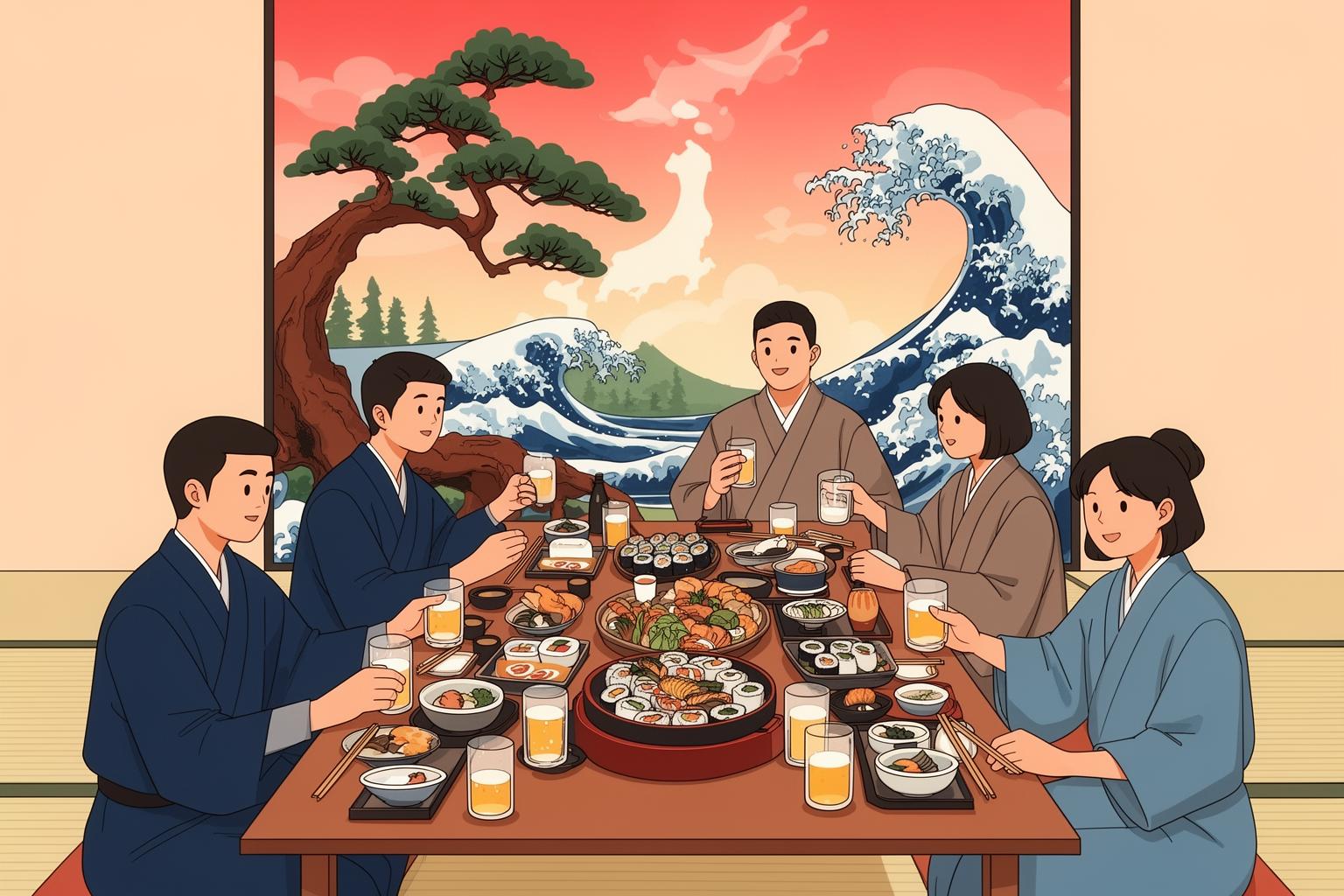
To truly understand why shime no ramen exists, you need to realize that a Japanese drinking party, or enkai (宴会), is far more than a casual get-together for drinks. Oh no, darling. It’s a carefully orchestrated, multi-stage event with its own rules, etiquette, and dramatic flow. It’s an entire experience, with ramen as the ultimate destination. These evenings are carefully organized, often with a fixed start and finish time, especially for work-related occasions. You don’t just turn up and wing it; you’re part of a well-oiled social machine.
Act I: The ‘Ichijikai’ Kick-off
The first gathering, the ichijikai (一次会), is the main event. Typically held at an izakaya or restaurant, this is where the night’s foundation is set. If it’s a work function, there’s even a seating hierarchy. The most important person, such as a boss or client, occupies the kamiza (上座), the seat of honor farthest from the door, while junior members sit in the shimoza (下座), closest to the door, ready to place orders and serve others. The party begins with a collective toast. No one dares to drink before the designated leader raises their glass and shouts “Kanpai!” (乾杯!). It’s a moment of pure unity, a synchronized launching of the festivities. Food arrives in waves—course after course of shared dishes. And the drinks? They flow endlessly thanks to the magic of nomihodai. For a flat fee, you enjoy two to three hours of unlimited drinks. It’s a system designed for serious imbibing and sets the pace for the entire night. This isn’t about savoring a single glass of wine; it’s about diving headfirst into the social experience, lubricated by a steady stream of highballs, draft beer, and shochu. The ichijikai is loud, energetic, and meant to break down barriers. Yet it nearly always has a strict time limit. When time’s up, the lights might flicker, or a server will gently remind you that your session is ending. The main act is over, but the night is far from done.
Act II: The ‘Nijikai’ Migration
Here’s where things get interesting. Just because the restaurant needs the table back doesn’t mean the party is finished. It’s time for the nijikai (二次会), the second party. The mood changes instantly. The formality of the ichijikai fades away, and the group, now smaller and more intimate as some people head home, moves to a new venue. This is often where the genuine bonding occurs. The classic nijikai destination? A karaoke box. Packed into a small, soundproof room and fueled by more drinks, people let their guards down completely. You’ll see the quietest person from the office unleash an emotional power ballad. It’s surreal and beautiful. Other popular spots include cozy cocktail bars for intimate conversation, darts bars for friendly competition, or even a sunakku (スナック), a type of hostess bar that feels like stepping back in time. The nijikai is looser, more chaotic, and far more personal. It’s where inside jokes are born and friendships grow stronger. And for the truly committed, there might even be a sanjikai (三次会), a third party, usually at another, quieter bar or, as you might guess, heading straight for the night’s grand finale.
The Unspoken Need for a Grand Finale
After hours of structured eating followed by wild singing and more drinking, the night reaches its peak. The group has shared a long, emotional, and alcohol-fueled journey together. You’ve navigated multiple venues, social dynamics, and a whole range of energy levels. The night feels epic, yet somehow incomplete. It’s like watching an action-packed blockbuster with no satisfying final scene. There’s a collective, unspoken understanding that the evening can’t just fizzle out. You can’t simply say “Okay, see ya!” and drift away into the night. That would be anticlimactic. The experience demands a capstone—a final shared act that brings everyone back down to earth, a ritual providing closure and cementing the memories made. This crucial psychological space is exactly what shime was created to fill. The night needs a punctuation mark, a definitive end. In Japan, that punctuation mark is most often a bowl of ramen.
‘Shime’ (〆): More Than Just “to Close”
The word itself is a crucial key to grasping the entire phenomenon. Shime (〆) is a captivating element of Japanese typography. It is a simplified, single-character form of the kanji 締, which means “to close,” “to tie up,” or “to fasten.” You encounter this symbol everywhere in Japan. It’s used on letters to seal envelopes, in business documents to mark deadlines, or on packages to indicate they are secured. It literally signifies bringing something to a conclusion, tying up all loose ends. So when you mention shime no ramen, you’re not merely saying “closing ramen.” You’re expressing “the ramen that perfectly ties the whole night together.” This concept extends far beyond food.
The Linguistic Vibe Check
Consider the feeling of completing a massive project and sending that final email. That sense of closure? That’s shime. Think of the satisfaction from a flawlessly performed hand-clapping ritual like ippon-jime or sanbon-jime at the end of an event—it’s an audible signal meaning, “We’re done, and we did it together.” The culture greatly values these moments of clear and definite closure. Ambiguous endings are not welcome. The shime ritual applies this idea to socializing. A night of drinking and bonding is a story everyone has contributed to. The ramen is the final page, the “The End” that makes the whole narrative feel complete and fulfilling. Without it, the story abruptly stops. With it, the story concludes, leaving everyone united with a shared sense of closure. It’s a remarkably powerful social tool disguised as a simple meal.
The Psychology of the Final Act
Beyond linguistics, the psychology behind shime is what makes it brilliant. The entire evening, from the first kanpai to the last karaoke song, has been a high-energy experience. You’re riding a social and emotional high. The shime ritual acts as a vital transition. It’s a purposeful act of winding down. By shifting focus from drinking and conversation to the singular, focused act of eating, the group collectively begins to return to reality. It functions as a buffer between the peak of the party and the solitary journey home. That bowl of ramen offers a shared moment of calm after the storm. It’s an opportunity for one final, quiet conversation, or even a comfortable, reflective silence among friends. It provides a gentle landing, an emotional off-ramp from the social highway you’ve been speeding down all night. It’s not about preventing a future hangover (though many claim it helps). It’s about processing the moment, solidifying the bonds you’ve just strengthened, and bringing the collective experience to a peaceful, communal close. It’s the final, quiet nod that says, “That was amazing. Now, we can go home.”
Why Ramen? The Holy Trinity of Salt, Fat, and Carbs
Alright, we get it—the night needs to come to an end. But why, of all foods, is a bowl of noodle soup the go-to choice? Why not a slice of pizza, a kebab, or a greasy burger, as it is in many other parts of the world? The answer lies in a perfect combination of physiological cravings, sensory satisfaction, and a social setting uniquely designed for this purpose. Ramen isn’t just a random pick; it’s the ideal solution.
The Sobering Science (Sort Of)
Let’s be honest, there’s some drunk science at work here. After processing all that alcohol, your body is basically yelling for three things: salt, fat, and carbs. Alcohol acts as a diuretic, causing dehydration and flushing out salts and potassium. That intense, almost primal craving for something savory and substantial is your body trying to restore balance. Ramen satisfies all these needs fervently. The broth bursts with umami and salt, replenishing what you’ve lost. The fat, whether from the rich tonkotsu pork base or the fragrant oil on top, offers deep comfort and satisfaction. And the noodles? They form a glorious, slurpable mountain of carbs, delivering quick energy and a grounded feeling when you’re a bit… floaty. It’s the ultimate recovery meal—a culinary first-aid kit for a body that’s been through the wringer. It feels less like indulgence and more like a necessary remedy. It’s a delicious, self-prescribed antidote that your drunk brain convinces you is the healthiest choice you could make at 1 AM.
A Symphony in a Bowl
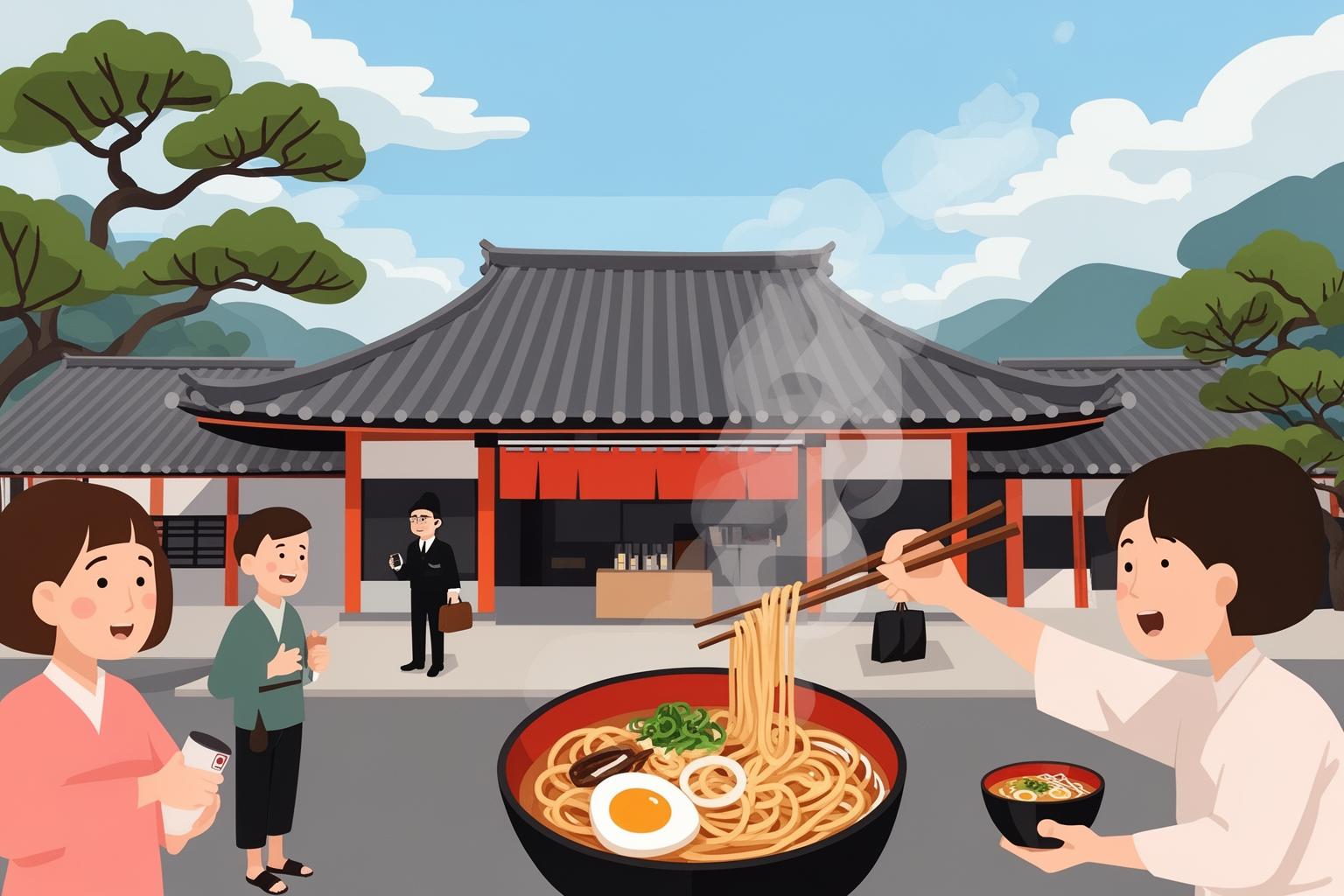
The sensory appeal of eating ramen is a huge part of its role as a shime ritual. Picture stepping out of the cold night into a small, steamy ramen shop. The air is thick with the incredible aroma of simmering broth. Steam from the bowl hits your face like a mini-facial, clearing your head. Eating ramen is an immersive experience. You have to concentrate. You lean over the bowl, crafting a private little world. You guide the noodles with your chopsticks, sip the life-giving broth with your spoon. Slurping—which is absolutely encouraged—isn’t just about eating fast; it cools the noodles and aerates the broth, intensifying its flavor. It’s a full-body experience. This multi-sensory engagement powerfully pulls you back into the present moment. It cuts through the alcohol haze and centers you. For a few minutes, the loud, chaotic night fades away, leaving only you, your friends, and the perfect bowl of soup. It’s a form of meditation, a savory, delicious reset button for your whole system.
The Perfect Social Setting
The typical late-night ramen shop environment is perfectly suited for the shime experience. These spots are usually small, often just a counter with a few stools. They’re no-frills places focused on one thing: making amazing ramen. You and your friends sit shoulder-to-shoulder, facing the chef as he works his magic. This intimate, shared space fosters a unique camaraderie. The loud, rowdy energy of the izakaya gives way to a more subdued, communal vibe. You can have a quiet, final chat with the person next to you or simply share a comfortable silence, united in the goal of finishing your bowls. It’s a liminal space—a bridge between the night’s social peak and the solitude of heading home. The ramen shop’s efficiency adds to this. It’s a quick in-and-out affair. You order, eat, and leave. This swiftness enhances the sense of closure. It’s the last stop, the final mission accomplished with delicious precision before everyone disperses into the night.
The Ramen Aren’t All the Same: Choosing Your ‘Shime’ Weapon
Not all ramen is made equal, especially when it comes to the revered ritual of shime. The ramen you pick reflects your mood, your level of intoxication, and your personal philosophy on how a memorable night should conclude. It’s a choice that carries significance. Do you opt for something light and restorative, or do you go all in with a flavor explosion that’ll leave you in a food coma? The menu at a late-night ramen-ya offers a lineup of potential destinies.
The Classic Contenders
Though Japan boasts countless regional ramen varieties, a few staple styles have become the champions of the shime scene. Each offers a unique route to nocturnal bliss.
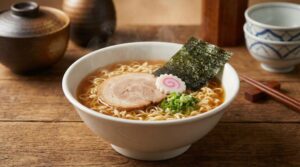
Shoyu Ramen (醤油ラーメン): The original, the timeless classic. Made from a clear broth (usually chicken or pork) seasoned with Japanese soy sauce (shoyu), it’s savory, light, and profoundly comforting. It’s the sensible, refined choice. A good shoyu ramen is elegant—it delivers that salty, umami kick your body craves without overwhelming you. Think of it as a graceful exit, the perfect final note that satisfies without weighing you down. It says, “I had a great time, and now I’m responsibly wrapping up my evening.” It’s the little black dress of shime ramen—always fitting, always effective.
Shio Ramen (塩ラーメン): Even lighter and more delicate than shoyu, shio (salt) ramen is the minimalist’s pick. The broth is clear, clean, and seasoned with a finely balanced salt base. The flavor is subtle, allowing the quality of the base stock—whether chicken, pork, or seafood—to shine. This is the ramen you choose when you want to feel refreshed and restored, not punished. It’s like a warm, salty hug in a bowl, gently guiding you back to sobriety. It’s the culinary equivalent of a cool-down stretch after a marathon, prepping your body for peaceful rest.
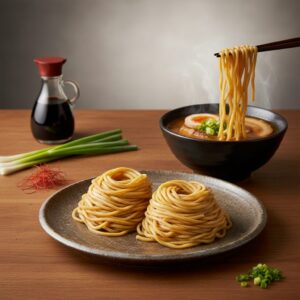
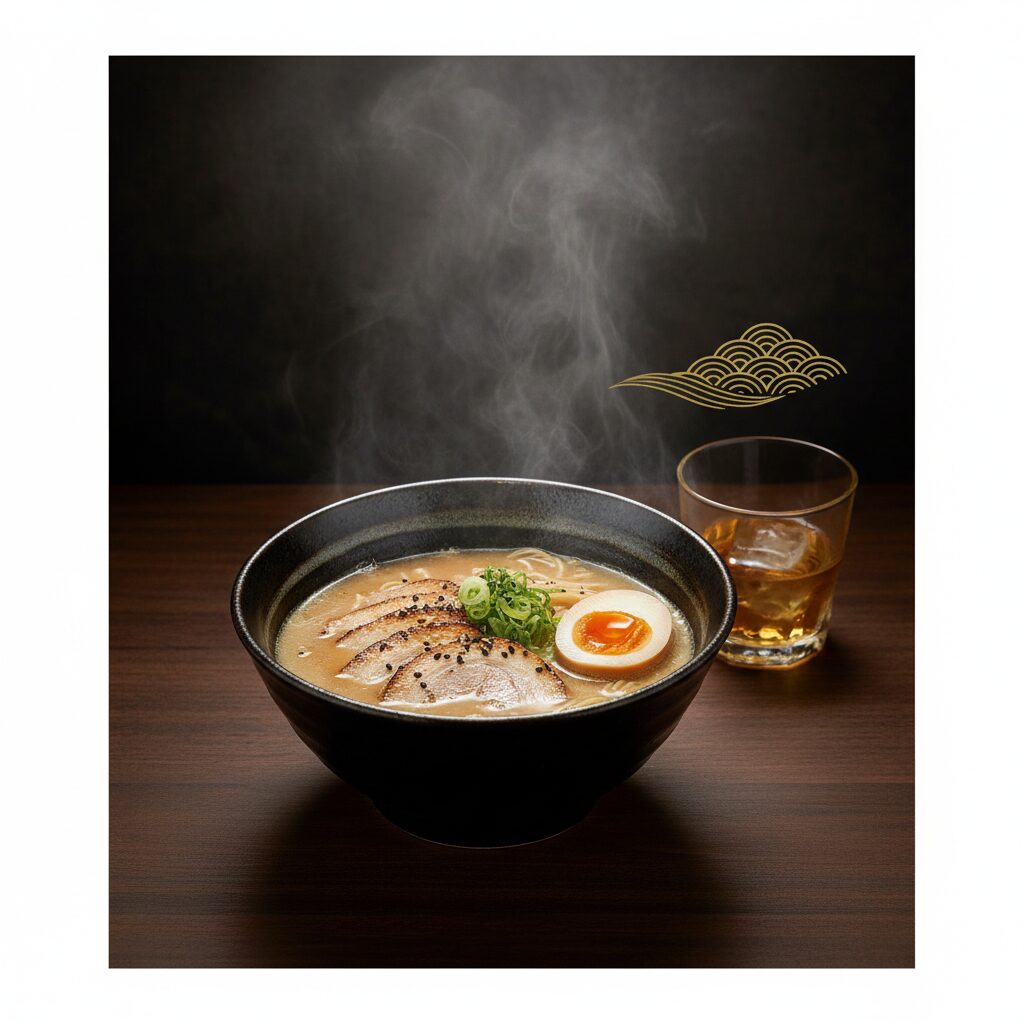
Tonkotsu Ramen (豚骨ラーメン): Then there’s tonkotsu. From Kyushu, this is the complete opposite of shio. The broth is made by boiling pork bones for hours until they break down, creating a rich, opaque, and incredibly creamy soup. It’s a full-on flavor assault in the best possible way. This is the go-hard-or-go-home option. You pick tonkotsu when the night has been especially wild and you want a culinary statement to end it. It’s thick, fatty, and coats your entire soul. With thin, straight noodles, slices of fatty chashu pork, and pungent pickled ginger on top, a bowl of tonkotsu is the ultimate mic drop in the ramen world. It’s a choice you’ll celebrate in the moment and possibly regret in the morning—that’s part of its charm.
Miso Ramen (味噌ラーメン): Hailing from the chilly northern island of Hokkaido, miso ramen is the ultimate comfort food. The broth is enriched with fermented soybean paste (miso), lending a complex, nutty, and deeply savory flavor that’s both robust and nourishing. It’s often topped with sweet corn, butter, and stir-fried bean sprouts, making it a hearty, satisfying meal. Choosing miso ramen for shime is like wrapping yourself in a warm blanket. It’s the nurturing choice, perfect for a cold winter’s night, offering soulful satisfaction that feels both indulgent and wholesome.
The Non-Ramen ‘Shime’ Squad
Believe it or not, shime goes beyond ramen. While ramen reigns supreme, the throne has several other contenders depending on mood, region, and company. The core idea remains: a final, satisfying, carb-heavy dish to seal the night.
Ochazuke (お茶漬け): For a more understated, almost Zen-like conclusion, there’s ochazuke. It’s deceptively simple: a bowl of cooked rice topped with ingredients like pickled plum (umeboshi), salted salmon, or seaweed, over which hot green tea or light dashi broth is poured. It’s light, hydrating, and easy on the stomach. Perfect for when you want comfort and closure without the caloric overload of a bowl of tonkotsu. It’s the quiet, introspective finale to the night’s narrative.
Udon (うどん): Sometimes, the soul yearns for the gentle, chewy embrace of udon noodles. Thicker and softer than ramen, udon is typically served in a delicate, savory dashi broth. It offers a simpler, cleaner flavor experience. A late-night bowl of kake udon (plain udon in broth) is ultimate comfort food, the culinary equivalent of a soft, cozy sweater. It’s less a punch and more a reassuring pat on the back, telling you everything will be alright.
Shime Parfait (〆パフェ): This trend began in Sapporo and has since spread. Yes, you read that right—a “closing parfait.” For those with a sweet tooth, ending the night with an elaborate parfait topped with ice cream, fresh fruit, cake, and whipped cream is the ultimate indulgence. It upends the savory tradition of shime, proving that the ritual is more about sharing a final treat than sticking to a particular food group. It’s a bold, celebratory, and highly Instagrammable way to say goodnight.
So, Is ‘Shime no Ramen’ a Must-Do? The Real Deal vs. The Hype
After all of this, the question still stands: is this ritual really that important? Do you have to take part? As a visitor trying to grasp the local culture, navigating the social nuances of the shime can be challenging. It feels like just a simple meal, but it carries unspoken expectations and deep social meaning.
The Social Contract
Let’s be honest: there’s definitely a certain social pressure at play. The suggestion to get ramen usually gets unanimous, enthusiastic agreement. Being the one to say, “No thanks, I’m heading home,” can feel like breaking an unspoken social contract. It’s like leaving a concert before the encore. You’re not simply refusing food; you’re opting out of the final, crucial moment of group bonding. You’re missing the post-credits scene where the real magic happens. While no one will openly judge you (this is Japan, after all), skipping the shime can signal a lack of full commitment to the shared experience. Participating, even if only for a few bites, shows you’re a team player and that you value the group’s unity right to the very end. It’s a small gesture that says a lot.
A Calorie Catastrophe? Absolutely.
There’s no sugarcoating this: shime no ramen is a nutritional disaster. It’s a huge load of refined carbs, sodium, and fat eaten at the worst possible time—just before bed. Any nutritionist would cringe at the thought. It’s the opposite of a healthy choice. And yet, millions indulge every week. Why? Because it’s not about health or nutrition. It’s a deliberate act of hedonism, a conscious choice to prioritize social and emotional fulfillment over long-term diet goals. It’s a delicious defiance of reason. That bowl of ramen is a trophy, a tasty symbol of a night well-spent. The inevitable bloated, overstuffed feeling the next morning is just part of the cost, a physical reminder of the epic fun you had.
The Verdict: It’s Not About the Food, It’s About the Feeling
In the end, if you try to understand shime no ramen through only a logical or nutritional lens, you’ll miss the whole point. You don’t eat shime no ramen because you’re hungry. You eat it for the same reason you stay for one last song at a concert or watch the credits roll after a great movie. You do it for closure. You do it to be part of a shared, final memory. It’s a ritual that turns a chaotic night of drinking from a random series of events into a cohesive story with a beginning, middle, and deeply satisfying conclusion. The steam rising from the bowl, the slurping of noodles, the quiet shared focus of friends absorbed in their meal—this is the true heart of the ritual. It’s the emotional handshake that closes the evening, a silent agreement declaring, “We did this together.” So next time you’re in Japan and someone suggests that final, outrageous bowl of ramen, don’t question it. Just say yes. You’re not just grabbing a late-night snack; you’re earning your diploma in the art of Japanese socializing.