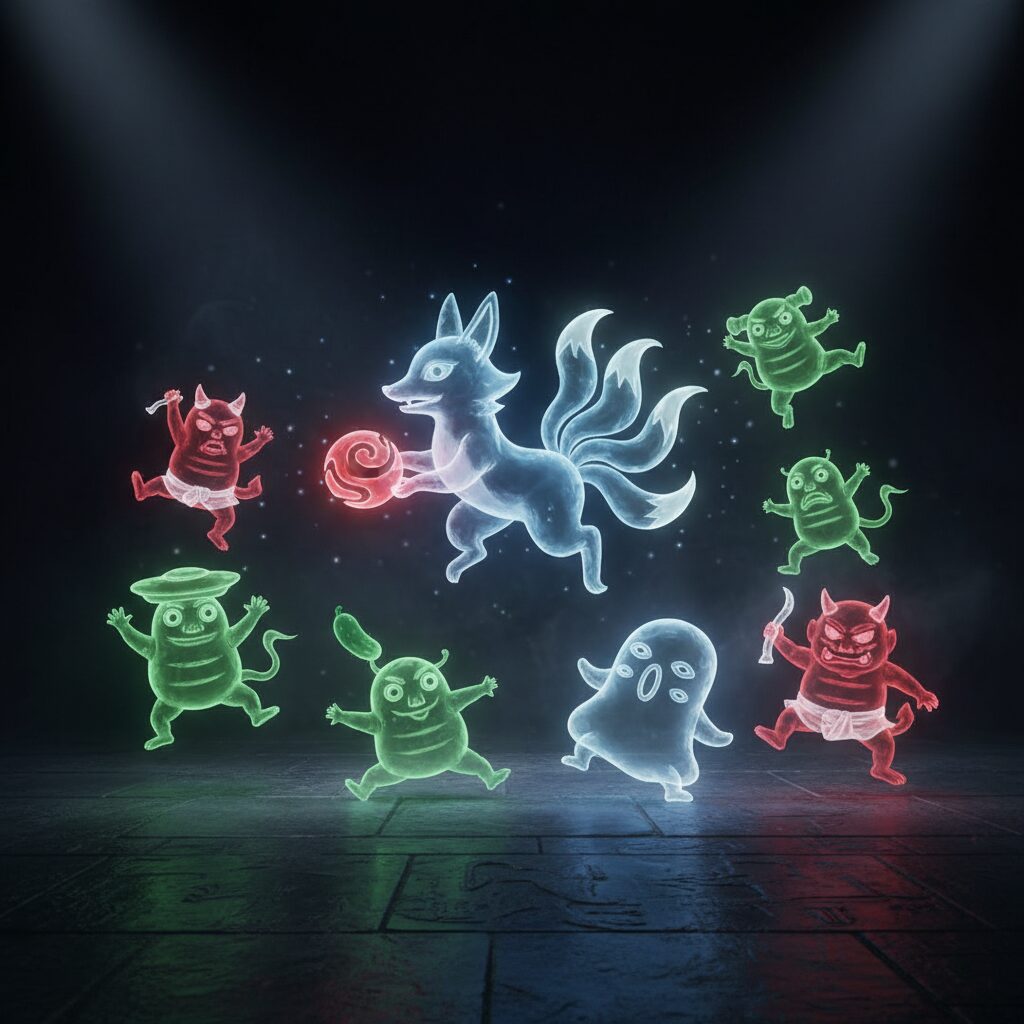
Ever been deep in a JRPG, grinding through a dungeon, and you run into some bizarre enemy that makes you go, “What even IS that?” A possessed umbrella with one leg? A walking wall? A nine-tailed fox that breathes fire? You probably chalk it up to a designer’s wild fever dream. But what if I told you that most of that weirdness isn’t new? It’s ancient. Like, centuries-old ancient. You’re not just fighting random pixels; you’re battling a remixed, digitized version of Japan’s oldest and spookiest folklore. This whole phenomenon, this massive pop culture ecosystem of monster-catching and battling, from Dragon Quest to Pokémon, is a direct glow-up of creatures called Yokai. These supernatural beings were once the stuff of nightmares, whispered warnings, and sacred scrolls. They were the original monsters, the OG squad that explained everything from a sudden storm to a strange noise in the attic. And then, in the 1980s, a little gray box called the Famicom—the Nintendo Entertainment System to us in the West—plugged them into the mainframe, turning terrifying folklore into the 8-bit enemies and collectible companions that basically defined a generation of gaming. It’s a wild story of how old ghosts learned new tricks, and it’s low-key the secret sauce behind why Japanese games just hit different. We’re about to unpack how ancient spirits got hacked into the system, transforming from cautionary tales into the high-score targets and pocket-sized pals we stan today. This is the ultimate cultural remix, and trust me, it’s lit.
This cultural remix even extends to the real world, where you can experience the atmosphere of these games by exploring a real-life JRPG town like a Japanese shōtengai.
The OG Monsters: What Even Are Yokai, Fr?
More Than Just Goblins and Ghosts
Before we dive into video games, we need to get the lore straight. So, what exactly are Yokai? The simplest translation might be “monster,” “ghost,” or “spirit,” but that’s like calling all music “songs”—too basic and missing the full vibe. Yokai is a broad umbrella term covering the entire range of supernatural, strange, and unexplainable creatures in Japanese folklore. They aren’t all evil, they aren’t all powerful, and many are just… weird for the sake of being weird. This is a world of beings that defies simple Western categories of “good” and “evil.” Some Yokai are genuinely terrifying natural forces, while others are mischievous pranksters or even bearers of good fortune. The immense variety reflects a culture that saw the supernatural woven into every aspect of life.
Let’s start with a well-known example: the Kappa. Today you might see it as a cute, green turtle-like mascot, often with a cucumber in hand. But the original Kappa? Absolutely terrifying. This water-dwelling creature was notorious for dragging children and livestock into rivers to drown. They had a dish on their head called a sara filled with water; if it spilled, they’d lose their strength. Their one true weakness? A deep love for politeness and sumo wrestling. Legend says that if you bowed deeply to a Kappa, it would be forced to bow back, spilling the water and becoming powerless. It also had an odd obsession with cucumbers, which explains why cucumber sushi rolls are called kappa-maki. This dual nature is key: a deadly child-drowner who can be defeated with good manners and loves crunchy vegetables. This complexity is peak Yokai.
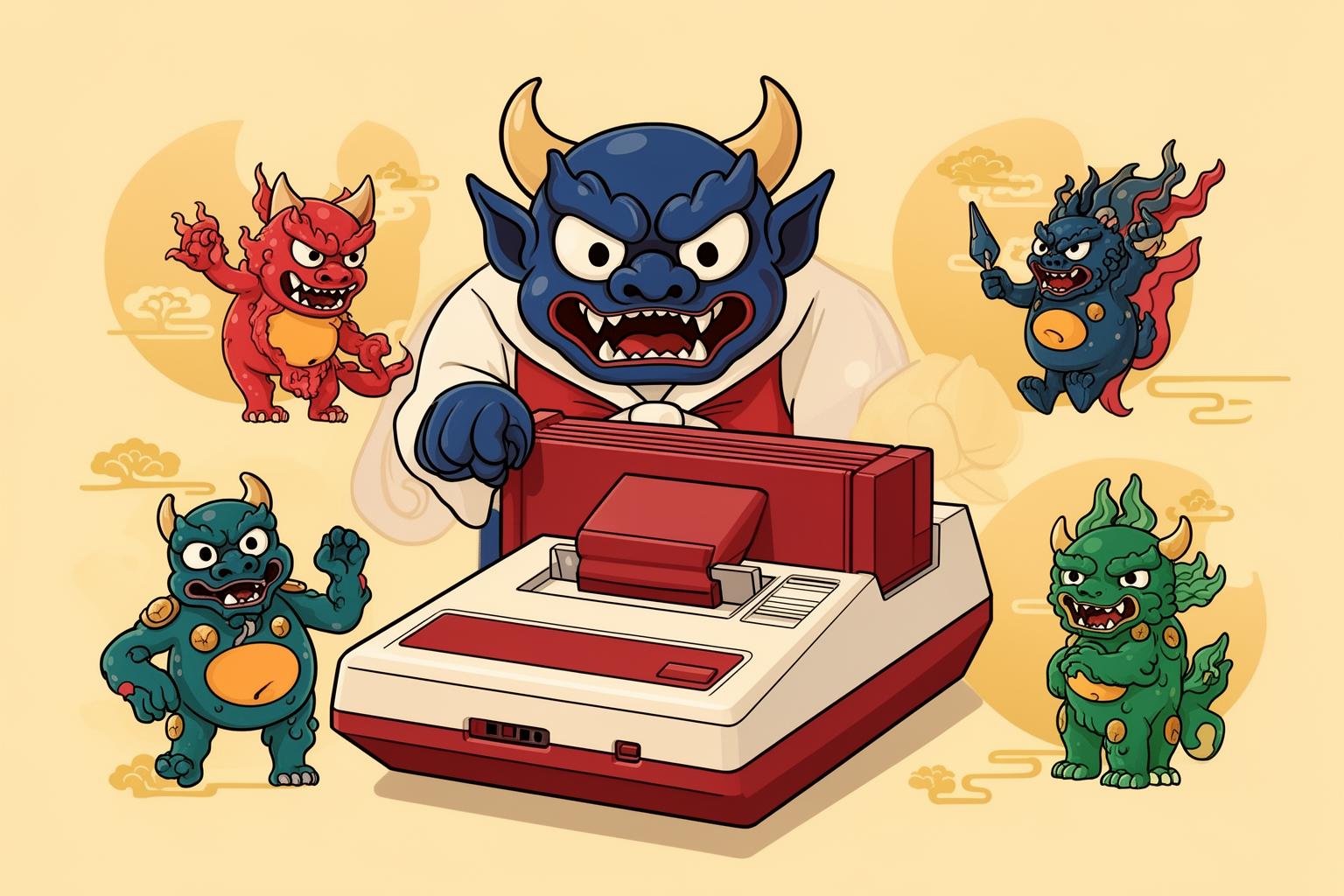
Then there are the Oni, often translated as “demons” or “ogres.” They’re usually depicted as huge, muscular beings with red or blue skin, horns, and wielding a massive iron club called a kanabō. They’re classic villains in folklore, symbolizing chaos and disaster. They’re the “bad guys” you throw beans at during the Setsubun festival each February, shouting “Oni wa soto! Fuku wa uchi!” (“Demons out! Fortune in!”). But even Oni aren’t one-dimensional. Some stories tell of warriors or monks defeating Oni and turning them into protective guardians. The boundaries are always blurred.
And it gets even stranger. The concept of Tsukumogami is where things become uniquely fascinating. This is the belief that tools and household items, after a hundred years of use, come to life and gain a spirit. Suddenly, your old paper lantern (chōchin-obake), worn sandals (bakezōri), or even a roll of cotton (ittan-momen) could sprout limbs and an eye and wander around. Most were mischievous, playing tricks on their neglectful owners. This reflects a deep Shinto animistic belief—that spirits, or kami, can inhabit anything, from mountains to teacups. This idea proved perfect for game developers seeking distinctive enemy designs.
The roster also includes animal spirits with shapeshifting powers, like the clever Kitsune (foxes) and the trickster Tanuki (raccoon dogs). Kitsune, especially the nine-tailed variety (kyūbi no kitsune), were powerful beings capable of possessing humans and creating elaborate illusions. Tanuki were more whimsical, famous for their giant, magical scrotums, which they could stretch and use as fishing nets, boats, or more. No, that’s not a joke. This blend of the terrifying, divine, and utterly bizarre captures the true essence of Yokai.
Where Did They Come From? The Ancient Lore Grind
These creatures’ stories didn’t just appear out of nowhere. They emerged from a pre-scientific era as a way to explain the unknown. Why did someone suddenly fall ill? An evil spirit’s possession. What was that strange noise in the forest at night? Surely a Tengu, a winged mountain goblin. Yokai were answers to life’s frightening and unpredictable events. They provided a cultural framework to understand a world that often seemed chaotic and hostile. They also served as cautionary tales—don’t go near the river alone, or a Kappa will grab you; don’t be wasteful with your possessions, or they’ll become Tsukumogami and haunt you.
The earliest visual records of these creatures come from ancient illustrated scrolls. The most famous is the Hyakki Yagyō Emaki, or “Night Parade of One Hundred Demons.” These scrolls from the Heian period (794-1185) depict a wild procession of countless Yokai marching through the streets at night. It was believed that anyone who saw this parade would die or be taken away by spirits. The scrolls are a wildly imaginative display of weirdness, showcasing numerous Tsukumogami and bizarre demons in a massive, chaotic conga line.
But the real Yokai craze took off during the Edo period (1603-1868). With the printing press’s invention, artists could mass-produce woodblock prints, or ukiyo-e. An artist named Toriyama Sekien became the first great Yokai cataloger. He produced several illustrated volumes serving as an encyclopedia of Yokai, giving names and forms to hundreds of folk creatures. He didn’t just replicate old stories; he created some of his own, establishing a definitive “field guide” to the supernatural. His work standardized many Yokai’s appearance, creating a visual language everyone could recognize. It was like the original Monster Manual. This era transformed Yokai from vague local myths into a codified cultural phenomenon. They became Edo-period pop culture icons, appearing in art, kabuki theater, and stories. They were meant to frighten, yes, but also to entertain. This was a crucial step: domestication of the monstrous. And it was this established catalog of strange beings that lay waiting to be rediscovered by a new generation of creators working with a revolutionary medium: video games.
Enter the Famicom: The Digital Revolution Was Televised (On a CRT)
From Parchment to Pixels: The Great Yokai Remix
Jump to the 1980s. Japan was in the midst of an economic bubble, and a new kind of magic was taking over living rooms: the Family Computer, or Famicom. This compact device acted as a cultural reset button. It created a new shared imaginative space, with the dominant genre on this new frontier being the Role-Playing Game, or RPG. Titles like Dragon Quest and Final Fantasy offered expansive worlds to explore, epic narratives to experience, and, most importantly, monsters to battle.
However, developers faced significant technical challenges. The Famicom’s 8-bit processor was advanced for its time, but memory (RAM) and cartridge space were extremely limited—we’re talking kilobytes, not gigabytes. The color palette was confined to just 54 colors, and only a few could be used on a single sprite simultaneously. Crafting detailed, realistic creatures like a dragon from a Dungeons & Dragons manual was a monumental task. You couldn’t simply render a beautiful, terrifying beast; you had to imply it with just a handful of pixels.
This is where Yokai became a developer’s secret weapon. Why struggle to design a generic Western-style goblin when you already had a vast, pre-existing library of uniquely Japanese monsters that the entire domestic audience would recognize immediately? Yokai perfectly suited the 8-bit aesthetic. Their designs were often simple and graphic. A Kasa-obake, the one-legged umbrella Yokai, is just an umbrella with an eye and a leg. That’s incredibly easy to depict with a few pixels and instantly recognizable to anyone familiar with the stories. A Rokurokubi, the woman whose neck stretches to incredible lengths, appears as a normal sprite until her head suddenly flies across the screen. This served as cultural shorthand. Developers didn’t need to waste precious cartridge space on backstory or lore dumps to explain these creatures. Players already understood. It was a shared cultural language, a cheat code for creating a rich and instantly immersive fantasy world on a budget.
Dragon Quest & Final Fantasy: Your Yokai Starter Pack
When Dragon Quest launched in 1986, it revolutionized everything. It became the blueprint for the modern JRPG. A large part of its charm was its monster roster, designed by the legendary Dragon Ball artist Akira Toriyama. While many of Toriyama’s creations were original and quirky, like the iconic Slime, the spirit of Yokai was everywhere. The Ghost and Specter enemies were classic Japanese yūrei (ethereal, legless ghosts). Players also encountered clear stand-ins for Oni. The overall feel of the monster lineup resembled less a Tolkien-esque bestiary and more a playful, gamified nod to Toriyama Sekien’s Yokai encyclopedia.
Final Fantasy, released a year later, pulled from a global mythological pool, featuring creatures like Behemoths, Griffins, and Cockatrices. Yet it too retained a distinctly Japanese flavor. The Bomb enemy, a floating orb that swells and explodes, feels like a modern Tsukumogami—an inanimate object imbued with a dangerous, singular purpose. The recurring Cactuar, a running cactus that attacks with needles, embodies the same bizarre, inexplicable charm of a classic Yokai. It requires no logical explanation; its oddness defines it. These games weren’t strictly “Yokai games,” but they infused their fantasy worlds with a Japanese aesthetic, using the principles of Yokai design—the strange, the unexpected, the animate inanimate—to fill their dungeons and overworlds.
These early RPGs served a crucial role: they transformed Yokai from static folklore into interactive entities. You didn’t just hear stories about an Oni; you fought it. You learned its attack patterns, weaknesses, and stats. You earned experience points and gold by defeating it. This systematization—turning a mythical creature into a bundle of game mechanics—marked the first major step in their digital evolution. They became more than stories; they were obstacles, resources, and data.
The Real MVP: Megami Tensei’s Monster Mash-Up
While Dragon Quest and Final Fantasy had players battling monsters, one series posed a groundbreaking question: What if you could talk to them? What if they could join your party? This was Digital Devil Story: Megami Tensei, first released on the Famicom in 1987. This game, and its far more famous successors Shin Megami Tensei and its spin-off Persona, revolutionized the human-monster relationship. It shattered the existing paradigm.
The core mechanic of Megami Tensei was demon negotiation. When you encountered an enemy—drawn from a vast, multicultural encyclopedia of demons, gods, and countless Yokai—you had options beyond “Fight.” You could converse with them. You might flatter them, intimidate them, or bribe them with money or items. Choosing the right dialogue based on their personality could convince them to join your team. Then, you could summon them in battle, level them up, and fuse them to create more powerful beings. This was revolutionary.
This system profoundly re-contextualized Yokai and other mythological creatures. They were no longer mere cannon fodder but potential allies. They had personalities, alignments (Law, Neutral, Chaos), and desires. A brutish Oni might respond well to threats, while a mischievous Pixie might want an item. The game compelled you to understand these beings on their own terms. It transformed them from simple enemies into complex, recruitable characters. You became a supernatural talent scout, building a roster of allies from the very creatures trying to kill you. This mechanic—the concept of befriending and collecting monsters—is the direct ancestor of the entire monster-collecting genre. Before you could “catch ‘em all,” you had to negotiate with them in a post-apocalyptic Tokyo. Megami Tensei was the dark, edgy, and philosophically rich prototype of what would soon become a global phenomenon.
The Evolution: From Spooky to Stan-Worthy
Pokémon: The Ultimate Yokai Glow-Up
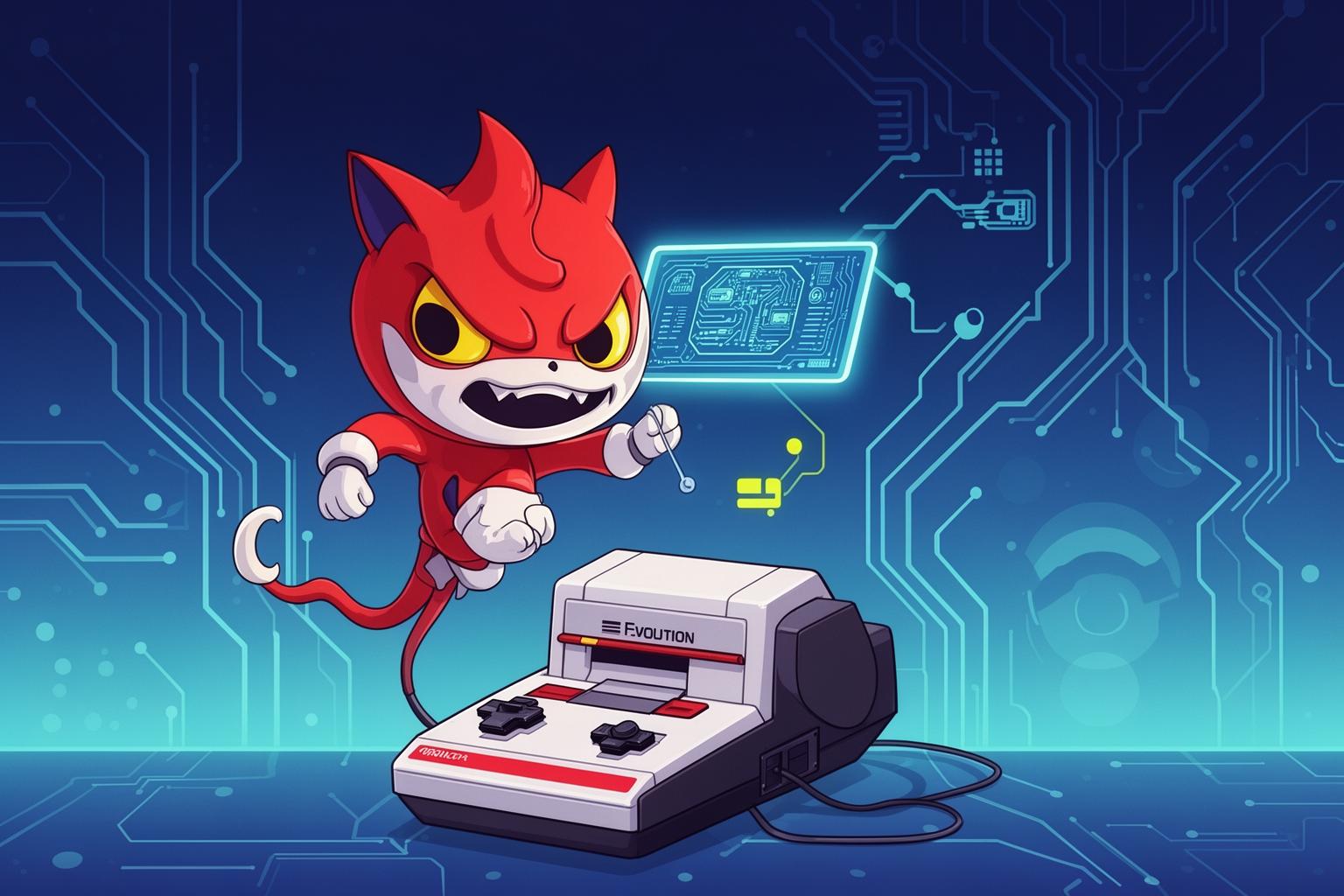
If Megami Tensei was the underground indie band with the brilliant concept, Pokémon was the pop superstar that took that idea and shared it with the entire world. The connection between the two is undeniable. The core loop of encountering a wild creature, weakening it, and then capturing it to make it your ally is a simplified and more accessible version of the negotiation and recruitment system from Megami Tensei. But Pokémon’s genius lay in its presentation. It took the core idea and executed a flawless cultural translation, smoothing out the dark, scary, and complex edges and repackaging it in the most adorable, kid-friendly way imaginable.
Pokémon creator Satoshi Tajiri has said his main inspiration was his childhood love of bug collecting, a popular pastime for Japanese children. But the cultural ground had already been prepared. The notion of cataloging and collecting a bestiary of supernatural creatures was deeply rooted thanks to centuries of Yokai lore and a decade of JRPGs that had digitized that tradition. Pokémon took the final step: it made the monsters your friends. Your partners. They weren’t just demons you summoned or allies of convenience; they were companions on your journey, raised from cute little babies into powerful champions. The Poké Ball symbolized domestication, transforming wild, dangerous forces into loyal pets.
And the designs? It’s basically a Yokai festival. Many of the original 151 Pokémon, and the hundreds more that followed, are direct, unmistakable riffs on classic Yokai:
- Ninetales: This one is straightforward. It’s a direct nod to the Kyūbi no Kitsune, the powerful nine-tailed fox spirit. In folklore, these foxes were incredibly intelligent, long-lived, and possessed strong magic. Ninetales is an elegant, mystical Pokémon with psychic and fire powers—a perfect modernization.
- Lombre/Ludicolo: The lily pad on its head gives it away. This is the Kappa reimagined as a goofy, dancing pineapple-duck hybrid. It retains the water association and the head-dish motif but sheds the dark, malevolent traits.
- Froslass: A beautiful, ghostly figure draped in a kimono-like body, Froslass is a clear homage to the Yuki-onna, or “snow woman.” In lore, the Yuki-onna was a Yokai who appeared in snowstorms to lure travelers to their doom, freezing them solid. Froslass, an Ice/Ghost type, captures that same eerie, deadly grace.
- Shiftry: With its long nose, leafy fan-hands, and wooden geta sandals, Shiftry resembles a Tengu perfectly. Tengu were powerful, sometimes arrogant mountain goblins linked to martial arts and the wind. As a Grass/Dark type known as the “Wicked Pokémon,” Shiftry channels that same trickster energy.
This pattern continues throughout. The process was brilliant: take a familiar Yokai, distill its key visual and thematic elements, then pass it through a kawaii (cute) filter. The result was a roster of creatures that felt both familiar and fresh. They resonated culturally with Japanese audiences while appearing as fantastically creative and original designs to the rest of the world. Pokémon deftly de-fanged the folklore, transforming a pantheon of dangerous and ambiguous spirits into a marketable, collectible, and utterly lovable cast of characters. It was the ultimate Yokai glow-up.
Yo-kai Watch: Bringing It All Back Home
For a time, the Yokai connection in monster-collecting games remained a sort of open secret. But in 2013, a franchise emerged that put the folklore front and center, even naming itself after it: Yo-kai Watch. Developed by Level-5, this series brought the concept full circle, making the link between ancient lore and modern life more explicit than ever.
Yo-kai Watch returned to the original role of Yokai: explaining the minor, everyday annoyances of life. In the game’s world, the main character receives a special watch that lets them see the Yokai secretly causing mischief all around us. Why do you keep forgetting what you were about to say? The Yokai Wazzat is influencing you. Why are you suddenly hungry for no reason? The Yokai Hungramps is nearby. Why are you arguing with your friend over something trivial? It’s the fault of the Yokai Dismarelda.
This was a masterstroke. It reconnected the concept of Yokai to its roots as a way to understand the world, while applying it to modern, relatable, everyday problems. The gameplay loop involved finding these hidden Yokai, battling them, and then making friends by giving them their favorite food. Once befriended, you received their medal and could summon them in battle. It’s a direct descendant of the Megami Tensei and Pokémon formula, but with a thematic focus that is purely and authentically Yokai folklore.
Yo-kai Watch became a massive hit in Japan, rivaling Pokémon for a time. It succeeded because it didn’t merely borrow designs; it embraced the entire cultural context. It taught a new generation the names and stories of classic Yokai like the Kappa, Tengu, and Yuki-onna, reviving the very folklore that had inspired the genre initially. It was the feedback loop completed: ancient stories became 8-bit enemies, then collectible pets, and finally a game explicitly about the original ancient tales. The cycle was complete.
So Why Does This Matter? The Cultural Cache
More Than Just a Game: It’s a Digital Shrine
An ancient Japanese ghost story becomes a character in a video game. Cool story, bro. But why does this matter so much? Because it perfectly encapsulates how Japanese culture operates. It illustrates a society that excels at preserving its traditions, not by locking them away in museums behind glass, but by continuously reinventing, remixing, and embedding them into the latest, most popular forms of media. The Famicom, the Game Boy, the Nintendo Switch—all these consoles serve as the new picture scrolls, the new woodblock prints, the new kabuki theaters. They are the mediums through which ancient culture remains alive, relevant, and commercially successful.
This isn’t about disrespecting the past; it’s about securing its future. A story about a vengeful spirit from the 12th century might not strike a chord with a ten-year-old in Tokyo today. But a ghost-type Pokémon with a cool design and a powerful special move? That definitely resonates. The child may not consciously realize they are interacting with a piece of thousand-year-old folklore, yet the cultural DNA is being passed on all the same. The symbols, archetypes, and aesthetics are absorbed and become part of a new generation’s cultural lexicon. The game transforms into a living, interactive archive—a digital shrine where old gods and monsters are reborn as code and pixels.
This process is deeply intertwined with Japanese religious and philosophical beliefs, especially Shintoism and its animistic perspective. The concept that anything can house a spirit and that countless invisible forces inhabit the world is fundamental. The Tsukumogami—spirits of old objects—are a prime example. This worldview effortlessly translates into a video game universe. A fantasy realm where every rock, tree, and treasure chest might be a monster or contain a spirit feels naturally fitting within this cultural framework. It’s why JRPG worlds often feel so vibrant and full of secrets; they are built on a cultural foundation that has always perceived the world this way.
The Takeaway: Japan’s Mastery of Remix Culture
Ultimately, the journey of the Yokai from eerie scrolls to pixelated sprites offers one of the clearest explanations for the question, “Why is Japan like this?” It’s a culture that doesn’t view the ancient and the hyper-modern as contradictory but rather as a continuum. A 1,000-year-old shrine can stand alongside a skyscraper full of anime studios. A traditional tea ceremony can be followed by a night of competitive video gaming. One doesn’t negate the other; instead, they coexist and often blend in captivating ways.
Japan has perfected the art of cultural remixing. It takes its own history, folklore, and deeply ingrained aesthetics and boldly fuses them with new technologies and foreign influences to create something entirely new, yet unmistakably Japanese. The transformation of Yokai into digital monsters stands as one of the most successful examples of this process in modern times. It spawned a multi-billion dollar global industry and introduced the world to some of its most iconic and cherished fictional creatures.
So, the next time you’re playing a JRPG and encounter a curious one-eyed creature or a shapeshifting fox, remember you’re not merely looking at a random cluster of pixels. You’re witnessing the culmination of a very long story—a tale that began with a whisper in the dark, was painted on a scroll by a monk, printed on woodblocks by an artist, programmed into an 8-bit cartridge by a developer, and finally delivered to you. In your own small way, you’re partaking in a living, breathing cultural tradition. And that’s a power-up no item shop can provide.