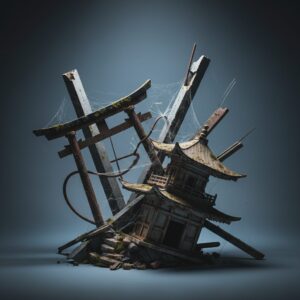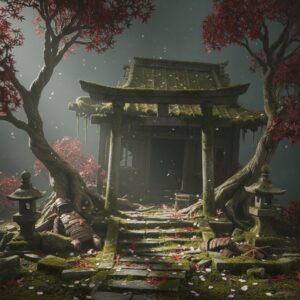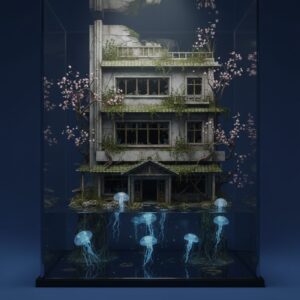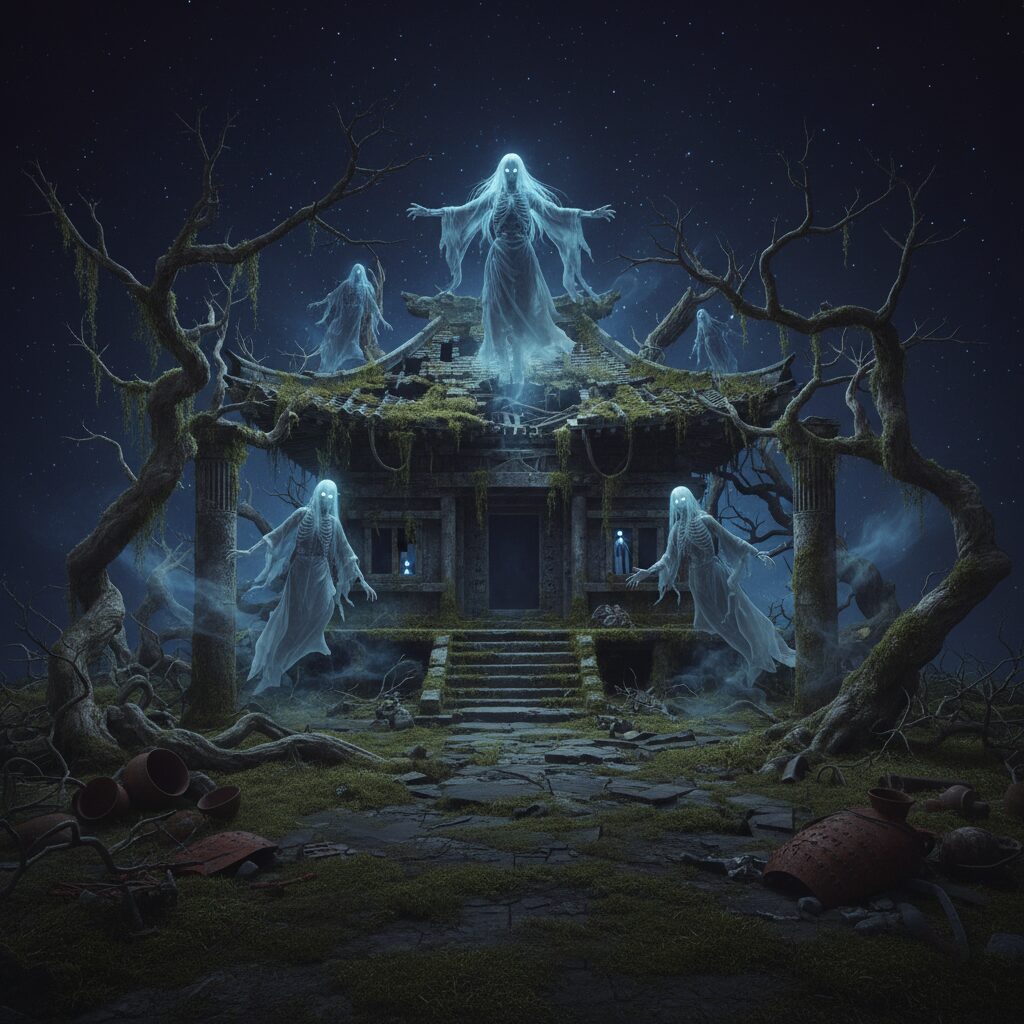
Yo, let’s get one thing straight. The Japan you see on your feed—the one with the slick, neon-drenched streets of Shibuya, the serene temples of Kyoto, and the almost painfully efficient bullet trains—that’s the highlight reel. It’s real, for sure, but it’s not the whole story. Not even close. You slide just a little off the beaten path, past the pristine convenience stores and the perfectly manicured gardens, and you find the ghost image of that perfection. You find the haikyo—the ruins. Abandoned schools, forgotten hospitals, decaying theme parks, and opulent hotels being swallowed whole by nature. It’s a side of Japan that doesn’t make it into the travel brochures, and it hits different. For real.
The first time you see one, it’s a total trip. You’re driving through some lush, green mountain pass and then bam—a massive, concrete European-style hotel, windows blown out, vines crawling up its face like green veins. The immediate question that hits your brain is, why? Why does a country so famously obsessed with cleanliness, order, and relentless progress let so many massive, expensive structures just… sit there and rot? It feels like a glitch in the matrix, a contradiction that’s hard to square. But here’s the thing: these places aren’t just empty. They’re not just dead space. Step inside one, and you’ll feel it. There’s a weight in the air, a heavy, static-filled silence that’s buzzing with the ghosts of what used to be. Not spooky, jump-scare ghosts, but the residue of life, the echoes of forgotten moments. It’s a vibe. And if you’re looking to understand the real, complex, and sometimes melancholic soul of modern Japan, these ruins are where you’ll find it. It’s a low-key pilgrimage into the country’s subconscious, a hunt for the modern yokai that haunt the dreams of a lost future.
To truly grasp this obsession with decay, one must explore the story of Gunkanjima, Japan’s most iconic post-apocalyptic ghost island.
The Ghost of the Bubble: Why Japan is Full of Ruins
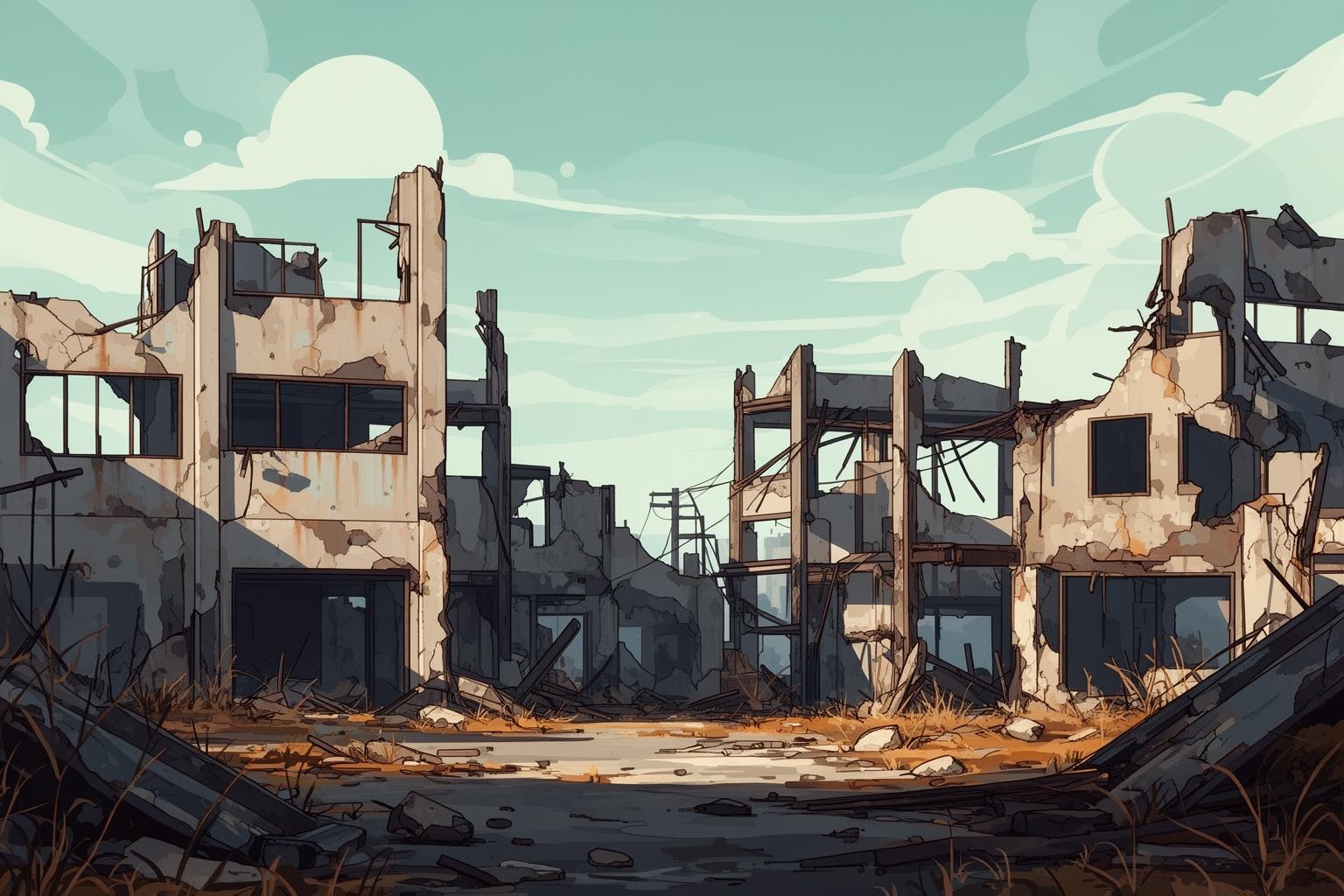
To understand why there are entire zombie resorts scattered across the Japanese countryside, you need to take a step back in time—not to the samurai and shogun era, but to a more recent and in some ways more violent period: the late 1980s. This was the height of Japan’s economic miracle, known as the Bubble Era. The mood then was pure, unfiltered optimism. The stock market and real estate prices were skyrocketing. People paid for coffee with 10,000 yen notes and told the waiter to keep the change. Companies were so flush with cash they didn’t know how to spend it. The world genuinely believed Japan was on the verge of buying America. No exaggeration.
The Party That Never Ended (Until It Did)
This flood of cheap money sparked a construction boom that bordered on madness. It was a national drive to build the future, right now. Every local government and corporation wanted a piece of the pie. They poured funds into wildly ambitious projects, often in the most remote and impractical locations. Imagine sprawling ski resorts on mountains that barely saw snow, lavish hotels with faux-European designs deep in forests miles from any tourist hub. Dozens of golf courses carved into pristine landscapes, catering more to corporate backroom deals than actual play. And the theme parks—my goodness, the theme parks. There was a German-themed village here, a Spanish-themed park there, all built on the nearly delusional belief that the good times would never end. These weren’t just buildings; they were monuments to hubris, concrete symbols of a nation that felt unstoppable.
Then, in the early ‘90s, the music stopped. The bubble burst. The stock market crashed, real estate values nosedived, and the whole house of cards collapsed. The aftermath was harsh. What followed was the “Lost Decade,” which extended into two, then three decades of economic stagnation. Those once-grand projects, symbols of boundless potential, turned into toxic liabilities overnight. Many were left half-finished when funding ran dry, leaving skeletal structures on the hillsides. Others opened with fanfare only to go bankrupt a year or two later, unable to lure the spending crowds that existed only in the bubble’s fantasy. The cost of demolishing these massive structures was, and still is, astronomical. The cheapest option was simply to do nothing. Lock the doors, walk away, and let time and nature take their course. Every haikyo from this era stands as a tombstone to a very specific, wildly ambitious dream. It’s the hangover from the greatest party in modern history.
The Demographic Cliff-Dive
But the economic crash tells only half the story. The other, quieter force behind ruins all over Japan is demographics. The country faces an overwhelming demographic crisis: a rapidly aging population and one of the world’s lowest birth rates. For decades, young people have been leaving rural areas in droves, heading for big cities like Tokyo and Osaka in search of jobs and excitement. This has hollowed out rural Japan.
This hollowing creates a different kind of ruin, the akiya, or abandoned house. Drive through a small town in rural Shikoku or Tohoku, and the sheer number of them is staggering. Entire streets are lined with darkened windows and overgrown gardens. These aren’t just rundown shacks; many are beautiful, traditional homes with tiled roofs and detailed woodwork, now gradually surrendering to the elements. Schools are often the first to close. With no children, the local elementary or junior high shuts its doors for good. The clinic follows, then the post office, then the last remaining shop. Eventually, you find yourself in a genkai shūraku, a “marginal village,” where most residents are elderly and the community is essentially awaiting its final chapter.
You might wonder, “Why not just tear them down and build anew?” It’s not that simple. In Japan, land is everything, but the buildings on it are often seen as disposable. Adding to the complexity is a strong cultural and familial attachment to homes. Tearing down a house your grandparents built feels like a desecration. On top of that, inheritance laws can be a nightmare, with ownership divided among multiple descendants who have long since moved away and have no interest in the property. Demolition is also extremely costly. So, much like the bubble-era resorts, the easiest and most common choice is to do nothing. Let them stand. Let them decay. It’s a slow-motion collapse, a quiet, creeping ruin that’s just as profound as the spectacular failure of a giant theme park.
More Than Just Decay: The Spiritual Vibe of Emptiness
Exploring these places, you begin to realize it’s not merely about the visual allure of decay—the peeling paint, the rust, the way sunlight streams through a collapsed roof. There’s a tangible atmosphere to a haikyo. A distinct kind of energy. It isn’t about fear. It’s something deeper, uniquely Japanese. To truly understand it, you need to grasp the spiritual and philosophical framework underlying Japanese culture, even for those who don’t identify as religious.
When Objects Have Souls: A Shinto Crash Course
At the heart of Japanese spirituality lies Shinto, the indigenous religion. Its core idea is a form of animism: the belief that kami—a term loosely translated as gods or spirits—inhabit everything. Not only people and animals, but also rocks, trees, rivers, mountains, and even man-made objects. This isn’t an abstract theological notion; it’s a lived reality that subtly influences the culture. It explains why people tie prayer papers to trees, why small shrines exist for seemingly ordinary rocks, and why there’s profound respect for objects and craftsmanship.
This belief connects to a fascinating piece of folklore about tsukumogami. The idea is that after an object has existed for a hundred years, it can awaken and gain its own spirit or soul. Old tools, instruments, umbrellas—they might all come to life. Although a concrete hotel from the 1980s isn’t quite a century old, the principle is essential for grasping the haikyo vibe. The cultural mindset holds that objects, through prolonged use and human interaction, become infused with energy, memory, and experience. They absorb the psychic residue of their users.
This is what you sense in a haikyo. An abandoned elementary school is more than just an empty building; it’s a vessel still vibrating with the spectral energy of thousands of children who once raced through its halls, the stern voices of teachers, the anthems sung in the auditorium. An abandoned hospital feels heavy, thick with lingering emotions of birth, death, pain, and relief. A crumbling love hotel, with its quirky themed rooms and dusty, heart-shaped beds, is imbued with the ghosts of countless secret encounters—a strange blend of desire and melancholy. The objects left behind—a child’s shoe, a medical chart, a dusty vinyl record—aren’t mere rubbish. They are anchors for memories. They are the focal points of the building’s soul. In a haikyo, you walk through a space that isn’t empty but profoundly filled with absence. This is the source of the supernatural sensation. It’s not a Western-style haunting; it’s the quiet, persistent hum of a place’s accumulated life force.
Mono no Aware: The Sad Beauty of Impermanence
Another essential Japanese aesthetic concept sheds light on the appeal of haikyo: mono no aware. It’s a notoriously challenging phrase to translate, but it essentially means “the pathos of things”—a gentle, bittersweet sadness at their transience. It’s the deep awareness that everything is temporary, and that this impermanence is exactly what makes it beautiful.
The classic example is the cultural obsession with cherry blossoms (sakura). People don’t just admire them for their beauty. They treasure them because their beauty is so fleeting. They bloom in a breathtaking explosion of color for a week, maybe two, and then vanish, scattered by wind and rain. The point is the heartbreaking beauty of their brief life. Mono no aware is the feeling you experience watching petals fall—a mix of sorrow for their passing and a deeper appreciation for the beautiful moment you’ve just witnessed.
Now, apply that same logic to a rusting, vine-covered ferris wheel in an abandoned amusement park. Haikyo exploration, at its best, is a gritty, modern expression of mono no aware. It’s about discovering a profound, melancholic beauty in decay. It’s appreciating an object not at its creation or peak usefulness, but at the very end of its story. The way nature reclaims a concrete structure—with moss softening its hard edges and trees sprouting through its floors—is a powerful, living tableau of impermanence. The faded colors, the textures of rust and rot, the quiet dignity of a building slowly returning to the earth—it’s a visual poem. For a photographer, it’s an irresistible subject. You don’t just capture decay; you capture the beauty of an ending. It’s a deeply meditative and strangely moving experience. It’s the aesthetic of failure, a concept that resonates profoundly in a country that has endured decades of economic stagnation.
Modern Yokai: What Really Haunts These Places?
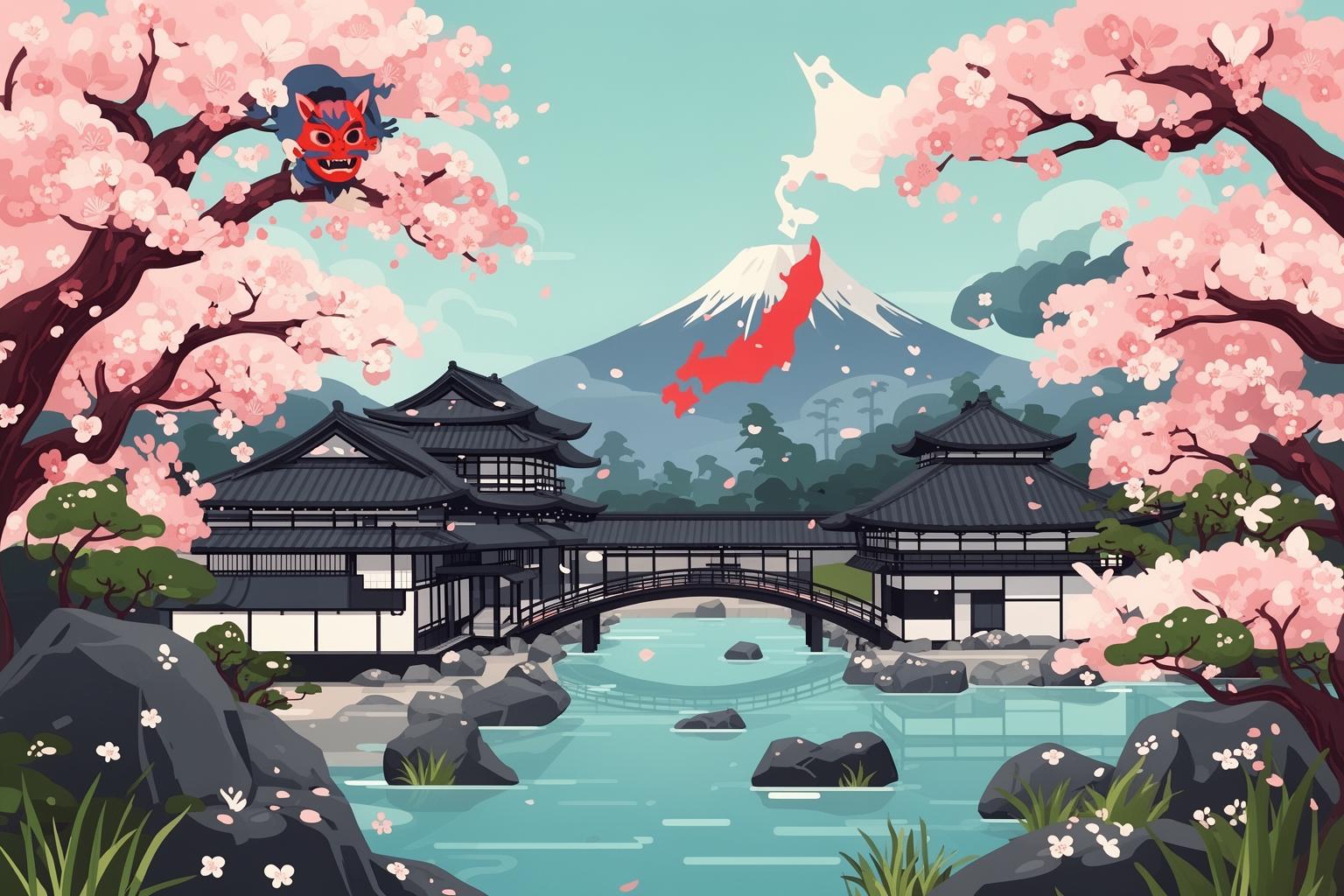
So if these places are imbued with a spiritual energy, what does that actually feel like on the ground? What are the modern ghosts, the new yokai, born from concrete and rebar? It’s important to leave your Western horror movie expectations at the door. If you enter a haikyo expecting a poltergeist to fling a chair at you, you’ll be disappointed. The supernatural presence here is far more subtle, more atmospheric, and deeply connected to the psychology of the space itself.
The Real vs. The Expectation: It’s Not a Horror Movie
For the most part, the prevailing feeling in a haikyo isn’t fear. It’s a profound, almost overwhelming, sense of melancholy and nostalgia. You stand in the middle of a frozen moment. A calendar on the wall is permanently stuck on August 1992. A newspaper left on a desk announces a world that no longer exists. It’s a form of time travel, but you are visiting a dead timeline. The “haunting” is the deafening silence in a place built for noise and human activity. Each type of haikyo resonates with its own unique emotional frequency, its own specific ghost.
An abandoned school is perhaps the most common and, in many ways, the most poignant type of haikyo. Walking into a silent classroom, seeing the small desks and chairs covered in thick dust, the cheerful drawings still taped to the wall… it’s heartbreaking. The ghost here is the ghost of lost potential, of a future that never came for that community. The silence of the gymnasium, where the squeak of sneakers and children’s shouts should be heard, is immense. You can almost sense the presence of all the lives that passed through these rooms, and the sadness comes from knowing no more will follow.
Abandoned hospitals and clinics tell a different story. These places carry a heavier, darker atmosphere. The vibe here leans more toward what you might call “creepy.” The residual energy of pain, fear, and death lingers on the walls. An empty operating theater, the surgical light still hanging over the table, or a wheelchair sitting alone in a long, dark corridor can send a genuine shiver down your spine. The objects left behind—medical instruments, patient files, mysterious stains on the floor—stir the imagination in a much more unsettling way. This is where the line between melancholy and dread becomes blurred.
Then there are places of leisure, like abandoned onsen resorts, hotels, and pachinko parlors. These are ghosts of faded glamour. You step into a grand ballroom, crystal chandeliers shattered on the floor, velvet seats of banquet chairs torn and moldy. You can almost hear the phantom clinking of glasses and murmur of conversations from a party that ended decades ago. It’s the melancholy of pleasure decayed, the sadness of a celebration long over. These places evoke deep melancholy, testaments to how swiftly luxury can deteriorate into ruin.
Finally, the most surreal of all: abandoned theme parks. Nothing prepares you for the sight of a grinning, life-sized mascot, its paint peeling away to reveal a fiberglass skull beneath, standing guard over a rusted roller coaster swallowed by weeds. Theme parks are designed as places of pure, manufactured happiness. When they decay, that manufactured joy curdles into something deeply unsettling. The bright colors and whimsical architecture become grotesque in ruin. It’s a powerful visual metaphor for a broken dream, and the cognitive dissonance it creates is intense. The ghost of a theme park is the ghost of forced fun, an incredibly strange feeling to encounter.
The New Gods of Concrete and Rust
This brings up a wild idea: perhaps these places are giving birth to new forms of supernatural entities, new yokai for the modern age. In Japanese folklore, yokai are incredibly diverse; they range from mischievous animal spirits to vengeful ghosts to personifications of natural phenomena. The pantheon is fluid and has always evolved to reflect the era’s anxieties. So why wouldn’t our era create its own?
The “spirit” of a defunct bubble-era resort isn’t a traditional ghost in a white kimono; it’s the embodiment of greed and economic hubris, a massive, groaning entity of concrete and mold. The yokai haunting an abandoned factory isn’t a goblin; it’s the lingering spirit of Japanese industrial might, the ghost of countless repetitive motions now frozen in rust. The entity in an abandoned school could be seen as the collective consciousness of the children who passed through it—a spirit of eternal youth trapped in a decaying body.
This is not mere fantasy. It taps into how Japanese spirituality can seamlessly absorb and sanctify new things. A haikyo becomes a new kind of sacred space, albeit a profane one. It is a place where normal rules are suspended. The veil between past and present feels incredibly thin. By entering, you participate in a ritual, paying respects to the spirit of the place. You acknowledge the power that lives in its memories and materials. These aren’t your grandmother’s ghost stories. These are tales being written right now in peeling paint and shattered glass.
The Reality of the Hunt: Is It Worth It?
It’s easy to romanticize this kind of thing. The photos look stunning, and the stories are captivating. But before you book a flight and start searching for fence gaps, you need a serious reality check. Haikyo exploration, or urbex (urban exploration) as it’s known worldwide, is far from a casual tourist pastime. It’s a high-stakes hobby with very real dangers and a strict, unspoken code of ethics. So, is it truly worth it?
The “Why”: Beyond the Urbex Hype
For those who take this seriously, the motivation goes well beyond just scoring an impressive new profile picture. For many, it’s a form of active meditation. In a world that’s hyper-connected and constantly clamoring for your attention, stepping into a haikyo feels like entering another dimension. The silence is complete. Your phone has no signal. It’s just you, the building, and the weight of its history. It compels you to be present, to notice the details, to move carefully and deliberately. It’s a powerful way to disconnect from the noise of modern life and connect with something raw and authentic.
It’s also a grassroots form of historical preservation and modern archaeology. You become a detective, piecing together the story of a place from the clues left behind. Why did this place shut down? Who were the people who lived or worked here? A stack of letters in a desk drawer, the final entry in a logbook, a set of keys still hanging on a hook—each item is part of a puzzle. You bear witness to a history that’s actively being forgotten, documenting a piece of Japan’s story that’s often swept under the rug. It offers a direct, physical link to the country’s recent past that museums or history books simply can’t provide. You’re not just witnessing the fallout of the bubble’s collapse; you’re standing right inside it.
And yes, there’s an undeniable thrill. The adrenaline rush of stepping into a forbidden zone, of being somewhere you’re not meant to be, is a powerful lure. It’s a genuine adventure, a journey into the unknown that’s increasingly rare in our carefully controlled and curated world.
The Risks and the Rules (The Unspoken Code)
Now, for the hard truth. This isn’t a game. First and foremost, it’s dangerous. These buildings have been abandoned for decades. Floors may be rotten, roofs could be on the verge of collapsing, and staircases are often treacherous. There’s frequently broken glass, exposed rebar, and other hazards everywhere. That doesn’t even account for things like asbestos, which was commonly used in these structures. Then there are the local inhabitants. In rural Japan, that means venomous snakes (mamushi), aggressive wild boars (inoshishi), and in some areas, even bears. You’re on your own. If you get injured, no one is coming to assist you.
Then there’s the biggest risk of all: getting caught. Let’s be clear: entering these sites without permission is trespassing and illegal in Japan. While the police may not be actively patrolling every abandoned building, security systems, motion sensors, and watchful neighbors are common. Getting caught can result in fines, arrest, and for foreigners, deportation. It’s a risk that should never be underestimated. The fantasy of free-roaming exploration often clashes with the harsh reality of a very strict legal system.
Because of these risks, a strong ethical code has developed within the serious haikyo community. The golden rule is simple: “Take nothing but pictures, leave nothing but footprints.” This is non-negotiable. Vandalism, graffiti, and especially theft are considered the ultimate taboos. The aim is to experience and document the place as it stands, in its natural state of decay. To break something or steal a “souvenir” is to violate the spirit of the place, disrespect its history, and spoil the experience for those who come after you. This isn’t about conquest; it’s about reverence. You’re a guest in the house of time and must behave accordingly. Understanding this distinction separates a true explorer from a common vandal. And it’s worth highlighting the vast difference between exploring a genuinely abandoned site and taking a sanitized, official tour of a place like Gunkanjima (Hashima Island). The guided tour is safe and legal, but it’s essentially a museum exhibit. The real, raw experience comes with real, raw consequences.
Final Vibe Check: So, Why is Japan Like This?
Let’s return to that initial big question: Why? Why does this landscape of sleek modernity and untouched nature conceal this hidden world of decay? I believe the answer is that haikyo are not contradictions to the narrative of modern Japan. Rather, they form its most honest and revealing chapter. They are the tangible scars of the country’s recent history, the unavoidable consequence of a clash between wild economic ambition, significant demographic shifts, and an ancient, deeply rooted cultural worldview.
Japan appears this way because its hyper-modern exterior is stretched thin over a complex foundation. It’s a nation that endured the trauma of a massive economic collapse, a dream of the future that vanished overnight. The haikyo stand as monuments to that lost future. They also emerge from a culture that, through Shinto animism, perceives a life force in all things, making it difficult to simply erase the past. Additionally, they serve as a canvas for a people who, through the aesthetic of mono no aware, uniquely find profound, resonant beauty in the processes of decay and impermanence.
These abandoned places are where all these strands converge. They are where the ghost of the bubble economy merges with the spirit of an ancient Shinto shrine. They are where the stark realities of demographic decline are expressed in peeling paint and rust. They embody a kind of societal subconscious, a storehouse of dreams, failures, and memories that the polished surface of contemporary Japan strives to overlook. Standing in a silent, dusty classroom, sunlight filtering through a broken window and illuminating swirling dust motes, I finally understood. The feeling wasn’t just fear or sadness. It was a profound sense of connection. I was listening to silence and hearing stories. The haunting isn’t about Western-style ghosts. It’s about the overwhelming presence of absence, a sensation so palpable you can almost touch it. Exploring these places isn’t about seeking thrills. It’s about bearing witness. It’s a quiet spiritual journey into the essence of what Japan is, and what it might have been.