
Ever felt like you’ve stumbled into the wrong side of the internet? Like, you clicked a link and suddenly you’re in a digital back alley, surrounded by a chaotic swarm of faceless voices, all shouting in a language you barely understand, made up of weird characters and inside jokes that feel a thousand years old? If you’ve ever browsed the Japanese web, you’ve probably had that vibe check. It’s a world away from the curated, identity-driven spaces of Western social media. It’s messy. It’s raw. It’s brutally, unapologetically anonymous. And the ground zero for this entire aesthetic, the ghost in this wild machine, was a forum that looked like it was designed in 1998 and never updated: 2-channel, or as it’s known now, 5-channel. To an outsider, it looks like pure, unadulterated chaos. A relic of a forgotten web. But for a huge slice of Japan, it was, and in many ways still is, the most honest place in the country. It’s where the silent majority found its voice, for better or, quite often, for worse. This isn’t just about old-school forums. This is about understanding the core of modern Japanese digital culture. It’s about decoding the digital ninjas who built a world online that could never exist offline. It’s a space born from a deep-seated cultural need to separate your public face from your true feelings. To really get it, you have to understand the pressure cooker of Japanese society and how 2-channel became its unofficial, unfiltered, and often terrifying release valve. We’re diving deep into the abyss, to a place that birthed memes, otaku culture, social movements, and some of the most toxic mobs the internet has ever seen. This is the story of the real, hidden Japan—the one that only logs on when nobody’s watching. And it all started in places like Akihabara, the physical heartland of the culture that 2-channel gave a digital home.
To truly grasp this phenomenon, one must first understand the foundational Japanese concepts of honne and tatemae.
The Birth of the Beast: What Even Was 2-channel?
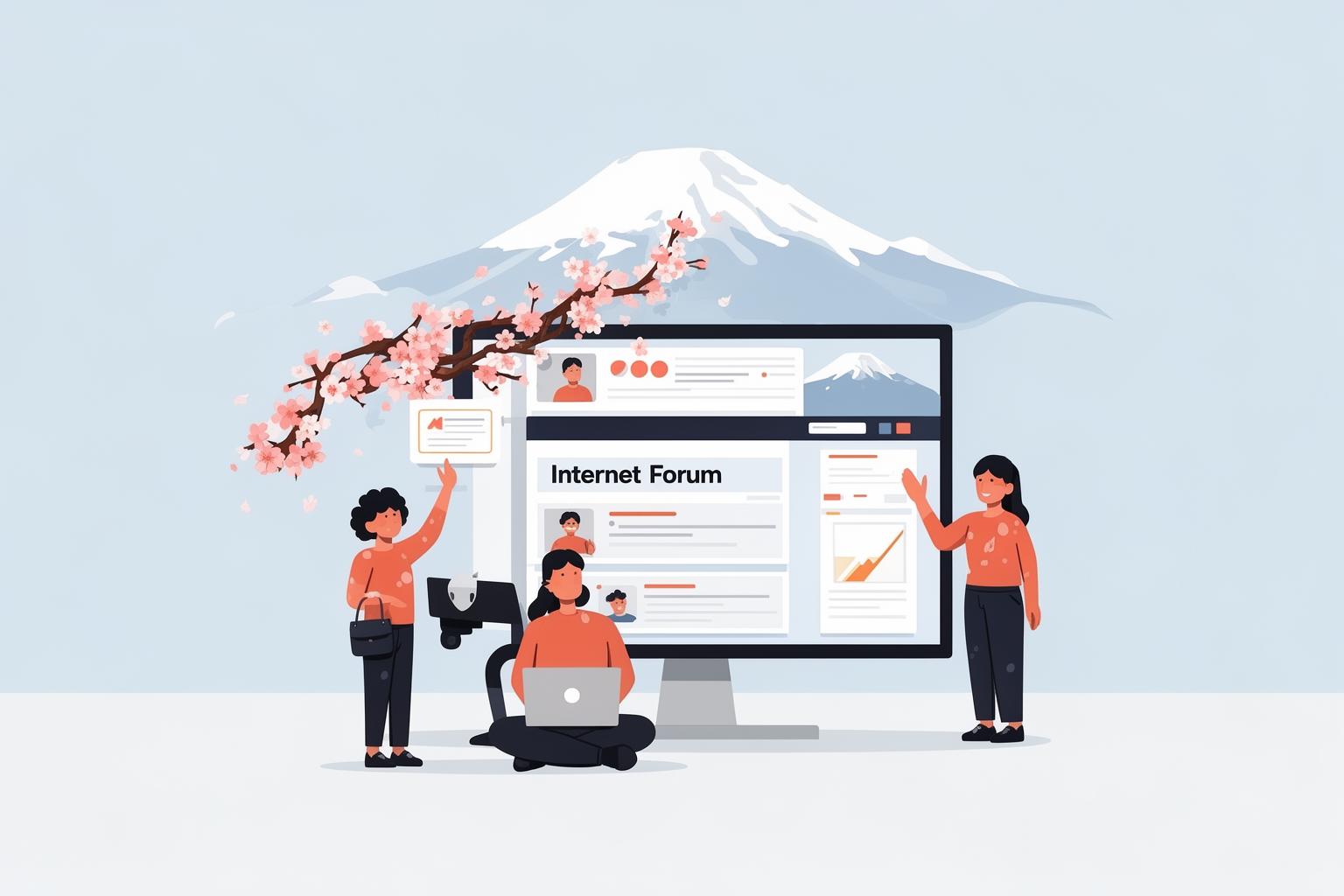
Before delving into the psycho-social drama, it’s essential to grasp the fundamental mechanics of this digital beast. Consider the internet you know—Facebook with its real names, Instagram with its polished selfies, Twitter with its blue checks and brand-building, Reddit with its karma points and user histories. Now, take every aspect of personal identity from those platforms and toss it into a digital dumpster fire. That’s 2-channel. It was a space fundamentally built on the total erasure of the individual. Its design was aggressively minimalist, harkening back to the earliest days of web forums. Essentially, it was a collection of boards called ‘ita,’ each dedicated to every conceivable topic, from mainstream anime series and video games to extremely niche subjects like vintage train timetables, local politics in a specific prefecture, or strategies for handling noisy neighbors. It was a realm of hyper-specific conversations all happening simultaneously.
Not Your Mom’s Forum: The Core Mechanics
The user experience was, to say the least, unwelcoming to newcomers. There was no registration. No profiles. No avatars. No usernames. When you posted, you were automatically assigned the name 「名無しさん」 (Nanashi-san), which literally means “Mr. Anonymous” or “Ms. Nameless.” Everyone was Nanashi-san. This wasn’t optional; it was the entire point. Imagine a Reddit thread where every participant is named ‘Anonymous.’ The attention shifts instantly from who is speaking to what is being said. The message alone mattered, not the messenger. A post by a 15-year-old high schooler looked the same as one from a 50-year-old corporate executive. This fostered a brutally egalitarian, if chaotic, environment. There was no hierarchy based on reputation, tenure, or follower count—concepts deeply ingrained in everyday Japanese society. On 2-channel, everyone was a ghost, a disembodied voice among countless others.
Threads themselves, called ‘suresure’ (an abbreviation of ‘sreddo’, the Japanese transliteration of ‘thread’), were dynamic, living organisms, but also rapidly dying ones. Unlike Western forums where old threads are archived and easily searchable, 2-channel threads had a post limit, usually 1000 posts. Once a thread reached 1000, it became ‘dat-ochi’—archived, effectively dead and locked. Discussion had to continue in a new thread. This created a strong sense of urgency and transience in conversations. Popular topics would fill threads and replace them within hours, sometimes minutes. Keeping up with fast-paced discussions on busy boards required full-time attention. It wasn’t enough to check in once a day; you had to be present, watching the digital river flow in real time. Participation also required understanding a secret language. Simple commands typed into the email field could influence a thread. Typing ‘sage’ (from ‘sageru’, meaning to lower) allowed you to post without ‘bumping’ the thread to the top, a quiet gesture of humility. Typing ‘age’ (from ‘ageru’, to raise) bumped the thread, signaling its importance and calling for more eyes. This ‘age/sage’ culture encapsulated 2-channel’s ethos: a set of unspoken rules you either grasped or didn’t. There was no user guide.
Then there was the content itself. Walls of text were divided not by images or embedded videos but by elaborate and often amusing ASCII art, or ‘AA.’ This formed an entire subculture. Users spent hours crafting intricate pictures out of text characters, creating recurring mascots like the smug cat Giko Neko or the everyman character Mona. These weren’t mere decorations; they were a rich emotional language, expressing sarcasm, joy, despair (‘orz’ famously depicting a person on their hands and knees in defeat), and countless other nuances that plain text couldn’t convey. The written language evolved at a breakneck speed. Laughter was abbreviated to a simple ‘w’ (from ‘warau’, to laugh), which could be extended to ‘wwwww’ to denote intense amusement, resembling blades of grass and giving rise to the term ‘kusa haeru’ (growing grass) for something hilarious. This jargon was impenetrable to outsiders but served as a powerful in-group marker. If you understood the slang, the AA, the ‘age/sage’ system, you belonged. You were part of the anonymous collective.
Hiroyuki and the Wild West Philosophy
This digital wild west didn’t emerge spontaneously. It was the creation of one man: Hiroyuki Nishimura, often just Hiroyuki. A brilliant, iconoclastic figure, he founded 2-channel in 1999 while reportedly a student at the University of Central Arkansas. His philosophy was radically hands-off. He viewed 2-channel not as a community to be managed but as a utility—a tool for uninhibited information exchange. His famous line, often paraphrased, was, “I think 2-channel is a lot like a trash heap… I just created a place. I have no desire to manage it.” This wasn’t false modesty; it was a manifesto. He believed the platform’s value lay in its absolute freedom. He designed a system with minimal moderation, where even libelous, hateful, or illegal posts were often left up, forcing police and courts to navigate a murky legal gray zone with a US-based server and a founder who relished being a provocateur.
This stance made him a folk hero to some and a villain to others. Supporters saw him as a free speech champion, creating Japan’s only public square where power could be openly criticized without fear of retaliation. Critics painted him as an irresponsible troll king profiting from a platform that enabled cyberbullying, defamation, and the spread of harmful misinformation. As always, the truth lies somewhere in the messy middle. Hiroyuki’s genius was recognizing a fundamental truth about his culture: a society governed by strict social codes and fear of offense needed a space where those codes vanished. He didn’t invent the need for such a space; he built the playground and let the Japanese internet’s collective id run wild. He knew that any attempt to sanitize it, to impose accountability or identity, would destroy its very purpose. 2-channel was designed as a mirror for raw, unfiltered human thought, and Hiroyuki was content playing janitor to the abyss, observing the chaos he unleashed without trying to control it.
Why Anonymous? The Social Science Behind the Keyboard
So, why did this chaotic, anonymous model take off in Japan in a way it never quite did in the West? Why the fixation on being a ‘Nanashi-san’? The answer lies not in the technology, but deep within the foundations of Japanese social structure. To grasp it, you must understand two key concepts that shape everyday life: ‘Honne’ and ‘Tatemae’. This isn’t mere cultural trivia; it is the very core of the social framework guiding nearly every interaction in Japan.
Honne and Tatemae Go Digital
‘Tatemae’ (建前) represents the public persona. It is the carefully crafted facade of opinions, behaviors, and words you show to maintain social harmony, demonstrate respect, and meet expectations. It’s telling your boss their idea is fantastic even if you think it’s awful. It’s agreeing to attend a drinking party you have no desire to join. It’s the polite smile, the non-committal nod, the entire dance of indirect communication designed to avoid conflict. ‘Tatemae’ acts as the social grease that keeps the complex machinery of Japanese society operating smoothly. In a word, it is exhausting.
‘Honne’ (本音), on the other hand, is the opposite. It’s your true feelings, genuine opinions, your raw, unfiltered thoughts. It’s the content you’d only share with your closest family or most trusted friends, if at all. In a culture that values the group over the individual, expressing your ‘honne’ openly is a serious social blunder. It’s perceived as selfish, immature, and disruptive. Consequently, most people keep the vast majority of their ‘honne’ locked away, unspoken. This builds enormous social and psychological pressure. What do you do with all those opinions, frustrations, and dark thoughts you can’t express in daily life? For millions, 2-channel became the answer. It was the great ‘honne’ dumping ground.
Anonymity was the key that released the ‘honne’. By removing your name, face, job, and social status—all aspects of your ‘tatemae’—2-channel allowed your ‘honne’ to run free. It was a digital masquerade ball where everyone wore the same mask of ‘Nanashi-san’. Here, you could harshly criticize a popular anime, confess a secret desire, vent about your company, or share a deeply unpopular political opinion without real-world repercussions. This wasn’t just about trolling; it was a kind of collective therapy. It was a space where your strange, hidden thoughts weren’t so strange after all, because hundreds of other anonymous users were shouting the exact same thing alongside you. The platform’s success stemmed directly from this societal dynamic. It provided an outlet that real life couldn’t offer. It was the digital subconscious of a nation raised to hide its true feelings.
The Nail That Sticks Up Gets Hammered Down
This dynamic is reinforced by another core aspect of Japanese culture, embodied in the proverb 「出る杭は打たれる」 (Deru kui wa utareru), meaning “The nail that sticks up gets hammered down.” This teaching is ingrained from a young age: don’t stand out, don’t show off, don’t rock the boat. Conformity and contributing to the group take priority over individual expression and ambition. In a classroom, a student who constantly raises their hand and asks challenging questions might be seen not as smart but as disruptive. In the workplace, an employee who proposes a radical new idea often faces silent opposition. Success is collective; failure is personal.
This cultural pressure breeds great reluctance to take risks, especially in voicing opinions. What if you say something foolish? What if your opinion is unpopular? What if you offend someone powerful? In a society where reputation and relationships matter deeply, the risk often isn’t worth it. So, people stay silent, deferring to group consensus. The ‘tatemae’ becomes a protective shield.
Now, consider 2-channel through this perspective. The anonymity it offered wasn’t just a feature; it was direct counter-programming to ‘deru kui wa utareru’. On 2-channel, you could be the nail that sticks up. In fact, the entire platform was a collection of nails jutting out in all directions. You could post a harsh critique of a beloved film, and though you might be flamed by other anonymous users, it was a clash of ideas, not a personal or professional risk. The hammer of social conformity couldn’t reach you. This freedom was intoxicating. It enabled a level of debate, intellectual probing, and brutally honest feedback impossible in consensus-driven Japan. The mob might be wrong, the mob might be ruthless, but it was also a place where every opinion, no matter how odd or controversial, could at least be voiced. It was a chaotic marketplace of ideas where the only currency was the strength of argument (or the sharpness of insult), not the speaker’s social rank.
Group Identity Over Individual Ego
This leads to a fascinating paradox. While 2-channel unleashed individual ‘honne’, it did so by absorbing the individual into a new kind of group: the anonymous mob of each thread. You weren’t Mia Kim, the anime writer voicing her thoughts. You were simply another ‘Nanashi-san’ contributing to thread #257 on the video game board. Identity shifted from the person to the conversation itself. This mirrors the broader Japanese cultural emphasis on the group—but in a strange, altered form.
On Western platforms, the goal is often to build a personal brand. You want more followers, more karma, more likes. Your online persona is a curated extension of your real-world self. On 2-channel, there was no brand to build, no ego to satisfy. Trying to stand out or develop a recognizable ‘Nanashi-san’ personality was often met with suspicion and ridicule. The aim wasn’t individual recognition but participation in creating a collective work—the thread. The thread became the entity, with its own mood, inside jokes, and life cycle. Individual posters were merely transient cells in this larger organism. This explains why events like ‘matsuri’ (festivals) or online pile-ons could be so powerful. The mob wasn’t a gathering of individuals; it was a unified entity with a singular purpose, energized by the combined ‘honne’ of thousands of nameless participants. It was the ‘deru kui wa utareru’ philosophy weaponized in reverse: instead of hammering down a standout individual, the anonymous group became a giant hammer striking external targets.
The Culture That Crawled Out of the Threads
2-channel was more than just a pressure valve; it was a petri dish. Within its chaotic, anonymous stew, entirely new forms of culture, language, and social phenomena emerged and eventually spilled over into the mainstream. The influence this single, unattractive website has had on modern Japan, especially otaku and internet culture, is impossible to overstate. It functioned as a low-key cultural factory operating around the clock, producing memes, slang, and entire narratives that would come to define a generation of Japanese internet users.
From ASCII Art to Otaku Lexicon
The creative output of 2-channel is astonishing considering its limitations. In a world without images, users pushed the boundaries of what plain text could achieve. The ASCII art (‘AA’) culture was its most visible legacy. This was more than simple smileys. It involved multi-line, highly detailed characters used to tell stories, perform skits, and respond to posts. Characters like Mona (モナー), a cat-like figure often representing the archetypal 2-channel user, and Giko Neko (ギコ猫), his cynical sidekick, became the platform’s unofficial mascots. Whole threads could consist entirely of AA characters interacting in complex storylines. It was a form of digital puppetry, a shared visual language that everyone understood. Learning to recognize and create AA was a rite of passage.
This linguistic innovation extended well beyond art. The fast-paced thread environment required a shorthand language that evolved rapidly. Many elements of the modern otaku lexicon were born or popularized here. The use of ‘w’ for laughter became so widespread it now appears throughout the Japanese internet, from Twitter to YouTube comments. Terms defining entire anime genres were refined and fiercely debated on 2-channel boards. While ‘tsundere’—a character archetype initially cold or hostile but gradually warmer—wasn’t coined on 2-channel, the forum was where the term was dissected, analyzed, and codified into the trope recognized today. The concept of ‘moe,’ denoting a strong, often protective affection toward a fictional character, sparked thousands of threads with users debating its precise meaning and sharing examples. ‘Wktk’ (wakuwaku tekateka), onomatopoeic slang for being giddy with excitement and anticipation, and ‘Kitaaaaa!’ (キターーーー!), an exclamation meaning “It’s here!” or “It’s happened!”, often used when a long-awaited anime episode aired or a key plot point occurred, also originated here. These terms were more than just words; they were cultural markers, secret handshakes signaling membership in the in-crowd.
The ultimate demonstration of 2-channel’s cultural power was ‘Densha Otoko’ (電車男), or ‘Train Man’. This was not fiction but a phenomenon unfolding in real time on the forum in 2004. A self-identified 22-year-old nerdy ‘otaku’ posted on a singles board about defending a beautiful woman from a drunk harasser on a train. As thanks, she sent him an expensive set of teacups. Having never dated before, he was clueless about how to proceed. He turned to the anonymous users of 2-channel for advice. What followed became a national sensation. For weeks, hundreds of ‘Nanashi-sans’ acted as his personal cheerleaders and dating coaches, offering advice on everything from attire to dinner venues to conversation tips. ‘Train Man’ posted real-time updates of his dates, with the entire thread collectively celebrating his successes and sympathizing with his setbacks. The story ended like a fairy tale: he eventually confessed his feelings, and they became a couple. The entire saga, compiled from forum threads, became a bestselling book, blockbuster movie, hit TV drama, and manga series. It was a watershed moment demonstrating that the anonymous mob, often linked with negativity and cynicism, could also be a source of collective support and heartfelt storytelling. It launched the hidden world of 2-channel into the mainstream and turned its anonymous community into heroes, if only briefly.
The Dark Side: Flash Mobs, Flame Wars, and Cyberbullying
Yet for every ‘Densha Otoko’, countless instances showed 2-channel’s collective power turned to darker ends. The same anonymity that encouraged creativity and support also provided the perfect cover for humanity’s worst traits. The ‘honne’ unleashed was not merely quirky opinions or nerdy enthusiasm; it was frequently hatred, prejudice, and outright malice. This was the darker face of the platform, deeply ugly.
The forum became notorious for its ‘matsuri’ (祭り), or ‘festivals’. This word, usually denoting joyous traditional Japanese celebrations, was repurposed to describe large-scale online attacks or pile-ons. A ‘matsuri’ would erupt when a person, company, or media piece committed some perceived offense. A celebrity might make a controversial statement, a company might release a flawed video game, or a TV show might misrepresent otaku culture. Suddenly, a thread would ignite and, fueled by outrage, explode. Thousands of anonymous users would band together to uncover personal information, flood company phone lines, spam social media accounts, and inundate review sites with negative ratings. It was the digital equivalent of a mob wielding torches and pitchforks.
These ‘matsuri’ sometimes escalated into full-scale witch hunts. The mob, convinced of its own righteousness, engaged in ‘tokutei’ (特定), or doxing—identifying an individual’s real-world information, such as name, address, school, or workplace. This could have devastating effects. Lives were shattered over minor perceived offenses. People lost jobs, were forced to relocate, and endured severe psychological trauma at the hands of a nameless, faceless horde. Anonymity was key; with everyone as ‘Nanashi-san,’ no one took responsibility for the collective actions. It was easy to add one more hateful comment or post one more piece of private data when you were just one voice among thousands. This was the terrifying power of the decentralized, ego-less mob. While it could become a tool for vigilante justice, the line between justice and pure bullying was often erased. The ideal of absolute free speech came at a high cost, often paid by real people targeted by the anonymous collective’s wrath. This served as a stark reminder that a space without rules or consequences is not a utopia, but anarchy that frequently empowers the cruelest voices.
The Legacy: Where Did the Digital Ninjas Go?
The golden age of 2-channel—the era of ‘Densha Otoko’ and pioneering meme culture—has ended. The site itself became entangled in ownership disputes and technical problems, eventually rebranding as 5-channel (‘5ch’) and losing much of its cultural significance. The internet moved forward. Yet, the spirit of 2-channel continues to haunt the entire Japanese digital landscape. The essence, attitude, and mechanics of that anonymous world didn’t vanish; they simply evolved. The digital ninjas didn’t disappear; they merely found new platforms to inhabit. If you know where to look, you can spot 2-channel’s DNA everywhere.
The Great Migration: From 2ch to the Modern Web
The 2-channel user base didn’t just vanish overnight. That vast, restless energy had to flow somewhere. One major inheritor is, somewhat surprisingly, Twitter. Although it appears to be a typical social media platform, Japanese Twitter operates under a very different set of cultural norms. The proportion of users employing pseudonyms or anonymous avatars is much higher than in the West. It’s common for individuals to maintain a ‘honne’ account, entirely separate from their real name and professional identity, where they can vent, share niche interests, and engage in the kind of unfiltered conversations that were once exclusive to 2-channel. The ‘retweet’ and ‘quote retweet’ features often catalyze the rapid formation of digital mobs, echoing the old ‘matsuri’ culture. A contentious tweet can go viral within minutes, triggering a storm of criticism from thousands of pseudonymous accounts. The speed, piling-on mentality, and often brutal tone of these online conflicts are a direct spiritual successor to 2-channel’s flame wars.
Another prominent successor is Nico Nico Douga, Japan’s quirky counterpart to YouTube. What distinguishes Nico Nico is its signature feature: user comments scroll across the video screen in real time, synced to playback. Watching a popular video on Nico Nico isn’t passive; it’s a communal experience. You watch it alongside thousands of others whose reactions, jokes, and commentary become part of the content itself. This is a clever evolution of the 2-channel thread. It captures the feeling of a shared, real-time conversation and overlays it onto video. The screen transforms into a living wall of text, a collective consciousness reacting as one. The sense of a unified, anonymous crowd (‘danmaku’) creating a shared experience perfectly embodies 2-channel’s philosophy, adapted for the multimedia age. You’re not just watching a video; you’re participating in a digital festival with your fellow ‘Nanashi-sans’.
Perhaps the most contemporary development is the world of VTubers (Virtual YouTubers). Creators use animated avatars to stream and produce content, allowing them to craft charismatic personas while keeping their real-world identities completely hidden. This represents the 2-channel ethos of anonymity taken to its logical, highly monetizable extreme. The avatar is the ultimate mask, a sophisticated ‘Nanashi-san’ that enables creators to express their ‘honne’—their personality, humor, and passions—without revealing their ‘tatemae’-bound real selves. The fan communities surrounding VTubers are intense and collective, often organizing support campaigns and generating massive amounts of fan content, reflecting the supportive aspect of old 2-channel mobs.
Echoes in the Mainstream: Is Everyone a Ninja Now?
Beyond specific platforms, 2-channel’s fundamental worldview—cynical, skeptical, anti-establishment, and deeply fluent in irony—has permeated the entire Japanese internet. Its greatest legacy may be the normalization of anonymous, unfiltered commentary in public digital spaces. Just observe the comments on major news aggregators like Yahoo! Japan News. They are notoriously harsh, filled with blunt, often nationalistic or extremist ‘honne’ that would be unthinkable to express openly. These comment sections function as a massive, mainstream version of a 2-channel politics board. They serve as a powerful—and often unsettling—barometer of public sentiment that exists beyond the polished ‘tatemae’ of traditional media.
The concept of the ‘nettomin’ (ネット民), or ‘net people,’ as a distinct cultural and political force, was forged in the fires of 2-channel. The ‘nettomin’ are viewed as anonymous digital masses—quick to anger, highly critical of mainstream media and political elites, and possessing their own unique culture and slang. They are the descendants of the ‘Nanashi-sans.’ The idea that the anonymous internet has a collective voice, and that this voice is often the “real” voice of the people, is a direct inheritance from Hiroyuki’s creation. The digital ninja is no longer a niche subculture; the mask of anonymity and the language of ‘honne’ have become standard tools used by a vast portion of the Japanese population as they navigate the digital world.
So when you try to understand the often baffling realm of the Japanese internet, don’t just perceive chaos. See the culture beneath it. The chaotic textboards, the scrolling comments, the anonymous Twitter armies—they are not random noise. They are a digital reflection of a profound and enduring social dynamic. This space was born from the tension between the tranquil, orderly surface of Japanese society and the turbulent, messy reality of human emotions beneath. Anonymous forums were not anomalies; they were necessities. They are the cry of the ‘honne’ in a world demanding ‘tatemae.’ The digital ninjas of 2-channel created a world where the nail that sticks out isn’t hammered down—it finds a million other nails and builds a whole new, invisible house. And we are all, in one way or another, still living in it.