What’s up, fellow adventurers? Alex here. Picture this: it’s the late 90s. The world is a whirlwind of dial-up internet, baggy jeans, and a digital craze that swept the globe, fitting right into the palm of your hand. I’m talking about the Tamagotchi. That little egg-shaped keychain wasn’t just a toy; it was a responsibility, a digital life form that beeped for food, attention, and, well, everything. We poured our little hearts into keeping these pixelated pets alive. But what happened when the inevitable occurred? When the screen went blank and the little angel icon appeared? In most places, it meant a sad trip to the trash can or the bottom of a drawer. But in Japan, the birthplace of this digital creature, something way more profound, way more…extra, started happening. Whispers of Tamagotchi graveyards began to surface—places where these fallen digital companions were laid to rest. This wasn’t just about a dead toy; it was a legit cultural moment, a crossover episode between 90s tech nostalgia and ancient Japanese traditions. It’s a story that’s part urban legend, part cultural deep-dive, and one hundred percent fascinating. We’re about to unplug from the matrix and dive headfirst into the eerie, emotional world of Japan’s digital pet cemeteries and the infamous “ghost hacks” that haunted them. This is a journey into the soul of the machine, a quest to understand why we care so much about things that aren’t technically real. It’s a vibe, for real. So, let’s get into it. But before we start this ghost hunt, let’s get our bearings. While these “graveyards” aren’t official spots you can just punch into your GPS, the cultural spirit behind them is very real, often echoing traditions found in sacred places like temples that perform memorials for cherished objects. This map points to one such place, a temple famous for doll memorials, giving you a tangible starting point for understanding this uniquely Japanese perspective on saying goodbye.
This cultural reverence for digital nostalgia isn’t limited to Tamagotchi, as you can also experience it by hunting down Japan’s old-school arcades.
The Vibe: It Was Never Just a Toy

To fully grasp the entire Tamagotchi graveyard scene, you need to rewind and appreciate the total grip this thing had on us. This wasn’t just any toy. For many of us, it marked the first time we experienced the weight of digital life and death. The constant beeping was the soundtrack of our childhood—a relentless call to action you simply couldn’t ignore. Forgetting to feed your Tamagotchi wasn’t just about losing a game; it felt like a real personal failure. The emotional investment was, no lie, off the charts. We forged genuine attachments, giving them names, personalities, and projecting our own emotions onto these simple pixelated characters. The bond was intense. When it died—and it always did—the feeling of loss was surprisingly real. This intense connection lies at the heart of the entire phenomenon. And it wasn’t just kids; adults were equally hooked, often sneaking glances at their digital pets under their desks at work. The craze created a shared global experience, but Japan, as the original home of the Tamagotchi, elevated that connection to an entirely different level.
Here, a key Japanese cultural concept comes into play: mono no aware. It’s a beautiful, bittersweet notion without a direct English equivalent. Essentially, it means “the pathos of things.” It expresses a gentle sadness toward the transience of life, an awareness that everything is fleeting, and a deep, melancholic appreciation of that fact. It’s the feeling you get watching cherry blossoms fall, knowing their breathtaking beauty is momentary. The Japanese cultural mindset holds a profound respect for objects, believing that even inanimate things can possess a spirit or essence, especially when loved and cherished over time. This belief is central to Shintoism, Japan’s indigenous religion, which teaches that kami (gods or spirits) can inhabit everything—from rocks and rivers to, yes, even a tiny plastic egg. So, when a beloved Tamagotchi “passed away,” simply tossing it in the trash felt…wrong. It seemed disrespectful to the emotional energy and time invested in it. It wasn’t just a broken piece of plastic; it was a vessel of a relationship—a tiny digital ghost. This cultural context is crucial to understanding why the concept of a graveyard for Tamagotchis isn’t as strange as it might sound. It’s a modern expression of an ancient sensibility, applying the pathos of things to the digital era. It’s about honoring the connection, the memory, and the feelings it inspired. It’s profound, and honestly, quite beautiful when you think about it.
Level Up: The Birth of Digital Graveyards
Alright, let’s be clear: you won’t find a sprawling, official “Tamagotchi Cemetery” with little headstones on Google Maps. That’s not what this is about. These “graveyards” were more of a grassroots, subcultural phenomenon—part urban legend, part real tribute. They appeared in a few different, fascinating ways. Some of the earliest accounts describe online memorials. In the early days of the internet, message boards and personal websites became digital spaces for mourning. People posted RIP messages, shared stories about their departed digital pets, and created pixel art tributes. It was a communal grieving space—a way for people to connect over this shared, slightly quirky, but very real sense of loss. It was a quietly beautiful expression of a global community forming around this tiny piece of tech.
Then there are the physical manifestations, which are far more elusive and legendary. The stories often revolve around tech-centric hubs, the epicenters of otaku culture in Japan. Imagine a hidden corner in a retro video game shop in Akihabara, where the owner started a small, informal collection of “dead” Tamagotchis left by sad kids. Maybe it began with one, then another, forming a small, colorful pile in a glass case—a silent, collective memorial. Or picture a shelf in a café in Nakano Broadway, adorned with dozens of these little eggs, each symbolizing a story, a memory. These weren’t commercial enterprises; they were organic, heartfelt shrines. Often decorated with tiny, handmade offerings: a small paper crane, a single piece of candy, a handwritten note saying “Arigato” (Thank you). It was a tangible expression of that mono no aware spirit. These weren’t places of horror, but spaces of quiet respect and nostalgia. Discovering them felt like stumbling upon a secret level in a video game, a real-world Easter egg. The vibe was less spooky and more poignantly nostalgic. It was a testament to the powerful, often overlooked relationships we form with technology. It’s the ultimate IYKYK (if you know, you know) kind of spot, a true hidden gem for those who were part of that initial wave of digital pet ownership. The search for these places is part of the charm—a pilgrimage into the heart of 90s nostalgia.
Glitch in the Matrix: Unpacking the Tamagotchi Ghost Hack
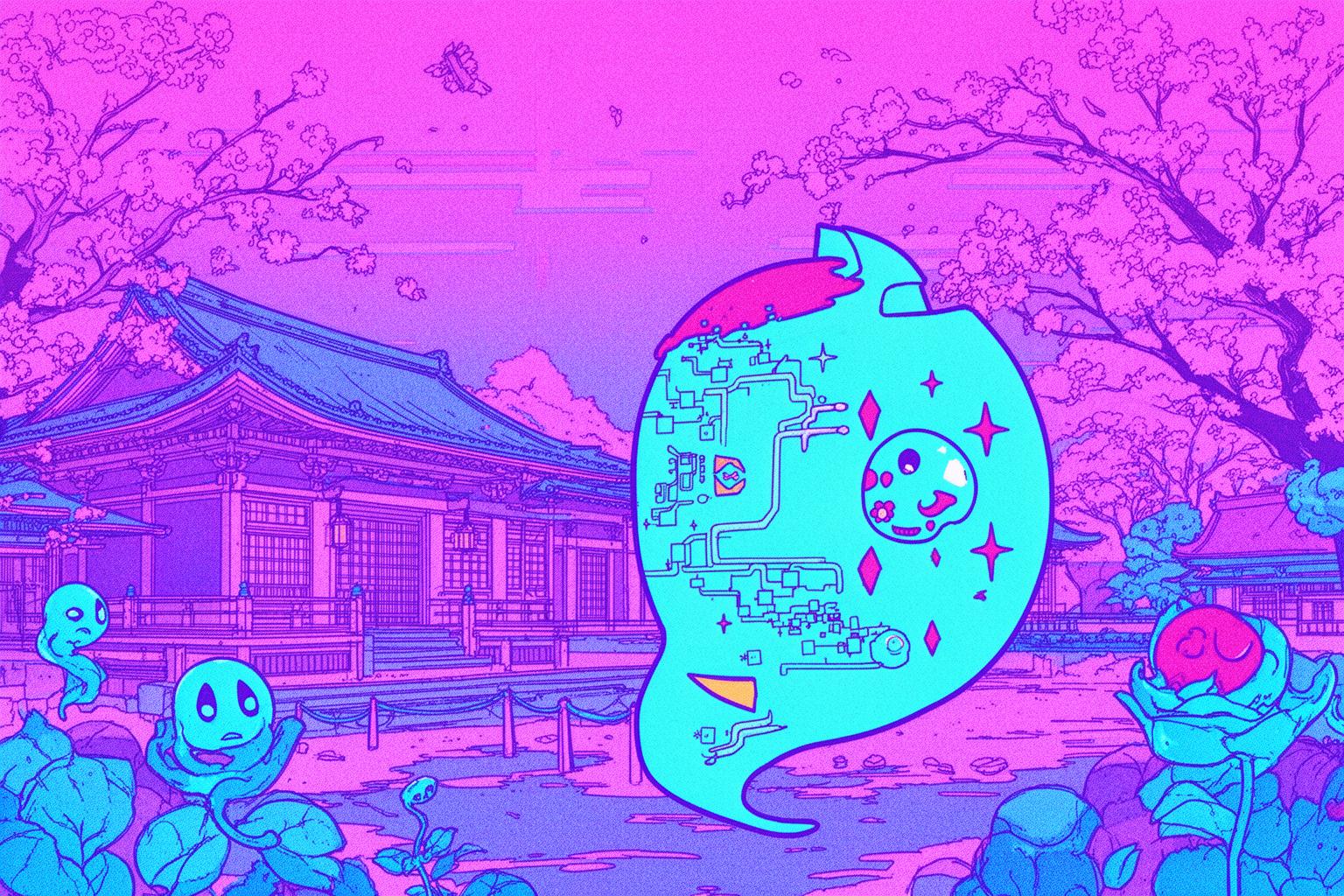
Now, let’s dive into the truly eerie stuff. Running alongside the physical graveyards was a digital phenomenon that felt like a genuine ghost story for the tech era: the Tamagotchi “ghost.” This wasn’t an official character. You wouldn’t find it in the instruction manual. It was a glitch, a secret, a myth whispered on playgrounds and shared across early internet forums. The tale was that if you cared for your Tamagotchi in a very specific, often neglectful way, it wouldn’t just die and become an angel. Instead, it would turn into a ghostly figure—a small white blob with a tail, sometimes resembling a classic Japanese yurei or spirit. This was the ultimate mystery. Getting the ghost character was a badge of honor for some, a sign that you had uncovered a hidden part of the game. For others, it was somewhat unsettling, as if the device itself was haunted by the spirit of a neglected pet. The lore was captivating.
This tapped directly into Japan’s rich heritage of ghost stories and folklore. Japanese culture abounds with tales of yokai (supernatural monsters and spirits) and yurei (ghosts of the deceased) who often linger due to strong emotions—love, anger, or sorrow. The notion of an object retaining a spiritual essence, or tsukumogami—the belief that tools and objects reaching 100 years of age can gain a soul—is a well-established part of this folklore. The Tamagotchi ghost felt like a modern-day tsukumogami. It was a digital ghost born from neglect, a glitch in the code that seemed to possess a soul. It blurred the boundaries between programming and the paranormal. Was it simply a clever piece of coding from the developers at Bandai, an Easter egg for devoted players? Or was it something beyond that? The ambiguity was everything. This digital haunting made the Tamagotchi feel less like a product and more like a mysterious artifact. It added a layer of dark intrigue to the experience. People would deliberately try to summon the ghost, following specific, often complex, rumored procedures. It flipped pet care on its head; the aim wasn’t to be a good caretaker but to be a bad one, just to see what kind of spectral entity you could conjure from the digital ether. It’s a perfect example of how users can take a piece of technology and create their own culture, rituals, and myths around it. The Tamagotchi ghost wasn’t just a character; it was a story we told ourselves about the hidden lives of our digital companions.
The IRL Quest: Where to Find the Vibe Today
So, you’re in Japan and eager to pursue this digital ghost. As we’ve noted, there isn’t a single marked grave to visit, but you can certainly embark on a pilgrimage to places that capture the essence of this phenomenon. It’s a search for a feeling, a vibe, a nostalgic rush. Your journey centers on three key spots: Akihabara, Nakano Broadway, and traditional shrines honoring objects.
Akihabara: The Electric Heartbeat
Your first stop is Akihabara, also known as Electric Town. This place offers sensory overload in the most exhilarating way. It’s the global hub for anime, manga, and gaming culture, buzzing with electric energy. Here, your goal is to dive into retro gaming. Ignore the flashy department stores on the main streets and instead explore the back alleys and upper floors of iconic buildings. Head to Super Potato, a legendary retro game store. Climbing its narrow staircase feels like stepping back in time—the air is thick with the scent of old plastic and cardboard, accompanied by the store’s signature 8-bit music on repeat. Walls are lined with every console imaginable, and if you’re lucky, you’ll spot vintage Tamagotchis on display. While you won’t find an official “graveyard,” you will encounter these artifacts carefully preserved like relics. Another essential visit is Mandarake Complex, an eight-story black tower devoted to all things otaku. Each floor offers a unique world, and somewhere within its intricate maze, you’ll discover showcases filled with nostalgic toys from the ’80s and ’90s. This is where the spirit of the Tamagotchi graveyard truly lives—in the thoughtful preservation and reverence for these old pieces of tech. The atmosphere is one of shared memory and collective love for objects that defined a generation. Take your time exploring each floor and immerse yourself in the vibrant otaku energy.
Nakano Broadway: The Otaku Labyrinth
If Akihabara feels like a dazzling theme park, Nakano Broadway is the sprawling, mysterious dungeon you delve into for rare treasures. A short train ride from Shinjuku, this four-story shopping complex houses over 300 stores, creating a dense, almost overwhelming otaku experience. It focuses less on electronics and more on collectibles, attracting hardcore collectors. You’ll find shops so packed with merchandise that moving through them is a challenge. Within these tiny, highly specialized stores, the Tamagotchi ghost is most likely to appear. Seek out toy shops specializing in ’90s memorabilia, where you might discover a forgotten corner with boxes of old, non-functional Tamagotchis sold for parts or nostalgic value. The vibe here isn’t a formal memorial but rather a cycle of consumption, collection, and memory. These objects are rescued from obsolescence and given new life as cherished collectibles. Nakano Broadway feels like a living museum, and wandering its corridors is a treasure hunt—unpredictable and magical.
Shrines and Temples: The Original Graveyards
For the most profound connection to the spirit behind the Tamagotchi graveyard, step away from the neon city lights and visit a traditional Japanese shrine or temple. Here, you’ll encounter the practice of ningyo kuyo, a memorial service for dolls. Indeed, in Japan, there are ceremonies to respectfully say goodbye to dolls and figurines that have been loved. People bring old dolls—from traditional Hina dolls to modern anime figures—to the temple, where they are lined up and a priest performs a ritual to thank them for their service and purify them, allowing their spirits to pass peacefully. This cultural tradition is the DNA behind the Tamagotchi graveyard; the same impulse to honor an inanimate object that carries human emotion and memory. Visiting a temple hosting these ceremonies, like Kannon-ji in Iwatsuki (a location on our map), offers a powerful experience. You may not see Tamagotchis, but you will find rows of dolls, each with its own story. It provides a deep, authentic context for understanding the phenomenon, showing that it’s not just a quirky ‘90s trend but a modern continuation of a centuries-old tradition of finding soul in the everyday. It’s a beautiful, moving practice that can change how you cherish your own possessions.
Pro-Gamer Moves: Tips for Your Tech Pilgrimage

Alright, before you set off on your quest, let’s review some pro tips to ensure your journey is smooth and respectful. Consider this your strategy guide for exploring Japan’s nostalgic tech scene.
Timing is Key
If you plan to visit Akihabara, aim for a Sunday afternoon. The main street, Chuo Dori, is pedestrian-only during this time, turning into a hokoten (pedestrian paradise). The atmosphere is vibrant, filled with cosplayers, street performers, and a large crowd of fellow enthusiasts. It’s like a cultural festival in full swing. For Nakano Broadway, weekdays tend to be less crowded, which is a relief when navigating its narrow, packed corridors. You’ll have more room to breathe and truly explore the shops. When visiting temples, be mindful of their schedules. If you want to attend a ningyo kuyo ceremony, check the temple’s website ahead of time since these are often held only on specific days each year.
Cash Rules, But Suica Reigns
Although Japan is increasingly card-friendly, when dealing with retro games and niche collectibles, cash remains king. Many smaller, independent shops in Akihabara and Nakano Broadway accept cash only. So, make sure you carry enough yen to grab that rare treasure. For everything else—trains, convenience stores, vending machines—a prepaid IC card like Suica or Pasmo is your best companion. You can top it up at any station and just tap to go, making travel around Tokyo effortless.
Honor the Relics and the Space
This is crucial. You’re entering spaces deeply valued by the local community. In these retro shops, remember you’re in a functioning store, not just a museum. Always ask permission before photographing merchandise or the interior. Shop owners are often very passionate and knowledgeable, but also protective of their curated collections. A simple “Shashin o totte mo ii desu ka?” (May I take a picture?) can make all the difference. The same respect applies to temples and shrines, which are active places of worship. Be quiet, respectful, and follow the rules. Don’t treat a solemn doll memorial as a quirky photo opportunity—it’s a sincere cultural and spiritual practice. Showing respect will enrich your experience and leave a positive impression.
Boost Your Language Skills
You don’t need fluency in Japanese, but knowing some key phrases helps immensely. Basic greetings like “Konnichiwa” (Hello) and “Arigato gozaimasu” (Thank you very much) are fundamental. When shopping, “Kore wa ikura desu ka?” (How much is this?) is very handy. And if you’re just browsing, a polite “Miteiru dake desu” (I’m just looking) goes a long way. People appreciate the effort, which can open doors to great interactions. Download a reliable translation app but try to use your own voice first. It’s all part of the adventure.
The Digital Ghost in the Shell
So, what did we discover on this strange and fascinating journey? We set out to find a graveyard for toys but ended up uncovering something far more profound. The tale of the Tamagotchi graveyard isn’t really about lifeless electronics. It’s a story about us—our remarkable ability to form emotional bonds, to find meaning and even a soul in the most unlikely places—a cluster of pixels on a tiny screen. It’s a perfect blend of cutting-edge technology and ancient, animistic traditions. It embodies the spirit of mono no aware for the digital age, acknowledging that even these brief, manufactured experiences carry weight and beauty. The ghost in the Tamagotchi machine wasn’t a glitch; it was a mirror of our own humanity, our desire to create stories, to grieve, and to remember.
As we enter an era of increasingly advanced AI companions, virtual realities, and digital assistants, this little 90s fable feels more relevant than ever. What will happen when our relationships with artificial beings grow even more complex and nuanced? Will we hold digital funerals for our AI friends? The questions raised by a simple, egg-shaped toy over two decades ago are now central to our technological future. Exploring these cultural phenomena in Japan is more than just a journey; it’s a glimpse into the core of our changing relationship with technology. It reminds us that no matter how sophisticated our devices become, what truly matters is the human connection we project onto them. So next time you stumble upon an old piece of tech tucked away in a drawer, pause for a moment. Remember the joy it once brought you. In a way, you’re visiting its own tiny graveyard, honoring a digital ghost from your past. And that, right there, is a pretty fire vibe.