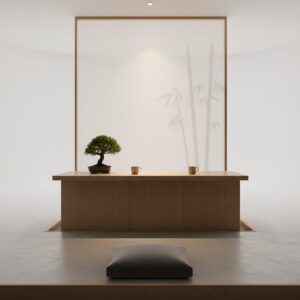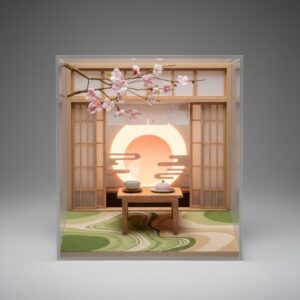
You’ve seen it, right? Scrolling through your feed, and bam—a photo from a Tokyo cafe that just hits different. It’s a cup of coffee, but it looks more like a piece of art. The latte art is a flawless swan, the ceramic cup looks like it was made by a monk on a misty mountain, and the minimalist wooden interior is so clean it feels like a sanctuary. You see the caption, #TokyoCafe, and you think, “Is it even real? Is every coffee shop in Japan this… perfect?” And more importantly, why? Why the intense focus on something as simple as a cup of coffee? It feels like there’s a whole story behind that single cup, a story you’re not quite in on. You might even feel a little skeptical. Is it all just for the ‘gram, a performance of authenticity? Or is there something deeper going on?
No cap, you’re right to be curious. It’s not just you. This isn’t just about making good coffee; it’s a full-blown cultural expression. What you’re sensing is a concept that’s basically the secret sauce to understanding modern Japanese craftsmanship: kodawari. It doesn’t have a perfect English translation, but think of it as a deep, unwavering, almost obsessive commitment to a personal standard of perfection. It’s not just “attention to detail”; it’s a life philosophy poured into a craft. This isn’t a corporate mandate for quality; it’s one person’s soul, their entire worldview, manifested in a physical space and a tangible product, be it a cup of pour-over, a slice of cake, or the very chair you’re sitting on. It’s the reason why that latte art feels less like a cute decoration and more like a final, deliberate brushstroke on a masterpiece. It’s an entire vibe, a meticulously crafted universe in a tiny shop. Before we dive deep into this world, let’s get our bearings. Peep this map of Kiyosumi-Shirakawa in Tokyo—it’s basically ground zero for this third-wave coffee movement, where Kodawari isn’t just a buzzword, it’s the air you breathe.
To fully appreciate this modern kodawari, it helps to understand its roots in the older, nostalgic world of Japan’s retro kissaten.
The Kodawari Grind: More Than Just a Good Cup of Coffee
Let’s clarify one thing: when you enter a cafe steeped in Kodawari, you’re not merely purchasing a drink. You’re entering a tangible embodiment of someone’s lifelong dedication. The price on the menu doesn’t only cover the beans and milk; it reflects years of practice, failures, adjustments, and a focused vision that culminates in the cup before you. This represents a fundamental mindset shift from the Western view of a cafe as just a casual hangout or makeshift office. Here, the coffee is the star, and everything else plays a supporting role.
So, What Exactly IS ‘Kodawari’?
To truly understand, we need to break down the word. Kodawari (こだわり) is a noun derived from the verb kodawaru, meaning to be particular about, meticulous, or to fuss over details. On the surface, it can seem like being picky, and it sometimes carries a negative nuance in Japanese. Someone with excessive Kodawari might be seen as stubborn, rigid, or difficult, unable to see the bigger picture because they’re fixated on minor details. But when applied to a craft, it becomes something admirable— a badge of honor. It embodies the spirit of the shokunin (artisan), who devotes their life to mastering a single skill, whether sushi-making or sword forging. Kodawari is more personal and versatile, too. A programmer can have Kodawari about their code, a musician about their tone, and a barista about every step of the coffee-making craft.
This isn’t about following a handbook or corporate manual on “how to make the perfect latte.” It’s about creating your own guidelines. The Kodawari barista has spent countless hours perfecting their approach. They’ve chosen a specific bean origin, likely sticking to just that one. They trust a particular roaster, or maybe roast the beans themselves in-house. They’ve pinpointed the exact water temperature, down to a tenth of a degree, to best draw out the flavors they want. They select the grinder, filter paper, kettle, scale, and timer with the same care an artist uses to pick brushes. This is their unique formula, their response to the question, “What is the ideal cup of coffee?” The outcome can’t be replicated elsewhere since it’s not just a method; it’s a philosophy—a personal signature delivered in liquid form.
The Barista as an Artist, Not a Service Worker
Now let’s consider the person behind the counter. In many Western cafes, the barista is seen as a service role, expected to be cheerful, chatty, and quick. The aim is customer satisfaction through friendliness and efficiency. But in a high-Kodawari Japanese cafe, this model changes entirely. The barista often works quietly, focused, almost monk-like. Their movements are precise, economical, and rehearsed. They may not engage in small talk or smile much, which can feel unsettling to visitors, leading to thoughts like, “Are they upset with me? Is the service poor?”
However, this is a cultural misunderstanding. The silence is not rudeness; it’s a profound respect for you and the craft. Their sole attention is on preparing the best possible coffee for you. The process itself is the service. You’re there to observe a master at work. The calm, deliberate rituals—grinding beans, tamping espresso, steaming milk, pouring—express omotenashi, Japanese hospitality that anticipates needs without intrusion. Here, hospitality shines in the unwavering quality of the product. The barista communicates through actions rather than words, saying, “I am dedicating my full focus to this cup for you. This is the highest respect I can offer.”
For many, being a barista isn’t just a job to earn a living. It’s a vocation, a calling, their ikigai (life’s reason). They have chosen this path with great seriousness, having apprenticed for years or traveled extensively to coffee farms. Their identity is deeply connected to their ability to craft the perfect cup. So when you watch them work, you’re not simply waiting for caffeine—you’re a guest in their studio, witnessing a silent, masterful performance. The real exchange happens when you take that first sip and your expression shows you understand. That quiet nod of appreciation is the conversation they’ve been waiting for.
The Aesthetics of Everything: Crafting the Perfect Vibe
Okay, so the coffee itself is a masterpiece of personal philosophy. But what about the space? The perfectly minimalist decor, the single flower in a vase, the custom-made ceramic cups—this isn’t accidental, nor is it simply about creating a good photo op for social media. The physical environment of a Kodawari cafe is a vital, inseparable part of the experience. It extends the owner’s aesthetic and ethical commitment, crafted to shape the entire sensory experience from the moment you step inside.
The ‘Gram is Great, But the Feeling is Even Truer
There’s no denying these places are incredibly photogenic. And yes, the owners know people will take pictures. But assuming the design exists for Instagram misses the point entirely. The aesthetic isn’t a marketing tactic; it’s a fundamental element of the product. The aim is to create a specific kuukan—a word meaning “space” that carries a deeper sense of atmosphere, ambiance, and place. The owner is curating a feeling, building a world where their ideal coffee can be experienced at its best. The visual harmony of the space is meant to foster mental harmony in the customer. It’s about removing distractions so your focus can narrow to the simple, profound pleasure of the coffee before you.
This is why many of these cafes feel almost like temples or art galleries. The sparse decor, natural materials like wood and concrete, and carefully controlled lighting are all designed to soothe your mind and sharpen your senses. The visual noise of the outside world is stripped away, leaving only the essentials. In this quiet, focused environment, you’re more likely to detect the subtle aroma of the coffee, the warmth of the cup in your hands, and the complex flavor notes. The aesthetic isn’t just a backdrop for the coffee; it’s the stage that enables the coffee’s performance. The photo you take is merely a souvenir of that feeling, a digital trace of a meticulously crafted analog experience.
Interior Design as a Statement
Let’s take a closer look at the design choices. Minimalism is common, but it’s a distinctively Japanese minimalism rooted in Zen philosophy and the concept of ma (negative space). It’s not emptiness for emptiness’s sake; it’s about the power of what’s omitted. Every object allowed in the space—a chair, a lamp, a counter—is chosen with care. It must be beautiful, functional, and harmonize with everything else. The empty space around objects is equally important, giving them room to breathe and allowing full appreciation. This act of subtraction is central to Kodawari. The owner is saying, “I have removed everything that is not essential to the experience I want you to have.”
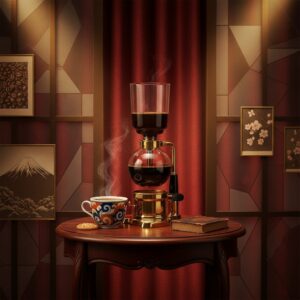
But it’s not all minimalist concrete boxes. The Kodawari ethos can express itself through any aesthetic. Consider the old-school kissaten: cafes that feel like time capsules from the Showa era (1926–1989), with dark wood paneling, velvet seats, and classical music softly playing on a vintage sound system. The owner’s Kodawari here is about preservation and nostalgia rather than modern precision. They are guardians of a specific atmosphere from a bygone time, maintaining that feeling through elements like a siphon coffee maker resembling a science experiment or slightly yellowed manga pages on the shelf. Another aesthetic is wabi-sabi, which values beauty in imperfection and impermanence. A wabi-sabi cafe might feature uneven handmade pottery, a weathered wooden counter, and walls with textured, earthy plaster. Here, Kodawari embraces the natural, humble, and authentic over sleek and mass-produced. Each style represents a different philosophical statement, a different universe crafted by the owner.
From the Cup to the Counter: Material Matters
This obsession with aesthetics extends to the smallest details. Generic, mass-produced ceramic mugs simply won’t be found here. The cup you drink from is a vital part of the experience. It might be handmade Hagi-yaki pottery, prized for its rustic warmth and how it subtly changes with use over time. The owner believes the specific shape, weight, and texture of this cup make it the ideal vessel for their coffee—the thin lip affects how the coffee enters your mouth, the glaze’s texture the feel in your hands, and the ceramic color contrasts with the dark liquid to create a unique visual effect. It’s a complete sensory package.
This philosophy applies throughout. The spoon might be hand-forged brass, balanced with a satisfying weight. The water glasses may be impossibly thin and elegant. The counter could be a single, massive slab of Japanese cypress, sanded smooth like silk. These aren’t luxury extras; they are essential components. The owner’s Kodawari insists that spent years perfecting their coffee cannot be served in a cheap, thoughtless cup—it would insult both the coffee and the customer. It’s about preserving the integrity of the vision from start to finish. Every material object in the cafe is a testament to the owner’s uncompromising standards, another layer of personality embedded in the physical space. This holistic attention to detail is the very essence of Kodawari culture.
The Silent Conversation: Reading the Room in a Kodawari Cafe

So you’ve discovered one of these spots. You step inside, and the atmosphere feels… intense. It’s quiet. The other customers sit alone, reading or simply gazing into their cups. The barista gives you a slight nod. A sign with a list of rules in Japanese hangs on the wall. Suddenly, this cool cafe resembles a library right before a final exam. This is often when foreign visitors feel most puzzled or even unwelcome. You might wonder, “Am I doing something wrong?” The answer is probably no, but you’ve entered a space governed by a strong, unspoken social contract. Grasping this is essential to truly appreciating the Kodawari cafe experience.
Rules of the Game You Didn’t Know You Were Playing
Those rules on the wall? They’re more than mere suggestions. Typical ones include: “One drink minimum per person,” “No laptops or studying,” “Please keep your voice down,” “No flash photography,” or “Maximum stay of 90 minutes.” From a Western viewpoint, this can seem very restrictive and bad for business. Why turn away customers who want to work for hours or groups of friends who want to chat?
Because the owner is not aiming to maximize customer volume or long visits. They are focused on preserving the kuukan, the atmosphere they have meticulously crafted. Their cafe isn’t a public co-working space or a social club; it’s a place for quiet appreciation of coffee. Laptops disrupt that calm, creating a work-like vibe. Loud conversations break the tranquil, focused mood. Customers lingering for hours without ordering more occupy precious seats in often small spaces. These rules aren’t hostile; they are protective barriers the owner erects around their creation. They act as a filter, ensuring those inside understand and respect the space’s purpose. By entering and ordering, you implicitly agree to be part of that curated atmosphere, not to disturb it. You’re a guest in the owner’s private world, and their Kodawari extends to the conduct of patrons. It’s a tough concept, but it stems from a deep passion for preserving the experience’s integrity.
The Menu is the Manifesto
Another potential point of confusion is the menu. You might enter a stunning cafe, ready for your usual vanilla latte with oat milk, only to discover a menu with just three options: “Brazil Single Origin,” “Ethiopia Single Origin,” and “House Blend,” all served as black pour-over coffee. No espresso drinks, no milk, and no flavored syrups. Your only choice is which bean you want. If you ask for sugar, the barista might give you a look as if you’ve committed a grave offense, or politely say they don’t offer it.
This isn’t a sign of a poorly stocked or amateur cafe. Quite the opposite. This is the ultimate, most distilled form of Kodawari. A highly focused, limited menu is a declaration of supreme confidence. The owner is essentially issuing a manifesto: “After years of research, I have concluded that this particular bean, roasted this way, brewed with this method, represents the pinnacle of coffee. Adding milk or sugar would mask the pure, complex flavors I’ve worked so hard to reveal. I’m not offering you a customizable drink; I’m offering a singular, perfect experience. This is my thesis on coffee. You are here to savor it.”
It’s a bold, uncompromising stance. You’re asked to trust the expert. Your role isn’t to alter the creation to suit your taste but to experience it as the artist intended. It’s like going to a high-end sushi restaurant and requesting your otoro nigiri with ketchup. It shows a fundamental misunderstanding of the context. For the Kodawari barista, their coffee is a finished work of art. The limited menu isn’t about restricting choices; it’s about presenting a single, perfect selection.
Is This Vibe for You? The Flip Side of Perfection
By now, this culture might sound like either a coffee lover’s dream or a somewhat stressful, intimidating nightmare. And you know what? It can be both. The relentless pursuit of perfection that defines Kodawari has another side. It creates extraordinary experiences, but it also cultivates a culture of immense pressure and rigidity that isn’t suited for everyone—and isn’t always healthy. Being an informed traveler means appreciating both sides of the coin—the brilliant shine and the darker tarnish.
When Kodawari Goes Too Far: The Pressure to Be Perfect
Let’s be honest. The life of a Kodawari café owner is far from glamorous. These are often small, independent businesses run by one or two people working incredibly long hours for minimal profit. The pressure to uphold an impossible standard of perfection every single day, for every single customer, can be overwhelming. There’s no room for an “off day.” Each cup must be the best they’ve ever made. This can lead to burnout, anxiety, and a working life that is isolating and all-consuming. The same passion driving them to create beauty can also devour them.
For customers, this intensity can sometimes come across as cold or unwelcoming. If you unknowingly break one of the unspoken rules, you might receive a stern look or quiet correction that can feel awkward. The focus on perfection can make the space feel less like a cozy café and more like a high-stakes museum where you’re afraid to touch anything. If you’re just looking for a quick, inexpensive coffee and a place to relax without overthinking it, a high-concept Kodawari café probably isn’t the right atmosphere. You’ll notice the friction between your expectations and the reality of the venue, and neither you nor the owner will enjoy the experience. It’s a culture that demands a certain level of engagement and understanding from customers; if you’re not ready to give that, the experience can fall flat.
Finding Your Flow: Navigating Café Culture Like a Pro
So, how do you navigate this complex world? The key is to shift your mindset. Don’t see it as a set of traps or rules to learn. Instead, think of it as tuning in to the energy of a space. Japan offers a huge variety of cafés, each serving a different purpose. Your goal is to find the one that fits your needs at that moment.
If you need to work on your laptop and hold a few meetings, go to a major chain like Starbucks or Doutor—they are literally designed for that. The vibe is transactional, the rules relaxed, and no one will disturb you. If you want to have a lively conversation with friends, seek out a bright, modern café with larger tables and a buzz of chatter. If you want a quiet, reflective experience, visit an old-school kissaten, where you can sink into a plush chair and read for a while. And if you want your mind blown by the art of coffee itself, find a third-wave Kodawari spot. But when you go, bring the right intention. Go because you’re curious and want to appreciate someone’s art. Leave your laptop in your bag. Put your phone on silent. Go alone or with one quiet friend. Sit at the counter if you can and just watch. Observe the ritual. Take your time with the coffee. Let the carefully crafted atmosphere envelop you. Match the energy of the room.
It’s less about strict dos and don’ts and more about being a mindful participant. The silent conversation begins before you even order. By observing the space and the people in it, you can understand what’s expected of you. When your behavior aligns with the owner’s intention, you’re no longer just a customer; you become part of the curated experience. And that’s when the magic happens.
That flawless latte art you saw on your phone? It was never just about being visually appealing. It was a symbol. The final, visible flourish of a deep, invisible process. It represents years of dedication, a distinct worldview, and an unwavering commitment to a personal standard. The barista isn’t simply decorating your drink—they are signing their artwork. They are communicating, in the only way that matters in that moment, “I am a master of my craft, and I have poured all of my skill and spirit into this single cup, just for you.”
Japanese café culture, at its highest form, isn’t about business as the West understands it. It’s not about scalability, efficiency, or maximizing profit. It’s about the small, the personal, the unrepeatable. It’s about creating a tiny, perfect universe and inviting people in for a brief moment. So next time you step into one of these quiet temples of coffee, you’ll know what you’re experiencing. You’re not just a customer buying a product. You’re a guest, an audience, and a participant in a profound act of creation. You’re there to witness someone’s Kodawari. And now, at last, you understand.