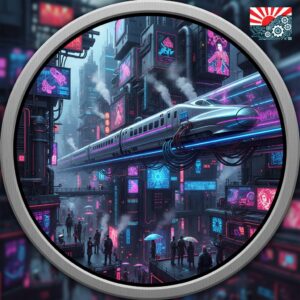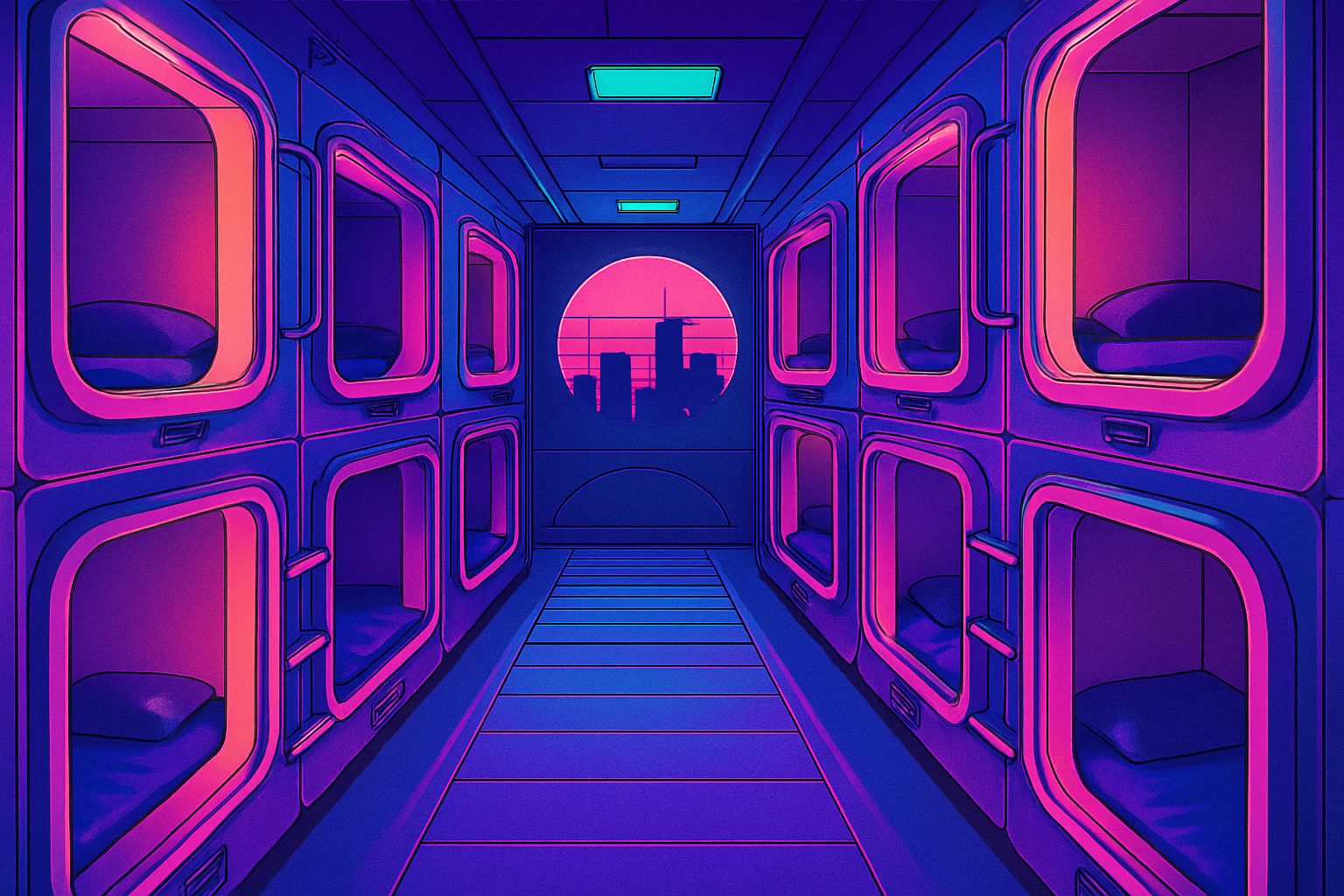
Yo, what’s the move? Let’s talk about Japan. You’re picturing it, right? Rain-slicked streets, neon signs bleeding into puddles, steam rising from a ramen stand in some hidden alley. It’s that whole Blade Runner aesthetic, that Ghost in the Shell vibe. You feel me? It’s a future that feels both high-tech and deeply human, and you wanna just dive right in. But where do you sleep when you’re living out your cyberpunk fantasy? A regular hotel? Nah, that’s not it. You gotta go full-on immersive. You gotta check into a capsule hotel. For real, these aren’t just budget crash pads anymore. They’ve evolved. Some are straight-up futuristic pods that feel like you’re bunking on a starship hurtling through the galaxy. It’s more than a place to stay; it’s an experience, a whole mood. It’s about compact living, insane efficiency, and a design philosophy that’s uniquely Japanese. From retro-futuristic classics to sleek, minimalist havens, these pods are your portal to the Japan you’ve been dreaming of. It’s time to jack in and see what the future feels like. We’re about to drop you right into the heart of the action, where the city’s electric pulse is your lullaby.
To fully immerse yourself in this neon-drenched aesthetic, you should also explore the Akihabara arcades.
The Mothership: Classic Vibes at Shinjuku Kuyakusho-mae Capsule Hotel
First stop, we have to pay respect to the OGs—the places that started it all. If you’re after that pure, uncut, retro-futuristic vibe, you’ve got to check out a classic like Shinjuku Kuyakusho-mae Capsule Hotel. No doubt. This isn’t about fancy amenities or Instagram-worthy lounges; it’s the raw source code of pod life. The moment you step inside, it’s an instant time warp. The aesthetic feels ripped straight from an 80s sci-fi anime—think spaceship barracks or a secret underground bunker. The check-in ritual is something else: you swap your shoes for slippers, your worldly baggage for a locker key, and your street clothes for the hotel’s simple loungewear—usually a comfy set of shorts and a top. You’re not just a tourist here; you become a temporary resident of this strange, orderly world where everyone wears the same outfit, creating a bizarre but powerful sense of anonymous community.
The main attraction is the pod floor. It’s typically dead silent. You walk down a narrow corridor lined with capsules stacked two units high on both sides. It’s like a honeycomb of human presence. Finding your assigned number feels like locating your cryo-chamber. You slide back the curtain or pull down the shutter, and there it is: your own little world. Surprisingly cozy, not at all claustrophobic. The molded plastic interior is smooth and curved, the mattress firm, and at the head rests a control panel with an alarm clock, a light dimmer, and maybe a tiny TV. It’s everything you need, and nothing you don’t. The gentle hum of the ventilation system is the only sound—a steady white noise that lulls you into a deep, restful sleep. It’s pure, unadulterated function, and there’s a strange peace in that simplicity.
But the experience goes beyond the pod. These classic spots almost always feature a large communal bath, or sento, which is a cultural deep dive in itself. After stashing your stuff, you head to the bathing area. Rows of showers line the space where you wash thoroughly before entering the main baths. And these baths are the real deal—from piping hot pools to cold plunges and sometimes even a sauna, it’s the ultimate way to shake off the fatigue of trekking 20,000 steps around Tokyo. Soaking in the hot water, surrounded by local salarymen unwinding after a long day, you feel a strange connection to the city’s rhythm. This is where real Tokyo lives and breathes. It’s a moment of quiet reflection, a hard reset for mind and body. The unspoken sento rules—no splashing, respect for others’ space—are lessons in Japanese social harmony. When you’re done, you slip back into your pod wear, feeling renewed. You might grab a cold drink from a vending machine in the lounge, watch some late-night Japanese TV with other guests, sharing a silent understanding. Everyone’s here for the same reason: a place to rest and recharge before diving back into the city’s beautiful chaos. Stepping out from the hotel’s quiet order into Shinjuku’s neon-drenched madness at night is an experience the contrast is everything. Just a block away lie the tiny, atmospheric bars of Golden Gai and the smoky, lantern-lit alleys of Omoide Yokocho. You can dive headfirst into this wild, sensory-overload adventure, then retreat to the quiet, minimalist sanctuary of your pod. It’s the perfect cyberpunk duality.
Level Up Your Stay: The Millennials Shibuya
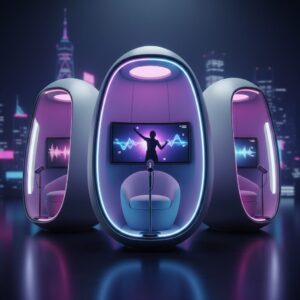
Alright, so you’ve experienced the classic model. Now, let’s power up the next-gen version. If a traditional capsule hotel is like a retro spaceship, The Millennials Shibuya is a sleek starfighter equipped with smart-home technology. This place completely redefines what a pod can be. Situated right in the heart of Shibuya, the epicenter of youth culture and trends, The Millennials focuses less on quiet solitude and more on high-tech comfort and community. No joke, this spot is lit. It’s designed specifically for a new wave of travelers: digital nomads, solo explorers, and anyone who wants their accommodation to be as connected as they are. From the moment you check in, you can tell it’s different. The vibe is closer to a stylish boutique hotel or an upscale co-working space. The center of the hotel is the expansive, open-plan lounge on the main floor. It features work desks, cozy couches, a full kitchen, and even a happy hour with free beer every evening. It’s made for mingling. You’ll find people typing away on laptops, swapping travel tales over coffee, or plotting their night out. The energy is vibrant and social—a complete 180 from the quiet corridors of traditional capsules.
The pods themselves steal the show. They call them “Smart Pods,” and the name fits perfectly. Forget simple curtains; here, you have a full-length screen for privacy. But the real game-changer is inside. The bed isn’t just a mattress on the floor—it’s an articulating bed that, with a tap on the iPod Touch provided at check-in, transforms from a fully flat bed into a comfy reclining sofa. This is huge, as it means your pod isn’t just for sleeping; it’s your personal lounge, your chill zone. And it gets even better. The privacy screen doubles as a massive 80-inch projector screen. Connect your phone or laptop, and your pod becomes a private movie theater. Recline on your bed and watch a film on a giant screen with your headphones on—it’s an unforgettable experience. It’s your personal media cocoon, the perfect escape hatch from the outside world. The smart pod also includes a clever under-bed storage system for your luggage, so you don’t have to keep running back to a separate locker room. It’s all about seamless, tech-integrated living. Waking up is a futuristic experience, too. Instead of a harsh alarm, you can set a “smart alarm” that gradually raises the bed to a sitting position while the pod’s lights gently brighten. It’s easily the most civilized way to wake up.
The co-ed floors and shared spaces create a truly modern and inclusive atmosphere. The shower rooms are private, spotless, and stocked with high-quality amenities. The kitchen is a legit place to cook your own meals and save money, a rare convenience in this type of accommodation. The free coffee each morning and free beer every evening are more than just perks—they’re social catalysts. You’ll end up chatting with people from around the globe, swapping tips on hidden spots, or even assembling a crew to explore the city. Staying at The Millennials isn’t just about finding a place to sleep in Shibuya; it’s about plugging into the very heartbeat of modern Tokyo. Step outside, and you’re mere seconds from the legendary Shibuya Scramble Crossing, Hachiko’s statue, and endless streets full of fashion, food, and culture. After a day immersed in Shibuya’s sensory overload, retreating to your smart pod feels like returning to your personal command center. You can socialize in the lounge or seal yourself off in your pod and project a movie onto your screen. It’s the ultimate blend of community and personal space, powered by some seriously cool technology. This is the future of travel, happening now.
Boss Battle: e-ZONe Denno Kukan in Osaka
If your vision of a cyberpunk dystopia features less corporate espionage and more high-stakes esports, then I’ve got just the spot for you. Welcome to e-ZONe Denno Kukan in Osaka. The name literally translates to “Electric Zone Cyber Space,” and they mean it. This isn’t merely a capsule hotel with a gaming theme; it’s a full-scale esports stadium with beds. It’s a sacred ground for gamers, a place where you can literally live, breathe, eat, and sleep video games around the clock. Situated in Nipponbashi, Osaka’s counterpart to Akihabara, this place is the ultimate boss of themed hotels. The moment you step inside, you’re enveloped in pure gamer aesthetics. The interior is dark, sleek, and glowing with RGB lights. It feels less like a hotel lobby and more like the headquarters of a pro gaming team. The first three floors are the core of the operation: a massive gaming arena boasting over 70 high-spec gaming PCs. We’re talking top-tier hardware—powerful graphics cards, high-refresh-rate monitors, and professional-grade peripherals. This is where the magic unfolds. The air buzzes with the clicking of mechanical keyboards and the intense focus of fierce competition. Gamers from across Japan and beyond come here to train, compete, or grind levels in their favorite MMOs. You can rent a rig by the hour, or if you’re staying at the hotel, you often get special deals for all-night play.
The sleeping pods are on the upper floors, from the fourth to the eighth, and they fully embrace the theme. The capsules are sleek, dark, and look like they were lifted straight from a sci-fi game. They’re designed with one goal: to provide an efficient, comfortable space to recharge after a long gaming marathon. Each pod includes a comfy mattress, charging ports for all your devices, and secure storage for personal items. While they may be simpler than the high-tech pods at The Millennials, they absolutely capture the vibe. It’s like sleeping in the barracks of a futuristic army, but instead of soldiers, everyone is a devoted gamer. There are male-only, female-only, and mixed floors, making the space welcoming to everyone. The shower facilities are modern and spotless—essential for freshening up after an all-night raid. The whole place revolves around the rhythm of a gamer’s lifestyle: sleep, wake, game, repeat. No judgment if you spend 14 hours straight in front of a screen—in fact, it’s encouraged.
The sense of community is huge. You’re surrounded by people who share your passion. You’ll spot groups huddled together, planning their next Valorant match, or solo players deep in the zone, faces lit by their screens. It’s an incredible place to meet new people, find a squad, or simply absorb the vibe of the Japanese gaming scene. You don’t have to be a pro to fit in. The atmosphere is welcoming, whether you’re a casual Animal Crossing fan or a hardcore Street Fighter competitor. The location in Nipponbashi (often called “Den Den Town”) is ideal. This is Osaka’s hub for anime, manga, electronics, and, of course, gaming. The streets are lined with arcades, figure shops, and retro game stores. Staying at e-ZONe puts you at the heart of otaku culture. Spend your days exploring the area, hunting rare games or collectibles, then return to the hotel to test your skills. It’s a fully immersive pilgrimage for anyone who loves Japanese pop culture. This is more than a hotel; it’s a destination. A place to connect, compete, and live out your ultimate gaming fantasy. It’s truly a legendary-tier drop.
2001: A Sleep Odyssey: The Minimalist Future of nine hours
Now, let’s shift the focus. Not every futuristic vibe revolves around neon lights and complex machinery. There’s another vision of the future: one that’s clean, quiet, and hyper-minimalist. A future where everything is stripped down to its purest, most essential form. If that appeals to you, then you need to experience `nine hours`. This capsule hotel chain is a masterpiece of Japanese design philosophy. The name itself embodies the concept: 1 hour to shower and unwind + 7 hours to sleep + 1 hour to get ready. That’s it—a total of nine hours to fully reset yourself. The entire experience is crafted for maximum efficiency and tranquility. Stepping into a `nine hours` is like entering the set of 2001: A Space Odyssey. The color scheme is strictly black, white, and grey. The lines are clean, the spaces uncluttered, and the signage uses simple, intuitive pictograms that anyone can understand, no matter their language. It’s a universal design language tailored for the global traveler. Check-in is seamless. You receive a locker key granting access to your designated storage space, where you’ll find a bag containing everything you need: a towel, a toothbrush, and their signature `nine hours` loungewear.
The locker rooms and shower areas are gender-separated and impeccably clean. The showers are individual pods that offer complete privacy. They provide high-quality, custom-scented shampoo, conditioner, and body wash with an amazing fragrance—a little touch of luxury in this minimalist setting. After washing away the city grime, you change into the loungewear and head to the sleeping pod floor. The sight is truly breathtaking. Corridors of glowing, stacked pods stretch out before you, their rounded entrances resembling portals to another dimension. It’s incredibly quiet, almost like a sanctuary. The pods themselves represent the pinnacle of minimalist design. Inside, a smooth, gleaming white fiberglass shell houses a custom-fitted mattress designed for optimal sleep comfort, a single soft-glowing light, and a power outlet. That’s all—no TV, no radio, no distractions. The goal here is clear: to provide the perfect environment for sleep. They even feature a special “Sleep Ambient Controller System” that gradually dims the lights and sounds to help you drift off naturally and wake gently. It’s an extremely peaceful and restorative experience. You feel completely detached from the chaos of the outside world, cocooned in your own serene, white bubble.
This minimalist, high-concept aesthetic aligns perfectly with another futuristic Tokyo experience: visiting a teamLab digital art museum, such as Borderless or Planets. Picture this for a day: you spend hours immersing yourself in teamLab’s interactive worlds of light, color, and sound—wandering through crystal universes, losing yourself in infinite flower fields, and interacting with art that responds to your presence. Your senses become beautifully overwhelmed. Then, you retreat to the serene, monastic quiet of `nine hours`. The stark minimalism of the hotel serves as the perfect canvas to process the vibrant, chaotic beauty you just experienced. It’s a sensory palate cleanser. The two experiences complement each other perfectly, creating a journey through two distinct but equally compelling visions of the future. Staying at `nine hours` isn’t just about a good night’s sleep. It’s about embracing a lifestyle, a philosophy. It’s about recognizing that sometimes, the greatest luxury in the world is simplicity. It’s a hard reset, a system reboot, a chance to find quiet at the center of one of the world’s busiest cities. It’s less a hotel and more a conceptual art piece you can sleep in. And it’s, without question, a glimpse into a very cool, very clean future.
Glitching into the Matrix: The City is Your Playground
Here’s the real deal: staying in a capsule hotel is only half the experience. The pod serves as your base, your save point. The real adventure, the main quest, unfolds on the streets. When you stay in one of these futuristic nests, the city itself begins to transform before your eyes. You start to perceive the cyberpunk world that has inspired so much sci-fi, and you get to live it. It’s time to stop being a tourist and become an urban explorer. You need to hit the pavement after dark, when the city truly awakens and glitches into its final form. Let’s outline a couple of essential night crawls—a sensory dive deep into the matrix of urban Japan. First up, Akihabara in Tokyo. Known as Electric Town by day, at night it reveals a completely different beast. Begin your journey beneath the massive billboards lining the main street, Chuo Dori. The light from the screens is so intense it turns night into a constant, colorful twilight. The soundscape is a symphony of beautiful noise: j-pop blaring from storefronts, the hypnotic jingle-jangle from the massive arcades, and announcements echoing from the station. Your mission: plunge into one of the multi-story arcades, like the iconic Gigo or Taito Station. Each floor is a different realm. The ground floor is a chaotic jungle of UFO catchers, where people are laser-focused on snagging the latest anime figure. Head up a level and you’re in a thunderdome of rhythm games, where players move with superhuman speed and precision. Higher still, the fighting game floors host rows of players locked in fierce one-on-one battles. The energy is electric. You don’t have to play—just watching is an experience. After your senses are fully fried, slip into the back alleys. Here, tiny hidden shops sell vintage game consoles, obscure electronic parts, and all sorts of otaku treasures. Grab a hot coffee or a strange Fanta flavor from a glowing vending machine and just find a spot to stand and watch the world go by. That’s the Akihabara vibe.
Next, let’s teleport to Shinjuku. This place is the final boss of urban density. Start your journey by navigating the labyrinth that is Shinjuku Station, the busiest train station in the world. Just letting the flow of people carry you is a trip. Emerge from the east exit and you’re immediately thrust into a canyon of neon. Giant screens, towering buildings, and overwhelming crowds—it’s intense in the best possible way. Your first stop should be Omoide Yokocho, or “Memory Lane.” It’s a network of tiny, smoke-filled alleys packed with minuscule yakitori restaurants. The air is thick with the smell of grilled meat and beer. Squeeze onto a stool at a counter seating maybe six people and order some skewers. It feels like a scene straight out of Blade Runner. Next, make your way to the infamous Golden Gai. This is another maze of narrow lanes, but here you’ll find over 200 tiny, eccentric bars, some only big enough to hold a handful of customers. Each bar sports its own unique theme and character. It’s a preserved slice of old Tokyo, a glitch in the modern city’s grid. Wandering these alleys at night, lanterns glowing and conversations spilling from the tiny doorways, is pure magic. For a panoramic view of this urban sprawl, head up to the Tokyo Metropolitan Government Building. The observation decks are free and offer a god-tier vista over the city’s endless electric sea. Seeing city lights stretching to the horizon from 45 floors up will make you feel like you’re peering out from the window of a spinner. These nightly expeditions are what it’s all about. It’s about realizing how the compact, efficient design of your capsule pod mirrors the city itself—a place where millions of lives coexist in a dense yet orderly vertical world. You’re not just visiting the future; you’re living it.
The Unspoken Code: Nailing Your First Pod Stay
Alright, so you’re sold on the vibe, ready to book your first pod and live the sci-fi dream. But hold on—there are a few things you need to know first. There’s an unspoken etiquette, a set of rules for the capsule world that will make your stay much smoother. Think of this as your cheat sheet, the insider’s guide to pod life. First and foremost: sound. The pod sleeping area is a sacred quiet zone. Seriously, this is rule number one. Don’t talk on your phone. Don’t watch videos without headphones. Don’t even rustle your plastic convenience store bag too loudly. Be a ninja. Put your phone on silent, and if you use an alarm, set it to vibration only. Most pods have a light-based alarm anyway. Earplugs and an eye mask are your best friends—they’re pro-level gear for a perfect night’s sleep. Imagine the pod floor as a library where everyone is trying to rest. Respect the silence, and you’ll be golden.
Next: luggage. You can’t bring your giant suitcase into your pod; it simply won’t fit. You’ll be assigned a locker, typically tall and narrow, perfect for a backpack or a small carry-on. If you have a huge checked bag, you’ll likely need to leave it at the front desk or in a designated luggage room. So, a savvy move is to pack smart. Bring a smaller bag or packing cube with just your essentials for the night: toiletries, a change of clothes, electronics. That way, you only have to visit your locker once, grab what you need, and you’re set for the night. It streamlines the whole process. Also, let’s talk about the daily checkout, which confuses many first-timers. In many traditional capsule hotels, even if you’ve booked multiple nights, you technically have to “check out” every morning, usually around 10 AM. You need to clear out your pod and sometimes even your locker so they can clean each capsule thoroughly. You can usually store your large luggage at the front desk but will have to check back in later in the afternoon. It sounds inconvenient, but you get used to it—it encourages you to get out and explore. More modern places like The Millennials tend to be more flexible, so be sure to check the hotel’s policy before booking.
And now the big one: the communal bath, or sento. If you have tattoos, this can be tricky. Traditionally, tattoos in Japan have been linked to the yakuza, and many onsens and public baths still enforce a “no tattoos” rule. However, the culture is gradually shifting, especially in spots catering to international travelers. Some capsule hotels welcome tattoos. Others may ask you to cover small tattoos with a waterproof bandage, which they may provide. Your safest bet is to check the hotel’s policy online or send them a quick email—it’s best to know the rules ahead of time. While in the bath, remember the key rule: wash yourself thoroughly at the shower stations before entering the pools. The bath is for soaking, not cleaning. By following these simple guidelines, you’re not just being a good guest—you’re showing respect for the culture. And that’s the true way to travel. You’ll feel less like a tourist and more like someone who genuinely gets the vibe of the place. Now you’re ready. Go forth and conquer the pod.
More Than a Bed, It’s a Vibe
At the end of the day, you could stay at any ordinary hotel, with a typical room, a standard bed, and a plain little window—and that’s perfectly fine. But you didn’t come all the way to Japan for just “fine.” You came for the experience, for those moments that make you feel as if you’ve stepped through a screen into another world. And that’s exactly what a capsule hotel offers. It’s more than just an affordable place to sleep; it’s a cultural immersion, an architectural statement, and an opportunity to live, even if just for a night or two, in the future you’ve only ever seen in movies and games. It’s about the quiet connection in the sento, the shared enthusiasm in the gaming lounge, the calm minimalism of a perfectly designed pod, and the thrill of retreating to your tiny, personal spaceship after a day amid the electric chaos of the city. It’s a core memory waiting to be made. So when planning your trip, don’t simply think about where you’ll sleep—think about the story you want to tell. Bet on the pod. You won’t regret it.