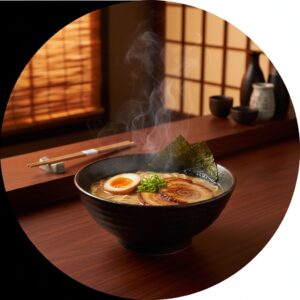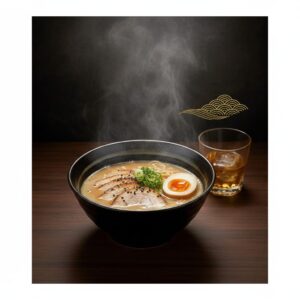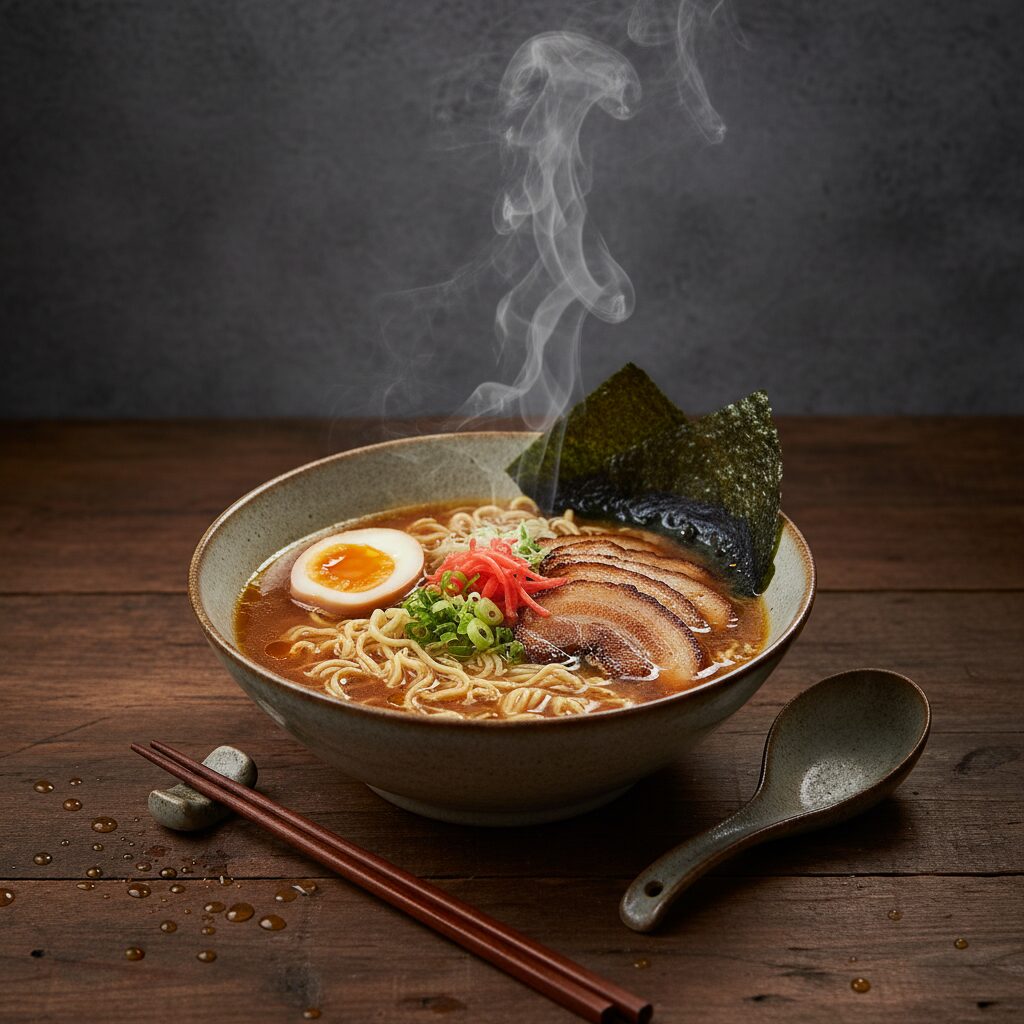
You’ve seen it, right? Scrolling through your feed, past the pristine temples and the chaotic scramble of Shibuya Crossing, and then—BAM. A bowl of ramen that just hits different. It’s got, like, a cloud of foam on top, or maybe some perfectly seared duck breast fanned out like a poker hand. You see slivers of yuzu, a dollop of something that looks suspiciously like pesto, and a broth so clear yet deep it looks like liquid gold. And you’re thinking, “Hold up. I thought ramen was that cheap, salty, super-satisfying soup you slurp down at a grimy counter in five minutes flat. What is this boujee glow-up?” That’s the disconnect, for real. The image of ramen as Japan’s ultimate comfort food—fast, cheap, and soul-huggingly good—is totally legit. It’s the baseline. It’s the OG. But what you’re seeing online, that avant-garde bowl of noodle art, is a whole other beast. It’s the manifestation of a quiet revolution that’s been simmering in Japan’s kitchens for years. This is craft ramen. And honestly? It’s probably one of the best windows into the modern Japanese psyche. It’s where tradition gets a remix, where hyper-local pride meets global flex, and where the obsessive-compulsive nature of Japanese craftsmanship, known as kodawari, gets cranked up to a level that’s frankly wild. Forget what you think you know about noodle soup. We’re about to dive deep into a world where chefs are more like mad scientists or indie artists, where a single bowl tells a story about a specific farm, a specific pig, a specific strand of seaweed harvested under a full moon. Okay, maybe not the moon part, but you get the vibe. This isn’t just about food; it’s a cultural deep-dive served in a perfectly heated bowl. It’s the answer to “Why is Japan like this?”—a question best answered with a pair of chopsticks and an open mind. Let’s get it.
To truly understand the full spectrum of this noodle obsession, from its avant-garde heights to its most fundamental, soul-satisfying roots, you must also explore the world of tachigui ramen.
Beyond the Tonkotsu: The Ramen Revolution is Low-Key Wildin’
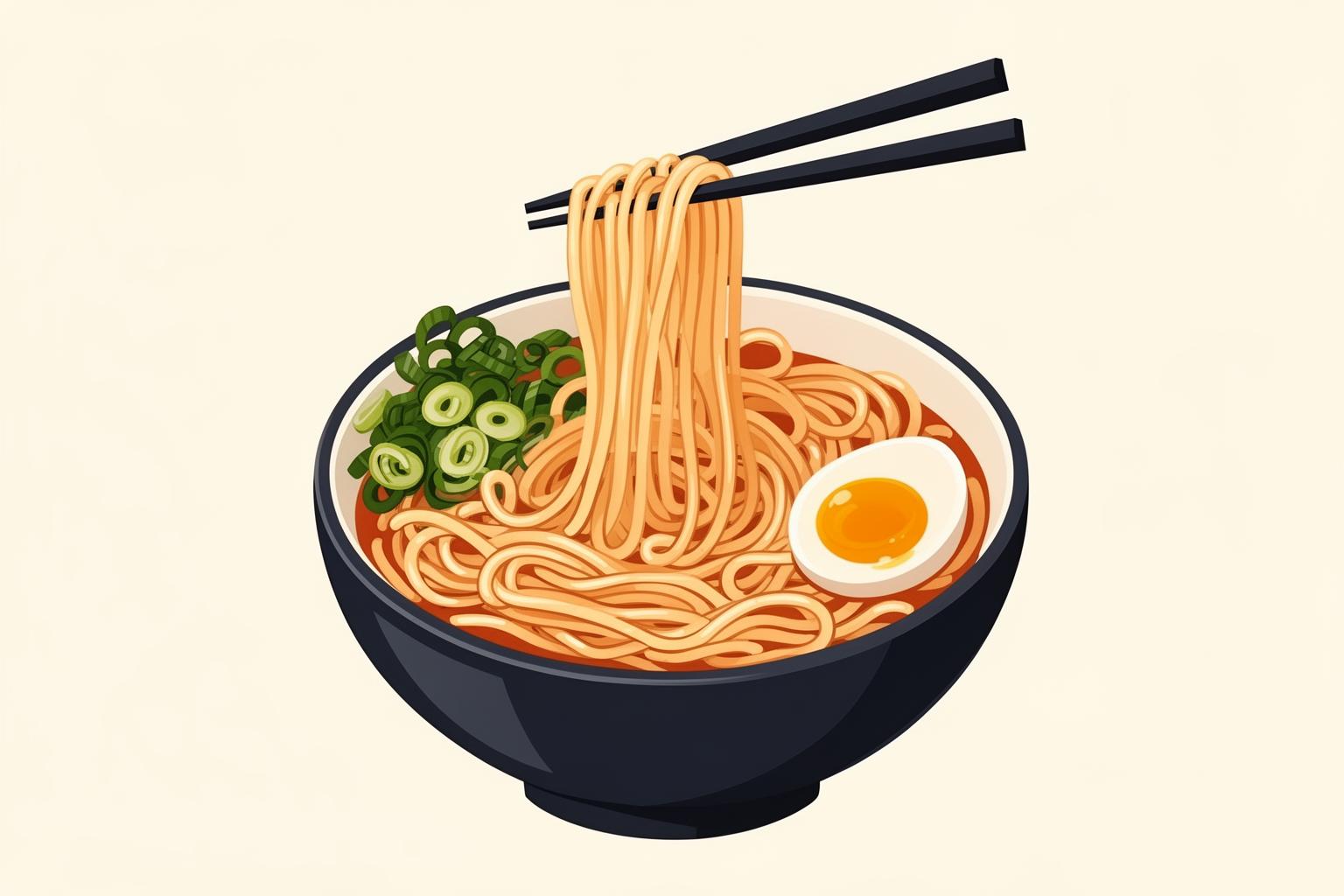
First, let’s set the scene. The classic ramen playbook is legendary for a reason. You have your four main stars: Shio (salt-based), Shoyu (soy sauce-based), Miso (fermented soybean-based), and the heavyweight champion, Tonkotsu (pork bone broth). For decades, mastering ramen meant choosing one of these styles and dedicating your entire life to perfecting it. A Tokyo shoyu expert wouldn’t dream of attempting Hakata-style tonkotsu. It was about depth, not breadth. The aim was to create the Platonic ideal of a classic bowl, so perfectly balanced and deeply familiar it felt like a comforting embrace from your ancestors. The ethos centered on honoring tradition, following the unwritten rules handed down from master to apprentice. It was, and remains, a noble and beautiful pursuit. But over the past couple of decades, a new generation of chefs began looking at that playbook and thinking, “Why not?” They grew up with the classics, but also with the internet, global food trends, and a fierce desire to craft something uniquely their own. They weren’t just cooks; they were auteurs. They viewed the ramen bowl not as a finished script, but as a blank canvas. This is where things start to get exciting. These new-wave chefs deconstructed ramen into its core components—soup, noodles, tare (flavor base), aroma oil, and toppings—and reconstructed it using techniques and ingredients that would alarm the old guard. They introduced French techniques like sous-vide for chashu pork, yielding impossibly tender meat with a pink center—an absolute no-no in traditional ramen. They drew inspiration from Italian cuisine, experimenting with dashi infused with sun-dried tomatoes and porcini mushrooms. They borrowed from the minimalist plating of Scandinavian food, arranging toppings with the precision of a Zen garden. This wasn’t about disrespecting tradition; it was about using tradition as a springboard. The fundamental essence of ramen—a perfectly harmonious, steaming hot, deeply savory bowl—remained the goal. But the route to reach it became a broad, multi-lane highway with no speed limits. Shops began to specialize in hyper-specific concepts. Not just “chicken ramen,” but ramen made exclusively from the bones of a rare heritage chicken from Shimane Prefecture. Not just “seafood ramen,” but a bowl centered on a single type of clam, harvested from a particular bay in Chiba, creating a broth that was a pure, unfiltered expression of that ingredient. This movement didn’t emerge out of thin air. It reflects a broader shift in Japanese society. As the economy evolved and lifetime employment at major corporations became less certain, more young people sought fulfillment through personal creative endeavors. Being a “shokunin” (artisan) regained coolness, but with a modern twist. The new shokunin wasn’t just preserving a craft; they were reinventing it. The ramen shop, often a small, independent, solo operation, became the perfect arena for this artisanal spirit. It offered a low-cost, high-impact way for chefs to build their own worlds, express unique visions, and connect directly with an audience eager for something fresh.
“Kodawari” on Overdrive: The Obsession is the Whole Vibe
To truly grasp craft ramen, one must understand the concept of kodawari (こだわり). There is no exact one-word equivalent in English. “Commitment” feels too mild. “Perfectionism” comes close but carries a somewhat negative connotation, like an obsession. “Artisanship” is somewhat apt. Kodawari represents a profound, personal, often obsessive, and unwavering dedication to a craft, extending down to the tiniest, seemingly trivial details. It’s a mindset where “good enough” is an insult. It’s the sushi master who spends a decade mastering the rice. It’s the swordsmith who folds steel thousands of times. In craft ramen, this kodawari is dialed up to eleven, applied to every single molecule in the bowl. It’s not just about using premium ingredients; it’s a sourcing and preparation level that borders on mania. Chefs relentlessly pursue the ultimate flavor, believing it lies in the smallest marginal gains—the one-percent improvements invisible to most but fully perceived by them. They believe these incremental gains sum to create a transcendent experience. This philosophy lies at the core. A bowl of craft ramen isn’t merely food; it is the physical embodiment of the chef’s worldview. It encapsulates their soul, passion, and sleepless nights into one slurpable moment. The customers willing to wait hours understand this; they aren’t there just for lunch but to witness and taste that passion. They are patrons of art, and the chef is the artist. Let’s explore how this extraordinary level of kodawari manifests in reality, where the magic and madness truly reside.
The Broth That Simmered for, Like, Ever
The soup is ramen’s soul, and for a craft ramen chef, it is their life’s purpose. While traditional tonkotsu broth may simmer 8 to 12 hours, a craft ramen chef often considers that merely a baseline. They obsess over extraction, wanting every last drop of umami and collagen from their ingredients. The process feels less like cooking and more like alchemy. It begins with the water. Many top chefs insist water is the most crucial ingredient. They avoid tap water, opting for specific bottled mineral water or installing advanced reverse osmosis systems in their compact kitchens to balance pH and minerals perfectly for extraction. Some rural chefs even use water from renowned local springs, believing it imparts unique regional terroir. Then come the main ingredients. A typical shop uses pork bones and chicken carcasses. Craft shops? They delve into another dimension. A chef might craft broth blending three, four, or even five chicken varieties—for example, a Hinai-dori (a famous Akita heritage breed) carcass for gamey depth, Nagoya Cochin bones for rich collagen and fat, and generic broiler wings for a clean chicken base. Each element is chosen deliberately. They discuss these chickens like vintners discuss grapes—their diet, age, and origin. Pork similarly isn’t generic; it’s specific combinations of femur, spine, and ribs from breeds like Sangen-ton or even famed Iberian pork, each contributing different flavor, aroma, and viscosity layers. And the dashi—the foundational umami soup stock—is another world of obsession. They avoid generic kombu (kelp), opting for specific types like two-year-aged Rishiri-kombu from Hokkaido to mellow flavor. Instead of just katsuobushi (dried bonito flakes), they blend various dried fish such as urume-iwashi (round herring) for a punch, saba-bushi (mackerel flakes) for richness, and sometimes ago (flying fish) for a subtle sweetness. These ingredients are added at precise times and temperatures—a process called takiwake—to extract flavors flawlessly without off-notes. Constantly skimming, tasting, and adjusting, the chef monitors the broth with surgical intensity. The result is a soup of staggering complexity—simultaneously powerful and delicate, coating lips with collagen yet clean on the palate. Every sip reveals new layers—first chicken, then pork, then a subtle ocean whisper from the dashi. It’s a symphony with the chef as conductor.
Noodle Game is Seriously Next Level
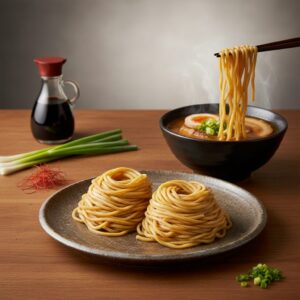
If broth is the soul, noodles are the heart. In craft ramen, noodles aren’t mere vehicles for broth; they’re equal partners in a culinary ballet, crafted as both science and art. The era of ordering noodles from commercial suppliers is fading. Many craft ramen chefs make noodles in-house, often in small glass-walled spaces at the shop’s front so customers can watch the master at work. Obsession begins with flour. They don’t use generic all-purpose flour but create custom blends (kona-awase), mixing wheat types for precise flavor, texture, and aroma balance. A hard bread flour may add high gluten for firm, chewy bite (koshi), blended with softer cake flour for delicate fragrance. Some incorporate whole wheat or rye for rustic complexity. Flours often come from specific Japanese regions, like high-quality Hokkaido wheat. Hydration level, or kasuiritsu, is another fanatical focus—the water-to-flour ratio by weight, dramatically shaping noodle character. Low hydration (~30%) yields firm, straight noodles that absorb broth quickly (Hakata tonkotsu style), while higher hydration (~40%) produces softer, often curly noodles with springy bounce. The craft chef tunes hydration down to a tenth of a percent to perfectly complement their broth. Shape and thickness are also tailored; thick, wavy noodles (chijire-men) cling to heavy miso or tonkotsu broths, trapping pockets of soup, while thin, straight noodles (hosomen) suit delicate shio or shoyu broths, letting broth flavor shine. They consider “slurpability”—how noodles glide from bowl to mouth—studying fluid dynamics to achieve the ideal bite. The final touch is kansui, the alkaline water that imparts ramen’s yellow hue, springy texture, and distinct aroma. Chefs experiment with different kansui types and concentrations to fine-tune these traits. Making noodles this way is a high-wire act, sensitive to temperature and humidity, requiring daily recipe tweaks based on weather—a massive extra effort for often tiny, 10-seat shops. But it’s non-negotiable. After spending days crafting a life-changing broth, serving generic factory noodles would betray the philosophy. The noodles must be equally special, intentional, and infused with the chef’s soul.
Toppings? Nah, We Call it “Art”
Traditional ramen toppings—chashu, menma (bamboo shoots), ajitama (marinated soft-boiled egg), negi (green onions)—are classics for good reason, serving as supporting elements to complement soup and noodles. In craft ramen, toppings (gu) become co-stars, integral to the bowl’s concept, created with the same kodawari. Plating is often meticulous, weaving colors, shapes, and textures into an edible work of art. Here, the chef’s creativity shines and tradition is most notably broken.
From Farm to Bowl, For Real
Japan’s farm-to-table philosophy parallels the local concept chisanchi-shō (地産地消)—“local production for local consumption.” This isn’t a fad but a deep-rooted emphasis on regional food, culture, and identity connection. Craft ramen chefs champion this, forging personal bonds with local farmers, fishermen, and producers to highlight their region’s best in each bowl. A shop in Nagano’s mountains might feature seasonal foraged wild mountain vegetables (sansai), imparting a unique slightly bitter, earthy flavor that evokes the local terrain. A coastal Shizuoka shop could top ramen with fresh shirasu (whitebait) or prized sakura ebi (tiny pink shrimp), their delicate sweetness balancing a clear salt broth. You’ll find ramen crowned with a single perfectly ripe heirloom tomato from a Yamanashi farm, its acidity cutting through rich soup, or a Hokkaido bowl crowned with fresh cheese curds from a nearby dairy, melting slowly into hot miso. This is not just freshness; it’s storytelling—the chef as a culinary ambassador for their homeland. Each bowl becomes a flavorful map of the region, with toppings as landmarks. Chefs take fierce pride in local ingredients, convinced that a carrot grown down the road simply tastes better—tastes like home. This hyper-local sourcing also enables extreme seasonality, with menus changing weekly or even daily based on the market’s best that morning. The experience becomes immediate and exciting—you’re not just eating ramen; you’re savoring this specific place at this exact moment.
Wait, Is That…? Yeah, It Is.
Beyond exceptional local produce, craft ramen is where you find the truly unexpected, the surprises that make you do a double-take. This is where global influences and modern culinary techniques collide with ramen delightfully. Classic braised pork chashu is often replaced with refined alternatives: duck breast cooked sous-vide to perfect medium-rare then seared crisp; Iberian pork prized for nutty flavor and marbling; or rare-cooked wagyu beef slices that melt into broth. The humble menma might be swapped for house-made pickles of other vegetables—lotus root or celery—for a different crunch and acidity. Foams and espumas, from molecular gastronomy, have entered ramen bowls—a porcini mushroom foam adding earthiness on chicken broth, or a citrus foam for bright, zesty top notes. Instead of simple aroma oil swirls, dishes might feature drizzles of high-end truffle oil, basil-infused oil, or smoky charred onion oil. Some chefs experiment with dairy and fruit; it’s not unheard of to find creamy gorgonzola sauce ramen, or a “tsukemen” dipping ramen with thick beet or corn potage. One renowned shop even offered a limited-edition strawberry ramen. It sounds wild, but in skilled hands, it works. These unconventional toppings create a layered multisensory journey of flavors, aromas, and textures blended with the care of a perfumer. The experience evolves: first a pure classic chicken sip; then a spicy, crunchy chili crisp; a sweet, tender duck bite; a hit of yuzu peel zesty citrus. It’s dynamic, not mere shock or Instagram bait, but a genuine push to expand what a bowl of noodles can be, crafting a complex, surprising, utterly unforgettable flavor profile.
The Social Slurp: Why We Vibe with This Noodle Drama
So, we’ve established that these chefs pour their entire being into crafting each bowl of ramen. But what about the other side of the story? Why are people willing, even eager, to wait in line for one, two, sometimes three hours—often in extreme heat or freezing cold—for a meal that takes maybe fifteen minutes to eat? The answer lies in the unique social and cultural ecosystem built around craft ramen. It’s a scene, a subculture, and a community. Dining at one of these top-tier shops isn’t just about eating; it’s about taking part in a cultural phenomenon. It’s a hobby, a sport, and, for some, a near-religious experience. The long wait isn’t merely an inconvenience; it’s part of the ritual. It builds anticipation and weeds out the casual visitors. When you finally get that bowl, you feel like you’ve earned it. This entire dynamic is driven by several key factors that perfectly capture the modern Japanese zeitgeist.
The Chef as an Indie Artist
Think of a top craft ramen chef not as a restaurant owner, but as an indie musician or a cult filmmaker. Their shop is their studio, stage, and gallery. Often, it’s a tiny space with as few as six or seven seats arranged along a counter. This intimate setup is deliberate. It breaks down the barrier between creator and consumer. You are right there, witnessing the chef performing their art. You see the intense focus in their eyes as they execute the yugiri, the ritualistic, almost violent flick of the wrist that shakes every last drop of water from the noodles. You hear the sizzle of aroma oil, and smell the steam rising from the broth. It’s an immersive, theatrical experience. This often creates a very specific, sometimes intimidating, atmosphere. Many of these shops are silent or play only soft music. Talking is discouraged. The vibe is one of reverence. You are there to focus on the ramen, to give it your full, undivided attention. It’s a form of mindfulness, a brief escape from the noise of the outside world. The chef is often the sole employee, working under the wan-ope (one-person operation) model. They take orders, cook the ramen, serve it, and wash the dishes. This reinforces their status as a lone artisan, a master fully in control of their universe. This “auteur theory” of ramen means fans don’t just follow a shop, they follow the chef. They know the chef’s backstory, training, and philosophy. They are genuine stans. When a celebrated chef opens a new shop, it’s like their favorite band releasing a new album—it’s an event.
Limited Drops and Insta Hype
Craft ramen culture has cleverly adopted hype tactics from streetwear and sneaker culture. The key concept here is gentei (限定), which means “limited edition.” Many shops offer special, off-menu ramen for a limited time—maybe a day, a week, or a season. This gentei bowl is where the chef experiments with their boldest ideas. It might include a rare ingredient they just sourced or be a collaboration with another famous chef. Announcing a new gentei bowl, usually via the shop’s Twitter or Instagram account, sends ripples through the ramen-obsessed community. It creates immediate urgency and FOMO (fear of missing out). Eating one of these limited-run bowls is like scoring a rare pair of Jordans—it gives you bragging rights. This is where social media acts as a powerful amplifier. The ramen community is highly active online. Enthusiasts, known as ra-ota (a blend of ramen and otaku), carefully document their conquests on Instagram, Twitter, and review sites like RamenDB. A perfectly styled, beautifully lit photo of a rare gentei bowl is the ultimate flex. It proves you were there, that you’re in the know. These posts generate even more hype, leading to longer lines, which further cements the shop’s legendary status. It’s a self-sustaining cycle of desire. For newcomers, this online world is a double-edged sword. It’s an amazing resource for discovering hidden gems, but it also sets expectations that can be tough to meet. The bowl you saw online might have been a limited-edition from months ago. And sometimes, the hype overshadows the actual experience. But for those inside the scene, it’s a vibrant, exciting game—a never-ending quest for the next great bowl. It transforms eating ramen from a simple meal to a dynamic, community-driven hobby.
So, Is It Still… Ramen? The Identity Crisis in a Bowl
This brings us back to the profound, existential question: when you have a bowl of noodles topped with seared foie gras, a truffle-infused broth, and a sprinkle of parmesan cheese, can it still be called ramen? It’s a valid question, one that sparks intense debate between purists and progressives in the ramen community. The skeptics—the traditionalists—would argue this is no longer ramen. To them, it has become a distorted version of itself, a sort of bastardized “fusion noodle soup” created more for Instagram likes than for nourishing the soul. They believe ramen should embody a certain spirit—unpretentious, affordable, and grounded in established styles. These new creations, in their eyes, betray ramen’s working-class, comfort-food roots. They might dismiss such dishes as all style and no substance, fleeting fads that will eventually fade, leaving the timeless classics standing strong. And you know what? That critique isn’t entirely unfounded. Certainly, some chefs prioritize gimmicks over fundamentals, crafting visually striking bowls that end up unbalanced or unsatisfying. But to reject the whole movement would miss the point entirely. The progressive view is that this evolution is not just natural but vital. It’s what keeps the culture alive and vibrant. After all, ramen itself isn’t some ancient, unchanging Japanese tradition—it traces back to Chinese noodle soups brought to Japan by immigrants in the late 19th and early 20th centuries. It was adapted, refined, and perfected over generations of Japanese chefs. Tonkotsu ramen, now deemed a classic, is actually a relatively recent creation in the grand timeline. Ramen’s history is one of constant change and regional reinterpretation. What today’s craft ramen chefs are doing is simply the next chapter in that ongoing story. This process is quintessentially Japanese: to take an external idea (like French culinary techniques), study it meticulously, master it, then integrate it within a Japanese framework to create something entirely new. We see this pattern in technology, fashion, animation—and now, in a humble bowl of noodles. So, is it still ramen? The answer is a clear yes. As long as the core elements remain—the carefully crafted broth, perfectly paired noodles, harmonious toppings—and it’s served hot, meant to be slurped with joy, it carries the soul of ramen. The ingredients may differ, the techniques more contemporary, but the underlying spirit—the obsessive pursuit of the perfect bowl known as kodawari—is as strong and vibrant as ever.
When you encounter one of those mind-bending ramen bowls, don’t dismiss it as merely a strange food trend. Recognize it for what it truly is: a delicious, steaming microcosm of modern Japan itself. A culture that deeply honors its past but refuses to be bound by it. A society of artisans constantly pushing the boundaries of their craft, discovering new ways to express individuality. A place where local pride and global awareness merge in a single, flawlessly constructed bite. This bowl of noodles tells a story of passion, innovation, and the relentless, beautiful quest for perfection. The craft ramen scene is more than a makeover of a classic dish—it’s a declaration. It proclaims that even the most familiar things can be seen anew, that tradition is a foundation to build upon, not a cage that confines. And for a culture often stereotyped as rigid and unchanging, that’s a bold and exciting message to send. So next time you face a bowl of ramen that seems out of this world, don’t be puzzled or intimidated. Just pick up your chopsticks, lean in, and slurp. You’re not just having dinner—you’re tasting the future.