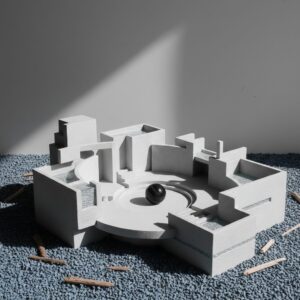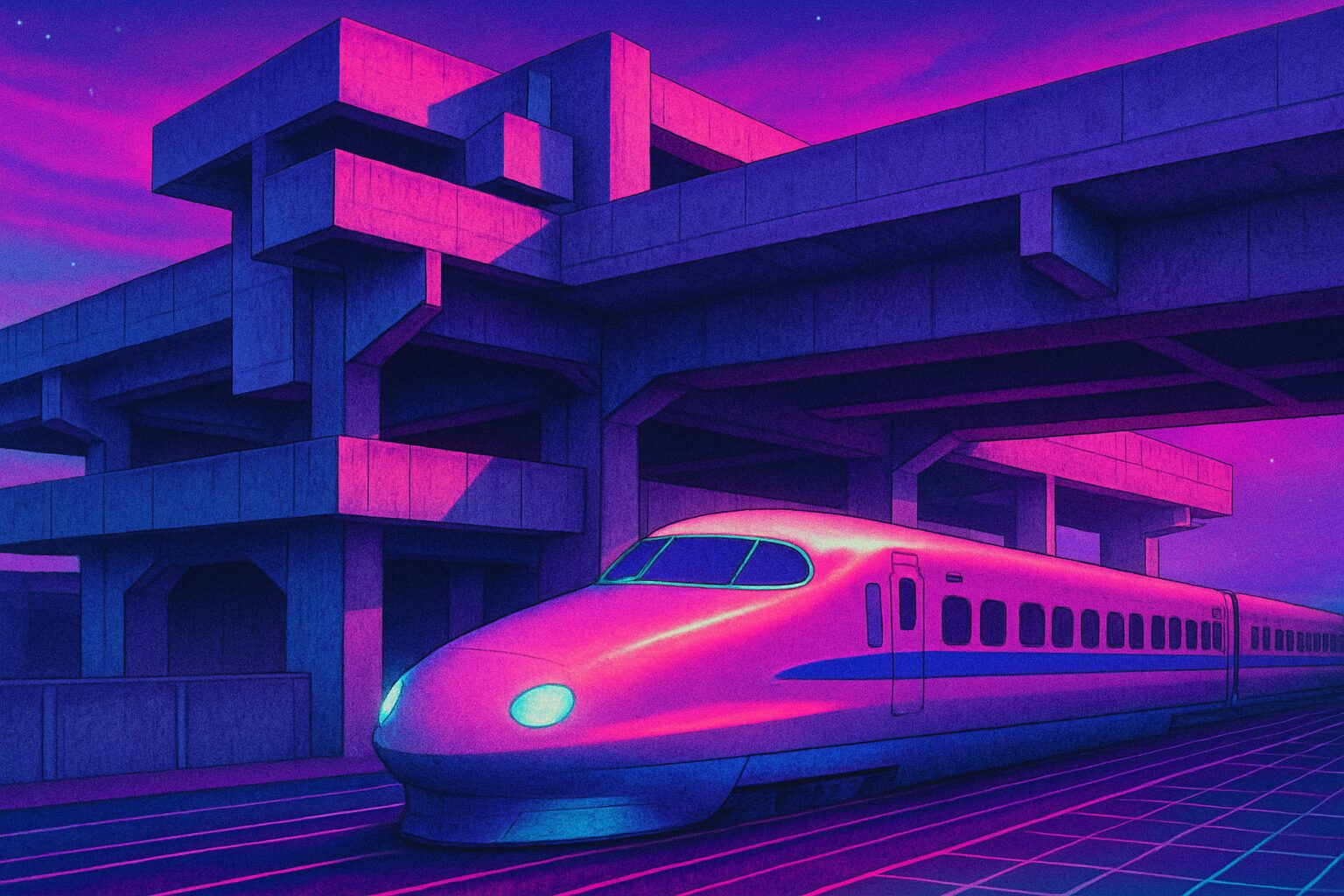
Yo, what’s up, world! Keiko here, coming at you from the heart of Tokyo. Real talk, when you think about the Shinkansen, what comes to mind? Sleek, futuristic bullet trains slicing through the Japanese landscape with insane precision, right? It’s all about speed, efficiency, and that clean, minimalist aesthetic Japan is famous for. But hold up. Today, we’re gonna flip the script. We’re zooming out from the train itself and focusing on the stage where this high-speed drama unfolds: the infrastructure. The endless ribbons of concrete viaducts, the monolithic support pillars, the cavernous tunnels—this is the unsung hero of the Shinkansen story. And let me tell you, it’s a legit architectural masterpiece in its own right, a sprawling monument to an often-misunderstood style: Brutalism. It’s this raw, powerful, and kinda moody concrete world that we’re diving into today. This isn’t just about getting from A to B; it’s about appreciating the massive, sculptural art that makes the journey possible. It’s the vibe, the texture, the sheer, unapologetic presence of these concrete giants that gives the Shinkansen its foundational power. Forget the glossy travel brochures for a sec. We’re going on a different kind of tour, one that finds beauty in the bold, the heavy, and the absolutely epic scale of Japan’s concrete dreams. Let’s get into it.
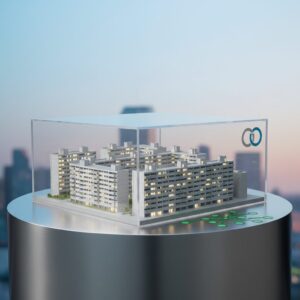
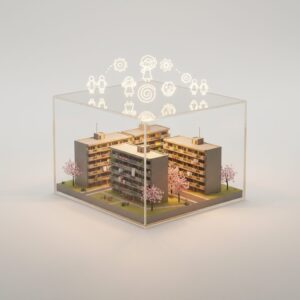
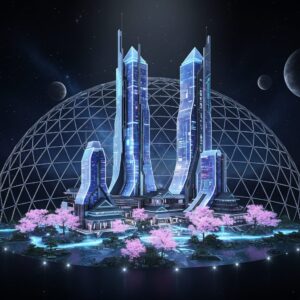
この巨大なコンクリートの美学は、日本の昭和時代の団地に息づくサイバーパンク・ブルータリズムにも通じる、力強い表現形式なのです。
The Birth of a Concrete Colossus: A Vibe Check on Shinkansen History
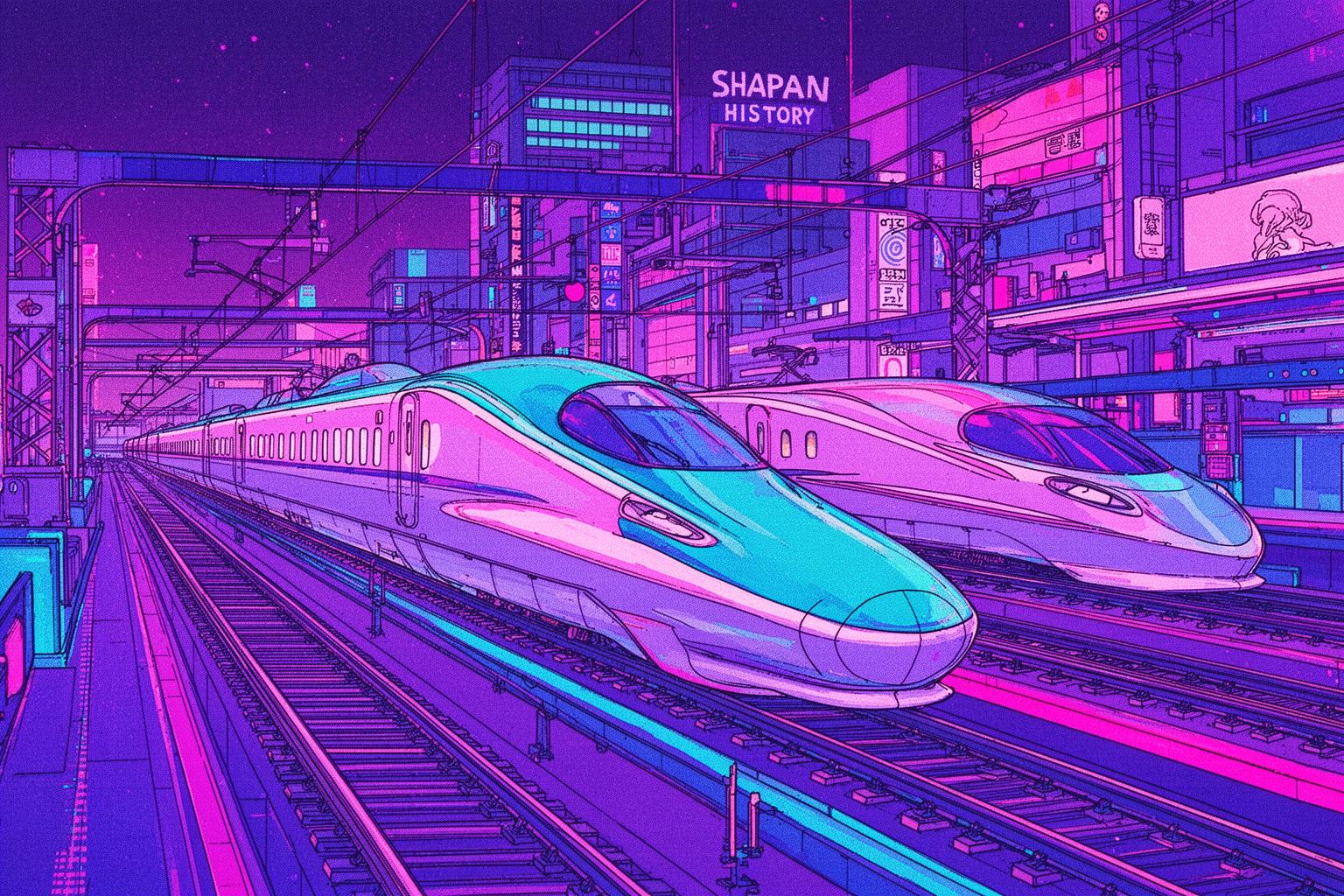
To truly understand the Shinkansen’s concrete essence, we need to turn back time. Imagine this: it’s post-war Japan, a country alive with an electrifying energy, unified by a determination to rebuild, innovate, and prove itself to the world. The 1964 Tokyo Olympics were approaching, serving as a major impetus. Japan had to link its key cities, Tokyo and Osaka, with a system that was futuristic, efficient, and symbolic of its revival. The existing railways were congested, demanding a groundbreaking solution. Enter the Shinkansen, or as it was initially envisioned, the “new main line.”
This was far beyond simply laying new tracks. It was about designing a dedicated, high-speed corridor entirely separate from current lines. That meant eliminating level crossings, incorporating gentle curves, and creating as straight and flat a path as possible. In a mountainous and densely populated nation like Japan, the answer was to build upwards—elevate. Construct a new infrastructure above the old. The material chosen? Concrete. Tons of it. It was strong, adaptable, and in its own way, honest—it didn’t disguise itself, serving as the raw, powerful framework of a new era in travel.
The engineers and designers behind the first Tokaido Shinkansen line, which debuted in 1964 just before the Olympics, were true visionaries. They weren’t merely constructing a railway; they were shaping the future. They faced monumental challenges: tunneling through mountains, spanning rivers, and integrating massive structures within tight urban environments. The outcome was a network of viaducts and piers that instantly became a lasting landmark across Japan’s landscape. These structures arose purely from functional necessity but conveyed a striking, almost primal aesthetic. They were massive, geometric, and boldly unapologetic. This, friends, is where the Brutalist connection truly resonates.
Brutalism 101: More Than Just Brutal
Alright, let’s quickly break down the term “Brutalism,” since it often gets misunderstood. The name isn’t derived from the word “brutal.” Instead, it comes from the French phrase “béton brut,” which literally means “raw concrete.” This material and concept were favored by the renowned architect Le Corbusier. The movement thrived from the 1950s through the 1970s, coinciding with the birth and expansion of the Shinkansen. It was a global trend, commonly linked to post-war reconstruction, social housing, and public institutions.
At its core, Brutalism emphasizes honesty in materials, form, and function. It involves removing unnecessary decoration and allowing the structure to speak for itself. Key features? You recognize them instantly: massive, monolithic shapes; a heavy, fortress-like look; repetitive, geometric designs; and plenty of exposed, textured concrete. Often, you can see the marks left by the wooden molds, called formwork, on the concrete surface—subtle evidence of the human touch behind these massive works. Brutalism isn’t about conventional beauty; it’s about strength, clarity, and a commanding presence. It’s architecture with conviction—bold and sometimes intimidating. But when examined closely, there’s a unique poetry to it, a sense of monumental calm and lasting endurance.
This style perfectly embodied the spirit of post-war Japan. It was forward-thinking, practical, and represented a strong, collective determination. It wasn’t focused on delicate, traditional aesthetics; rather, it aimed to build a new, resilient future—quickly. So when you look at the Shinkansen’s infrastructure, you’re seeing more than concrete and steel. You’re witnessing a tangible expression of a nation’s ambition, articulated through the architectural language of its era.
The Shinkansen Network: A Brutalist Masterpiece Hiding in Plain Sight
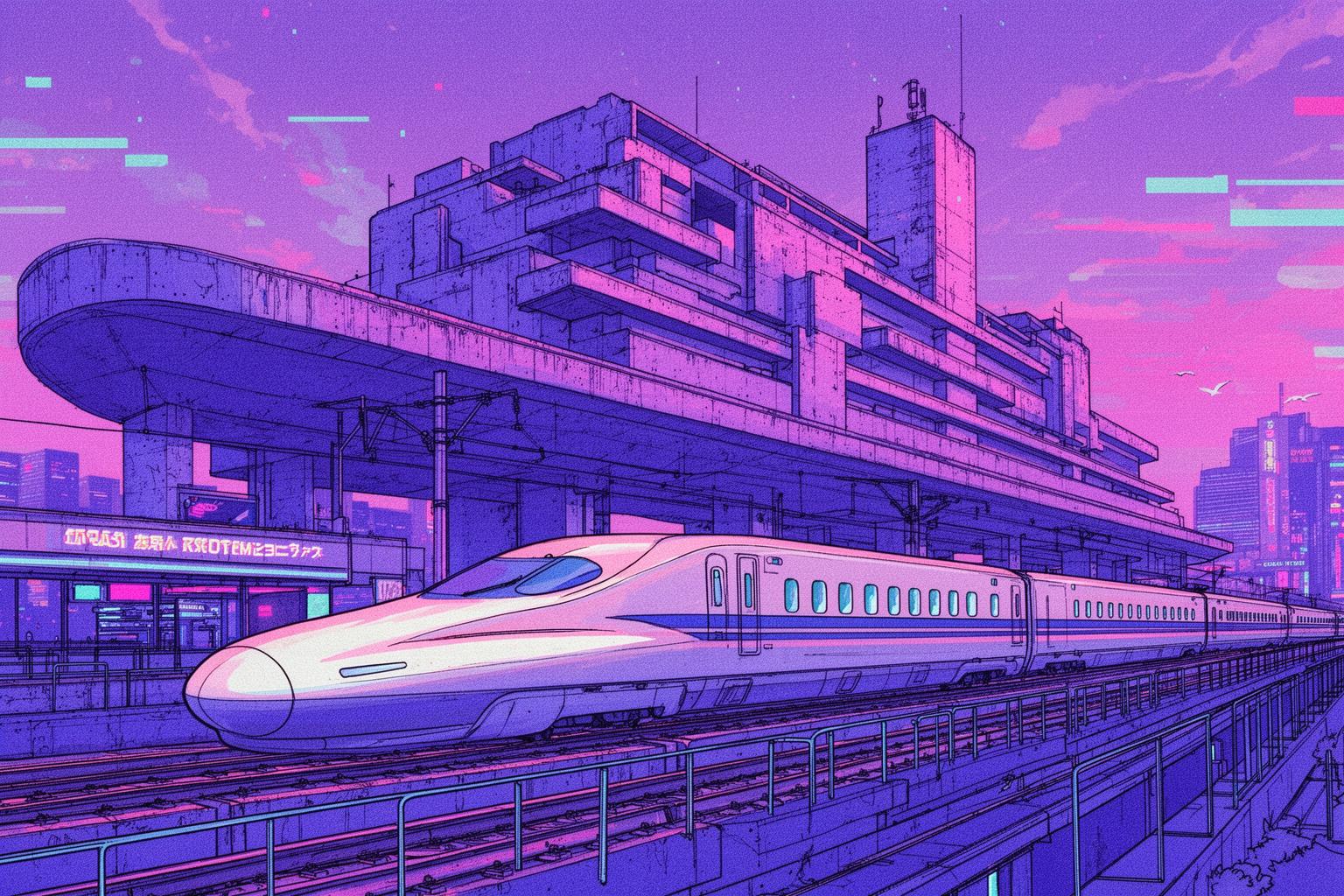
This is the essence of it all. The Shinkansen infrastructure can arguably be considered one of the largest and longest Brutalist sculptures in the world. It’s a masterpiece that extends for thousands of kilometers, yet it’s so commonplace that most people don’t even recognize it as architecture. They merely see it as… tracks. But once you begin to notice it, you can never unsee it. The aesthetic is everywhere.
The Viaducts: Ribbons of Concrete
Let’s begin with the most familiar element: the elevated viaducts, known as “koka-kyo” in Japanese. In cities like Tokyo, Osaka, or Nagoya, these structures dominate the urban landscape. They resemble great concrete rivers flowing above the streets, casting long, dramatic shadows that shift with the sun. Look at the support pillars, or “hashira.” They are not just simple columns. They often take the form of massive, sculpted shapes—large cylinders, strong T-shapes, or thick, blade-like walls. There’s a rhythm to them, a repetition that generates a powerful visual cadence as you walk or drive alongside. They march relentlessly through neighborhoods with unstoppable momentum. The concrete itself serves as a canvas. Over time, it weathers, becomes stained by rain, and sometimes moss grows in the cracks. This patina adds character, telling a story of decades of service and millions of journeys. It stands as a testament to endurance. The underside of these viaducts creates unique urban spaces—sometimes housing small shops, restaurants, and parking lots, forming an entire ecosystem living in the bullet train’s shadow. The contrast between the massive, unmoving concrete and the fleeting, super-fast train overhead evokes a distinct mood. It’s a dance of stillness and speed, permanence and transience.
The Bridges: Leaping Across Voids
When the Shinkansen crosses a river or a deep valley, the scene becomes even more dramatic. The bridges, or “kyoryo,” showcase the intersection of engineering and Brutalist aesthetics in spectacular fashion. Consider the bridge over the Fuji River on the Tokaido Shinkansen line, with Mount Fuji in the background. It’s an iconic image, but zoom in on the bridge itself. It’s a powerful truss or girder bridge—pure function, yet its scale and clean lines are breathtaking. Or look at the Hamana Bridge, another classic example. These aren’t delicate, arched stone bridges; they are bold, assertive structures, often supported by massive concrete piers and stark steel girders. They don’t blend into the landscape; they make a statement. They speak of conquering nature, connecting two points with unwavering force and precision. Their design is raw and honest. Every beam and support has a clear purpose. There is no ornamentation, only the beauty of a flawlessly solved engineering challenge. On a clear day, the sharp, geometric lines of the bridge contrast beautifully with the soft, organic shapes of the surrounding nature. On a grey, rainy day, they appear even more moody and monolithic, like ancient aqueducts from a futuristic Roman empire.
The Stations: Gateways of Concrete
While many modern Shinkansen stations have been updated with glass and sleek metal facades, some older stations, or parts of them, still retain their original Brutalist DNA. Head to the platforms. Often, you’ll find yourself beneath a massive, coffered concrete roof. These roofs aren’t just flat slabs; they feature deep, recessed geometric patterns that produce a stunning play of light and shadow. They feel incredibly solid, as if you’re inside the belly of a great beast. The platforms themselves are long, sweeping expanses of concrete, designed solely for boarding trains. The signage, benches, and clocks—all are arranged with stark, functional clarity. Even the underpasses and corridors connecting platforms can feel like Brutalist art installations. The low ceilings, exposed pipes and ductwork, and raw concrete walls lit by fluorescent lights create a distinctive, underground atmosphere that’s a huge part of the Shinkansen travel experience. These spaces aren’t made to be cozy; they’re designed to be efficient, durable, and to accommodate vast numbers of people. They are transit fortresses, and in their unapologetic functionality, they possess a unique and powerful beauty.
Sound Barriers: The Unsung Sculptures
Here’s an often-overlooked element that embodies pure Brutalist poetry: the sound barriers. To mitigate the thunderous noise of trains traveling at 300 km/h, the sides of the elevated tracks are lined with tall walls. And what are they made of? You guessed it: concrete. But these aren’t just plain walls. They’re often pre-cast concrete panels, featuring shapes and textures designed to absorb and deflect sound. They form long, repeating patterns that stretch for miles. From the Shinkansen window, they become a blur of rhythmic geometry. From the ground, they add another layer of texture and scale to the viaducts, transforming them into even more complex sculptural forms. They perfectly exemplify Brutalist principles: a problem (noise) solved through a direct, functional, and structurally honest solution that results in a powerful aesthetic—whether intended as “art” or not.
A Guide for the Concrete Connoisseur: Where to Vibe with Shinkansen Brutalism
So you’re convinced by the aesthetic and eager to experience it firsthand? Bet. The good news is, no special ticket is required. This architectural art exhibition is free and accessible 24/7. Here are some key locations and areas to satisfy your Brutalist cravings.
The Urban Jungle: Tokyo & Osaka
Big cities serve as the ultimate galleries for Shinkansen infrastructure. In Tokyo, stroll through Yurakucho, Shimbashi, Kanda, and Akihabara. Here, the Tokaido and Tohoku Shinkansen lines run on massive elevated tracks right through the heart of the city. Stand beneath them. It’s a sensory overload in the best way. You feel the ground subtly vibrate as a train rumbles overhead. The sound is a muffled roar, a fleeting ghost of immense power just meters above you. The interplay of light is incredible. Sunlight filters through gaps between the tracks, creating shifting patterns on the pavement below. At night, the lights from nearby buildings and the passing trains form a cinematic, almost cyberpunk mood. This is where the scale truly hits home. These concrete pillars stand like the legs of giants striding through the city, and we walk between them. The area beneath the tracks at Yurakucho, home to a collection of old-school yakitori restaurants and bars known as “Gado-shita” (literally “under the girders”), is a must-see. You can sit with a drink and feel the entire structure resonate with the life of the railway above.
Osaka offers a comparable vibe, especially near Shin-Osaka Station and where the Sanyo Shinkansen line cuts through the city. The urban density presses tightly against the concrete, creating a striking contrast between the monolithic, planned infrastructure and the organic, chaotic city life. It’s a photographer’s paradise.
The Natural Contrast: Rivers and Mountains
To witness another side of Shinkansen Brutalism, head beyond the city center. The best way is aboard the train itself. The Tokaido Shinkansen line between Mishima and Shizuoka offers some of the most breathtaking views. The bridge crossing the Fuji River is legendary. Try to snag a window seat on the right side when traveling from Tokyo to Osaka (or the left side on the return) for the ideal shot of the train, the bridge, and Mount Fuji. The contrast between the rigid, man-made lines of the bridge and the perfect natural cone of the volcano is simply chef’s kiss.
Whenever the Shinkansen runs parallel to a highway or local train line through rural areas, you get a clear sense of its imprint on the landscape. It appears as a continuous, elevated horizon line—a concrete aqueduct carrying people instead of water. It cuts across rice paddies, leaps over valleys, and vanishes into the dark mouths of tunnels bored through mountains. These tunnels are another Brutalist hallmark—their entrances are often massive, stark concrete portals, like gateways to another world. Purely functional, designed for maximum strength and stability, their visual impact is unmistakable.
Pro Tip: Station Hopping
While the newest stations tend to be less Brutalist, some older or regional stations can be hidden treasures. Try visiting stations that aren’t major termini. Places like Atami or Odawara on the Tokaido line still retain sections with a distinctly mid-century feel. Look for original platform structures, stairwells, and concourses. Notice the details: the texture of the concrete, the sturdy handrails, the simple, functional typography on old signs. It’s like architectural time travel.
Capturing the Concrete: A Photographer’s Guide
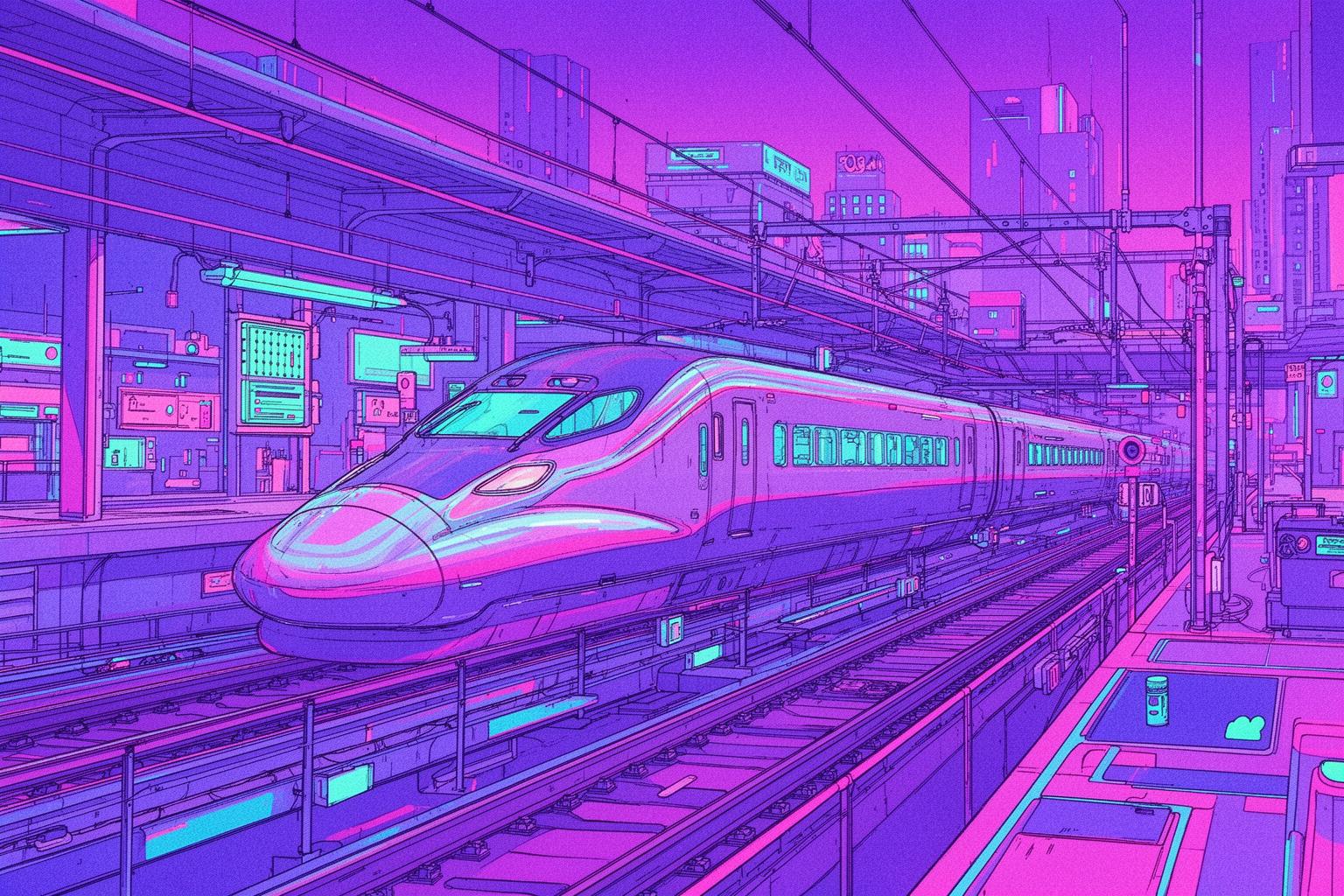
If you want to capture the moody beauty of the Shinkansen’s infrastructure, here are some tips to help you get started. This aesthetic is incredibly photogenic, allowing you to take some truly epic shots.
Use Leading Lines
Shinkansen tracks serve as perfect leading lines. Whether you’re shooting from a parallel bridge or from underneath, utilize the long, straight, or gently curved lines of the viaducts to guide the viewer’s eye into the frame. This technique creates a strong sense of depth and motion, even if the train itself isn’t present. The repeating pattern of the support pillars also generates a compelling rhythm and perspective.
Experiment with Light and Shadow
Brutalism emphasizes form, and light reveals that form. The best times to shoot are early morning or late afternoon—during the golden hour. The low-angled sun casts light across the textured concrete surfaces, highlighting every imperfection and wood grain pattern left by the formwork. The long shadows from the viaducts can add striking graphic elements to your composition. Don’t shy away from harsh midday sun, either; it produces bold, high-contrast black-and-white images that highlight the geometric purity of the structures. And nighttime photography is a total game-changer. Use a tripod and slow shutter speed to capture the light trails of the Shinkansen and city traffic, with the massive concrete structure standing as a dark, silent subject.
Emphasize Scale and Contrast
One of the most impressive aspects of this infrastructure is its sheer size. To convey that, include a human element in your shots. A person walking beneath a massive concrete pillar, or a small car passing alongside the viaduct, instantly provides a sense of scale, making the structure feel even more monumental. Also, seek out contrasts: the rough concrete texture against a smooth blue sky, the rigid geometry of the structure against soft tree leaves, or old, weathered concrete next to a brand-new, shiny building. These juxtapositions create compelling images.
Highlight Texture
Get close. Don’t just focus on the overall structure—capture the details. The rough, aggregate-filled surface of the concrete, rust stains dripping from steel fixtures, or the way light hits the sharp corner of a geometric edge. These texture shots can be highly powerful and abstract, telling a story of materiality and time. Using a macro lens can reveal an entire universe on the surface of a single concrete pillar.
The Cultural Resonance: Concrete in the Japanese Imagination
So, how do people in Japan perceive these massive concrete structures? For most, they simply blend into the background, representing everyday convenience. However, this infrastructure has deeply permeated the cultural consciousness, particularly in visual media. Consider classic anime and manga from the 70s, 80s, and 90s—worlds like those in “Akira,” “Ghost in the Shell,” and “Neon Genesis Evangelion” are filled with enormous, often decaying, concrete highways and buildings. This style, heavily inspired by Tokyo’s real-life infrastructure, became a visual shorthand for a futuristic, sprawling, and at times dystopian cityscape. The Shinkansen viaducts, with their monolithic presence and association with cutting-edge technology, played a key role in this visual vocabulary.
There’s a kind of modern sublime at work here. In Western art, the sublime was often about encountering the overwhelming power of nature—a towering mountain or a turbulent sea. In contemporary Japan, one could argue that this sensation arises from the immense scale of its human-made structures. Standing beneath a Shinkansen viaduct, sensing the immense weight and power of both the structure and the train, can inspire a similar awe and a feeling of smallness before something vast and formidable. It’s not a comforting or cozy sensation, but it is a deeply moving one.
Today, there is a growing, though somewhat niche, appreciation for this type of infrastructure among photographers, artists, and urban explorers in Japan, known as “doken doboku” (civil engineering) enthusiasts. They find beauty in functionality and artistry in engineering. They take tours to admire the form of dams, bridges, and of course, the Shinkansen network. This movement recognizes these structures not merely as utilities but as cultural artifacts—monuments to a distinct era in Japanese history and design.
Final Thoughts: The Journey and the Stage
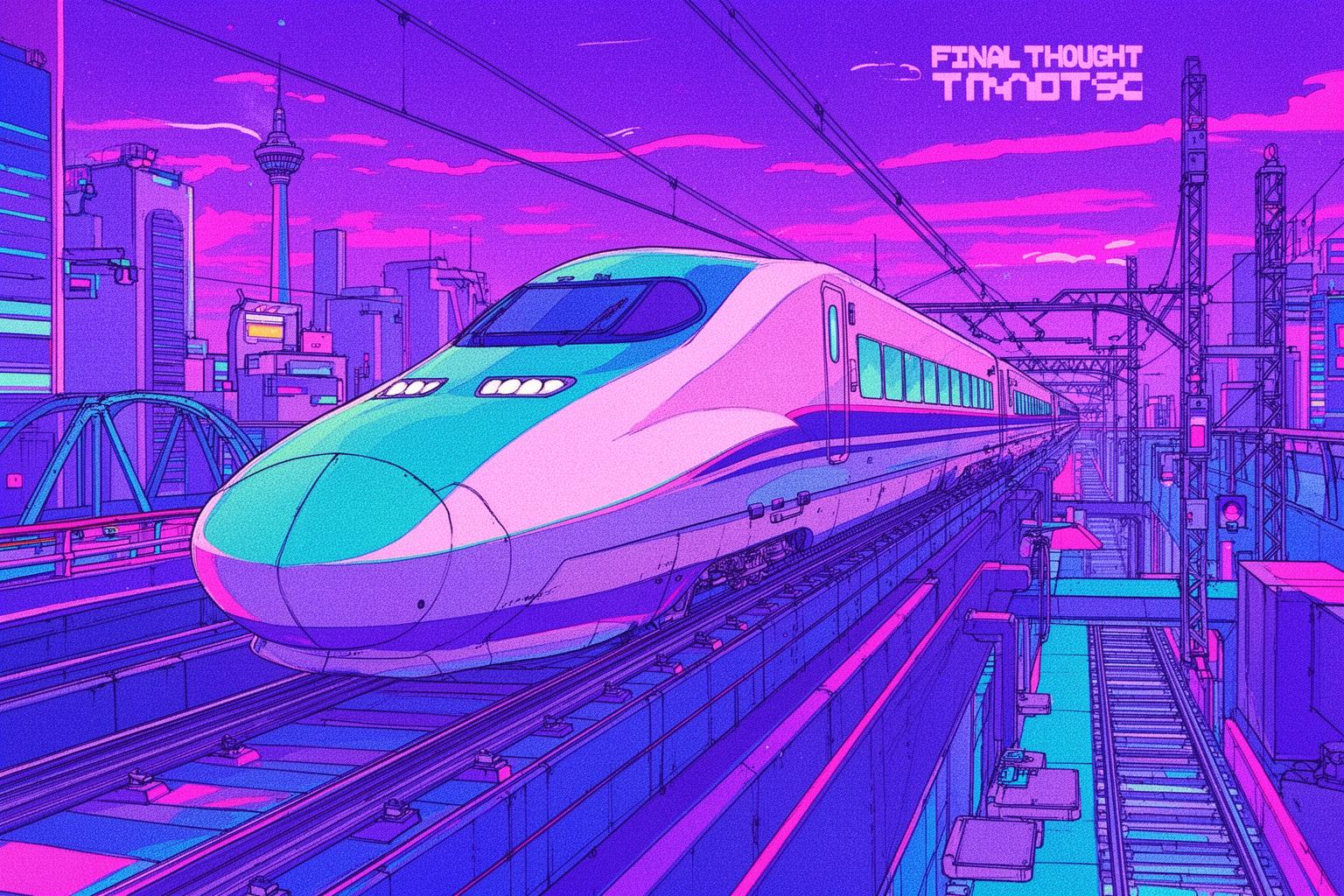
Traveling on the Shinkansen is a remarkable experience. It’s a swift blend of speed, comfort, and remarkable punctuality. You can easily become fully absorbed by the view outside the window or the sleek design of the train car. But next time you ride, I want you to consider the stage behind it all. Think about the silent, stationary concrete world that enables your lightning-fast journey. As you walk through a Japanese city, look up and recognize the concrete giants that share the sky with skyscrapers. See them not merely as functional structures but as works of art and history in their own right. The Brutalist elegance of the Shinkansen infrastructure stands as a testament to an era of great ambition and faith in bold, functional design. It’s a raw, genuine, and powerful element of the Japan experience that often goes unnoticed. It’s the rhythm section of the band, the foundation of the building. It may not be the flashy lead singer, but without it, there would be no show. And honestly, the aesthetic is absolutely stunning. IYKYK. So go out, explore, and discover your own favorite concrete view. Peace.