Chances are, you’ve heard it. You were probably deep in a YouTube spiral late one night when the algorithm, in its infinite and mysterious wisdom, served it up. A still image of a woman’s face, serene and slightly smiling, caught in a soft-focus haze. The track begins with a shimmering synth chord and a crisp, irresistible drum machine beat. A woman starts singing in Japanese, her voice smooth as silk, weaving a melody that feels both instantly familiar and completely alien. The song is Mariya Takeuchi’s “Plastic Love,” and for millions of people outside Japan, it was the gateway. The first taste of a sound that feels like a memory you never made, a nostalgia for a place you’ve never been. That feeling is the essence of City Pop, and it begs a fascinating question: Why does this music, born from the hyper-capitalist optimism of 1980s Japan, resonate so profoundly across the world today? The answer is that City Pop isn’t just a genre of music. It’s a complete, hermetically sealed aesthetic. It’s the soundtrack to a very specific vision of the future—one of sleek cars, endless summer nights, and sophisticated urban leisure—that never quite came to pass. It’s the ghost of a tomorrow we were promised, and its breezy, melancholic charm has become a strange and beautiful refuge for the anxieties of our own time.
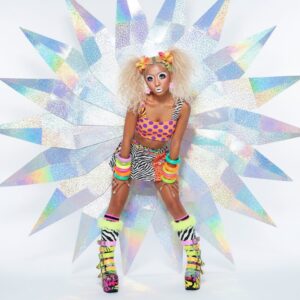
The infectious spirit of City Pop is mirrored in the vibrant evolution of Urahara fashion, where traditional aesthetics blend seamlessly with contemporary urban energy.
The Sound of the Bubble Economy
To grasp City Pop, you first need to understand the money. The sound and the yen are inseparable. The music that thrived from the late 1970s through the 1980s was a direct result of Japan’s post-war economic miracle, culminating in the notorious asset price bubble. This was a time of unprecedented, almost surreal prosperity. Japanese corporations were purchasing American landmarks, Tokyo real estate was extraordinarily valuable, and a sense of boundless possibility permeated the culture. For the first time, a generation of young Japanese had significant disposable income and leisure time to enjoy it. They were buying cars, designer clothes, and cutting-edge stereo equipment. City Pop was the music created for and by this new reality.
More Than Just Music: The Soundtrack of an Economic Miracle
The exceptional quality of City Pop productions is astonishing, driven by massive record label budgets. This wasn’t garage music; these were elaborate studio productions. Labels like RCA, Sony, and Toshiba-EMI invested heavily in their artists, recruiting the best session musicians not only from Japan but also from the United States. It was common for top American funk and fusion players—the same musicians who performed on albums by Earth, Wind & Fire or Steely Dan—to be flown into Tokyo to record basslines or horn sections. The outcome was a level of musicianship and technical refinement that was unmatched. The sound is richly layered, featuring intricate basslines, precise horn arrangements, and lush string sections. This era also marked the beginning of a new phase in music technology. Cutting-edge synthesizers like the Yamaha DX7 and Roland Juno-60, which would come to define the global 80s sound, were developed and refined in Japan. City Pop producers and artists had early access to these instruments, using them to craft a sound that was both technologically innovative and deeply soulful. Musically, it was a brilliant fusion. It combined sophisticated chord progressions from American jazz fusion, the smooth grooves of AOR (Album-Oriented Rock), the rhythmic drive of funk, and the danceable energy of disco, all filtered through a uniquely Japanese melodic sensibility. Artists like Tatsuro Yamashita, often hailed as the “King of City Pop,” produced meticulously crafted albums that were pop symphonies. Others, such as Toshiki Kadomatsu, added a harder funk and boogie edge, while female artists like Anri and Takako Mamiya delivered breezy, sun-filled anthems that became synonymous with summer.
Lyrical Escapism: Highways, Beaches, and Heartbreak in the Metropolis
If City Pop’s sound was born from economic excess, its lyrics reflected the lifestyle that excess made possible. This was not protest music; it did not tackle deep social or political issues. Instead, it depicted an idealized urban life. The lyrics formed a tapestry of aspirational dreams and everyday moments of modern leisure. Cars were a frequent symbol, representing freedom and mobility. Songs often featured imagery of cruising down coastal highways at dusk, with city lights shimmering in the distance. The metropolis—almost always Tokyo—played a central role as a place of endless excitement, romantic possibility, and a distinctly modern loneliness. The lyrics described meeting lovers at downtown cafes, dancing in skyscraper discos, or watching rain fall on the neon-lit streets of Shinjuku. The seaside was another key theme. Tracks were named after coastal roads, specific beaches, and the sensation of the ocean breeze. The coast was the ultimate escape from city life, a setting for summer romance and reflection. This lyrical world was deliberately escapist, offering a vision where the main concerns were navigating modern love’s complexities or choosing a cocktail at a rooftop bar. It was a life detached from the grind of the salaryman lifestyle that defined the previous generation. It was cool, sophisticated, and deeply romantic, even when tinged with sadness. The heartbreak in City Pop songs isn’t overly dramatic; it’s a stylish, melancholic longing that feels like an intrinsic part of the beautiful urban fabric. It’s the quiet ache of nursing a drink alone, watching city lights blur through the window.
The Aesthetic of a Lost Future
The influence of City Pop reaches well beyond the music itself. It offers a complete aesthetic experience, where the visuals hold equal importance to the sound. The album artwork of the time wasn’t merely packaging; it served as a window into the musical world. It encapsulated the dream, providing a distinct visual language to the moods of optimism, leisure, and sleek modernity evoked by the songs. This harmony between sound and image is a significant reason why the genre feels so immersive to contemporary listeners. It delivers a full, vividly imagined fantasy world that you can step into.
The Visual Language: Hiroshi Nagai and the Endless Summer
When you think of City Pop, you probably envision the work of one iconic artist: Hiroshi Nagai. His legendary album covers for musicians such as Eiichi Ohtaki and others became the quintessential visual emblem of the genre. Nagai’s style is unmistakable. He creates hyper-realistic, sunlit landscapes that verge on painfully idyllic. His scenes are dominated by radiant blue skies, sparkling swimming pools, and minimalist modern architecture. Palm trees, symbolizing an exotic and relaxed paradise, appear everywhere. Classic American cars, especially shiny Cadillacs and Chevrolets from the 50s and 60s, often sit casually within the frame, representing an imported, idealized cool. What stands out most in Nagai’s art is its immaculate, almost sterile perfection. His most famous pieces never include people, creating a strangely peaceful yet slightly lonely mood. It’s a flawless world awaiting the listener’s arrival. The shadows are sharp, lines crisp, and the light possesses a magical, timeless late-afternoon glow. It’s a vision of an endless summer. This style, heavily inspired by American artists like David Hockney and a fascination with the sun-bleached vistas of California and Florida, was a kind of cultural borrowing. Japan, during its economic rise, confidently adopted and reimagined the symbols of American leisure and luxury. It was a visual statement that Japan had not only caught up with the West but was now crafting its own, perfected version of the Western dream. Artists like Eizin Suzuki presented a different but related perspective, more crowded and lively, filled with roadside diners, vintage signs, and a romanticized, bustling Americana. Together, these artists forged a visual shorthand for City Pop: bright, clean, optimistic, and steeped in nostalgia for a dreamy elsewhere.
Fashion, Tech, and the Urban Dreamscape
The City Pop aesthetic permeated every facet of the culture. The fashion of the period echoed the music’s sophisticated, easygoing vibe. For men, this meant sharp pastel suits featuring the iconic 80s power shoulders or relaxed resort wear—linen shirts paired with pleated trousers. For women, it combined elegant dresses with chic yet comfortable daytime attire. The look exuded effortless wealth and urban sophistication. Technology played a central role as well. This was the era of the Sony Walkman, a groundbreaking device that made music personal and portable for the first time. City Pop was, in many respects, the perfect soundtrack for the Walkman. It was meant to accompany your own personal cinematic experience as you moved through the city, whether on the train or behind the wheel. The sleek design of Japanese electronics—the brushed metal surfaces, streamlined high-end stereo systems, and futuristic digital readouts on car dashboards—formed part of the same aesthetic world. Tokyo itself was undergoing a transformation mirroring the music. The 1980s brought a construction boom, with new skyscrapers and bold architectural ventures reshaping the skyline. Neighborhoods such as Shibuya and Shinjuku became dizzying canyons of neon and glass. This evolving urban environment served as the real-life backdrop for the fantasies unfolding in the music. The city represented endless stimulation and possibility, a concrete and neon embodiment of that era’s limitless energy. City Pop captured the sensation of inhabiting that city, being young and hopeful in what felt like the future’s very center.
The Rediscovery: How a YouTube Algorithm Resurrected a Genre
For decades, City Pop remained largely a cultural footnote in Japan. After the economic bubble burst with devastating impact in the early 1990s, the country’s mood shifted dramatically. The boundless optimism of the ’80s vanished, replaced by economic stagnation and a pervasive sense of uncertainty that came to be known as the “Lost Decade.” The music, so closely linked to the euphoric heights of the bubble, suddenly felt naive and out of touch. It was shoved into bargain bins, remembered with a sort of embarrassed fondness as the cheesy soundtrack to an era of excess long past. It might have stayed that way, a relic for domestic collectors, were it not for the strange, connective power of the internet.
From Obscurity to Global Phenomenon
Its revival didn’t begin in Tokyo record stores, but in the digital realm. Throughout the 2010s, niche online music communities, especially those focused on genres like vaporwave, delved into obscure archives searching for samples. Vaporwave, with its aesthetic rooted in ’80s and ’90s consumerist nostalgia, discovered a rich trove in the smooth, synth-heavy sounds of City Pop. Then came a sudden breakthrough. Around 2017, an unofficial eight-minute remix of Mariya Takeuchi’s 1984 track “Plastic Love,” uploaded by a fan, started appearing in people’s YouTube recommendations. No one is completely sure why the algorithm zeroed in on this particular song. Perhaps it was the combination of a catchy melody, a melancholic theme of fleeting romance, and that iconic, soft-focus thumbnail that created the perfect storm. Whatever the cause, it went viral on an enormous scale. Millions who had never heard of Mariya Takeuchi before were instantly captivated. The YouTube comment section became a fascinating global forum, filled with people from all over the world asking the same questions: “What is this music?” and “Why does it make me feel nostalgic for a time I never lived through?” Sensing a trend, the algorithm began recommending other City Pop tracks to this new, eager audience. Songs by Tatsuro Yamashita, Anri, Miki Matsubara, and others quickly amassed millions of views. A genre all but forgotten in its homeland had become a worldwide subcultural phenomenon.
The Allure of Anemoia: Nostalgia for a Time You’ve Never Known
The psychological appeal of City Pop to a contemporary, international audience is complex and deeply revealing. It directly taps into a sensation known as “anemoia”—a nostalgia for a time and place one has never actually experienced. This is more than simply enjoying old music; it’s about forming a profound emotional bond with the feeling the music evokes. For a generation raised online, facing economic uncertainty, climate anxiety, and the relentless pressures of social media, City Pop provides a powerful form of escapism. It offers an idealized vision of the past that feels cleaner, simpler, and far more optimistic than the present. It’s a world without the internet or smartphones, where human connections are analog and experiences more tangible. Moreover, City Pop embodies a distinct kind of retrofuturism. It sounds futuristic, full of synthesizers and electronic drums, yet it envisions the future through the lens of the past. It’s an analog future made of chrome, glass, and neon—a stark contrast to the sterile, screen-dominated, data-driven future we actually live in. This dissonance is compelling. It feels like a beautiful alternate timeline where things turned out differently—perhaps more stylishly, perhaps more humanely. The aesthetic cohesion is crucial. Listening to a City Pop playlist on YouTube is not just about hearing the music; it’s about experiencing a curated slideshow of Hiroshi Nagai’s dreamlike landscapes and stills from ’80s anime. It’s a complete sensory experience that transports you to a self-contained world where it’s always golden hour, and the perfect soundtrack is perpetually playing on the car stereo.
More Than a Meme: City Pop’s Enduring Legacy
While its internet-driven rediscovery may have begun as a meme, City Pop has demonstrated a cultural resilience that goes beyond mere novelty. Its impact is now tangible in modern music, and its lasting appeal reveals important insights about our collective cultural mindset. The genre is no longer simply a relic; it remains a vibrant influence, a time capsule whose themes of sophisticated melancholy and lost optimism continue to connect with a new generation of listeners and creators worldwide.
The Sound Lives On: Neo-City Pop and Global Influence
The revival has come full circle, with a new generation of Japanese artists consciously drawing from the 80s playbook. This “Neo-City Pop” movement features contemporary bands and producers embracing the classic elements—the funky basslines, shimmering keyboards, breezy melodies—while updating them with modern production methods and sensibilities. Artists openly cite figures like Tatsuro Yamashita as key inspirations, revitalizing the genre for a domestic audience re-examining its recent history. Yet the influence extends beyond Japan. City Pop’s sonic DNA has permeated the global music scene. Its echoes are audible in the 80s-inspired synth-pop of major Western acts like The Weeknd and Dua Lipa. Its funk and soul roots resonate in the work of artists such as Tyler, the Creator and Thundercat. The music’s global accessibility has made it part of the international pop palette—a source of inspiration for anyone aiming to capture a vibe of smooth, nostalgic cool.
A Time Capsule with a Message
Ultimately, City Pop is more than just expertly crafted pop music. It serves as a cultural record of a distinct time and place, capturing a nation at the height of its confidence, on the verge of a profound collapse. There is a striking poignancy embedded within its relentless optimism. Listening today, with hindsight, feels like hearing the soundtrack of a party atop a skyscraper, blissfully unaware of the economic quake about to shake its foundations. This is where the subtle melancholy woven through even the most upbeat City Pop tracks becomes so powerful—a sense of impermanence, an unspoken acknowledgment that this perfect, sunlit moment cannot last. That emotional complexity elevates it beyond a simple nostalgic throwback. It isn’t just joyous music; it’s music that strives to be joyful, clinging to a beautiful, delicate dream. The global resurgence of City Pop reflects as much about our present as it does about Japan’s past. In a world often marked by chaos and uncertainty, we are drawn to this echo of a lost future. We seek more than catchy melodies; we search for the feeling embedded within—a genuine, un-ironic faith in a tomorrow that was bright, stylish, and brimming with endless possibility. City Pop is the soundtrack to that beautiful, bygone dream, and we simply can’t seem to turn it off.