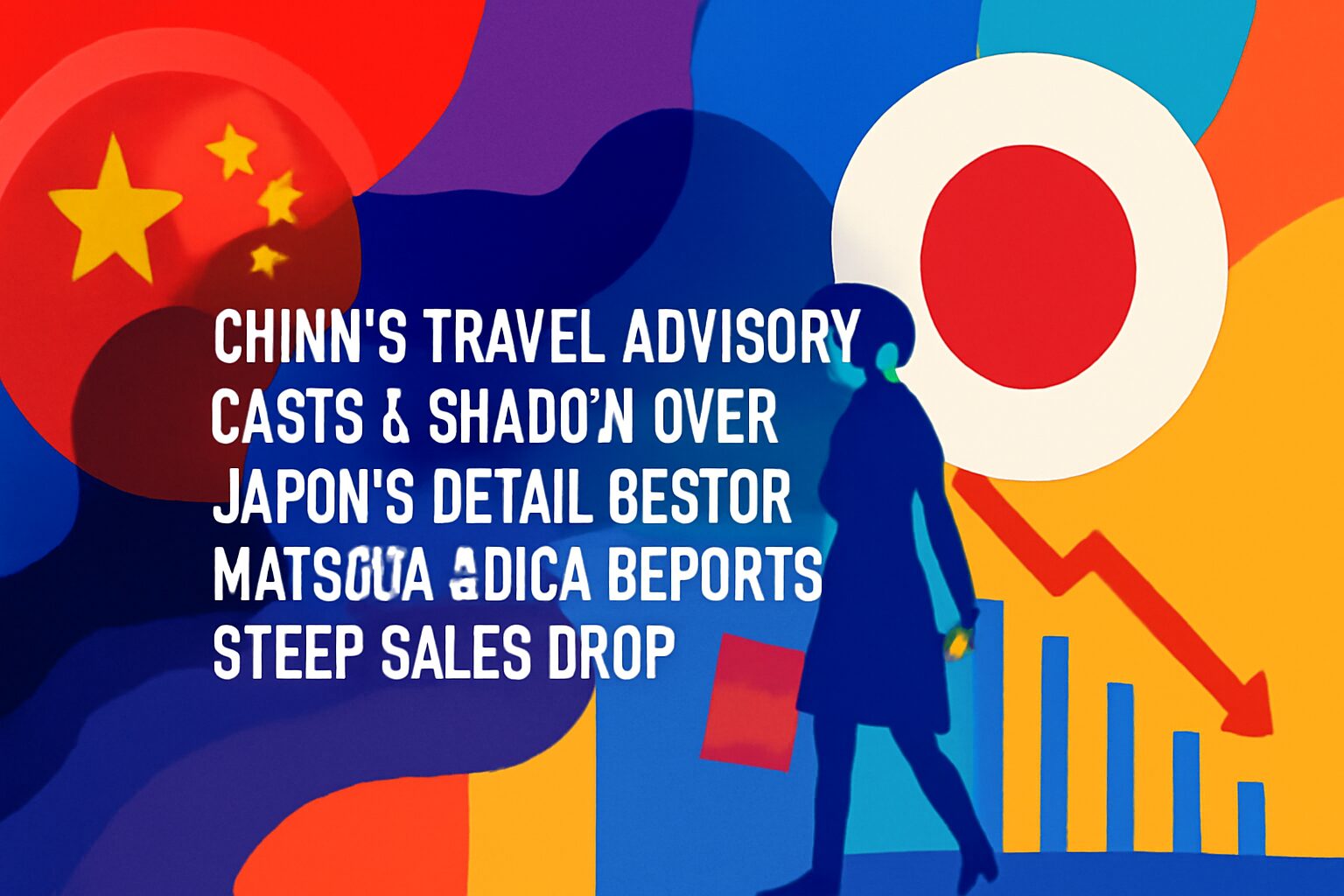
A new travel warning issued by the Chinese government has sent shockwaves through Japan’s tourism and retail industries, with the prestigious Matsuya Ginza department store reporting a sharp decline in duty-free sales. The advisory, which urges Chinese citizens to “reconsider non-essential travel” to Japan, is an immediate blow to a sector that has heavily relied on the spending power of Chinese tourists for its post-pandemic recovery.
The Immediate Impact on Matsuya Ginza
Matsuya’s flagship store in Ginza, a district synonymous with luxury shopping, has been one of the first to feel the effects. The company revealed that its duty-free sales for November 2025 plummeted by an estimated 40% compared to the same month last year. This downturn is directly attributed to a significant drop in the number of Chinese shoppers, who have historically been the backbone of the store’s tax-free revenue.
Before the travel warning, shoppers from mainland China accounted for over 60% of Matsuya Ginza’s total duty-free sales. Their purchases often focused on high-end cosmetics, luxury brand accessories, and designer clothing. Store officials expressed deep concern, noting the sudden and near-total disappearance of tour groups and the significant decrease in individual Chinese travelers since the advisory was issued in mid-November.
Background: Political Tensions Fuel Tourism Concerns
The travel advisory did not emerge in a vacuum. It follows a period of escalating diplomatic tensions between the two nations over longstanding territorial disputes and recent trade disagreements. While the official statement from Beijing cited concerns over “the safety and rights of its citizens abroad,” analysts widely interpret the move as a politically motivated measure intended to exert economic pressure on Japan.
This tactic is not unprecedented. Similar situations in the past have seen tourism used as a tool in international diplomacy, causing significant economic disruption to the targeted country. The timing, just ahead of the critical New Year and Lunar New Year holiday seasons, suggests a deliberate effort to maximize the economic impact.
Broader Implications for Japan’s Tourism Industry
The situation at Matsuya Ginza is a microcosm of a much larger problem facing Japan’s entire tourism ecosystem. The industry had been celebrating a robust recovery, with inbound visitor numbers steadily climbing. According to Japan National Tourism Organization (JNTO) data, Chinese tourists were a vital component of this rebound. In 2023, visitors from China constituted the largest group of international spenders, contributing approximately ¥1.77 trillion to the Japanese economy.
The absence of these high-spending tourists will be felt far beyond the polished floors of Ginza’s department stores.
- Hospitality: Hotels in popular destinations like Tokyo, Osaka, and Kyoto are already reporting cancellations from Chinese tour groups.
- Transportation: Airlines and railway companies that rely on tourist traffic will likely see a drop in demand.
- Regional Economies: Tourist spots and local businesses in areas popular with Chinese visitors, such as Hokkaido and Okinawa, are bracing for a difficult winter season.
Future Outlook and Industry Response
The long-term impact will depend on the duration of the travel advisory. If tensions de-escalate quickly, the damage could be contained. However, a prolonged warning could derail Japan’s goal of achieving a record number of inbound tourists and spending.
In response, Japanese businesses and tourism authorities are being forced to pivot their strategies.
- Market Diversification: There is now an urgent need to accelerate efforts to attract tourists from other markets, such as Southeast Asia, the United States, and Europe, to offset the loss from China.
- Promotional Campaigns: The Japanese government and JNTO are expected to launch new promotional campaigns targeting these alternative markets.
- Focusing on Domestic Travel: Retailers like Matsuya may shift their focus to boosting domestic consumption, although this is unlikely to fully compensate for the loss of high-value duty-free sales.
For now, a sense of uncertainty hangs over Japan’s tourism landscape. The empty checkout counters at Matsuya’s duty-free section serve as a stark reminder of how quickly geopolitical winds can shift, threatening an industry that has fought so hard to recover.