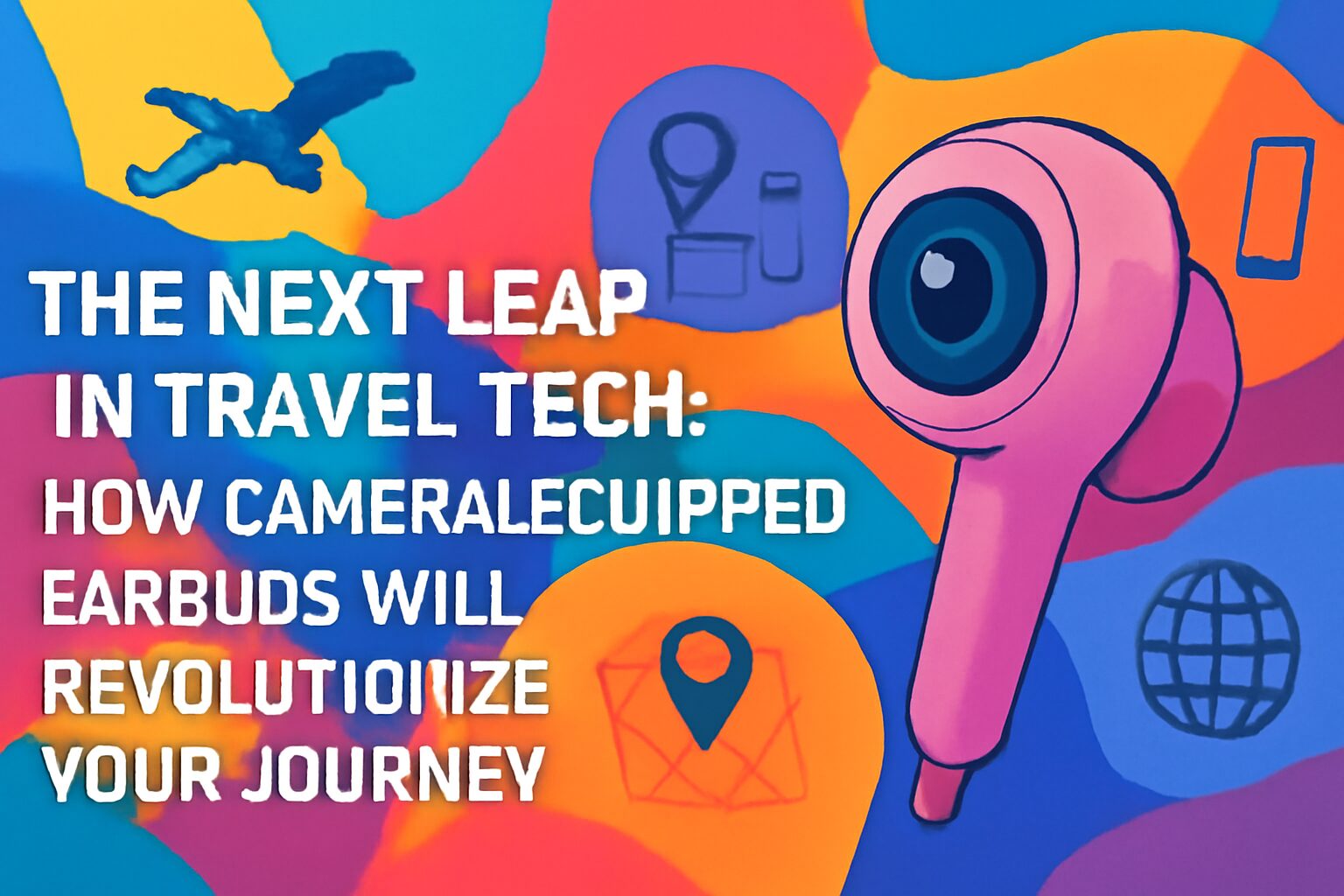
The era of wireless earbuds has firmly established itself, moving from a novel accessory to an everyday essential for music, calls, and podcasts. For years, the innovation race has centered on audio fidelity and noise-cancellation technology. But as these features reach a point of maturity, a new frontier is emerging—one that promises to transform our travel experiences in ways we’ve only imagined. The next generation of earbuds will not just be for listening; they will see, understand, and interpret the world for us, thanks to the integration of miniature cameras.
The Convergence of Audio and Vision
The idea of a wearable camera is not new. Devices like Google Glass and, more recently, Ray-Ban Meta Smart Glasses have explored the potential of blending our digital and physical worlds. However, smart glasses have faced challenges with social acceptance and aesthetic design. Earbuds, on the other hand, are already a socially normalized and discreet accessory. This makes them the perfect platform for the next wave of wearable AI.
The technological groundwork has been laid. Advancements in miniaturized optical sensors, powerful AI-powered processors that can run on low energy, and the sophisticated gyroscopes already present in high-end earbuds are converging. This fusion of technologies is set to unlock capabilities that go far beyond what today’s audio devices can offer. The global true wireless earbuds market, valued at over USD 50 billion in 2023 and projected to grow significantly, provides a massive user base ready for this next evolutionary step.
Redefining the Tourist Experience
For international travelers, camera-equipped earbuds are not just a gadget upgrade; they are a key to unlocking a more seamless and immersive journey. Imagine navigating a foreign city, communicating with locals, and discovering hidden gems, all without ever pulling out your phone.
Seamless, Eyes-Up Translation
While real-time translation apps exist, they often create a clunky experience, forcing you to pass a phone back and forth. Earbuds with integrated cameras will revolutionize this interaction. The camera can identify who is speaking in a group, use lip-reading to improve accuracy in noisy environments like a bustling market, and deliver the translation directly to your ear. This technology will break down language barriers more naturally, fostering genuine human connection and allowing travelers to engage more deeply with local cultures.
Intuitive, Hands-Free Navigation
Navigating an unfamiliar city often means staring down at a map on your smartphone, potentially missing the sights around you and making you a target for pickpockets. Camera-equipped earbuds will enable a true “heads-up” navigation experience. By visually recognizing landmarks, street signs, and even the flow of traffic, the earbuds can provide intuitive, turn-by-turn audio directions. Combined with gyroscopes that know which way you are looking, the device could offer contextual information, whispering “The famous bakery is on your left” as you walk past it. This transforms navigation from a task into an interactive tour.
An Interactive, Personal Tour Guide
The potential extends beyond simple navigation. Point your head towards a historic monument, a piece of art in a museum, or an exotic dish at a food stall, and the earbuds could instantly provide you with relevant information, historical context, or dietary details. This creates a personalized, on-demand tour guide that adapts to your curiosity in real-time, enriching your understanding of the destination without the need for a guidebook or a pre-planned itinerary.
Future Outlook and Potential Challenges
The implications of this technology are vast. Tech giants like Apple, Google, and Sony are likely to lead the charge, integrating these features into their already popular earbud ecosystems. We can expect a new wave of applications and services designed specifically for this “audio-visual” platform, further personalizing the travel experience.
However, this innovation also brings significant challenges that must be addressed.
- Privacy Concerns: The most pressing issue is privacy. The presence of an always-on, inconspicuous camera raises legitimate concerns for both the user and the people around them. Clear visual indicators to show when the camera is active, along with robust regulations, will be crucial for public acceptance.
- Data Security: These devices will collect immense amounts of personal and environmental data. Ensuring this data is securely stored and processed ethically will be paramount to building trust with consumers.
- Over-Reliance on Technology: While these earbuds promise a frictionless journey, there is a risk of becoming disconnected from the authentic experience of travel. The joy of getting lost and making unexpected discoveries could be diminished if every step is perfectly guided and interpreted by an AI.
Despite these hurdles, the trajectory is clear. The simple earbud is evolving into a powerful assistant for exploring the world. By seamlessly merging what we hear with what we see, this next leap in travel tech will empower tourists to travel with more confidence, curiosity, and connection than ever before. The future of travel isn’t just about where you go; it’s about how you experience it.