
Come to any major Japanese city in the early spring, and you will see them. A silent army flooding the train stations and sidewalks, moving with a synchronized, nervous energy. They are unmistakable: thousands of young men and women, almost all in their early twenties, dressed in identical, ill-fitting black or navy blue suits. The men carry plain black briefcases; the women, simple black shoulder bags. Their hair is a uniform shade of natural black, cut and styled with rigid precision. They are the Black Suit Brigade, the foot soldiers of one of Japan’s most intense and defining modern rituals: shukatsu.
Shukatsu (就活) is the abbreviation for shūshoku katsudō (就職活動), which translates literally to “job-seeking activity.” But this sterile translation does a grave disservice to the reality of the experience. This is not the casual process of sending out résumés when you feel like it, common in many other parts of the world. Shukatsu is a highly structured, year-long gauntlet that consumes the third and fourth years of nearly every university student’s life. It is a national rite of passage, a grueling transition from the relative freedom of academia to the structured, demanding world of the Japanese shakaijin (社会人), or “member of society.”
To an outsider, the process can look baffling, even dystopian. Why the uniform? Why does everyone start at the same time? Why are companies hiring students with no professional experience a full year before they can even start working? These are the right questions to ask, because the answers reveal something fundamental about the unspoken rules of Japanese society, the historical forces that still shape its corporate culture, and the immense pressure placed on its youth to conform. This isn’t just about finding a job; it’s a sorting mechanism for an entire generation, a system designed to identify not the most skilled or the most experienced, but those who demonstrate the greatest potential to assimilate. To understand shukatsu is to understand the logic that underpins the modern Japanese workplace. Let’s pull back the curtain on this all-consuming ritual.
This intense pursuit of conformity and identity within shukatsu finds a parallel in the cultural subtlety of the Japanese bow, an emblem of silent communication and respect that underpins many social interactions in Japan.
The Unspoken Calendar: How an Entire Nation Hunts in Unison
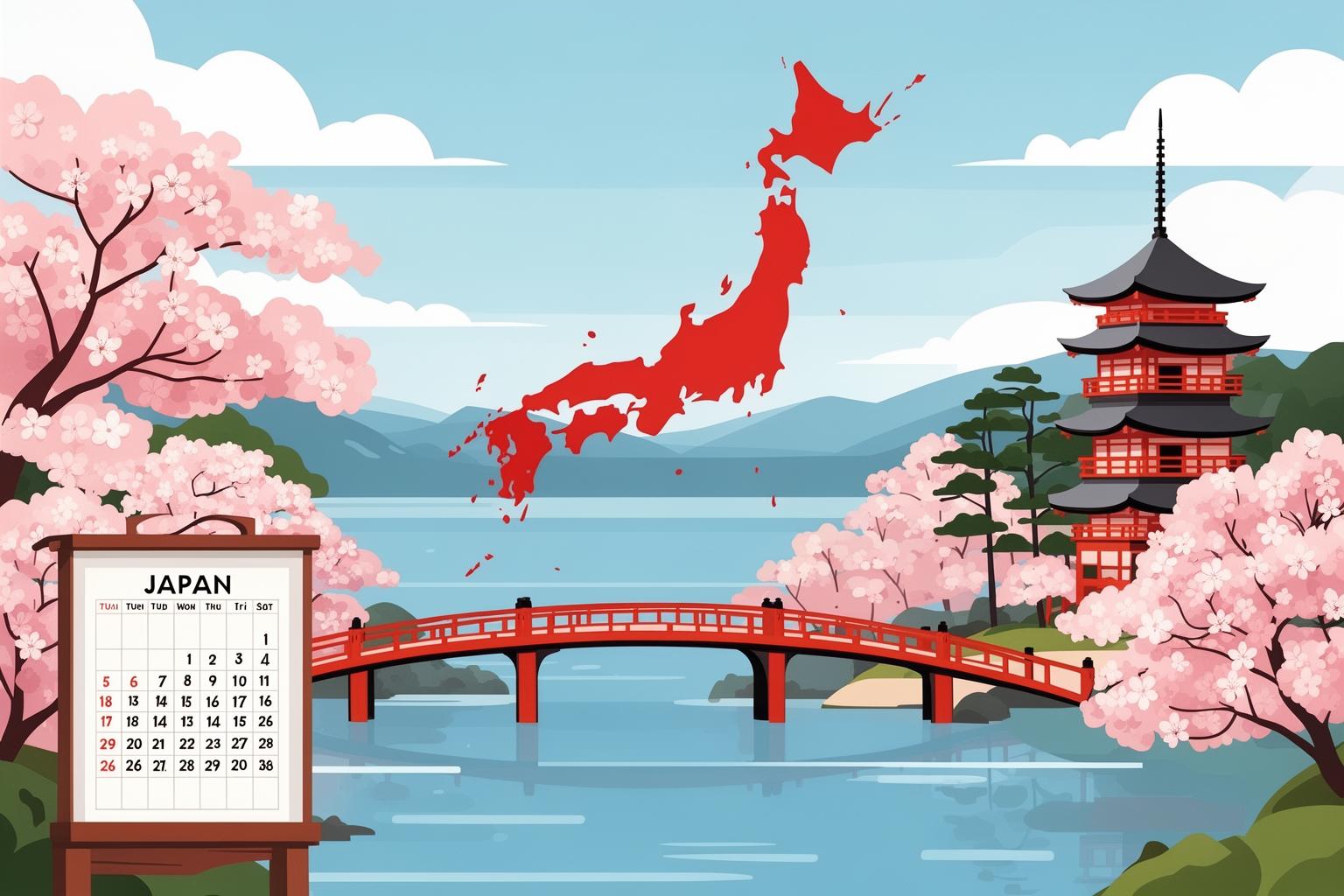
The most puzzling aspect of shukatsu is its strict, nationally coordinated timeline. Unlike many Western countries where hiring occurs year-round based on company needs, Japanese firms—especially large, prestigious ones—follow a schedule set by business federations like the Keidanren. This turns job hunting from a personal endeavor into a collective, synchronized race.
Phase One: The Inner Battlefield of Preparation
The process truly begins around June of a student’s third university year, a full year and a half before graduation. However, the first step is not to write a resume but to look inward. This period is known as jiko-bunseki (自己分析), or self-analysis. Students are expected to carefully dissect their entire lives—childhood experiences, part-time jobs, club activities, friendships—to create a coherent narrative about themselves. They purchase specialized notebooks and use apps to map their personal histories, searching for stories that showcase qualities like leadership, perseverance, or teamwork. The aim is not just self-discovery but to mine their past for material to craft compelling answers for future interviews. They must address basic questions: What have I achieved? What are my strengths and weaknesses? What kind of person am I? This deep introspection forms the foundation of their entire shukatsu campaign.
Meanwhile, students conduct gyōkai kenkyū (業界研究), industry research, and kigyō kenkyū (企業研究), company research. They examine whole sectors—finance, manufacturing, IT, trading houses—to understand their structures, key players, and future outlooks. This research is less about finding a particular job opening and more about identifying the corporate tribe they wish to join. Internships also take place in this phase but often differ from their Western equivalents. Many are brief, lasting from a day to a week, serving more as extended marketing presentations and early screening opportunities than as genuine work experience.
Phase Two: The Information War
As winter approaches, the information-gathering intensifies. This is the season of the setsumeikai (説明会), or corporate information sessions. These large-scale events, often held in conference halls, draw hundreds or thousands of students who listen to company representatives discuss their corporate philosophy, business model, and desired qualities in new hires. Attendance is mandatory. Students travel across the country, collecting brochures and taking detailed notes. The scale is staggering, revealing the sea of black suits most vividly.
After the setsumeikai, students begin submitting their Entry Sheets, known universally as ES (エントリーシート). An ES is much more than a resume. Along with basic academic and personal details, it includes a series of essay questions ranging from the expected (“Why do you want to work for our company?”) to the personal or abstract (“What is the biggest challenge you have ever faced?” or “Describe yourself using a single kanji character and explain why.”). Companies receive tens of thousands of these, representing the first major hurdle.
To narrow the field, most large corporations rely on a standardized test, commonly the SPI (Synthetic Personality Inventory). This computer-based exam includes verbal and quantitative aptitude sections followed by an extensive personality test. It evaluates processing speed and personality traits rather than knowledge. A whole industry of cram books, online courses, and prep schools exists around the SPI, as a low score can eliminate a candidate before a human reviewer even sees their application.
Phase Three: The Gauntlet of Judgment
By April of their fourth and final year, students who have cleared the ES and SPI screenings enter the most intense phase: the mensetsu (面接), or interview. This is never a single discussion but a multi-stage process involving anywhere from three to seven rounds.
Early rounds often include a Group Discussion (グループディスカッション), or GD. Several students are placed together, given a topic—“Propose a new marketing strategy for our product” or “How can we address the declining birthrate?”—and observed by silent assessors. The goal isn’t necessarily to find the “correct” solution but to evaluate the process. Who takes leadership? Who mediates conflict? Who listens? Who generates ideas? The GD directly tests a candidate’s ability to maintain wa (和), or group harmony, a core value in Japanese corporate culture.
Later interviews become more personal, shifting from group interviews with junior HR staff to one-on-one meetings with mid-level managers, ending with a final interview with senior executives. The etiquette is rigorously precise. A student must knock exactly three times, wait to be invited in, bow at a specific angle, introduce themselves clearly, place their briefcase on the floor beside their chair, and only sit when instructed. Answers are often rehearsed, drawing from the narratives developed during jiko-bunseki. The entire process tests poise, respect, and adherence to formalities.
Phase Four: The Promise
For the successful few, the demanding process concludes with a naitei (内定). A naitei is an unofficial job offer, typically extended between June and October, months before graduation. It is a formal declaration that, barring unforeseen circumstances, the student will have a job starting the following April. Many companies hold a naitei-shiki (内定式), or formal ceremony, to welcome new recruits. It’s a moment of immense relief and celebration, marking the end of a grueling marathon spanning over a year.
This entire system, from self-analysis to final offer, is a powerful socializing mechanism. It teaches students the language of corporate Japan—the honorifics, humility, and emphasis on group dynamics—well before their first day of work. It is designed to find not mavericks but team players; not specialists but moldable human clay.
The Armor of Conformity: Decoding the Shukatsu Uniform
Nothing embodies the shukatsu experience more vividly than the uniform: the rikurūto sūtsu (リクルートスーツ), or “recruit suit.” Its prevalence is remarkable. This is not merely a recommendation or guideline; it is an unspoken rule. To stray from it is to risk appearing ignorant of the norms, a fatal flaw in a system founded on conformity.
The standards are almost militaristic in their exactness. The suit must be a plain, single-breasted, two-button style in black or dark navy. The shirt must be pure white and free from any patterns. For men, the tie should be simple and understated—no bright colors or flashy designs. Shoes must be plain, black, and well-polished. The bag must be a functional, plain briefcase that can stand upright on the floor during an interview.
For women, the rules are equally strict. The choice is between a skirt suit or pantsuit, with the skirt being the more traditional and “safer” option. The blouse must be simple and white. Makeup should be minimal and natural, aiming for a clean and wholesome appearance. Hair must be neatly tied back if long, and any dyed hair should be returned to its natural black. Even the height of one’s heels is implicitly regulated—not too high, not too flat. The goal is to convey seriousness, cleanliness, and above all, an absence of distracting individuality.
This uniform carries a critical symbolic meaning. It visually represents a candidate’s willingness to subordinate their personal identity for the collective good. In a culture that has traditionally valued the group over the individual, the recruit suit is the initial test of this commitment. It communicates to recruiters: “I am a blank slate. I am ready to be shaped by your company’s culture. I understand the importance of harmony and will not cause disruption.” It removes visible signs of social class, personal style, and regional background, creating a homogeneous pool of candidates from which companies can select.
The suit acts as a form of armor, shielding the student from the sin of standing out. Yet it is also a cage, limiting their ability to express individuality. The pressure to conform is immense. Stores dedicate entire sections to shukatsu attire, with sales staff trained to direct students toward the “correct” choices. Wearing the wrong item is not a fashion mistake; it signals social ineptitude. The uniform is the first and most visible expression of shukatsu’s core principle: the system does not seek difference; it seeks proof that you can conform.
Ghosts in the Machine: The Historical Roots of a Modern Ritual
Shukatsu did not arise out of nowhere. It is the direct outcome of a distinct set of historical and economic circumstances that shaped Japan’s postwar economic miracle. To comprehend why this seemingly outdated system endures, we must examine the corporate structures it was created to support.
The traditional Japanese corporation was founded on two key pillars: shūshin koyō (終身雇用), or lifetime employment, and nenkō joretsu (年功序列), seniority-based wages. After World War II, as Japan swiftly rebuilt its industrial base, large companies required a stable, loyal workforce. They implicitly promised lifetime job security in return for an employee’s unwavering commitment. Within this framework, wages and promotions were based not on individual performance but primarily on age and length of service. Everyone advanced together.
This system demanded a distinctive hiring method known as shinsotsu ikkatsu saiyō (新卒一括採用), the simultaneous, mass recruitment of new graduates. Since employees were expected to remain for their entire careers, companies were not recruiting for specific positions; they were investing in individuals for the next forty years. What mattered was not a student’s current skills or major—which were often regarded as irrelevant—but their raw potential, character, and most importantly, cultural fit. Companies hired a cohort of “blank slates” every April 1st and then spent years shaping them through intensive on-the-job training, rotations across various departments, and cultural indoctrination.
Shukatsu developed as the most efficient method to enable this mass recruitment process. The synchronized timing allowed all major companies to access the full pool of graduating students simultaneously. The focus on interviews, group discussions, and personality tests aimed to assess a candidate’s potential for loyalty, harmony, and trainability. The university attended served as the first and most crucial filter, acting as a proxy for a student’s intelligence and perseverance. This is why the pressure to enter a prestigious university in Japan is so intense; it represents the gateway to the shukatsu race.
However, the economic landscape has changed drastically since this system was perfected. The bursting of the economic bubble in the early 1990s and the ensuing “Lost Decades” of stagnation weakened the guarantees of lifetime employment and seniority-based pay. Companies were forced to restructure, and the notion of a guaranteed lifelong job began to disappear. Yet, the shukatsu system itself has remained remarkably resilient. It continues to function as if the old guarantees are still fully operative. This results in a significant disconnect: students are still compelled to undergo a ritual designed for a world of lifetime employment, even as they enter a much more unstable and flexible labor market. The ghost of the former system lingers, haunting the new reality.
The Psychological Toll: Beyond the Suits and Schedules
While the shukatsu system operates efficiently for corporations, it imposes a substantial psychological burden on the students caught within it. The process is a year-long marathon filled with relentless pressure, self-doubt, and the fear of failure. The stakes feel overwhelmingly high. In a society that prizes stability and a clear life path, failing to secure a naitei by the end of the set period is viewed not only as a professional setback but also as a personal and social failure.
Pressure comes from all sides. Professors may unofficially reduce academic demands for fourth-year students, recognizing that shukatsu is their priority. Parents, having experienced a similar system themselves, hold high expectations. Perhaps most strongly, peer pressure weighs heavily. As friends start to receive their naitei and celebrate, the anxiety for those still searching grows. The fear of being the last to secure a job or having to explain why no offer is yet in hand is a powerful, isolating motivator.
Rejection is a fundamental aspect of the experience. It is common for students to apply to dozens of companies and face a steady stream of rejections. These often arrive as politely phrased emails called o-inori mēru (お祈りメール), or “prayer mail,” so named because they typically end with sentiments like, “We pray for your future success” (今後のご活躍をお祈り申し上げます). Though courteous, the sheer number of these standard rejections can be devastating, sometimes leading to what is known as shūkatsu-utsu (就活うつ), or “shukatsu depression.”
One of the greatest sources of stress lies in the central paradox of the process. On one hand, students are encouraged to “be themselves” and highlight their unique personalities. On the other, they must fit into a uniform mold, provide formulaic answers, and be evaluated on their ability to conform to strict behavioral norms. This cognitive dissonance is draining. They are required to present a version of individuality that satisfies corporate gatekeepers. They are told to stand out, but only in a very specific, pre-approved manner. The result is a performance of authenticity—an intentionally curated self crafted to pass the test.
To navigate this complicated and stressful landscape, a support industry has developed. Shūkatsu-juku (就活塾), or job-hunting cram schools, offer classes ranging from how to write a compelling Entry Sheet to the correct way to sit and bow during interviews. Consultants assist with jiko-bunseki and conduct mock interviews. While these services offer important guidance, they also reinforce the idea that shukatsu is a game with a secret rulebook that must be mastered, further intensifying the preparation arms race.
Cracks in the Monolith: Is Shukatsu Forever?
For decades, the shukatsu system has appeared as an unchangeable cornerstone of Japanese life. Yet today, noticeable cracks are starting to surface in its monolithic exterior. A convergence of economic shifts, technological disruptions, and evolving generational attitudes is gradually beginning to challenge the logic behind this all-consuming ritual.
The most significant challenge arises from the economy’s increasing diversification. The emergence of gaishikei (外資系), or foreign-affiliated companies, alongside a dynamic tech startup scene, has introduced alternative hiring models. These companies often recruit year-round, prioritize specialized skills and prior experience over raw potential, hold more casual interviews, and pay little attention to whether candidates wear the traditional suit. They are drawing in talented students frustrated by the rigid conformity of the traditional shukatsu process.
There is also growing acknowledgment within the establishment that the system is flawed. The Japanese government and the Keidanren business federation have repeatedly tried to reform the timeline, pushing start dates later to give students more time to concentrate on their studies. However, these guidelines are non-binding, creating a “prisoner’s dilemma”: companies fear that waiting will let competitors scoop up the best talent first, leading many to begin the process secretly before the official schedule.
More deeply, younger generations’ values are shifting. Growing up amid economic uncertainty, they are often less enamored with dedicating their entire careers to a single corporation. They prioritize work-life balance, personal fulfillment, and flexibility more than their predecessors. An increasing number of students are opting out of the traditional shukatsu race entirely. Some pursue study abroad, graduate degrees, freelance work, or entrepreneurship. Though still a minority, their presence signals a quiet rebellion against the prescribed life path.
Technology serves as a double-edged sword. On one side, online platforms have made it easier to access information and apply to companies. On the other, social media intensifies social pressure as students can observe their peers’ successes in real time on their feeds. Companies are also experimenting with AI-driven resume screening and video interviews, which may streamline the process but also risk making it even more impersonal.
Shukatsu is not going to vanish overnight. It remains deeply rooted in the country’s educational and corporate frameworks. However, the system is under strain. The once-monolithic pathway from university to a stable, lifelong career at a major company is now just one among many. The ritual of the black suit, the synchronized schedule, and formulaic interviews was designed for a Japan that is slowly fading. For now, the Black Suit Brigade continues its annual march, but the ground beneath them is undeniably shifting. Shukatsu remains the dominant rite of passage, but it is no longer the only one. How this system adapts—or fails to adapt—will reveal much about the future of work and society in Japan.