You’ve probably seen it in a movie. The CEO of a massive corporation makes a decision, but then glances nervously at a silent old man sitting in the corner of the room, sipping tea. That old man says nothing, perhaps just gives a slight, almost imperceptible nod. And with that, the real decision has been made. Or maybe you’ve read a political thriller where the newly elected Prime Minister is revealed to be a puppet, his strings pulled by a disgraced predecessor who officially holds no power at all. In both cases, you’ve just met the kuromaku.
The word literally translates to “black curtain.” It’s a term pulled directly from the world of traditional Japanese theater, but its modern meaning has nothing to do with stagecraft and everything to do with power. A kuromaku is a fixer, a kingmaker, a puppet master—an individual or group who wields immense influence from behind the scenes, without an official title or public accountability. They are the true center of gravity in a system, while the people on the organizational chart are often just planets orbiting in their pull.
Understanding the concept of the kuromaku is essential to grasping how things actually get done in Japan, whether in politics, business, or even smaller social organizations. It’s a peek into the nation’s cultural operating system, revealing a deep preference for indirectness, a respect for invisible hierarchies, and a complex dance between public appearance and private reality. This isn’t about conspiracy theories; it’s about a deeply embedded social logic that has shaped Japan for centuries. To ignore the black curtain is to see only the play, while missing the director entirely.
In a similar vein, the quiet influence of everyday practices, such as rajio taiso, further illustrates how subtle forces govern the hidden currents of Japanese society.
The Stage and the Shadows: Theatrical Origins
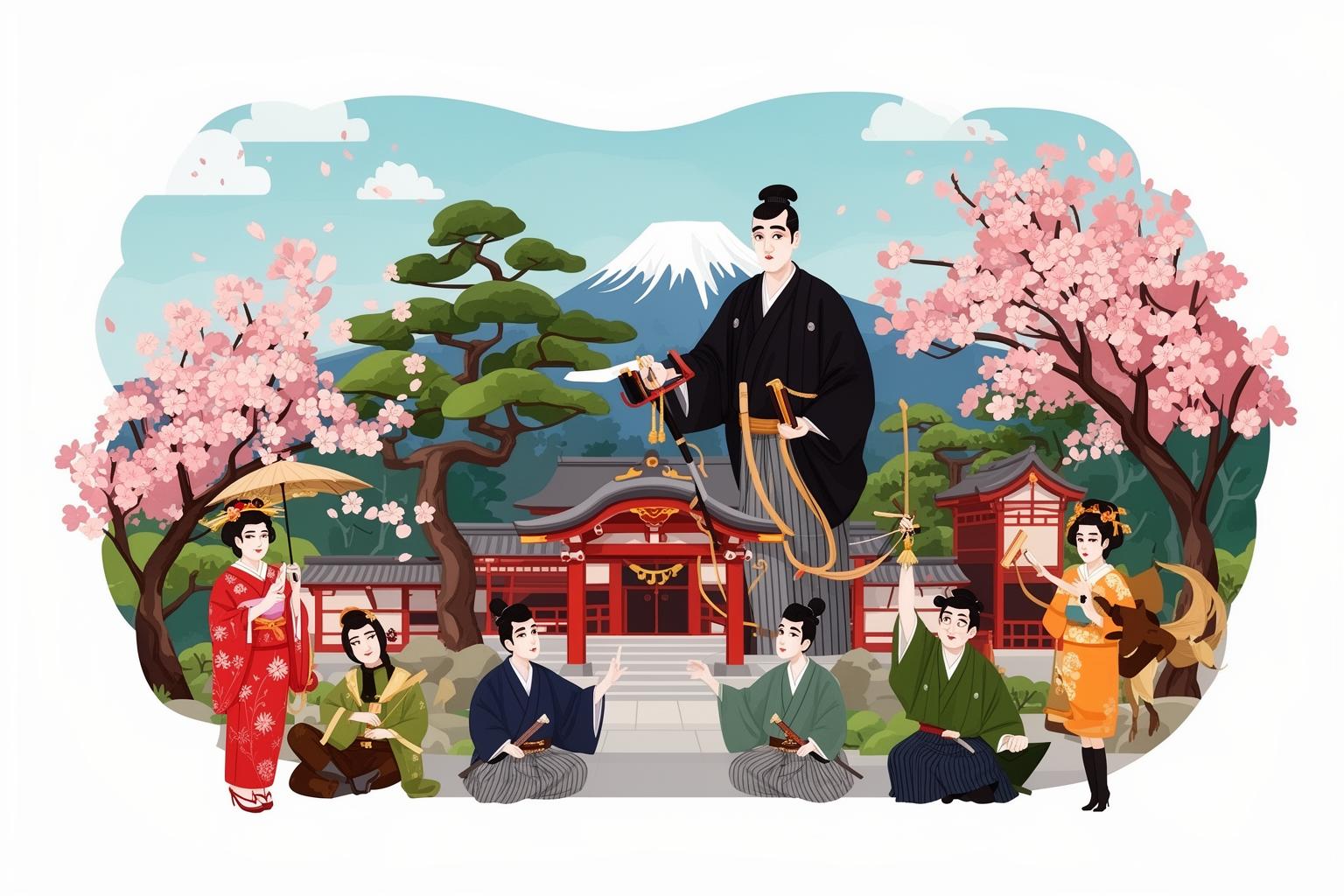
To truly grasp the nuance of the term, we must return to its origin: Kabuki theater. On a traditional Kabuki stage, you’ll find flamboyant actors adorned in elaborate costumes and dramatic makeup. Yet, you may also spot figures clad entirely in black, moving props, adjusting costumes, and managing scene transitions. These individuals are the kurogo. Their black attire serves as a theatrical convention, signaling that they should be regarded as invisible by the audience. They are part of the stage, not of the story. Though essential for the performance’s mechanics, they hold no influence within the plot.
The term kuromaku does not refer to these visible-yet-invisible stagehands but to the black curtain at the back of the stage. The person or force behind that curtain directs the play, cues the music, and signals major changes in the narrative. While the kurogo act as stage functionaries, the kuromaku is the unseen director offstage. This distinction is crucial. A kuromaku is not merely someone working quietly behind the scenes; they are the source of the script and the ultimate authority concealed from view.
This theatrical metaphor was so powerful that it entered everyday language to describe a similar real-world dynamic. Someone who orchestrates events, brokers deals, and makes key decisions without ever stepping into the public spotlight came to be called a kuromaku. They wield the director’s power without facing the critics. The person on stage—the prime minister, CEO, or public representative—is the one who must take the bow, for better or worse, when the performance ends. Meanwhile, the kuromaku has already begun planning the next act.
The concept of an unseen hand guiding events is not unique to Japan. In my Chinese cultural background, there is the idea of 垂帘听政 (chuí lián tīng zhèng), or “ruling from behind the curtain,” historically referring to empress dowagers governing on behalf of young emperors, separated from male officials by a screen. Both notions describe a system where formal authority and actual power are intentionally divided. In Japan, however, this model has shown remarkable adaptability, evolving from theater and imperial court traditions into a recurring feature of its political and corporate spheres.
From Feudal Lords to Modern Boardrooms: A History of Shadow Rule
The kuromaku is not a recent invention. The dynamic of a figurehead leader controlled by a behind-the-scenes power is a recurring theme throughout Japanese history. While the names and titles change, the basic structure remains constant.
The Emperor’s Cloister and the Shogun’s Shadow
For much of Japan’s history, the Emperor was a divine figurehead, symbolizing national and spiritual unity but wielding little direct political power. True authority rested with the shōgun, the military dictator. Yet even this was not the ultimate authority. During the Heian period (794-1185), a practice called insei, or “cloistered rule,” emerged. An emperor would formally abdicate, retire to a monastery, and appoint his young son as the new emperor. However, the retired emperor continued to rule from behind the scenes, liberated from the onerous ceremonial duties and strict court etiquette of the official role. He became a kuromaku, exercising real power without the title.
This pattern persisted through the samurai era. The Kamakura Shogunate (1192-1333) was ostensibly led by the shogun, but actual power was often held by regents from the Hōjō clan, called shikken. They controlled the shogunate by controlling the shogun, who in turn governed the country in the emperor’s name. It was a nested hierarchy of power, with the most influential figure often being the one farthest removed from the official, public-facing position.
Meiji’s Unseen Architects and Post-War Kingmakers
The fall of the shogunate and the Meiji Restoration in 1868 ostensibly modernized Japan’s political system by centralizing power around the emperor. However, the kuromaku dynamic merely evolved. The new architects of Japan were elder statesmen from the clans that had toppled the shogunate. Known as the genrō, these men held no formal cabinet roles during much of their later years but formed an unofficial advisory council to the emperor, whose “advice” was binding. They chose prime ministers, shaped foreign policy, and directed the nation’s course. They were the ultimate kuromaku of their era, formalizing an informal power structure.
This tradition reached its strongest 20th-century form in post-war politics, especially within the long-dominant Liberal Democratic Party (LDP)). The quintessential modern kuromaku was Kakuei Tanaka. Although forced to resign as Prime Minister in 1974 amid a financial scandal, his official career ended but his real power surged. From his “Mejiro Palace” in Tokyo, Tanaka controlled the largest and most powerful LDP faction. For more than a decade, no one could become prime minister without Tanaka’s approval. He managed votes, assigned funds for enormous public works projects (his specialty), and effectively governed the country by proxy. Prime ministers came and went, but they all answered to the “Shadow Shogun.”
The corporate world has its own parallels. Founders or long-serving presidents often retire from official roles and take on vague advisory titles while maintaining paramount influence. The new president may handle daily operations, but any major strategic moves—a merger, significant investment, or change in direction—require the implicit or explicit consent of the retired patriarch. He is the corporate kuromaku, his power rooted in decades of relationships, loyalty, and institutional knowledge.
The Psychology of the Shadow: Why the Kuromaku Thrives
The persistence of the kuromaku is not merely a historical coincidence. It reflects deeply ingrained cultural values and social frameworks that foster an environment where this kind of power dynamic can thrive. It is less about secret conspiracies and more about a societal preference.
The Public Façade and the Private Reality
A key concept in understanding Japanese social interaction is the distinction between tatemae and honne. Tatemae refers to the public face, the official position, the polite fiction that enables society to operate smoothly. Honne represents one’s true feelings, the genuine story, the private intent. Public figures such as politicians or CEOs function almost entirely within the sphere of tatemae. They must speak appropriately, fulfill expected roles, and preserve social harmony.
The kuromaku personifies honne. Free from the need to put on a public show, they can concentrate solely on the raw mechanics of power: negotiating deals, forming alliances, and making difficult, unpopular choices. The public leader serves as the face of the organization’s tatemae, while the kuromaku drives its honne. This separation of roles is seen as efficient, insulating actual decision-making from the complications of public opinion and allowing the official leader to remain a symbol of unity and consensus.
Avoiding Confrontation Through Back Channels
Japanese culture generally disdains direct confrontation. Openly opposing someone, especially a superior, risks causing both parties to lose face and disrupt group harmony (wa). To prevent this, critical negotiations and consensus-building occur behind the scenes, through a process known as nemawashi (literally, “turning the roots” before transplanting a tree).
The kuromaku excels at nemawashi. They act as a neutral yet powerful intermediary, engaging all parties involved, smoothing over conflicts, and brokering compromises before formal meetings even take place. By the time a matter is brought to a public vote or board meeting, the outcome has essentially been decided. The formal meeting serves as a ritual to ratify the decision the kuromaku has orchestrated privately. This procedure prevents open conflict and ensures the group presents a united front. The kuromaku’s invisibility is crucial to their effectiveness as mediator and dealmaker.
The Influence of Seniority and Informal Networks
Respect for seniority is fundamental to society. A person’s influence often depends less on their official title and more on their age, experience, and the extensive network of relationships built over a long career. When senior figures retire, they do not simply vanish; they become OBs (“Old Boys”), whose informal influence frequently grows. They are regarded as reservoirs of wisdom and, more importantly, as focal points in powerful networks of former colleagues, subordinates, and rivals who now hold key positions across industries and government ministries.
A kuromaku harnesses this network. Their power stems not from an organizational chart but from decades of accumulated loyalty, owed favors, and personal connections. A single phone call from a powerful OB can achieve what months of formal requests cannot. This informal, relationship-based power is amorphous and highly resilient. It cannot be easily challenged or dismantled, because it lacks official recognition. It operates on social obligation and personal history that transcend formal hierarchies.
This system also fosters ambiguity of responsibility. When a decision made behind the black curtain results in failure, who is held accountable? The public-facing leader may be forced to resign, absorbing the fallout for the organization. This functions as a circuit breaker, channeling public anger. Yet the true power structure—the kuromaku and their network—remains untouched, ready to appoint a new leader and continue as before.
Spotting the Kuromaku in Culture and Daily Life
Once you recognize what to look for, you’ll begin spotting the kuromaku archetype everywhere. It’s a cornerstone of Japanese storytelling and a subtle yet significant dynamic in everyday organizational life.
Ninjas of the Narrative
Japanese popular culture—from yakuza films and political anime to expansive video game RPGs—is full of kuromaku characters. They often serve as the ultimate antagonists, masterminds unveiled only in the final act. Imagine the shadowy elder directing a clan war from his secluded garden, or the seemingly harmless corporate advisor covertly manipulating the global economy. This trope resonates deeply because it reflects a shared cultural understanding that the most powerful figures are rarely those in the spotlight.
In storytelling, the kuromaku provides mystery and drives the narrative forward. The hero’s journey often involves not just defeating the visible enemy but uncovering and exposing the hidden power structure behind them. The dramatic unveiling of the kuromaku is a moment of profound insight, revealing the true nature of the conflict.
Is There a Kuromaku in Your Office?
The kuromaku is not merely a grand figure in national politics or fiction. This dynamic exists in smaller forms within countless organizations. In a typical Japanese company, the real decision-making power over a project may not rest with your direct supervisor. Instead, it might lie with a senior manager in an entirely different division who enjoys the executives’ ear. This person is the departmental kuromaku. Everyone knows that to get your project approved, their informal endorsement is essential. Their official title might be irrelevant; it is their influence that counts.
It could be the quiet section chief (kachō) who has been with the company for thirty years and seems to know everyone. While the younger, more charismatic department head (buchō) delivers the presentations, it is the kachō whom people approach for the real story and practical assistance navigating the bureaucracy. His silent approval or disapproval can make or break a career.
For anyone working with a Japanese company, recognizing these informal power structures is far more important than memorizing the official org chart. It demands careful observation, listening to office gossip, and understanding the history of personal relationships within the organization. Who goes to lunch with whom? Whose opinion does everyone await before speaking in meetings? Who is the person even the president appears to defer to? Answering these questions will reveal the true center of power.
Ultimately, the kuromaku embodies a fundamental truth about power in Japan: it is often most effective when least visible. It is a system based on relationships, not just rules; on history, not only titles. The figure behind the black curtain exemplifies a culture that recognizes the loudest voice in the room is rarely the most powerful. True influence needs no stage; it prefers the quiet, commanding stillness of the shadows.