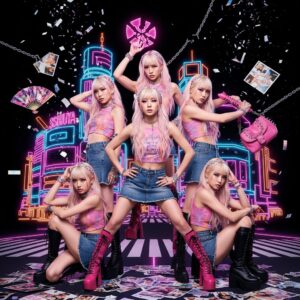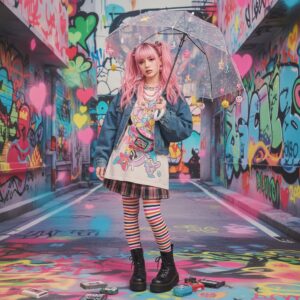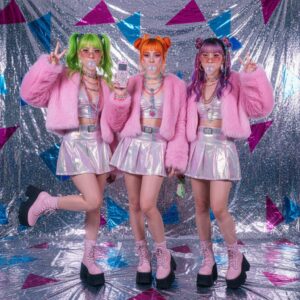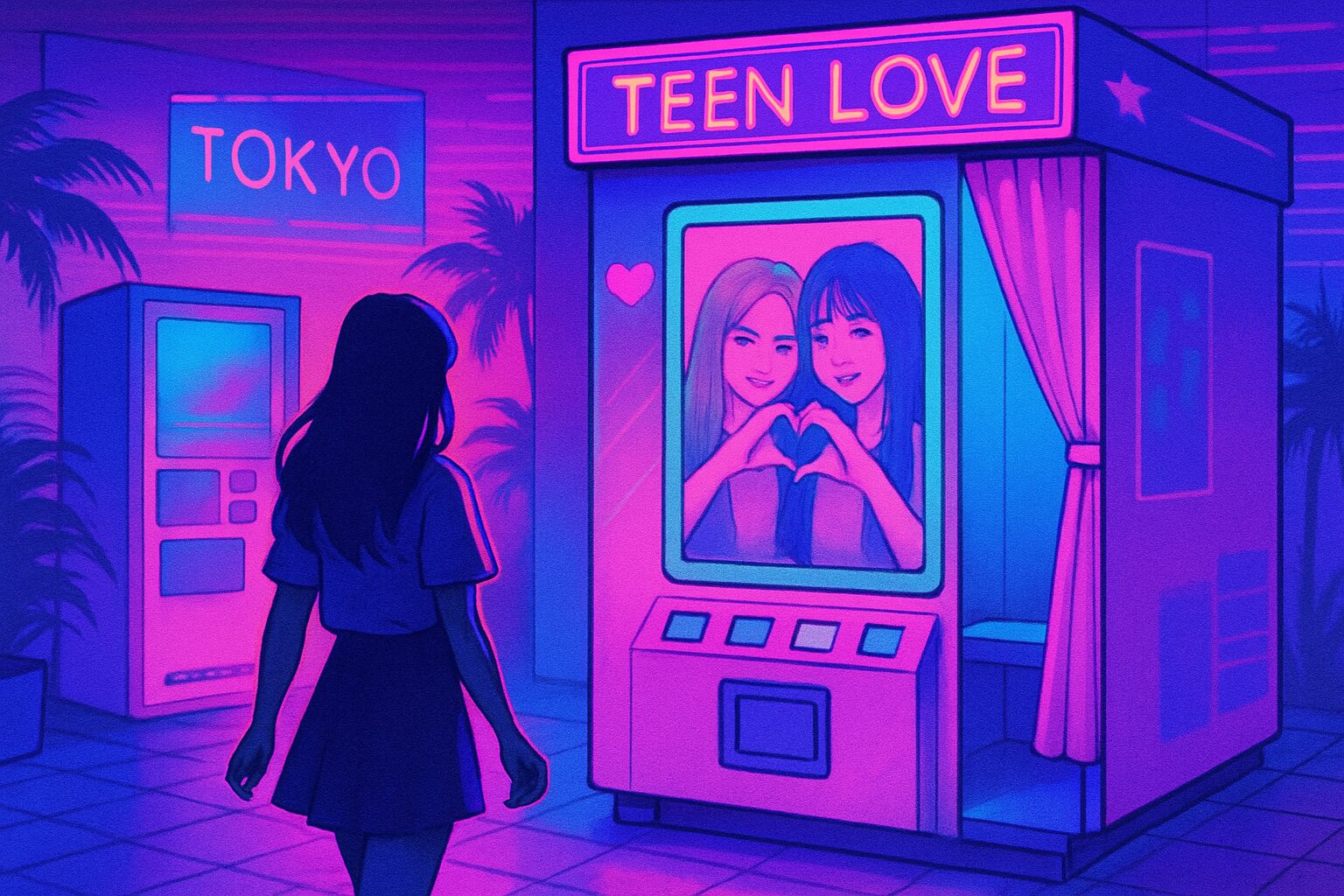
Yo, what’s the move? It’s Hiroshi Tanaka, your local connection to the real deal Japan, the side that doesn’t always make it into the glossy travel brochures. We all know the iconic images: serene temples shrouded in mist, bustling intersections that pulse with a million stories, and ramen bowls that are basically a warm hug from the inside out. That’s all legit, a hundred percent. But for the traveler who’s been around the block, who’s looking to tap into the electric, vibrant, and sometimes wonderfully weird heartbeat of modern Japanese culture, you gotta look a little closer. You gotta find the places where memories aren’t just made, they’re manufactured, customized, and covered in a galaxy of digital sparkles. I’m talking about Purikura, my friends. And trust me, it’s way more than just a photo booth. It’s a full-blown cultural phenomenon, a rite of passage, and your ticket to seeing a side of Japan that’s playful, creative, and unapologetically extra. Forget just taking a picture; we’re about to create a masterpiece of kawaii. This isn’t just about snapping a photo; it’s about stepping through a portal into a world where everyone gets to be the main character, with eyes that sparkle like anime heroines and skin so flawless it looks like it was rendered by a team of animators. It’s a living, breathing part of youth culture that has survived the onslaught of smartphones and selfie apps to remain an unshakeable ritual of friendship and fun. So, let’s get into it. Let’s peel back the layers of this sparkly, big-eyed universe and see what it’s all about. We’ll start our journey in one of the epicenters of this culture, Shibuya, where the neon lights practically hum with youthful energy.
To fully appreciate this vibrant, playful side of modern Japan, it’s essential to also explore the roots of its Harajuku kawaii culture.
The Genesis of Sparkle: How a Photo Sticker Changed Japan
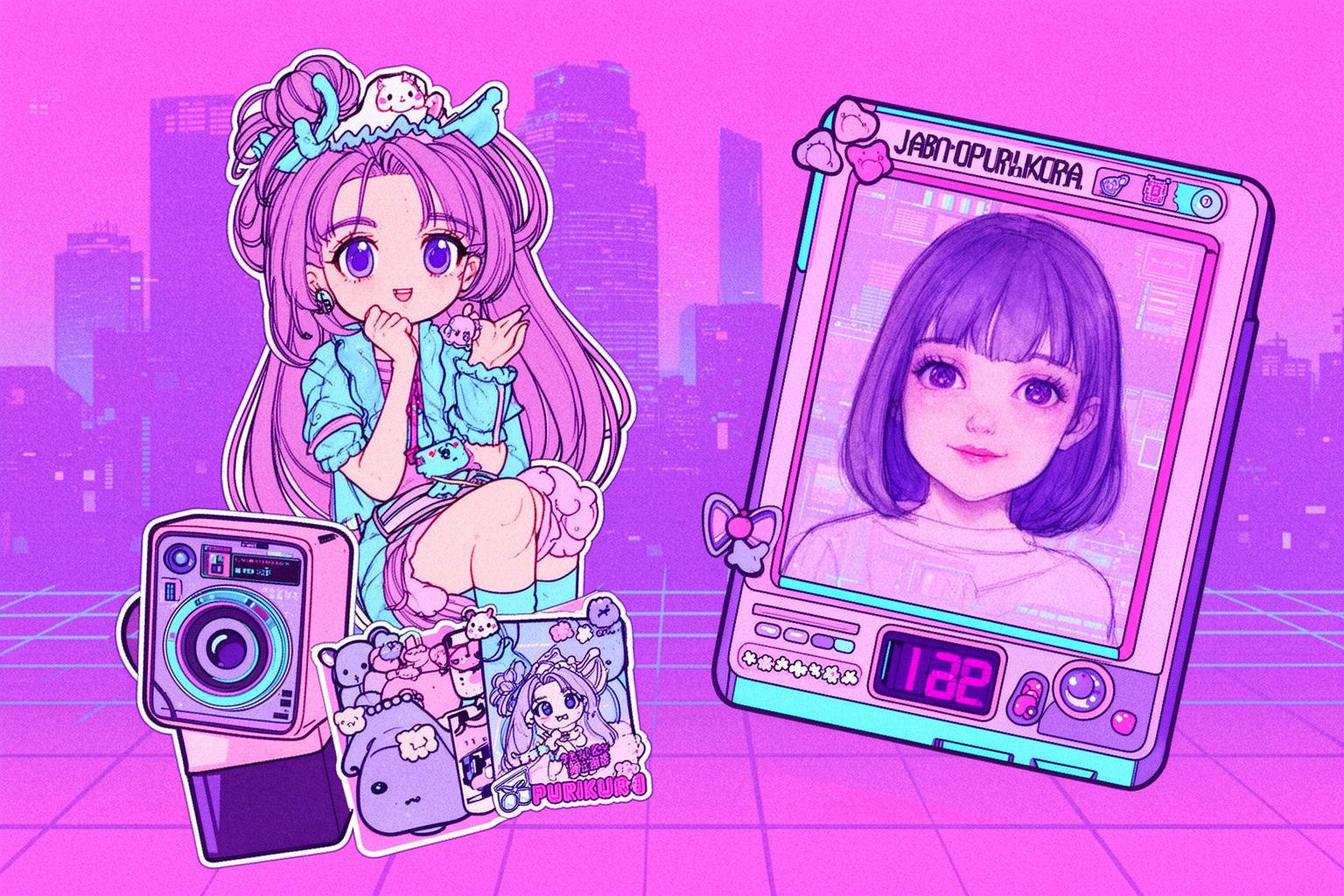
To truly capture the Purikura vibe, we need to rewind the tape and head back to the mid-1990s. Japan was in a different mindset then. The bubble economy had burst, and uncertainty lingered in the air. But from this so-called “Lost Decade,” a dynamic youth culture emerged, especially the iconic gyaru (gal) movement. It centered on self-expression, breaking norms, and defining your own version of cool. Right in this context, in 1995, a little machine called “Print Club” made its debut. Developed by Atlus, this was no ordinary photo booth. It took your picture and, here’s the twist, printed it out on small stickers. That was the game-changer. Suddenly, you didn’t just have a photo; you had a social token. You could stick it on your flip phone, planner, or school binder. You could trade them with friends like currency. The name “Print Club” was shortened by the high school girls who adored it to “Puri-Kura,” and a legend was born.
The early machines were simple by today’s standards. The photo quality was grainy, the backgrounds basic, and digital enhancement was still a dream. But it was revolutionary because it was interactive and shareable in a way photos had never been before. It tapped into a deep desire for connection and self-documentation. Having a collection of Purikura stickers was like possessing a physical snapshot of your social life—a scrapbook of your friendships, style changes, and favorite hangouts. This was before social media, remember. Your “profile” was the back of your phone, covered in your best friends’ faces, each sticker a little testament to a shared moment of fun.
The early 2000s marked the golden age. Technology caught up with the craze. Machines began adding features that would define the Purikura aesthetic. Skin smoothing appeared, subtly erasing blemishes. Then came the major innovation: eye enlargement. This was huge. It meshed perfectly with the kawaii aesthetic, heavily influenced by manga and anime, where large, expressive eyes symbolize beauty and youth. The technology was still experimental and sometimes produced comically alien-like results, but no one minded. It was fun, fresh, and the birth of what the Japanese call moreru. There’s no exact English equivalent for moreru. It roughly means “to be able to appear at your best,” but in a way that’s enhanced, elevated, and brimming with charm. It’s about creating an idealized version of yourself, and Purikura became the ultimate tool for this. Companies like FuRyu joined the scene, turning it into an art form by constantly innovating and pushing the boundaries of digital transformation.
The Purikura Pilgrimage: Finding Your Booth and Choosing Your Vibe
So, where can you find these enchanting memory-capturing machines? Your adventure will most likely lead you to a game center, or as the locals say, a ge-sen. Think of places like GiGO, Taito Station, or Round1. These multi-level wonderlands filled with flashing lights and electronic sounds create a sensory overload in the best way possible. As you move past the UFO catchers and rhythm games, you’ll begin to hear it: a lively mix of high-pitched, energetic J-pop and cheerful voice-overs. You’ll spot groups of students, couples, and friends gathered around, laughing and prepping themselves. You’ve reached the Purikura section. It feels like stepping into another world, a sanctuary devoted to beauty and fun.
In major areas like Tokyo’s Harajuku or Shibuya, or Osaka’s Amerikamura, you can even find entire buildings dedicated to Purikura. These are the sacred places, the “Purikura no Mecca.” Inside is a gallery of futuristic pods, each one serving as a gateway to a unique aesthetic. Choosing your machine is the first—and arguably most important—step of the ritual. Don’t just rush into the first one you see. Pause and take it all in. The outside of each booth serves as a massive billboard advertising the type of transformation it provides. You’ll see model photos highlighting the machine’s distinct style, surrounded by flashy slogans. One machine might promise a churun effect, giving your eyes a wet, shiny, doll-like appearance. Another might offer toumeikan, evoking a translucent, ethereal beauty. You’ll find phrases like “kirei na Otona” (beautiful adult) for a more elegant, natural look, or “saikyou ni moreru” (the ultimate enhancement) for a full-on gyaru makeover.
The mood you want to convey guides your choice. Are you aiming for the K-Pop idol vibe, with cool color tones, sharp jawlines, and effortless style? There’s a machine for that. Or perhaps you prefer the fuwa-fuwa (soft and fluffy) look, with pastel filters, dreamy lighting, and an innocent feel? There’s one for that, too. Recently, there’s been a huge range of options. You can find machines with a retro Y2K aesthetic, featuring 90s-inspired fonts and filters. There are even booths tailored for men, reducing eye-enlargement effects and emphasizing clearer skin and defined features. This isn’t a one-size-fits-all experience. It’s a carefully curated journey, and you’re the creative director.
Even before stepping inside the booth, you’ll often find a dedicated prep area nearby. This is the “makeup corner,” a vital part of the experience. You’ll see mirrors crowded with people fixing their hair, touching up makeup, and getting ready for the camera. Some spots even provide hair straighteners, curling irons, and cosplay rental outfits. This pre-game ritual builds excitement. It shows you’re not just snapping a picture; you’re preparing for a performance.
Inside the Machine: The High-Speed World of Posing and Editing
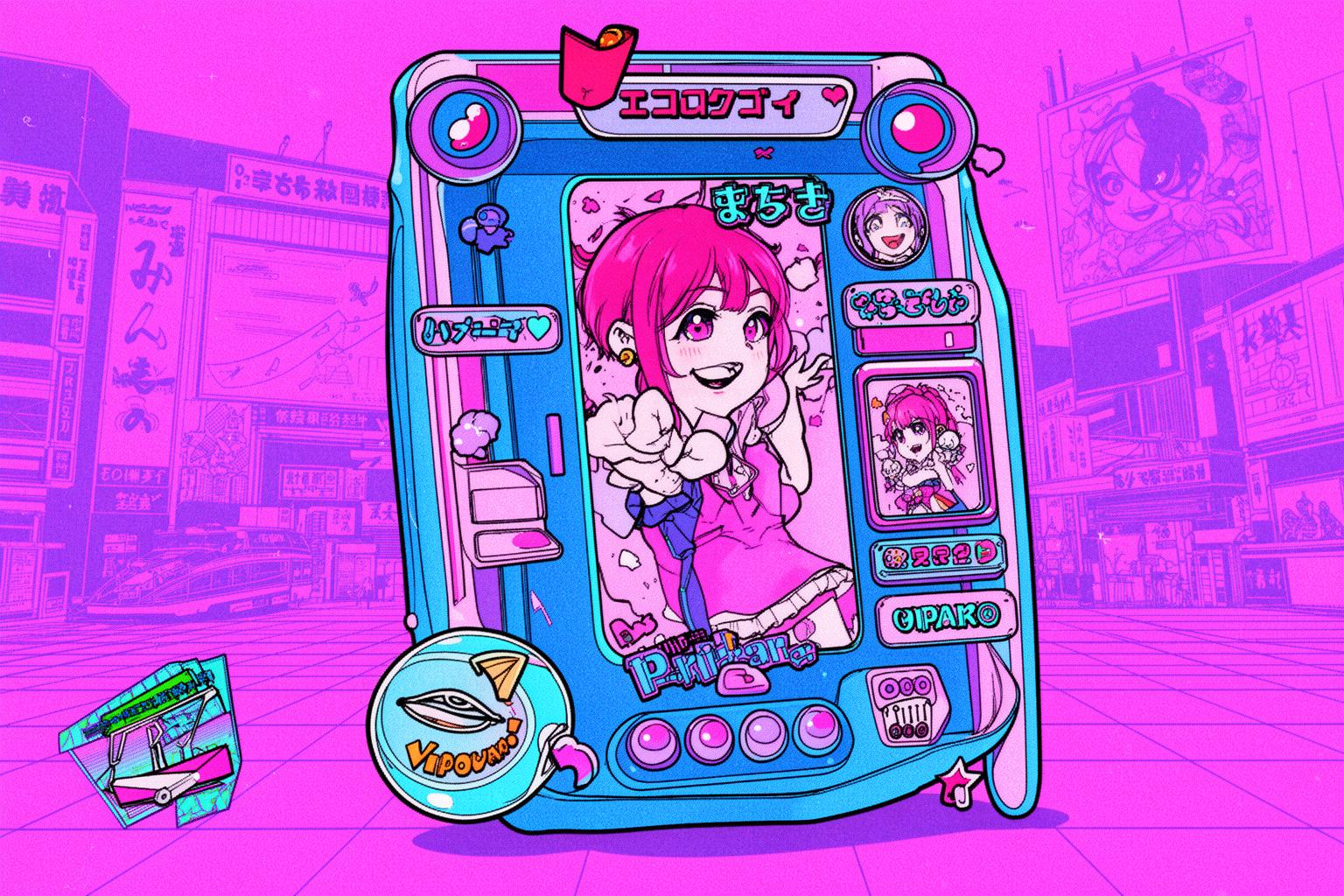
Alright, you’ve picked your machine and prepared your look. Now it’s time for the main event. You’ll need around 400 to 500 yen, usually in 100-yen coins, though some newer machines may accept electronic payment. Insert the coins into the slot, select the number of players, and step inside the booth. Once the curtain closes, you’re transported to another world. The space is surprisingly roomy, dominated by a large screen, a camera, and professional-grade lighting that makes everyone look fantastic.
A super-energetic, high-pitched voice—your guide for the next few minutes—bursts from the speakers, leading you through the process at lightning speed. “First, pick your background!” The screen displays a variety of digital backdrops, from simple colors to intricate patterns. You tap your choice, and the green screen behind you does its magic. Then, the real excitement begins.
“Okay, get ready to pose! San, ni, ichi… CHEESE!” A flash goes off. The screen shows a model striking a suggested pose, and you have about ten seconds to copy it before the next countdown. This is when the classic Purikura poses come out. The peace sign is the original, but it has countless variations: the reverse peace sign, peace sign under the chin, double peace. Then there’s the heart pose family: the simple finger heart, the two-handed full heart, and the heart on the cheek. A favorite is the “mushiba” or “toothache” pose, where you hold your hand to your cheek as if you have a cavity, which conveniently frames and slims your face. You’ll also see the “crying” pose with fists under the eyes, the “paw” pose, and dozens more. The voice keeps the energy up, shouting encouragement and instructions. You snap about six to eight photos in what feels like just sixty seconds. It’s a whirlwind of laughter and fast movement. It’s thrilling.
But the photo session is only half the experience. The true creativity happens next. You’ll be asked to leave the booth and move to the “rakugaki” (doodling) station attached outside. This is where you edit your photos, and it’s a race against the clock. You typically get a few minutes—a timer on the screen counts down ominously. This part is a team effort. If you’re with a friend, you’ll each grab a digital pen and split the work. One starts decorating the first photo while the other works on the second.
The editing palette is a digital treasure trove. You have pens of every color and texture imaginable: neon, glitter, rainbow. You can scribble your names, the date, or an inside joke. Then come the stamps. Oh, the stamps. There are thousands: sparkles, hearts, stars, crowns, cat ears, dog noses, angel wings, devil horns, seasonal stamps for Christmas or Halloween, and popular character stamps. You can layer, resize, and rotate them to form a chaotic, beautiful collage of pure kawaii.
But it goes further. You can access a full digital makeup kit. Don’t like your blush? Add a digital swipe of pink. Want more dramatic eyes? Apply digital eyeshadow and eyeliner. You can even alter your hair and eye color. Then you dive into the feature-tweaking menu. This is the heart of the moreru engine. You can enlarge your eyes, change their shape, and add a catchlight—a little white glint that makes them sparkle. You can slim your face, shrink your nose, lift your cheekbones, and smooth your skin to a porcelain finish. You hold god-like power over your image. It’s a process of hyper-idealization, crafting the perfect version of yourself for this one special keepsake. When the timer hits zero, the machine finalizes your masterpiece. You choose a layout for your sticker sheet, and moments later, a warm, glossy sheet with your creations slides out from a slot. Nearby, you’ll find a small counter with scissors, where you perform the final ritual: cutting and sharing the stickers among your group, each person taking a piece of the shared memory.
Beyond the Sticker: Purikura as a Cultural Language
So why has this culture persisted? In an era when smartphone apps can replicate many of these effects with a single tap, why do people still flock to these booths? The answer lies in the experience. Purikura is not merely a solitary act of selfie-taking; it’s a communal ritual. It’s an occasion to come together. It’s both an activity and a destination. The physical space of the game center, the lively energy inside the booth, the collaborative chaos of the rakugaki session—these are things your phone simply can’t replicate. It’s a tangible, shared experience that culminates in a physical token of friendship.
Within Japanese social culture, especially among younger generations, taking Purikura together holds significant meaning. It’s a way to strengthen bonds. For couples, it’s a cornerstone of date culture, a method to document their relationship. For friends, it’s a keepsake of their youth. During the 90s and 2000s, students would maintain a “puri-cho,” a dedicated notebook or album filled with Purikura stickers from all their friends. Flipping through a puri-cho was like scrolling through a physical social media feed, each sticker representing a connection to a person and a memory.
The aesthetic of Purikura also offers an intriguing glimpse into Japanese beauty ideals. The focus on large eyes, a small face (kogao), and flawless, fair skin (bihaku) mirrors trends seen across East Asian media, from K-Pop and J-Pop to anime. While some might critique this as promoting unrealistic standards, within the culture, it’s largely regarded as a playful form of expression. It’s not about fooling others into believing you look exactly like your Purikura image in real life. Everyone is part of the joke. It’s about the enjoyment of transformation, of seeing an idealized, almost fantastical version of yourself. It’s a brief escape into a realm of cuteness and perfection.
This culture has also evolved. With the rise of Instagram, the digital image became as important as, if not more important than, the physical sticker. Machine manufacturers responded innovatively. Now, after printing your sticker sheet, you’re prompted to scan a QR code. This directs you to a website or an app like PiCTLINK, where you can download digital versions of your photos—often including the rakugaki and also without—perfectly formatted for sharing online. This merging of the physical and digital has been crucial to Purikura’s continued relevance. The experience generates the content, and social media amplifies it.
A Pro-Guide for the First-Timer
Ready to dive in? Great! Here are some insider tips from your friend Hiroshi to make your first Purikura experience unforgettable. First, and this is essential, bring a friend. It’s much more fun and way easier to handle the quick posing and editing sessions together. Second, prepare your change. Most machines require 100-yen coins, so break a 1,000-yen bill at a nearby change machine before you start. Third, don’t be intimidated. While the machines use Japanese, the on-screen prompts are very visual. Just mimic the model poses shown, and you’ll be fine. Embrace the silliness! Go big with your poses—the more exaggerated, the better.
When you reach the rakugaki station, coordinate with your partner. “You take the top three, I’ll take the bottom three!” Speed matters. Don’t overthink it. Stick on some cat ears, write your name with a glittery pen, and scatter some heart stamps around. It’s not about making a masterpiece; it’s about capturing the fun, chaotic spirit of the moment. And don’t forget to scan the QR code to get your digital copies—this is your ultimate keepsake.
As for etiquette, be mindful of those around you. If there’s a line for the machine you want, don’t hang around. Keep an eye on the timer at the editing station and move on when your time’s up so the next group can jump in. Most importantly, just enjoy yourself. No one is judging you. The Purikura corner is a place of pure joy and self-expression—perfect to be goofy, creative, and connect with your friends.
The Ever-Evolving Canvas
As you exit the game center, blinking in the daylight with a fresh sheet of sparkly stickers in hand, you’ll carry more than just a souvenir. You will have taken part in a living, breathing piece of modern Japanese culture. Purikura stands as a testament to Japan’s remarkable ability to innovate, adapt, and find joy in the small things. It’s a world that has continually reinvented itself, enduring technological changes and shifting trends by focusing on one timeless element: the shared human experience of creating a happy memory with someone you care about.
So next time you’re in Japan, after visiting the temples and enjoying the sushi, I challenge you to seek out a game center. Head to the neon-lit floor housing the Purikura machines, drop your coins into the slot, and step inside. Strike a pose, doodle with wild abandon, and laugh until your sides ache. You won’t simply be taking a photo. You’ll be crafting a tiny, glossy, sparkly keepsake that perfectly captures the feeling of being young, alive, and having the time of your life in Japan. It’s a vibe—and one you definitely don’t want to miss.