Yo, what’s up? So you’ve done the Japan 101 trip. You’ve seen the Shibuya Scramble, snapped a pic with the deer in Nara, and maybe even conquered a bit of the Golden Route. Mad respect. But now you’re back for round two, looking to get past the surface-level stuff and into the real-real. You’ve probably seen the hype online about Japanese whisky—the rare bottles, the insane awards, the whole vibe. But then you search for a bar, step inside, and it hits you. It’s… quiet. Like, dead silent. There are maybe eight seats, a single bartender moving like a surgeon, and everyone is just staring at their glass. You’re thinking, “Is this a bar or a library?” It feels awkward, almost sterile. You might wonder if you’ve made a huge mistake. But hold up, this isn’t a mistake. This is the whole point. That quiet, minimalist space isn’t a bug; it’s a feature. It’s a full-blown cultural experience disguised as a place to get a drink. It’s an aesthetic philosophy you can taste, a deep dive into the concepts that secretly run so much of Japanese life, from garden design to the way people queue for ramen. We’re not just talking about getting a good drink; we’re talking about understanding the ‘why’ behind Japan’s obsession with perfection, subtlety, and the power of silence. This is your level-up moment, where you stop being a tourist and start becoming an observer. It’s time to decode the silence and find the Zen in the whisky. Let’s get into it.
This minimalist philosophy extends beyond the bar, echoing the principles of Danshari, the Zen art of mindful decluttering.
The Silence Isn’t Awkward, It’s the Main Event
The first thing that surprises people is the quiet. In many cultures, bars are associated with loud, chaotic energy—social friction, bumping into others, shouting over music, and collective excitement. A quiet bar often signals failure. Yet here, everything is reversed. The silence in a Japanese whisky tasting room is intentional, carefully crafted, and deeply significant. It’s not the absence of sound; rather, it’s the presence of focused attention. This entire atmosphere is rooted in a fundamental Japanese aesthetic principle that becomes apparent once you know how to recognize it.
Unpacking the “Quiet Bar”: The Idea of Ma (間)
To grasp the quietness, you must understand the concept of Ma. This character, 間, merges the symbols for “gate” (門) and “sun” (日), representing a sliver of sunlight peeking through a gate’s gap—the space between. Although often translated as “negative space,” this is a vast oversimplification. Ma is not empty space; it is the interval that gives form and meaning to everything else. It’s the pause between musical notes that shapes rhythm. It’s the unpainted area of an ink wash that makes mountains feel expansive. It’s the silence within a conversation that invites reflection. In a whisky bar context, Ma is the quiet backdrop on which the experience is framed. The absence of loud music, intrusive chatter, and cluttered visuals is a deliberate subtraction. The aim is to eliminate distractions so your senses can focus on what truly matters: the whisky’s aroma, the cold weight of the glass, the bartender’s precise, almost choreographed movements, and the complex flavors unfolding on your palate. The silence isn’t a void begging to be filled with small talk; it’s an essential element of the drink itself. It’s a space reserved for your own personal, contemplative experience. The bartender isn’t ignoring you by staying silent; they are honoring your Ma, providing you the space to fully engage with the world-class spirit before you. This is why you’ll frequently see solo drinkers, quietly content and lost in thought. They aren’t lonely; they’re immersed in an experience designed for one.
The Atmosphere as a Musical Instrument
Consider the entire bar as a meticulously tuned instrument. Soft lighting accentuates the color of the liquid in your glass. The sturdy, smooth wood of the counter offers a grounding tactile sensation. The subtle, nearly imperceptible scents of aged wood, polish, and evaporating spirits form an olfactory backdrop. The primary sounds may be no more than the gentle clink of a bar spoon against a mixing glass or the satisfying, deep crack of large ice cubes being split. These aren’t random background noises; they serve as the bar’s percussion section. In this setting, your senses, usually overwhelmed and dulled by modern noise, become sharp. You start noticing things you’d otherwise overlook—the subtle differences in glassware, how the light refracts through a hand-carved ice sphere, the layered aromas rising from your glass. The silence compels presence and mindfulness. It’s a meditative state, not achieved through chanting but through a glass of Hakushu 12. This is a striking contrast to the Western idea of a bar as a place to escape through distraction. Here, the escape is found in intense focus.
It’s Not a Bar, It’s a Stage: The Bartender as a Performer
If the bar is a stage, then the bartender is the lead actor, and their performance is a silent, solo play. You’ll notice they don’t behave like a typical bartender rushing through orders. Every movement is intentional, precise, and filled with purpose. This is more than just mixing a drink; it’s about respecting the craft, the ingredients, and the guest. This performance embodies a fundamental Japanese cultural value: the relentless pursuit of perfection in one’s chosen profession.
Shokunin (職人) Mentality: The Craftsman Behind the Bar
This bartender is a shokunin. While the word translates to “artisan” or “craftsman,” it holds a much deeper spiritual and social meaning. A shokunin is someone who dedicates their life to mastering a craft—not for fame or fortune, but for the love of the craft itself. They bear a social responsibility to give their best for the welfare of others. This spirit drives legendary sushi masters, master swordsmiths, and traditional woodworkers alike. The shokunin bartender regards their work not merely as a job, but as a calling, a dou (道) or “way,” much like chadou (the way of tea) or kadou (the way of flowers). Their goal is the flawless execution of their art. You are not merely a customer; you are an audience, a witness to their life’s dedication. This explains the astonishing attention to detail: the polishing of each glass until it’s perfectly spotless, the almost obsessive arrangement of tools, the surgical precision in measuring ingredients—it’s all part of their discipline. This mindset accounts for the often high price you’ll encounter. You’re not just paying for the whisky’s raw cost. You are investing in decades of practice, failures, insights, and the relentless pursuit of perfection that allows the shokunin to present that whisky at its absolute best. You are paying for the performance, the accumulated knowledge, and the honor of being served by a true master.
The Ritual of the Highball
Nowhere is the shokunin spirit more apparent than in crafting something as seemingly simple as a highball. For many, a whisky highball is a straightforward, no-frills drink. Yet in the hands of a Japanese master, it becomes a multi-step ritual, proving that no task is truly “simple” when approached with enough dedication. The performance begins. First, a specific tall, slender highball glass is filled to the brim with large, crystal-clear ice blocks. The bartender stirs the ice gently—a technique distinct from the “hard shake”—with a graceful, fluid motion, not to mix but to chill the glass thoroughly. Any melted water is carefully strained away, ensuring the final drink is as cold and undiluted as possible. Next, the whisky is poured precisely. The bartender stirs it exactly 13.5 times, always in the same direction, to perfectly chill the spirit and marry it with the ice. Finally, the soda water, kept at maximum coldness, is introduced. The bartender tilts the glass and gently pours the soda down the side or along a long bar spoon, minimizing agitation. This preserves the carbonation, resulting in a vibrant, long-lasting fizz. The finished drink is never stirred vigorously; perhaps just a single, gentle lift from the bottom with the spoon to integrate without losing effervescence. What you receive is not merely whisky and soda; it’s the ideal highball—crisp, clean, intensely cold, and effervescent. This is not simply drink-making; it’s mastery over every variable to achieve a perfect, repeatable outcome. It encapsulates the Japanese obsession with process and form, known as kata. By perfecting the form, one perfects the result.
The “Less is More” Aesthetic: Why is Everything So… Plain?
The room is quiet, the bartender performs silently, and now you take in the decor—or rather, the absence of it. There are no beer signs, quirky decorations, or TV screens. Typically, there’s just a single, stunning slab of wood for the counter, a row of neatly arranged bottles on a simple shelf, and maybe a subtle flower arrangement tucked in a corner. To an eye used to visual stimulation, it can feel stark or even empty. This isn’t about budget interior design; it’s a purposeful, sophisticated aesthetic rooted in centuries of Japanese philosophy.
Wabi-Sabi (侘寂) and Shibui (渋い): The Elegance of Imperfection and Simplicity
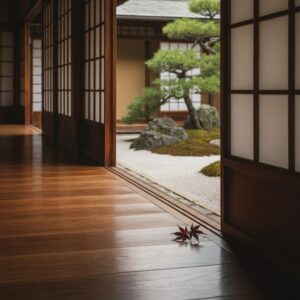
Two important concepts are at play here: wabi-sabi and shibui. You’ve likely encountered wabi-sabi before. It’s a worldview embracing transience and imperfection, finding beauty in modest, humble, and unconventional things. Wabi reflects rustic simplicity and quietness, while sabi refers to the beauty that accompanies age and wear, like the patina on old metal or moss on a stone. In the bar, this might be evident in the counter itself—perhaps a single, massive piece of timber, hundreds of years old, with natural knots, grains, and small imperfections left intact and celebrated. The walls may be simple, textured plaster that reveal the craftsman’s hand. This aesthetic values the authentic and organic over the new and flashy. Then there is shibui, which describes a simple, subtle, and unobtrusive beauty— the opposite of gaudy or ostentatious. A shibui object or space doesn’t demand attention; it quietly awaits discovery. It is beautiful without needing to be pretty. The bar’s design embodies shibui intentionally: muted colors, clean lines, and absence of ornamentation all work together to create a calm, serene environment. The goal is to remove all that is unnecessary. By eliminating visual distractions, the space invites you to turn your focus inward to your own thoughts, and outward to the one thing that truly matters at that moment—the glass in your hand. The bar’s design isn’t the star; it’s a carefully crafted frame meant to enhance the art it holds: the whisky itself. It is the ultimate display of confidence. The space doesn’t need to shout because the quality of the product and service speaks volumes.
Finding Your Sanctuary: How to Actually Experience These Places
Alright, so you’re convinced by the philosophy and ready for a calm, reflective whisky experience. However, these venues can be daunting and often hidden away. They don’t advertise, lack flashy signs, and operate according to unwritten rules. Entering this world demands a slight change in mindset and approach.
It’s About Tasting, Not Getting Drunk
The key principle is that these are tasting rooms, not party bars. The aim is appreciation, not intoxication. Asking for a beer or a simple mixer may be politely declined. The expectation is that you are there for the whisky. It’s also a space for quiet enjoyment. Arriving with a loud group of six or more is a serious breach of etiquette. These intimate venues are best savored alone or with one companion for a hushed conversation. Using your phone—especially for calls or watching videos—is a significant no-no. Flash photography is strictly forbidden. The goal is to honor the sanctuary the bartender has created for all guests. You’ll often encounter a cover charge, or otoshi, usually presented as a small, exquisite appetizer you didn’t order. This isn’t a scam but a standard seating fee common in small, upscale Japanese bars. Think of it as your ticket to the performance, acknowledging that you occupy valuable space in a tiny establishment and allowing the bar to uphold its high standards without a strict drink minimum.
Practical Vibe Check: How to Spot These Places
How do you locate these hidden treasures? Look up. Many top bars aren’t on street level but tucked away on upper floors of unassuming office buildings in neighborhoods like Ginza or Shinjuku. Seek a small, elegant sign—often a simple wooden plaque with the bar’s name in subtle calligraphy. The entrance will likely be a heavy, solid wooden door offering no hint of what lies beyond. Upon entering, don’t just take any seat. Wait for the bartender to acknowledge you and direct you to a spot. Seating is often intentional. The best way to begin is not by ordering a specific drink but by striking up a conversation. Share what flavor profiles you enjoy. Do you prefer smoky and peaty, like an Islay Scotch? Or something lighter and floral? The bartender is a whisky encyclopedia who will guide you to a bottle—perhaps a rare Japanese single cask unknown to you—that perfectly suits your palate. Trust their recommendation. This is your chance to embark on a guided journey, with the shokunin as your guide.
Example Experience: An Evening at “Bar Ishi no Ue”
To put this into context, imagine a visit to a place that embodies these principles—let’s call it “Bar Ishi no Ue,” or “Bar on the Stone.” You find it by a small, lantern-lit sign down a quiet Ginza alley. Climbing a narrow, steep staircase to the third floor, you face a plain wooden door. You slide it open. The first thing that hits you is the aroma—a rich, complex blend of old wood, leather, and a faint, sweet note of sherry casks. The room is tiny, seating just seven at a single flawless counter carved from a massive piece of granite, cool and solid to the touch. The bartender, a man in his late 60s with impeccably combed gray hair and a crisp white jacket, simply nods. This is Mr. Endo. There’s no menu. Behind him, hundreds of bottles are lit from below, arranged with the precision of a museum exhibit. You take a seat. Mr. Endo places a small warm, damp towel (oshibori) before you. You tell him you want to try an older Japanese whisky, something with character. He pauses thoughtfully, then selects a dusty bottle from the back. It’s a 21-year-old single cask from Hanyu, a long-closed “ghost” distillery. He presents the bottle as a sommelier would a fine wine. Then the ritual begins. He chooses a small, delicate glass with a thin rim. Producing a large, crystal-clear block of ice, he skilfully slices it into a perfect sphere with a small, sharp knife. Placing the ice sphere into the glass, he pours the whisky over it. The sound is barely audible, just a whisper. He slides the glass across the polished granite counter, where it stops exactly in front of you. You lift it. The aroma is incredible—incense, dried figs, a hint of tropical fruit. You take a sip. The silence of the room, the weight of the glass, Mr. Endo’s focused gaze upon your reaction—all combine to heighten the experience. You’re not merely drinking whisky; you’re savoring history, craftsmanship, and a deep, quiet philosophy. In this small, silent room, you’ve discovered not just a superb drink but a moment of pure, unfiltered clarity. That is the genuine experience these bars provide.
So, Why Are Japanese Whisky Bars Like This?
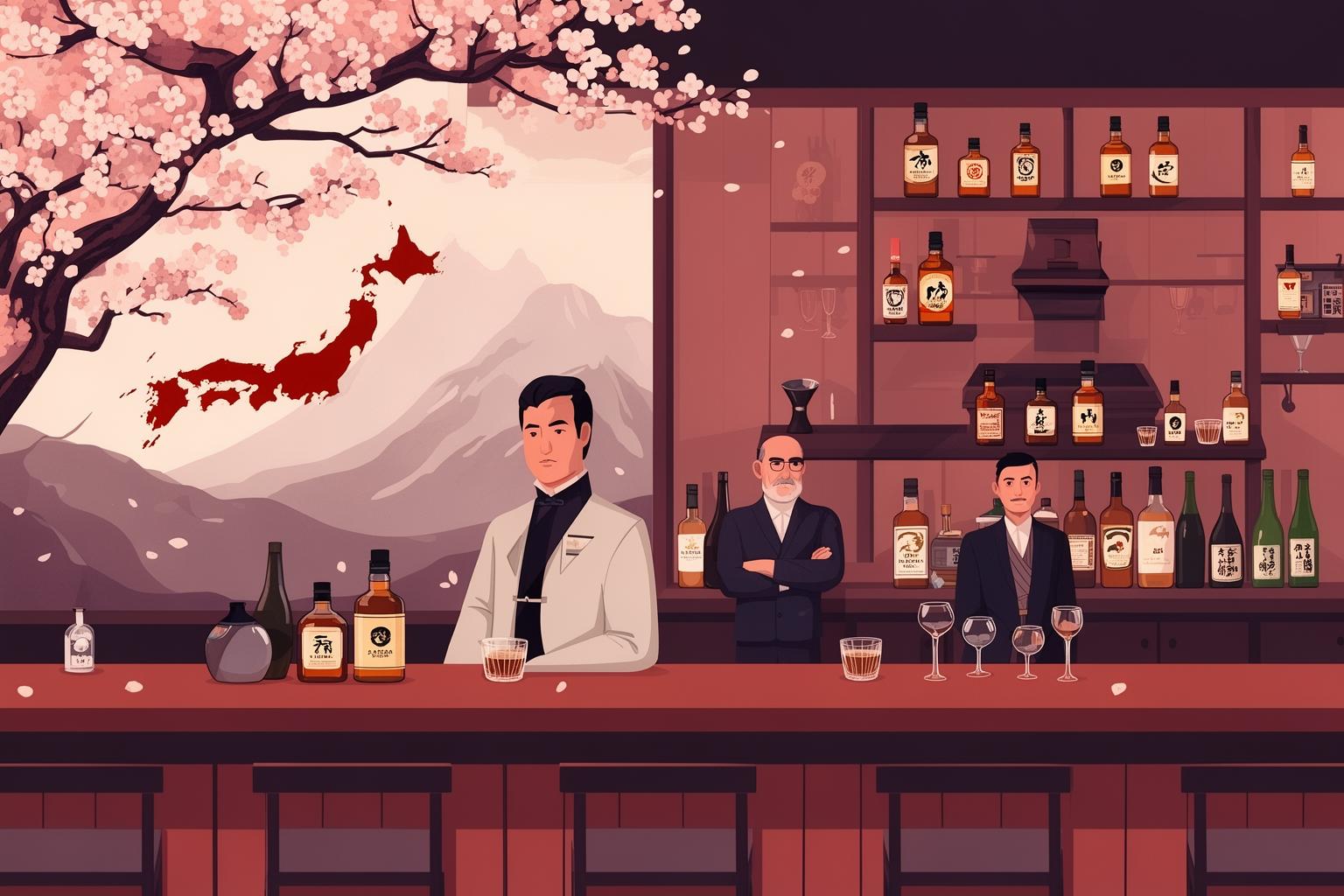
Ultimately, the minimalist Japanese whisky bar is like a puzzle box that, when opened, unveils the essence of the culture itself. It isn’t a passing trend or a copy of Western cocktail culture. It is a distinctly Japanese creation—an ecosystem where fundamental cultural values are conveyed through hospitality. The silence is not emptiness; it embodies Ma, the deliberate space for focus and reflection. The careful bartender is more than a service worker; they are a shokunin, an artisan devoted to the pursuit of perfection, transforming a humble highball into a ceremonial performance. The austere, simple interior is not a lack of design; it exemplifies wabi-sabi and shibui aesthetics, removing the non-essential to reveal a deeper, more subtle beauty. For the second-time traveler seeking to understand Japan more profoundly, entering one of these bars is like an immersive lesson. It answers the question “Why is Japan like this?” not through words, but through a direct, sensory experience. It demonstrates how the same principles guiding a Zen garden or tea ceremony are reflected in a glass of whisky. It’s a place to slow down, focus, and appreciate the profound beauty found in a single, perfectly executed moment. It’s not just a bar; it’s a dojo for your senses. And once you connect with it, the vibe is totally and completely fire.