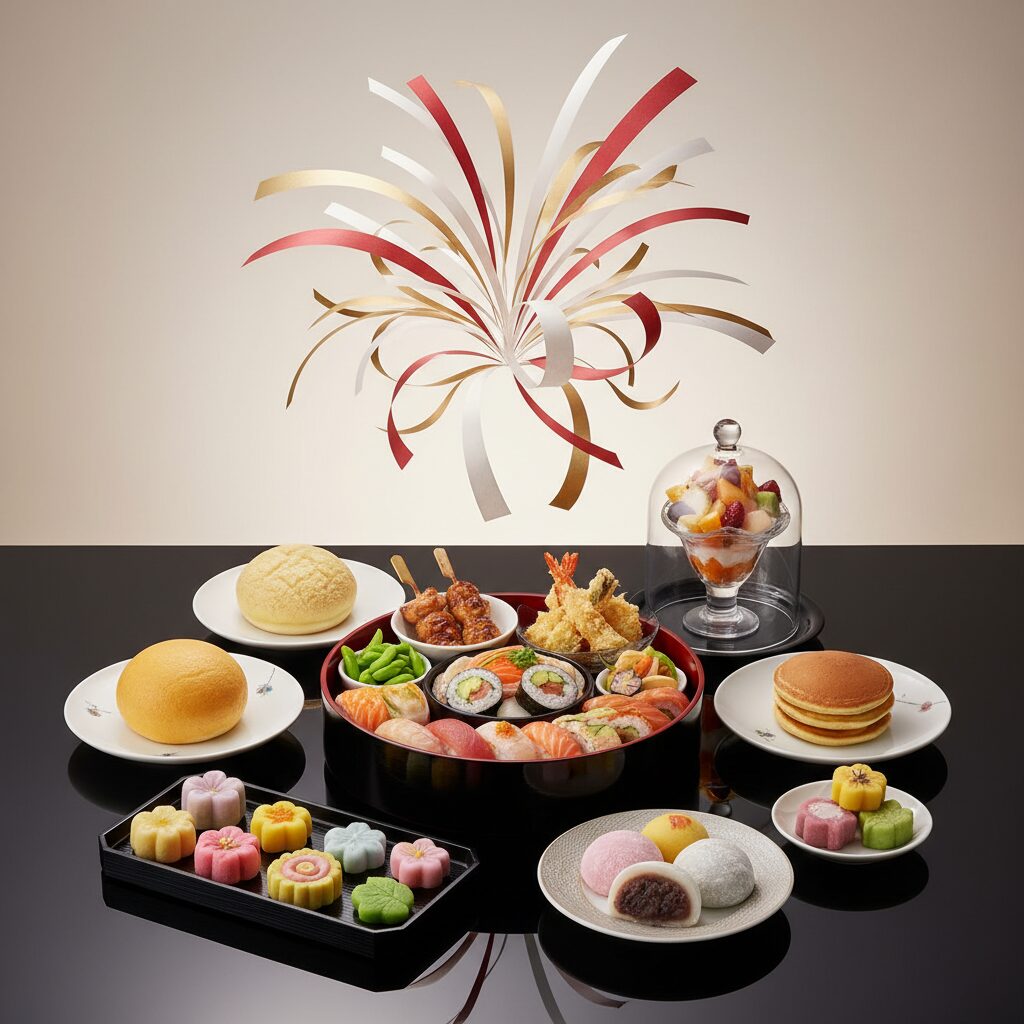
You’re standing in one of Tokyo’s retail behemoths, a place like Isetan in Shinjuku or Mitsukoshi in Ginza. You’ve navigated the pristine floors of designer fashion, marveled at the minimalist perfection of the homewares, and maybe even felt the serene, almost temple-like atmosphere of the stationery department. It’s all very sleek, very organized, very… vertical. But then you spot an escalator, not going up towards a rooftop garden, but plunging down into the earth. Your Western retail-trained brain cycles through the limited possibilities: parking garage, furniture overflow, maybe a dingy stockroom? It feels like heading backstage, somewhere you’re not supposed to go. Yet, a steady stream of impeccably dressed locals flows downwards, disappearing from view. Driven by curiosity and the faintest, most tantalizing aroma, you follow them. The moment you step off the escalator, reality shifts. You’ve just walked into another dimension. It is a full-force assault on the senses—in the best way possible. Bright lights illuminate a seemingly endless expanse of food, laid out with the precision of a jewelry exhibit. The air hums with the polite chorus of “Irasshaimase!” (Welcome!) and is thick with a thousand competing, yet somehow harmonious, smells: the savory soy of grilling eel, the sweet perfume of baking bread, the sharp tang of pickles. This, my friends, is the depachika. And it is so much more than just a food hall. It’s a subterranean theater of Japanese culinary culture, a frantic nexus of daily commerce, and a living museum of the nation’s obsession with quality, seasonality, and presentation. It’s where the high-speed demands of modern urban life collide with centuries of tradition. Honestly, it’s a whole vibe, and understanding it is key to understanding modern Japan. Before we peel back the layers on why these basements are basically the GOAT of food experiences, let’s pinpoint one of the most legendary stages for this daily drama.
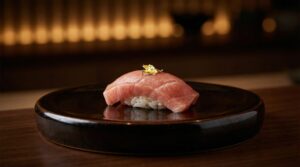
To truly appreciate this culinary theater, one must understand the artistry behind Japan’s counter dining and omakase traditions.
Not Your Average Food Court: Decoding the Depachika Vibe
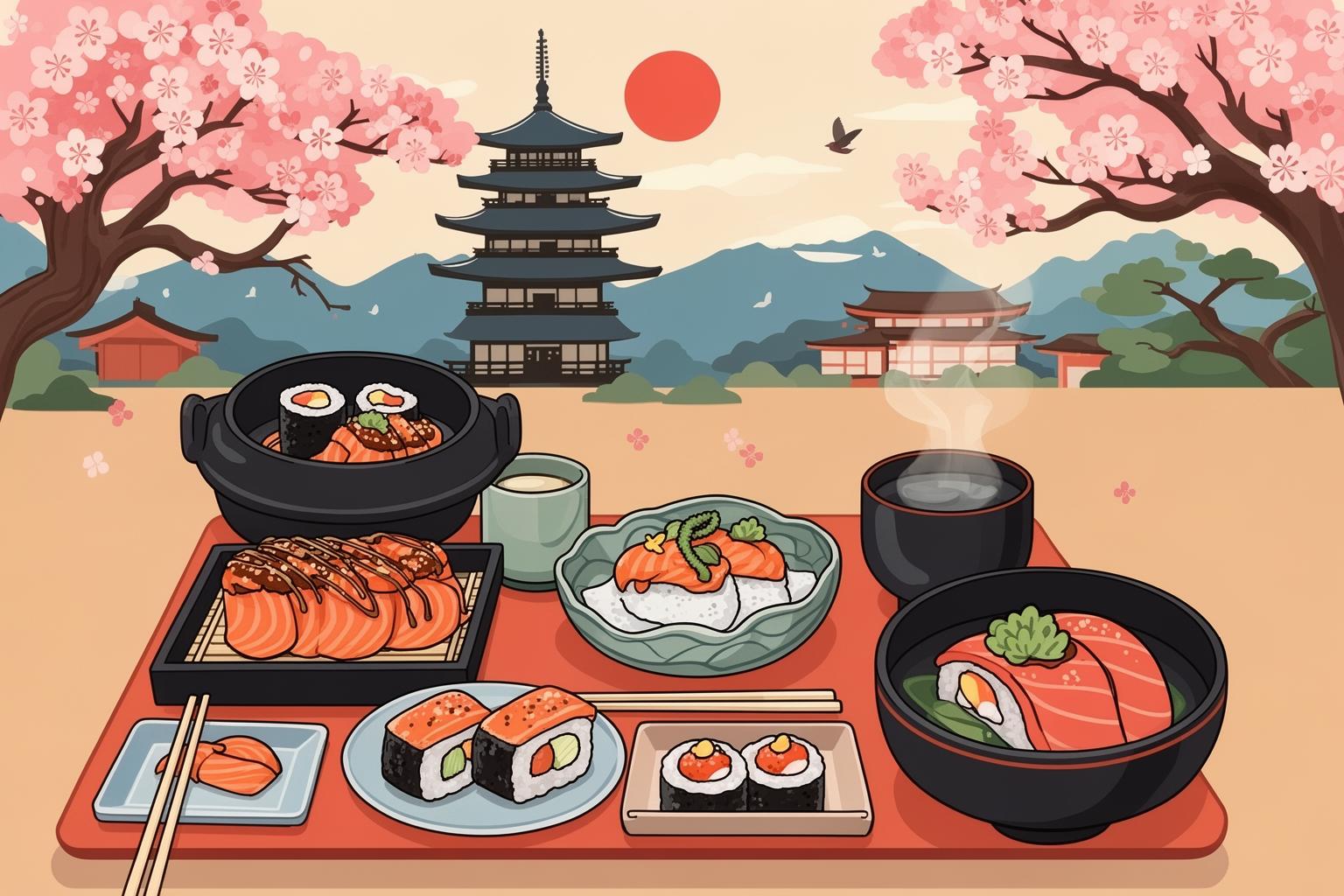
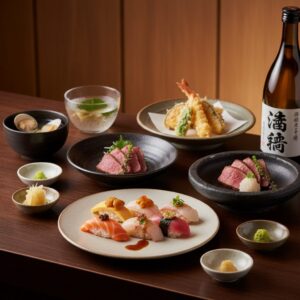
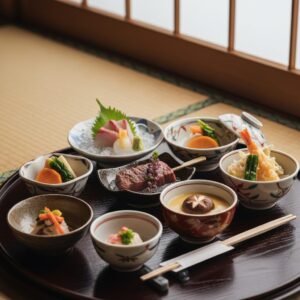
First things first, let’s clearly define our terms. The word depachika itself exemplifies Japanese linguistic efficiency—a portmanteau combining depāto (デパート), the borrowed term for “department store,” with chika (地下), the native word for “basement” or “underground.” So, literally, it means “department store basement.” But to leave it at that would be a serious understatement, comparable to calling a Bugatti simply a “car.” The key mindset shift for a newcomer is to completely discard any preconceived ideas of a typical Western food court. Forget the shared seating with sticky tables, the lukewarm fast-food chains under buzzing fluorescent lights, and the overall atmosphere of resigned mediocrity. A depachika is the exact opposite. It is an expansive, brilliantly illuminated, and impeccably clean marketplace. It consists of a curated collection of individual boutiques that happen to sell food. There are no central seating areas. The entire concept centers around takeaway, or mochikaeri (持ち帰り). Each vendor operates from their distinct counter, staffed by uniformed, knowledgeable, and unfailingly polite employees. The space is a maze of culinary specializations. You don’t just find a generic “cake shop”; instead, there is a counter for yōgashi (Western-style pastries) from renowned patisseries like Sadaharu Aoki or Henri Charpentier, where mousses and mille-feuilles are displayed like modern art. Just steps away, you enter the world of wagashi (traditional Japanese sweets), a realm of breathtaking beauty and nuance. Here, delicate nerikiri, sweet bean paste sculptures shaped into seasonal motifs such as cherry blossoms in spring or maple leaves in autumn, await you. You’ll spot gleaming yōkan, firm jelly made from adzuki beans, and plump daifuku, soft mochi rice cakes filled with sweet fillings. Then there’s the savory side of things. The sōzai (惣菜) section is the depachika’s vibrant heart, offering a dazzling array of ready-to-eat side dishes that form the basis of a traditional Japanese meal. Everything can be found here, from kinpira gobo (braised burdock root and carrot) to spinach salads with sesame dressing (goma-ae), intricate rolled omelets (dashimaki tamago), and every imaginable variety of croquette. Entire stalls are devoted to single products, showcasing fierce artisanal pride. There are tsukemono (pickle) specialists with barrels of salt-cured, rice-bran-cured, and vinegar-cured vegetables from every region of Japan. You’ll also find grilled eel (unagi) masters, tempura experts, tonkatsu fryers, and yakitori grillers, each perfecting their craft. And naturally, the bento boxes. The bento section is a gallery of miniature, edible landscapes. Each box offers a nutritionally balanced, visually appealing meal with components neatly arranged in separate compartments—a piece of grilled fish, a scoop of potato salad, pickles, and perhaps stewed vegetables, all artfully placed around a bed of rice. It is a space defined by profound specialization and obsessive quality control, far removed from the one-size-fits-all approach of a typical food court. It is a living catalog of Japanese cuisine, ranging from the most traditional to the most modern, all presented with almost theatrical flair.
The Logic of Location: Why Are These Food Heavens in the Basement?
This is a fundamental question that often confuses visitors from abroad. In the Western retail hierarchy, the basement is typically the bargain bin, the storage area, or the location for the least glamorous departments. Prime space is on the ground floor, with its street-facing windows and high visibility. So why do Japanese department stores—these icons of consumerism—place their most vibrant and popular section in the basement? The answer is a brilliant example of urban planning centered around one crucial concept: transit. To fully understand the logic behind the depachika’s location, you must grasp the physical and economic structure of Japanese cities. Unlike many Western countries where railways and retail developed independently, in Japan, they grew together. In the early 20th century, private railway companies such as Hankyu in Osaka and Tokyu in Tokyo recognized the need to encourage people to use their new train lines, which often ended in what were then city outskirts. Their innovative solution was to build large, aspirational department stores directly atop their main terminal stations. This created a powerful symbiotic relationship: the department store became a destination itself, attracting passenger traffic to the railway, while the railway continuously funneled customers right to the store’s entrance. Now, consider the layout. In these multi-level transit hubs, the basement—the chika—is the most crucial junction. It is the floor physically connected to the ticket gates of multiple subway and train lines. Every day, millions of commuters, tourists, and shoppers stream through these underground passageways. By situating the depachika on this basement level, the department store makes a highly strategic choice, positioning its food offerings directly in the path of this constant flow of people and turning the daily commute into a shopping opportunity. Imagine a typical office worker in Tokyo: after a long day, they exit the subway gate and, instead of going up to street level to find a separate grocery store, they can walk straight into this food haven. They can pick up a high-quality bento for dinner, some freshly prepared sōzai to complement the rice waiting at home, a premium loaf of bread for tomorrow’s breakfast, and even a beautifully wrapped gift for a client meeting the next day. It is a system of remarkable, almost overwhelming convenience, carefully designed for a society always on the move. The basement is not a downgrade; it is the most valuable, highest-traffic location in the entire building. There is also a clever sensory element at work. By confining all the cooking, frying, and grilling to the basement, the store prevents the strong aromas of food from drifting up to the upper floors, where they could interfere with the subtle scents of cosmetics or the refined atmosphere of designer boutiques. It is an expert example of environmental design, keeping the worlds of Chanel No. 5 and grilled mackerel perfectly separated.
The High Art of Gifting: Depachika as Omiyage Central
As you stroll through the gleaming aisles of the depachika, one thing quickly stands out: the obsessive, almost spiritual, dedication to packaging. A simple box of cookies is far more than just that. It is a crisp paper box wrapped in intricately designed paper, tied with a ribbon or sealed with a branded sticker, then placed carefully inside a thick, glossy paper bag, which is sealed again with tape. You might spot a single, flawless mango resting on a bed of shredded paper inside a paulownia wood box, carrying a price tag rivaling a fine bottle of scotch. This goes beyond merely protecting the product; it offers a glimpse into the heart of Japanese gift-giving culture, with the depachika serving as its grand central hub. The Western notion of a “souvenir” falls far short of the significance of omiyage (お土産). An omiyage is a social imperative—a tangible symbol of your travels and a gesture of goodwill toward those you left behind. Whether on a business trip or vacation, you are expected to bring back omiyage for your entire office, family, and often your neighbors. Beyond omiyage, there exists a vast array of gift-giving occasions: visiting someone’s home, showing gratitude, offering apologies, and the major corporate gift seasons, Ochūgen in summer and Oseibo at year’s end. This relentless gifting cycle generates a huge, steady demand for appropriate presents, and the depachika is ideally positioned to satisfy it. The products are crafted specifically for this purpose—often shelf-stable, beautifully packaged, and from renowned, prestigious brands. Think of the classic blue tin of Yoku Moku butter cigars, the elegant cheesecakes from Shiseido Parlour, or Toraya’s dense, centuries-old recipe yōkan. Importantly, most items are individually wrapped inside the larger package, ideal for sharing among colleagues. The appearance of the gift is paramount. In Japanese culture, the care and thought invested in wrapping directly reflect the giver’s respect and sincerity toward the recipient. Unwrapping is part of the experience. Depachika staff are masters of this craft, wrapping your purchase with focused, reverent precision that is captivating to watch. The folds are flawless, the tape invisible. The final bagged item is handed to you with two hands and a slight bow. This is why the prices often seem astonishing. You’re not simply buying food; you’re acquiring a complete, culturally rich package of prestige, thoughtfulness, and social grace. That $150 musk melon won’t be casually sliced for breakfast. It is a high-stakes offering—a corporate peace treaty or an immense gesture of gratitude to a valued mentor. It’s a social instrument, and the depachika is its finest arsenal.
The Unspoken Etiquette of Shishoku: A Masterclass in Free Samples
Now we come to the subject that generates the most curiosity and confusion among foreign visitors: the free samples. They are everywhere in the depachika. A cheerful vendor offers you a tiny cube of castella cake on a toothpick. Another invites you to try a slice of smoked sausage. A third hands you a small paper cup containing a warm sip of artisanal dashi broth. For anyone raised on the skeptical saying that “there’s no such thing as a free lunch,” this can feel like a trap. What’s the catch? Is it really okay to just accept it? Will I face a high-pressure sales pitch? Relax. Welcome to the subtle, graceful world of shishoku (試食), which literally means “test eating.” The first and most important thing to understand is that this is not the aggressive, every-person-for-themselves sampling scene of a Western big-box store. There is no need to elbow your way through. Shishoku is based on unspoken social rules and mutual respect. Its purpose is not to provide a free meal but to create a moment of genuine consideration. It is a quintessentially Japanese sales approach: indirect, polite, and grounded in the belief that a superior product will speak for itself. Instead of a salesperson loudly praising their goods, they simply offer you a taste. This gesture is an invitation. It establishes a brief, low-pressure connection between vendor and potential customer. The vendor expresses pride and confidence in what they sell, and you, the customer, have the chance to make an informed choice without any pressure. So, how does one take part in this delicate ritual without committing a misstep? The etiquette is simple and natural. Don’t be a ghost sampler who grabs a bite while rushing by. It is considered polite to pause briefly, make eye contact with the vendor, and give a slight nod to acknowledge the offer. Accept the sample using the utensil provided, usually a toothpick or tiny fork. Take just one piece. After tasting it, a simple response is appreciated. A quiet “Oishii” (delicious) and a smile are a lovely compliment. If you love it and wish to buy, great. If not, that is perfectly fine too. There is no obligation. A polite “Arigatou gozaimasu” (thank you very much) as you move on is all that’s needed. The entire system relies on the assumption that people will not take advantage. The goal isn’t to piece together a meal by making ten rounds of the floor. It’s about discovery. It’s a chance to try something you might never buy otherwise, like a rare seaweed or an especially pungent pickle. It also reflects the high hygiene standards; sample stations are kept impeccably clean, and vendors frequently use small tongs to handle the food, further building consumer trust. It is a microcosm of Japanese social interaction: understated, orderly, and based on a shared understanding of civility.
The Daily Lifeline and the Evening Gold Rush
Although the depachika’s dazzling displays of luxury fruit and artisanal sweets might suggest a place reserved for tourists and special occasions, it is crucial to recognize its profound role in the everyday lives of ordinary Japanese city residents. For millions, these food halls are not a novelty; they serve as an essential, practical part of their domestic routine. In cities like Tokyo and Osaka, where apartments are notoriously compact with tiny kitchens, and where long working hours are the norm, the daily practice of preparing a full multi-course meal from scratch is an unattainable luxury for many. The depachika, especially its sōzai section, provides an ideal solution. It acts as a lifeline for busy professionals, families, and an increasing number of single-person households. The option to stop by after work and purchase several high-quality, nutritious, and varied side dishes to complement a simple bowl of freshly cooked rice at home is transformative. It offers a culturally accepted and widely embraced middle ground between the effort of a fully home-cooked meal and the impersonality of a convenience store dinner. At lunchtime, the bento counters buzz with activity, as office workers flock to get a midday meal that far surpasses the alternatives. Yet the true spectacle unfolds in the evening, usually starting an hour or two before the department store’s closing time. This is when the magic of nebiki (値引き), or price reduction, begins. You’ll notice the vendors’ calls shift in rhythm and volume as they start chanting “Taimu sāru!” (Time sale!). Employees armed with sticker guns circulate, applying brightly colored decals to the day’s perishable items. First come the 20% off stickers, then 30% off, and finally, as closing time nears, the holy grail: 50% off (hangaku 半額). This marks the start of what can only be described as the “Depachika Gold Rush.” A crowd of savvy shoppers, who have been strategically waiting, moves in. The atmosphere becomes charged with a unique energy—a polite but determined rush to snag the best deals on premium sushi sets, sashimi platters, elaborate bento boxes, and fresh salads. This nightly ritual powerfully embodies the Japanese concept of mottainai (もったいない), a cultural, almost Buddhist, feeling of regret over waste. Discarding perfectly good food is considered deeply shameful. For the department store, selling off the day’s fresh inventory at a steep discount is far preferable, both economically and ethically, to throwing it away. For shoppers, it is a brilliant opportunity to enjoy high-end food at bargain prices. Witnessing this organized, communal, and efficient approach to minimizing food waste reveals a core principle of Japanese culture playing out in the most delicious way possible.
The Reality Check: Navigating the Overwhelm and the Expense
After painting a picture of this subterranean utopia, it’s time to face a dose of reality. Is the depachika experience always a blissful, seamless journey through a food wonderland? Let’s be honest: absolutely not. For the unprepared, it can be a jarring, stressful, and unexpectedly costly experience. It’s a system with unique quirks and challenges worth understanding before you dive in. First and foremost, the crowds. We’re not talking just a little busy; it’s more like a human traffic jam. During peak hours—lunch rush from 12 to 1 PM and evening rush from 5 PM until closing—the aisles become extremely congested. Navigating with a shopping basket, let alone a stroller or luggage, can feel like playing a game of human Tetris. If you dislike crowds or struggle with claustrophobia, this can be genuinely anxiety-inducing. Aim to visit mid-morning or mid-afternoon on weekdays for a more relaxed experience. Second, the cost. Let’s be clear: this is not budget shopping. While the evening nebiki offers a chance for a bargain, regular prices reflect the premium quality of ingredients, the high labor costs for food preparation, exquisite packaging, and prime retail locations. A single, simple bento box can easily cost 1,500 yen ($10 USD), and a photogenic cake slice from a renowned patisserie might be 800 yen ($5.50 USD) or more. If you’re on a backpacker’s budget, the depachika is more like a museum where you look but don’t touch, or a place for the occasional splurge. Third is the overwhelming paralysis of choice. The astonishing variety is both a blessing and a curse. When faced with fifty kinds of bento boxes, each more beautiful than the last, making a decision can be surprisingly difficult. You might spend thirty minutes wandering in a daze, growing hungrier and more confused, before grabbing something at random out of sheer decision fatigue. Finally, there’s a crucial practical point that often confuses tourists: there is almost never anywhere to sit and eat your purchases. Depachika are designed for takeaway. The assumption is that you’ll take your food home, back to your office, or hotel room. Although some of the largest, most modern depachika may have a small eat-in counter or rooftop garden, these are exceptions, not the rule. Don’t buy a beautiful tray of sushi expecting to find a table to enjoy it. You’ll likely end up eating it on a park bench or, if necessary, standing in a quiet corner of the train station. Understanding these realities is essential to fully appreciate the depachika. Go with the right expectations. Treat it as a cultural safari. Set a budget, have a loose idea of what you want, and know where you’ll eat your finds. When you see it not just as a store, but as a complex, brilliant, and sometimes maddening solution to the puzzle of modern urban living, you can truly appreciate the magnificent theater of it all.