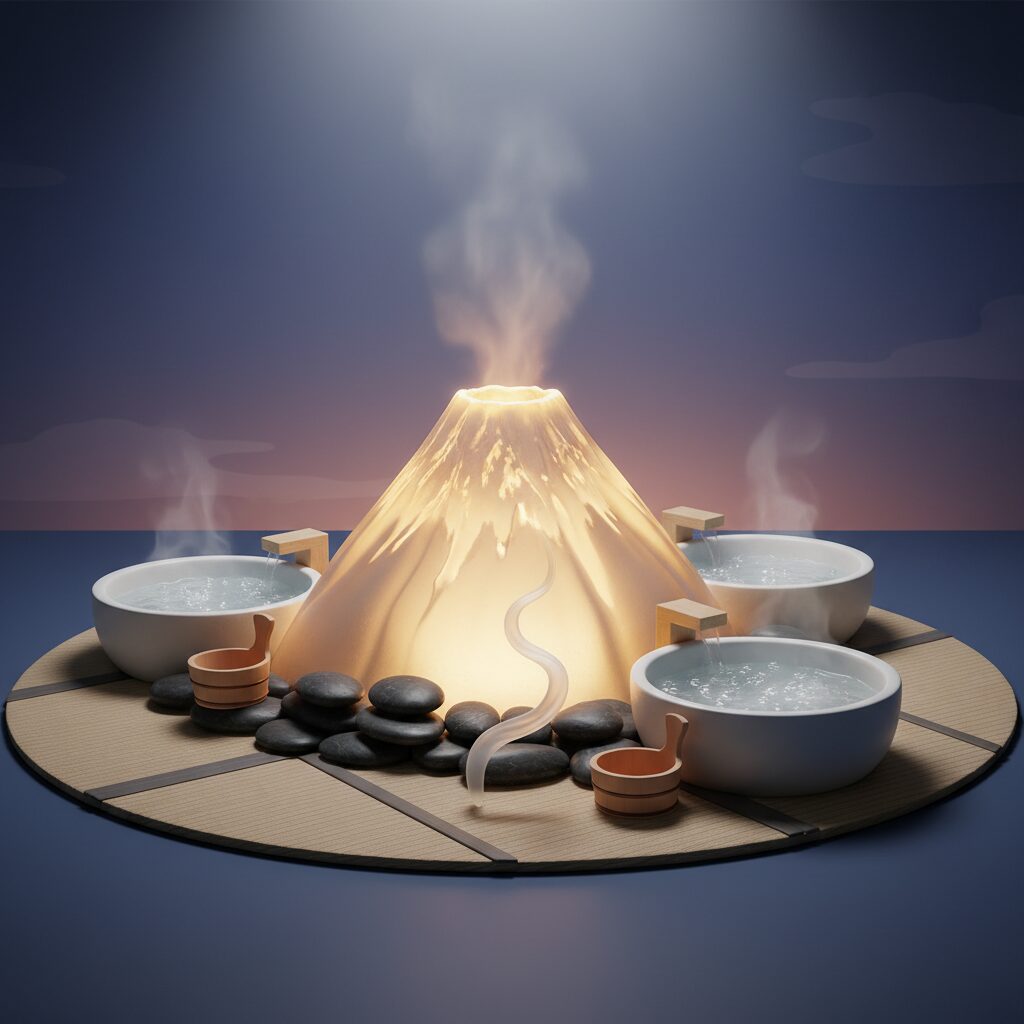
Yo, Keiko Nakamura here, your guide to the Tokyo art scene and all the cultural rabbit holes that come with it. Let’s talk about something you’ve probably seen on your feed, looking both totally serene and kinda… awkward. I’m talking about the Japanese public bath, the Sentō. You see pics of old-school tile work, steam rising from the water, and a massive, painted Mt. Fuji watching over everyone. And everyone is, well, naked. Together. The immediate question for anyone not raised on this is a big, fat “Why?” In a world of private bathrooms and endless personal space bubbles, why would you choose to get clean with a bunch of strangers from your neighborhood? Is this just a throwback thing, an experience curated for tourists? Or is there something deeper going on? Honestly, the answer is a whole mood. The Showa-era Sentō isn’t just a place to wash up. It’s a living museum, a community center, and a social leveler all rolled into one steamy, tile-covered package. It’s about a concept we call hadaka no tsukiai—literally, “naked communion.” It’s where the social armor comes off, and the real talk begins. Before we dive deep into the steam and the culture, get your bearings. We’re talking about places like this, the real OGs of the bathing world.
If you’re intrigued by this concept of communal, unplugged relaxation, you might also appreciate the philosophy behind Japan’s traditional engawa.
The Sentō Scene: Not Your Average Spa Day
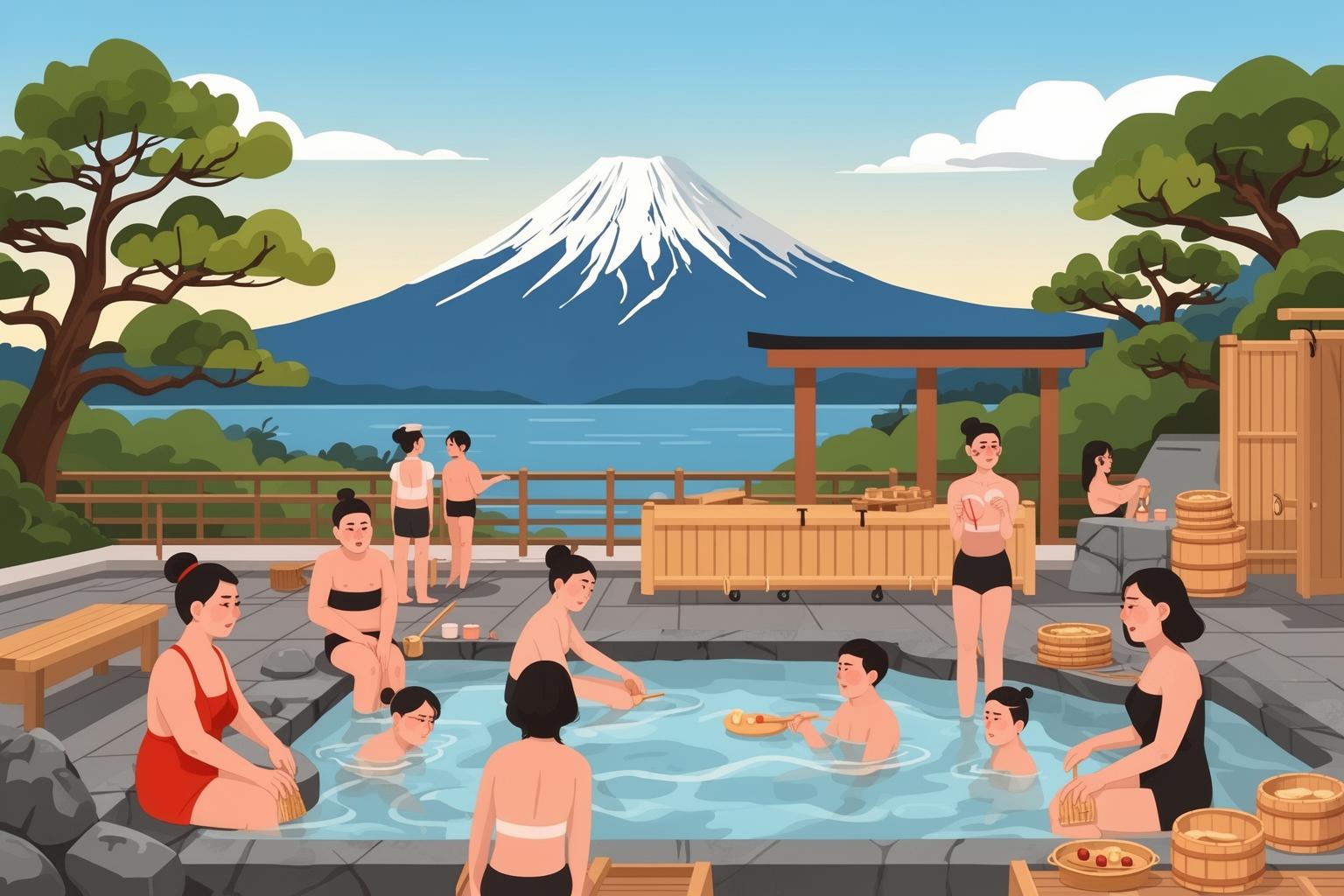
First, let’s clarify one thing: a Sentō is not an onsen. An onsen is a natural hot spring, typically found in scenic volcanic regions. A Sentō, on the other hand, is a public bathhouse usually located in residential neighborhoods that heats its own water. While onsen are for vacations, Sentō were part of everyday life. This distinction is crucial to grasping the overall atmosphere. The Sentō emerged out of necessity, creating a unique social environment that, surprisingly, still exists today. It’s less about a detox retreat and more about a relaxed community check-in. The experience isn’t designed to be luxurious or zen like a modern spa. It can be noisy, the tiles may be somewhat worn, and the fluorescent lighting in the changing room is rarely flattering. But that’s precisely the point. It’s authentic. A raw, unfiltered glimpse into Japanese neighborhood life.
Decoding “Hadaka no Tsukiai” (Naked Communion)
This phrase is the key to unlocking the entire Sentō experience. Hadaka no tsukiai might sound highly intimate, or even a bit strange, to outsiders. But it’s not about forced closeness or oversharing. It’s quite the opposite: stripping away the social status that defines you externally. Japanese society is very hierarchical. You have your job title, your role within the family, your style of dress—all of which signal your status. Different levels of polite language (keigo) are used depending on who you speak to. This can be exhausting. But inside the Sentō, all that disappears along with your clothes. A company CEO might be sitting next to a construction worker, a student beside a retiree. When everyone is just a group of naked people in hot water, those external labels lose their meaning. This creates a unique social equalizer. Conversations you overhear in a Sentō are different. People won’t immediately ask what you do for a living. Instead, they might comment on the weather, local news, or how hot the water is. It’s a place where you can simply be without the pressure to perform. For many, especially older generations, it’s one of the rare places where such unguarded communication happens. It serves as a form of social therapy, a release valve for the pressures of a highly structured society. This idea is so deeply embedded that it is often used metaphorically in business. An executive might say, “We need a hadaka no tsukiai meeting” to indicate the need for an honest, straightforward discussion without the usual corporate formalities. The Sentō is the literal, physical root of this powerful social concept.
The Original Community Hub: Before Cafes, There Was the Bath
To truly understand the Sentō, you have to rewind to the Showa era (1926-1989), especially the post-war years. This was a period of rapid reconstruction and urban growth. Millions moved to cities like Tokyo and Osaka, living in small, crowded apartments. Having a private bathroom was an unimaginable luxury for the average family. The Sentō wasn’t a choice; it was an essential part of daily life. Every evening, the whole neighborhood gathered at the local bathhouse. It was effectively the community’s living room. This was where locals shared gossip, parents exchanged child-rearing advice, and children learned basic social manners (like not splashing elders). The bandai, the attendant’s high platform, acted as an information center. The attendant knew everyone and everything happening on the block. The Sentō was deeply woven into daily life, functioning not only as a utility but also as a cornerstone of community identity. The decline of the Sentō began when Japan’s economic boom made private baths common in nearly every home. The original purpose disappeared. Yet, the social function, though reduced, never fully vanished. For the elderly, who grew up with this daily ritual, the Sentō remains a vital place of social contact and a way to combat the loneliness that can be common in modern cities. Walking to the Sentō, greeting neighbors, having a familiar chat—it’s a routine that provides structure and connection. What we see today is a quieter, more nostalgic ghost of that intense community, but its spirit still lingers in the steam.
The Fuji Mural Flex: Art That Hits Different
Alright, let’s address the elephant in the room—or more accurately, the mountain on the wall. That enormous, striking painting of Mt. Fuji towering above the bathtubs is arguably the most emblematic feature of a traditional Sentō. As you sit there, enveloped in 42-degree Celsius water, you glance up to behold Japan’s most sacred peak in all its magnificence. It’s a powerful image, and definitely intentional. This isn’t just decoration; it’s a statement piece, an escape, and a profound cultural emblem that has been part of the Sentō experience for over a century.
Why Mt. Fuji? The Perfect Elevation for Your Bath
In Japanese culture, Mt. Fuji, or Fuji-san, is far more than a mountain. It’s a deity, a national icon, an inspiration for countless artists, and a source of immense spiritual power. It symbolizes permanence, beauty, and good fortune. Catching a glimpse of Fuji-san, especially on a clear day, is considered highly auspicious. For centuries, making a pilgrimage to the mountain or seeing it from one’s home has been a sign of great privilege. So, what about the urban crowds packed into city blocks with nothing but their neighbor’s laundry in view? You bring the mountain to them. The tradition of painting Mt. Fuji in bathhouses began in 1912 at Kikai-yu, a Sentō in Kanda, Tokyo. The owner, aiming to uplift his customers and share the grand vistas from his home prefecture of Shizuoka, commissioned an artist to paint the mountain on the main wall. It was a huge success. The concept was brilliantly simple. It transformed the ordinary act of bathing into a mini-retreat. For the price of a bath, you could soak your tired bones and mentally transport yourself to a place of natural beauty and spiritual meaning. It was an affordable luxury, a democratic way to share an aspirational experience. The painting enlarges the space, making the tiled room feel expansive, turning it into a grand landscape. It’s both a psychological trick and a work of art. The Fuji mural sets the perfect mood, offering a moment of calm and grandeur amid the city’s hustle.
The Disappearing Craft: The Last Masters of Sentō Painting
The art of crafting these enormous murals is as distinctive as the Sentō themselves. It’s a specialized skill called penki-e (paint pictures), practiced by a rare group of artists. This isn’t fine art created in a quiet studio. It’s a physically strenuous, rapid-performance craft. The bathhouse must close for the day, the air thick with paint and solvent fumes. Artists often work on scaffolding, wielding giant brushes attached to long poles to cover vast walls. They must work swiftly and confidently, as the paint dries quickly in the humid environment. There are no preliminary sketches on the wall; the entire scene is painted from memory and experience, often completed in just a few hours. The style is bold and dynamic, not photo-realistic. It captures the spirit and energy of the landscape. Today, this craft is critically endangered. Only a handful of official Sentō painters remain across Japan. The most renowned were masters like Kiyoto Maruyama and Morio Nakajima, who painted hundreds of bathhouse Fujis over their long careers. Now, as the number of Sentō dwindles, work is scarce. A new generation, including Mizuki Tanaka—the youngest and one of the few female painters in the field—is striving to keep the tradition alive. She not only paints but also champions Sentō culture, bringing fresh energy to this aging art form. When you see a Fuji mural in a Sentō, you’re not just admiring a pretty picture. You’re witnessing the work of a rare artisan, a practitioner of a fading Japanese craft. Each mural stands as a testament to their skill and a tribute to a unique artistic heritage deeply connected to the culture of public bathing.
Fuji Isn’t the Only Star
Though Mt. Fuji reigns supreme in Sentō art, it’s not the only motif. The murals often convey broader themes of good fortune, strength, and escapism for bathers. Leaping carp (koi) are a common symbol, representing strength, perseverance, and success—reminiscent of the legend of koi swimming upstream to become dragons. The Seven Lucky Gods (Shichifukujin) might appear sailing on their treasure ship, promising wealth and happiness. Sometimes, murals feature other famous Japanese scenic spots, such as the coast of Matsushima or the shores of the Seto Inland Sea. The goal remains consistent: to elevate bathing beyond mere hygiene into a moment of mental and spiritual rejuvenation. The back wall of the Sentō is a canvas for shared daydreams, a gateway to a more beautiful, peaceful, and fortunate world, all for the price of a soak.
Navigating the Sentō Labyrinth: A Vibe-Based Guide
Alright, so you’re convinced by the idea. You want to immerse yourself in this piece of living history. But stepping into a Sentō for the first time can feel daunting. There’s a flow, a rhythm, and an unspoken set of rules that everyone else seems to know instinctively. It can feel like walking into a private party you weren’t invited to. But don’t worry. The etiquette isn’t meant to be exclusive; it’s about respecting the shared space and ensuring a comfortable experience for all. It’s about understanding the why behind the rules. It’s a quick lesson in Japanese group harmony, or wa (和).
The Getabako & Bandai: Your Initial Social Challenge
Your journey starts the moment you pass through the noren (the fabric curtain at the entrance). The first thing you’ll see is the getabako, a wall of small wooden lockers for your shoes. You take off your shoes, slide them in, and take the wooden key. This simple gesture is the first step in shedding your outside self. The clacking sound of the wooden key tag is pure Sentō ASMR. Next, you approach the heart of the place: the bandai or a modern front desk. The traditional bandai is a high, seated platform where an attendant (often an older man or woman) oversees the entrance, collects money, and sells soap and towels. Importantly, the bandai is often positioned with a clear view of both men’s and women’s changing rooms. For a first-timer, this can be a major cultural shock. But it’s important to realize this isn’t about being intrusive. It’s a design rooted in old-school efficiency. From this single vantage point, the attendant can manage the entire facility, watch over customers’ belongings, and serve as a central contact point. They are the guardian of the space. Recently, many Sentō have renovated to feature separate front desks for privacy, but encountering a classic bandai is a genuine Showa-era experience. Just hand over your fee (usually around 500 yen), grab a rental towel if needed, and head to the appropriate changing room—男 for men, 女 for women.
The Unspoken Rules of the Water: Maintaining the Flow
Once inside the changing room (datsuijo), find an empty locker or basket for your clothes. This is where you strip down entirely. Yes, completely. Now the most crucial part: before you even think about stepping into the inviting hot tubs, you must wash. Thoroughly. There’s a designated area with stools, faucets, and showerheads called the kakeyu or washing area. You take a stool and a bucket, sit down, and scrub yourself clean. This is the absolute, non-negotiable golden rule of the Sentō. The bathtubs are for soaking, not washing. The water is shared by everyone, and this rule exists to keep it clean. Jumping into the tub without washing first is the biggest faux pas you can make. It’s seen as deeply disrespectful to other bathers and the establishment itself. Now, regarding that tiny towel: most regulars bring their own small towel, about the size of a washcloth. You can use it to scrub your body. But what do you do with it once you get into the tub? This is the second critical rule: the towel never goes into the bath water. It’s considered unclean. You’ll see people placing it on their head (which surprisingly helps keep you cool) or resting it on the edge of the tub. Once in the water, the atmosphere is generally quiet and respectful. It’s not a swimming pool, so no splashing or swimming. While regulars might engage in quiet conversations, it’s best to relax and enjoy the soak. Gauge the mood: if it’s silent, remain silent. If there’s a low hum of chatter, it’s fine to join in quietly. It’s all about being considerate of the shared environment.
Post-Bath Rituals: The True Hangout
The Sentō experience doesn’t end once you exit the water. In fact, many would say the best part is just starting. The changing room is more than a place to get dressed; it’s the post-soak lounge, the real social hub. After drying off, people don’t just rush out. They linger. You’ll see old-timers relaxing in vintage massage chairs, their low hum a classic part of the Sentō soundscape. There’s often a large, old-fashioned scale that people use faithfully. And almost certainly, there will be a TV showing a baseball game or variety show, watched collectively. This is where the real social magic unfolds. Conversations here are more relaxed than in the bath itself. Then there’s the most sacred post-bath ritual: the drink. Vending machines or old-school coolers are stocked with a very specific selection of beverages, chief among them fruit milk (furutsu gyunyu) and coffee milk (kohi gyunyu), served in iconic glass bottles. Why these drinks? It’s pure nostalgia. In post-war Japan, when refrigerators were rare, dairy companies partnered with Sentō to install coolers and sell their products. A cold, sweet, nourishing bottle of milk was the perfect, affordable luxury after a hot bath. For generations of Japanese people, the taste of fruit milk is inseparable from the feeling of being clean, warm, and relaxed after a Sentō visit. Enjoying one while lounging in the changing room is the perfect way to conclude the experience. It’s the final, essential step in the ritual.
The Showa Sentō in the Reiwa Era: A Fading Vibe?
Despite all its cultural importance and nostalgic appeal, the traditional Sentō is confronting an existential threat. The society that created and relied on it no longer exists. Now deep into the Reiwa era, Japanese society has changed profoundly. The gradual disappearance of these neighborhood icons is a quiet tragedy for many, symbolizing a community spirit slowly fading amid modernization and convenience. However, it’s not entirely bleak. A new generation is discovering the Sentō, not out of necessity, but as a destination—a place for connection and analog tranquility in an overwhelmingly digital world.
The Reality of Decline: Why Are They Vanishing?
The statistics reveal a stark reality. At their height in the late 1960s, Japan boasted over 18,000 Sentō. Today, fewer than 3,000 remain, with the number continuing to dwindle annually. The primary cause is straightforward: the widespread adoption of private bathrooms. The Sentō’s original role as a public utility has become redundant. Yet, the challenges go deeper. Operating a Sentō is a difficult business. Overhead costs are high—gas for heating vast amounts of water, water bills, and ongoing maintenance to keep aging buildings safe and sanitary. Many Sentō are family-run, passed down through generations. Current owners are often elderly, and their children, having chosen other careers, have no interest in taking over this demanding, low-profit enterprise. Additionally, many classic bathhouses stand on valuable urban land. The offer to sell to developers for substantial profit is often too tempting to decline. Each closure is a small rip in the neighborhood’s social fabric, the loss of a familiar local landmark and community hub that can never be replaced.
The Revival: Sentō 2.0 and the Emerging Trend
Just as the traditional Sentō seems destined to vanish, a new movement is revitalizing these old establishments. Young entrepreneurs, architects, and designers are recognizing Sentō’s unique cultural significance and working to reinvent it for the 21st century. This has given rise to “designer Sentō” or “renovation Sentō.” These initiatives take classic, often dilapidated bathhouses and give them a modern makeover while carefully preserving their nostalgic Showa-era essence. Iconic features like the Fuji mural and vintage tilework remain, enhanced by new elements aimed at attracting a younger, more diverse crowd. For example, Koganeyu in Sumida, Tokyo, added a craft beer bar with a DJ booth near the entrance. Others, such as Ume-yu in Kyoto, have become hubs for local creatives, hosting events and serving as informal public salons. Modern, powerful saunas—hugely popular with a new generation—are being introduced. Some even offer co-working spaces or guesthouses. This new wave is shifting the Sentō’s demographic. It’s no longer just the domain of elderly locals. Young people, who grew up with private baths and never needed Sentō, now seek them out. They view it as a retro-cool experience, an authentic piece of Japanese culture that feels more genuine and grounding than sleek modern spas. It’s a break from screens, a space for a different form of social connection. The Sentō is evolving from a neighborhood necessity into a “third place”—a destination to relax, connect, and enjoy a unique community atmosphere increasingly rare in today’s urban life.
So, What’s the Real Deal? Is a Sentō Trip Worth It?
After all this, we return to the original question. You’ve seen the aesthetic on Instagram, you’ve heard the stories, but is it truly worth navigating the rules and potential awkwardness to visit a Sentō? Let’s be honest: if you’re expecting a five-star luxury spa with fluffy robes and cucumber water, you’ll be disappointed. A neighborhood Sentō is not that. It can be a bit noisy with the chatter of regulars. The facilities might be old and show their age. It’s not a polished, sanitized version of Japanese culture; it’s the raw, unfiltered source code. And that’s exactly where its value lies. Going to a Sentō is less about tourism and more about cultural anthropology. You step directly into a time capsule. It’s a sensory immersion into the Showa era, a period that fundamentally shaped modern Japan. You feel the intense heat of the water, hear voices echoing off the high, steam-filled ceiling, see the magnificent Fuji mural, and taste the sweet nostalgia of a post-bath coffee milk. These are the textures of a Japan slowly disappearing. You’re not just observing; you’re participating in a living ritual. You experience firsthand the Japanese concept of shared space, the importance of group harmony, and the quiet beauty of a daily routine that has bound communities together for generations. It’s a lesson in the delicate balance between public and private life that defines much of Japanese society. So, is it worth it? Absolutely. No cap. Forget temples and tourist traps for an evening. Go for the art, stay for the soak, but what you’ll leave with is a genuine, unscripted connection to the heart and soul of a Japanese neighborhood. It’s a vibe that will stay with you long after the heat of the water has faded.