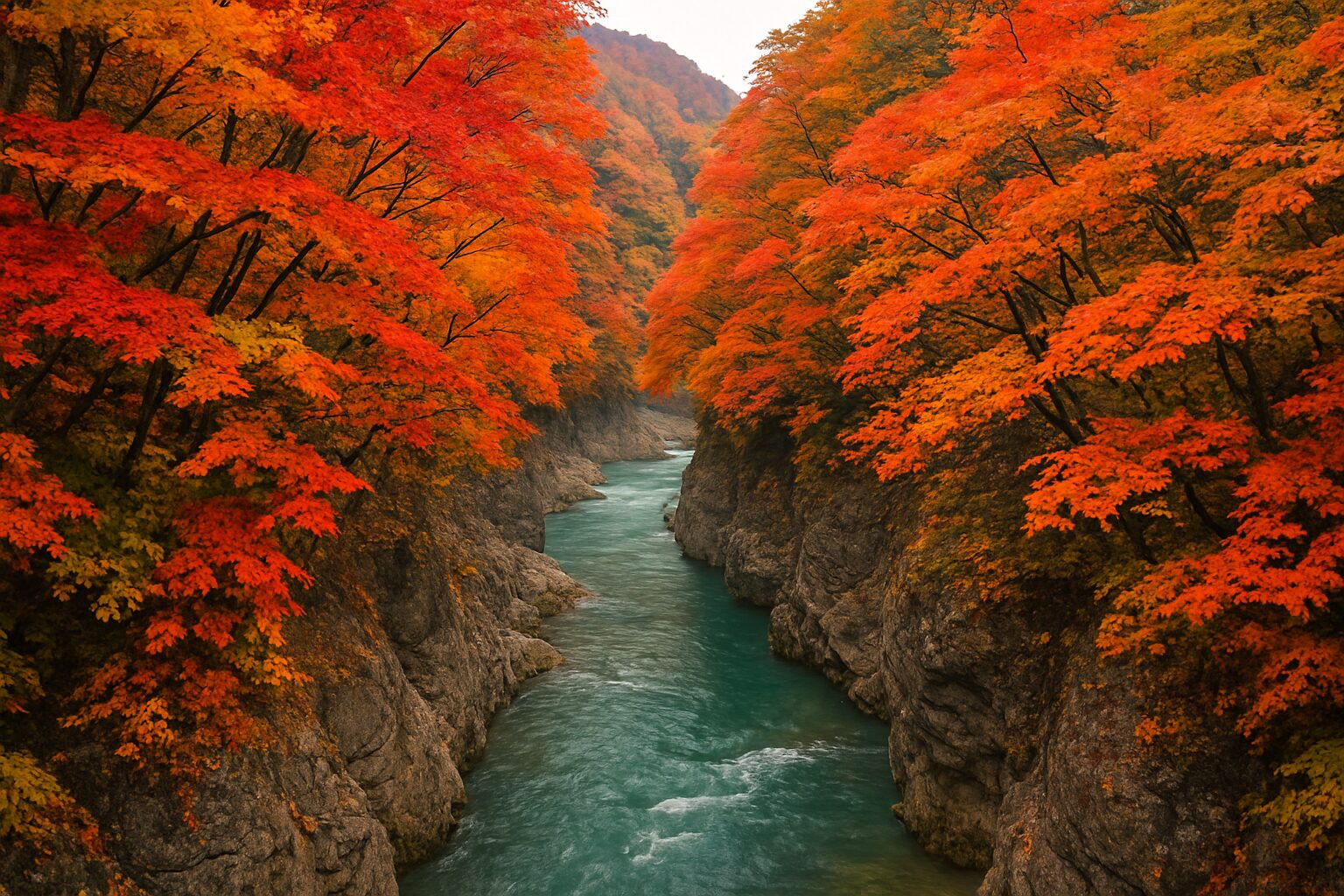
OMG, let’s talk about Japan in the fall. Seriously. Forget everything you thought you knew about autumn because Japan takes it to a whole other level. It’s not just a season; it’s a full-blown aesthetic, a total mood. The air gets this incredible crispness, the sky turns a crazy deep blue, and the whole country just decides to set itself on fire with the most insane colors you’ve ever seen. We’re talking reds that pop, oranges that are straight-up sunset-in-a-leaf, and yellows so bright you’ll need shades. And the absolute best way to dive headfirst into this explosion of color? A gorge walking tour. It’s like the main character energy of autumn adventures. You’re not just looking at the leaves; you’re literally walking through a masterpiece painted by Mother Nature herself. I’d been scrolling through pics, dreaming of that perfect blend of adventure and aesthetic, when I stumbled upon a place that looked too good to be true: Dakigaeri Gorge in Akita Prefecture. Tucked away in the northern Tohoku region, this spot promised a river so blue it looked photoshopped and forests that were basically a real-life autumn filter. I knew I had to go. This isn’t just a hike; it’s a pilgrimage for anyone who lives for incredible views, epic photos, and that feeling of discovering a place so magical it doesn’t seem real. So, grab your comfiest boots and your portable charger, because I’m about to spill all the tea on how to have the most unforgettable autumn adventure at Dakigaeri Gorge.
If you’re looking for another incredible way to experience Japan’s dramatic landscapes, consider exploring its volcanic hikes and onsen trails.
The Vibe Check: What is Dakigaeri Gorge Even?
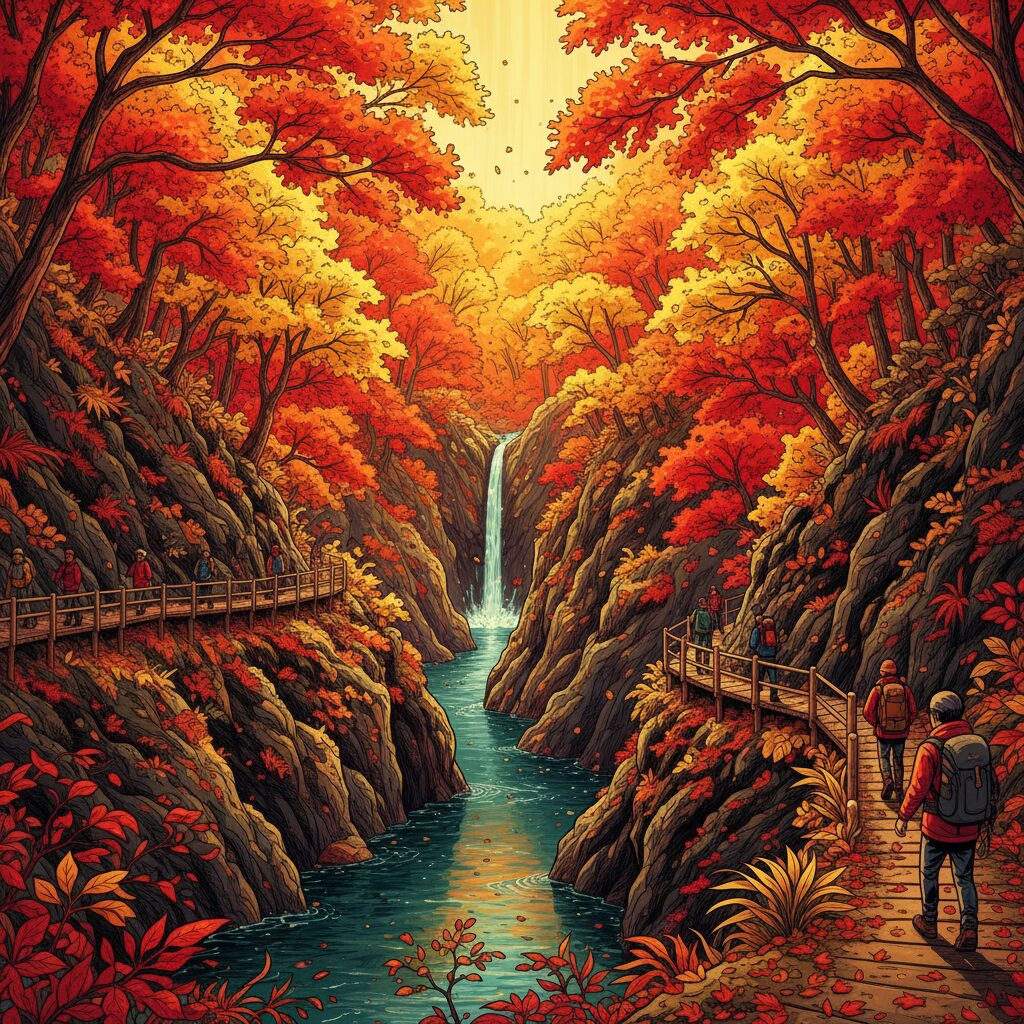
Before diving into the play-by-play of my trip, let’s set the scene. Dakigaeri Gorge isn’t just some random pretty spot; it’s an entire vibe with a backstory that’s honestly iconic. It’s known as one of the most beautiful gorges in the entire Tohoku region, and believe me, the competition is fierce. But Dakigaeri stands out. It’s an incredible ravine carved by the Tama River, with towering cliffs covered in ancient trees. In autumn, this place undergoes a total transformation, an epic glow-up, turning the landscape into a canvas of fiery colors that contrast beautifully with the strikingly blue water. It’s a place that feels wild and untouched, yet incredibly welcoming and accessible—a perfect combination, if you ask me.
A Nickname with a Story
First, the name. “Dakigaeri” (抱返り) literally means something like “hugging and turning back.” I was so curious about this, and when I found out why, it added so much to the experience. The legend goes that long ago, the path through the gorge was so dangerously narrow and steep that when two people met, they had to literally hug each other to squeeze past. How wild is that? It paints a picture of a rugged, adventurous past, and even though the path is now safe and well-maintained, you can still feel that whisper of history as you walk along the cliffs. It makes you appreciate the journey even more, knowing what it took for people to explore this place centuries ago. It’s not just a name; it’s a story that connects you to the generations who walked there before.
The Bluest Water You’ve Ever Seen
Okay, can we talk about the water? Because it deserves its own spotlight. They call it “Dakigaeri Blue,” and that’s no exaggeration. The Tama River flowing through the gorge has a color I can barely describe. It’s not turquoise, not sapphire… it’s this milky, vibrant, almost glowing blue that seems to emit light from within. I learned that the color comes from the mineral-rich water flowing down from Tamagawa Onsen upstream, giving it this unique, ethereal quality. Seeing this electric blue stream winding through a valley of crimson and gold leaves is an image that will be etched in my memory forever. It’s the kind of color combo that makes you stop in your tracks and just stare. Every photo I took looked like I’d cranked the saturation all the way up, but that’s just how it appears in real life. It’s a natural phenomenon that feels like pure magic and is hands down the star of the show.
Not Your Average Hike
If the word “hike” makes you think of grueling climbs and needing tons of gear, relax. The walk through Dakigaeri Gorge feels more like a scenic stroll. The main trail is a mostly flat, 1.5-kilometer path that’s super easy to navigate. It takes about 30-40 minutes each way, but you’ll want to allow plenty more time because you’ll be stopping for photos every few seconds, I promise. The path is literally carved into the cliffside, offering insane, uninterrupted views of the river below and the forest canopy above. It’s exciting without being intimidating, and perfect for nearly any fitness level. You can simply stroll, soak in the atmosphere, and let the scenery do all the work. It’s the ideal blend of breathtaking nature and laid-back, accessible adventure. You get all the rewards of a massive mountain trek without breaking a sweat… unless it’s from running back and forth to capture the perfect shot.
Your Ultimate Autumn Itinerary: The Dakigaeri Gorge Walk-Through
Alright, let’s dive into the main event: the walk itself. Experiencing Dakigaeri Gorge feels like watching a story unfold on screen, complete with an opening scene, rising action, and a breathtaking finale that will leave you utterly speechless. The entire trail is a highlight reel, but a few moments stand out as pure, unfiltered magic. From the instant you arrive, it’s as if you’ve stepped into another world, where every view surpasses the last in beauty.
Starting Off: Dakigaeri Shrine and Kami no Iwahashi Bridge
The adventure kicks off the moment you step out of the car or bus. The entrance buzzes with energy, especially during the autumn festival. There’s a small yet lovely shrine—Dakigaeri Shrine—where you can offer a quick prayer for a safe and beautiful journey, a perfect and calming way to begin. But the true gateway to the gorge is the Kami no Iwahashi, or “Bridge of God’s Rock.” This is it: the iconic bright red suspension bridge that features in all the photos. Stepping onto it is an experience. The bridge gently wobbles with each step, and as you reach the middle, the gorge unfolds in its full grandeur. To your left, the valley stretches out with a blue river slicing through a fiery forest. The vivid red of the bridge against the natural hues of the gorge is a photographer’s dream. I easily spent twenty minutes on this bridge, spinning around, soaking in the full 360-degree panorama. You hear the river rushing beneath, feel the cool mountain breeze on your face, and see the enormous cliffs you’re about to follow. It’s the perfect appetizer to what’s next, pumping your excitement for the journey ahead.
The Promenade Path: A Runway of Colors
Crossing the bridge brings you to the main attraction: the promenade path. This trail is a marvel of design, hugging the cliffside and occasionally dipping into short, hand-carved tunnels that add a sense of adventure and mystery. Peering out from a tunnel to a stunning new view is thrilling. The path is wide enough to feel completely safe, yet close enough to the edge to give you a rush of height and openness. Each twist and turn reveals a fresh perspective. Sometimes, you look down onto the serene blue river pooling in a calm basin; the next moment, it crashes over rocks in a series of mini-rapids. Throughout, you’re immersed in autumn’s embrace. Japanese maples, or momiji, steal the show with delicate leaves in deep scarlet and fiery red, mingling with bright yellow beech and birch, and evergreen needles that still hold strong. The canopy above is just as stunning as the river views below, making you feel like you’re strolling through a living kaleidoscope.
Photo Opportunity Central
You’ll want your camera ready the entire walk—every step is a potential photoshoot. A prime spot is just after the first big bend, where the cliff curves perfectly to frame the river and the distant tree-lined bank. Morning light here is divine, illuminating the leaves with a beautiful glow. Another fantastic location is inside one of the shorter rock tunnels. Use the dark, rugged tunnel entrance as a dramatic frame for the brightly lit gorge outside. It’s all about contrasting light and dark, rough and soft, blue and red. My tip? Don’t just shoot outward at the view—turn around and capture the path behind you. Seeing the trail carved into rock with other hikers walking gives a wonderful sense of scale and adventure. And, of course, don’t miss those classic shots looking straight down at the impossible blue river—it’s a color that demands to be captured.
The Grand Finale: Mikaeri no Taki Waterfall
Just when you think it can’t get any more spectacular, you reach the end of the 1.5 km trail. The path opens onto a viewing platform where Mikaeri no Taki—the “Looking Back Waterfall”—awaits. The name fits perfectly. The waterfall cascades delicately down a dark rock face in a lacy pattern, surrounded by a natural amphitheater of autumn foliage. The sound is incredible—not a deafening roar, but a powerful, soothing rush that fills the air. The mist from the falls feels refreshing on your face after the walk. The viewing area is an ideal spot to relax, with benches where you can sit, have a snack, and absorb the astonishing beauty around you. The name “Mikaeri no Taki” reflects how captivating the falls are—you can’t help but turn back to gaze at them one last time as you leave. And it’s entirely true. I glanced back at least five times on my way out, desperate to imprint the scene on my memory forever. It’s the most satisfying, beautiful end to an already perfect walk.
Level Up Your Trip: Beyond the Gorge Walk

While Dakigaeri Gorge is undoubtedly the highlight, the surrounding region in Akita is brimming with incredible experiences that will make your trip even more unforgettable. This area represents pure, authentic Japan, and spending an extra day or two here is highly recommended. Turning your gorge hike into a full cultural getaway is the ultimate insider’s tip.
Immersing Yourself in the Onsen Atmosphere at Kakunodate
The ideal base for your Dakigaeri excursion is the nearby town of Kakunodate. Just a short drive or bus ride away, it is one of Japan’s most beautiful and well-preserved samurai towns. Strolling through the main samurai district feels like stepping onto a movie set. The streets are wide and lined with magnificent, historic samurai residences, many of which are open to visitors. These houses boast stunning dark wood walls and imposing gates, and while Kakunodate is renowned for its weeping cherry blossoms in spring, the town takes on a uniquely elegant and atmospheric feel in autumn. Bare trees form intricate, sculptural silhouettes against the sky. After a day of walking in the crisp fall air, nothing beats checking into a traditional ryokan (Japanese inn) and heading straight to the onsen (hot spring). Soaking in the steaming, mineral-rich water while gazing at a Japanese garden offers supreme relaxation. It soothes both your tired muscles and your spirit. Then, wrapped in a cozy yukata (cotton robe), you can enjoy an elaborate multi-course kaiseki dinner featuring Akita’s finest local and seasonal ingredients. This is a deep immersion into Japanese hospitality and culture that you will cherish forever.
Savoring Akita: Nourishing Your Adventure
Let’s be honest, food is a huge part of travel, and Akita’s cuisine is the ultimate comfort fare, especially in fall. You simply must try Kiritanpo-nabe, the region’s soul food. Kiritanpo are skewers of freshly pounded rice toasted over a fire until crispy on the outside yet soft and chewy inside. They are added to a savory chicken and vegetable hot pot, typically including burdock root, mushrooms, and leeks. Sharing a bubbling nabe pot with friends after a day outdoors is such a cozy, quintessentially Japanese experience. Another local specialty is Inaniwa Udon. These noodles differ from the thick, chewy udon you might know; they are thinner, flatter, and possess an incredibly smooth, silky texture that is both elegant and delicious. Served hot in a delicate broth or cold with dipping sauce, they are a must-try. And of course, you can’t overlook the sake. Akita is famous for its rice and exceptionally pure water—two essential ingredients for outstanding sake. The region produces some of Japan’s best sake, known for its clean, crisp flavor that pairs perfectly with the local cuisine. Visiting a brewery or simply ordering a recommended bottle at dinner is a wonderful way to experience the spirit of Akita.
The Deets: How to Slay Your Dakigaeri Gorge Trip
Alright, it’s planning time! A bit of logistics can go a long way in ensuring your trip is smooth, stress-free, and truly unforgettable. Japan’s travel system is fantastic, but reaching more rural places like Dakigaeri requires a bit of preparation. Don’t worry—I’ve got all the essential information covered for you.
When to Go: Timing is Crucial!
The peak season for autumn colors at Dakigaeri Gorge is fairly brief, so timing matters a lot. Typically, the best time to visit is from late October to early November, though this can vary slightly each year depending on the weather. Your best resource is the internet. Before booking, do a quick search for “Japan autumn foliage forecast” or “koyo forecast.” These updates are regularly refreshed and provide predictions for when the colors will be at their peak in different regions, including Tohoku. I recommend aiming for the very end of October. Another important note: the Dakigaeri Gorge Autumn Leaves Festival (Dakigaeri Keikoku Momiji Matsuri) usually runs during this peak period. The festival lights up the gorge with extra festivities—food stalls near the entrance sell local snacks and drinks, and sometimes there are special evening illuminations where the trees and bridge are lit up after dark. Visiting during the festival adds a fun, lively vibe, but it also means bigger crowds, so plan accordingly!
Getting There: Enjoy the Journey
Dakigaeri Gorge is nestled in a picturesque, rural part of Akita, making the trip part of the adventure. The most common route for international visitors is to take the Shinkansen (bullet train). From Tokyo, you can ride the Akita Shinkansen directly to Kakunodate Station. The train journey itself is incredible, speeding through beautiful Japanese countryside. If you have a Japan Rail Pass, this route is fully covered, which is a great deal. Once you arrive at the charming Kakunodate Station, you have a few choices for the final stretch to the gorge. During the autumn festival, a special shuttle bus usually runs directly from the station to the gorge entrance—this is the simplest and most cost-effective way. Be sure to check the shuttle schedule ahead of time, as services may be infrequent. Alternatively, you can take a taxi, which is faster and more flexible but also pricier—about a 20-25 minute ride. If you’re comfortable driving in Japan, renting a car is another excellent option, giving you freedom to explore the surrounding area at your own pace. There’s a large parking lot at the gorge, but it fills up quickly on weekends during peak season, so arriving early is essential.
What to Wear & Pack: Your Gorge Style Guide
Picking the perfect outfit for a day at Dakigaeri Gorge means balancing style with practicality. You want to look great in photos but also be comfortable and ready for mountain weather. First and foremost: footwear is key. Choose comfortable, sturdy shoes with good grip—stylish sneakers, trail runners, or comfy walking boots work best. No heels or flimsy sandals! For clothing, layering is essential. The gorge can be noticeably cooler than town, especially in shaded spots. Start with a cozy base layer, add a warm fleece or chic knit sweater, and top it off with a light jacket that’s ideally windproof and water-resistant. A sleek trench coat or trendy puffer jacket would be perfect. This layering lets you easily add or remove clothing as you warm up or as weather conditions change. For accessories, a cute beanie or hat is great for warmth and to keep your hair tidy in photos. Gloves can be a lifesaver on colder days. Bring a stylish yet practical backpack to hold essentials like water, snacks, your wallet, and especially a portable power bank for your phone—you’ll be taking tons of photos and videos, and your battery will drain faster than you expect!
Pro Tips from a Fellow Traveler
After every major trip, I always end up with a list of little things I wish I’d known beforehand. These small tips can make a huge difference, turning a great trip into a perfect one. So here are my insider suggestions for making your visit to Dakigaeri Gorge absolutely flawless.
Beat the Crowds, Get the Perfect Shot
This is probably my most important piece of advice. Dakigaeri Gorge is very popular, especially on peak autumn weekends. It can become seriously crowded, with the narrow path turning into a slow-moving line of people. For the best, most peaceful experience and to capture clean, people-free photos for your Instagram, you need a plan. Try to go on a weekday if you can. The difference between a Tuesday and a Saturday is like night and day. If a weekend visit is your only option, go early — and I mean really early. Be at the entrance just as the sun rises. You’ll have the place almost to yourself for the first hour or so, and the morning light is ideal for photography. It’s soft, golden, and makes the autumn colors even more vibrant. The magical, misty morning atmosphere of the gorge is something you won’t forget.
Cash is King
While Japan’s cities are increasingly card-friendly, rural areas still primarily operate on cash. Don’t get caught unprepared. Before leaving Kakunodate, be sure to withdraw enough Japanese yen to cover your expenses for the day. You’ll need cash for the shuttle bus, a taxi if you take one, any food or drinks from festival stalls, and small souvenirs or offerings at the shrine. It’s always better to have a bit more cash than not enough. Assume you won’t be able to use your card until you return to a larger restaurant or hotel in town.
Respect the Trail
This beautiful gorge is a precious natural treasure, and it’s up to all of us to help keep it that way. The rule is simple: leave no trace. Pack out everything you bring in. There are very few trash cans along the trail, so bring a small bag to carry any wrappers or empty bottles until you can dispose of them properly back in town. Also, please stay on the designated paths. The ecosystem here is fragile, and straying off-trail can harm the vegetation and cause erosion. The trails are designed for your safety and to protect the environment. Let’s keep this place as beautiful as it is for generations of visitors to come.
Mind the Bears (Seriously!)
This last tip might sound a bit intense, but it’s important local advice. The mountains of Tohoku are wild and home to Asiatic black bears. While it’s unlikely you’ll encounter one on the main, busy trail, it’s not impossible, especially if you go very early or late in the day. It’s common for hikers in Japan to carry a “kuma-yoke suzu,” or bear bell. This small bell attaches to your backpack, and its constant jingling alerts bears to your presence so you don’t startle them. You can buy these at outdoor stores or souvenir shops in the area. It’s a simple precaution that offers peace of mind and shows respect for the fact that you’re visiting the home of wild animals. Plus, it makes a nice little keepsake!
More Than Just a Pretty Picture
As I walked back across the Kami no Iwahashi bridge at the end of my visit, with the afternoon sun casting a warm glow over the entire valley, I felt deeply overwhelmed with gratitude. A trip to Dakigaeri Gorge is far more than just an opportunity to capture stunning content for social media. Yes, the photos are breathtaking, and your camera roll will be filled with vibrant hues. But the true magic lies in the experience itself. It’s the feeling of being utterly humbled by the grandeur of nature, of breathing in air so pure and crisp it seems to heal you from within. It’s about engaging in the Japanese cultural tradition of “momijigari,” which goes beyond “leaf viewing” to mindfully appreciating the fleeting beauty of a single moment in time. This experience reminded me that some places are so stunning and powerful, they demand your full attention. They pull you out of your thoughts and ground you in the present. Dakigaeri Gorge, with its impossibly blue waters and fiery forest, is one of those places. It’s an adventure that nourishes your soul and leaves you with memories more vivid than the colors themselves. If you’re planning a trip to Japan in the fall, do yourself a favor and make this incredible hidden gem the top of your bucket list. Chase those colors—you won’t regret it.