Yo, what’s up, fellow traveler? Taro Kobayashi here. Ever felt that itch? That deep-down pull to just get away from it all, to stand somewhere so ridiculously epic it rewires your brain? I’m talking about a place where the ground beneath your feet hums with ancient power and the sky above explodes with a billion distant suns. If you’re nodding along, then you need to know about a place that’s straight-up legendary. We’re going to Kumamoto Prefecture, deep in the heart of Kyushu, to a place called Aso. But this isn’t just any mountain. Aso is a colossal, living, breathing double volcano caldera, a massive natural bowl carved by unimaginable forces. And inside this giant’s cradle, under some of the darkest skies in Japan, you can witness a celestial show that will absolutely change your life. It’s a place where you can feel the raw energy of the Earth and the infinite chill of the cosmos all at once. It’s a vibe that’s impossible to describe but once you feel it, you’ll never forget it. This is the real deal, a journey into the heart of fire and the soul of the night. Get ready to have your perspective totally flipped.
The Land Forged in Fire: Understanding Aso’s Insane Geology
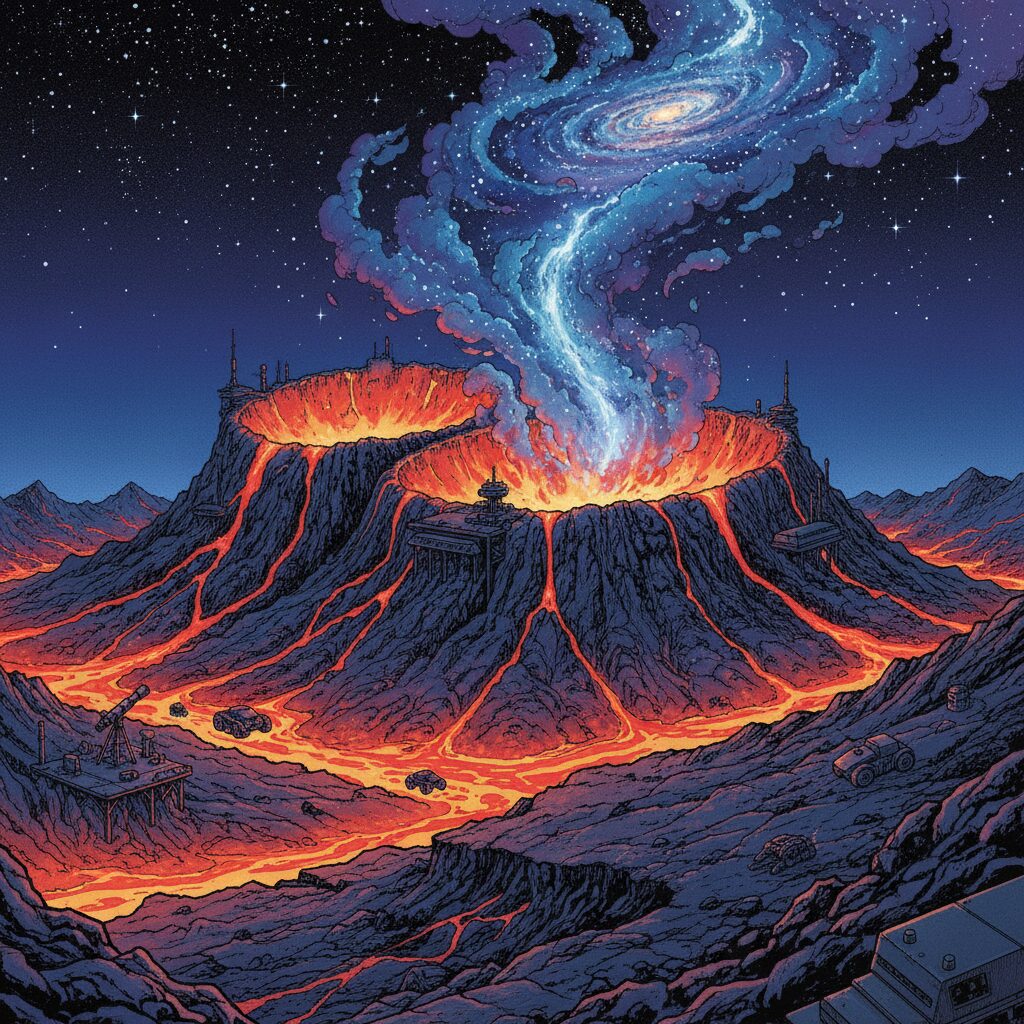
Before we even reach the stars, you need to grasp where you’re standing. The Aso caldera isn’t merely a crater; it’s a mega-crater, a super-caldera. Its circumference spans about 128 kilometers—that’s enormous. So vast, in fact, that entire towns, train lines, and farms lie comfortably within it. It’s a world inside a world. This entire landscape was shaped by a series of cataclysmic eruptions between 270,000 and 90,000 years ago. The last of these, the Aso-4 eruption, ranks among the largest volcanic events in the planet’s recent geological history. It was so powerful that volcanic ash traveled all the way to Hokkaido. When the smoke cleared and the magma chamber below collapsed, this enormous depression was formed. That’s the outer caldera, the first ring of your double-volcano experience.
But the story didn’t end there. At the center of this gigantic basin, volcanic activity continued, pushing up a new cluster of peaks. These are collectively called Mount Aso, or the Aso Go-gaku (the Five Aso Peaks). They include Takadake, Nekodake, Eboshidake, Kishimadake, and the only one still active, Nakadake. From a distance, especially from the northern rim of the caldera, these five peaks resemble a giant sleeping Buddha, a silhouette that has become a regional icon. This is the inner structure, the second part of the double caldera. So when you’re stargazing from the caldera floor, you’re literally standing on the collapsed roof of an ancient supervolcano, surrounded by a towering rim, while looking up past a younger, still-active volcanic core. The scale is truly mind-bending. The ground is rich with volcanic soil, making the grasslands incredibly green and lush. The air feels different here—cleaner, crisper, and charged with a primal energy you just don’t find in the city. You’re in a place of immense destruction and incredible creation, a duality you can feel deep in your bones.
Daytime Missions Before the Darkness Drops
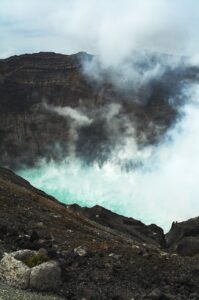
To truly appreciate the celestial spectacle at night, you need to connect with the stage during the day. Aso is an outdoor enthusiast’s paradise, and hiking here is on an entirely different level. The absolute must-visit site is the Kusasenri-ga-hama plateau, commonly called Kusasenri. It’s a vast, sprawling grassland featuring a couple of large, rain-fed ponds situated right in front of the smoldering Nakadake crater. This place is pure magic. You can wander for hours across the grassy plains, watching free-roaming horses and cows graze peacefully. The contrast between the tranquil, green pasture and the plumes of volcanic smoke constantly rising from Nakadake in the background creates an unforgettable scene. It’s both beautiful and intimidating at once. You can hike up a small, conical peak adjacent to Kusasenri called Kishimadake. The trail is well-maintained, and the climb offers an even better perspective of the entire area. From the top, you can see the vastness of Kusasenri, the smoking crater, and the surrounding peaks. It’s an excellent warm-up for the cosmic show later on. Nearby, the Aso Volcano Museum is a fantastic spot to delve into the geology and watch a live feed from cameras aimed directly into Nakadake’s crater, especially if access is limited due to gas levels.
Another essential daytime experience is making the pilgrimage to Daikanbo, the highest point on the northern caldera rim. The drive up, particularly via the famous Milk Road, is an adventure in itself, with winding roads offering breathtaking views at every turn. But when you reach Daikanbo, your jaw will drop. This viewpoint allows you to truly grasp the astonishing scale of the Aso caldera. The panoramic vista is legendary. You can see the entire caldera stretched out below, with the five peaks of the sleeping Buddha perfectly silhouetted in the center. On a clear day, the view appears endless. You feel like you’re standing on the edge of the world, looking down into a lost realm. The wind rushes past you, and the sense of vastness is overwhelming. Standing there, you realize how small you are in the presence of these geological forces. It’s both humbling and exhilarating. Spend some time here, try the famous local soft-serve ice cream, and let the view fully sink in. This perspective is crucial, because later, you’ll be looking up from inside that very bowl, and your mind will have a perfect map of the epic landscape you’re in.
Life Inside the Beast: Aso’s Culture and Flavors
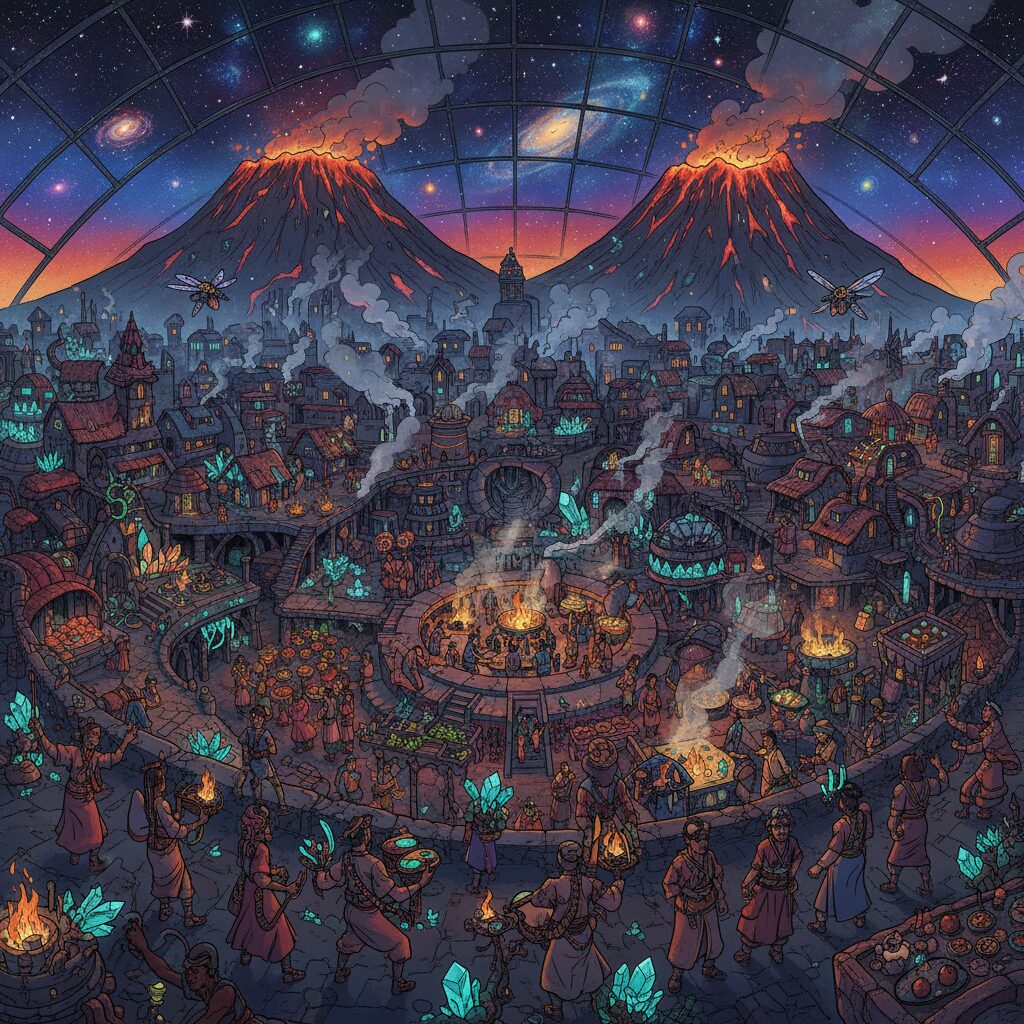
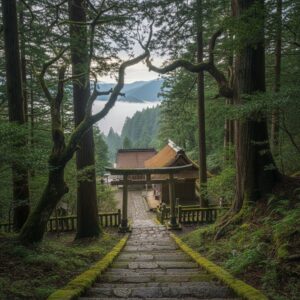
The most surreal aspect of Aso is that people actually live here. For centuries, communities have flourished within this volcanic caldera, cultivating a distinctive culture deeply connected to the powerful natural surroundings. Central to this is the Aso Shrine, one of Japan’s oldest and most significant shrines. Situated in the town of Aso, this sacred site is dedicated to Takeiwatatsu-no-Mikoto, the legendary deity believed to have created the Aso region. According to legend, he kicked a hole in the caldera wall to drain a massive lake that once filled it, making the land habitable for humans. The shrine itself is a stunning, tranquil complex steeped in history. Although it suffered heavy damage in the 2016 Kumamoto earthquake, the community’s commitment to restoring it showcases their resilience and deep bond with this land. Visiting the shrine offers a way to connect with Aso’s spiritual essence and understand the respect and reverence locals have for the volcano they worship as a god.
And when discussing life in Aso, the food is impossible to ignore. The fertile volcanic soil and pure spring water create an agricultural haven. Yet the undisputed star of Aso’s cuisine is Akaushi, the Japanese Brown Cow. These cattle are raised free-range on the expansive grasslands within the caldera. Their healthy, stress-free lifestyle produces beef that is truly extraordinary. Leaner than other wagyu varieties, it is remarkably tender and rich with deep, savory umami flavors. Sampling Akaushi-don (a rice bowl topped with perfectly grilled Akaushi beef) at a local restaurant is an essential part of the Aso experience—it tastes like the land itself. Beyond the beef, Aso is renowned for its dairy products. The fresh milk, yogurt, and cheese are exceptional, thanks to the contented cows grazing on nutrient-dense pasture. After a day of exploration, the ideal way to relax is to visit Uchinomaki Onsen, a hot spring town nestled inside the caldera. Soaking in the mineral-rich volcanic waters while gazing up at the caldera rim offers the ultimate relaxation—an immersive experience in Aso’s geology, where the Earth’s natural warmth soothes your muscles before a long night of stargazing.
When the Sun Dips: The Celestial Show Begins
As the afternoon fades, the entire atmosphere of the caldera begins to transform. This is the magic hour. Find a vantage point facing west—perhaps up at Daikanbo or a high spot on the Kusasenri plains—and simply watch. The sun slips behind the western rim of the caldera, and the sky puts on a spectacle worth every moment. Colors flow across the horizon—fiery oranges, soft pinks, and deep purples—reflecting off the grasslands and volcanic peaks. The temperature drops quickly as the day’s warmth drains away, replaced by a crisp, cool chill. This is your signal to start layering up. As the colors fade, the scene shifts into the blue hour, a time of deep, tranquil twilight with everything bathed in a gentle, ethereal light. Silence deepens. The daytime sounds of tourists and cars disappear, replaced by the wind sweeping across the plains. It’s a moment of pure calm, a sensory reset before the main event.
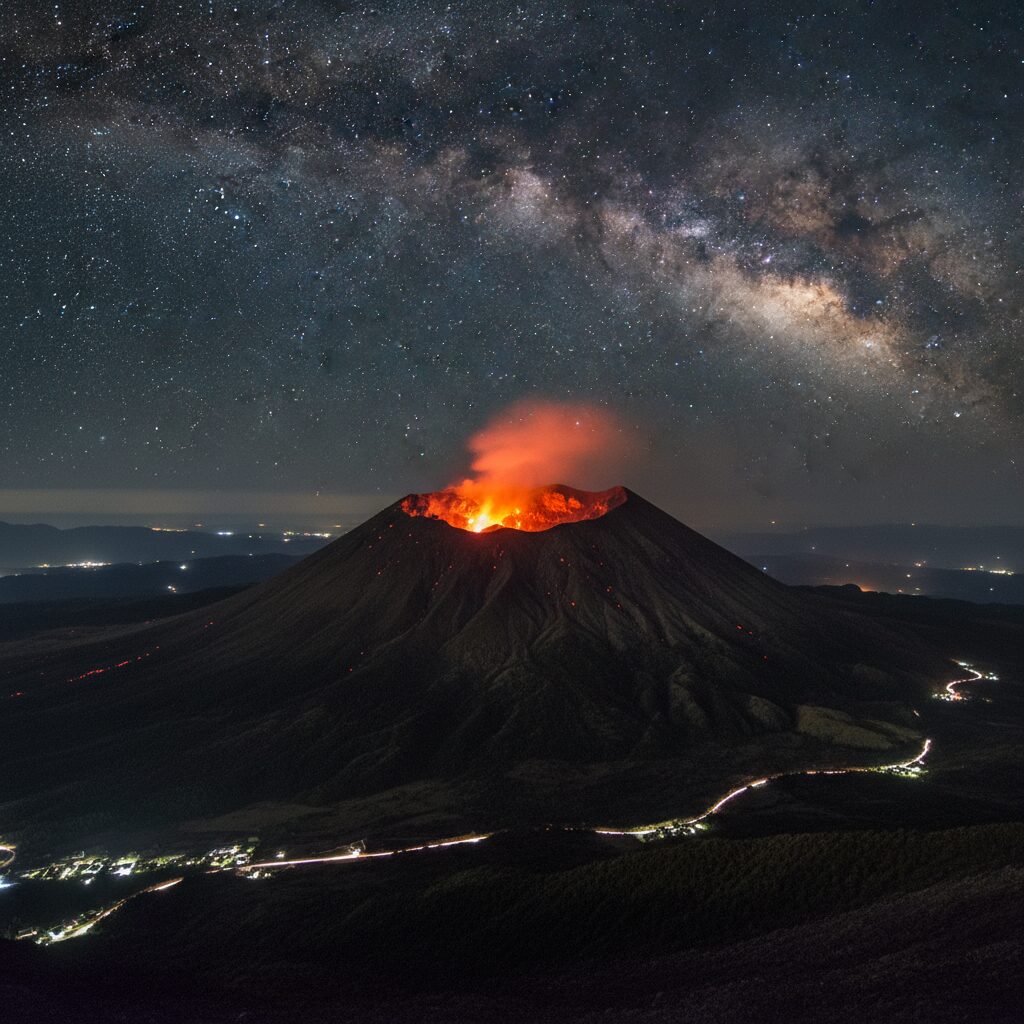
Then it begins. The first star appears, shining impossibly bright against the darkening indigo sky. Then another, then another. Within half an hour, as the last remnants of sunlight vanish, the sky transforms into a spectacle you’ve only seen in magazines. The sheer number of stars is breathtaking. Far from city light pollution, the sky reveals its true depth. Constellations barely visible at home now shine clearly, surrounded by a thick, glittering dust of countless smaller stars. If you’re here in the right season—from late spring to autumn—the undisputed centerpiece slowly rises: the Milky Way. Witnessing the galactic core stretch across the sky from horizon to horizon becomes a lasting memory. It doesn’t resemble a faint cloud but a thick, textured, luminous river of light dense with nebulae and star clusters. The darkness in Aso feels alive—so complete that the starlight seems tangible, as if you could reach out and touch it. This is not merely gazing at the sky; it’s being immersed in the cosmos.
Your Front-Row Seat to the Galaxy
You have several options for where to set up for the night’s show, each offering a slightly different cosmic experience. The best spot depends on your desired vibe.
Kusasenri Plateau: The Infinity Pool of Stars
This classic spot is popular for good reason. Driving to Kusasenri after dark is an adventure itself—empty roads winding upward as you leave the lights of the caldera towns behind. When you turn off your engine and step out at the Kusasenri parking lot, the sky immediately overwhelms you. It’s a perfect, uninterrupted dome with no mountains blocking your view—a full 360-degree panorama of stars. Bring a blanket or camp chair, walk out onto the grassland away from the parking area, and lie back. The sensation is incredible; you feel as if you’re floating in space, with the dark silhouette of the smoking Nakadake crater beside you as a reminder of the earth’s power. The scale of the sky here is vast, almost disorienting in the best way. This location is ideal for astrophotography. The open space offers endless framing options—from ponds reflecting stars to the Milky Way arching over Kishimadake. The profound silence is only broken by the wind. It’s an intimate, humbling, and deeply personal stargazing experience.
Daikanbo Lookout: The Balcony of the Gods
If Kusasenri is about immersion, Daikanbo is about transcendence. Stargazing from the caldera rim provides a different, equally breathtaking perspective. Here, you’re not just looking up but out and down. The sky is just as dark and brilliant, but now you overlook the vast, shadowed caldera floor below. On clear nights, you see the tiny, sparkling lights of Aso town and Uchinomaki, like a constellation fallen to earth. This view offers a powerful sense of height and scale. The silhouette of the sleeping Buddha appears not against blue sky, but under a backdrop of infinite stars. It feels grander, more cinematic—like watching the universe from a private balcony. The wind is stronger here, so bundling up is essential, but the payoff is a spectacular view that unites heaven and earth. Seeing the Milky Way rise over the caldera rim from this vantage feels ancient and sacred, as if witnessing a scene meant only for the gods.
What You’re Actually Seeing Up There
For those accustomed to washed-out city skies, the sheer number of stars visible in Aso can be stunning. First, let your eyes adjust by turning off your phone, killing all lights, and sitting in darkness for about 20 minutes. As your pupils dilate, the sky reveals more secrets: faint stars emerge, and the Milky Way brightens from a subtle cloud to a vivid, textured band. You’ll notice not only bright stars but also dark dust lanes within the galaxy, creating depth and structure. Major constellations like Orion in winter, with its nebula visible as a fuzzy patch, or the Summer Triangle of Vega, Deneb, and Altair, become easy to spot. Satellites glide silently across the sky and, with luck, a meteor streaks fiery through the atmosphere. The clarity is so sharp that planets like Jupiter and Saturn shine with steady, brilliant light, clearly distinct from twinkling stars. Bringing binoculars can be transformative, turning fuzzy patches into dense star clusters and revealing moon craters if it’s visible. It’s an interactive experience—a chance to reconnect with the universe we belong to but often overlook.
The Nitty-Gritty: Your Aso Stargazing Playbook

Alright, you’re convinced. You’re ready to plunge into the cosmic cauldron. But a journey this epic demands a solid plan. Just winging it won’t cut it. Here’s the lowdown on how to do it right.
Getting There: The Car Rules
Let’s be honest: Aso is rural Japan. Public transportation is limited and practically nonexistent at night. To have the freedom to chase clear skies and reach the best stargazing spots, you need a car—no exceptions. Renting one from Kumamoto Airport (Aso Kumamoto Airport) or Kumamoto City is your best bet. The drive into the caldera is part of the adventure. The roads are well-maintained and incredibly scenic. The Milk Road along the northern rim and the Panorama Line on the southern side offer breathtaking views. Just keep in mind the mountain roads are winding and sometimes narrow. At night, they’re unlit, so drive carefully and watch out for wildlife like deer or wild boar. Having your own wheels means you can stay out as late as you want, switch locations if one spot is cloudy, and have a warm refuge if the cold gets too intense.
When to Go: Timing Is Key
Your Aso stargazing experience hinges on the weather and the moon. The best seasons are usually autumn and winter, from October to February. The air is colder and less humid, resulting in clearer, more stable skies. Spring can be good too, but the weather can be unpredictable. Summer brings the rainy season (tsuyu) in June and July, followed by typhoon season in August and September, making it the most challenging time to plan. But the most crucial factor is the moon. Aim to schedule your trip around the new moon. A full moon is basically a huge source of light pollution, washing out all but the brightest stars and hiding the Milky Way. Use a moon phase calendar and choose a few nights when the moon is a thin crescent or ideally not visible at all. And absolutely monitor the weather forecast. Look for clear sky charts specific to the Aso area. A cloudy night there is just a very dark, very cold night.
Gear Up: Pack Smart
The temperature difference between day and night in Aso is no joke. It can be pleasantly warm during a sunny afternoon, then drop to near-freezing after dark—even in summer. Layers are essential. Seriously. Bring a thermal base layer, a fleece or mid-layer, and a windproof, insulated outer jacket. A beanie, gloves, and warm socks aren’t optional. Sturdy hiking shoes are a must for uneven terrain in the dark. A headlamp is necessary, and a red-light headlamp is even better since red light preserves your night vision. A portable camping chair or thick blanket will make stargazing far more comfortable. The secret weapon: a thermos filled with a hot drink. A warm sip of coffee, tea, or hot chocolate when the chill sets in is a game-changer. For photographers, a sturdy tripod is essential for sharp, long-exposure shots. A wide-angle lens with a fast aperture (around f/2.8 or lower) is ideal. Don’t forget a remote shutter or use your camera’s self-timer to avoid shake, and bring extra batteries since cold drains power faster.
Where to Stay: Rest Easy
Aso offers a variety of accommodations for every budget. For a full experience, staying at a traditional Japanese inn (ryokan) in Uchinomaki Onsen is highly recommended. You’ll enjoy an exquisite multi-course kaiseki dinner featuring local ingredients, and nothing beats soaking in a natural hot spring after a long, cold night outside. There are also many casual guesthouses (minshuku) and modern hotels nearby. If you’re on a tighter budget or want to be closer to nature, several well-equipped campsites are scattered around the caldera. Waking up to the morning mist rising around the Aso peaks is an unforgettable experience. Just be sure to book accommodations in advance, especially during peak seasons like autumn foliage or Golden Week.
Stay Safe: Respect the Volcano
This is the most important part. Mount Aso is an active volcano. That’s not just a cool fact—it’s a reality you must respect. The Japan Meteorological Agency (JMA) constantly monitors the volcano and issues alert levels ranging from 1 (normal) to 5 (evacuate). These levels define the size of the exclusion zone around the active Nakadake crater. Before heading near the central peaks, check the current alert level on the JMA website. The road leading to the crater is often closed at Level 2 or higher due to volcanic gas (mainly sulfur dioxide) and potential small eruptions. The gas can be harmful, especially for those with respiratory issues. Always follow warnings, closures, and instructions from local authorities. Your safety comes first. The volcano is in charge here—we’re just visitors.
More Than Just Stars: The Aso Vibe
Visiting Aso to see the stars is about far more than just an astronomical event. It’s a pilgrimage to a place of immense power and breathtaking beauty. When you stand on the floor of the caldera at night, there’s a profound feeling—a deep connection to something ancient and vast. You are standing on land forged by unimaginable violence, a place still geologically alive and shifting beneath your feet. At the same time, you gaze up at a sky that embodies deep time on a cosmic scale, witnessing light from stars that has traveled thousands, even millions, of years to reach you. The contrast between Earth’s fiery, chaotic energy and the silent, cold, orderly dance of the cosmos is incredibly moving. It prompts you to reflect on your own place in the universe. It’s a feeling of being both insignificant in the face of such grandeur and incredibly fortunate to be a conscious being able to experience it all. For generations, the people of Aso have lived with this duality—cultivating the fertile land gifted by the volcano while respecting its power to take everything away. That spirit of resilience, reverence, and connection to nature is palpable wherever you go. It permeates you.
So yes, you’ll return with stunning photos and a story to share. But the true keepsake from a trip to Aso is a shift in your perspective. It’s the memory of the cold air on your face, the rumbling energy beneath the ground, and the overwhelming light of a billion stars. It’s an experience that rekindles your sense of wonder. It reminds you there are still places in the world that are wild, powerful, and capable of making you feel completely and utterly alive. This isn’t just a trip; it’s an encounter with the raw forces that shape our world and the universe. And that’s something that will stay with you long after you’ve left the caldera’s embrace. No exaggeration—it’s a whole different reality out there, and it’s waiting for you. Get ready.