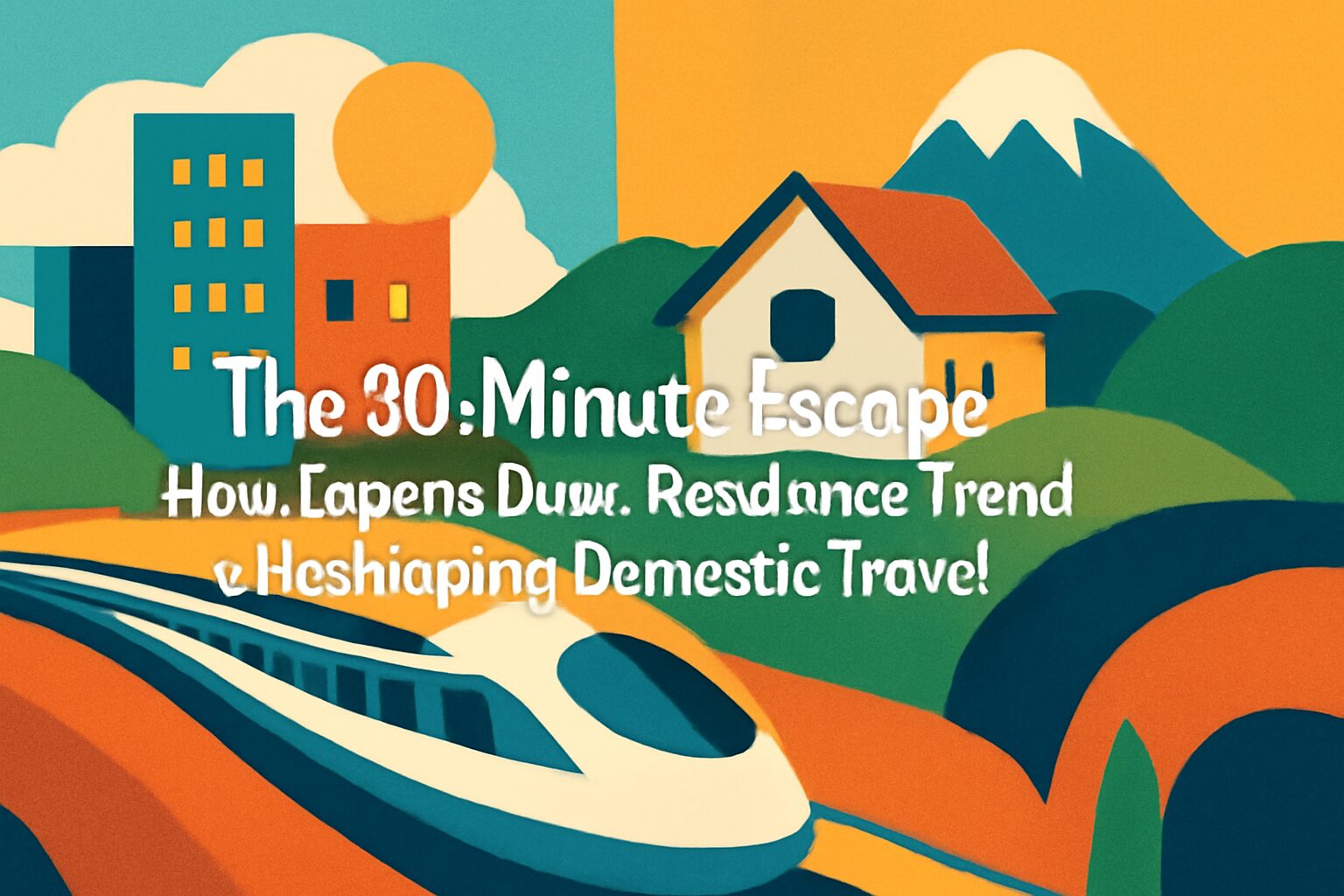
A significant shift is underway in Japan’s domestic travel landscape. A recent survey has highlighted a burgeoning desire for a “dual-residence” or nikyoten seikatsu lifestyle, with nearly 30% of Japanese expressing interest in owning a second home. This isn’t about distant holiday villas, but rather accessible retreats, typically within a 90-minute commute from their primary urban residence. This trend signals a fundamental change in how people perceive travel, work, and life, promising to revitalize regional economies and redefine tourism.
Behind the Trend: A New Vision for Work-Life Balance
The rise of the dual-residence lifestyle is not a sudden phenomenon but an acceleration of underlying societal shifts, heavily influenced by the COVID-19 pandemic.
The Remote Work Revolution
The widespread adoption of remote and hybrid work models has been the single most significant catalyst. Previously, professional life was tethered to physical offices in major metropolitan areas like Tokyo and Osaka. Now, with the freedom to work from anywhere, employees are questioning the necessity of enduring crowded commutes and the high cost of city living. The 90-minute radius represents a perfect compromise: close enough for occasional office visits or meetings, yet far enough to enjoy a drastically different, more relaxed environment.
A Quest for Well-being
Beyond practicalities, there’s a growing cultural shift towards prioritizing well-being and a better work-life balance. Urban dwellers are increasingly seeking solace in nature, craving open spaces, fresh air, and a slower pace of life. A second home in a coastal town, a mountain village, or a hot spring resort offers a readily available escape from the stresses of city life, blending leisure and daily living.
The Impact on Local Economies and Tourism
This move from short-term vacations to a more integrated, long-stay model is poised to have a profound impact on Japan’s regional areas.
From Tourist to Part-Time Resident
Unlike a typical tourist who visits for a weekend, a dual-residence holder becomes a part-time member of the local community. Their economic contribution is more consistent and diverse. They shop at local supermarkets, dine at neighborhood restaurants, and utilize local services, providing a stable stream of revenue for small businesses. This sustained consumption can be a powerful engine for local economic revitalization, especially in areas that have struggled with depopulation.
A New Real Estate Market
The trend is breathing new life into the real estate market in targeted regions. There is a rising demand for akiya (vacant houses), which are often renovated into modern second homes or workspaces. This can help address Japan’s long-standing issue of abandoned properties. Popular areas within 90 minutes of Tokyo, such as the Shonan coast, the Izu Peninsula, and Karuizawa, are already seeing increased interest and property value appreciation.
The Future of Travel in Japan
The dual-residence trend is more than just a housing choice; it’s reshaping the very definition of travel.
The Rise of “Workations”
The concept of a “workation”—blending work with a vacation—is becoming mainstream. The second home acts as a satellite office with a scenic view. This encourages longer stays and changes travel patterns from seasonal peaks to a more year-round flow. In response, local governments and businesses are investing in infrastructure like high-speed internet and developing co-working spaces to attract this new demographic of worker-travelers.
Hyper-Local Tourism
As people spend more time in one area, their travel interests shift from famous landmarks to deeper, more authentic local experiences. They build relationships with community members, participate in local festivals, and explore hidden gems. This fosters a more sustainable and meaningful form of tourism that benefits both the visitor and the host community, moving beyond superficial sightseeing to genuine cultural exchange.
In conclusion, the desire for a dual-residence lifestyle within a 90-minute commute is not just a fleeting trend. It represents a long-term evolution in Japanese society, driven by new work realities and a renewed focus on quality of life. For international observers and future visitors, it offers a fascinating glimpse into how Japan is innovating its domestic travel scene, creating vibrant, resilient communities, and forging a new, more balanced way of living.