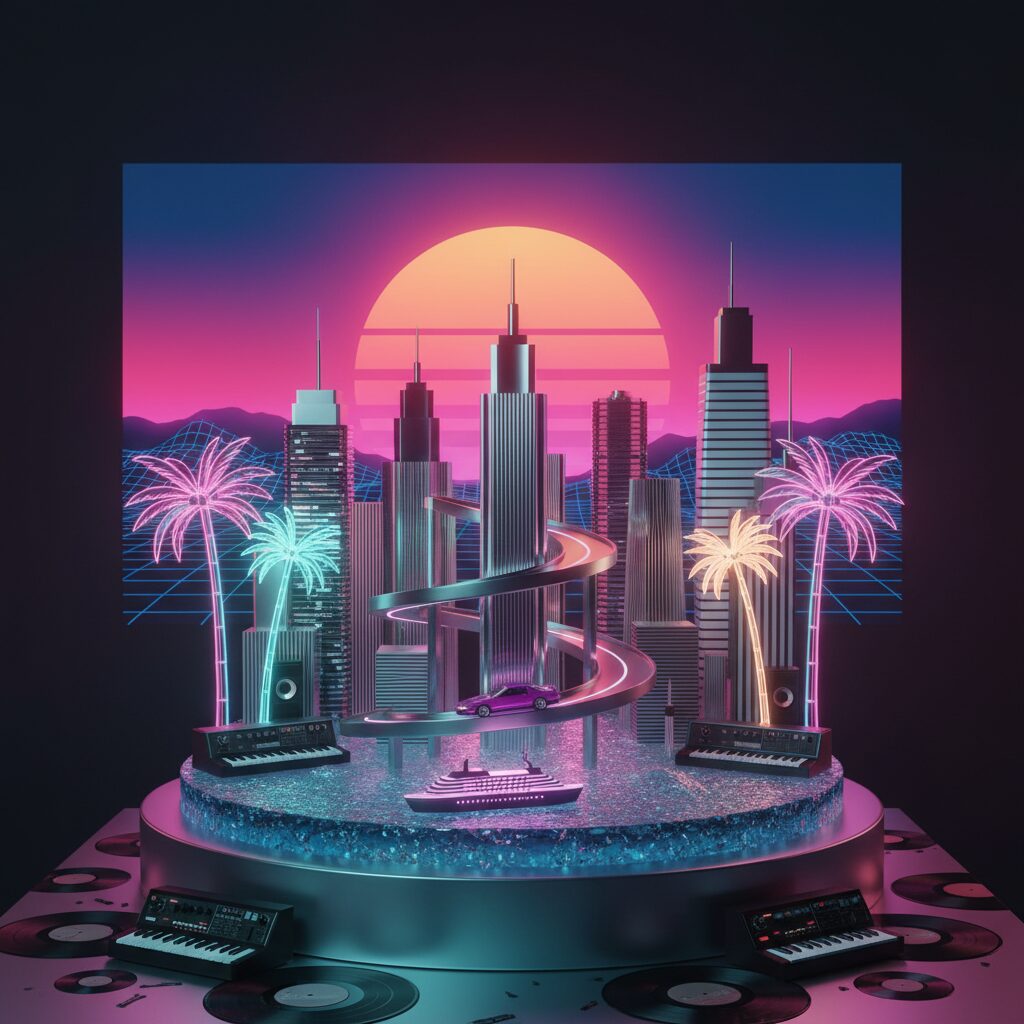
Yo, let’s get real for a sec. You’ve been there. It’s 2 AM, you’re deep in a YouTube rabbit hole, or maybe just letting your Spotify Discover Weekly do its thing. Suddenly, it hits you. A sound you’ve never heard but feels… familiar. It’s a wave of impossibly smooth bass, shimmering synths, and a voice singing in Japanese, yet somehow speaking directly to your soul. The track is probably Mariya Takeuchi’s “Plastic Love” or Miki Matsubara’s “Mayonaka no Door/Stay With Me.” The thumbnail is a grainy, stylish photo from another era. You’re hooked. You look at the upload date—1984. You look at the view count—tens of millions. And you ask the same question as everyone else: what is this, and why is it an absolute banger? This isn’t just some niche retro thing. It’s a full-blown global phenomenon. We’re talking about Japanese City Pop, the soundtrack of the 80s bubble economy, and its wild comeback is fueling a legit vinyl boom that has record execs and collectors spinning. But the real question is why. Why is this music, from a hyper-specific time and place, resonating so hard with a global audience, decades later? It’s not just about catchy tunes. It’s about a feeling—an “analog warmth,” a sense of breezy, sun-drenched optimism that feels like a portal to a better past, even if you never lived it. It’s the sound of a future that never quite happened, and we’re all just discovering its ghost. This is the story of how the slick, sophisticated sound of 80s Tokyo, a city buzzing with economic power and creative energy, became the world’s favorite escapist vibe. It’s a deep dive into the culture, the tech, and the feeling that makes you want to drop a needle on a record and just cruise.
To fully appreciate this analog warmth, one must explore the unique culture of Japan’s Showa-era audiophile sanctuaries.
What Exactly Is City Pop? The Sonic Cocktail of a Booming Japan
Not Your Average J-Pop
First, let’s set the record straight. Calling City Pop simply “J-Pop” is like referring to a carefully crafted Old Fashioned as just “whiskey.” It’s not incorrect, but it overlooks the essence entirely. City Pop isn’t a rigid genre; it’s a vibe, an aesthetic, a sonic collage that captured the spirit of a specific era. Think of it as a refined musical cocktail, blending the finest global influences with a unique Tokyo flair. Its foundation was American music—the smooth, jazz-infused chords of West Coast AOR (Adult-Oriented Rock) acts like Steely Dan and The Doobie Brothers; the compelling, infectious rhythms of funk and soul from groups like Earth, Wind & Fire; and the steady four-on-the-floor beat of disco. Yet Japanese artists weren’t merely imitating these styles; they were internalizing, reimagining, and enhancing them with a distinct melodic sensitivity and meticulous production. The outcome was a sound both familiar and entirely fresh. This was pop music for adults—sophisticated yet approachable, danceable yet ideal for a nocturnal drive through a neon-lit cityscape. The chord progressions tended to be more intricate than typical pop, influenced by jazz fusion. Horn sections were precise and impactful, string arrangements lush and cinematic. It was music that sounded luxurious because, indeed, it was.
The Soundtrack to the Economic Miracle
To truly appreciate City Pop, you need to grasp the world it emerged from: Japan’s bubble economy, or baburu keizai. From the late 1970s through the 1980s, Japan experienced an unparalleled wave of economic boom. The yen was strong, real estate prices soared to stratospheric heights, and giants like Sony and Toyota were dominating globally. The atmosphere was charged with confidence and boundless opportunity. Tokyo resembled the futuristic cityscape from Blade Runner, minus the dystopia. It was a playground for the newly wealthy, filled with cutting-edge technology, designer fashion, and vibrant nightlife. City Pop served as the literal soundtrack to this era. Its themes mirrored the lifestyle and ambitions of the urban professional class. The lyrics weren’t about protest or social critique; they celebrated romance, leisure, and the refined pleasures of city living. Songs depicted cruising along the coast in a convertible (Tatsuro Yamashita’s “Ride on Time”), enjoying cocktails by a poolside resort (Anri’s “Last Summer Whisper”), or navigating the emotional intricacies of love in a bustling metropolis (Mariya Takeuchi’s “Plastic Love”). The album artwork played a crucial role in shaping this fantasy, with artists like Hiroshi Nagai and Eizin Suzuki producing iconic, hyper-real illustrations of sunlit beaches, sparkling pools, and sleek skylines. These covers weren’t just packaging; they were invitations to step into the idyllic world the music evoked. This was pure escapism, a sonic snapshot of a nation at the zenith of its economic strength and cultural confidence. The party seemed endless, with City Pop as the ever-present DJ.
The “Analog Warmth” Factor: Why It Sounds So Damn Good
Peak Analog, Pre-Digital Excellence
Why does music recorded more than forty years ago sound so remarkably rich, detailed, and vibrant? The answer lies in a single key concept: analog warmth. City Pop emerged at the absolute peak of analog recording technology, just before the digital CD revolution took hold. This was no coincidence; Japan was a global frontrunner in high-fidelity audio gear, and its premier recording studios resembled sonic laboratories, packed with the finest equipment money could buy. With massive budgets, these studios allowed for unlimited recording time and experimentation. The whole recording process was a physical, tactile craft. Music was recorded onto thick, two-inch reel-to-reel tape, running over magnetic heads in massive, meticulously maintained machines. This method naturally produced a sound that’s hard to duplicate digitally. Tape saturation, for example, offers a subtle, pleasing form of compression and harmonic distortion when a signal is recorded “hot” onto tape. It binds the instruments together, enhances the low end, and softens harsh high frequencies. The outcome is a sound that’s full, punchy, and cohesive—what we recognize as “warmth.” The mixing consoles themselves, iconic SSL and Neve boards, had their own distinct sonic signatures that added extra richness. Every stage, from the microphone capturing a singer’s breath to the final mix printed to master tape, involved physical processes that sonically colored the music in a musically enjoyable way. It’s an imperfect, organic process, and that’s exactly where the magic lies. It’s the sonic equivalent of the contrast between a high-resolution digital photo and a beautifully developed 35mm film frame—one is clinically flawless; the other has soul.
The Session Musician GOATs
World-class technology means little without world-class talent, and this is where City Pop truly excels. The scene was ruled by an elite group of session musicians—a “Wrecking Crew” of Japanese artists—who contributed to countless iconic albums. These were not mere hired hands; they were virtuosos and innovators who shaped the sound of the era. Their names are legendary among fans: drummer Jun Aoyama, known for impossibly tight and funky grooves; bassist Koki Ito, whose melodic basslines often served as a song’s main hook; guitarist Tsunehide Matsuki, who laid down smooth rhythm parts or blazing solos with equal skill. Then there were the masterminds—artists who were both phenomenal performers and visionary producers. Tatsuro Yamashita, often dubbed the “King of City Pop,” was a studio perfectionist, crafting layered vocal harmonies and intricate arrangements to create his signature wall of sound. Haruomi Hosono, a founding member of the iconic Yellow Magic Orchestra, infused his productions with playful, experimental, and exotic elements. Toshiki Kadomatsu specialized in the hard-hitting, funky, brass-laden evening sound. These musicians spent years perfecting their craft, deeply studying American funk, soul, and jazz. Their technical skill was extraordinary, allowing them to flawlessly execute complex arrangements. This caliber of live musicianship—with full horn sections, string quartets, and a rock-solid rhythm section all performing together in cutting-edge studios—is a rare and costly luxury in today’s music industry. That human element, the subtle interplay among master musicians at their peak, is a major factor in City Pop’s lasting, timeless charm.
From Obscurity to Global Vibe: The YouTube Algorithm and the Vinyl Revolution
The Digital Archaeologist: How “Plastic Love” Broke the Internet
For decades, City Pop remained mostly a Japanese secret, a remnant of a past era. So how did it suddenly gain global attention? The answer, oddly enough, involves a computer program: the YouTube recommendation algorithm. Around 2017, an unusual phenomenon began. Users worldwide started discovering an eight-minute fan-upload of Mariya Takeuchi’s 1984 hit “Plastic Love” in their recommended videos. The song wasn’t new, and the upload had been online for years. Yet the algorithm, in its enigmatic way, found it and deemed it noteworthy. It was a perfect convergence. The music itself was irresistibly catchy—a melancholic but danceable tune about the emptiness of modern romance. The thumbnail, a grainy, candid image of Takeuchi smiling, was oddly compelling. The algorithm started promoting it to audiences who enjoyed vaporwave, future funk, and other retro-inspired electronic genres. The momentum grew rapidly. Millions were suddenly introduced to this hidden treasure, feeling as if they had uncovered a lost classic. This was not a promotional push from a record label; it was an organic, grassroots discovery fueled by technology and curiosity. Fans began exploring further, creating playlists and forming online communities on Reddit and Discord to share more City Pop music. The algorithm served as a digital archaeologist, unearthing forgotten gems and presenting them to a new generation. It marked a collective cultural awakening, revealing that an entire universe of remarkable music had been hidden in plain sight. It demonstrated that a great song can transcend language, culture, and time, especially when a powerful AI gives it a nudge.
The Vinyl Connection: Why We’re Buying the Physical Thing
This digital discovery created an intriguing paradox: hearing this flawlessly produced analog music through compressed YouTube streams sparked a longing for the authentic experience. It ignited a fervent desire to enjoy the “analog warmth” in its original form—vinyl. This is at the heart of the City Pop vinyl resurgence. Listeners sensed the depth and richness simmering beneath the digital compression, motivating them to seek the full, unfiltered sound. A record is not just a medium for City Pop; it’s the intended medium. Dropping the needle on an album like Tatsuro Yamashita’s For You or Anri’s Timely!! is the true way to savor the remarkable dynamic range, the punch of the drums, and the silky-smooth bass that were meticulously crafted in the studio. Responding to this growing global interest, Japanese record labels, with extensive back catalogs, began reissuing these classic albums. Record stores in Tokyo’s Shinjuku and Shibuya districts became pilgrimage sites for international “crate diggers” searching for original pressings. For many younger fans born in the digital era, City Pop serves as their entry point into vinyl culture. In a world dominated by intangible, fleeting streams, a vinyl record is a tangible artifact. It’s a piece of art you can hold, display, and interact with. The ritual of removing a record from its sleeve, cleaning it, and placing it on the turntable is a mindful listening experience that streaming cannot replicate. And the album art should not be overlooked. The vibrant, stylized covers are as much part of the appeal as the music itself. They are beautiful objects, windows into the optimistic, sun-soaked world the music evokes. Owning the vinyl isn’t just about superior sound quality; it’s about owning a piece of the fantasy.
Beyond the Hype: The Bittersweet Vibe of a Lost Future
Nostalgia for a Time You Never Lived
If City Pop’s appeal were only about polished production and catchy melodies, it might have stayed a niche interest for audiophiles. Yet its impact runs much deeper, evoking a powerful feeling that resonates strongly today: nostalgia for a time and place you never actually experienced. This feeling is known as anemoia. The world City Pop evokes—Japan during the 1980s bubble era—embodies a distinct kind of carefree, materialistic optimism that seems almost unimaginable in today’s world. It was an era marked by seemingly endless economic growth, faith in technological advancement, and an emphasis on leisure and personal pleasure. Contrast that with our current reality of economic uncertainty, political divisions, climate anxiety, and digital exhaustion. City Pop offers a sonic escape into a world that feels simpler, more glamorous, and fundamentally more hopeful. It’s the soundtrack to sipping a piña colada by the pool, free from worries, or falling in love on a vibrant summer night in a city buzzing with energy and promise. For a generation raised online and facing a far more uncertain future, this fantasy holds immense appeal. It’s an idealized, beautifully wrapped past that provides a brief respite from a complicated present. You don’t need to have lived through the ’80s in Tokyo to experience a longing for the uncomplicated future it seemed to promise. This music lets us visit that lost future, even if only for the duration of a song.
The Melancholy Under the Gloss
But here’s the twist that gives City Pop its lasting appeal: it’s not all sunshine and convertibles. Beneath the polished production and upbeat rhythms, there’s often an undercurrent of subtle melancholy—a distinctly Japanese concept of mono no aware—a tender sadness for the fleeting nature of life. This emotional depth elevates the genre from mere retro pop to timeless art. The perfect example is, of course, “Plastic Love.” On the surface, it’s a vibrant disco-funk dance track. Yet Mariya Takeuchi’s lyrics reveal a story of heartbreak and disillusionment, of trying to fill the emptiness left by lost love with empty encounters. She sings, “I’m just playing games, I know that’s plastic love.” It’s the ultimate song for crying in the club. This theme of urban loneliness and feeling adrift within a bustling, impersonal city recurs throughout the genre. Artists like Taeko Onuki and Miki Matsubara often infused their music with a similarly wistful, contemplative tone. This bittersweet quality is what makes the music so relatable even four decades later. It perfectly captures the modern paradox of being hyper-connected while feeling profoundly isolated. It acknowledges that beneath the glamour and material success lies a deep human yearning for true connection. The glossy production makes the sadness feel refined rather than depressing. It’s a mood that is both very much of its time and endlessly relevant—the sound of a heart breaking softly in a beautiful, expensive apartment overlooking a city of countless lights.
So, Is It Just a Fad? Or a New Classic?
The Legacy Lives On
With a trend this explosive, it’s natural to wonder if it’s just a passing fad, a brief moment on the cultural radar. Yet, all indications suggest something far more enduring. City Pop has solidly established itself as more than an internet curiosity; its influence is now deeply woven into the fabric of contemporary music. Genres like vaporwave and future funk owe much of their aesthetic to sampling and reinterpreting the sounds and visuals of City Pop. Mainstream artists have clearly been inspired; you can hear City Pop’s smooth chords and funky basslines echoed in the work of Tyler, the Creator, Thundercat, and The Weeknd. In Japan, a vibrant “neo-City Pop” scene thrives, with new bands and artists like Lamp, Awesome City Club, and Suchmos deliberately reviving and updating the sound for a new generation. They’re not merely imitating the past; they’re expanding on its foundation, demonstrating the genre’s resilient and adaptable nature. Additionally, City Pop’s presence in popular anime and video games has exposed it to an even broader audience, solidifying its role as a vital part of Japan’s modern cultural heritage. It is no longer just “old music”; it has been redefined and enshrined as a classic, a cornerstone of Japanese pop history receiving the global recognition it has long deserved.
Your Gateway to the Groove
Ultimately, the worldwide fascination with City Pop is not surprising once you analyze it. It’s a perfect blend of masterful craftsmanship, an evocative historical narrative, and the magic of digital discovery. It proves that a vibe or feeling can transcend language. You don’t need to understand the Japanese lyrics to appreciate the warmth of analog production, the musicians’ skill, or the bittersweet emotion just beneath the surface. For the curious listener, City Pop serves as a gateway — an entry not just to one genre, but to the entire rich and diverse landscape of Japanese music from the 70s and 80s, spanning funk, soul, fusion, and ambient styles. It’s an invitation to explore a specific era in Japanese culture when anything seemed possible, and the music mirrored that limitless ambition. The analog warmth remains tangible, a testament to a time when art was created with abundant resources and personal touch. The groove is unmistakable, designed to make you move. And the party, which started in the neon-lit clubs of 1980s Tokyo, is now being celebrated worldwide, one vinyl spin at a time.