Yo, what’s the deal? Keiko here. Let’s get into it. You’ve seen the pics, right? The dimly lit rooms, rows of glowing CRT screens, the air thick with the electric hum of ancient hardware and the ghost sounds of a million digital deaths. You see these spots in Tokyo, Osaka, scattered across Japan, and you gotta wonder: in a country that’s all about the future—bullet trains, robotics, next-gen everything—why is everyone so obsessed with the past? Specifically, this clunky, pixelated, 8-bit past. You might think, “Oh, it’s just nostalgia, a little throwback for the old heads.” But nah, you’d be missing the whole story. It’s way deeper than that. This isn’t just about playing old games. It’s about stepping into a time capsule, a whole mood, a living, breathing subculture that tells you more about modern Japan than you’d ever guess. The survival of these retro game centers, or ge-sen as we call them, is a whole cultural phenomenon. It’s a conscious choice to keep a certain kind of physical, analog community alive in a world that’s doing its best to go completely digital. It’s a story about shared spaces, artisan-level dedication, and the unique Japanese relationship with memory and imperfection. So, if you’re really trying to understand why these noisy, beautiful, anachronistic arcades are still thriving, why they’re more than just a tourist trap or a dusty museum, you came to the right place. We’re about to unpack why this 8-bit vibe isn’t just retro—it’s eternal. Bet.
To fully immerse yourself in this analog vibe, consider how other retro experiences, like visiting a real-life JRPG starting village, offer a similar portal to a cherished past.
The Birth of the ‘Ge-Sen’: A Social Hangout, Not Just a Game Room
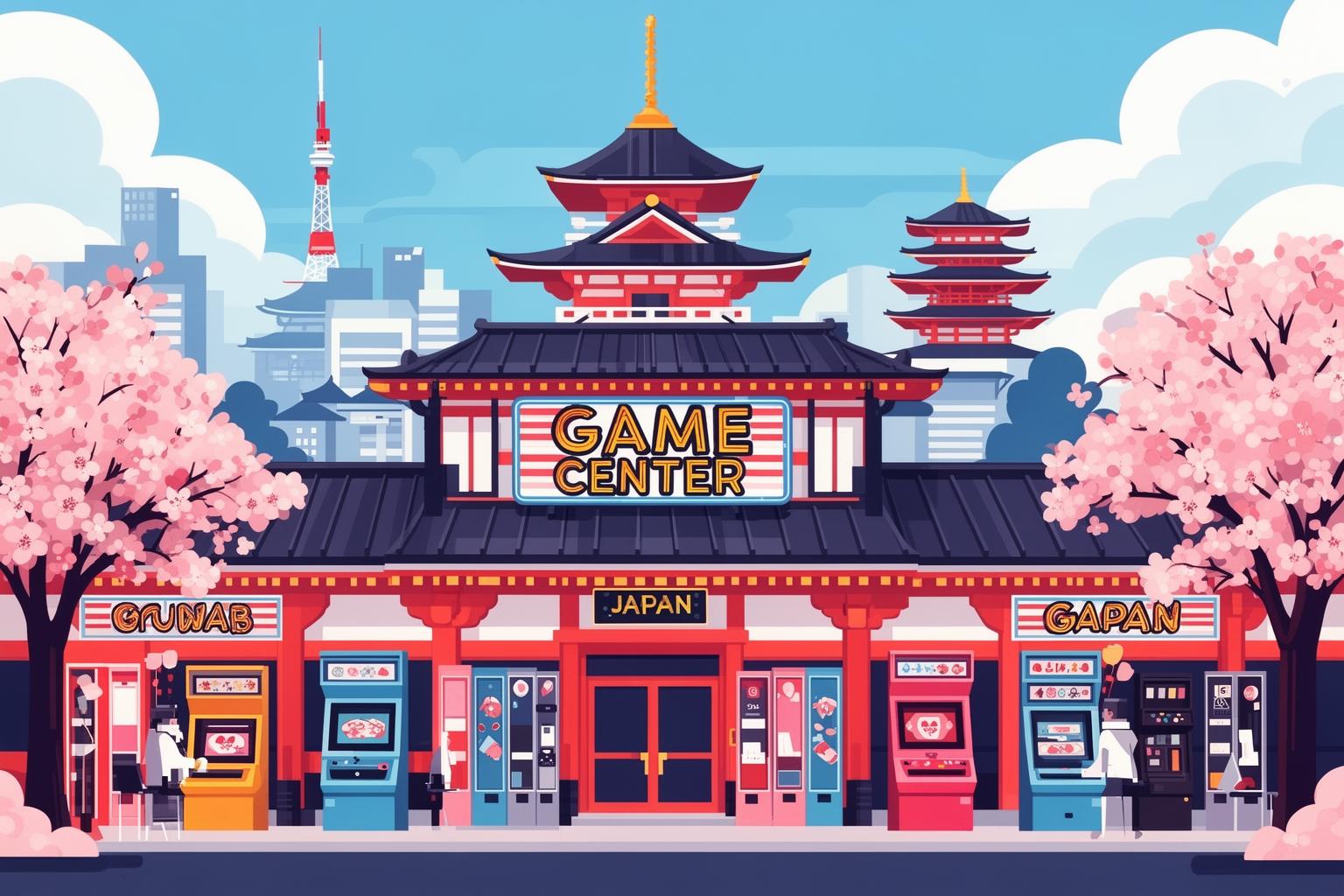
To truly understand why retro arcades resonate differently in Japan, you need to rewind the tape—way back. The modern, flashy ge-sen didn’t just appear out of nowhere. Its origins run deep in post-war Japan, a period of rapid, intense change. The idea of a dedicated space for electronic gaming emerged from a desire for something new—a place for a generation torn between tradition and a turbulent, uncertain future.
From Post-War Pastime to Pixelated Paradise
Imagine the 50s and 60s: Japan amid its economic miracle. Cities were being rebuilt, new industries were flourishing, and an electric energy filled the air. Yet, for kids and young adults, entertainment options were scarce. Public leisure spaces were limited, and the concept of leisure itself was still emerging. Early amusement spots were basic—maybe just a handful of mechanical games on a department store rooftop next to a modest petting zoo. Think pinball and electromechanical shooting galleries—novelties, something to pass a few minutes while your mom shopped. They weren’t destinations; they were just… there.
This was the primordial soup from which the ge-sen would emerge. These department store rooftops, or okujō yūenchi, were among the earliest locations where families could share the thrill of modern, commercialized fun. They were safe, clean, and optimistic spaces that reflected Japan’s hopeful outlook. The games were simple, but they planted a crucial idea: paying a small fee for electronic escapism was a legitimate way to spend time and money. This normalized the transaction, though the arcades were still a side attraction—an afterthought to the main event of shopping.
The ‘Space Invaders’ Boom and the Rise of the Dedicated Arcade
Then everything shifted in 1978 with one game: Space Invaders. It’s hard for today’s gamers to grasp just how seismic this was. It wasn’t merely a hit—it was a nationwide craze. So popular, in fact, that it caused a shortage of 100-yen coins—the exact coin needed to play. The Bank of Japan even had to mint more coins to keep up. This isn’t a myth; it’s a fact. Suddenly, people weren’t just playing games to kill time—they were heading to specific venues just to play Space Invaders.
This moment sparked a gold rush. Entrepreneurs launched dedicated venues, known as ‘Invader Houses.’ These spots were often dark, cramped, and a bit sketchy but packed with players. This was the birth of the arcade as a standalone business in Japan. It proved video games were more than novelties on department store roofs—they were a powerful entertainment industry. Following Space Invaders, titles like Pac-Man and Donkey Kong cemented this trend. The ‘Invader Houses’ evolved into the ‘Game Centers’ familiar today, brimming with diverse games, each demanding its own 100-yen tribute.
More Than a Game, It Was a ‘Third Place’
Your home is your first place; school or work, your second. Everyone needs a third place—a neutral zone to hang out, socialize, and just be outside family and work pressures. In the West, this might be a mall, a park, or a friend’s basement. But in Japan, for a whole generation in the 80s and 90s, the arcade was the third place. Period.
After school, you wouldn’t head straight home. You’d meet friends at the local ge-sen. It was the go-to hangout spot—loud, chaotic, and mostly unsupervised by adults, which made it especially appealing. Here, social status wasn’t about grades or athleticism; it was about your high score on Galaga or your winning streak in Street Fighter II. It was a pure meritocracy where respect was earned through skill. It was a place to develop an identity beyond school’s labels.
There was also a unique etiquette, an unspoken code. You learned to wait your turn by placing your 100-yen coin on the machine bezel to signal ‘next.’ You nodded respectfully to the player who bested you. You silently observed the experts, studying their techniques. It was a social education and, in many ways, a physical social network decades before Facebook. Friendships, rivalries, and community were built around these glowing screens. The arcades had a rebellious edge, too. Parents and teachers sometimes viewed them as dens of delinquency, which only enhanced their appeal. This core role as a social hub, proving ground, and essential part of adolescent identity is why arcades became far more significant in Japan than elsewhere. It wasn’t just where you played games; it was where you grew up.
The Aesthetic of Imperfection: Why Pixels and CRT Still Slap
Alright, so we’ve recognized the ge-sen as a legitimate cultural institution. Yet, that still doesn’t fully clarify why, in an age of 4K graphics and photorealistic virtual reality, people continue to line up to play games that, let’s be honest, look incredibly simple. The appeal goes beyond just the gameplay. It’s about the entire aesthetic, the full sensory experience. There’s a unique beauty in the constraints of that old technology—a beauty that modern gaming, in its pursuit of perfection, has somewhat forgotten. And this appreciation for imperfection is, well, quintessentially Japanese.
The ‘Wabi-Sabi’ of 8-Bit
You may have come across the term wabi-sabi (侘寂). It’s a traditional Japanese aesthetic philosophy centered on finding beauty in imperfection, impermanence, and incompleteness. It’s the charm of a cracked teacup, moss growing on an ancient stone, or something that bears its age and history. Subtly, the retro gaming aesthetic embodies pure wabi-sabi.
The 8-bit sprites of Mario or the invaders from Space Invaders aren’t realistic. They’re blocky, abstract interpretations. The artists worked with a tiny pixel grid and a limited color palette. They couldn’t depict detailed faces, so they evoked emotions with just a few carefully arranged pixels. These constraints sparked a kind of creativity and elegance that’s incredibly captivating. Your brain fills in the blanks. This simplicity leaves space for your imagination, offering a different kind of engagement from having every pore and whisker rendered in ultra-HD.
Then there’s the hardware itself—the CRT monitor. Unlike a flat-screen TV’s clean, sharp image, a CRT has scanlines, slight color bleed, and a warm, glowing aura that feels alive. Playing classic games on a modern LCD emulator feels sterile—too clean, too flawless. The subtle blur and visual noise of the CRT were part of the original artistic vision. It’s like the crackle on a vinyl record—an imperfection that adds character and warmth. It’s the wabi-sabi of the experience.
‘Natsukashii’: The Potent Power of Nostalgia
Now, let’s address the N-word: nostalgia. In English, nostalgia sometimes carries a negative undertone, suggesting being stuck in the past or unwilling to move forward. In Japan, however, the notion is different. The word is natsukashii (懐かしい), a strong, positive feeling. It’s a gentle, bittersweet fondness for the past, a warm ache in your chest when recalling something from your youth. It’s not about wanting to return; it’s about cherishing the memory and how it shaped who you are today.
Japanese culture is obsessed with natsukashii. It drives trends, marketing, and media. Retro game arcades serve as cathedrals of natsukashii. When a 30- or 40-something salaryman steps in and hears the opening notes of the Dragon Quest theme or the iconic coin sound from Super Mario Bros., they are instantly transported. It’s an emotional time machine. They’re not merely playing a game; they’re reliving the feeling of being a 10-year-old, free from adult responsibilities, immersed in that same lively, noisy space.
These arcades don’t just sell gameplay for 100 yen. They provide access to a powerful, almost sacred emotion. Every game, sound effect, and piece of cabinet art is a key unlocking a core memory. That’s why you’ll see grown adults with intense, focused expressions, completely absorbed in a game of Darius. They’re reconnecting with a past version of themselves. It’s a form of therapy, a way to link back to a simpler time—an experience worth far more than 100 yen.
The Physicality of the Game
Let’s get physical. Think about how you play now. Probably on a couch, using an ergonomic controller with analog sticks and subtle trigger pressure. Or swiping your thumb over a cold, flat glass screen. It’s efficient and precise, but also… detached.
Now, compare that to an old-school arcade cabinet. You’re standing, fully engaged. You grasp a large ball-top joystick that resists your movements, making a satisfying click-clack-click as you whip it from side to side. You mash huge, concave buttons that travel deeply and emit a loud thwack. It’s a full-body, tactile experience. When you land a perfect ‘Shoryuken’ in Street Fighter II, you don’t just feel it in your thumbs—you feel it throughout your arm and shoulder.
This physicality is a huge part of the appeal, nearly lost in modern gaming. There’s a direct, unfiltered link between your physical actions and the response on screen. It feels more real, more impactful. This visceral feedback loop roots you in the moment. You’re not only mentally engaged—you’re physically present in the act of playing. In an increasingly virtual and disembodied world, the raw, analog, physical sensation of playing on a vintage arcade machine is a powerful counterbalance. It’s real. It’s tangible. And it absolutely slaps.
The Arcade as a Living Museum and Community Hub
The vibe is perfectly on point, and the nostalgia hits hard. But these places aren’t merely static relics. If they were, they’d be museums where you pay a fixed entry fee just to look at stuff. Instead, they are living, breathing ecosystems sustained by a passionate community—people who resemble high priests of a forgotten religion more than business owners. These aren’t just shops; they’re cultural institutions actively preserved by devoted disciples. To truly understand the retro arcade, you need to understand the people who keep the faith alive.
Curators of Cool: The Arcade Owners
Running a retro arcade in the 21st century isn’t a get-rich-quick plan. It’s a labor of love, no exaggeration. Rent in cities like Tokyo is sky-high, the machines are decades old and prone to breaking, and sourcing spare parts for a 1986 circuit board can be a nightmare. The people who run these arcades are a rare breed: part historian, part electrical engineer, part community manager, and wholly devoted otaku.
Take a legendary venue like Mikado in Takadanobaba, Tokyo. Its owner, Minoru Ikeda, is a cultural icon within the scene. He’s not merely running a business; he’s on a mission to preserve gaming history. His team tracks down rare cabinets, painstakingly repairs them, and keeps hundreds of games fully operational. They know the subtle differences between versions of a game’s motherboard and understand the precise monitor specs needed to make a game look and feel authentic. In the truest sense, they are curators, preserving interactive art for future generations. When you step into places like Mikado or the equally famous Super Potato in Akihabara, you’re not just entering a store—you’re walking into a carefully curated collection, a library of playable history maintained by people who believe these games hold as much cultural significance as any painting or sculpture.
The Shokunin Spirit in Gaming
There’s a Japanese concept called shokunin (職人), often translated as ‘artisan’ or ‘craftsman,’ but those words don’t fully capture its meaning. A shokunin is someone who has devoted their life to mastering a craft. It’s about more than skill; it’s a spiritual dedication to a singular pursuit, an unrelenting quest for perfection simply for its own sake. You see this in sushi chefs, sword makers, and, honestly, in the elite players at retro arcades.
Go to an arcade on a weekday night and watch the regulars. You’ll find salarymen who have been coming to the same spot for 20 years, masters of one specific game. They’ve deconstructed it, uncovered every secret, and execute impossibly complex moves with calm, practiced grace. They are the shokunin of Street Fighter II or Dodonpachi. Their pursuit isn’t just about winning or high scores—it’s about the beauty of a perfect combo, the elegance of dodging a dense field of enemy bullets without a wasted motion. It’s a form of moving meditation, a discipline.
The arcade is their dojo, their place of practice. The other players gathered to watch aren’t merely spectators; they’re students and fellow practitioners, appreciating the mastery on display. This elevates video gaming from a simple pastime to a respected craft. It’s this deep cultural reverence for dedication and mastery that enables a highly competitive scene to flourish around games three decades old.
The Intergenerational Hand-off
One of the most heartening sights is how these spaces are no longer just enclaves for middle-aged nostalgists; they’re intergenerational. You’ll see a 45-year-old dad who grew up playing Gradius teaching his 10-year-old daughter how to play. You’ll see groups of high schoolers, raised on PlayStation 5, getting psyched over a match of The King of Fighters ’98.
What’s happening is a cultural hand-off. The original generation is passing down their passion to a new one. For younger kids, these games aren’t natsukashii—they have no past memories tied to them. To them, the games are simply cool. The pixel art aesthetic has made a comeback thanks to the indie game scene, and the challenging, skill-based gameplay offers a refreshing contrast to many modern games that often hold your hand. They’re discovering these classics on their own terms and finding them just as captivating as their parents did. This cross-generational appeal is vital. It ensures the culture isn’t merely preserved; it’s evolving. Arcades have become unique social spaces where people with age gaps of 30 years can connect as equals, united by a love for well-designed games. It’s a living tradition, not a monument to a bygone era.
Where to Vibe with the 8-Bit Ghosts: Real-World Examples
Alright, so you grasp the theory. But where do you actually witness this culture in practice? It’s not a single, uniform scene; each arcade has its own distinctive vibe and character. They’re like different schools of thought, each offering a unique perspective on the art of gaming. Visiting them isn’t just about playing games; it’s about immersing yourself in these varied micro-cultures firsthand. Let’s explore a few archetypes — the pilgrimage destinations for any true devotee.
Mikado (Takadanobaba, Tokyo): The Fighter’s Dojo
If the retro arcade is a religion, Mikado is its Vatican. This place isn’t for the faint-hearted. Nestled in the somewhat offbeat neighborhood of Takadanobaba, Mikado is renowned worldwide among fighting game aficionados. The atmosphere here is intense. It’s loud, packed, and unapologetically hardcore. This isn’t where you casually tap at Pac-Man. This is where the shokunin spirit shines at its purest and most visible. The first floor is a dizzying maze of candy cabs, but the second floor holds the true core: two long, back-to-back rows of fighting game cabinets, forming a gauntlet known as the ‘Fighting Game Arena.’
On any given night, these seats are occupied by some of the world’s top players battling in games that are decades old. They host frequent tournaments streamed online to a global audience. The energy is electric. It’s less about nostalgia and more about a living, dynamic, and fiercely competitive scene. Watching a high-level match here is like observing a rapid chess game between martial artists. Mikado stands as an arcade proving ground, a modern dojo where legends are forged and skills sharpened to a razor’s edge. It proves these games are neither ‘solved’ nor ‘finished’; they remain timeless arenas for human competition.
Super Potato (Akihabara, Tokyo): The Collector’s Shrine
If Mikado is a dojo, then Super Potato is the grand library or museum. Situated in the heart of Akihabara, Tokyo’s electric town, Super Potato is less an arcade and more a vast archive of gaming history available for purchase. The store spans three cramped, treasure-filled floors. You’ll find literally tens of thousands of classic games, from the Famicom to the Neo Geo, plus consoles, merchandise, and soundtracks. It’s a collector’s paradise, embodying the natsukashii economy. Visitors come not just to buy games for play, but as artifacts—tangible pieces of their childhood.
The top floor features a small, lovingly preserved retro arcade. The atmosphere here contrasts sharply with Mikado’s. It’s quieter, more reverent. People play with a sense of historical curiosity. You’ll see tourists alongside locals, all marveling at these ancient machines. Super Potato represents the collector’s side of the culture—the urge to own, preserve, and classify the past. It treats games as significant cultural objects, worthy of display and reverence. It’s the arcade as a historical exhibit, a shrine dedicated to the golden age of 8-bit and 16-bit entertainment.
Natsuge-sen (Various Locations): The Neighborhood Hangout
Beyond the large, famed venues, there are smaller, local arcades, sometimes even including Natsuge-sen (ナツゲーセン, short for ‘Nostalgic Game Center’) in their names. These are the true spiritual heirs to the neighborhood arcades of the ’80s. They’re not about being the most competitive or offering the rarest games. They focus on recreating a particular feeling: the comfort of your local hangout.
The vibe here is super relaxed. The lighting is dim, the decor likely unchanged since 1992, and there might be an old couch tucked in a corner. The owner knows the regulars by name. In these spaces, the arcade feels more like a community center or a local bar. People come after work to unwind, chat with friends, and play a few rounds of their favorite classics. It’s the ‘third place’ concept in its purest form. These arcades center less on the games themselves and more on the social space they foster. They embody the idea that, in our hyper-connected world, what we often truly seek is a simple, physical place to belong, enveloped by the comforting sights and sounds of a shared past.
So, Is It Just a Fad for Tourists and Old-Timers?
This is the big question, isn’t it? It’s easy to view this whole scene with some skepticism. Is it merely a dying subculture, sustained by a small group of hardcore otaku and wide-eyed tourists in search of an ‘authentic’ Japanese experience? Or is it just a fleeting nostalgia trend that will disappear as its original fans grow older? The reality is more complex. The future of the retro arcade is complicated, but it’s far from as bleak as one might assume. The scene faces real challenges but is also evolving and discovering new forms of relevance in today’s world.
The Economics of Nostalgia
Let’s be honest for a moment. Running a ge-sen is a challenging business. We’ve already discussed the high rent and the difficulties in maintaining aging hardware. But the biggest threat comes down to demographics. The generation that grew up with these games as their go-to entertainment is now in their 40s and 50s. Meanwhile, the younger generation—the ‘digital natives’—arrived with smartphones in their hands. Their social spaces exist online, in games like Fortnite or on platforms like Discord. They don’t need a physical third place in the same way. Many iconic arcades, even large ones, have shuttered their doors in recent years. The scene is undeniably smaller than it was at its peak. To deny that would be dishonest. In many respects, it’s a culture under siege.
The Indie Renaissance and Pixel Art’s Comeback
But here’s the twist. While the mainstream gaming industry has been focused on photorealism, a major counter-movement has been brewing in the indie game community. Over the past decade, indie developers worldwide have embraced the visuals of the 8-bit and 16-bit eras. Pixel art is no longer viewed as a limitation; it’s a deliberate and stylish artistic choice. Chiptune music, once born from technological restrictions, has become a vibrant genre in its own right.
This global renaissance has significantly shaped how young people view retro games. For a 16-year-old today, the blocky graphics of a Famicom game don’t appear ‘old’ or ‘outdated.’ They look ‘cool,’ ‘lo-fi,’ and ‘vintage.’ It’s an aesthetic recognized from modern indie hits like Stardew Valley or Celeste. This has created a feedback loop: young players, influenced by the contemporary indie scene, are revisiting the original source material with fresh eyes. They enter retro arcades not from nostalgia, but from genuine appreciation for the art style and the raw, challenging gameplay. This gives the retro arcade a new lease on life—a new form of cultural currency detached from personal memory.
Beyond the Screen: A Search for Analog Connection
At its core, the survival of the retro arcade isn’t really about the games. It’s about what the space offers that your phone or PlayStation cannot. In a world dominated by curated social media feeds, algorithmic suggestions, and increasingly virtual interactions, the arcade stands defiantly, messily, and gloriously real. It’s an analog oasis in a digital desert.
It’s a place where you have to be physically present. You stand shoulder-to-shoulder with strangers, sharing the collective thrill of a close match or the sting of a narrow defeat. You make eye contact. You can’t filter your reactions or edit your comments. It’s an unfiltered human experience. A community you can’t simply log into. You have to show up. The lasting appeal of the retro arcade, I believe, is a quiet rebellion against the isolation of modern life. It’s a quest for tangible connection, for shared physical space, for the simple, irreplaceable magic of a group of people in a room, all excited about the same thing. That’s not nostalgia. It’s a basic human need. And as long as that need exists, places like the ge-sen will remain essential. No doubt.