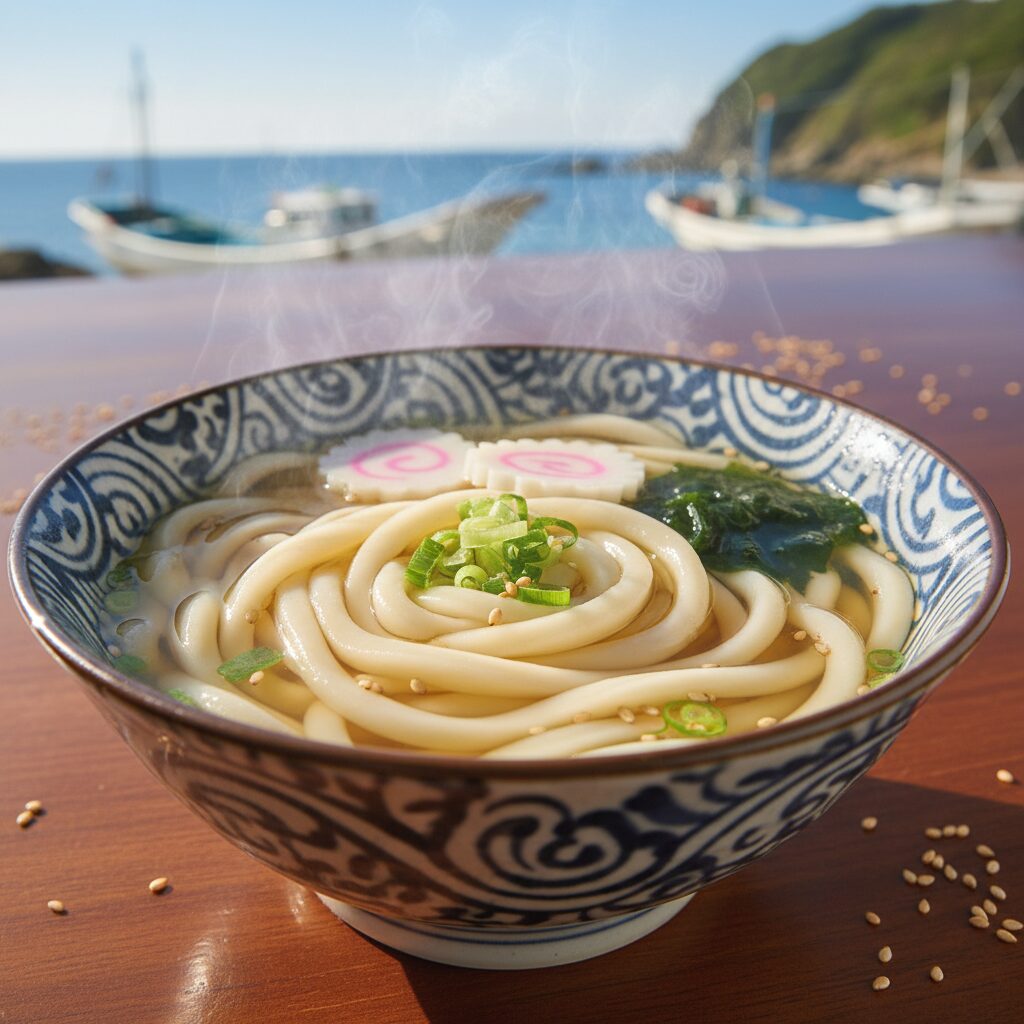
Yo, what’s up, world-trekkers and food adventurers! Taro Kobayashi here, coming at you live from the edge of Japan. Forget what you think you know about udon for a sec. We’re not talking about those thick, chunky noodles you slurp down in a hurry in the big city. Nah, today we’re going on a journey. A real-deal pilgrimage to a place where the ocean breeze carries ancient secrets and every bite of food tells a story a thousand years old. We’re heading out to the Goto Islands in Nagasaki Prefecture, a chain of emerald gems scattered in the East China Sea. This place is low-key one of Japan’s best-kept secrets, a land of crystal-clear waters, hidden Christian history, and the star of our show: Goto Udon, one of the three great udons of Japan. This isn’t just a meal; it’s a vibe, a craft, a piece of history you can taste. It’s a culinary experience that’s been perfected over centuries, and trust me, it’s about to change your noodle game forever. We’re diving deep into the world of hand-stretched, camellia oil-kissed noodles that are, no cap, the GOAT. So buckle up, because we’re about to catch a ferry to an island paradise where time slows down and the flavor is turned all the way up. Get ready to discover the magic of Goto Udon.
The Legend Woven in Flour and Seawater
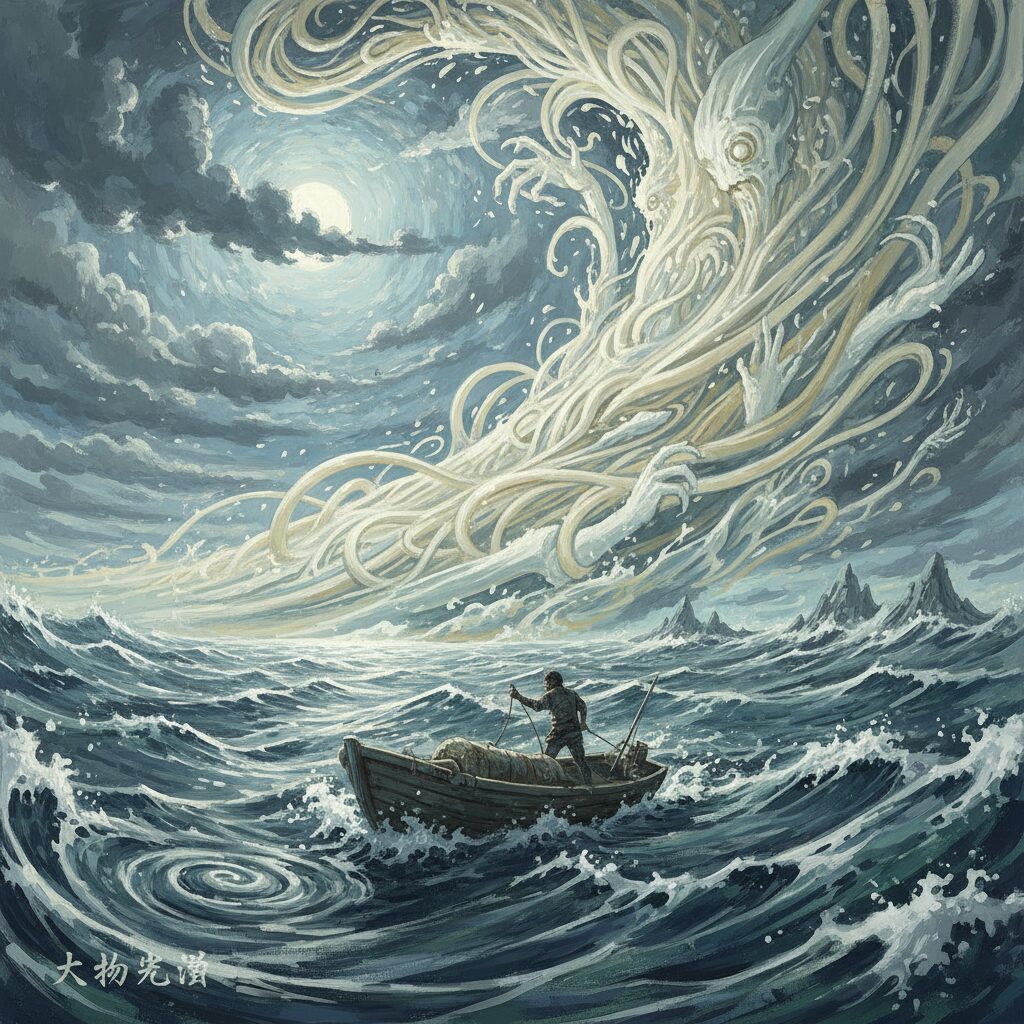
To truly appreciate Goto Udon, you need to know its backstory, which is downright epic. The tale is as long and intricate as the noodles themselves. We’re talking about more than a thousand years of history. The story starts way back in the Nara and Heian periods, when Japan looked toward Tang Dynasty China for culture, technology, and, of course, food. The Goto Islands weren’t just some isolated outpost; they served as the final Japanese stop for the Kentoshi, official Japanese missions to China. These courageous diplomats, monks, and scholars stayed on Goto, waiting for favorable winds to brave the perilous sea voyage. It was their last taste of home and their first step into a broader world.
Legend says that on their return trips, they brought back more than Buddhist scriptures and art—they brought the precursor to udon noodles themselves. The craft of making noodles from wheat flour, a mainland skill, arrived right here on these shores. Here’s where the story gets a bit hazy and intriguing. Some claim the techniques they returned with were originally for confectionery, and the noodles developed from there. Others insist the original noodle recipe was brought directly to the islands. Whatever the exact story, the Goto Islands became the birthplace of noodle culture in Japan. It’s amazing to think this remote archipelago was the gateway to something that would become a staple of Japanese cuisine.
The islands’ isolation was a total game-changer. While noodle-making spread throughout Japan, evolving into countless regional varieties, Goto’s version was preserved and perfected in a unique bubble, guarded by the sea. The islanders took that original idea and made it their own, using local resources: pure salt harvested from the surrounding ocean, fresh mountain water from the island, and the most essential ingredient—a secret element that makes Goto Udon truly one of a kind. This process was more than cooking; it was a ritual passed down through generations, a form of cultural DNA keeping the tradition alive. You can feel that history when you’re here. It’s not locked away in a museum; it’s in the hands of elderly masters still stretching dough in their family workshops. It’s in the steam rising from a freshly boiled bowl of noodles. It’s living history, and it’s absolutely delicious.
The Art of the Stretch: What Makes Goto Udon So Extra
So what’s the fuss? Why make the journey just for a bowl of noodles? Let’s dive into what makes Goto Udon a culinary masterpiece: a perfect blend of technique, ingredients, and deep island spirit.
The Sacred Dough and the Power of Salt
It all begins with the basics: flour, water, and salt. But this isn’t your everyday pantry trio. The flour is specially chosen for its protein content, giving the noodles their distinctive strength and elasticity. The water often comes from pure, soft spring sources within the island, pristine and untouched. And the salt? It’s Goto no shio, harvested from the nutrient-rich ocean waters surrounding the islands. Local artisans insist that the unique mineral makeup of this salt is essential to the dough’s texture and flavor. Kneading the dough is an intense, physical ritual—a rhythmic dance of pushing, folding, and resting, often done by foot in the traditional method to apply even pressure. This process develops the gluten structure to an extraordinary level, creating dough that is both incredibly strong and remarkably pliable. The dough is then left to rest, to breathe and mature. This is no hurried task—it’s slow food at its purest, showing respect for the ingredients and allowing them to reach their fullest potential. The patience required is exceptional, a true testament to the dedication of the noodle masters.
The Te-nobashi Hustle
The real magic that sets Goto Udon apart from its thicker, knife-cut relatives like Sanuki Udon is the te-nobashi method, meaning ‘hand-stretched’. Rather than rolling and cutting the dough, the masters roll it into ropes, coil them, and then begin a painstaking process of stretching, twisting, and pulling by hand. The dough is stretched thinner and longer with each pass—a mesmerizing sight. Two long rods are used as the noodle ropes are looped over them repeatedly, resembling a gluten cat’s cradle. The artisans move with practiced grace, intuitively sensing how much tension the dough can handle. They carefully pull and separate the strands, allowing resting periods between stretches so the gluten can relax before the next pull. This cycle of stretching and resting is repeated over two days, resulting in noodles that are incredibly thin, perfectly round, and impressively long. Think spaghetti-thin—but with a texture worlds apart from pasta. This hand-stretching technique creates a unique internal structure and a chewiness no machine or knife-cut noodle can match.
The Golden Touch: Camellia Oil
Here lies the secret ingredient—the x-factor—that elevates Goto Udon from excellent to legendary: tsubaki abura, or camellia oil. The Goto Islands are blanketed with wild camellia trees, whose vibrant blossoms in winter contrast beautifully against the deep green leaves. Islanders have harvested seeds from these flowers for centuries to produce a rich, golden oil. During the final stretching stages, the noodles are coated with this oil. This stroke of genius serves multiple purposes: it prevents the ultra-thin strands from sticking while drying, imparts a subtle, elegant aroma with a faint, almost elusive nutty flavor you’d miss if absent, and thanks to its high oleic acid and antioxidant content, it resists oxidation. This acts as a natural preservative, crucial for storing the dried noodles long before refrigeration—especially on a remote island. This final touch of camellia oil gives Goto Udon its silky-smooth mouthfeel and glossy finish; it’s the island’s soul, infused into its most celebrated creation.
Catching the Vibe: The Goto Islands Experience

To truly savor the udon, you must immerse yourself in the atmosphere of its birthplace. The Goto Islands stand worlds apart from the neon rush of Tokyo or Osaka. Life here flows with the rhythm of the tides. The air is pure, the stars shine brightly, and the dominant soundtrack is the crashing of waves against volcanic cliffs. This is a place to disconnect from the noise and reconnect with something more fundamental. As an outdoor enthusiast, this place is my sanctuary.
A Landscape Shaped by Wind and Sea
The scenery is simply breathtaking. Imagine dramatic, rugged coastlines, hidden coves with turquoise waters, and rolling green hills. Takahama Beach on Fukue Island is frequently ranked among Japan’s most beautiful beaches, with its powdery white sand and crystal-clear, shallow water. It feels like stepping into a postcard. For hikers, trails such as the one ascending Mt. Onidake, a dormant volcano blanketed in lush grass, offer 360-degree panoramic views of the island and surrounding sea. Renting a car is essential. Driving along the coastal roads is an experience in itself, with stunning vistas at every hairpin turn. You’ll pass tiny fishing villages where octopus and squid dry in the sun, and elderly women with sun-weathered faces tend their vegetable gardens. The pace is slow and unhurried. People wave as you drive by. It’s a glimpse into a simpler, more connected way of life.
Echoes of Faith: The Hidden Christian Legacy
You can’t discuss Goto without acknowledging its profound and moving history as a refuge for Japan’s Kakure Kirishitan, or ‘Hidden Christians’. During the Edo Period, when Christianity was harshly suppressed, believers fled mainland Japan and found solace on these remote islands. For over 250 years, they practiced their faith in secret, camouflaging prayers and icons to resemble Buddhist traditions to evade persecution. Once the ban on Christianity was lifted in the late 19th century, these communities emerged, and beautiful churches began to appear across the islands. Today, more than 50 churches are scattered throughout the archipelago, many simple yet beautiful wooden structures built by local carpenters. Visiting places like Dozaki Church, the oldest on the islands, or the striking white Egami Church, a UNESCO World Heritage site, is a profoundly moving experience. You can sense the weight of history and the resilience of a faith that refused to vanish. This undercurrent of perseverance and quiet strength permeates the island’s character and seems to have influenced the careful, patient craft of noodle-making as well. It is all interconnected—the faith, the struggle, the land, and the food.
How to Slay the Goto Udon Game: The Ultimate Eating Guide
Alright, you’ve made the journey and absorbed the atmosphere; now it’s time to eat. Experiencing the pinnacle of Goto Udon culture requires a certain approach. You’re not merely ordering a bowl of noodles—you’re taking part in a tradition.
The Main Event: Jigoku-daki, the ‘Hell’s Boil’
This is it—the signature dish and the most authentic, downright fun way to enjoy Goto Udon. The name Jigoku-daki literally means ‘Hell’s Boil,’ which sounds fierce, but it’s pure bliss. The name comes from the sight of the noodles bubbling wildly in a large iron pot of boiling water right at your table. It looks like a churning cauldron, hence the ‘hell’ reference. Yet the experience is communal, cozy, and incredibly delicious.
Here’s how it unfolds: a server brings a portable stove and a large pot of water to your table. Once it reaches a rolling boil, you drop in bundles of dried Goto Udon yourself. While they cook, you prepare your dipping sauce. The classic combination is a special soy-based sauce, often made with ago-dashi (a broth made from dried flying fish, another Goto specialty), mixed with a raw egg. Yes, a raw egg. Don’t knock it until you try it. The heat from the noodles gently cooks the egg, creating a rich, creamy, savory sauce that clings to every strand. You can also add toppings like spring onions, bonito flakes, or a dash of yuzu kosho for a citrusy, spicy kick. You fish the noodles straight from the ‘hell pot’ with your chopsticks, dip them into your customized sauce, and slurp away. It’s interactive, messy, and incredibly satisfying. The noodle texture shines here—that perfect al dente chew, known in Japanese as koshi, combined with a slippery smoothness from the camellia oil and the egg sauce that helps them glide down effortlessly. This smooth sensation is called nodo-goshi, the feeling of food as it passes through your throat, and Goto Udon boasts the best nodo-goshi around. It’s a must-try experience.
Exploring Other Styles
While Jigoku-daki steals the spotlight, there are many other ways to enjoy these versatile noodles. On a hot day, nothing beats a cold preparation. You might find it served zaru style, chilled on a bamboo mat with a cold, concentrated ago-dashi dipping sauce on the side. Or perhaps as bukkake udon, where chilled noodles sit in a bowl with a small amount of strong, cold broth poured over them, often topped with grated daikon radish, ginger, and a soft-boiled egg. In colder months, a hot bowl of kake udon provides pure comfort. The noodles float in a delicate, steaming hot ago-dashi broth that warms you from within. The broth is essential. The flying fish broth is lighter and more refined than the bonito-based broths common elsewhere in Japan. It offers a unique, slightly sweet, deeply umami flavor that perfectly complements the subtle taste of the noodles without overpowering them. Don’t hesitate to try different restaurants—each family-run establishment has its own recipe for dashi, a secret handed down through generations. Discovering your favorite is part of the adventure.
Level Up: Practical Tips for Your Goto Pilgrimage
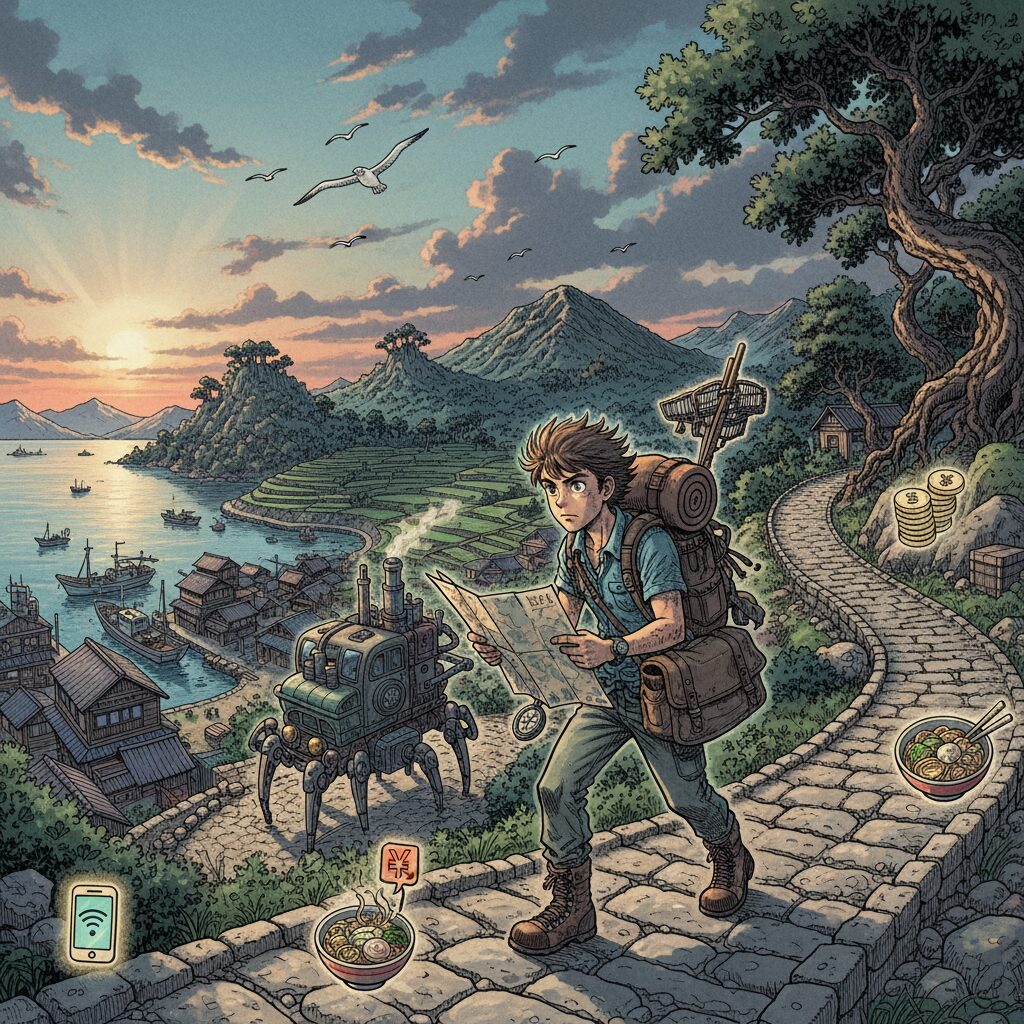
Convinced? Thought so. Visiting the Goto Islands takes a bit more preparation than a quick trip to Kyoto, but that’s exactly what makes it so rewarding. Here’s the essential guide to making it happen.
The Journey Is Part of the Destination
Getting to the Goto Islands is an adventure on its own. You have two main choices: by sea or by air. From Nagasaki Port, you can take a high-speed jetfoil, which reaches Fukue Island (the largest and most central island) in about an hour and a half. It’s fast and efficient. Alternatively, there’s the slower, larger car ferry, which takes about three to four hours but has its own charm. Standing on deck, feeling the sea spray, watching smaller islands drift by—you really get a sense of leaving the mainland behind and entering another world. I highly recommend the ferry if time allows. Flying directly to Fukue Airport from Nagasaki or Fukuoka is the quickest option. Pick your own adventure, but the sea journey definitely sets the tone.
Island Hopping 101
Once you arrive, having your own transportation is essential. Public transit is limited and infrequent. Renting a car is the best way to go. It gives you the freedom to explore at your own pace, pull over at scenic viewpoints whenever you like, and lose yourself down narrow lanes leading to secret beaches. Be sure to reserve your rental car well in advance, especially during peak times like summer or Golden Week. Some of the smaller islands are connected by bridges, while others require local ferries. Planning your inter-island travel is part of the fun, making you feel like a true explorer.
Timing is Everything
The Goto Islands are stunning year-round, with each season offering its own unique charm. Spring (March-May) is mild and pleasant, with wildflowers blooming across the hills. Summer (June-August) is perfect for beach lovers—the water is warm, the sun shines bright, and the islands buzz with laid-back energy. It’s ideal for swimming, snorkeling, and kayaking. Autumn (September-November) brings cooler temperatures, clear skies, and a bounty of seasonal foods—arguably the best time for hiking and outdoor adventures. Winter (December-February) is calm and peaceful. Camellia flowers bloom in vibrant reds and pinks, and it’s the perfect season for cozying up indoors with a steaming pot of Jigoku-daki udon. There’s truly no bad time to visit; it just depends on the experience you want.
A Few Pro-Tips for the Road
- Cash is King: Larger hotels and restaurants accept credit cards, but many small, family-run udon shops, cafes, and local stores only take cash. Make sure to carry enough yen.
- Book Ahead: Especially for accommodations and rental cars. The islands have limited tourist infrastructure, and places can fill up quickly, particularly during Japanese holidays.
- Respect the Silence: When visiting churches and other historical Christian sites, remember these are active places of worship and hold deep historical significance. Be quiet, respectful, and dress modestly.
- Embrace the Slow Down: Don’t rush. The charm of the Goto Islands lies in their unhurried pace. Build free time into your itinerary to sit by the sea, wander through a village, or enjoy a second bowl of udon. You won’t regret it.
The Final Slurp: A Taste of Timelessness
There’s something deeply profound about Goto Udon. It’s more than simply a meal—it’s a living connection to the past, a culinary tradition that has endured centuries of change, preserved by the sea and the unwavering spirit of the islanders. Each silky, chewy strand reveals stories of ancient maritime trade routes, secret faiths, and a profound bond with the natural world. Eating Goto Udon on the islands where it originated is to taste the salt in the air, feel the history in the soil, and connect with the generations of hands that have patiently stretched and coiled this dough.
It serves as a reminder that the finest things in life are often the simplest, perfected over time with care and dedication. In a world that is constantly rushing, the slow, intentional art of making these noodles feels like an act of rebellion and an invitation to pause and savor the moment. So, if you’re seeking a journey that nourishes not only your stomach but your soul, set your sights on the Goto Islands. Pursue that legendary noodle. I assure you, the flavor of your first bite of Jigoku-daki, fresh from the pot and dripping with savory egg sauce, will linger long after you’ve boarded the ferry back to the mainland. It’s a flavor, a feeling, a memory woven from flour, salt, and the timeless spirit of the sea.