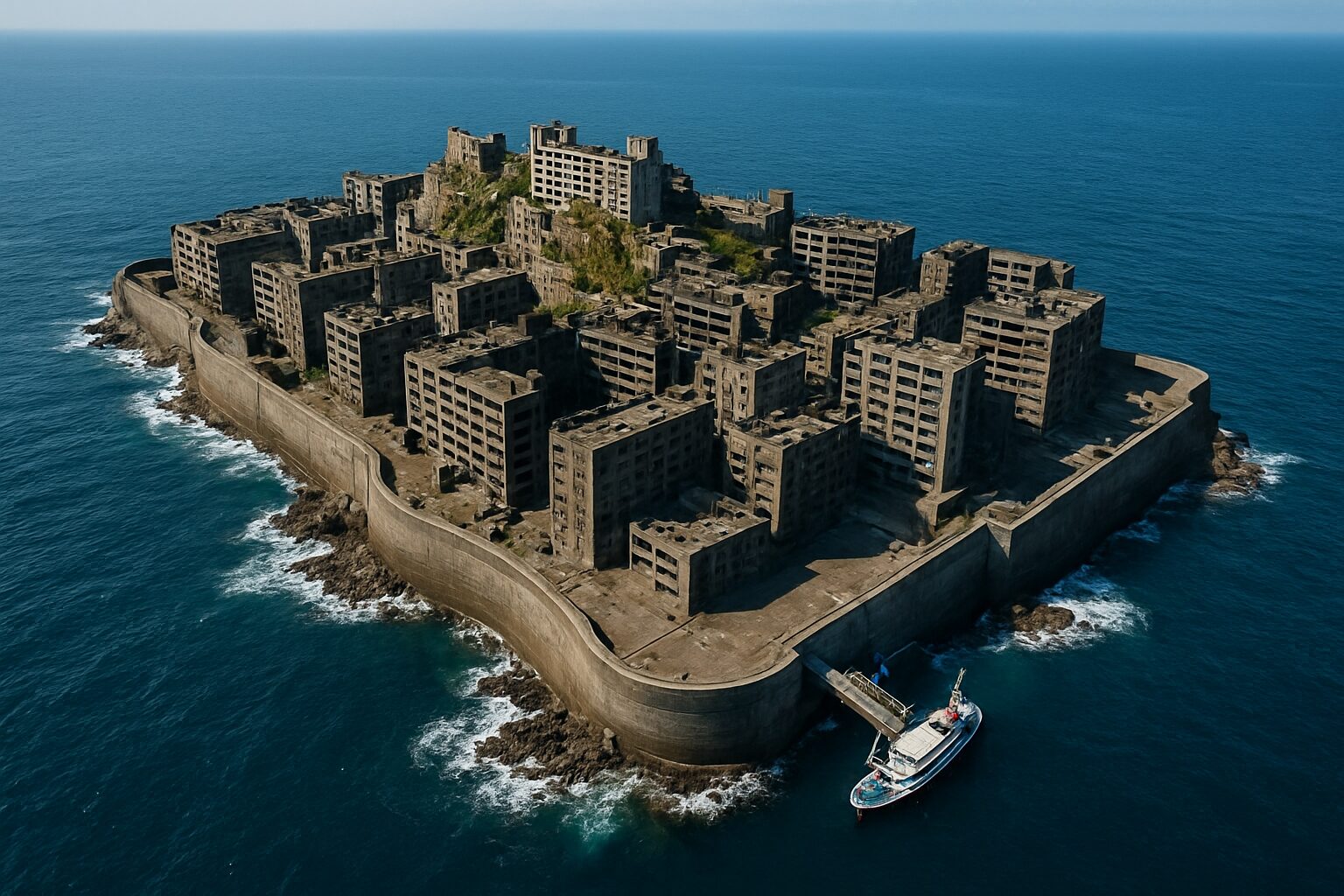
Out on the horizon, floating in the East China Sea like a phantom warship, there’s a silhouette that grabs you and doesn’t let go. It’s not a vessel of steel, but an island of concrete and ghosts, a place where time just… stopped. This is Hashima Island, but the world knows it by its way cooler, more epic name: Gunkanjima, or “Battleship Island.” And let me tell you, this spot hits different. It’s more than just a crumbling ghost town; it’s a legit time capsule, a UNESCO World Heritage site that tells a story of insane industrial ambition, vibrant community life, and a dark, heavy history that Japan is still grappling with. You might have seen its moody, dystopian vibes as the villain’s lair in the James Bond film Skyfall, but the real story is a million times more complex and captivating. It’s a place that went from being one of the most densely populated spots on the entire planet to zero, practically overnight. Getting there is a whole adventure, and stepping onto its weathered shores is like walking into another dimension. It’s a full-on sensory experience, a raw, unfiltered look at the rise and fall of an empire built on coal, a place that absolutely deserves a top spot on your Japan bucket list. So, let’s get into it, for real.
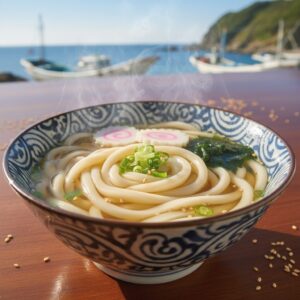
While exploring Nagasaki’s unique history, you might also be interested in discovering the region’s culinary treasures, such as the legendary hand-stretched udon of the Goto Islands.
The Vibe Check: What It Feels Like to Step on Gunkanjima
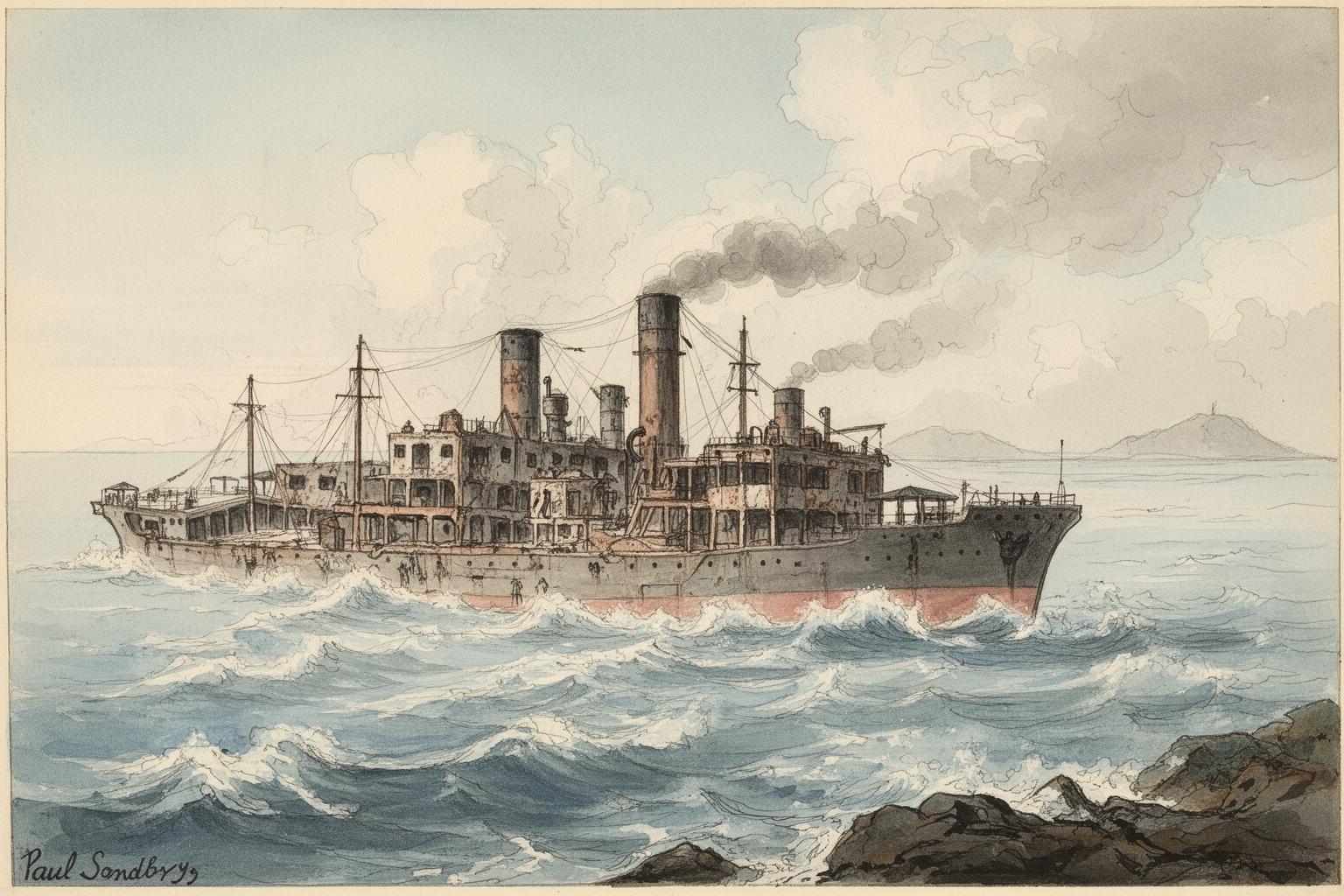
Before diving into the details of its history or how to get there, we have to talk about the atmosphere. Because the vibe of Gunkanjima is truly the main character here. The moment you step off the boat onto the specially-built pier, the air shifts. You’re greeted by a blast of sea-salt-laden wind that seems to carry whispers from the past. The first thing you notice is the sound—or rather, the silence. The urban noise is gone, replaced by the relentless crash of waves against the sea wall, the mournful cries of black kites circling overhead, and the eerie whistle of wind flowing through thousands of shattered window panes. It’s a symphony of decay, hauntingly beautiful in the most profound way.
This isn’t your typical ruin. It’s a vertical concrete jungle, a maze of high-rise apartment blocks crammed onto a tiny rock, all connected by a labyrinth of shadowy staircases and covered alleyways. The scale is simply mind-blowing. You walk along a designated path, a safe zone carved from chaos, surrounded by towering skeletal buildings. You peer into apartments where families once lived, where children did their homework, where people dreamed. You spot remnants of lives left behind—a rusted bicycle frame, a broken television set, a child’s shoe half-buried in debris. It feels profoundly human and deeply unsettling. The sheer density of the place makes the emptiness feel even more intense. It’s a profound absence, the ghost of a vibrant community still lingering in the air. Every crumbling wall and rusted railing tells a story, and the island’s powerful silence lets you listen. It’s a mood, a meditative yet somber experience that invites reflection on progress, community, and what we leave behind. It’s not just about seeing ruins; it’s about feeling the echoes of 5,000 lives lived in a space smaller than a modern shopping mall. That feeling stays with you long after you’ve sailed back to the mainland.
The Lowdown on Gunkanjima’s History: From Boom to Bust
The story of Gunkanjima is an intense journey—a perfect blend of technological innovation, corporate power, and human drama. It serves as a microcosm of Japan’s rapid modernization from the Meiji era onward, yet it also harbors a dark, shadowy side that cannot be overlooked. Truly understanding its past is essential to fully grasp the significance of what you see today.
The Rise of a Concrete Battleship
It all began with a lump of coal. In the late 1800s, coal was the driving force behind the industrial revolution—a “black diamond” fueling a nation’s ambitions. Just off the coast of Nagasaki, undersea coal seams were discovered, turning the tiny rock known as Hashima into valuable land. In 1890, the Mitsubishi Corporation, a name that would become synonymous with Japan’s industrial strength, purchased the island and committed fully. They undertook an enormous project, employing remarkable engineering feats to reclaim land, build massive seawalls to guard against fierce typhoons, and dig mine shafts deep beneath the ocean floor.
What they constructed on this small isle was nothing less than a futuristic marvel for its era. To accommodate the thousands of miners and their families arriving for work, Mitsubishi built huge, multi-story apartment blocks. In 1916, they introduced Building 30, Japan’s first reinforced concrete apartment building. Towering seven stories tall and designed to withstand harsh sea winds and salt spray, this was only the beginning. The island quickly transformed into a vertical city—a concrete jungle of high-rises so tightly packed that its silhouette earned it the nickname “Gunkanjima,” resembling the mighty Tosa-class Japanese battleship.
At its peak in the 1950s, life on the island was remarkably vibrant and distinct. Hosting over 5,200 residents, its population density was more than nine times that of Tokyo at the time—truly extraordinary. Yet, it was a wholly self-contained world. The island featured everything: a school, a technologically advanced hospital, a cinema showcasing all the latest mainland films, a pachinko parlor, numerous shops, restaurants, bars, and even a Shinto shrine and public bath. With no soil available, residents cultivated lush rooftop gardens—green patches amid the gray concrete. A strong sense of community flourished, forged through shared labor and cramped living quarters. For those workers and their families, the island symbolized prosperity and progress—an emblem of Japan’s post-war economic miracle. They lived in the future, a high-tech city afloat on the sea. But beneath this bright, thriving image lay a dark underside.
The Shadow Side: A History That Needs to Be Told
Honestly, we cannot discuss Gunkanjima’s impressive industrial legacy without recognizing the immense human suffering behind it. From the 1930s through the end of World War II, the story darkens. As Japan’s imperial ambitions expanded, so too did the demand for coal to fuel its war efforts. To meet this demand, the Japanese government enforced forced labor policies, turning Gunkanjima into a grim destination for thousands of conscripted Korean civilians and Chinese prisoners of war.
These men were compelled to toil in the deepest, most hazardous sections of the undersea coal mines under utterly brutal conditions. They endured unimaginable hardships: exhausting hours, scant rations, dangerous work environments, and relentless physical abuse from overseers. The mine shafts were unbearably hot and humid, prone to gas explosions and collapses. Many perished due to exhaustion, malnutrition, disease, and horrific accidents. Surrounded by the merciless sea, escape was impossible. This tragic chapter is a crucial part of the island’s story—a history of exploitation and sacrifice that starkly contrasts with the narrative of industrial success.
This painful legacy remains central to ongoing international controversy. When Gunkanjima and other Meiji Industrial Revolution sites were nominated for UNESCO World Heritage status in 2015, South Korea voiced strong objections, claiming the sites’ history of forced labor was being whitewashed. Japan ultimately pledged to establish an information center to recognize and honor the victims of forced labor. However, the Industrial Heritage Information Centre in Tokyo has faced severe criticism for failing to fully and honestly present this dark past, instead emphasizing primarily the story of Japan’s industrial achievements. When visiting Gunkanjima, it’s important to hold both truths in mind: it was a place of incredible innovation and community as well as a site of immense cruelty and suffering. The island’s silence speaks volumes about both.
The Sudden Silence: Why Everyone Left
Gunkanjima’s demise came as quickly as its rise. By the 1960s, global energy trends shifted. Petroleum rapidly replaced coal as the primary energy source, prompting Japan to change its energy policies. Coal mines nationwide began closing, and Gunkanjima’s fate was inevitable. The undersea mines were becoming increasingly unprofitable, and Mitsubishi recognized the end was near.
In January 1974, the mine’s official closure was announced, sending shockwaves through the tightly bonded community. For its residents, Gunkanjima was more than a workplace—it was home, the only world many had ever known. Residents were given just a few months to pack up their lives and leave. The exodus was swift and complete. Families hurried to find new homes and jobs on the mainland, carrying only what they could. The shipping company was overwhelmed, and in the rush, almost everything was left behind: furniture, appliances, books, toys, photographs. They switched off the lights, locked their doors, and sailed away, leaving their city to the mercy of wind and waves. The last resident departed on April 20, 1974. From that day forward, the island that once buzzed with human activity fell utterly silent. It became a genuine ghost town. For decades, Gunkanjima was abandoned, a forbidden, off-limits time capsule slowly reclaimed by nature until finally opening to tourists in 2009.
Your Mission, Should You Choose to Accept It: How to Visit Gunkanjima
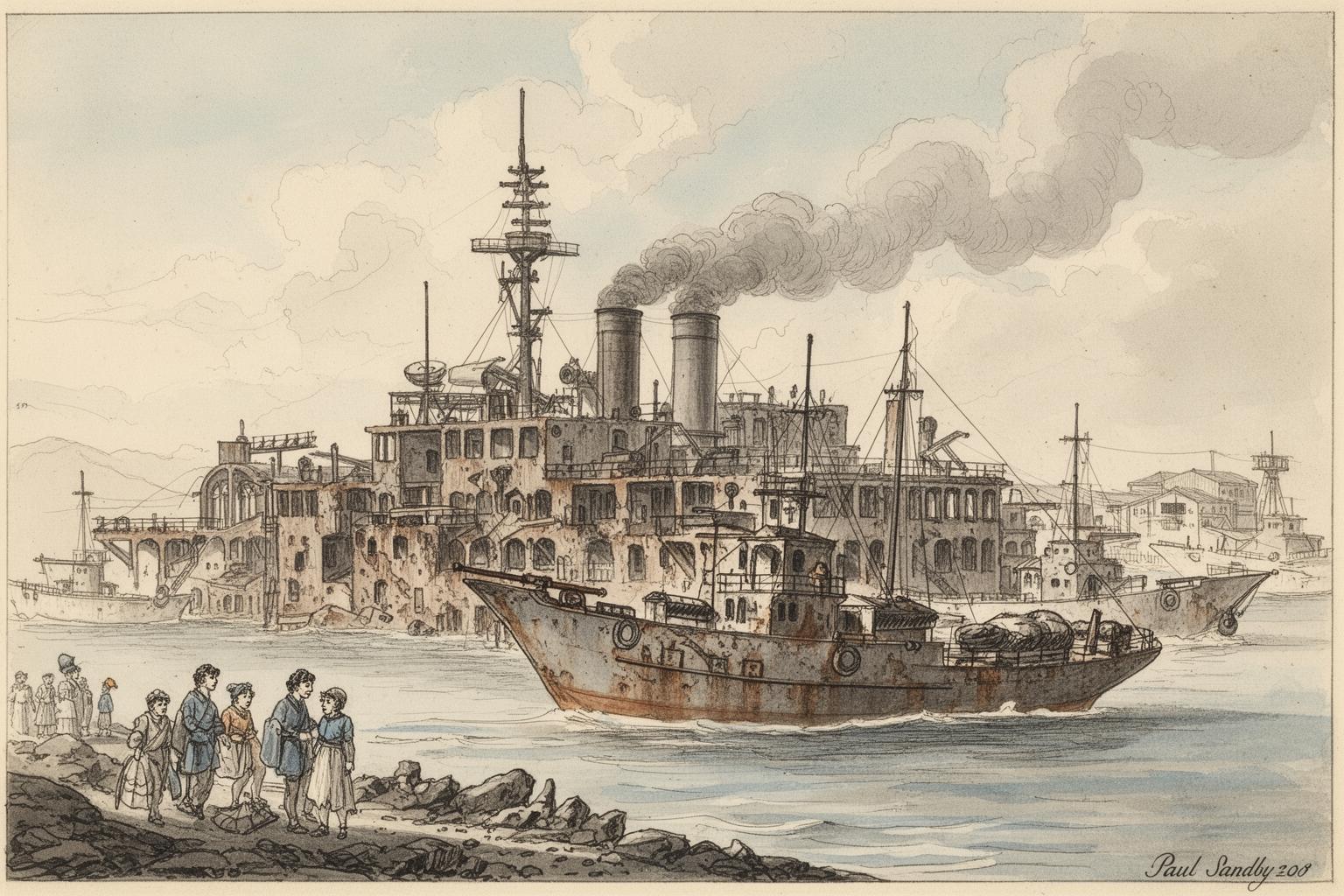
Alright, so you’re captivated by the story and eager to see this incredible place for yourself. Fair enough. But you can’t simply hop on a ferry and explore freely. Visiting Gunkanjima is a carefully controlled and regulated experience for very valid safety reasons. Here’s the essential rundown on how to make the pilgrimage to Japan’s most famous haikyo (ruin).
Booking Your Ride: The Only Way In
First and foremost: you absolutely must reserve a spot on a licensed tour boat. This is the sole way tourists can access the island. Several companies operate tours from various terminals in Nagasaki Port, making it a highly competitive market. Some of the main options include Gunkanjima Concierge, Yamasa Shipping, and Gunkanjima Cruise. While they generally follow a similar route, there are subtle differences. Some operate larger, more stable vessels (a plus if you’re prone to seasickness), while others are renowned for passionate guides who sometimes bring former residents to share personal stories, adding a wonderful layer to the experience. It’s worth researching online to find which company’s style and departure point best fit your plans.
Here’s a key pro-tip: book your tour well in advance, especially during peak seasons like spring (cherry blossoms) or autumn. These tours are extremely popular and often sell out weeks or even months ahead. Don’t delay. You can book online through each company’s website, which usually has English-language options. The cost typically ranges from 4,000 to 5,000 yen per person for the tour, plus a separate Nagasaki City landing fee of a few hundred yen. It’s a half-day commitment, lasting roughly three hours from start to finish.
The Journey and the Landing
The adventure truly begins at Nagasaki Port. The boat ride out takes about 40 to 50 minutes and is scenic in itself. You’ll pass Nagasaki’s vast Mitsubishi shipyards—a direct connection to Gunkanjima’s history—and head out into the open sea. As you move further from the shore, anticipation grows. Then you see it—at first just a dark speck on the horizon, but as you approach, the unmistakable battleship shape comes into focus. The boat typically circles the entire island before attempting to dock, offering a full 360-degree view. This is a photographer’s dream, allowing you to capture dramatic angles, including the iconic dense apartment blocks on the western side.
Now for the crucial reality check: landing on Gunkanjima is never guaranteed. The sea here can be notoriously rough, and the final decision to dock is made by the boat’s captain on the spot, based on wave height and wind conditions. Safety regulations are exceptionally strict. If waves exceed about 0.5 meters, docking is prohibited, turning the tour into a cruising-only experience. The success rate varies by season, generally better during calmer spring and autumn months, but lower in winter and typhoon season in late summer. It’s a gamble, so be prepared for the possibility that you might not step foot on the island. The sea is the ultimate authority. If you can’t land, you’ll still circle the island and enjoy the guide’s insightful commentary, which is fascinating—but managing your expectations from the start is essential.
What to Expect on the Island Tour
If fortune favors you and you land successfully, your visit lasts about 45 minutes to an hour. For safety reasons, free roaming is not allowed. The entire tour takes place on paved walkways and three large, designated observation decks built specifically for tourists. You’ll be led in a group by your guide, who will pause at various spots to explain what you’re seeing and share captivating stories about the island’s history and the daily lives of its former residents.
The first observation deck offers a great view of the primary and junior high school—a massive seven-story building that once echoed with the sounds of over a thousand children. From the second deck, you get a close look at the crumbling facade of Building 30, a pioneering concrete apartment block, as well as the infamous “Stairway to Hell,” a steep, claustrophobic staircase miners used to descend to the mine entrance. The third and final deck provides a view of the island’s industrial core: coal processing facilities, conveyor belts, and the sealed main mine shaft entrance. Guides are full of knowledge and bring the ruins to life with anecdotes and historical insights. They point out details you’d likely miss on your own, like the remains of the public bath or the company store. Though you might wish you could explore the decaying interiors, the guided tour is the only permitted way to experience this fragile and hazardous site, ensuring its preservation for future generations.
Pro Tips for Your Gunkanjima Adventure
To ensure your trip to Gunkanjima is as smooth and unforgettable as possible, here are some extra tips and advice. Consider this your insider guide to enhance the experience.
Gearing Up: What to Wear and Bring
First and foremost, comfortable, closed-toe shoes are absolutely essential. Trust me—you’ll be walking on uneven terrain, and tour operators enforce this rule strictly. No sandals or high heels allowed; opt for practical sneakers or walking shoes instead. The island is fully exposed to the elements, so dress according to the weather. In summer, it can get extremely hot and sunny, with no shade, so a hat, sunglasses, and high-SPF sunscreen are must-haves. Don’t forget to bring water. During cooler months, it can be very windy and chilly, so a windbreaker and layered clothing are crucial. Keep in mind that sea weather can differ significantly from the conditions in Nagasaki city, so it’s always better to be over-prepared.
If you’re even slightly prone to seasickness, take medication before boarding the boat. The ride can become quite rough, and you don’t want to feel queasy the entire trip. And naturally, bring your camera—the photo opportunities are incredible. But also remember to put it down for a few minutes at each observation deck. Breathe in the salty air, listen to the ambient sounds, and fully absorb the powerful, poignant atmosphere. Some moments are best savored by your memory rather than through a lens.
Best Time to Go? The Seasonal Scoop
As noted, the weather greatly influences the Gunkanjima experience. If your travel plans are flexible, aim for spring (March to May) or autumn (October to November). These seasons typically offer mild, pleasant weather and calmer seas, significantly boosting your chances of a successful landing. Plus, Nagasaki is lovely to explore during these periods.
Summer (June to August) can be very hot and humid, making the tour a bit exhausting. More importantly, this coincides with Japan’s typhoon season. Even a distant typhoon can cause swells that prevent landing for several days. Winter (December to February) brings colder temperatures and stronger winds, with rougher seas that often increase cancellations of landings. Regardless of when you visit, always have a backup plan since tours may be cancelled or become cruising-only trips due to bad weather.
Beyond the Island: Exploring Nagasaki
Gunkanjima is the main attraction, but it’s part of a larger, richer story rooted in Nagasaki. Since you’ll be based in Nagasaki, make sure to dedicate at least one or two full days to exploring this fascinating and historically significant city. The Gunkanjima tour takes only half a day, leaving plenty of time for further discovery.
Nagasaki’s identity is deeply tied to its history as one of the few ports open to foreign trade during Japan’s period of isolation. This fostered a unique, cosmopolitan culture that remains evident today. Visit Glover Garden, an exquisite open-air museum showcasing the historic homes of Western merchants from the 19th century. This site shares the UNESCO World Heritage designation with Gunkanjima, symbolizing the dawn of Japan’s industrial era. Nearby, the Oura Church, Japan’s oldest surviving church, reflects the region’s long Christian heritage. No trip to Nagasaki is complete without confronting its more recent, tragic past. The Nagasaki Atomic Bomb Museum and the adjacent Peace Park offer a profoundly moving, essential experience highlighting the city’s resilience and enduring message of peace.
And don’t miss the food! Nagasaki’s fusion culture shines through its cuisine. Be sure to try champon, a hearty noodle soup filled with pork, seafood, and vegetables, and sara udon, its crispy noodle counterpart. For dessert, enjoy castella, a simple yet divine sponge cake introduced by Portuguese missionaries centuries ago. Exploring Nagasaki adds valuable context to your Gunkanjima visit, connecting the dots between industrial ambition, international exchange, and the city’s powerful story of destruction and rebirth.
The Unforgettable Echoes of Hashima
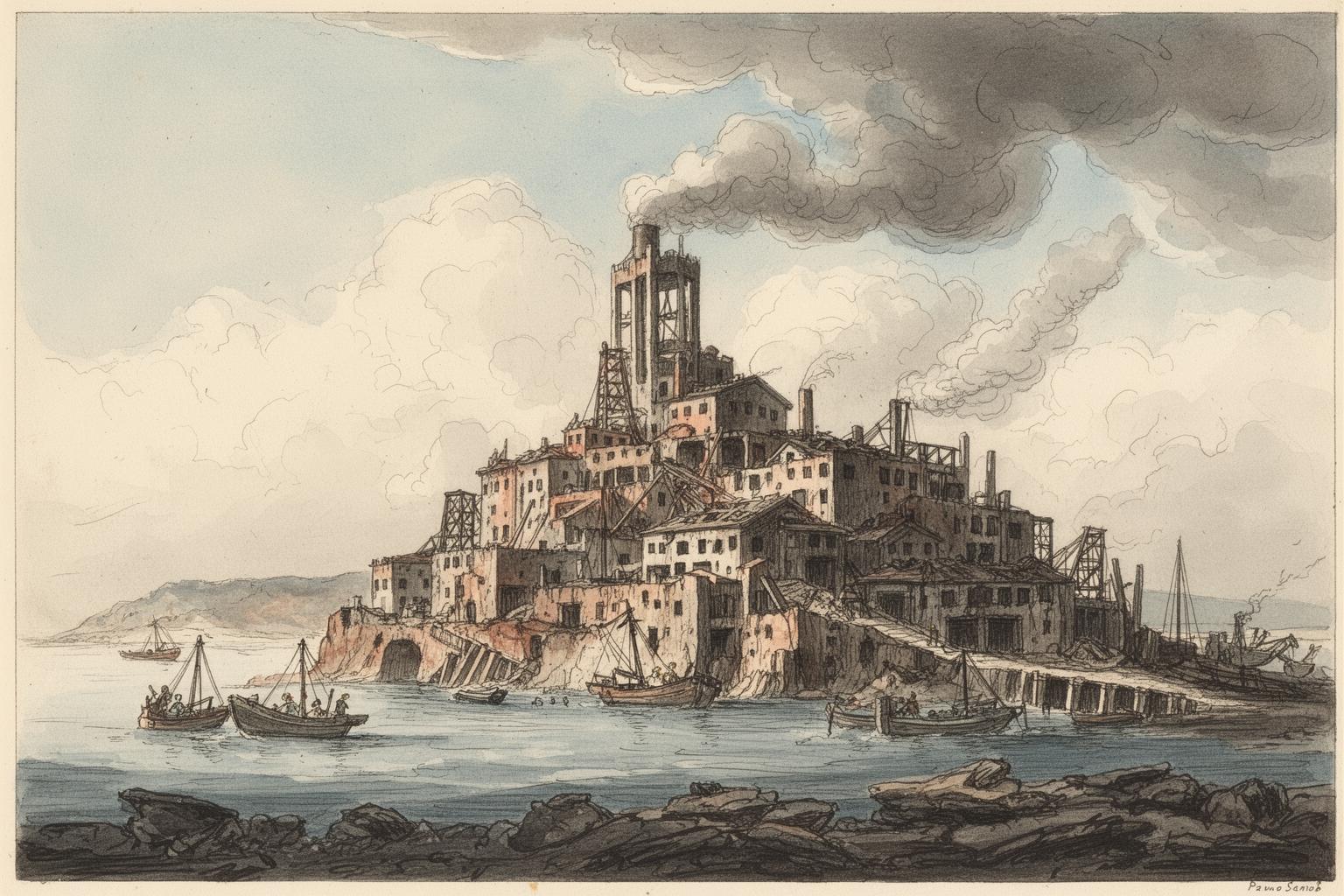
Leaving Gunkanjima evokes a strange feeling. As the boat pulls away and the concrete battleship fades into a silhouette on the horizon, the island’s silence is replaced by the hum of the engine, bringing you back to the present. Yet the echoes of Hashima linger. It’s a place that gets under your skin. More than just a cool, eerie ruin, it serves as a profound and complex memorial. It stands as a monument to a time when Japan’s industrial ambition was boundless—a marvel of engineering and a symbol of national pride. It testifies to the thousands who built vibrant lives and a strong community on a barren rock in the sea. But it also solemnly memorializes the many who were brought there against their will, who suffered and died in its dark, underground tunnels, their stories overshadowed by the triumphant narrative of progress.
Gunkanjima compels reflection. It raises questions about the cost of modernization, the meaning of community, and the duty to remember history in all its complexity, both glorious and shameful. It’s not a simple story, nor are there easy answers carried on the sea breeze. The island embodies duality—light and shadow, life and decay. Visiting Gunkanjima is more than a tour; it’s a conversation with the past. It offers a chance to witness a unique and powerful story, to feel the weight of history on a small, abandoned island, and to carry its unforgettable echoes with you. It’s a mood that lingers long after you leave.