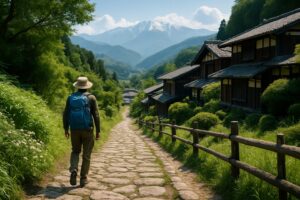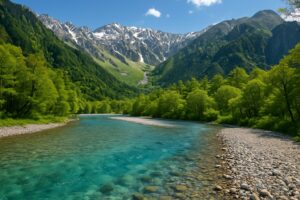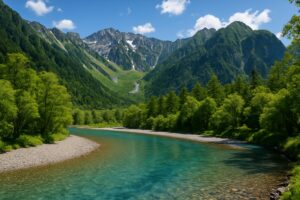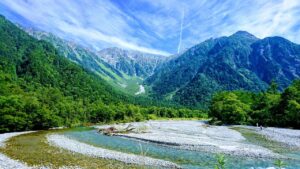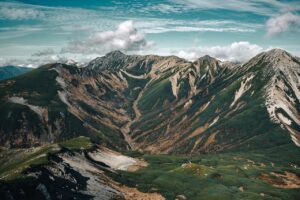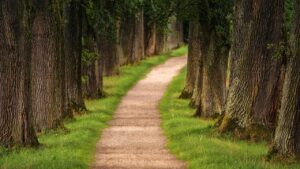
Alright, let’s talk about a place that’s straight-up legendary. A place where the air hits different and the scenery is so ridiculously beautiful it almost looks fake. We’re talking about Kamikochi, a high-altitude valley tucked away in the Northern Japan Alps that’s basically nature’s main character. Forget the neon-drenched streets of Tokyo for a sec and picture this: towering, jagged peaks piercing a perfect blue sky, a river so clear it sparkles with an unreal turquoise glow, and sprawling forests that feel ancient and alive. This isn’t just a park; it’s a whole mood. Kamikochi, which literally translates to ‘where the gods descended,’ is a protected sanctuary where Mother Nature is the undisputed queen. Private cars are banned, so the moment you step off the bus, you’re enveloped in a bubble of pristine tranquility. The only soundtrack here is the rush of the Azusa River, the whisper of wind through the larch trees, and the occasional call of a bird. For anyone feeling burnt out by the daily grind, this place is the ultimate reset button. It’s where you go to feel small in the best way possible, humbled by the sheer scale of the mountains and reminded of what a masterpiece our planet is. Whether you’re a hardcore trekker ready to conquer peaks or a family looking for a ridiculously scenic stroll, Kamikochi has a path for you. It’s a choose-your-own-adventure story set in one of the most stunning landscapes Japan has to offer. So, grab your best walking shoes and get ready to have your mind blown, because this place is about to become your new obsession.
The Vibe Check: What It Actually Feels Like in Kamikochi
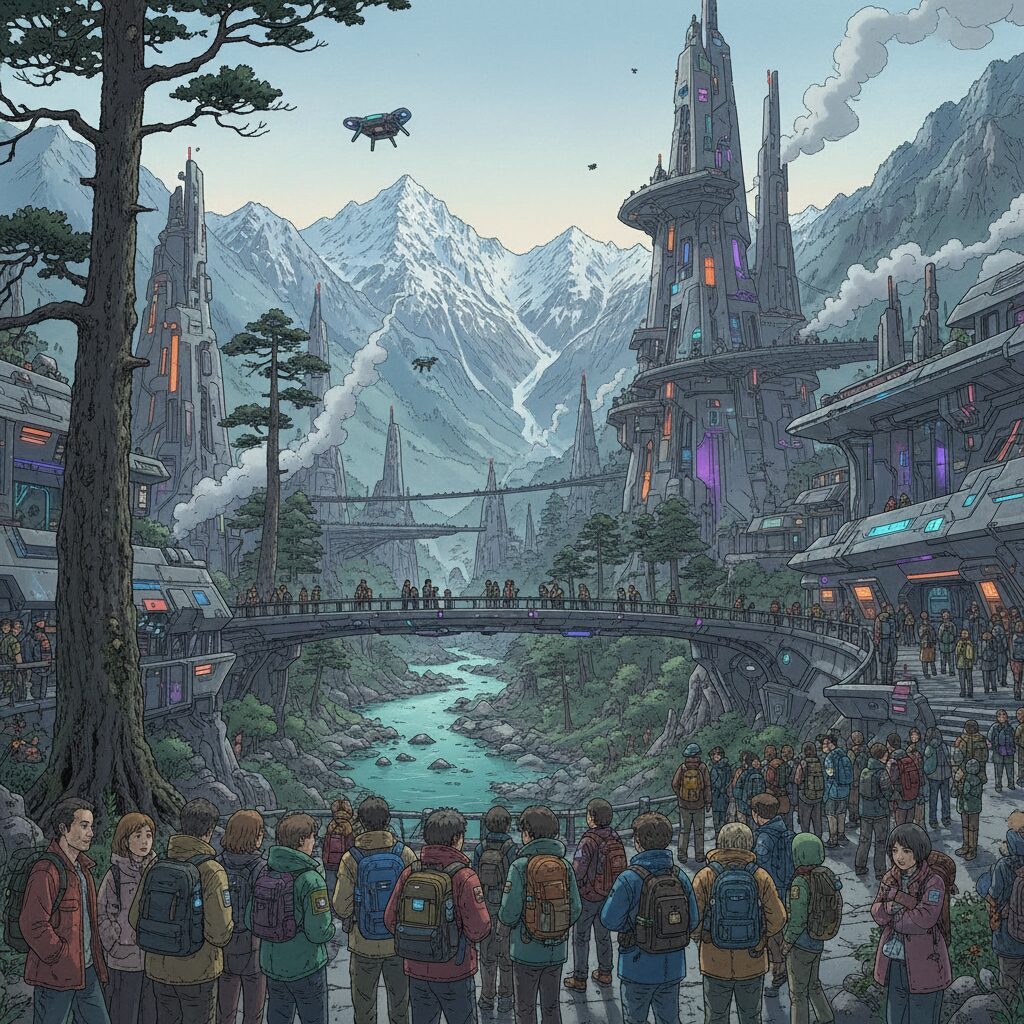
Entering Kamikochi feels like passing through a gateway. One moment you’re riding a bus winding along mountain roads; the next, you find yourself in a valley where the air is so fresh and pure it feels like taking your first true breath. The atmosphere becomes instantly tranquil. With no private vehicles allowed beyond the main gates, the usual traffic noise disappears. Instead, it’s replaced by a chorus of natural sounds—the steady, gentle rush of the Azusa River, the valley’s lifeblood, as it flows over smooth stones. You hear leaves rustling in the breeze, carrying the fragrance of pine and moist earth. Occasionally, you might catch the distant chatter of Japanese macaques or the sharp cry of a bird reverberating off the cliffs. It’s a sensory experience that immediately grounds you.
There’s a striking sense of scale here that puts everything into perspective. Standing on the valley floor, you tilt your head back to take in the summits of the Hotaka Mountain Range, rising over 3,000 meters into the sky. These are no gentle hills; they are steep, dramatic peaks of gray rock, often capped with snow well into the summer. You feel incredibly small, but not in a daunting way. Rather, it’s a profound, awe-filled sensation—a reminder of nature’s raw power and grandeur. This feeling of reverence is woven into Kamikochi’s very essence. It’s a place that demands respect and in return offers a deep sense of peace. The energy is both revitalizing and soothing. You feel motivated to explore further, to hike beyond the next bend, yet at the same time, you could sit quietly on a riverbank rock for hours, feeling utterly content. It is truly a sanctuary—a place to leave behind the noise and reconnect with something more elemental.
The Main Event: Kappa Bridge and the Azusa River
Every legendary destination has its core, its central gathering point, and in Kamikochi, that’s Kappa Bridge. Honestly, the first time you see it, you’ll understand why it’s featured on so many postcards. This simple wooden suspension bridge is the iconic symbol of the valley, and the view from it is absolutely stunning. Standing at the midpoint, you’re treated to a breathtaking 360-degree panorama. Upstream, the scenery is dominated by the majestic Hotaka mountains, including Mount Myojindake, whose rugged and imposing presence forms the perfect backdrop to the vividly vibrant Azusa River flowing beneath. The water itself is a spectacle—a mesmerizing mix of aquamarine and emerald, with crystal-clear clarity. You can see every single pebble and stone on the riverbed, even in the deeper areas. It’s pure snowmelt filtered through the mountains, looking as pristine and refreshing as it feels.
Downstream, the view is equally spectacular, showcasing Mount Yakedake, an active volcano that often releases a gentle plume of steam from its summit, reminding visitors that this landscape is still living and evolving. But Kappa Bridge is more than just a scenic photo spot. It serves as the social hub of Kamikochi—a gathering place for hikers, a resting spot for families admiring the view, and a convenient location to grab soft-serve ice cream or hot coffee from the nearby hotels, restaurants, and souvenir shops. The bridge’s name comes from the Kappa, a mythical water creature in Japanese folklore. According to legend, these mischievous and sometimes troublesome spirits inhabit Japan’s rivers and ponds. While you probably won’t spot one, the name adds a magical dimension to the place. Spending time at Kappa Bridge is an essential part of the Kamikochi experience—it’s the perfect spot to get your bearings, soak in the atmosphere, and mentally prepare for the adventures awaiting you on the trails ahead.
Level Up Your Hike: Trails for Every Squad
Kamikochi is a hiker’s paradise, yet you don’t need to be an experienced mountaineer to enjoy it. The trail system is excellent, offering everything from easy, flat walks ideal for families with children to starting points for serious multi-day alpine expeditions. The best part is that no matter which trail you take, the scenery is always breathtaking.
The Beginner’s Loop: Taisho Pond to Kappa Bridge
If you’re new to Kamikochi or just want a relaxing yet highly rewarding walk, this is the route to take. The journey typically begins by getting off the bus at the Taisho Pond stop, one stop before the main terminal. The pond itself is otherworldly. It was created in 1915 when a Mount Yakedake eruption dammed the Azusa River; the dead trees submerged and still standing in the water lend it a haunting, mystical atmosphere. Early in the morning, when mist hovers over the water and the Hotaka mountains reflect perfectly on the still surface, the scene is pure magic.
From Taisho Pond, a well-maintained trail, featuring long stretches of wooden boardwalk, runs along the river toward Kappa Bridge. This path is almost entirely flat and takes about an hour at a relaxed pace. It’s an absolute dream. You’ll wander through pristine forests and across Tashiro Marsh, a beautiful wetland offering expansive views of the mountain range. The trail is a feast for the senses: the sound of the river accompanies you throughout, while the forest floor is often covered with unique alpine flowers and lush moss. Watch for local wildlife; it’s common to spot Japanese macaques foraging near the trail. This route presents the full Kamikochi visual experience—the dramatic peaks, crystal-clear river, and lush forests—without any strenuous climbing. It’s the perfect introduction and sets the tone for the valley’s epic beauty.
The Classic Quest: Kappa Bridge to Myojin Pond
Ready for a bit more adventure? The hike from Kappa Bridge to Myojin Pond is the quintessential Kamikochi trek. It’s a round trip of about three hours and remains relatively flat, making it accessible to most people with moderate fitness. You have two trail options: the right bank or the left bank of the river. Many hikers choose one path going out and the other returning to enjoy different perspectives. The right bank trail is more forested and wild, while the left bank offers more frequent open views of the river and mountains.
As you leave the relative bustle of Kappa Bridge behind, the atmosphere shifts. The crowds thin, and you feel more immersed in nature. The forest grows older, the trees taller, and the sense of peace deepens. The destination, Myojin Pond, is well worth the walk. This isn’t just a pond; it’s a sacred site. Located behind Hotaka Shrine, a small entrance fee grants access to a tranquil area that feels like a Japanese garden sculpted by nature itself. There are two ponds here, with water so still it perfectly reflects the surrounding mountains and trees. Wooden boats moored at the edge add to the picturesque scene. The overall feeling is profoundly peaceful and spiritual. Beside the shrine is Kamonjigoya mountain hut, a historic spot serving hikers for generations. You must try their specialty: Iwana, a river char grilled to perfection over an open hearth. Sitting by the river, enjoying freshly grilled fish after a beautiful hike—this becomes a lasting memory.
The Pro-Gamer Route: Beyond Myojin to Tokusawa and Yokoo
For those drawn to the high peaks, the trail doesn’t end at Myojin. Here, Kamikochi shifts from a scenic day-trip spot to the gateway to the Northern Japan Alps. The trail continues deeper into the valley. The next major destination is Tokusawa, about an hour’s walk from Myojin. The forest opens into a vast, flat meadow that once served as cattle pasture. Today, it’s a stunning campsite and resting spot, with a couple of lodges and a visitor center providing a fantastic picnic location alongside jaw-dropping, unobstructed mountain views.
Press on for another hour, and you’ll reach Yokoo, the true terminus for casual hikers. The large Yokoo Sanso lodge and the long suspension bridge crossing the river mark this as a serious mountain hub. This is the starting point for some of Japan’s most famous and challenging multi-day treks, including the ascent of Yarigatake (Mount Yari), known as Japan’s Matterhorn, and the demanding Daikiretto Gap traverse along the Hotaka ridge. Beyond here, trails grow steep and rugged, requiring proper mountaineering gear, experience, and preparation. Even if you’re not venturing into the high peaks, the hike to Yokoo is a fantastic day trip that reveals the wilder, more remote side of Kamikochi, far from the crowds. You’ll feel like a true adventurer standing on the edge of Japan’s most epic alpine playground.
When to Slide Through: A Seasonal Play-by-Play
Kamikochi is open to the public only from mid-April to mid-November, and each segment of this season offers a distinctly different yet equally stunning experience. Choosing when to visit is crucial to capturing the atmosphere you desire. There’s no single “best” time; it truly depends on what you want to see and do.
Spring (Late April – June): The Grand Opening
The season begins in mid-April, but genuine spring vibes don’t emerge until May. This period marks an incredible transformation. The valley awakens from its long, snow-covered dormancy. Visiting in late April or early May, you’ll likely still find significant patches of snow on the valley floor, with the peaks brilliantly white, creating a striking, high-contrast landscape. The air is cold and crisp, evoking a sense of fresh beginnings. By late May and June, the renowned shinryoku, or fresh greenery, takes center stage. Larch and birch trees sprout vibrant new leaves in the most vivid shades of green imaginable. The contrast between this electric greenery, the snowy mountain peaks, and the deep blue sky is truly breathtaking. It’s also an excellent time for birdwatching as migratory birds return to the valley. Just keep in mind that layering your clothing is essential during this season, as the weather can quickly shift from warm sunshine to chilly winds.
Summer (July – August): Peak Season Energy
Summer represents Kamikochi at its fullest. The entire valley is a lush, green paradise, with alpine wildflowers in full bloom, sprinkling color across the trails and marshes. This is the peak season for a reason. The weather tends to be warmer and more stable, and all high-altitude hiking trails are free of snow, allowing access to the most challenging peaks. Long days provide ample time for exploration. The valley buzzes with energy as hikers from around the world gather to celebrate the beauty of the Japanese Alps. The downside? It’s the busiest time, especially during Japan’s Obon holiday in mid-August. Booking accommodation and long-distance buses well in advance is necessary. To avoid the crowds, a smart strategy is to stay overnight in the valley. This lets you hit the trails early, before the first buses arrive, offering precious hours to enjoy the stunning scenery in relative solitude. Truly, there’s nothing quite like watching the first rays of sunlight strike the Hotaka peaks from a quiet spot by the river.
Autumn (Late September – October): The Glow Up
Many regular visitors say that autumn is when Kamikochi reaches its ultimate glow up. The koyo, or autumn leaves, season is legendary here. The transformation begins on the high peaks in late September and gradually descends to the valley floor, peaking around mid-October. While you’ll see the classic reds and oranges of maple and rowan trees, the real highlight is the Japanese Larch, or karamatsu. Unlike most conifers, the larch is deciduous, and its needles turn a brilliant, fiery gold before falling. When the whole valley is covered in these golden tones, set against the stark grey mountains and turquoise river, it’s a sight etched forever in your memory. The air cools and crisps again, ideal for hiking, and the light takes on a warm, golden quality that photographers dream of. By early November, the colors fade, a chill settles in, and the valley gears up for its winter closure on November 15th. Visiting during these last weeks offers a poignant, beautiful atmosphere—a final chance to savor the magic before snow returns.
The Nitty-Gritty: How to Get There & Pro Tips
Reaching a place as pristine and well-protected as this takes a bit of planning, but that’s part of what makes it so special. The key rule to keep in mind is that private cars are completely prohibited from entering the Kamikochi valley. This important environmental policy helps maintain the area’s peacefulness. So, how do you get there?
Access is Everything
You’ll need to rely on public transportation, which is very efficient and adds to the adventure. If you’re driving, you must park at designated parking areas outside the park. On the Matsumoto side, that’s the Sawando Parking Area. On the Takayama side, it’s the Hirayu Onsen Akandana Parking Area. From these lots, you’ll take a special shuttle bus or taxi the rest of the way into Kamikochi. For those using public transport, the easiest route from Tokyo is a direct highway bus from the Shinjuku Bus Terminal, taking about five hours. Alternatively, you can take a train to Matsumoto, then a local train to Shin-Shimashima Station, followed by a bus up to Kamikochi. From Takayama and Kanazawa, buses depart from the Takayama Bus Terminal, sometimes requiring a transfer at Hirayu Onsen. The journey itself is stunning, winding through mountain roads with breathtaking views.
Where to Stay
While many visit Kamikochi as a day trip, staying overnight transforms the experience. It lets you enjoy the valley’s quiet ‘golden hours’ in the early morning and late evening, when day visitors have left. Accommodation options suit every budget and taste. At the top end is the historic and luxurious Kamikochi Imperial Hotel, known for its old-world charm and excellent service. Nearby the Kappa Bridge area, you’ll find many comfortable hotels and traditional Japanese inns (ryokan). For a more authentic mountain experience, try a sanso—a mountain hut—that ranges from basic to cozy and is scattered throughout the valley, such as at Myojin and Tokusawa. These offer a warm community atmosphere among hikers. For budget travelers and adventurers, there are a few campsites, notably at Konashidaira (near Kappa Bridge) and Tokusawa. Waking up in a tent surrounded by the majestic Alps is truly unforgettable.
Practical Tips for a Perfect Trip
First, gear. Even for an easy walk, wear sturdy, comfortable shoes. Trails are well-kept but can be uneven. Mountain weather is notoriously unpredictable and can change suddenly, so always bring rain gear, even if the forecast is clear. Also, pack clothing in layers so you can adjust easily. Next, bears. Asiatic black bears inhabit these mountains. Though encounters are rare, it’s important to be bear-aware. Many hikers attach small ‘bear bells’ to their backpacks; the sound alerts bears to your presence and avoids surprises. Never leave food unattended and always carry out all your trash. Regarding money, while hotels and larger shops accept credit cards, many mountain huts and food stalls only take cash, so bring enough yen. Finally, especially during peak season, book everything well in advance. Reserve your bus tickets, accommodation, and guided tours early, as availability fills up fast.
A Deeper Look: The Spirit of the Mountains
To fully appreciate Kamikochi, it’s helpful to recognize that you’re not merely walking through a beautiful park, but traversing a landscape steeped in history and cultural significance. For centuries, these mountains were the territory of hunters and woodsmen, regarded as sacred and largely off-limits. The notion of climbing mountains for pleasure was unfamiliar in Japan until the late 19th century. A pivotal figure in Kamikochi’s history is Reverend Walter Weston, an English missionary often hailed as the ‘Father of Japanese Mountaineering.’ Through his explorations and writings in the 1890s, he introduced recreational alpinism to Japan and played a key role in popularizing the term ‘Japanese Alps’ to describe this magnificent range. His enthusiasm for the mountains helped ignite a domestic interest in mountaineering that endures today, and a relief plaque honoring him is located in the valley.
This deep respect for mountains is a fundamental aspect of Japanese culture, especially in Shintoism, the indigenous religion. Mountains are viewed as the abodes of kami, or gods and spirits, and are objects of veneration. Sites of extraordinary natural beauty, such as Myojin Pond, are considered sacred places, gateways where the human and divine worlds meet. The Hotaka Shrine at Myojin Pond is devoted to the gods of the sea and mountains, symbolizing the belief that the pure water from these peaks ultimately nourishes the entire nation, reaching all the way to the ocean. Grasping this spiritual connection lends an added dimension to your visit—you are treading on sacred ground. This is also why conservation efforts here are so stringent. The ban on private vehicles, the ‘leave no trace’ ethic, and the careful trail management all reflect a collective commitment to protecting the sanctity and delicate ecosystem of this divine landscape for future generations.
More Than Just a Walk: Unforgettable Kamikochi Experiences

While hiking is the main attraction, there are many other ways to fully experience the magic of Kamikochi. The adventure is much more than simply placing one foot in front of the other. It involves engaging all your senses and letting the place leave a lasting impression on you.
Stargazing
If you choose to stay overnight, you’ll be in for an astronomical treat. Far from the city’s light pollution, Kamikochi’s night sky is absolutely breathtaking. On a clear night, the sky turns into a glittering tapestry of stars so dense and bright it feels as if you could reach out and touch them. The Milky Way stretches across the sky like a brilliant, cloudy band, and constellations appear with a clarity you’ve likely never witnessed before. Finding a dark spot away from the lodges, lying back, and simply gazing upward is a humbling and awe-inspiring experience that connects you with the vastness of the universe.
Onsen Break
After a long day of hiking, nothing beats soaking your tired muscles in a natural hot spring, or onsen. While a few hotels in Kamikochi offer private baths, the nearby onsen town of Hirayu, a main bus hub, is an excellent place to enjoy this quintessential Japanese tradition. The mineral-rich volcanic water is deeply relaxing and is believed to have therapeutic effects. Bathing in an outdoor bath (rotenburo), surrounded by forest and mountains, is pure bliss and the perfect way to end a day of adventure.
Photography
It goes without saying that Kamikochi is a photographer’s paradise, whether you’re a casual smartphone user or a serious landscape professional. Every direction offers a frame-worthy view. For the best shots, aim for the ‘golden hours’ of early morning and late afternoon, when the light is soft and warm. In the mornings, you can often capture mist rising from the river and Taisho Pond, creating a moody, atmospheric scene. A polarizing filter is a handy tool to reduce glare and enhance the rich blues and greens of the water and sky. Don’t limit yourself to grand landscapes; seek out smaller details as well—the texture of moss on a rock, the intricate patterns of a flower, or the way light filters through the forest canopy.
Wildlife Spotting
Kamikochi’s pristine environment supports a diverse array of wildlife. The most famous inhabitants are the Japanese macaques, or snow monkeys, often seen along the trails, especially between Taisho Pond and Kappa Bridge. It’s thrilling to observe them in their natural habitat, but it’s important to remember they are wild animals. Maintain a respectful distance, never feed them, and keep your food securely stored. You might also be fortunate enough to spot the Japanese serow, a native goat-antelope, clinging to rocky cliffsides. The valley is also a fantastic destination for bird enthusiasts, with opportunities to see beautiful species such as the Narcissus flycatcher, along with various woodpeckers and thrushes.
A Place That Stays With You
Leaving Kamikochi feels like awakening from a beautiful dream. As your bus descends the mountains and you gradually re-enter the world of traffic and towns, the deep peace of the valley lingers with you. It’s more than just a collection of stunning photos and memories from a good hike. Kamikochi has a way of getting under your skin, reshaping your perspective. It reminds you of a world that is wild, powerful, and breathtakingly beautiful. It’s the silence, interrupted only by the sound of the river. It’s the sight of 3,000-meter peaks mirrored in a glassy pond. It’s the sensation of fresh, clean air filling your lungs. This is a place that truly deserves its name as a playground of the gods. It’s a treasure that calls you back, inviting you to explore a new trail, experience a different season, and once again stand in awe of its timeless majesty.