
Yo, what’s the deal with Japan’s forests? For real. If you’ve spent any time scrolling through the internet, you’ve seen the pics: moody, moss-covered everything, trees the size of skyscrapers, and a vibe so thick you could cut it with a katana. And if you’re a real one, you’ve seen Studio Ghibli’s masterpiece, Princess Mononoke. You know the scene—the little white dudes with the creepy-cute rattling heads, the Kodama, peeking out from behind ancient tree trunks. It’s an iconic image, a whole mood. And it leaves a lot of people from outside Japan with a major question: Is that… real? Like, do people in Japan actually believe in those little guys? Are they out there, just vibing in the woods?
The short answer is nah, not literally. You aren’t going to find a Funko Pop-looking spirit chilling in the woods. But the long answer? That’s way more interesting. The quest for Kodama isn’t about finding a mythical creature. It’s a key—a cheat code, even—to understanding one of the most fundamental, deep-rooted parts of the Japanese psyche: the absolute, unwavering belief that nature is alive, and that it’s packed with a power, a presence, a whole squad of spirits we’d now call a “vibe.” Chasing the ghost of a Ghibli character is actually a pilgrimage to the heart of what makes Japan, well, Japan. It’s about learning to see the forest not just as a bunch of trees, but as a living, breathing entity. This isn’t just a travel guide; this is a deep dive into the spiritual OS that Japan has been running on for thousands of years. We’re going to decode why a walk in the woods here can feel like stepping into another dimension. So lace up your metaphorical hiking boots. The trail gets pretty deep from here.
To truly grasp this deep-rooted animism, it helps to see how the concept of summoning spirits has evolved into modern Japanese culture.
The Ghibli Glow-Up: Why We’re All Chasing Kodama
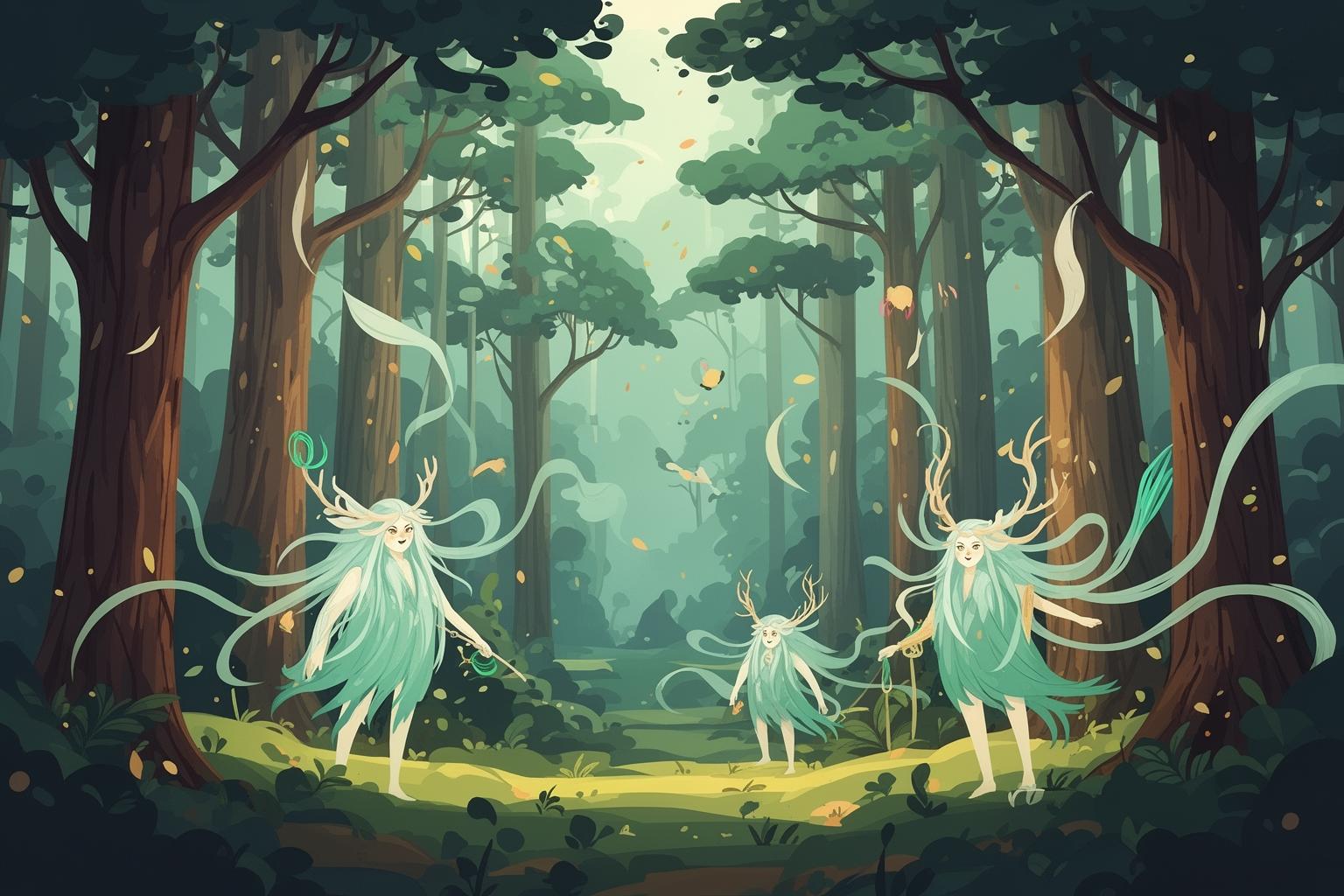
Let’s be honest: Hayao Miyazaki and Studio Ghibli have done more for promoting Japanese spirituality worldwide than anyone else in history. Princess Mononoke wasn’t merely an animated movie; it was a cultural Trojan horse. It introduced a substantial dose of Japanese animism to the global audience, wrapped in a compelling story with stunning visuals. The Kodama became the standout characters. Their strange, rattling head-turns and vacant yet knowing gazes symbolized the film’s core message: the forest has a soul. When people discovered that the film’s forest was inspired by a real place—Yakushima Island—a new kind of pilgrimage began.
But here’s the twist: Kodama weren’t just some adorable creation of Miyazaki’s team. The word and concept have existed for centuries. In Japanese folklore, a kodama (木霊) is literally a tree spirit. The character 木 means ‘tree,’ and 霊 means ‘spirit.’ Sometimes it also refers to an echo, implying that echoes in the mountains or deep forests are the voices of the kodama. Their presence indicated a forest that was healthy, ancient, and alive. If the Kodama disappeared, it meant the forest was dying. So, when Ashitaka sees them, it’s the film’s way of silently telling the audience that this place is deeply special and ancient. It’s a forest at its peak vitality, brimming with life force.
So when travelers, armed with a screenshot from the film, venture into the woods of Yakushima, they face an immediate expectation-versus-reality moment. You won’t see a physical, rattling creature. That’s fiction. The reality is that you step into an environment so rich with age and life that you begin to sense what the Kodama embody. You feel a presence. You notice the eerie silence, the way light filters through the canopy, the towering size of the trees. The point isn’t to capture a photo of an imaginary spirit; it’s to attune yourself to the forest’s frequency, to experience the ancient, powerful energy that gave rise to the legend in the first place. Ghibli just gave that feeling a form.
It’s Not a Religion, It’s a Vibe: The Shinto Roots of Forest Worship
To truly understand why a tree can be considered a god, you need to grasp the fundamentals of Shinto. The best way to view Shinto isn’t as a religion like Christianity or Islam, with a central holy book, a single all-powerful deity, and a set of strict rules. Instead, it’s more like a spiritual operating system— the default mode of the Japanese worldview, quietly running in the background of everyday life. At its heart is the concept of Yaoyorozu no Kami—the eight million gods. This poetic expression means that divinity isn’t confined to some distant heaven; it’s present here and now, in literally everything.
A kami, or god/spirit, can be anything that inspires reverence. It might be a majestic mountain like Fuji-san, a powerful waterfall, a river, the sea, or even the wind. It could also be a very old and massive tree, a uniquely shaped rock, or a respected ancestor. This isn’t about praying to a tree for a promotion; it’s about recognizing the life force and immense history within that tree and showing it respect. It’s a profound form of acknowledgment. You’re not merely looking at old wood; you’re in the presence of a being that has stood in that spot for a thousand years, silently witnessing everything.
That’s why, when traveling through Japan, you’ll notice various visual signs that may seem random at first. You’ll see thick, braided straw ropes, often with white paper zigzags hanging from them, tied around enormous, ancient trees. This is a shimenawa, a marker that says, “This is a sacred space. A kami dwells here. Treat with care.” That tree becomes a goshinboku—a sacred tree. You’ll also find tiny shrines called hokora hidden on mountain paths or in quiet neighborhood corners. These are markers, small nodes in a vast spiritual network, each one honoring a local kami. In this worldview, the sacred isn’t separate from the everyday; it’s woven into it. So, the idea of a forest full of spirits isn’t just a fantasy from an anime—it’s a natural extension of this foundational belief system. The forest is not merely a resource; it’s a cathedral, a home for countless kami.
Decoding the Forest: The Language of Moss, Mist, and Ancient Trees
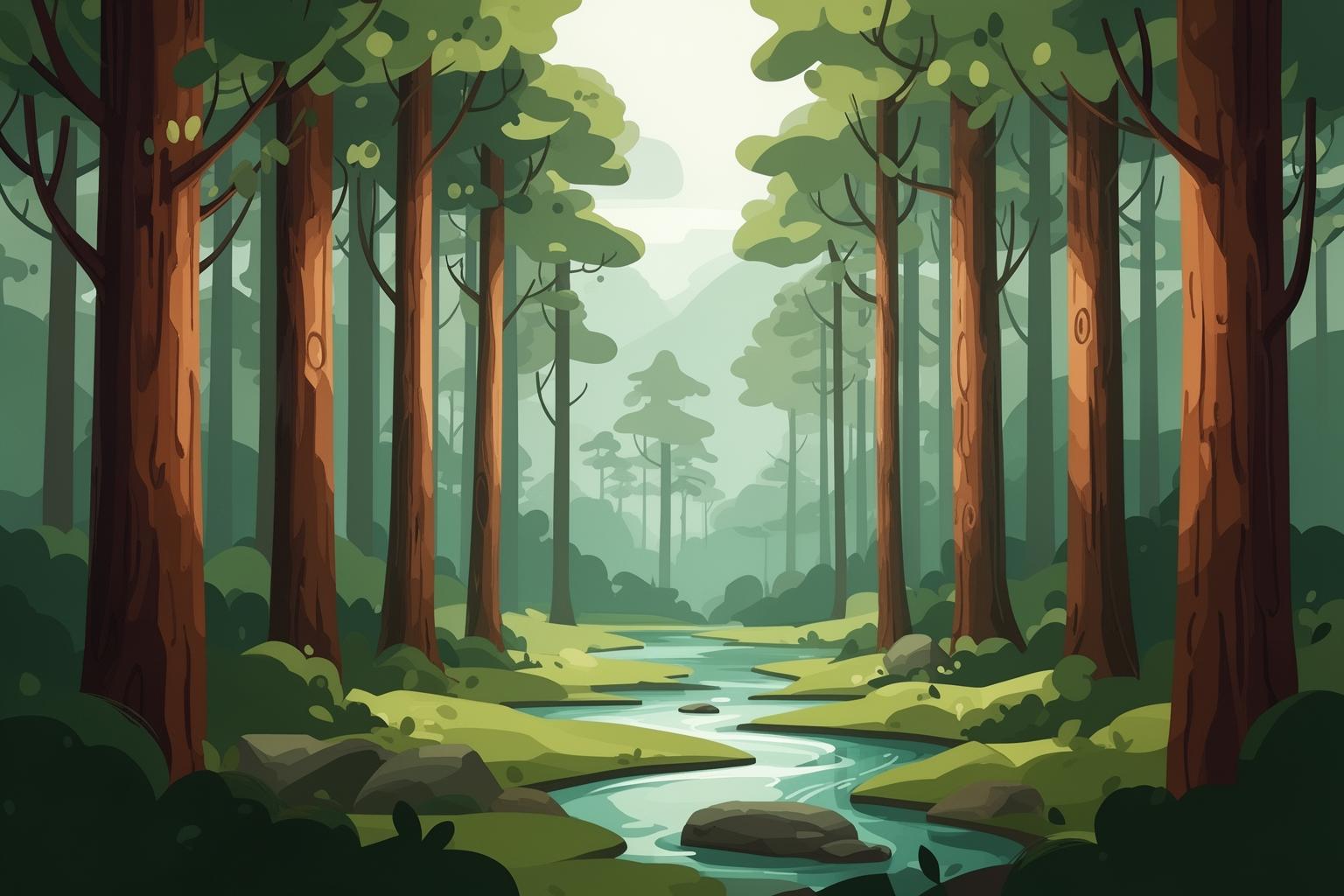
Once you grasp the Shinto vibe, the forest takes on a new meaning. It ceases to be just a static backdrop and instead becomes a living, dynamic text you can learn to interpret. There’s no better place to master this language than Yakushima Island, the real-world inspiration for the world of Princess Mononoke. Setting foot on its trails feels like entering an entirely different game world. The air is dense, saturated with moisture and the scent of damp earth and cedar. Everywhere—you guessed it—is cloaked in a thick blanket of green.
Let’s focus on the moss. For most of us, moss is simply… moss. It grows on rocks, no big deal. But in a place like Shiratani Unsuikyo Ravine on Yakushima, moss takes center stage. Hundreds of varieties appear in shades of green you never knew existed. It carpets the ground, engulfs fallen logs, and climbs the trunks of thousand-year-old trees. Culturally, it’s not merely decorative. Moss represents a tangible manifestation of time and purity. Its slow, relentless growth stands as a testament to the forest’s age and stability. It flourishes in the island’s ceaseless rain, which in Shinto is regarded as a purifying force, washing away impurities (kegare). Walking through a world defined by moss and water is a profoundly cleansing experience. You feel as though you’re breathing air filtered through millennia of life.
Then there are the trees themselves. The stars of the forest are the Yaku-sugi, the ancient cedar trees. To earn the title of Yaku-sugi, a tree must be at least 1,000 years old. The most famous, Jomon Sugi, is estimated to be anywhere between 2,000 and over 7,000 years old. Consider that: this tree was a sapling when the pyramids were being built and already an ancient giant by the time Rome was founded. Standing before such antiquity profoundly shifts your sense of time and your own significance. These trees aren’t just massive; they carry a spiritual presence. Their bark is gnarled and twisted into expressive shapes, resembling old faces. They are revered not only for their age but for their resilience. They endured harsh conditions, battered by typhoons, and their high resin content makes them highly resistant to rot. They are survivors—the elder gods of this forest. The ‘silence’ here isn’t the absence of sound; it’s a presence. It’s the drip of water from a fern, the rustle of a leaf, the creak of a branch overhead. It’s the forest breathing. This is the ‘echo,’ the ‘voice’ of the Kodama in its original, folkloric sense.
Yakushima: The Heart of the Mononoke Pilgrimage
If you’re serious about this quest, all paths lead to Yakushima. This subtropical island, south of Kyushu, is a UNESCO World Heritage site for a reason. It embodies a primeval atmosphere where the boundary between the physical and spiritual feels remarkably thin. But let’s set realistic expectations, because arriving and truly experiencing it isn’t easy. This isn’t a theme park—it’s rugged, authentic wilderness.
First, know that the island is nicknamed the “35-days-a-month rain island.” They’re not exaggerating. Rain is a constant companion. Yakushima has its own wild microclimate, responsible for the lush, verdant explosion of life around you. Prepare for rain—quality waterproof gear isn’t optional; it’s essential. The most iconic trail for Ghibli enthusiasts lies in the Shiratani Unsuikyo Ravine. Deep within the hike, there’s a spot known as the “Moss-Covered Forest” (Kokemusu no Mori), which perfectly mirrors the landscapes from the movie. Reaching it means navigating slippery, moss-covered rocks and tangled roots—a genuine workout that will leave your legs feeling the effort.
The ultimate reward for the dedicated is the trek to Jomon Sugi. This is a demanding, ten-to-twelve-hour round-trip journey. You start before dawn with a headlamp and return after dusk, utterly exhausted. The hike challenges you physically and mentally. But the payoff is immense. Hours spent traversing an increasingly ancient and otherworldly forest culminate in arriving at a viewing platform where Jomon Sugi stands. It’s so vast and ancient it almost feels unreal. It resembles less a tree and more a mountain made of living wood. The experience is truly humbling. The journey itself is part of the ritual. Physical exertion strips away daily distractions, forcing focus on your breath, footing, and the forest’s embrace. You don’t simply see Jomon Sugi—you earn the right to stand in its presence. That’s why the effort is worthwhile. The feeling isn’t just about witnessing a giant tree; it’s about the journey and the perspective you gain along the way.
Beyond Yakushima: Discovering Kodama Vibes Across Japan
While Yakushima garners much of the attention, you don’t need to make that intense pilgrimage to connect with this ancient forest energy. The Kodama vibe—the sensation of being in the presence of something sacred and ancient—runs through the entire Japanese archipelago. You just need to know where to seek it out.
Head north to Honshu, and you’ll find Shirakami-Sanchi, another UNESCO World Heritage site spanning Akita and Aomori prefectures. This area preserves the last remaining virgin beech forest in East Asia. The vibe here differs from Yakushima’s mossy, humid world. It’s a brighter, more open forest, yet equally imbued with untouched, primeval power. The Aoike (Blue Pond) here is legendary—a small body of water so unnaturally blue it seems ink was spilled into it. The beech trees, known as buna, are revered as the forest’s mothers, and walking among them feels like wandering through a vast, sunlit hall of living pillars.
Alternatively, trace the footsteps of emperors and monks along the Kumano Kodo pilgrimage routes on the Kii Peninsula. For over a thousand years, people from various backgrounds have walked these mountain paths to visit the three grand shrines of Kumano. The trails themselves form part of a sacred experience. Here, Shinto reverence for nature blends seamlessly with Buddhist beliefs. You’ll hike stone paths beneath towering camphor trees, encountering Oji shrines—smaller, subsidiary shrines—nestled throughout the woods every few kilometers. These serve as spiritual rest stops—places to pause, pray, and connect with the local kami guarding that part of the forest. The journey here is explicitly spiritual, a walking meditation through a landscape steeped in centuries of prayer. The energy is tangible.
But honestly? You can find this feeling right in the heart of a city. Visit Meiji Jingu in Tokyo. Yes, it’s a renowned shrine, but it’s also a vast, man-made forest planted a century ago. Standing beneath its canopy, the roar of one of the world’s largest cities fades to a distant murmur. Seek out the Meoto Kusu, two giant camphor trees tied together by a shimenawa, symbolizing the spirits of Emperor Meiji and Empress Shoken. That’s the essence. The same reverence felt for an ancient tree deep in the wild mountain exists for a sacred tree at the city’s core. The scale may differ, but the spirit remains unchanged.
Forest Bathing Isn’t Just a Trend, It’s an Ancient Practice with a New Name
You’ve likely heard of Shinrin-yoku, or “forest bathing.” It has become a global wellness trend, seen as a way to relieve stress and reconnect with nature. It’s often supported by scientific explanations—such as how inhaling phytoncides from trees can strengthen your immune system and how spending time in nature reduces cortisol levels. All of that is accurate. However, presenting it as a new wellness hack overlooks its deeper meaning, at least from a Japanese cultural standpoint. Shinrin-yoku is not a recent discovery; it is a modern, secular interpretation of an ancient, deeply rooted spiritual tradition.
Japanese culture has always recognized the forest as a place of healing. It’s where people go to be cleansed, not only physically but spiritually. The Shinto idea of kegare (impurity or pollution) denotes the spiritual contamination that builds up from everyday stresses, sorrow, and illness. Nature, particularly untouched mountains and forests, has long been regarded as the ultimate source of purification. Entering the forest was a way to wash away the kegare and renew the spirit. Simply being present in a sacred natural environment was itself the medicine.
The modern term Shinrin-yoku was created in the 1980s by the Japanese government, partly as a public health campaign and partly to encourage people to appreciate and visit the country’s forests. Yet, what they promoted was something people had intuitively practiced for generations. The main distinction between forest bathing and, for example, a Western-style hike, is the intention. Hiking often has a goal: reaching the summit, getting exercise, or mastering the trail. Forest bathing has no destination. The point is simply to be there. To move slowly. To pause and listen. To touch tree bark. To breathe deeply. To fully engage your senses in the forest’s atmosphere. You are not conquering nature; you are allowing it to envelop you. It is a passive, receptive experience—an inheritor of those ancient pilgrimages to sacred groves, stripped of explicit religious context but maintaining the same fundamental truth: the forest heals.
The Real Quest: It’s Not Finding Kodama, It’s Feeling Them
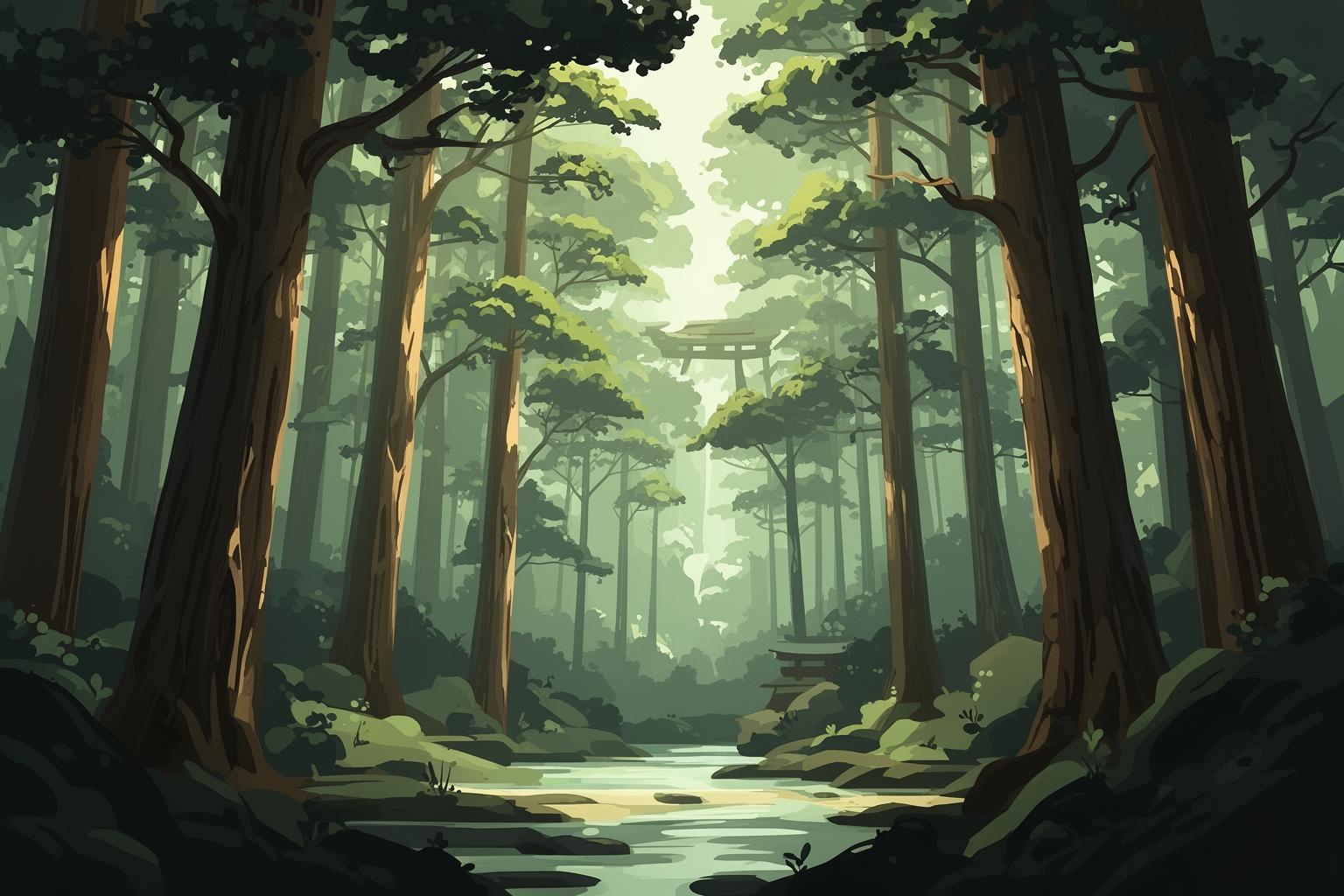
So, after all this, we find ourselves back at the beginning: the little white figures with rattling heads. The search for the Kodama is ultimately a perfect metaphor for the modern traveler’s experience in Japan. You arrive seeking something you saw in media—something cool and exotic. You want to witness the cartoon in real life.
Yet if you persist, if you hike the trails, if you stand in the rain and listen, you come to realize that the quest was never about finding an object. It was about learning to sense a feeling. You don’t discover the Kodama, but you do encounter the silence, the ancientness, the overwhelming life force that inspired their legend. You begin to understand that the rattling of their heads in the film is Miyazaki’s brilliant way of portraying the eerie, untranslatable sounds of a deep, ancient forest—the creaks, the drips, the echoes. The magic you experience in Yakushima’s woods isn’t there because Ghibli made a movie about it. Ghibli made a movie about it because the magic was already there, existing for millennia. Miyazaki didn’t invent it; he was simply the first to convey it so perfectly to a global audience.
That’s the “Ah, now I understand” moment. The true souvenir you bring back from Japan’s sacred forests isn’t a photo for social media. It’s a software update for your mind. It’s a new way of seeing the natural world—not as a backdrop for human activity, but as a living entity with its own spirit and story. The real quest is to stop searching and start feeling. And once you do, you’ll realize the Kodama aren’t only in Yakushima. They’re in every ancient tree, every quiet grove, every whisper of the wind reminding you that you’re part of something far greater than yourself. And that, truly, is a vibe.