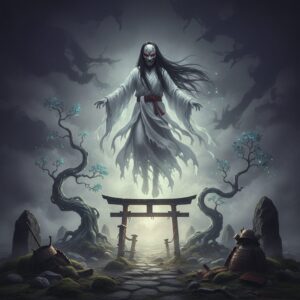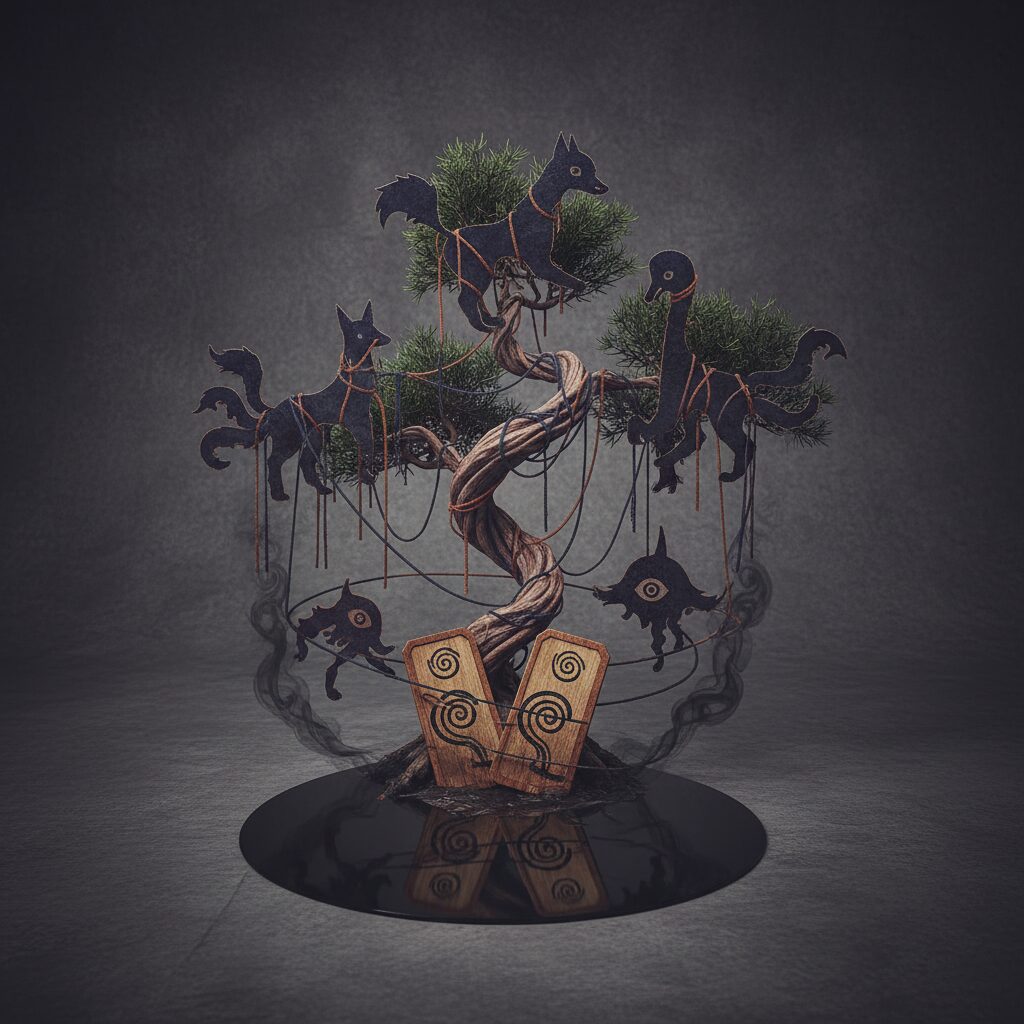
Yo, what’s the vibe? Ami here. So, let’s get real for a sec. You’ve binged Jujutsu Kaisen, right? You’ve seen Gojo Satoru’s whole heavenly-eyes-and-infinite-power thing, felt that secondhand dread every time Sukuna pops up, and maybe even thought about booking a flight to Shibuya just to feel the energy. It’s a global phenomenon, no cap. But as you’re watching Yuji Itadori punch some seriously grotesque-looking monster, a thought might bubble up: “Okay, so what are these ‘Curses’ actually?” Are they just random, freaky antagonists cooked up for a best-selling manga? Or is there something deeper going on? The answer, my friends, is that what you’re seeing is not new. Not even close. You’re watching a centuries-old story get a sick, 21st-century streetwear-style glow-up. The Curses that haunt the high-rises and back alleys of JJK’s Tokyo are, essentially, the next evolution of Japan’s OG supernatural baddies: the Yokai. Think of it like this: the spooky spirits and mischievous monsters that once haunted misty mountains and dark forests have moved to the city, traded their traditional kimonos for a more abstract, terrifying aesthetic, and are now feeding on a whole new buffet of modern anxieties. They are the spectral static generated by our hyper-connected, high-stress world. This isn’t just about anime tropes; it’s a direct line to the heart of Japanese folklore, where negative emotions have always had a tangible, terrifying power. We’re about to take a deep dive into the cultural DNA that connects the creepy crawlies of JJK to the ancient spirits of Japan, and explore how a modern metropolis like Tokyo becomes the ultimate breeding ground for these updated Yokai. Before we get into the guts of it, let’s pinpoint ground zero for a lot of the series’ chaos: Shibuya. The sheer volume of human emotion swirling in this one spot is, in the JJK universe, basically a five-star restaurant for Curses.
To see how this fascination with supernatural entities has evolved in modern pop culture, check out this deep dive into the world of 70s occult kitsch.
From Spooky Scrolls to Shonen Scares: The Yokai Evolution
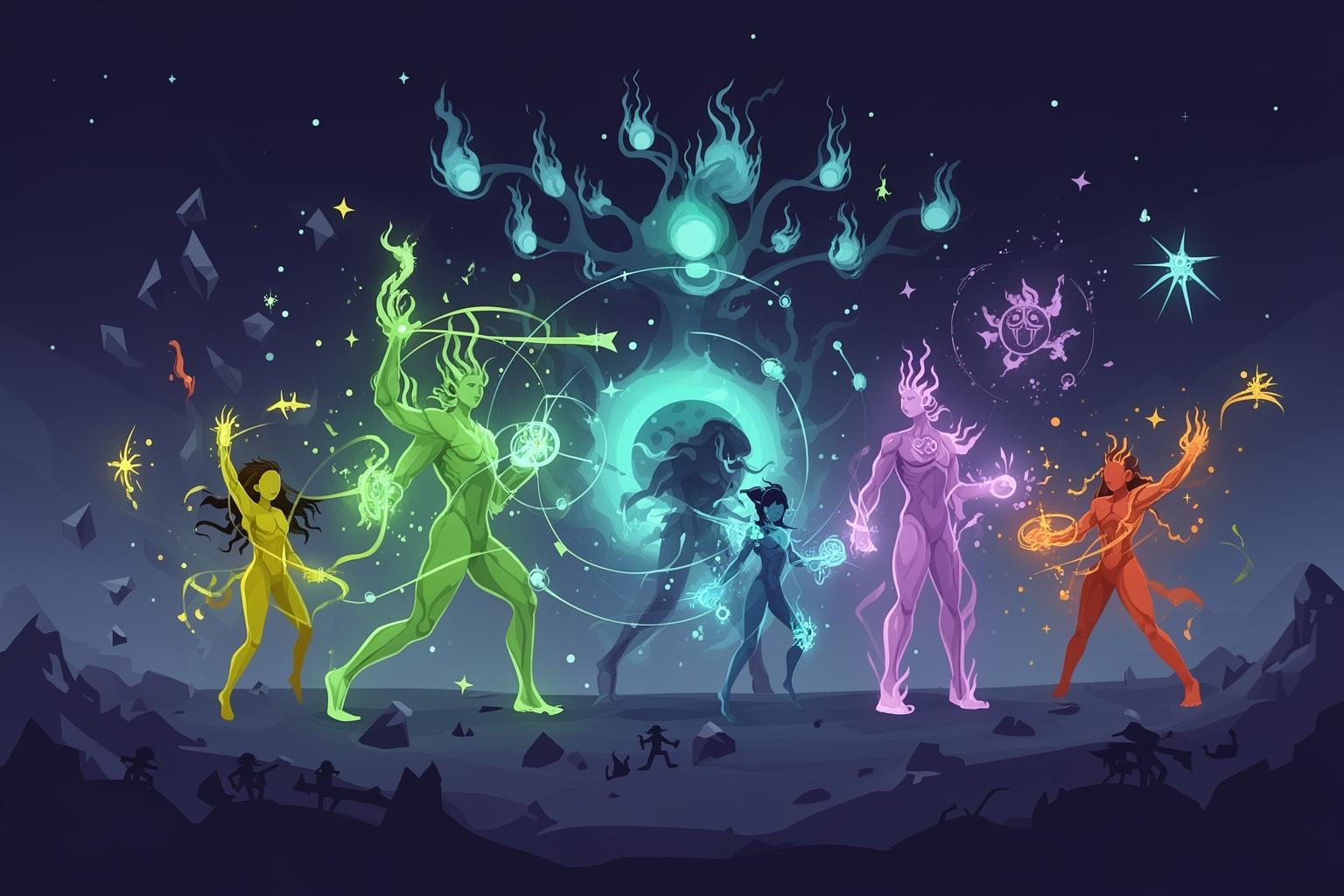
To truly understand why the Curses in JJK hit differently, we need to rewind far back—pre-internet, pre-electricity, basically pre-almost-everything. It’s essential to grasp the cultural stew that originally gave rise to Yokai because those are the foundational elements behind the nightmare fuel Gege Akutami brings us today.
What Exactly Are Yokai? Beyond the Familiar Kitsune and Kappa
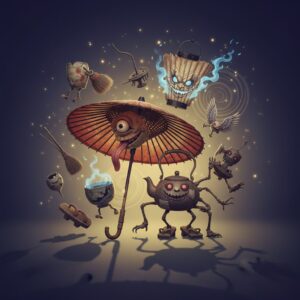
When most people hear “Yokai,” they likely think of a few well-known figures: kitsune, the cunning fox spirits with multiple tails; kappa, the turtle-like river imps known for their love of cucumbers; and maybe the large, intimidating oni (demons). While these are part of the mix, the world of Yokai is far stranger, deeper, and more chaotic than that. The term “Yokai” itself is very broad—a catch-all for bizarre phenomena, supernatural beings, monsters, spirits, and anything that goes bump in the night. Rather than a strict category, it’s a label for anything defying rational, everyday explanation. Their origins are diverse. A major influence is Shintoism, Japan’s indigenous religion, fundamentally animistic in nature. The core belief is that everything possesses a spirit or god (kami)—mountains, rivers, trees, a particularly striking rock, even the kitchen stove. There are said to be “eight million gods,” a poetic phrase signifying countless deities. Thus, the boundary between physical and spiritual worlds was always very blurry. A sudden gust of wind wasn’t mere weather; it could reflect the mood of a local spirit. Buddhism added another layer, introducing demons, hungry ghosts (gaki), and concepts like karma and reincarnation. Yokai became the perfect way to explain the inexplicable. Why did someone suddenly fall ill? Perhaps a mischievous spirit possessed them. Why did a storm destroy the crops? Maybe the local water dragon kami was angry. That creaking noise in the ceiling at night? That’s a tenjō-name, a ceiling-licking Yokai. Seriously—there’s a Yokai for literally everything. A key idea here is the tsukumogami, the belief that objects, after existing for a hundred years, acquire a soul and come to life. An old umbrella, a broken sandal, a forgotten pot—they could awaken and start causing trouble. This concept is huge for JJK. The whole idea of “Cursed Objects” and “Cursed Tools” is a direct, modern offshoot of tsukumogami, but instead of age, potent negative human emotion animates them. Another important point is that Yokai weren’t always purely evil. Unlike the Western demon concept tied to absolute evil, Yokai exist on a spectrum. Some were truly dangerous, others mere pranksters. Some could even bring good fortune if treated properly. They embodied the ambiguous, amoral power of nature and the supernatural—a force to respect, understand, and, when possible, avoid.
The Edo Boom: When Yokai Became Pop Culture
For centuries, Yokai were rooted in local belief and folklore, serving as warnings and explanations for the unknown. Then came the Edo Period (1603-1868), an era of peace and stability. When people aren’t consumed by war, boredom drives them to seek new forms of entertainment. This is when Yokai shifted from genuine objects of fear to popular entertainment—an explosion of pop culture. A pivotal figure was the artist Toriyama Sekien, essentially the world’s first monster cataloger. He created remarkable illustrated encyclopedias of Yokai, like The Illustrated Night Parade of a Hundred Demons. While he didn’t invent these beings, he gathered legends from all over Japan, giving each a definitive name and appearance. He provided a visual dictionary for the supernatural. A vague “river monster” suddenly became the iconic kappa we know today. His work was a huge hit, standardizing the Yokai world and turning them into recognizable characters. Around the same time, the game Hyakumonogatari Kaidankai (A Gathering of 100 Supernatural Tales) became wildly popular. People would gather at night, light one hundred candles, and take turns sharing scary stories, extinguishing a candle after each tale. As the room grew darker, tension mounted, fueled by the belief that the 100th story would summon a real spirit. This demand sparked a flood of spooky storybooks, while artists like Hokusai and Kuniyoshi produced strikingly graphic and terrifying woodblock prints of ghosts and monsters. From this moment, Yokai transitioned from religious or folk beliefs into a shared cultural archive of horror archetypes. They became symbols and tropes. This is the tradition JJK taps into, remixing that established repository of spooky archetypes for a contemporary audience, much like Edo-period artists did in their era. The Curses aren’t random monsters; they’re new entries in Sekien’s encyclopedia, born from the unique fears of our time.
Cursed Energy 101: The Modern Metropolis as a Yokai Breeding Ground
Alright, so we’ve established Yokai’s historical credentials. Now, let’s dive into the central mechanic of Jujutsu Kaisen: Cursed Energy. This is where the series forges a direct, unbreakable connection between the ancient world of folklore and today’s urban landscape. The concept is brilliant because it’s not entirely fictional; it’s a masterful dramatization of a very old Japanese cultural idea.
The Core Concept: Negative Emotions as Fuel
In JJK, Curses originate from the Cursed Energy that escapes from humans—specifically, from negative emotions like hatred, fear, jealousy, and despair. This isn’t just an interesting magic system; it’s a fundamental concept in Japanese spirituality. The belief that intense negative emotions can have a concrete impact on the world is deeply embedded in the culture. The quintessential example is the onryō, or vengeful spirit. This is arguably Japan’s most famous and frightening type of ghost. An onryō is not merely an ethereal figure; it’s a focused, highly destructive force of pure rage, born when someone dies harboring a powerful grudge. The classic tale is that of Oiwa from Yotsuya Kaidan, a kabuki play that has haunted audiences for centuries. Oiwa was a devoted wife who was betrayed, disfigured by poison, and driven to a tragic death by her cruel husband. Her spirit returns, fueled by consuming hatred, exacting horrific and systematic revenge on everyone who wronged her. Her grudge is so potent it becomes a curse infecting both places and people. Sound familiar? This is precisely the blueprint for how Special Grade Curses are created in JJK. They are the spiritual embodiment of a powerful, concentrated grudge. This belief ties into the cultural focus on social harmony, or wa (和). In a society that values group cohesion and suppressing individual desires for the good of the collective, open conflict is a major taboo. But those negative emotions don’t simply vanish. They fester. This repressed negativity is viewed as a form of spiritual pollution, or kegare (穢れ). Traditionally, kegare was associated with death, disease, and childbirth—disruptions to the natural order requiring purification rituals. JJK builds on this idea. Cursed Energy is the kegare of the modern era, the psychic sludge produced by millions suppressing their frustrations and anxieties. The Curses are living, breathing manifestations of that pollution. They represent the spiritual fallout of a society’s collective negativity.
Why Big Cities? Shibuya, Shinjuku, and the Anxiety Factory
JJK emphasizes that Curses—and thus Cursed Energy—are concentrated in large cities. Gojo even notes that the countryside has very few. This isn’t only a convenient backdrop for exciting battles among skyscrapers; it’s a culturally meaningful observation about modern life. If negative emotion is the raw material for Curses, then a city like Tokyo functions as a nonstop generator of it. Consider the daily experience in a metropolis: an environment rife with tremendous stress and pressure. Students face academic demands, workers endure intense overtime culture, financial worries abound, and there’s social pressure to maintain appearances. Here, the concepts of tatemae (the public face presented to the world) and honne (one’s true private feelings) become essential. In the city, you are constantly performing your tatemae. You remain polite to your boss despite anger, smile on a packed train while feeling claustrophobic and miserable, and showcase a polished, successful image on social media even as you wrestle with feelings of inadequacy. The gap between tatemae and honne forms a vast, turbulent ocean of suppressed negative energy—ideal fuel for Curses. Moreover, certain sites become spiritual hotspots, like lightning rods for psychic energy. Hospitals are steeped in fear of death, pain, and grief. Schools, meant to be centers of learning, often turn into arenas of jealousy, bullying, social anxiety, and the dread of failure. These buildings are emotional battlegrounds. Then there’s Shibuya Crossing, often symbolizing vibrant, modern Japan, but viewed through JJK’s lens, it is a chaotic, overwhelming vortex of human consciousness. Thousands converge simultaneously, each a tiny node of thought and feeling—stress over being late, irritation with crowds, excitement for a date, loneliness amid the masses. This dense concentration of emotions, both positive and negative, thickens the psychic atmosphere. It stands as the ultimate Curse factory. This aligns with traditional beliefs about geography and spirituality. Certain places are thought to hold a “memory” or become “stained” by past events. Battlefields, execution grounds, and sites of tragedy are believed to retain negative energy. JJK applies this reasoning to the modern city, pinpointing places where contemporary tragedies—stress, alienation, fear—unfold daily. The city itself transforms into a haunted landscape.
Meet the Crew: JJK’s Curses as Modernized Yokai Archetypes
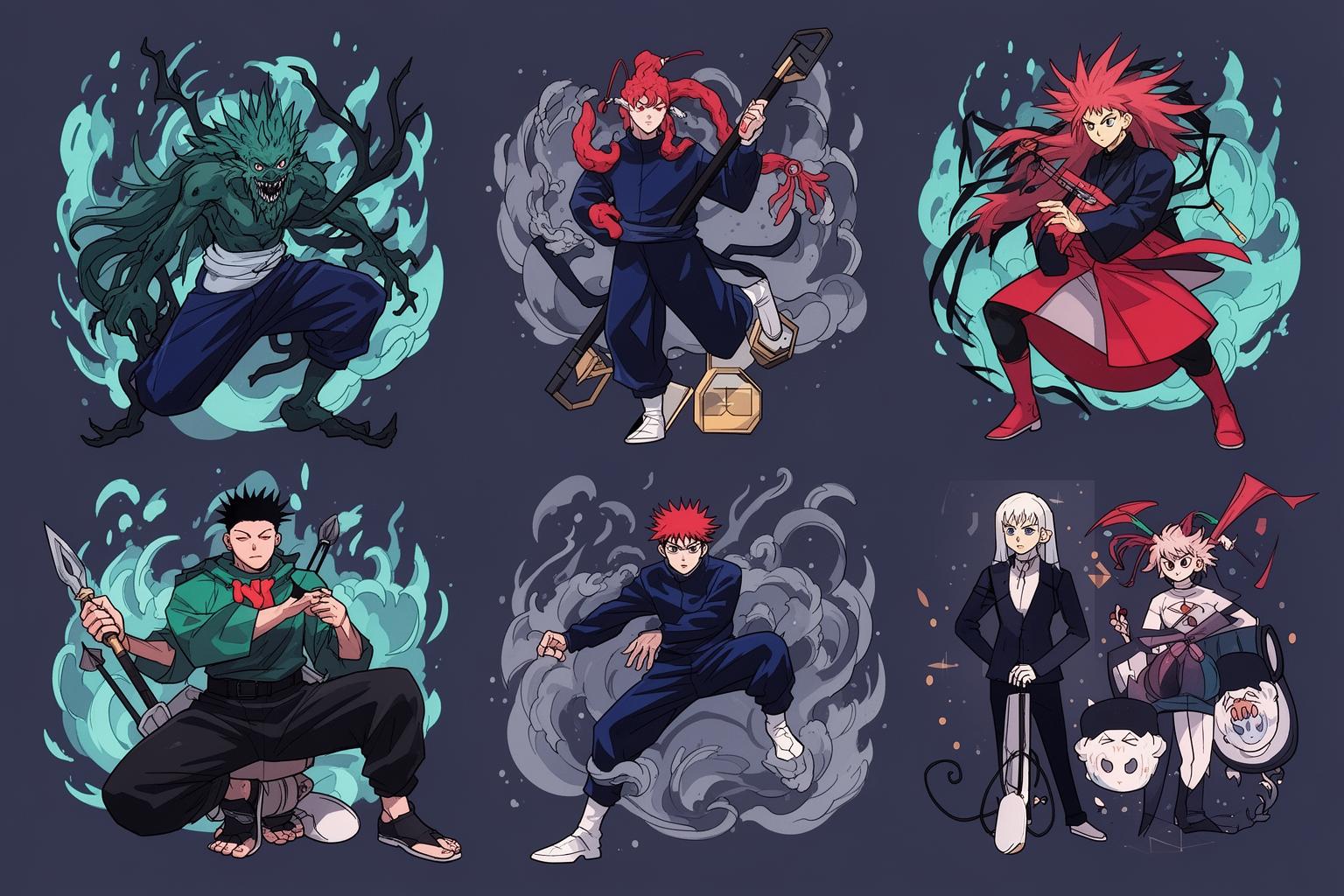
This is where things get truly fascinating. When you examine the specific designs and motivations of the main Curses in JJK, you can recognize them as modern reinterpretations of classic Yokai archetypes. They are Yokai reborn to embody 21st-century fears. Akutami didn’t merely create monsters; he crafted deeply meaningful symbols.
Mahito: The Fear of Humanity Itself (A Contemporary Gashadokuro?)
Let’s begin with the most existentially disturbing figure: Mahito. His essence emerges from humanity’s hatred and fear of other humans. He embodies all our cruelty, prejudice, and capacity to harm one another. His signature ability, Idle Transfiguration, allows him to reshape the human soul—and subsequently the body—into grotesque, monstrous forms. This strikes as a profoundly modern horror. In a world dominated by online hate mobs, dehumanizing rhetoric, and social alienation, the fear of losing one’s identity, warped by others’ malice, feels alarmingly real. So, what is his Yokai counterpart? He can be likened to a hengeyokai, a shapeshifting Yokai such as a kitsune or tanuki. But where those Yokai change themselves, Mahito’s terror lies in his power to forcibly alter others. He corrupts the concept of transformation. A more fitting parallel might be the Gashadokuro, a gigantic rattling skeleton composed of the amassed bones of those who died from starvation or battle without proper burial. It’s a monster born from collective, anonymous suffering. Mahito is a spiritual Gashadokuro. He does not arise from a singular grudge but from the accumulated, ambient malice of humanity as a whole. He stands as a walking, talking monument to our collective failure of kindness. His ability to reshape people is the spiritual equivalent of assembling bones into a new, horrifying form. It’s the ultimate act of dehumanization, perfectly embodying what he represents.
Jogo, Hanami, and Dagon: Nature’s Revenge (Oni and Nature Spirits Gone Rogue)
Now consider the disaster-themed Curses: Jogo (earth and volcanoes), Hanami (forests), and Dagon (oceans). Their aim is to annihilate humanity and replace it with a world ruled by Curses, viewing humans as the true impurities. Their motivation is explicitly environmental. They arise from humanity’s fear and mistreatment of the natural world—a classic Yokai theme updated with eco-conscious modernity. Jogo, with his volcanic head and fiery temper, is a perfect embodiment of a powerful Oni. Oni often appear as massive, destructive demons linked to natural disasters like lightning and earthquakes. Japan, defined by its volatile geology—volcanoes, earthquakes, tsunamis—harbors an ancient, continual fear of the earth’s rebellion. Jogo embodies that fear, giving it voice and villainy. He is the fury of the planet’s molten core, enraged by the parasites living on its surface. Hanami is more nuanced. Born from the fear of forests, they seek to protect the planet from human destruction. This directly connects to nature spirits like the Kodama, said to inhabit ancient trees, or the mighty Tengu, bird-like mountain guardians known for fiercely defending their domain and punishing those who desecrate it. Hanami’s quiet, almost mournful presence combined with immense power feels like an evolution of these ancient protectors. They represent the sorrow and wrath of a dying forest, twisted into a Cursed form by centuries of deforestation and pollution. Dagon arises from oceanic fear and serves as a modern Umibōzu. The Umibōzu is a giant, shadowy Yokai that emerges from the sea to capsize sailors’ ships, symbolizing dread of the unknown and the overwhelming power of deep waters. Dagon inherits this archetype but adds a contemporary grudge. In an era of overfishing, plastic pollution, and coral bleaching, the ocean has every reason to seethe. Dagon’s domain, a lush tropical paradise, is the “true earth” he and his allies seek to restore—a paradise with no place for humans. Together, these three embody nature’s fury, an age-old theme of Japan refreshed to reflect today’s ecological crisis.
The Small Fry: Everyday Anxieties as Yokai 2.0
It’s not only about the major antagonists. JJK’s world is full of weaker, more commonplace Curses, which also draw on Yokai influences. The wide variety and bizarre forms of these low-level Curses—the insect-like ones, those with multiple eyes, or resembling slugs—seem like they’ve crawled straight from Toriyama Sekien’s Edo-period scrolls. His collections are filled with countless strange, minor Yokai, each embodying a specific small-scale fear or irritation. For example, the Akaname (the filth-licker) appears in dirty bathrooms, symbolizing anxieties about cleanliness. The Makuragaeshi flips your pillow while you sleep, evoking the unsettling feeling of restless nights. JJK’s low-level Curses function similarly, physically manifesting everyday anxieties. A Curse haunting a school’s athletic shed might stem from a student’s fear of not making the team. The grotesque Curse lurking in a dark alley personifies the fear of walking home alone at night—an experience all too familiar to many women. This is where JJK’s world-building feels especially rich. It suggests that every flicker of negative emotion, no matter how trivial, feeds into this supernatural ecosystem. The world is literally shaped and populated by our collective neuroses.
The Sorcerers: Modern-Day Onmyoji and Exorcists
If Curses are the modern Yokai, then Jujutsu Sorcerers are the contemporary counterparts of those who once battled them. They’re not merely anime heroes with impressive powers; they inherit a long tradition of real-world exorcists and spiritual specialists from Japanese history.
From Ancient Courts to Covert High Schools
The closest historical equivalent to a Jujutsu Sorcerer is the Onmyōji. During Japan’s Heian period (794-1185), Onmyōji were influential government officials and masters of Onmyōdō (The Way of Yin and Yang)—a sophisticated blend of natural science, astrology, divination, and magic imported from China. They served as the emperor’s spiritual advisors, reading the stars to determine auspicious dates, applying feng shui principles to city planning, and, most crucially for our discussion, handling spirits. The most renowned Onmyōji was Abe no Seimei, a semi-legendary figure said to be half-human, half-kitsune. As a master exorcist, he commanded powerful paper spirits called shikigami to do his bidding. Sound familiar? Megumi Fushiguro’s Ten Shadows Technique is essentially a super-powered evolution of commanding shikigami. The structure of the Jujutsu world closely mirrors this ancient system. Great Sorcerer clans—the Gojo, the Zen’in—resemble aristocratic Onmyōji families who guarded their secret techniques and power across generations. The use of talismans (ofuda), hand signs (kuji-kiri), and barriers (kekkai) are directly borrowed from authentic esoteric practices within Shintoism, Buddhism, and Shugendō (a mountain ascetic tradition). Jujutsu High is not just a combat school; it’s a modern reinterpretation of an ancient apprenticeship, where sacred and secret knowledge of fighting the unseen world is passed on. The sorcerers continue an age-old war, updated with smartphones and stylish outfits.
Domain Expansion: The Ultimate Reality Check
Now, let’s consider the most dazzling technique in the JJK arsenal: Domain Expansion. This occurs when a powerful sorcerer or Curse creates a pocket dimension that overrides reality, trapping an opponent inside a space where their own techniques are guaranteed to land. While this is a classic shonen battle trope, it also visually represents esoteric spiritual concepts. One parallel is the creation of a mandala. In esoteric Buddhism, a mandala is a complex, geometric spiritual map of the cosmos, used as a focus for meditation to enter a sacred space and connect with the divine. A Domain Expansion acts as a combat mandala. The user doesn’t just create a room; they manifest their inner spiritual reality—their personal cosmos—and compel their opponent into it. It’s the ultimate expression of their soul and power. Another connection is the Shinto concept of a kekkai, a purifying barrier that separates a sacred space from the profane outside world, often marked by shimenawa (sacred ropes) at shrines. A Domain Expansion resembles a weaponized kekkai. Instead of keeping evil out, it traps an enemy in alongside the user, who becomes the absolute god of that small, temporary realm. This blend of abstract religious and philosophical ideas—about creating reality, sacred spaces, and inner power—is what makes JJK so captivating, translating these concepts into the most visceral, high-stakes visual language imaginable: a life-or-death battle.
So, Why Does This Vibe Resonate So Hard Right Now?
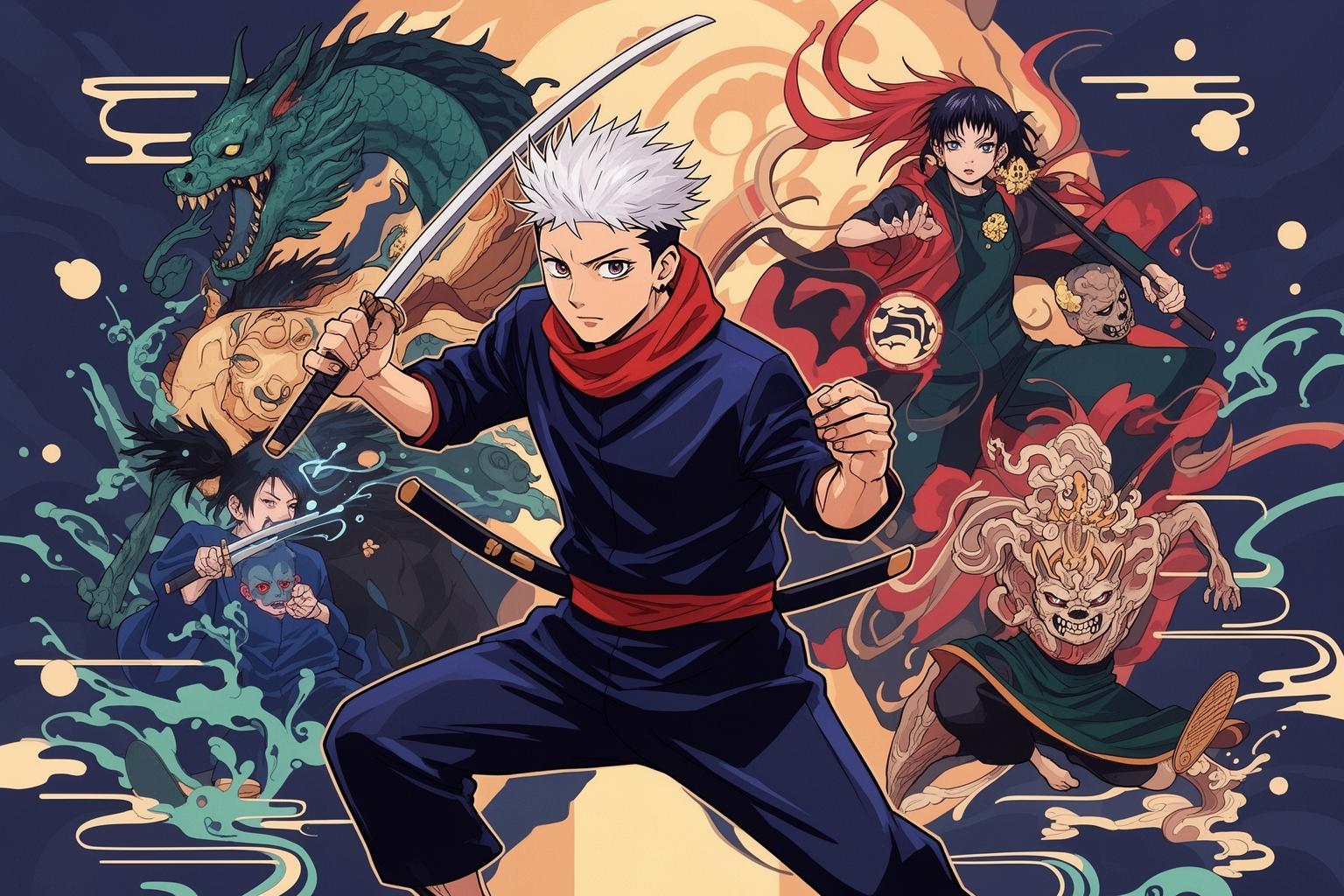
The cultural and historical ties run deep, but they don’t entirely account for Jujutsu Kaisen’s worldwide mega-hit status. Many anime draw from folklore, but JJK’s success lies in its core metaphor—Curses born from negative emotions—which perfectly captures the anxieties of our present time.
The Hidden Dangers of Modern Life
Consider the main sources of stress in the 21st century. Rarely are they physical threats like predators in the wild. Instead, they are the invisible, abstract pressures of contemporary society. It’s the unease of scrolling through social media and watching your self-esteem fall. It’s the overwhelming weight of financial instability. It’s the loneliness felt even in a bustling city, the disconnect from those around you. It’s the constant, low-grade anxiety stirred by a nonstop news cycle. These forces drain our energy and poison our minds, yet remain unseen, untouchable, and untouchable by direct confrontation. Jujutsu Kaisen puts a face on them. It transforms these intangible psychological horrors into visible monsters that can be punched, sliced, and exorcised. Mahito isn’t just a villain composed of stitched flesh; he embodies the experience of being trolled online—having your identity twisted and attacked by anonymous hatred. Sukuna’s casual, overwhelming brutality reflects the feeling of being powerless against vast, impersonal systems. The series offers a cathartic fantasy: that our inner demons can be externalized, and if externalized, can be defeated. The Jujutsu Sorcerers battle not only monsters but the very essence of modern despair on our behalf.
Reconnecting with the Physical in a Digital Age
We live in an increasingly disembodied, digital world. Much of our work, social interaction, and entertainment occur through screens. Despite its fantasy elements, JJK is intensely physical and visceral. The fights are brutal and exquisitely animated. The characters experience real pain, bleed, and push their bodies to the limits. This creates a striking contrast with our often sterile, disconnected reality. The series rekindles wonder in the everyday. It suggests there is a hidden, magical layer just beneath the surface of what we see. That an ordinary school could be a hub of supernatural power. That an unremarkable train station might host a battle that could change the world. This taps into a deep human longing for the world to be more than it appears, for magic and meaning to lurk beneath the ordinary. Rather than offering escape to a wholly different fantasy realm, it immerses us in a thrilling, dangerous version of our own. It provides a way to understand our negative feelings not as personal failings, but as natural consequences of a world literally filled with Cursed Energy. It’s a compelling and oddly comforting idea.
The Real Curse Was the Friends We Made Along the Way? Nah, It’s Still the Monsters
When you break it down, the Curses in Jujutsu Kaisen are more than just a clever plot device. They are the ghosts haunting Japan’s modern machinery. They embody a seamless and brilliant evolution of centuries-old folklore, carrying the cultural DNA of Yokai, onryō, and oni into the core of the 21st-century cityscape. The series resonates so deeply because it transforms the abstract, suffocating anxieties of our era—the stress, the alienation, the hatred—into a named and shaped monster, continuing Japan’s long tradition of making sense of the frightening and unknown through storytelling. It serves as a reminder that even in our secular, scientific age, old beliefs still hold power. The notion that our collective emotional state can physically affect our surroundings is a powerful one. So next time you find yourself walking through a bustling part of a major city, feeling that strange, heavy psychic fatigue wash over you, pause for a moment. Maybe it’s just been a long day. Or perhaps, just perhaps, you’re sensing the faint, leaking pressure of a Cursed Spirit forming in the alley nearby. Welcome to modern Japan. Stay safe out there.