
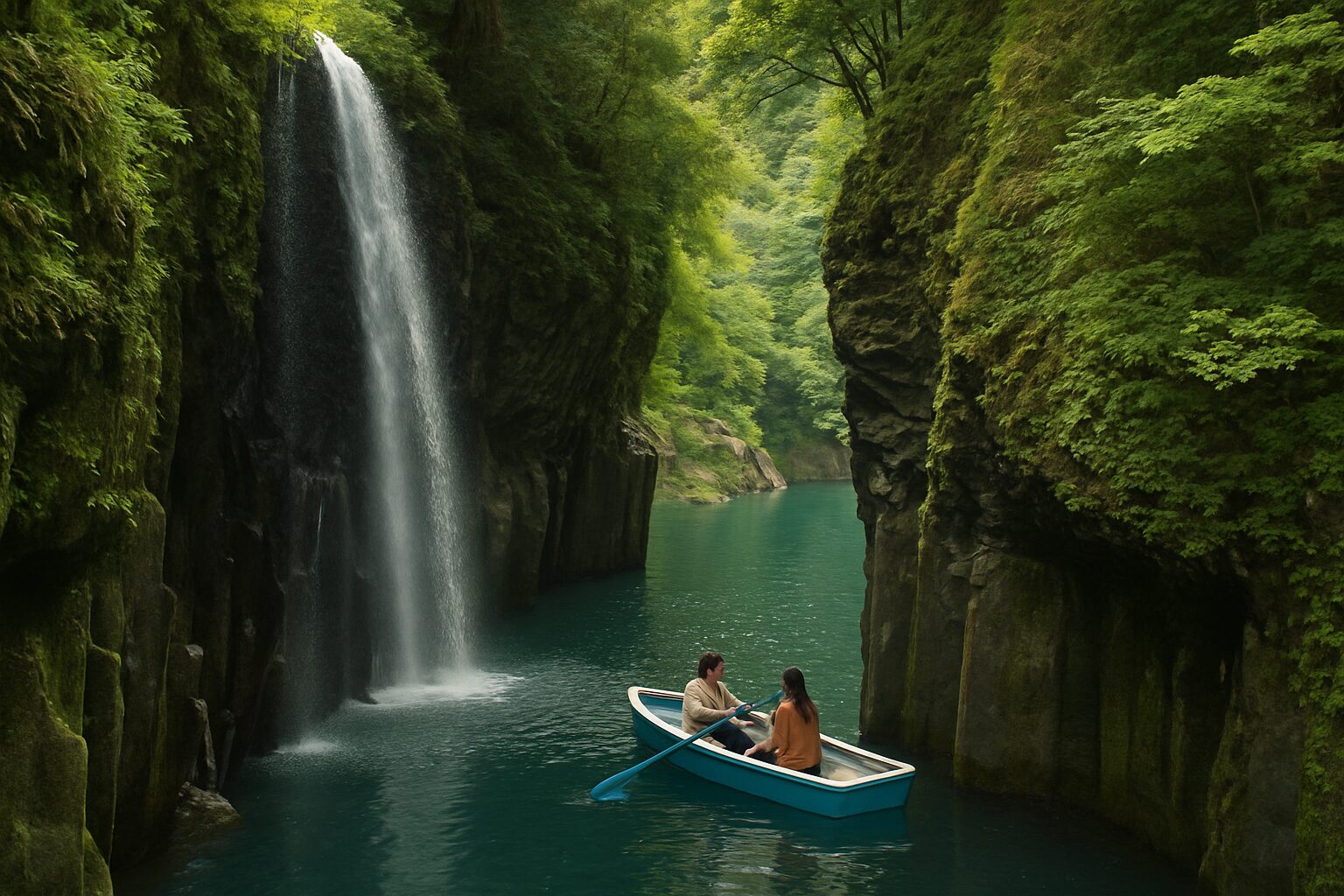
Yo, what’s up, world travelers! Megumi here, coming at you straight from the heart of Tokyo’s event scene. Usually, I’m all about neon lights and urban beats, but sometimes, you gotta unplug and dive into something real. Something ancient. Something that hits different. And let me tell you, I found the ultimate spot. We’re talking about a place where the air itself feels like a legend, where you can literally row a boat through the pages of Japan’s oldest stories. Get ready, because we’re heading deep into the mountains of Kyushu to explore the one and only Takachiho Gorge in Miyazaki Prefecture. This isn’t just a pretty canyon, fam. It’s a whole spiritual mood, a power spot that’s been vibing since the age of the gods. It’s the kind of place that makes you put your phone down—after you’ve taken like, a million pics, obviously—and just breathe. You get this insane view of a waterfall cascading into an emerald green river, squeezed between these massive, geometric cliffs that look like something out of a fantasy movie. But the craziest part? It’s all real. This is where the sun goddess herself once hid, and you can feel that divine energy with every paddle stroke. It’s a trip back in time, a connection to nature, and honestly, one of the most beautiful scenes in all of Japan. So, if you’re ready to experience something truly breathtaking, a place that’s 100% worth the journey, stick with me. We’re about to get into why Takachiho Gorge is a must-add to your bucket list. No cap.
The Vibe Check: What It Actually Feels Like
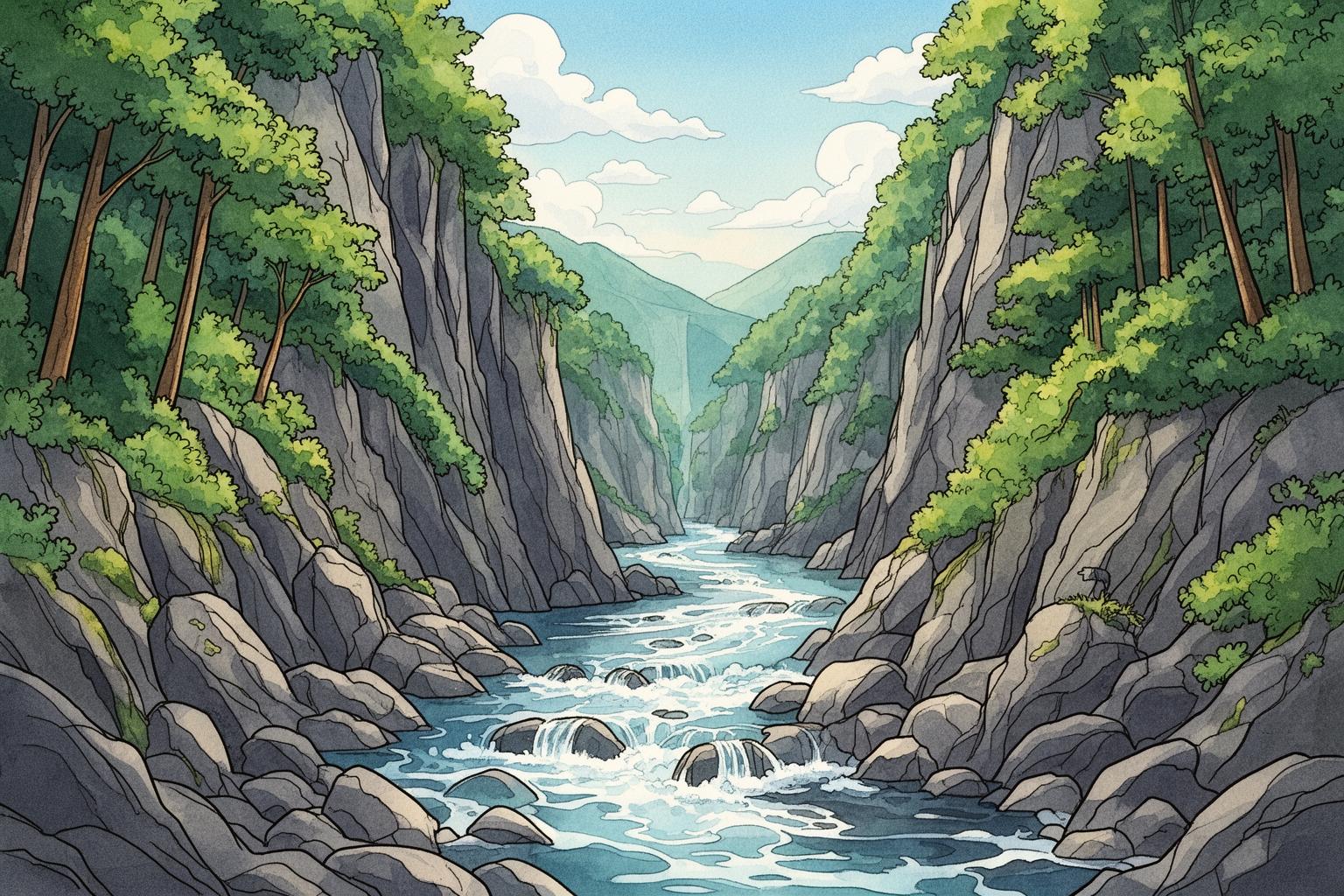
Before you even reach the main event, the entire journey to Takachiho sets the mood. You leave the city behind, and the roads begin to twist and climb higher into lush, green mountains. The air shifts—it becomes cleaner, crisper, carrying the scent of damp earth and cedar. Then you arrive, and the true experience begins. This isn’t a place you just observe; it’s one you feel the moment you step out of the car. There’s a tangible energy, a quiet reverence in the air, shared by everyone who walks the path down into the gorge.
The Approach is a Whole Mood
The walk down to the boat rental area is a vital part of the experience. It’s not merely a way to get there; it’s the prelude to the enchantment. You follow a paved trail winding along the cliffside, and with every step, the world you left behind seems to fade. The first thing you notice is the sound. It begins as a faint whisper, a distant rush of water growing louder, building anticipation like a cinematic score. The sound bounces off the rock walls, creating a natural amphitheater that fully surrounds you. It’s the Gokase River, the gorge’s lifeblood, and the booming Manai Falls. You don’t just hear it—you feel the vibrations beneath your feet. Then comes the drop in temperature. Even on a scorching summer day, as you descend into the canyon’s shadow, the air turns delightfully cool. It’s like a natural air conditioner, a refreshing welcome that makes you feel transported to a hidden world. Sunlight filters through the thick canopy above, casting shifting patterns of light and shadow on the path. This calming, grounding experience primes you for the breathtaking beauty ahead. This initial descent marks your passage from the ordinary to the mythical.
First Impressions are Everything
Then, you see it. Your first real view of the gorge is a moment etched in your memory forever. You round a curve, and the vista opens. Below, the river flows with an impossible, otherworldly emerald green glow. It’s not merely green; it’s a rich, vibrant shade that seems to both absorb and emit light from within. In some spots, it’s so clear you can make out the smooth stones on the riverbed; in others, it deepens to a mysterious jade. Towering alongside this stunning river are the cliffs. These aren’t ordinary rock faces; they’re sheer, dramatic walls of volcanic basalt, formed by a massive eruption from nearby Mount Aso long ago. As the lava cooled, it contracted and fractured into incredible geometric columns—a geological marvel known as columnar jointing. The effect is breathtaking. The cliffs look like giant, chiseled pillars or perhaps the scales of a sleeping dragon, rising vertically from the water’s edge. They’re cloaked in lush green moss and delicate ferns that cling to every crevice, enhancing the ancient, untouched atmosphere. Cutting through this scene of green and grey is Manai Falls. A pristine white ribbon of water plunges 17 meters down the cliff face into the river below, creating a fine mist that catches sunlight, often forming a faint rainbow. The combination of emerald water, dark dramatic cliffs, and pure white waterfall forms a visual trifecta. It’s so perfect it almost seems unreal, like a masterfully painted landscape. But it’s real, right there before you, more breathtaking than any photograph could ever capture.
The Main Event: Getting in That Rowboat
Viewing the gorge from the path above offers one perspective, but to truly grasp its scale and enchantment, you need to be on the water. The rowboat experience is undoubtedly the absolute highlight of any visit to Takachiho. It turns you from a passive onlooker into an active participant in this mythical landscape. It’s your opportunity to be fully immersed, gliding through the heart of the legend itself. The anticipation while waiting your turn, watching other small blue boats drift by, is intense. It’s a blend of excitement and perhaps a touch of nervousness if you’ve never rowed before. But believe me, it’s worth every second of the wait.
The Logistics Lowdown: A Quick Guide
Let’s get real for a moment. This experience is very popular—extremely popular. So having a plan is essential. Previously, you had to arrive at dawn and wait in a long line, hoping to get a ticket. Luckily, things are now more organized, which is a huge relief. The best advice I can give is to book your boat online ahead of time. They offer a reservation system, and that’s your golden ticket. You can select a time slot, sparing you hours of waiting or the disappointment of sold-out tickets, which happens frequently on weekends, holidays, and during peak seasons. If you can’t book online or decide to go last minute, your only chance is to arrive very early, well before opening, to try to secure one of the limited same-day tickets. Once you have your ticket, you’ll proceed down to the dock, where you’ll be provided with a life jacket and a brief, straightforward lesson on how to handle the oars. Don’t worry if you’re new at this; the boats are stable, and the river is calm. The ride lasts 30 minutes, which might seem short but is just right to take it all in without fatigue. The staff are efficient and friendly, ensuring smooth boarding and disembarking. Just follow their instructions, and you’ll be all set.
Paddling Through a Living Painting
The moment your boat pushes off from the dock feels pure magic. There’s an immediate sense of freedom and calm as you leave the busy platform behind. At first, you might just drift, getting your bearings and fumbling with the oars. The initial strokes may be a bit awkward, and you might spin in circles once or twice—it’s a rite of passage that everyone experiences. But soon, you find your rhythm. You pull the oars through cool, clear water, and the boat glides forward. This is when you truly appreciate the gorge from an entirely new angle. From water level, the cliffs seem taller and more majestic. They rise above you like a sacred, natural cathedral. You can get so close to the rock walls that you can reach out to touch the cool, damp stone, tracing the columnar joints with your fingertips. You notice the intricate details of moss and tiny flowers growing in cracks—details you’d never see from the path above. The water beneath you is a spectacle itself. Peering over the side, you watch sunlight dance on the riverbed, illuminating stones and the occasional darting fish. The color is so vivid it feels like floating on molten jade. The real highlight, of course, is paddling toward Manai Falls. As you near it, the roar of cascading water grows louder, a powerful, constant sound that drowns out everything else. You begin to feel the cool mist on your skin—a refreshing spray that’s wonderful on a warm day. Steering your boat right up to the base of the falls is the ultimate achievement. You must navigate around other boats and the gentle current, but getting that perfect shot with the waterfall thundering behind you is unforgettable. You sense the raw power of nature firsthand. It’s humbling and exhilarating simultaneously. The 30 minutes pass quickly as you paddle, drift, take photos, and simply be fully present in this breathtaking place. It’s a peaceful, almost meditative experience, punctuated by moments of pure wonder.
More Than Just a Boat Ride: Exploring the Area
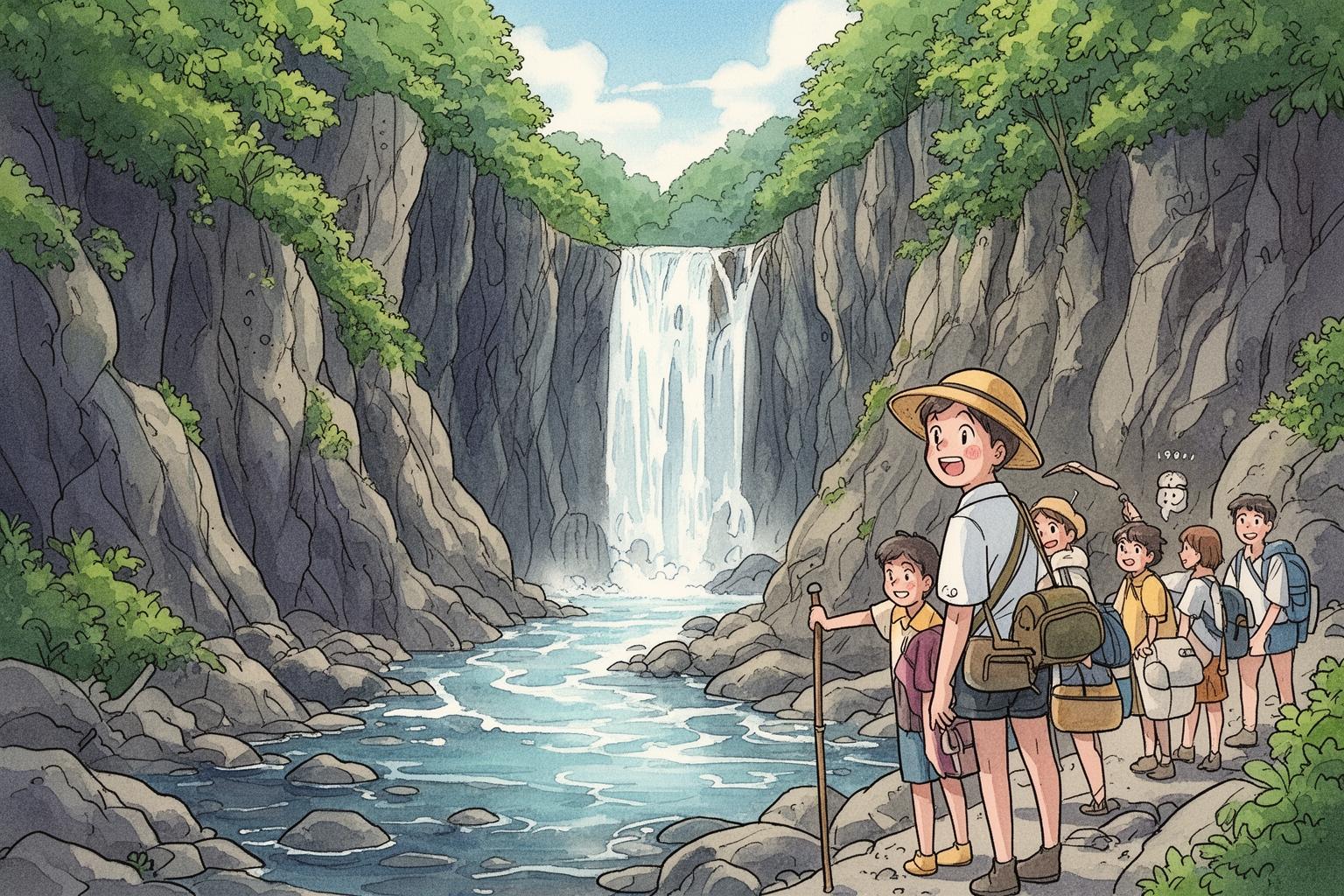
While the boat ride is undoubtedly the highlight, the enchantment of Takachiho doesn’t fade once you return to the dock. The entire region is rich with history, mythology, and natural splendor. To truly appreciate it, you need to carve out time to explore the area. This is where Takachiho’s story grows deeper, revealing why it’s regarded as the heartland of Japanese mythology. From picturesque walking paths to ancient shrines that serve as the backdrop for Japan’s creation myths, there is so much more to uncover.
The Takachiho Gorge Promenade
For a fresh perspective of the gorge, you must walk the promenade. This paved trail runs about a kilometer along the canyon’s upper rim, granting breathtaking bird’s-eye views of the river and boats below. It’s an easy, stunning walk, perfect before or after your boat trip, or for those preferring solid ground. The path meanders through the forest, with several dedicated lookout points offering varied angles—each a new opportunity for photos. From here, the narrow, V-shaped gorge and the remarkable geology of the cliffs become truly evident. One iconic spot along the promenade is Takachiho Mihashi, a trio of bridges spanning the gorge at different heights. From the tallest bridge, peering down gives a dizzying sense of the canyon’s depth. The trail is beautiful year-round. In spring, it’s framed by fresh greenery and cherry blossoms; in summer, dense foliage offers a cool, shady retreat. But autumn is when the promenade truly bursts to life, with maple and ginkgo leaves transforming into a vivid tapestry of reds, oranges, and yellows that contrast beautifully with evergreen trees and the emerald river below—a dream for photographers. The walk isn’t just about the views; it’s a chance to slow down, listen to birdsong, notice forest details, and soak in the tranquil aura of this sacred spot.
A Mythical Backstory That’s Seriously Epic
Here, Takachiho transcends being just a stunning natural locale to become a place of deep cultural and spiritual meaning. This region holds significance as the setting of one of Japanese mythology’s most important tales: the legend of Amano-Iwato, or the “Cave of the Sun Goddess.” According to the Kojiki, the ancient text, the story unfolds like this: Amaterasu Omikami, goddess of the sun and universe, quarreled with her wild, unruly brother Susanoo-no-Mikoto. Frustrated by his destructive antics, she secluded herself in the Amano-Iwato cave, sealing its entrance with a giant boulder and plunging the world into darkness and chaos. The eight million other gods panicked and gathered near the cave, attempting everything to lure her out, but to no avail. Eventually, they devised a plan to throw the world’s first divine party outside the cave. Ame-no-Uzume, goddess of dawn and revelry, overturned a tub and performed a wild, hilarious, and slightly scandalous dance that had the gods roaring with laughter. The joyful commotion piqued Amaterasu’s curiosity, and she slightly cracked open the boulder to peek out. At that moment, the mighty god Ame-no-Tajikarao hurled the boulder aside, and another god held up a mirror. Captivated by her reflection, Amaterasu emerged, restoring light to the world. The legendary cave’s location? Just a short drive from Takachiho Gorge.
Spiritual Stops: The Shrines
This powerful myth is alive here, and you can connect with it by visiting the local shrines closely tied to the legend.
Takachiho Shrine
Set in a grove of towering, ancient cedar trees, Takachiho Shrine is the town’s spiritual centerpiece. The atmosphere is calm and reverent. While the main shrine building is elegant, the true marvels are the massive cedars surrounding it, some believed to be over 800 years old. Their immense size makes you feel small and bridges you to the centuries of history here. A famous feature is the “Meoto-sugi,” or Couple Cedars—two gigantic trees whose trunks have fused at the base. Local legend says couples who hold hands and circle these trees three times will be blessed with a happy marriage and good luck. It’s a charming tradition and a favorite photo spot. But the shrine’s greatest attraction happens nightly. In a hall on the grounds, you can watch the Yokagura performance—a series of sacred traditional dances that reenact Takachiho’s myths. Dancers wearing elaborate masks and costumes tell the story of Amano-Iwato, including Ame-no-Uzume’s celebrated dance. It’s an enthralling, sometimes humorous, and powerful show that brings the mythology vividly to life—a must-see to truly grasp the region’s culture.
Amano Iwato Shrine
A short drive from the gorge, Amano Iwato Shrine commemorates the legend of the sun goddess. The complex is divided by the Iwato River. While the West Shrine houses the main worship hall, the spiritual heart lies on the opposite bank. Here, a free guided tour led by a priest takes you to an observation deck overlooking the sacred cave, Amano-Iwato, where Amaterasu is said to have hidden. Though entry to the cave is forbidden due to its sanctity, viewing it nestled in the cliffside is a chilling experience. The atmosphere hums with mythical energy. Nearby is Amano Yasukawara, a large riverside cavern reputedly where the eight million gods gathered to devise their plan to lure Amaterasu out. The area is dotted with thousands of carefully stacked small stones—offers from visitors who come to make wishes. The sight of these countless stone piles lining the riverbank is deeply moving and adds to the mystical, otherworldly ambiance of the place.
The Practical Stuff: How to Not Mess It Up
Takachiho Gorge is nestled deep within the mountains of Kyushu, which adds to its charm but also means that getting there requires some careful planning. This isn’t a spot you can simply drop into on a whim. To ensure a smooth and stress-free visit, you’ll need to consider transportation, timing, and reservations. A bit of preparation goes a long way in guaranteeing you spend your time soaking in the magic rather than waiting in lines or for a bus that runs just once every three hours.
How to Reach This Hidden Treasure
Let’s be honest: Takachiho isn’t the easiest place to access in Japan, and that’s exactly why it has preserved its pristine, untouched beauty. Since there’s no train station in Takachiho, your main options are by car or bus.
By Car
Undoubtedly, renting a car is the most convenient and flexible way to explore Takachiho and its surroundings. It allows you to travel at your own pace and easily visit key attractions like the gorge, Takachiho Shrine, and Amano Iwato Shrine, which are somewhat spread out. You can rent a car from major cities such as Kumamoto, Fukuoka, or the nearest large city in Miyazaki Prefecture. The drive itself is scenic, winding through mountain roads, forests, and terraced rice fields. Be prepared for some narrow, curvy roads near the gorge. Parking can be challenging during busy times. There are several paid parking lots near the gorge, but they fill up quickly. Arriving early improves your chances of securing a spot close to the entrance. If the main lots are full, you may have to park farther away and walk, so wear comfortable shoes!
By Bus
If you’re not driving, taking a bus is your next best alternative. Long-distance buses run from major transport hubs like Kumamoto Bus Terminal and Fukuoka, and local buses come from nearby towns such as Nobeoka. It’s crucial to check the bus schedules carefully in advance, as services are infrequent—sometimes only a few buses per day. Missing a bus could mean a long wait. You’ll need to plan your day around the timetable, which can feel restrictive but is manageable. The bus stops at Takachiho Bus Center in the town center. From there, it’s about a 30-minute walk to the gorge or a short local taxi ride. The walk is pleasant and mostly downhill, but be ready for the uphill climb back.
Timing Matters
When you visit Takachiho significantly affects your experience, influencing both the crowds you’ll encounter and the scenery you’ll see.
Best Seasons to Visit
Takachiho is stunning year-round, with each season offering its own unique atmosphere. Spring (April-May) brings fresh green leaves and mild weather. Summer (June-August) is peak tourist season; while the gorge provides a cool escape from the heat, it will be crowded, making advance bookings essential. Autumn (October-November) is arguably the most magnificent season, as fiery reds and yellows of the maple leaves contrast beautifully against dark cliffs and emerald waters. The weather is cool and pleasant. Winter (December-February) has the fewest visitors, with crisp, clear air and a stark but serene beauty due to bare trees. You might even see a light dusting of snow, adding a magical touch. Additionally, it’s easier to get a boat without waiting long.
Best Time of Day
Regardless of the season, the golden rule for visiting Takachiho Gorge is to go early. Aim to arrive right when the boat rentals open in the morning. There are several benefits to this timing. First, the crowds are much thinner, allowing for a more peaceful and intimate experience on the water and walking trails. Second, the morning light is often the most beautiful, as the sun’s rays penetrate deep into the canyon, illuminating the waterfall’s mist and making the water sparkle—perfect for photography. Third, and most importantly, your chances of securing a boat ticket are highest early in the day. By lunchtime, especially on busy days, waits can extend for hours or tickets may be sold out for the remainder of the day.
Fuel Up: Local Eats and Chills
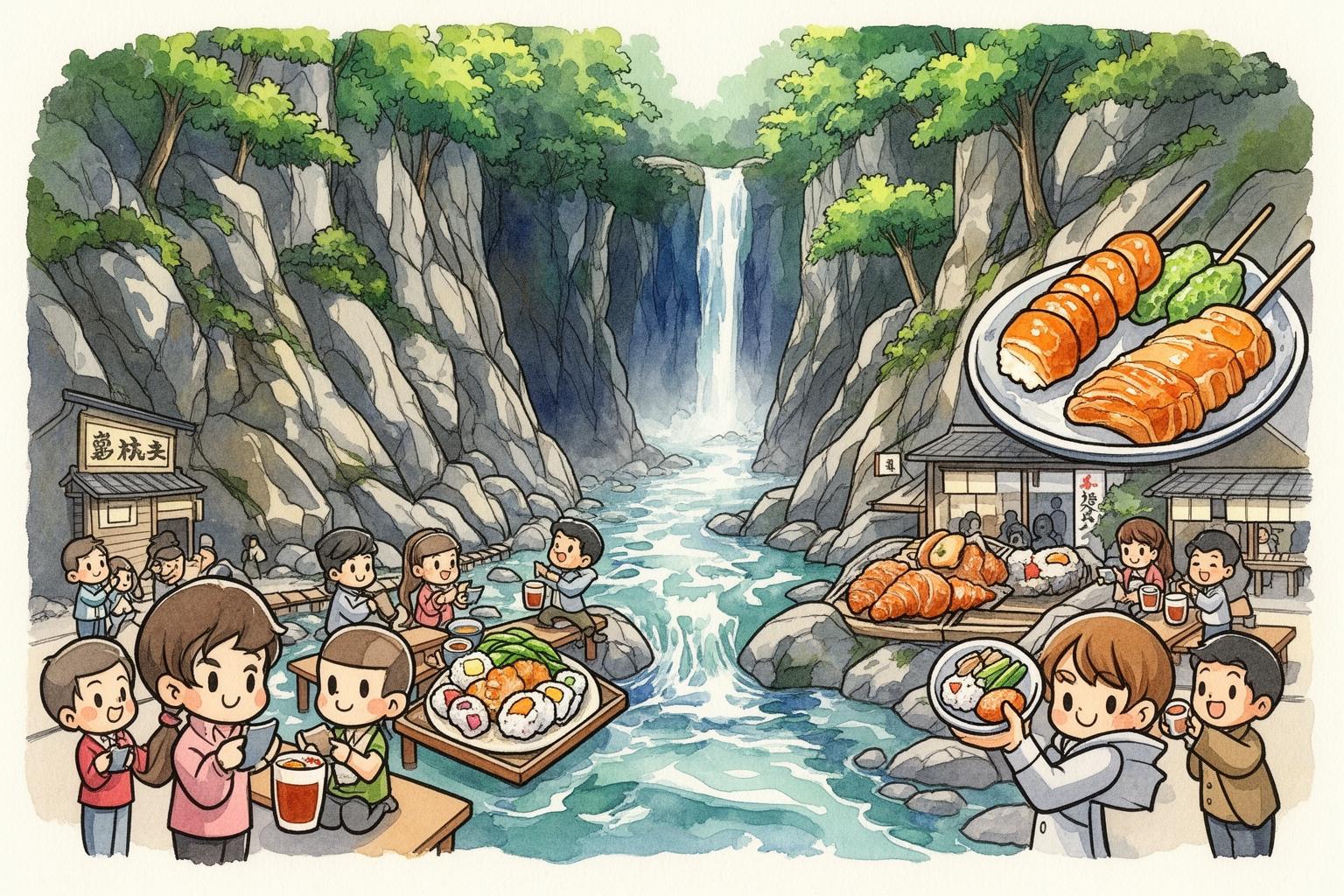
After all that rowing and walking, you’re sure to work up an appetite. Fortunately, the Takachiho area offers some unique and delicious local dishes that enhance the entire experience. From entertaining, interactive meals to top-quality local ingredients, there are plenty of options to recharge and unwind. Most restaurants and cafés are concentrated in the small town center near the bus station or along the main road leading to the gorge.
Nagashi Somen: Catch Your Noodles
If you visit between spring and autumn, you must try Nagashi Somen. This classic Japanese summer tradition is as much about the fun as it is about the food. You sit by a long bamboo flume with a steady flow of cold, clear mountain water, while staff drop thin white somen noodles into the stream at the top. Your task is to catch the noodles with your chopsticks as they pass by, dip them into a savory tsuyu sauce, and slurp them up. It’s surprisingly challenging and lots of fun, often leading to laughter when you miss a bunch of noodles. It’s the perfect light and refreshing meal on a warm day. Several restaurants near the gorge specialize in this dish, and enjoying it with the sound of the river nearby is truly memorable.
Takachiho Beef and Local Delicacies
For something heartier, be sure to try the local specialty: Takachiho beef. This high-grade wagyu, raised locally, is famous for its exceptional marbling, tenderness, and rich flavor. You can savor it in various forms, from a sizzling steak to a juicy hamburger patty or thin slices for yakiniku (Japanese BBQ). Although a bit of a splurge, it’s a delicious way to experience the region’s quality agriculture. Another local favorite is Chicken Nanban, a Miyazaki Prefecture specialty. It’s fried chicken soaked in a sweet and sour vinegar sauce, typically served with a generous dollop of tartar sauce. It’s incredibly flavorful and satisfying. Additionally, many dishes feature fresh mountain vegetables (sansai), foraged from nearby hillsides, delivering an authentic taste of the local landscape.
The Takachiho Afterglow
Leaving Takachiho Gorge feels like awakening from a beautiful dream. As you drive away and the mountains fade in the rearview mirror, the impression of the place lingers with you. It’s more than just the memory of a breathtaking view; it’s the sense of tranquility you experienced on the water, the coolness of the canyon air, and the weight of ancient stories that seem to hang in the atmosphere. This place isn’t merely another item on your Japan itinerary. It’s an experience that gets under your skin, reminding you that there are still places in the world that feel truly enchanted—where nature and myth intertwine so deeply that you can’t tell where one ends and the other begins. You visit Takachiho to see a stunning canyon, but you leave with a deeper connection to the timeless, spiritual side of Japan. It’s a place that rejuvenates your soul and fills your camera roll with photos sure to make your friends envious. So, when you’re planning your trip and seeking something beyond the usual tourist path, remember this mythical corner of Kyushu. It’s a journey worth taking, a story you get to live, and an adventure that stays with you long after you’ve returned home. Trust me, the Takachiho experience is one you’ll never forget.
