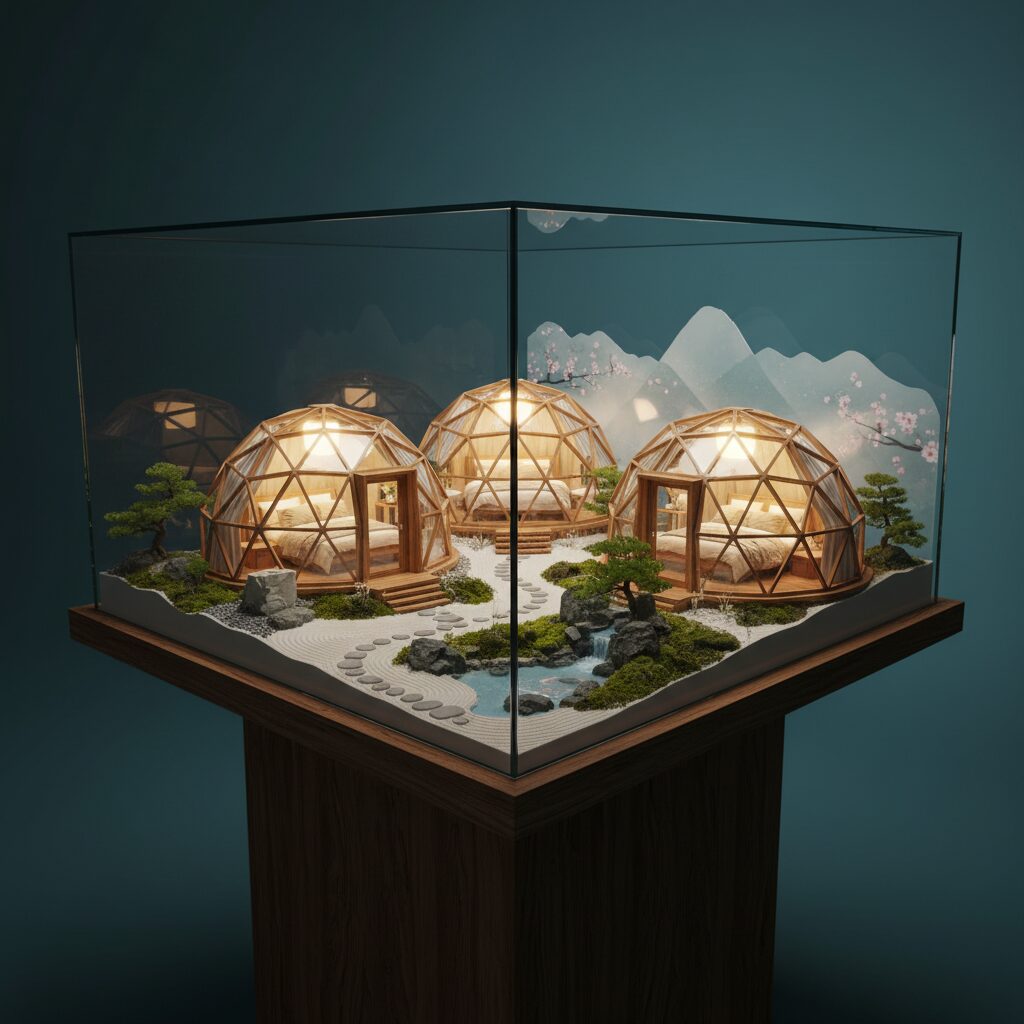
Yo, let’s talk about Japan. You’ve seen the reels, right? The sensory overload of Shibuya Crossing, the serene temples draped in Kyoto’s morning mist, the steaming bowls of ramen that look like actual art. It’s a vibe, a whole aesthetic built on this wild contrast between hyper-modern chaos and ancient, stoic tradition. But lately, there’s a new scene bubbling up that’s got everyone confused. We’re talking about glamping. But hold up, this ain’t your average festival tent with a few extra cushions. This is Japan-level glamping: architect-designed domes with panoramic windows, private open-air baths, and the main event—a multi-course Omakase dinner served under a blanket of stars. It’s a paradox that hits you sideways. Why is a culture so famously defined by its dense cities and meticulous, indoor arts suddenly dropping major yen to… sleep outside? It seems so out of pocket, but when you dig a little deeper, you realize this isn’t a random trend imported from the West. It’s one of the most profoundly Japanese experiences you can have. It’s a conversation between nature and humanity, between tradition and the future, and it’s rewriting the definition of luxury. This isn’t just about getting a sick photo for the ‘gram; it’s about plugging into the very soul of the country, a spirit that has always been there, just waiting for you to get out of the city and listen. So, if you’re trying to get the full picture, to understand the why behind the Japan you see online, this is the deep dive you need. We’re decoding the cultural DNA of Japan’s luxury glamping scene, and trust me, it’s way deeper than just a fancy tent.
To truly appreciate this evolution of luxury, you should also explore Japan’s secret omakase hotel scene.
Beyond the Concrete Jungle: The ‘Why’ Behind Japan’s Nature Boom
To truly understand why Japan is embracing high-end nature retreats so enthusiastically, you need to look beyond Tokyo’s neon lights and connect with the country’s deep-rooted beliefs. It’s a spiritual and philosophical tradition that has shaped the culture for centuries. The current glamping trend is not a novel concept; rather, it’s a modern reinterpretation of the timeless bond between people and the land they live on. It represents a return to origins, but with the comforts of Wi-Fi and plush bedding. Life in Japanese cities is demanding, governed by strict social codes, subtle rules, and enormous pressure to conform. The escape into nature is more than a getaway—it’s a crucial means of unwinding, shedding the social armor worn daily. Yet, the method—marked by meticulous attention to aesthetics, service, and experience—is distinctly Japanese. It’s not about roughing it; it’s about crafting a flawless, harmonious moment within the wilderness, demonstrating that human creativity and nature’s raw beauty can coexist beautifully.
The Shinto Spirit: Viewing Nature as Divine, Not Merely a Setting
First, consider Shinto, Japan’s indigenous religion. Its fundamental belief is that deities, or kami, don’t reside in some distant heaven but inhabit natural elements here on earth. That ancient, moss-covered tree in the forest? It houses a kami. That towering mountain breaking through the clouds? A home to kami. A waterfall, a uniquely shaped stone, or a river—each can be sacred. This worldview profoundly influences how Japanese people regard the environment. Nature is not merely a resource or a scenic backdrop for photos. It is alive, divine, and deserving of profound respect. This is why sacred ropes (shimenawa) encircle ancient trees and small shrines stand at mountain bases; they signify the presence of the divine. Therefore, when a Japanese person ventures into nature, it often carries a spiritual dimension—almost a quiet pilgrimage. This is the cultural foundation for the modern practice of shinrin-yoku, or “forest bathing.” Forest bathing is more than a wellness craze about fresh air; it’s a meditative immersion of the senses to connect with the forest’s spirit and cleanse the self. Luxury glamping is the ultimate expression of this concept. You’re not just visiting a sacred place; you live in it temporarily, dine within it, and wake surrounded by it. Glamping domes or cabins feature large windows not simply for views but to dissolve barriers between you and the kami. They offer closeness to the divine, a temporary home among the gods.
From Tea Ceremonies to Tents: Mastering the Art of Curated Simplicity
Japanese aesthetics encompass vast, subtle concepts often difficult to translate. Two key ideas are wabi-sabi and shibui. Wabi-sabi celebrates profound beauty found in imperfection, impermanence, and life’s natural cycles of growth and decay—like the charm of a cracked ceramic bowl, aged wood’s patina, or a lone asymmetric branch. Shibui refers to a quiet, restrained beauty that is elegant and refined without excess. How does this relate to a luxury tent? Japanese luxury seldom involves flashy displays. It is quiet, simple, and impeccably detailed. The design of glamping sites exemplifies these principles: structures crafted from natural, local materials blending seamlessly with nature, interiors minimalist to eliminate distractions and direct focus outward. The luxury is not in gold-plated fixtures but in the flawless framing of Mount Fuji’s view, the texture of the wooden deck beneath your feet, or the gentle morning light filtering through trees. It is a curated experience that feels effortlessly natural but results from meticulous planning and deep aesthetic understanding. This experience aims to evoke peace and connection, which is far more precious than any material possession. It echoes the spirit of the traditional tea ceremony, where every object and gesture is carefully chosen to create moments of pure, focused calm. The glamping site becomes the new teahouse, with nature as the honored guest.
‘Omakase’ Under the Cosmos: It’s Not Just Dinner, It’s a Dialogue
The idea of enjoying an Omakase meal at a campsite might seem like the most extravagant thing imaginable, but it is actually the key element that unites the entire experience. Omakase, which literally means “I leave it up to you,” goes far beyond a simple “chef’s choice” tasting menu. It is a cornerstone of Japanese food culture and a social ritual rooted in trust, respect, and artistry. By choosing “Omakase,” you surrender control and entrust your entire dining experience to a master. It signifies faith in their skill, knowledge, and creative vision. In a world overwhelmed by endless options, it offers a moment of joyful surrender. Bringing this revered culinary tradition out of the quiet, refined restaurants of Ginza and into the heart of a forest is a revolutionary gesture—yet one that perfectly aligns with cultural sensibilities. It transforms the meal from mere nourishment into a profound communion with nature.
More Than “Chef’s Choice”: The Philosophy of Trust
To grasp Omakase, you must understand the concept of the shokunin—the artisan or craftsman. A shokunin is someone who has dedicated their life to perfecting a single craft, whether it’s sushi-making, flower arranging, or sword forging. This unwavering commitment is deeply respected in Japanese culture. A master chef is regarded as a true artist, whose judgment is supreme. When you order Omakase, you become not just a customer but an audience awaiting a performance. This dynamic is directly transferred to the glamping setting. The chef preparing your meal is more than a cook; they are a culinary artist interpreting the landscape for you. They have cultivated relationships with local farmers, fishermen, and foragers to secure the finest ingredients that the current season (shun) offers. The menu becomes a story, told through flavors and textures that reflect the time and place you find yourself in. It is a dialogue between the chef and the land, and you are invited to listen. This act of trust serves as a powerful remedy to the decision fatigue common in modern life. For a few hours, you don’t have to decide—you simply receive. In doing so, you can fully savor the artistry and care behind every bite.
The Terroir on a Plate: Connecting with the Land Through Taste
In the world of wine, “terroir” describes how the unique qualities of a place—its soil, climate, and geography—are reflected in the wine’s flavor. Japanese culture applies this concept to nearly all food. The Japanese palate is exceptionally attuned to seasonality and origin. An ingredient is never just an ingredient; it embodies a particular mountain, river, or coastal bay. The Omakase dinner at a glamping site is the ultimate realization of this principle. You are, quite literally, tasting the environment around you. The wild mountain vegetables (sansai) on your plate were likely foraged from the forest visible from your table. The fish was caught in the nearby river you hear in the distance. The beef was raised on a pasture close by. This creates a deeply powerful multisensory connection to the locale. You see the forest, breathe the fresh air, and taste its bounty. The meal transcends being just food; it becomes the pinnacle of your immersion in nature. It is a way of internalizing the landscape, of making the spirit of the place a part of yourself. Experiencing this under a sky full of stars, far from city light pollution, adds a final cosmic dimension. It humbles you with a reminder of your place in the universe—a moment of connection to both the earth beneath you and the heavens above.
The Vibe Check: Where to Experience This IRL
Alright, the theory sounds incredible, but how does it translate in reality? The charm of this trend lies in how various places interpret the core principles differently. Each location serves as a distinctive case study blending nature, design, and hospitality. They are not merely constructing campsites; they’re crafting self-contained worlds, each guided by its own philosophy and aesthetic. From minimalist retreats centered on quiet reflection to playful resorts merging nature with contemporary pop culture, these sites embody the cultural ideas we’ve been discussing. Let’s explore a few examples that are raising the standard and truly defining what Japanese glamping means.
Case Study 1: Hoshinoya Fuji – The Trailblazer of Minimalist Immersion
Hoshinoya Fuji is essentially the pioneer of Japanese luxury glamping. When it launched, it completely transformed the scene. Nestled on a hillside overlooking Lake Kawaguchi with breathtaking views of Mount Fuji, this spot embodies the shibui aesthetic. It’s not your typical glamping site; it brands itself as a “glamping resort.” Guests stay in minimalist concrete cabins, each featuring a vast glass wall framing the iconic mountain. Rather than just a room, it’s more of a private viewing gallery for one of nature’s greatest spectacles. The luxury here is understated, confident, and deeply experiential. There’s no flashy lobby, only a series of intimate spaces designed to immerse you in the forest. A “Glamping Master” is assigned to each guest, guiding experiences like a coffee-brewing workshop in the woods, lessons in smoking your own food, or serene early-morning canoe trips on the lake. Dining is central to the experience—you can have a chef prepare a multi-course meal on your cabin terrace or enjoy the forest restaurant where Dutch ovens and grills take the spotlight. The entire atmosphere encourages active, elegant engagement. It’s a masterful demonstration of how to craft an experience that is both luxuriously refined and profoundly connected to the wild, showing that true pampering doesn’t require marble or gold.
Case Study 2: GLAMPROOK Iizuna Kogen – The Essence of All-Inclusive Zen
If Hoshinoya Fuji focuses on elegant involvement, GLAMPROOK in Nagano’s stunning highlands epitomizes blissful surrender. This all-inclusive resort redefines the concept through the lens of omotenashi, the famed Japanese hospitality that anticipates your needs before you’re even aware of them. From arrival onward, every detail—from meals and drinks to activities—is fully managed. The intent is to eliminate any friction or decisions so you can unwind completely. The glamping domes are modern and stylish, arranged around a central pond with sweeping mountain views. Inside, they are cozy, sophisticated sanctuaries. Thanks to omotenashi, you can grab craft beer or local Shinshu wine anytime from the lounge or relax in the on-site hot springs spa. The highlight is the dinner—a French-inspired Omakase showcasing Nagano’s renowned local produce, including apples, grapes, and soba. By handling everything, GLAMPROOK offers a luxury of thoughtlessness, providing a restorative retreat where you can release life’s mental burdens and simply enjoy a tranquil, well-cared-for existence.
Case Study 3: Grand Chariot Hokuto Shichisei 135° – A Fusion of Myth, Anime, and Nature
This location is arguably the most uniquely Japanese. Situated on Awaji Island, which holds a special place in Japan’s creation mythology as the first island formed by the gods, Grand Chariot is a remarkable experience. Its name alone is rich with significance: “Hokuto Shichisei” refers to the Big Dipper constellation, and “135°” marks the 135th degree of east longitude—a line that runs through the area and once set Japan’s standard time. This establishes a deep connection to myth, astronomy, and locale. But here’s the twist: it sits within a vast prefectural park that also houses a Naruto and Boruto-themed anime attraction and a Godzilla museum. This spot encapsulates Japan’s unique mix of ancient reverence and cutting-edge pop culture. You can explore mythological landmarks by day and see a life-sized Godzilla by night. Accommodations are hilltop “cocoons,” playful cabins with stunning views of the Akashi Kaikyō Bridge and Kobe skyline. The Omakase dinner celebrates Awaji Island’s culinary fame with local specialties like Awaji beef, fresh Seto Inland Sea seafood, and famously sweet onions. Grand Chariot is not meant to be a quiet retreat; it’s a playful, imaginative, and occasionally surreal experience embodying the complex, sometimes contradictory nature of modern Japanese culture. It’s a testament to how the country embraces both its ancient roots and its otaku enthusiasm simultaneously—and it’s a genuine delight.
Case Study 4: Mokki – Finnish Inspiration Meets Japanese Soul
Located in Kagawa Prefecture on Shikoku island, Mokki exemplifies how Japan masterfully adopts foreign ideas and refines them with its unique sensibility. The aesthetic is heavily inspired by Nordic design, especially the cozy minimalism of Finnish summer cabins. The name “Mokki” itself is Finnish for cottage. The design features clean lines, light wood, and an emphasis on simplicity and functionality. While it taps into the global affection for Scandinavian design and hygge, this is far from an IKEA display. The entire experience is imbued with Japanese omotenashi and a strong connection to the Setouchi region. The cabins are ideally situated to offer breathtaking views of the Seto Inland Sea, with a carefully curated atmosphere that’s both stylish and soothing. The dining here embodies this cultural blend—not a formal Omakase, but a premium BBQ experience. But this isn’t your typical backyard grill; you’re provided with the finest local ingredients, including Kagawa’s olive-fed wagyu beef, fresh seafood, and seasonal vegetables, along with top-tier grilling gear. It’s a more casual, engaging approach that still honors the Omakase principle of entrusting the provider to deliver the best of the season. Mokki symbolizes the modern Japanese global-local dynamic—internationally inspired in design yet deeply rooted in the local landscape and dedicated to exceptional quality and service.
The Modern Escape: Glamping as the Antidote to a High-Pressure Society
When viewed from a broader perspective, the phenomenon of luxury glamping is more than simply a new style of travel. It represents a direct response to the demands of contemporary Japanese life. It functions as a deliberately designed release valve for a society known for being industrious, conformist, and centered around urban living. These experiences transcend mere enjoyment of beautiful scenery and fine food; they offer mental and spiritual freedom. They provide a temporary escape from a strict social structure and an opportunity to reconnect with something more elemental: nature, and consequently, oneself. Although the cost may appear steep, what is offered is not merely a night in a dome; it is a comprehensive, therapeutic experience intended to rejuvenate the mind and soul, making it, for many, a worthwhile investment.
Unplugging from the ‘Tatemae’ Matrix
To truly understand this, it’s essential to grasp two key concepts in Japanese social psychology: tatemae and honne. Tatemae denotes the public persona, the facade that Japanese individuals are expected to maintain in social and professional environments. It involves preserving harmony, showing respect, and conforming to social expectations. Conversely, honne refers to one’s genuine, private thoughts and desires. Living in Japan often entails carefully balancing the divide between these two, which can be draining. The constant pressure to uphold your tatemae in the city, on public transport, and at work is overwhelming. In this context, nature serves as a refuge. The forest holds no social demands. The mountains offer no judgment. Being immersed in the wilderness is one of the rare occasions where you can truly drop the tatemae and connect with your honne. This is why the privacy and seclusion of these glamping sites are such crucial attractions. You are provided with your own private space, your own piece of nature, where you are liberated from society’s watchful eyes. You can be loud or quiet, playful or vulnerable. This act of disconnecting from the social matrix is profoundly restorative and a major reason why people are willing to pay for the experience.
Is It Worth the Hype (and the Yen)?
This brings us to the pressing question: Are these experiences, which can cost hundreds or even thousands of dollars per night, truly worth it? If you evaluate them by Western luxury standards—square footage, thread count, brand names—you might overlook the essence. The value here lies elsewhere. You are paying for a carefully curated, flawless experience. You are paying for decades of expertise from a shokunin chef. You are paying for the vision of an architect who spent months perfecting the ideal perspective to admire a mountain. You are paying for access to a pristine, protected natural setting. Moreover, you are paying for the peace of mind that comes with impeccable, anticipatory omotenashi. This is a luxury of time, space, and emotion, rather than material possessions. It is an opportunity to purchase a perfect moment, a carefully crafted memory deeply rooted in Japanese culture and landscape. For travelers who want not just to see Japan but to understand and feel it on a profound level, the answer is a definite yes. It is worth it because it is more than a vacation—it is a cultural lesson, a spiritual retreat, and a sensory celebration, all combined into one unforgettable night beneath the stars.