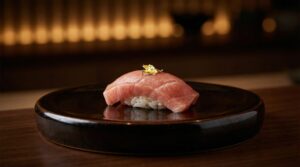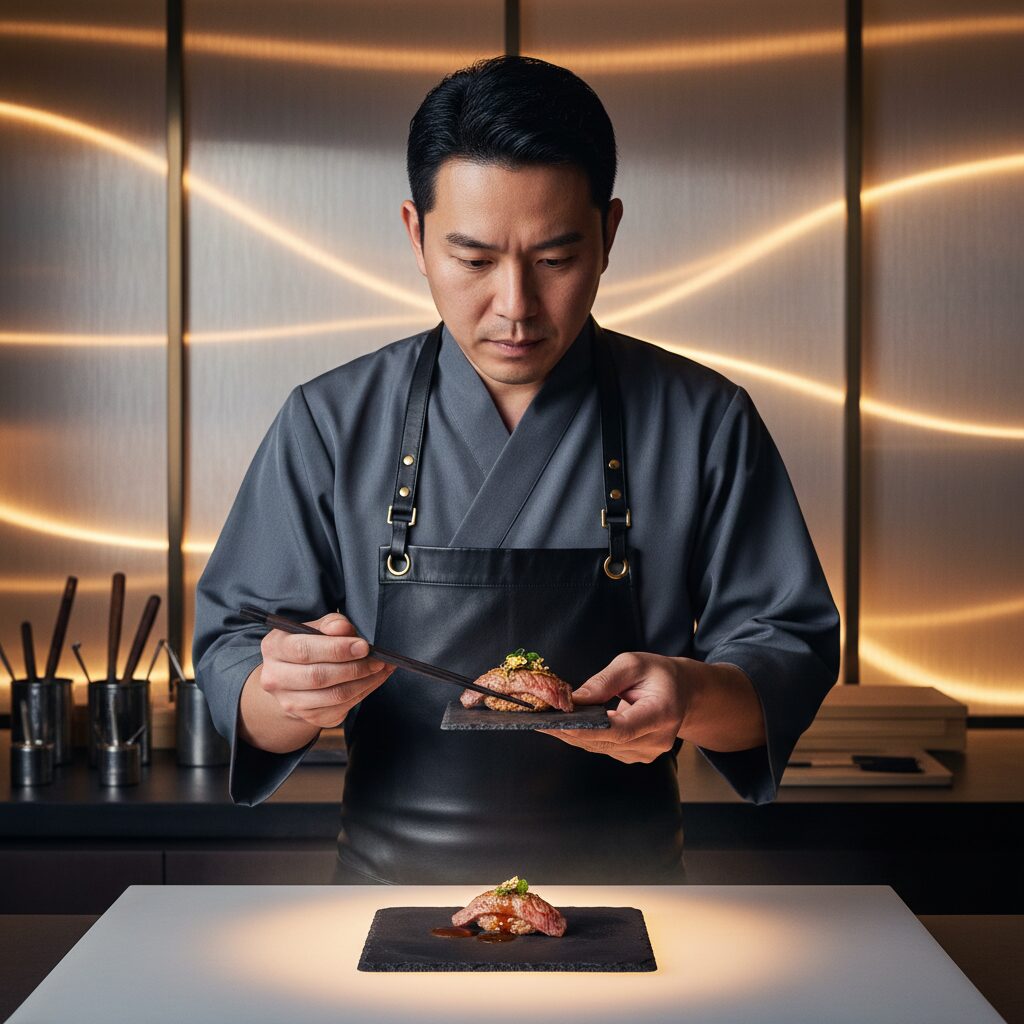
Yo, let’s set the scene. You’ve seen it all over the gram, the TikToks, the travel vlogs. That immaculate slab of hinoki wood, the spotlight hitting a single, perfect piece of nigiri like it’s a diamond. You finally drop some serious yen, slide into one of those exclusive eight-seater spots in some quiet Tokyo back-alley, and you’re ready for the ultimate Japanese dining experience. The air is thick with anticipation, smelling faintly of vinegar and cypress. But then you lock eyes with the master, the itamae, and your vibe gets a reality check. The dude looks… intense. Not just serious, but like he’s about to perform open-heart surgery, not feed you dinner. There’s no big, welcoming smile. No “Hey guys, welcome in!” Just a quiet, focused nod. As the meal progresses, the silence is only broken by the rhythmic thump of the knife, the soft patting of rice, and the hushed whispers of your fellow diners. You start to wonder, “Is he mad at me? Is my watch too flashy? Did I breathe too loud?” You’ve paid a fortune for this meal, and the service feels… cold. Almost hostile. It’s a total head-scratcher, a massive disconnect from the Western idea of luxury service, which is all about effusive friendliness and making you feel like a king. But what if I told you that this stoic, silent performance isn’t a bug, it’s a feature? What if that stone-cold expression is the ultimate sign of respect, and the silence is the loudest declaration of luxury you’ll ever experience? This ain’t bad service, fam. You’ve just entered the shokunin’s silent theater, and the lack of a smile is the whole point. It’s a deep cultural flex, and once you get it, it’ll change how you see luxury forever.
This silent, focused dedication to craft is a world away from the bustling, sensory-overload experience of exploring Japan’s legendary depachika food halls.
The Vibe Check: Decoding the Omakase Arena
First, you need to completely rethink your concept of what a restaurant is. An elite omakase establishment isn’t merely a restaurant. It’s a stage. A dojo. A sanctuary. The moment you pass through the noren curtain, you’re no longer just a customer; you become an audience member with front-row seats to a master’s performance. The space itself is crafted to remove every possible distraction. The lighting is dim and focused, typically highlighting the chef’s hands and the counter with a single spotlight. The décor is pared down to the extreme—no loud artwork, no distracting music, just clean wooden lines and perhaps a single, flawless flower arrangement in the corner. This experience isn’t about fostering a fun, social vibe. It’s about creating a sensory vacuum so that the only thing you can focus on is the artistry unfolding before you.
More Than a Meal, It’s a Performance
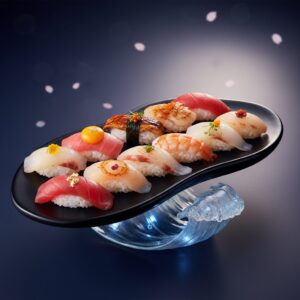
Every detail is meticulously choreographed. The chef, referred to as the taisho or itamae, serves as the lead actor, director, and stage manager all in one. His movements are precise, efficient, and practiced hundreds of thousands of times until they have become pure muscle memory. Watch his hands. There is no wasted motion. The way he pulls out a block of aged tuna, the angle of the yanagiba knife as it glides through the flesh, the seven to ten quick pats he uses to shape the ball of rice, or shari. It’s a dance. A kata. A ritual. He exists in a state of pure flow, a deep concentration bordering on meditation. A broad, cheesy grin or a casual “How ‘bout them Yankees?” would instantly break that focus. It would be like a ballet dancer stopping mid-pirouette to wave at a parent in the audience. It diminishes the art. The intensity on his face is the same you’d see on a concert violinist in the midst of a solo or a surgeon performing a critical operation. It signals that he is dedicating one hundred percent of his focus, energy, and soul to you. In this context, a smile would be an insult, implying he isn’t taking his craft—or you—seriously enough.
The Symphony of Silence
The silence in an omakase restaurant isn’t an awkward emptiness. It’s a rich, purposeful silence. It serves as a canvas for the subtle sounds of the craft. You start noticing things you’d never pick up in a noisy eatery—the shhhk of the blade slicing fish, a sound so pure it’s nearly musical. The soft, rhythmic pat-pat-pat of rice being molded. The gentle tap of ceramic dishes placed on the counter. The faint sizzle of sea eel, or anago, being seared with a blowtorch. These are the instruments of the chef’s orchestra. The silence draws you, the diner, into a similar meditative state. You’re not distracted by chatter or your phone. You are fully present. You watch the chef’s hands, you listen to the sounds, you inhale the subtle aroma of vinegared rice. When that piece of nigiri is finally placed before you, your senses are so heightened the flavor explodes. The experience is immersive. The chef’s silence isn’t rudeness; it’s the creation of the ideal environment for you to deeply appreciate his work. He’s carefully curating your sensory journey, and small talk has no role in that curation. It’s the ultimate form of hospitality, spoken in a language you may be unfamiliar with.
Enter the Shokunin: The Master Behind the Mask
To truly understand why the chef is so intensely serious, you need to grasp the concept of shokunin. This term is often translated as “artisan” or “craftsman,” but that’s like calling a Navy SEAL simply a “soldier.” It doesn’t capture the full magnitude. A shokunin is someone who has devoted their entire life to mastering a single craft. It’s not just a job; it’s a spiritual journey. It embodies a near-religious commitment to pursuing perfection, fully aware that absolute perfection can never be reached. This philosophy is deeply ingrained in Japanese craftsmanship, whether it’s swordsmiths, potters, or sushi chefs.
What Exactly Is a Shokunin?
The spirit of a shokunin, known as shokunin kishitsu, encompasses a distinct set of character traits. They are famously stubborn, fiercely independent, and obsess over detail to a degree that most people would find extreme. They don’t compromise. They don’t cut corners. Their work defines who they are. A shokunin’s foremost responsibility isn’t to the customer, but to the craft itself. Their aim is to honor the ingredients, the tools, and the centuries-old traditions behind them. Because of this, they can seem difficult or aloof. They aren’t trying to be your friend. They are trying to create something flawless. Their satisfaction comes not from praise but from the quiet, inner knowledge that they executed their task perfectly. This mindset is the complete opposite of the Western “customer is always right” approach. For a shokunin, the craft is always right. The customer exists to witness it. This is why asking for substitutions or drowning sushi in soy sauce is considered disrespectful—it undermines the shokunin’s process and judgment. His stern exterior serves as a barrier protecting the purity of his work from external disruption.
The Relentless, Years-Long Journey
The stoic expression you see is forged through hardship. The journey to becoming a full-fledged itamae is mercilessly long and demanding. An apprentice may spend their first three years doing nothing but washing dishes and scrubbing floors. They aren’t allowed to touch the fish, much less handle the rice. Instead, they watch, learn humility, and absorb the kitchen’s rhythm. After years of this, they might move up to washing and preparing the rice—a sacred responsibility they’ll spend another three to five years perfecting, learning to get the temperature, texture, and vinegar balance just right every single time. Only after a decade or more of this grueling, repetitive, and often thankless work might they be permitted to stand at the counter and learn to cut fish. This system is meant to weed out anyone lacking the patience, discipline, and total devotion required. It’s less about acquiring technical skills and more about shaping one’s entire character. It strips away the ego until only the craft remains. The chef before you has survived this crucible, and his seriousness reflects that immense sacrifice and dedication. He’s not merely preparing lunch; he’s presenting the culmination of his entire life’s work in a single bite. That kind of pressure leaves little room for a smile.
The Weight of Perfection
Consider the responsibility the chef bears. He rose at 4 AM to personally inspect and select the finest fish, navigating a complex web of relationships and rivalries among vendors. He honors the life of that fish. He honors the fisherman who risked his life at sea to catch it. He honors the rice farmer who labored in the fields. His work is the final, critical link in a long chain of effort and skill. If he falters—if the rice is even slightly too warm, or the fish slice just a millimeter too thick—he has let down everyone involved in that chain. This burden accompanies him with every piece he prepares. His intense focus isn’t about you; it’s about his sacred duty to the ingredients. He is engaged in a high-stakes dialogue with the fish and rice, and you are there merely to witness it. His serious expression reveals the depth of that respect and responsibility. It quietly declares, “I will not fail.”
The Unspoken Language of Luxury

In Western culture, luxury service often involves being loud and highly visible, characterized by verbal anticipation of needs, frequent check-ins, and an overt display of enthusiastic friendliness. In the realm of high-end omakase, however, luxury is expressed through a vastly different and much quieter language—one of intuition, observation, and complete trust. It is a high-context culture unfolding in real time, where the chef’s silence forms a crucial part of the communication.
Ichi-go Ichi-e: This Unique Moment
There is a fundamental Japanese concept, originating from the tea ceremony, called ichi-go ichi-e, which roughly means “one time, one meeting.” It signifies that this particular gathering, in this exact place with these specific people, will never occur again in the history of the universe. Hence, the moment is invaluable and demands the utmost sincerity and mindfulness. The shokunin embodies this philosophy. By removing all distractions, including unnecessary conversation, he honors the principle of ichi-go ichi-e. He dedicates his entire being to making this singular, unrepeatable encounter as perfect as possible. The intense, focused energy he emits is his way of saying, “I am wholly present with you in this unique moment, offering you my absolute best.” Small talk about trivial matters would fundamentally undermine this principle, diluting the sacredness of the once-in-a-lifetime experience he strives to create for you. The silence is not a sign of disconnection; it is the foundation of a deeper, more profound engagement with the present moment.
Observing the Room: The Chef Notices Everything
Do not confuse the chef’s silence with inattentiveness. Though he remains quiet, his gaze is sharp and all-encompassing, like that of a hawk. He is a culinary profiler, seeing everything. He notices whether you are left- or right-handed and arranges the nigiri accordingly. He tracks the pace at which you eat and detects subtle, involuntary eye movements when you savor something you particularly enjoy. He assesses your reaction to the wasabi amount and silently adjusts it on the next piece. If he observes you struggling slightly with a larger piece, the next one will be discreetly smaller. This is an intensely personalized service that transcends verbal exchange. It is a silent dialogue between the chef and your palate, where non-verbal cues guide a multi-course experience tailored to you in real time. Such intuitive, anticipatory hospitality requires no words, and it is far more luxurious than a server asking, “How’s that tasting?” because it rests on genuine observation rather than a script. The chef’s focused seriousness enables him to pick up on these subtle details.
The True Luxury Lies in the Craft, Not the Greeting
This highlights the core cultural distinction. In many service traditions, the emphasis is on making the customer feel good through interpersonal interaction. In the shokunin’s world, the true flourish is the work itself. Luxury resides not in fawning service but in access to a master’s unparalleled expertise. The chef possesses a quiet, unwavering confidence in his craft. He knows that the piece of o-toro (fatty tuna) he is about to serve will be the best you have ever tasted, one that will melt on your tongue and transform your perception of sushi. He does not need to promote it verbally or seek your approval with smiles. His work speaks eloquently on its own, in a manner words cannot match. His seriousness conveys this confidence, saying, “My skill is my hospitality. This perfect piece of fish is my greeting.” You are paying not for friendly service but for a moment of mastery. By simply being present, you acknowledge his greatness. The exchange is grounded in mutual respect and requires no superficial social pleasantries.
So, Is It Worth It? Navigating the Silent Theater
After all this, the big question remains: Is it worth spending hundreds of dollars on a meal where the chef might not even meet your gaze? The answer is a definite yes, but only if you approach it with the right mindset. This is where the gap between “reality vs. expectation” can either enhance or ruin your experience. If you enter expecting a lively, chatty dinner party, you’ll likely leave feeling confused and shortchanged. But if you come prepared to be a respectful spectator at a master’s performance, it can become a life-changing event.
Adjusting Your Mindset: You’re a Spectator, Not a Boss
The key is to discard the Western notion that “the customer is king.” Here, you are not the king. The shokunin is. You are a guest in his home, a student in his dojo. Your role is to be present, observant, and to receive the gift of his craft with grace. Put your phone away. Don’t speak loudly with your companion. Focus on the chef’s hands. Watch the ritual unfold. Let the silence heighten your senses. This isn’t a passive experience; it’s an active one. Your focused attention makes you an engaged participant in the ritual. When you grasp this, the chef’s intensity stops feeling intimidating and becomes inclusive. You are part of his circle of concentration. He’s not shutting you out; he’s drawing you into his world—a world where a single grain of rice holds supreme importance.
How to Vibe With Your Silent Chef
So how do you communicate in this quiet theater? How do you express your appreciation without breaking the spell? It comes down to subtle, respectful gestures. When the chef places a piece of nigiri before you, offer a slight, knowing nod. This acknowledges the offering. Eat it immediately. The chef has served it at the perfect temperature—the slightly warm rice meeting the cool fish. Letting it sit is disrespectful to his timing. Try to eat it in one bite if you can. As you savor it, closing your eyes briefly is fine; it shows you’re fully engaged. After swallowing, a quiet, sincere “oishii” (delicious) is sufficient. The chef will hear it and appreciate it. A small bow of the head when you leave is the final mark of respect. These understated, quiet actions form the language of this world. They demonstrate to the chef that you understand. You respect the rules of his theater and honor his process. This kind of interaction means far more to him than loud, exuberant praise. Though he may not outwardly show it, he will register your respect, which is the highest compliment you can offer.
The Smile at the End: The Curtain Call
Here’s the secret final moment. After the last piece is served and the final ritual is complete, the performance ends. And often, something magical unfolds. The chef’s shoulders relax. The intense focus leaves his eyes. He might wipe his knife one last time, pour you a bit of sake, and suddenly, the stoic mask softens. He may ask where you’re from or share a story about that morning’s fish market. Then you might witness it: a small, genuine, weary smile. This smile is one of the most rewarding experiences in Japan. It feels earned. It’s not the free, commercial smile of a service worker; it’s the satisfied smile of an artist who has just delivered a flawless performance. The curtain call. He has fulfilled his duty to the craft and can finally be himself again. That final smile, set against two hours of intense seriousness, feels profoundly warm and meaningful. It’s the payoff that makes the entire silent, intimidating, and awe-inspiring experience worthwhile.
The Ultimate Trust Fall

The word omakase literally means “I’ll leave it up to you.” It represents a verbal contract, an act of complete and total surrender. You are entrusting your trust, your money, and your palate fully to the master behind the counter. The chef’s unwavering, serious expression is the tangible embodiment of that agreement. It is his solemn pledge to you—a vow that he will not betray the immense trust you have given him. He recognizes the gravity of that responsibility, and his focus serves as his assurance that he will honor it with every fiber of his being. The silence, intensity, and noticeable absence of a smile are not failures of hospitality; rather, they form the very structure of a unique and profound kind of luxury, one founded not on superficial pleasantries but on a deep base of skill, respect, dedication, and trust. It is not coldness; it is the deepest expression of professional love. It is the ultimate silent boast, a quiet declaration that what you are about to experience is so exquisite, it requires no introduction, no sales pitch, and no smile. The work speaks for itself.