You’ve seen it on the ‘gram, for sure. The picture-perfect tray of a dozen tiny, exquisite dishes laid out on a low table. The serene tatami mat room, the shoji paper screens glowing softly. The person in the shot is wearing a comfy-looking yukata, probably fresh from a dip in a private onsen, looking blissfully relaxed. And it’s all happening right there, in their room. No restaurant, no other people, no need for shoes. It’s the peak aspirational Japan trip content. But let’s be real for a sec. A nagging question bubbles up from behind the aesthetic perfection: Is that… actually luxury? Paying a mortgage payment for a single night to have what looks like the world’s most elaborate room service? It feels a little weird, right? In the West, luxury dining is an event. You get dressed up, you go to a buzzing, exclusive restaurant, you see and are seen. Eating in your PJs is what you do with a pizza and a Netflix binge. So what’s the deal? Is this ultimate Japanese luxury, or are we just getting confused by a cultural lost-in-translation moment? This isn’t about simply having food brought to your room. It’s about a fundamentally different philosophy of what it means to be truly relaxed, truly cared for, and truly flexing. It’s a concept that’s less about opulent public displays and more about absolute, uncompromising private tranquility. To get it, we have to rewire our brains from the ground up and understand that in Japan, the most valuable commodity isn’t gold or glamour—it’s silence, privacy, and the art of not having to ask for a single thing. It’s a whole vibe, a deep-seated cultural preference that has been refined over centuries into a seamless experience. This is the world of the high-end ryokan, an experience that doesn’t just aim for five stars; it operates on a completely different celestial plane.
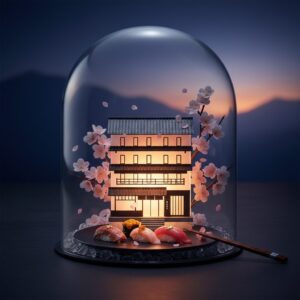
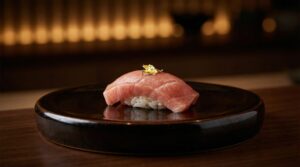
To fully appreciate this private tranquility, it’s helpful to contrast it with the public spectacle of a place like Ginza’s exclusive omakase counters.
The Vibe Check: Decoding Ryokan ‘Luxury’
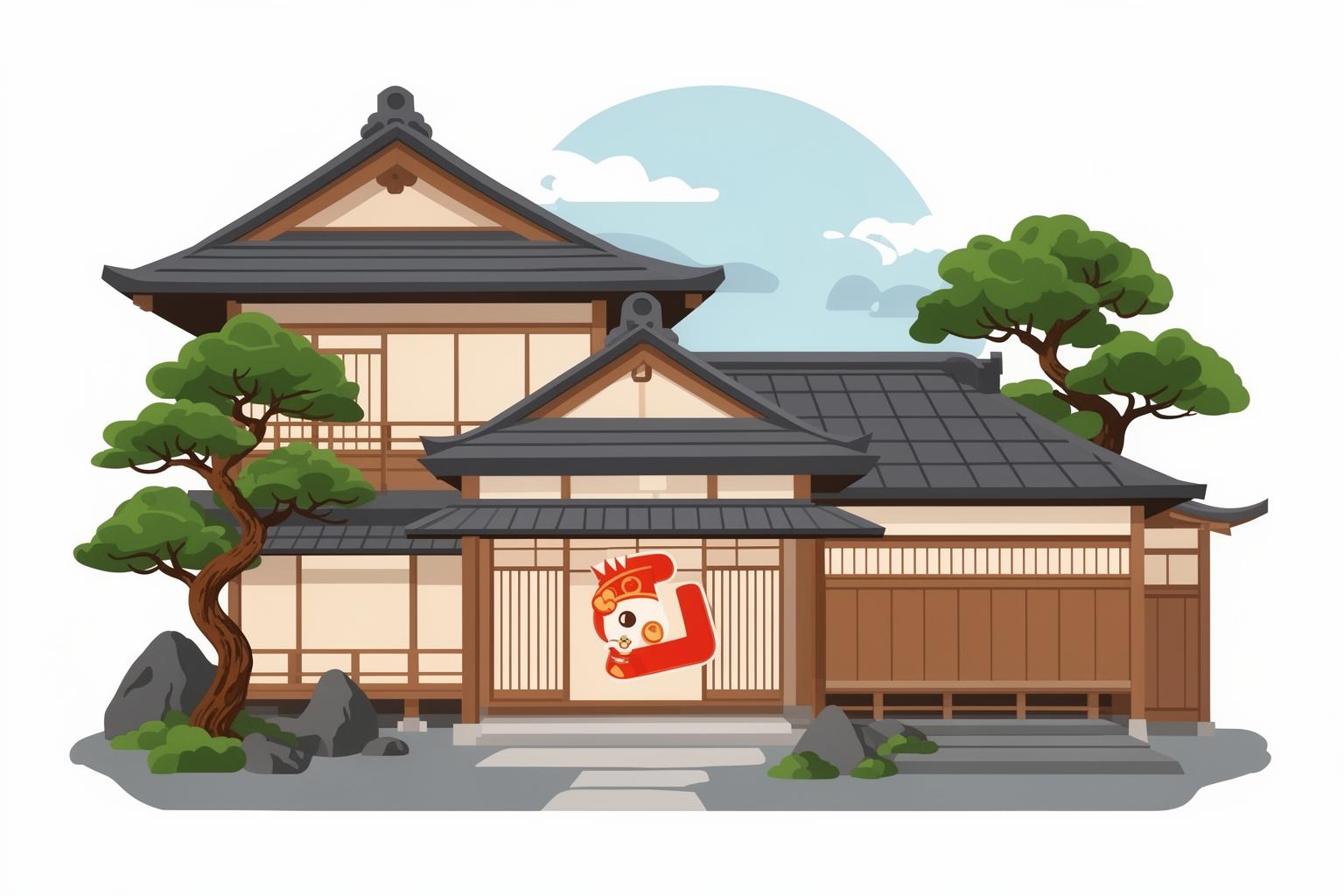
First and foremost, we need to completely redefine our concept of luxury. If you measure it by the standards of a Four Seasons or a Ritz-Carlton, you’re already off track. Western five-star luxury is inherently performative and public. It centers on the grand marble-floored lobby, the infinity pool with a DJ, the celebrity-chef restaurant where reservations signal status, and the trendy bar serving overpriced cocktails. The atmosphere is social, outward-facing, and focused on displaying wealth and taste in a communal setting. Your room, though plush, often serves merely as a private retreat after engaging in the hotel’s public spectacle.
A luxury ryokan upends this entirely. It is deliberately, unapologetically private. The whole experience is designed to draw you away from the outside world into the sanctuary of your personal space. The lobby is often small, understated, and functions merely as a brief transition rather than a destination. There might not even be a bar. The centerpiece, the heart of luxury, is your room. And that room is more than just a room; it becomes your whole world throughout your stay. It serves as your spa, your restaurant, your lounge, your sanctuary. The concept of ma, often interpreted as negative space or a void, is essential here. To a Western perspective, a traditional Japanese room might appear sparse, even empty. There’s no clutter, no heavy furniture—just tatami mats, a low table, and perhaps a single scroll in an alcove. But this isn’t minimalism for its own sake. It’s a purposeful design choice to create mental and physical breathing room. The luxury lies in what’s absent, in the quality of the materials you touch—the smooth hinoki wood of the bath, the fine weave of the tatami, the delicate texture of the washi paper on the shoji screens. The focus is inward. It’s about how the space makes you feel, not how it appears to others.
This inward-focused luxury is overseen by a crucial figure: the Nakai-san. Calling her a ‘butler’ or ‘attendant’ drastically understates her role and misses the essence entirely. The Nakai-san is the orchestrator of your entire stay—a discreet presence who appears just when needed and disappears when not. She embodies omotenashi, the renowned Japanese hospitality. Yet omotenashi differs greatly from Western-style ‘good service.’ It’s not about being chatty or familiar, nor about asking “how is everything?” every few minutes. It’s anticipatory. It’s the skill of reading the atmosphere, understanding a guest’s needs before they are expressed. Your Nakai-san will have your tea ready upon your return from a walk. She’ll know you prefer your yukata larger without you needing to request it. She manages the rhythm of your experience with almost supernatural finesse. This seamless, intuitive care is central to the luxury. You aren’t expected to direct your stay; you’re invited to surrender to it. This can be difficult for those accustomed to control, but relinquishing it is the essence. The mood is one of quiet confidence and complete tranquility. It’s the luxury of not having to think.
The Main Event: Why Your Dinner is Served in Your Room
So, let’s dive into the core of it: the in-room dinner, or heya-shoku. Why does this highlight of Japanese hospitality feel so much like, well, staying in? The answer lies deep within Japanese history and its social framework. Ryokans weren’t originally tourist hotels; they evolved from honjin and waki-honjin, which were designated inns for feudal lords (daimyo) and their samurai retinues during the Edo period. These influential figures traveled on official business, often in politically sensitive climates. For them, security, privacy, and status were crucial. Dining in a communal hall with strangers was not only a security risk but also a social misstep. The highest level of service meant being attended to privately in one’s own room, where a personal chef would prepare a meal exclusively for the lord. This set a significant precedent: true status wasn’t about public visibility, but about commanding an exquisite, personalized experience in complete privacy. This tradition has been maintained and democratized in today’s luxury ryokans. The in-room dinner is a direct cultural descendant of this samurai-era VIP care.
The ultimate indulgence in a society that often values the group over the individual is the ability to fully retreat into a private, perfect bubble. Consider this: there’s no need to pick a restaurant, no need to dress up (in fact, wearing the provided yukata is encouraged), no need to worry about transportation, and no obligation to engage in small talk with a waiter or overhear nearby conversations. Your entire world shrinks to the size of your room, your private onsen, and the culinary masterpiece before you. It’s the pinnacle of introverted bliss. After a long, hot soak in your onsen, your body is utterly relaxed, your mind calm. The thought of putting on street clothes, navigating a new town, and performing social pleasantries at a restaurant feels jarring, almost stressful. The ryokan experience is designed to eliminate every potential obstacle between you and a state of total relaxation. The dinner is not a disruption but a seamless continuation of this tranquility. It’s a subtle but powerful move in the game of serenity.
Omakase Unpacked: Beyond Just ‘Chef’s Choice’
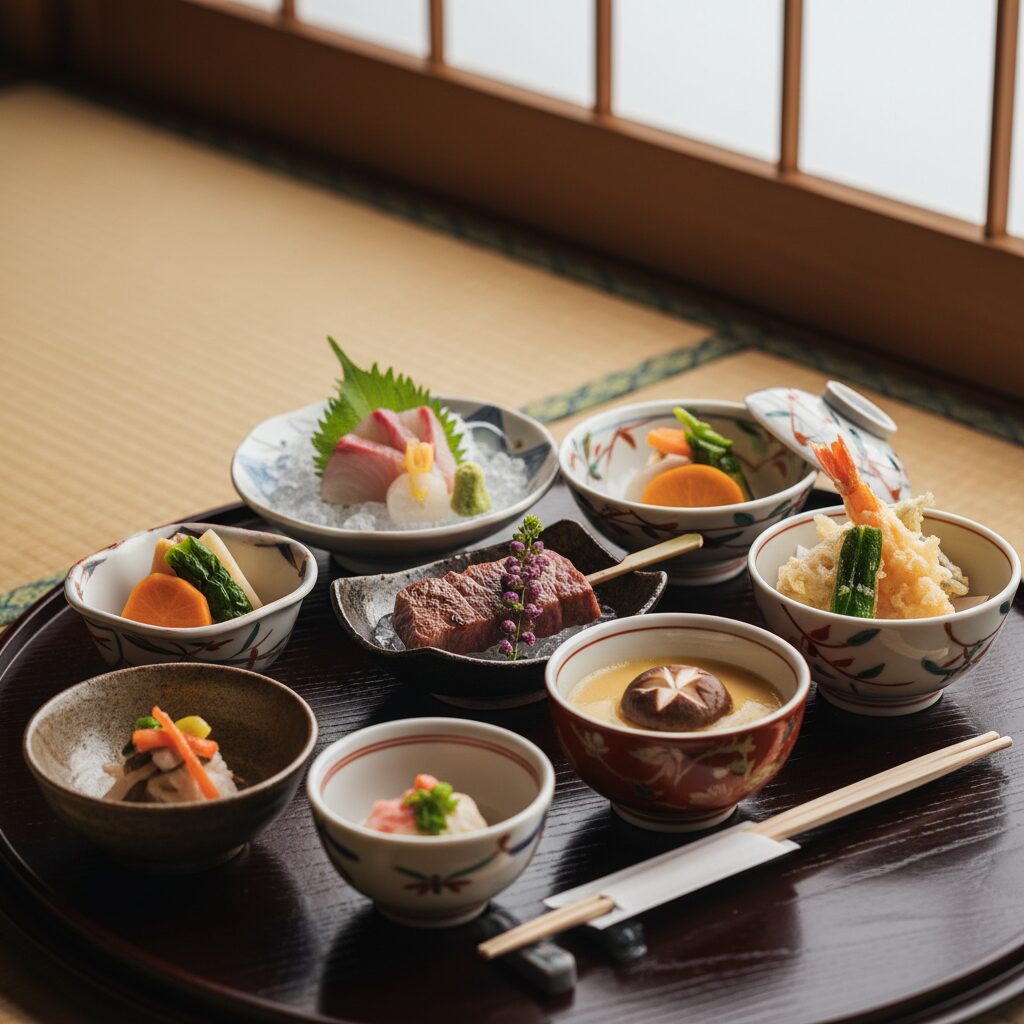
When we hear omakase in the West, we usually think of a high-end sushi bar where we tell the chef, “I leave it up to you.” At a ryokan dinner, it’s that, but taken to another level. The meal served is a particular multi-course haute cuisine called kaiseki-ryori. This isn’t a random selection of a chef’s favorite dishes. A kaiseki meal is a deeply meaningful, artistic, and philosophical exploration of the season and the specific locale of the ryokan.
Every detail is intentional. The meal revolves around the concept of shun, the peak of seasonality when an ingredient is at its most flavorful and vibrant. Staying at a mountain ryokan in autumn, you might find foraged mushrooms, chestnuts, and grilled river fish. Near the sea in spring, dishes feature tender bamboo shoots, sparkling firefly squid, and delicate white fish. The chef—often an unseen master artisan—is more than a cook; they are composing a culinary poem about the time and place. Ingredients are hyper-local, frequently sourced from the mountains visible from your window or the distant ocean you can hear. This creates a profound sense of place, a connection to the environment that is both visceral and delicious. Your menu is often customized based on any allergies or preferences shared at booking. This is not a mass-produced meal for hundreds of guests; it’s a bespoke culinary experience crafted for one (or two, or however many are in your group). It stands in stark contrast to a generic hotel restaurant menu.
The Art of the Meal: Beyond Just Food
Serving the kaiseki meal is itself a performance, meticulously choreographed by your Nakai-san. It’s not a single tray of food delivered by room service. It unfolds as a slow, deliberate sequence of courses—usually eight to twelve—each presented one by one. The pacing is flawless. Your Nakai-san will enter, kneel gracefully, and present the first course—often a small, artful appetizer (sakizuke) accompanied by a sip of local sake. They quietly explain each element—this fish is from the local bay; this vegetable was picked just this morning. Then they bow and depart, letting you enjoy the dish in peace. As you finish, they reappear like magic to clear the plate and bring the next course. This gentle rhythm continues throughout the meal, a soft, elegant dance of service that never feels rushed or intrusive.
The visual aspect is as crucial as the flavor. This principle is at the heart of Japanese cuisine: you eat first with your eyes. Each dish is a miniature masterpiece. The plates, bowls, and sake cups are far from generic hotel china; they are often exquisite pieces of local pottery or lacquerware, carefully chosen to complement the food. Grilled fish might be served on a long, rectangular plate evoking a river. A clear soup (suimono) might come in a covered lacquer bowl, with the moment you lift the lid to release fragrant steam being a small, dramatic reveal. The arrangement—the garnishes, colors, and textures—is painstakingly crafted. A single maple leaf in autumn might be placed on a dish to echo the scenery outside your window. This incredible attention to detail transforms the meal from simple sustenance into a multi-sensory artistic experience. It’s a feast that engages all your senses and firmly anchors you in the present moment.
Is It Actually… Awkward? Navigating the Service
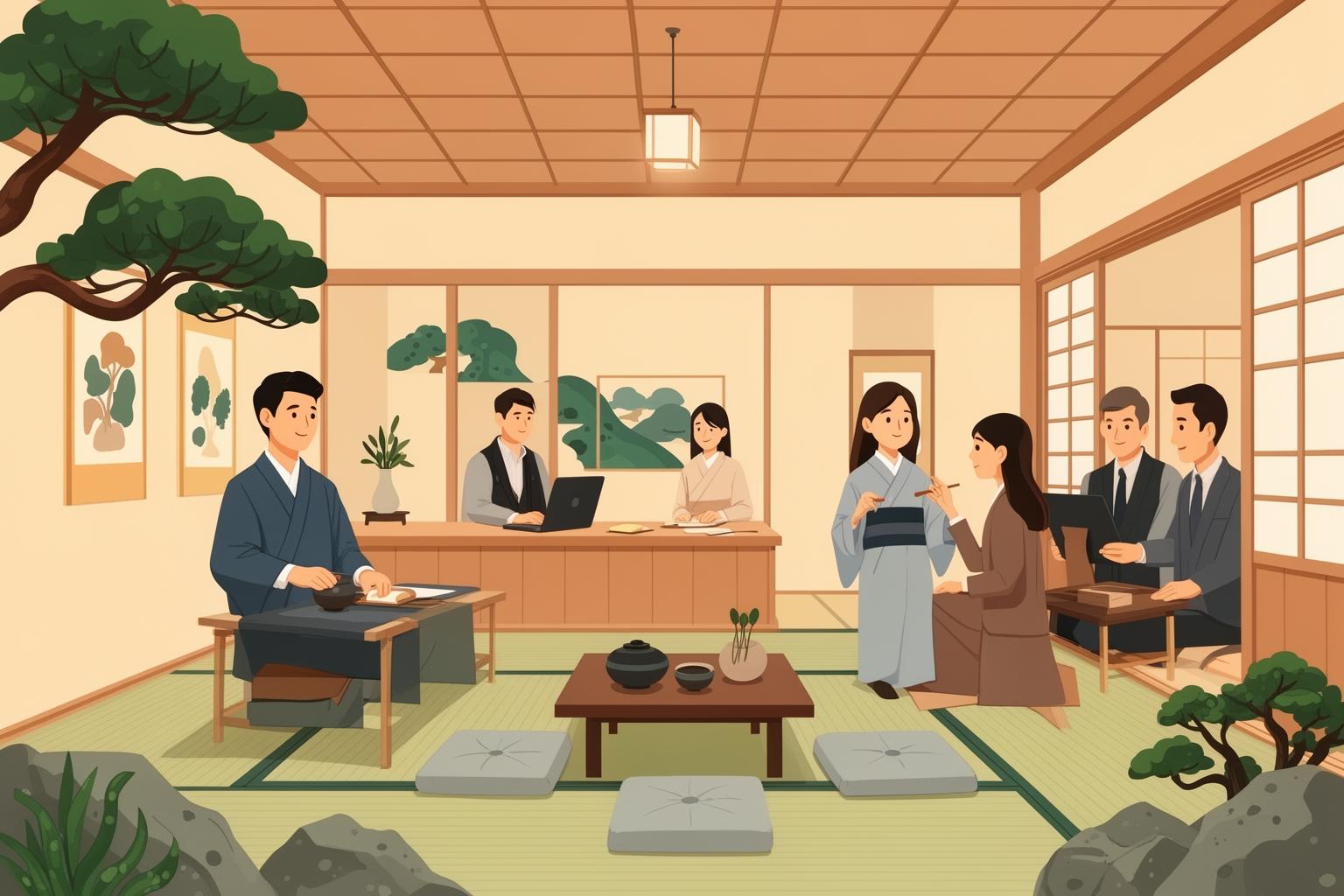
Let’s be honest. For many people raised in Western cultures, the idea of a personal attendant quietly coming and going in their private space for two hours can feel less like a luxury and more like a source of social anxiety. Should I make small talk? Do I help clear the plates? Must I pause my conversation every time they enter? It can seem somewhat intrusive, almost as if you’re under observation. This is one of the biggest cultural challenges to embrace when staying at a ryokan.
The key lies in understanding the Japanese concept of service and presence. The Nakai-san is not there to be a companion or engage in forced chit-chat. Their professionalism is shown through their discretion. They have perfected the art of being present without being intrusive. Their movements are quiet, efficient, and purposeful. They are trained to read the atmosphere, to sense if you are in the middle of a deep conversation and should be left undisturbed for a bit longer, or if you are ready for the next dish. Their aim is to be a seamless part of the room’s calm ambiance, not a disruption. Your role as a guest is simply to relax and receive. You are not expected to assist. You don’t need to make conversation beyond a simple ‘thank you’ (arigato gozaimasu). You should continue your own conversation, enjoy your companion’s presence, and treat the service as a natural part of the environment, like the sound of a nearby stream.
This embodies the philosophy of surrender once again. You relinquish control over the logistics of your evening. There’s no need to worry about ordering, paying the bill, timing the courses, or cleaning up. After the final dessert course is cleared, your Nakai-san will ask when you would like your futons prepared for sleeping. While you enjoy an evening stroll or another soak in the onsen, they will quietly return, move the dining table aside, and set out the plush futons. You come back to a room transformed for rest. This complete handing over of responsibility is the true luxury. It can feel strange at first, this level of passive reception. But once you embrace it, once you stop feeling the need to ‘perform’ as a guest, it becomes deeply liberating. It is a level of care so comprehensive, it borders on parental. For adults weighed down by constant decision-making in daily life, this temporary release is invaluable.
The Price Tag: Breaking Down the ‘Why So Expensive?’ Question
There’s no avoiding the fact that a stay at a top-tier ryokan comes with an astonishing price tag. It’s easy to glance at the per-person, per-night rate and experience serious sticker shock. But what exactly are you paying for? It’s important to realize that you’re not simply reserving a ‘room’ in the Western sense; you’re securing an all-inclusive, immersive cultural experience.
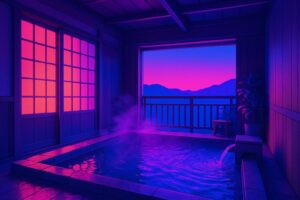
Let’s examine the value offered. First, the ‘room’ is often more than just a room. It’s usually a multi-room suite, featuring a separate living area, a veranda, and frequently a private garden. Most importantly, at this level, it almost always includes your own private onsen, either indoors or, for the ultimate luxury, an open-air bath (rotenburo). The expense and upkeep involved in delivering and heating natural hot spring water to a private bath in every suite is considerable. You’re paying for the privilege of soaking in mineral-rich, volcanic water whenever you wish, with complete privacy.
Second, the cuisine. The price covers two full, multi-course haute cuisine meals: an elaborate kaiseki dinner and a similarly stunning and substantial Japanese breakfast (choshoku) the following morning. Each meal, if enjoyed at a standalone restaurant of comparable quality in Tokyo or Kyoto, would easily command a significant price per person. Essentially, you’re receiving two Michelin-star-level dining experiences as part of your stay.
Third, and perhaps most significantly, is the service. The extremely high staff-to-guest ratio represents a major operational cost. You’re paying for the salaries, training, and skill of your dedicated Nakai-san, the unseen master chef and their team, the gardeners who impeccably maintain the grounds, and the staff responsible for the onsen. This is labor-intensive, highly skilled work. Such a level of personalized service requires a small army of professionals working behind the scenes to deliver a seamless, effortless experience.
Finally, you’re paying for the ambiance and cultural preservation. Many top ryokans are historic properties, housed in exquisite, traditional buildings that demand constant, meticulous, and costly maintenance by specialized artisans. The gardens are not merely patches of grass; they are carefully crafted landscapes that are works of art in their own right. In a sense, you’re paying a fee to temporarily inhabit a living museum and support the preservation of traditional Japanese craftsmanship and aesthetics. When you add it all together—the expansive suite, the private spa, two fine-dining meals, a personal attendant, and the immersive cultural environment—the high price begins to seem more reasonable, if not necessarily more affordable. It’s a bundled ultra-luxury package, and the ‘per night’ rate reflects the entire, all-encompassing experience.
So, Is the Hype Real? The Final Verdict
After breaking everything down, we arrive at the final question: is it worth it? The answer is a clear ‘it depends.’ The ryokan experience isn’t for everyone, and that’s perfectly fine. If your ideal vacation involves a lively social atmosphere, dressing up, exploring nightlife, and meeting new travelers, a high-end ryokan will likely feel isolating, quiet, and maybe even a bit dull. It’s designed to be the complete opposite. It’s an introvert’s sanctuary, a romantic escape for couples, or a peaceful retreat for families wanting to disconnect from the world and reconnect with each other.
The true value of the luxury ryokan experience isn’t in the thread count or the brand of toiletries. It lies in the profound cultural reset it provides. It gently but firmly urges you to slow down. It encourages you to appreciate the subtle beauty in the arrangement of a flower, the sound of water flowing over stones, the taste of one perfect strawberry. It’s a masterclass in the Japanese aesthetic of wabi-sabi—finding beauty in imperfection and impermanence—and the importance of being present. This experience stays with you long after checkout, subtly reshaping your understanding of luxury and relaxation.
So, is the hype justified? Yes, but only if you seek what it offers. It’s worth the splurge if you long for an escape not just from your hometown, but from the hectic, choice-filled pace of modern life itself. The in-room omakase dinner is more than just convenient; it’s the centerpiece of a philosophy devoted to your absolute, total, and uncompromising comfort. It’s about being cared for so completely that you can finally, truly, let go. In a world that constantly demands our attention and energy, the chance to simply exist, be nurtured, and have beauty and tranquility delivered to you? That’s not just five-star service. That’s a whole new level of glow-up. That, truly, is the ultimate flex.