Yo, what’s good? Ryo Kimura on the scene, and I’m here to drop some serious truth about Kyoto in the fall. You might think you know Japan, you might have seen the pics, but I’m telling you, until you’ve experienced the autumn glow-up in a Kyoto Zen garden, you haven’t seen anything yet. This isn’t just about pretty leaves, fam. This is a full-on spiritual reset, a deep dive into an aesthetic so clean, so intentional, it rearranges your brain cells. We’re talking about a quiet fire, a stillness that’s louder than any city noise. It’s the season when the ancient capital puts on its most fire fit, draping itself in crimson and gold, and the temple gardens? They become portals to another dimension of chill. This is where centuries of philosophy meet the fleeting, perfect beauty of a single season. It’s a vibe that hits different, a feeling you can’t just scroll past. It’s the ultimate main character energy for any seasoned traveler looking to connect with something real. So, get ready to unplug from the matrix and plug into the serene, electric hum of Kyoto’s Zen gardens at their absolute peak. This is the real deal, no cap.
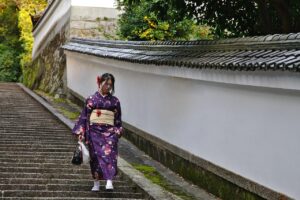
To fully immerse yourself in Kyoto’s cultural tapestry, consider exploring the fascinating world of its traditional geiko and maiko culture.
The Silent Sermon: Cracking the Code of Ryōan-ji
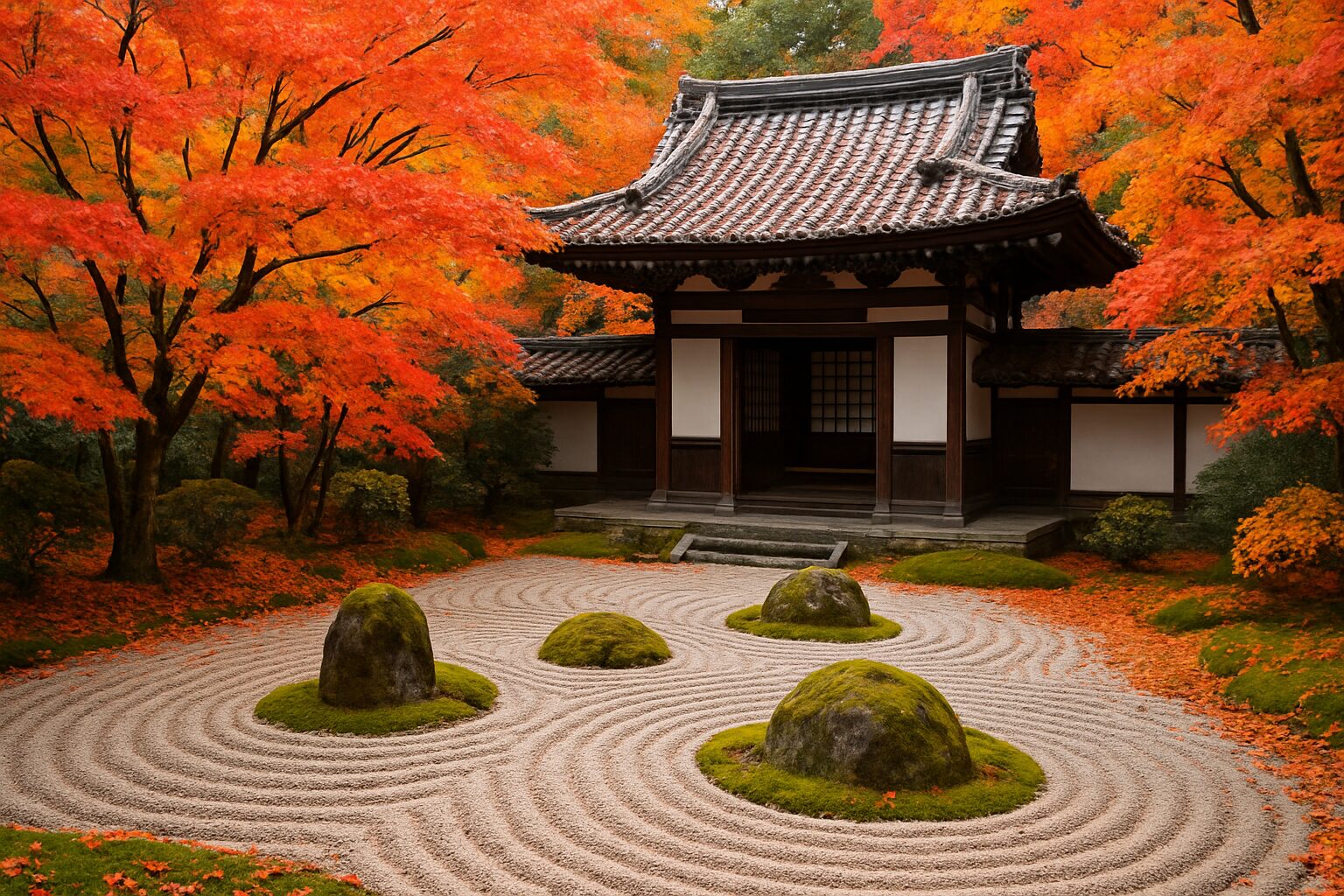
Let’s begin with the legend, the original Zen garden, Ryōan-ji. If Kyoto’s gardens had a hall of fame, this one would have an entire wing dedicated to it. Arriving at Ryōan-ji, you immediately sense a shift in energy. The city’s noise fades away, replaced by the crunch of gravel beneath your feet and the quiet whispers of visitors, who are genuinely awestruck. This isn’t a garden in the Western tradition. There are no flowers, no babbling streams. It’s a stark, minimalist masterpiece: a rectangular area of raked white gravel with fifteen stones of varying sizes arranged in small groups. The entire scene is enclosed by a simple earthen wall. That’s it. And yet, it means everything.
The Mystery of the Fifteenth Stone
The real fascination, what sparks everyone’s curiosity, is the layout. From any single viewpoint on the veranda, you can only see fourteen of the fifteen stones at once. The fifteenth stone is always concealed. The legends surrounding this are extraordinary. Some say that only by reaching enlightenment can you see all fifteen simultaneously. It physically embodies the Zen idea that complete understanding is unattainable, that there’s always something beyond our perception. Sitting on the smooth, worn wooden planks of the temple’s veranda, you find yourself compulsively counting and shifting position, trying to solve the mystery. But that’s precisely the point. The struggle is the lesson. It compels you to let go, to embrace imperfection, and to find peace in the enigma. It’s a total mind-bender, and spending a good hour here reflecting on this idea is a profound experience. The autumn sun casts long, dramatic shadows from the stones across the gravel sea, making the scene even more surreal and contemplative.
Beyond the Rocks: The Other Side of Ryōan-ji
Here’s a tip: many visitors get so absorbed in the rock garden that they overlook the rest of the grounds. Don’t be that person. After you’ve had your moment of Zen, be sure to explore the expansive estate around the main hall. There’s a large pond, Kyoyochi Pond, and the walking path circling it is absolutely stunning in the fall. The contrast is remarkable. You move from the austere, monochrome world of the rock garden to a burst of vibrant color. Fiery red Japanese maples (momiji) and brilliant yellow ginkgo trees are perfectly reflected in the still pond water. It’s as if the temple reveals two sides of the same coin: the sparseness of abstract thought and the wild, untamed beauty of nature. The path is dotted with smaller shrines and moss-covered stone lanterns, evoking the feeling of stepping into a Studio Ghibli film. This is where you capture those amazing photos, with the vivid leaves framing the water. It’s a much more traditional Japanese garden experience and offers a lovely balance to the intellectual challenge posed by the rock garden. The cool, crisp autumn air, the scent of damp earth and fallen leaves—it’s a feast for the senses.
Riding the Crimson Wave: Tōfuku-ji’s Autumn Spectacle
If Ryōan-ji embodies the quiet, intellectual core of Zen, Tōfuku-ji represents its soul-stirring, passionate spectacle. When it comes to autumn colors in Kyoto, Tōfuku-ji reigns supreme—no competition. This site is more than just a temple; it’s an institution dedicated to autumn leaf viewing. The scale is enormous, and the experience is unforgettable. The temple complex itself is vast, one of Kyoto’s great Zen temples, but the main draw, the reason people queue for hours, is the breathtaking view from Tsutenkyo Bridge.
The Sea of Clouds Over Tsutenkyo Bridge
Tsutenkyo, the “Bridge to Heaven,” is a 100-meter-long covered wooden walkway connecting the main hall to the Founder’s Hall. It stretches over the Sengyokukan ravine, densely filled with thousands of maple trees. Standing on this bridge in mid-November is a near-religious experience. You are literally suspended above a swirling sea of crimson, gold, and orange leaves. So dense and vivid, it resembles a living fire. The spectacle is stunning. Sunlight filters through the wooden slats of the bridge’s roof, casting shifting patterns of light and shadow over the scene. Around you, you can hear the collective gasp of onlookers trying to absorb the overwhelming beauty. It’s pure, unfiltered splendor on a scale that’s difficult to grasp. My advice? Arrive early—like, before it opens early. The crowds are legendary for good reason. But if you can be among the first to step onto that bridge as morning light fills the valley, you’ll experience a moment of pure magic. You’ll understand why this particular seasonal beauty has fascinated Japanese art for centuries.
The Modernist Zen of the Hasso Garden
Just as with Ryōan-ji, the main attraction at Tōfuku-ji can overshadow its other remarkable features. Once you tear yourself away from Tsutenkyo Bridge, head straight to the Hojo, the former residence of the head priest. Here lies the Hasso-no-niwa, or “Gardens of Eight Phases,” designed by the renowned landscape architect Mirei Shigemori in 1939. This is where Tōfuku-ji’s atmosphere becomes truly captivating. Shigemori was a modernist who infused traditional Zen garden design with a bold, almost avant-garde approach. The four gardens surrounding the Hojo are extraordinary. The South Garden showcases massive rocks set in a sea of raked gravel, symbolizing mythical islands of immortals, but with a strikingly abstract energy. The West Garden features clipped azalea bushes arranged in a geometric checkerboard pattern, a playful yet deeply symbolic homage to rice paddies, unique to this site. The North Garden is a small moss garden with stones laid out in a chequerboard pattern that subtly blends into the background—a design called `ichimatsu`. The East Garden uses cylindrical stones, repurposed from other temple parts, to represent the stars of the Big Dipper. This stunning fusion of ancient Zen principles and 20th-century art creates an unforgettable experience. Viewing these gardens, particularly framed by autumn foliage, serves as a vivid reminder that Zen is not a fixed tradition but a living, evolving philosophy. It’s a high-concept art installation and a deeply spiritual place all at once.
Wabi-Sabi Dreams: The Understated Elegance of Ginkaku-ji
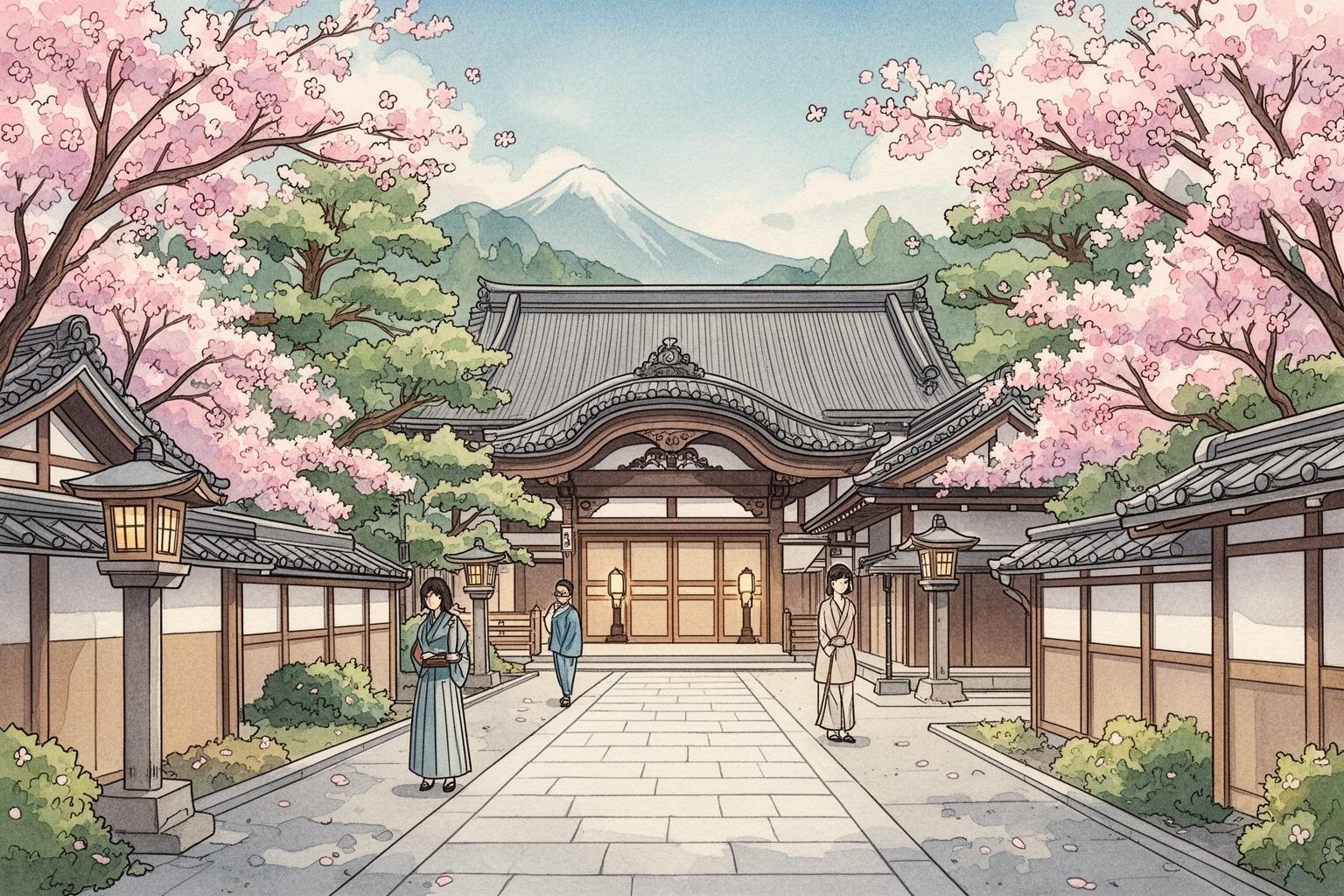
Heading to Kyoto’s eastern hills in the Higashiyama district, we come across Ginkaku-ji, the Silver Pavilion. First, a quick note: it’s not actually silver. The story is that the shogun who built it, Ashikaga Yoshimasa, planned to cover it with silver leaf to rival his grandfather’s Kinkaku-ji (the Golden Pavilion), but he passed away before that could happen. Honestly, it’s better this way. The pavilion’s weathered, unadorned wood perfectly captures `wabi-sabi`, the Japanese aesthetic that finds beauty in imperfection, impermanence, and simplicity. Ginkaku-ji isn’t about flashy display; it embodies a quiet, profound beauty that resonates deeply.
The Sand Cone and the Silver Sea
The most striking elements of Ginkaku-ji aren’t the pavilion itself, but the stunning dry landscape garden before it. It features two main parts: a massive, perfectly sculpted white sand cone called the `Kogetsudai` (Moon Viewing Platform), and a vast expanse of raked sand known as the `Ginshadan` (Sea of Silver Sand), symbolizing a lake. The precision is astonishing. The sand’s lines are immaculate, and the cone is a sculptural marvel. Though its purpose is debated, many believe they were designed to reflect moonlight, illuminating the garden during nighttime gatherings centuries ago. Standing in the crisp autumn air, with the deep green pines and fiery red maples framing the garden, the stark white sand offers a powerful visual anchor. It’s a space that feels both carefully crafted and naturally serene, inviting you to slow down, observe the details, and appreciate the interplay of light, shadow, and texture.
A Walk Through a Living Painting
Beyond the sand garden, a path meanders up the hillside behind the pavilion, leading you through a lush, mossy garden that feels ancient and mystical. This is where Ginkaku-ji truly dazzles in autumn. The path is almost completely shaded by maple trees, creating a tunnel of vibrant color. As you climb, you gain breathtaking bird’s-eye views of the temple complex and Kyoto stretching beyond. Each turn reveals a new scene, a perfect frame. You’ll catch glimpses of the pavilion’s dark wooden roof through gaps in the crimson leaves, with the carefully raked sand garden below. It’s like walking through a traditional Japanese painting. Small ponds, streams flowing over moss-covered rocks, and stone lanterns that seem centuries-old complete the scene. The atmosphere is deeply peaceful. This garden invites engagement, encouraging you to explore and uncover its secrets step by step. It’s less a static view and more a narrative unfolding as you wander. And that, truly, is the heart of `wabi-sabi`: discovering the profound in the journey itself, not just the destination.
The Borrowed Scenery of Arashiyama: Tenryū-ji’s Majestic View
Let’s head west to the Arashiyama district, renowned for its bamboo groves and breathtaking scenery. At the heart of this area is Tenryū-ji, a temple that is an absolute must-see for any garden enthusiast. As the foremost of Kyoto’s five great Zen temples, its garden exemplifies the art of `shakkei`, or “borrowed scenery.” This technique involves incorporating the landscape beyond the garden’s boundaries—in this case, the majestic Arashiyama mountains—into the garden’s design, creating a sense of limitless grandeur.
A Garden That Breathes with the Mountains
The main garden, Sogenchi Teien, was crafted by the Zen master Muso Soseki in the 14th century, and has retained its original form despite centuries of fires and conflicts. It centers around a large pond that beautifully mirrors the changing seasons. The true brilliance lies in how it flows seamlessly into the forested mountainside behind it. There’s no harsh separation; the trees and rocks within the garden seem like a natural extension of the mountain itself. In autumn, this effect intensifies dramatically. The Arashiyama mountains burst into a mosaic of red, yellow, and orange, and the entire panorama becomes part of Tenryū-ji’s garden. You’re not just gazing at a pond and stones; you’re witnessing a carefully framed, monumental work of natural art. The best place to absorb this view is from the veranda of the Daihojo (Large Abbot’s Hall). Sitting on the tatami mats, feeling the crisp autumn breeze, you can truly lose yourself in the scene. It’s a profoundly meditative experience, connecting the human-made garden with the vast, untamed nature beyond. The boundary between art and reality fades, leaving an unforgettable impression.
Exploring the Wider Grounds and the Bamboo Path
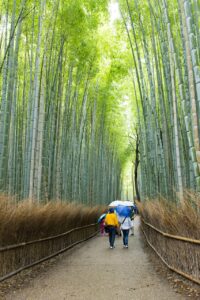
Tenryū-ji invites you to explore beyond the main garden. The complex features numerous other buildings and smaller gardens. The path from the main garden ascends gently through the Hyakkaen (Garden of a Hundred Flowers), which, while famed for its spring blossoms, is also stunning in autumn with its collection of maples and other deciduous trees. This trail eventually leads to the North Gate, where you’ll step directly into the renowned Arashiyama Bamboo Grove. The transition is breathtaking. You move from the open, colorful expanse of the `shakkei` garden to the cool, green, towering stalks of the bamboo forest. The bamboo creaks and sways with the wind, as light filters through in surreal green beams. Visiting both Tenryū-ji’s garden and then immediately walking through the bamboo grove offers one of Kyoto’s most iconic and fulfilling experiences. It’s a journey through two distinct yet equally powerful expressions of Japanese nature aesthetics. Pro tip: the bamboo grove can become extremely crowded. Visiting right after Tenryū-ji opens in the morning gives you the best chance for a peaceful, less selfie-stick-filled experience.
The Hidden Gems: Daitoku-ji’s Universe of Sub-Temples
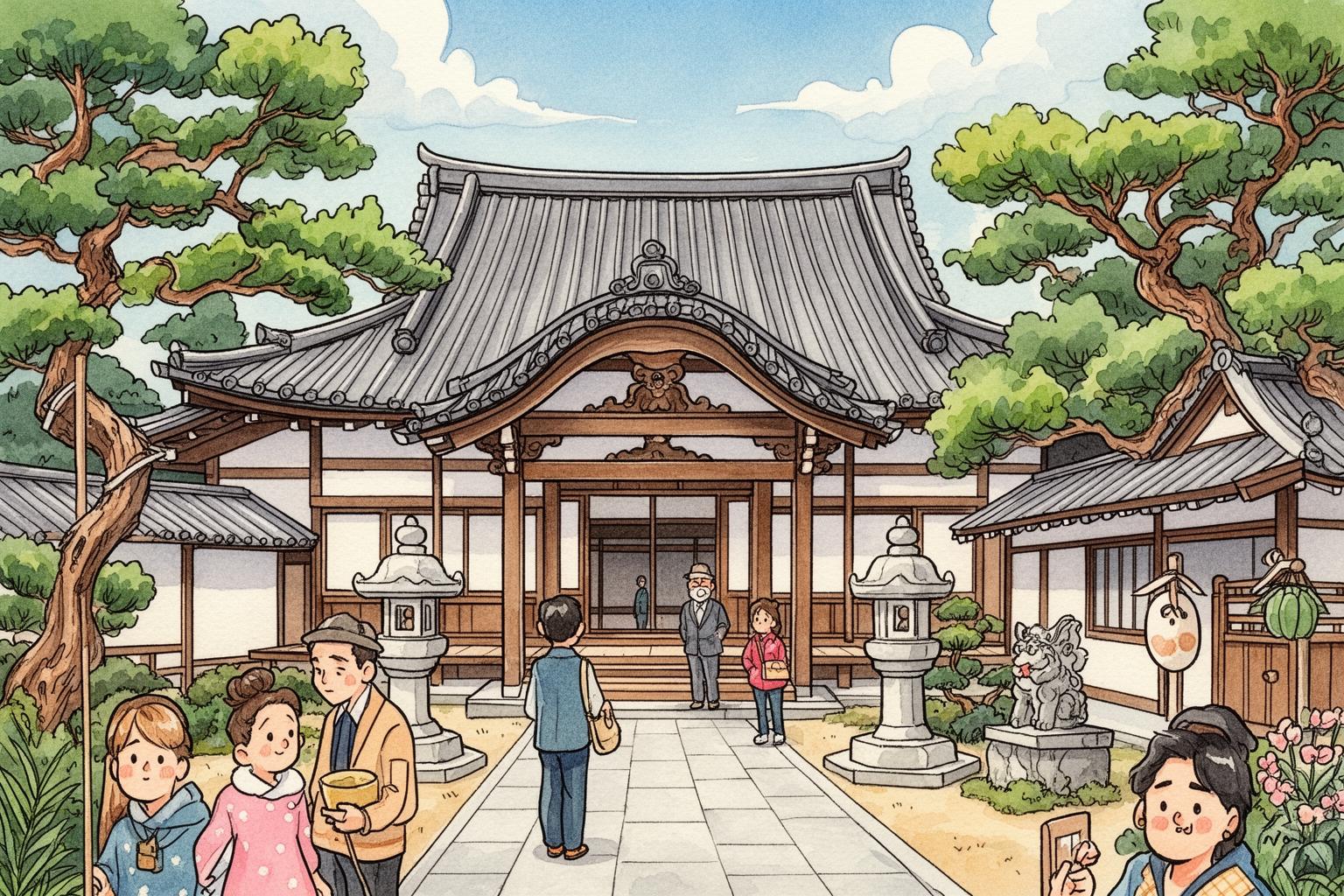
Alright, for seasoned travelers seeking to stray from the beaten path and discover something truly exceptional, we must talk about Daitoku-ji. This is not a single temple but a vast, walled monastic complex in northern Kyoto, home to over twenty sub-temples. While many of these are private and closed to the public, a select few are accessible and feature some of the most exquisite and intimate Zen gardens in the entire city. Visiting Daitoku-ji feels like a treasure hunt—you wander along quiet, stone-paved lanes, peering through gates to uncover hidden realms of profound tranquility. This is truly an IYKYK (if you know, you know) spot.
Kōtō-in: A Masterpiece of Simplicity and Moss
If you only visit one sub-temple within Daitoku-ji, make it Kōtō-in. This place is pure enchantment. Renowned as the final resting place of the great tea master Sen no Rikyu’s family, it exudes a refined, understated beauty closely tied to the tea ceremony’s aesthetic. The main garden is a simple moss-covered landscape dotted with Japanese maples. What makes it so special is the approach: you enter through a gate and walk along a long, narrow, stone-paved path almost completely enclosed by tall bamboo and maple trees. In autumn, the path transforms into a tunnel of blazing reds and greens, with light filtering through the leaves in an almost otherworldly way. It feels like a process of purification; by the time you arrive at the main temple building, the outside world has completely slipped away. The garden isn’t designed to be viewed from a single spot but experienced as you move through the temple rooms. Windows and open verandas perfectly frame various sections of moss and maples, creating a series of living paintings. It’s remarkably intimate and peaceful. Finding a quiet corner here and simply listening to the wind rustling through the bamboo is a top-tier Zen experience.
Ryōgen-in and Zuihō-in: Rocks, Sand, and Bold Statements
Two other sub-temples worth seeing offer entirely different atmospheres. Ryōgen-in features five distinct dry landscape gardens, including the oldest within Daitoku-ji. One of its gardens, Ryugin-tei, is said to be the smallest rock garden in Japan, showcasing how Zen principles can be expressed on any scale. The main garden is a vast stretch of moss symbolizing the ocean, with a solitary rock formation representing a mythical mountain. It feels powerful and ancient. Then there’s Zuihō-in, with gardens designed by the modernist master Mirei Shigemori, who also crafted the gardens at Tōfuku-ji. This garden is bold and dramatic, featuring a rock garden with jagged, upright stones that evoke a powerful sense of movement and are said to represent a Christian cross honoring the temple’s founder, a Christian feudal lord. It’s a fascinating and unexpected piece of history tucked inside a Zen Buddhist complex. The contrast between jagged rocks and raked sand is electric. Exploring these smaller temples offers a much deeper, more personal connection to the art of the Zen garden, far from the massive crowds found at more famous sites.
Practical Vibe Check: Navigating Kyoto’s Autumn Rush
Let’s be honest: visiting Kyoto during peak autumn foliage season is no secret. It’s one of the most sought-after travel experiences worldwide. The city will be crowded, but that doesn’t mean your Zen has to be disrupted. What you need is a solid game plan.
Timing is Everything
The peak color season in Kyoto usually lasts from mid-November to early December, though the exact timing can shift slightly each year. Keep an eye on the foliage reports (known as `koyo` forecasts) online as your trip draws near. To avoid the heaviest crowds, the strategy is simple: arrive early or visit late. Be at the entrances of popular temples like Tōfuku-ji or Tenryū-ji 15–30 minutes before they open. You’ll be rewarded with the golden morning light and a rare moment of calm before the tour buses roll in. Alternatively, some temples, such as Kōdai-ji and Kiyomizu-dera, offer special nighttime illuminations during the fall. This provides an entirely different atmosphere. The maple leaves, lit from below, radiate an intense, almost otherworldly glow. It’s dramatic and romantic, and although still busy, the visitor flow is spread across more hours.
Getting Around and Staying Sane
Kyoto’s public transportation is reliable, but buses can get caught in heavy traffic during this period. The subway often proves faster for covering longer distances. Combining subway travel with walking is your best option. Get a rechargeable IC card like Suica or Icoca to make hopping on and off trains and buses seamless. Wear comfortable shoes—seriously. You’ll be walking miles, often on uneven stone paths and gravel. This isn’t the time to prioritize fashion over function. Finally, embrace the quiet moments. Even at the busiest temples, you can usually find a secluded corner or a lesser-known part of the garden to pause, breathe deeply, and simply take in the atmosphere. Don’t rush from one photo spot to another. The real goal is to find your own moment of Zen amidst the beautiful chaos.
This journey through Kyoto’s autumn gardens is more than sightseeing. It’s a deep dive into a culture that has perfected the art of discovering the profound in the simple and the eternal in the fleeting. It’s about witnessing nature’s final, most brilliant performance of the year in a setting crafted for pure contemplation. It’s a glow-up for the soul. So come find your stillness, soak in the vibe, and let the ancient calm of Kyoto work its magic on you. It’s an experience that will linger long after the last crimson leaf has fallen.